
Application of Stainless Steel Doors and Windows Guardrails
Laser welding technology has improved the connection strength, weld flatness, and production efficiency in the manufacturing of stainless steel doors, windows, and guardrails, reducing the need for polishing.
The advantages of high-quality stainless steel laser welding
Say goodbye to the drawbacks of rough welds, easy deformation, and the need for extensive post-processing polishing brought about by traditional welding techniques. We provide professional laser welding solutions to provide high-strength and aesthetically pleasing connections for stainless steel door and window guardrails, completely changing your manufacturing process.
- High strength and durability: Achieve deep penetration and dense welds, with connection strength far exceeding traditional processes, ensuring that stainless steel doors, windows, and guardrails are sturdy, reliable, and have a longer service life.
- The weld seam is beautiful and exquisite: the weld seam is narrow and smooth, with precise control of penetration depth. It does not require or only requires a small amount of polishing to meet the requirements of the finished product, greatly saving post-processing procedures and costs.
- Minimal thermal deformation: The laser beam energy is concentrated, the heat affected zone is small, and it can effectively prevent thin-walled stainless steel profiles from warping and deformation during welding, ensuring product assembly accuracy.
- Significant improvement in production efficiency: With fast welding speed, automated or semi automated operations can be achieved, which is several times more efficient than traditional welding and significantly shortens the delivery cycle.
Through laser welding, you can achieve sturdy and reliable structural connections, minimize rework and material waste, reduce overall manufacturing costs, and thus enhance the market competitiveness and added value of stainless steel door and window guardrail products.
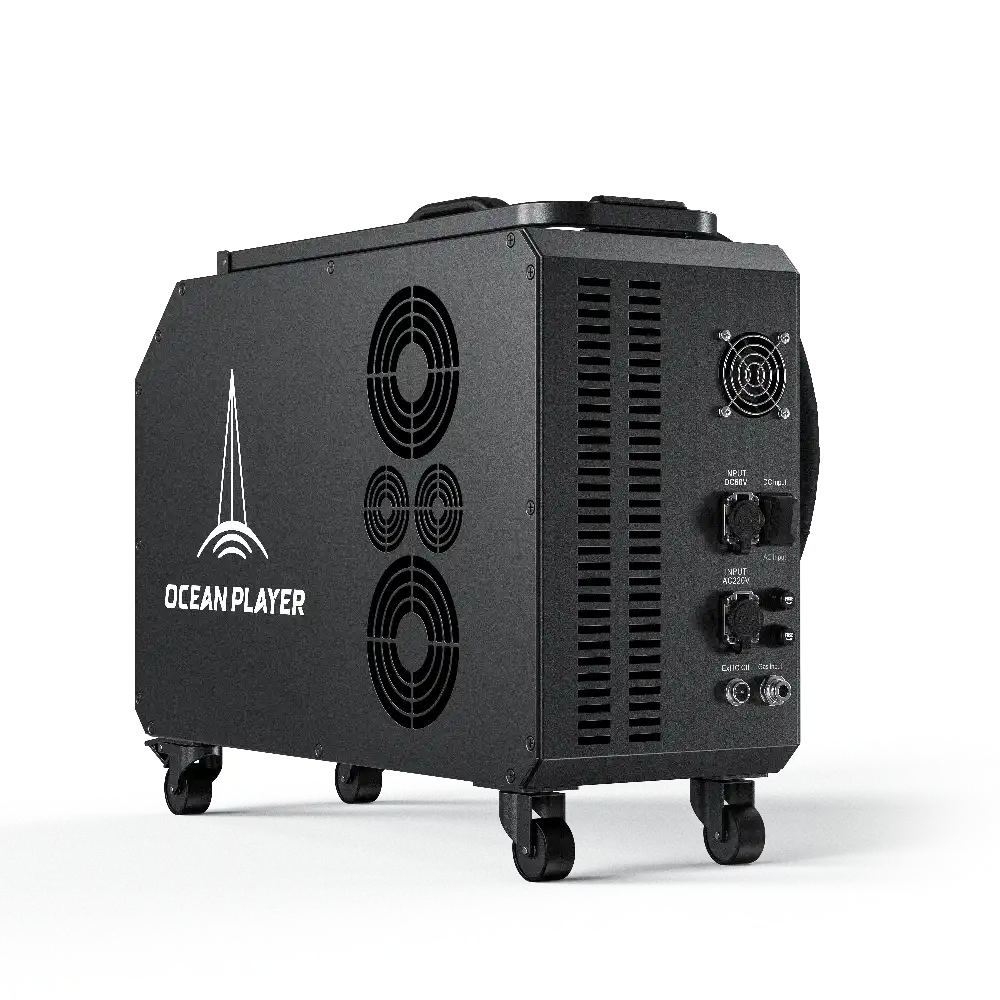
Stainless steel laser welding machine

Metal laser welding machine

High power laser welding machine
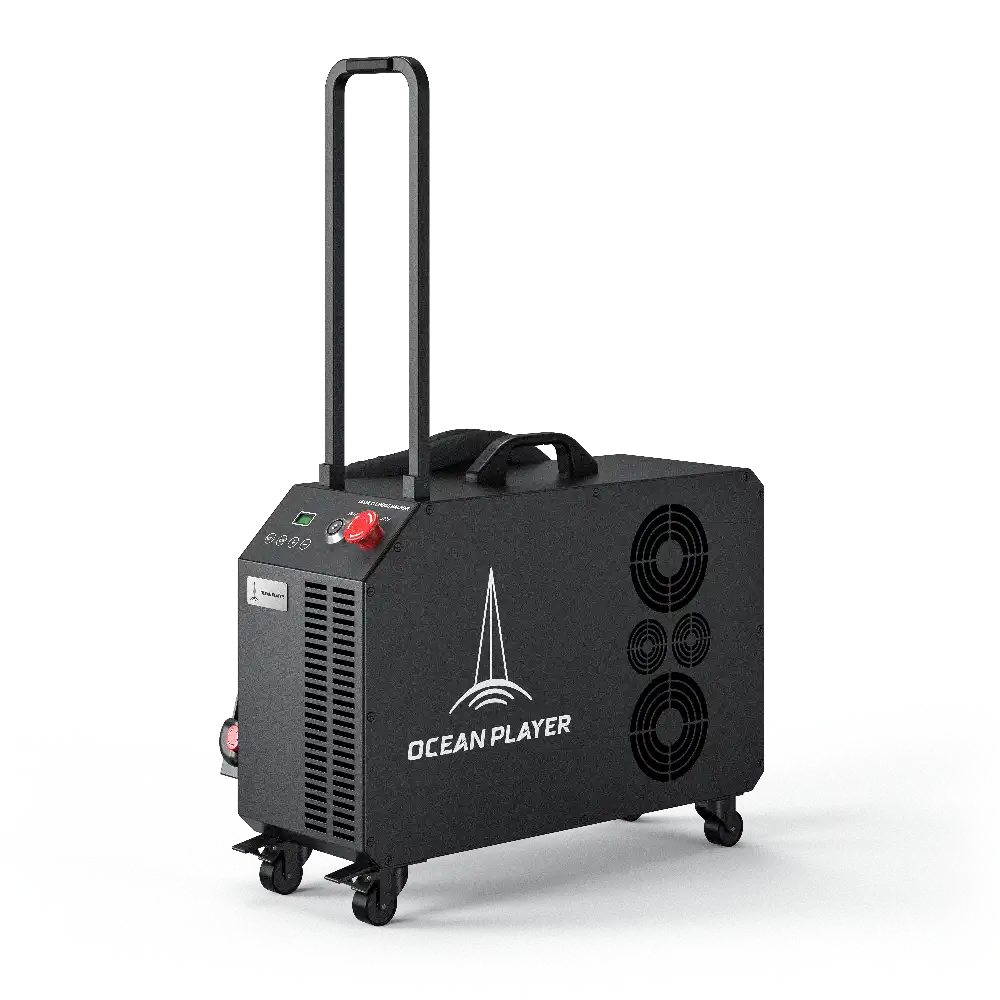
Desktop laser welding machine
If you need to customize the functionality and appearance of the product, please contact us and we will provide you with the best solution
Principles and advantages of laser welding technology in stainless steel applications
1. Definition and advantages
We use high-energy density laser beams to precisely focus on the joints of stainless steel materials. Within milliseconds, the material instantly melts and solidifies, forming a dense and uniform metallurgical bond weld. As a non-contact, efficient, and clean welding method, laser welding can perfectly maintain the original strength and corrosion resistance of stainless steel door and window guardrails, making it an ideal choice for the manufacturing of building hardware and high-quality security products.
2. Application focus
Traditional welding methods, such as arc welding and argon arc welding, often result in coarse welds, severe thermal deformation, and defects such as slag inclusion and porosity, requiring a significant amount of time for subsequent grinding and polishing. Our laser welding core application advantages include:
- High precision connection and structural stability: Ensure high dimensional accuracy and structural stability in the connection between door and window frames and guardrail components, providing solid guarantees for product safety and load-bearing capacity.
- Appearance quality and brand value enhancement: Uniform and beautiful welds reduce welding marks, making the surface of stainless steel products more delicate, significantly enhancing the added value of product appearance and brand image.
- Welding of ultra-thin plates and irregular parts: capable of handling thin-walled stainless steel profiles and complex curved workpieces that are difficult to handle with traditional methods, achieving seamless and high-quality connections.
Through efficient and precise laser welding, we are able to endow stainless steel door and window guardrails with clear and durable connection strength, significantly extending the product’s service life and enhancing its overall value and market competitiveness.
Operating procedures and quality control standards
In order to achieve high-strength connections, aesthetically pleasing welds, and minimize thermal deformation of stainless steel door and window guardrails, the following operating procedures and quality standards must be strictly followed to ensure that the welding effect meets industrial grade requirements and to enhance product structural safety.
Welding process
Laser Generator⇒Transmission Fiber⇒Welding Head/Focusing System⇒Precise Focusing and Positioning⇒Laser Melting and Solidification⇒Forming High Strength Weld Seam
Core operational steps
- Material preparation and alignment requirements: Firstly, accurately analyze the stainless steel grade and thickness (such as 304, 316), and perform precise fixture positioning and strict gap control on door, window, and guardrail components. This is the foundation for achieving high-strength and aesthetically pleasing welds.
- Welding parameter optimization (core): Adjust laser power, welding speed, defocusing amount, and shielding gas flow rate based on material characteristics and connection form to ensure that the penetration depth meets structural strength requirements, while minimizing heat affected zone and material deformation.
- Automation and precision motion control: Through high-precision motion control systems such as robots or CNC platforms, the laser focus is ensured to move accurately and uniformly along the weld trajectory, completing high-quality continuous welding and ensuring welding consistency.
- Real time monitoring of weld quality: During the welding process, the molten pool status and weld formation are monitored in real-time through a visual system or temperature sensor to ensure the uniformity, absence of pores and cracks, and compliance with structural load-bearing standards of the weld.
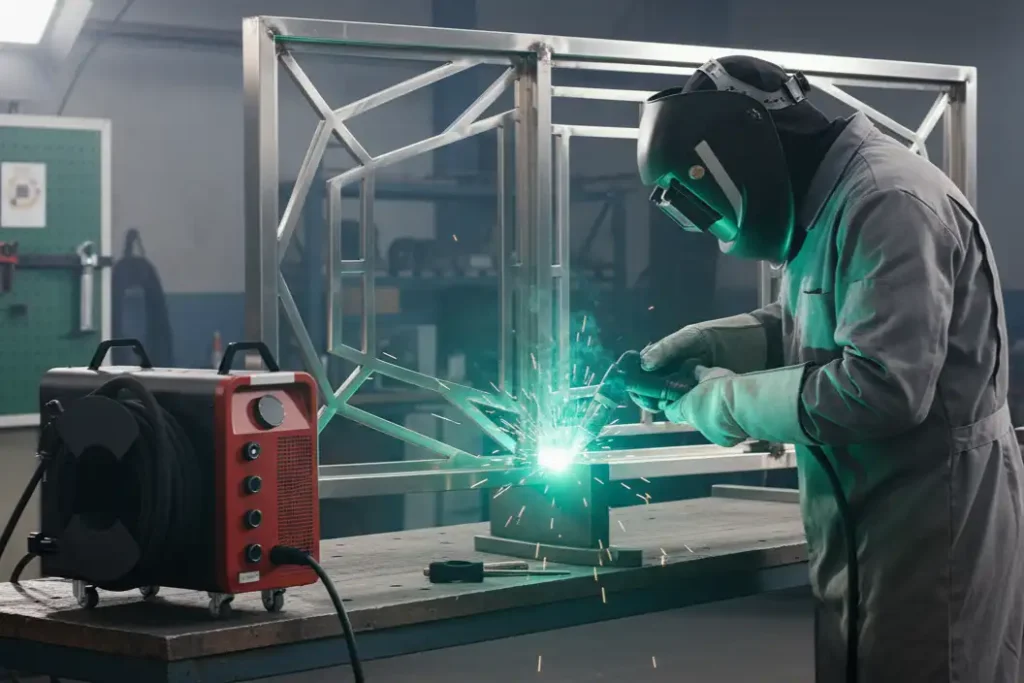
Flexible welding of complex structural components
Stainless steel doors, windows, and guardrails often involve complex structures and irregular connections. Our handheld laser welding machine can easily handle multi angle and irregular welds, ensuring high-strength and seamless connections at various junctions, greatly enhancing the design flexibility of stainless steel products.
Ultimate precision of structural components
Unlike traditional arc welding or spot welding, laser welding can achieve micrometer level accuracy in depth control and weld width, making it particularly suitable for connecting thin-walled stainless steel profiles. This is crucial for ensuring the high load-bearing capacity of structural components
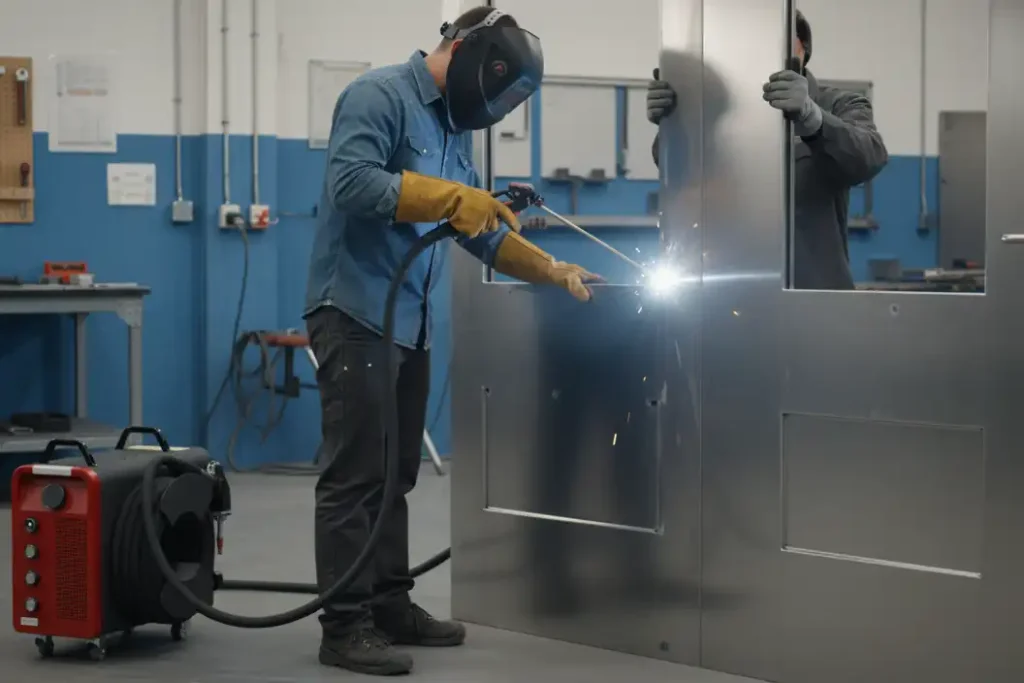
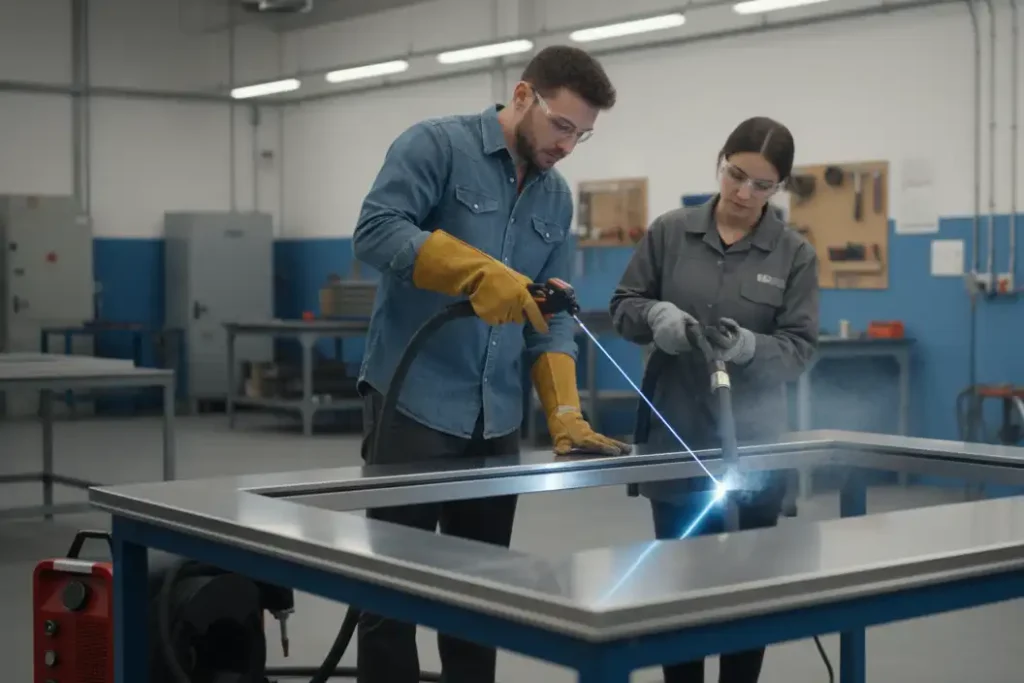
Accurate cleaning before welding
Accurately preprocess the connection area of stainless steel profiles to ensure that the welds are free of oil, oxides, and dust, control laser parameters to ensure stable melt pool, and ensure high-strength, zero defect welds.
Weld seam aesthetics
Laser welding produces very little oxide, but high-quality stainless steel door and window guardrails still require slight post-treatment. Compared to traditional welding, laser welding can safely remove residual discoloration layers or splashes, ensuring a smooth appearance without damaging the corrosion-resistant layer, and improving rust prevention and safety.
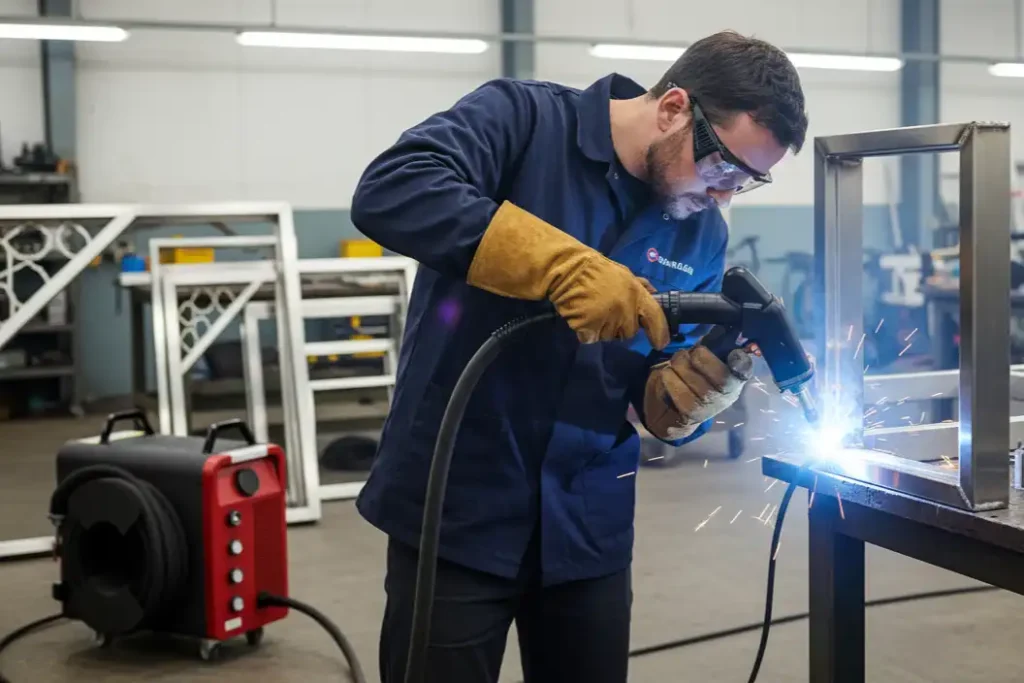
Six reasons to choose our laser welding machine
Fast, flexible, efficient and convenient
The handheld laser welding machine is easy to operate, does not require complex fixtures, and can be used immediately. For complex working conditions such as irregular parts, corners, or on-site installation of stainless steel door and window guardrails, fast and efficient welding can be achieved, greatly improving work efficiency.
Exquisite welds, reducing polishing
Laser welding machines can also provide stable and energy concentrated welds. The weld seam is narrow, smooth, and has minimal deformation, greatly reducing or eliminating the need for later polishing, making the appearance of stainless steel products more exquisite and beautiful.
Minimal thermal deformation, protecting the workpiece
Handheld laser welding machine has concentrated energy and a small heat affected zone. When welding thin-walled profiles of stainless steel door and window guardrails, it can effectively avoid deformation and warping caused by local overheating, protecting the overall accuracy and appearance of the workpiece.
Enhance connection strength and durability
Laser welding can achieve deep penetration metallurgical bonding, and the weld strength far exceeds traditional manual welding. This provides a stronger and more durable connection for stainless steel door and window guardrails, enhancing the overall structural stability and service life of the product.
Easy to operate, reducing technical barriers
The handheld laser welding machine is easy to learn and use, with an intuitive operating interface. Compared to traditional argon arc welding that requires skilled technicians, handheld laser welding machines reduce the skill requirements for operators, allowing them to get started faster and save training costs.
Wide applicability and low maintenance cost
With its flexibility and high precision, handheld laser welding machines can be applied to multiple processes such as manufacturing, installation, and maintenance of stainless steel door and window guardrails. Low equipment failure rate and minimal consumables effectively reduce long-term operation and maintenance costs.
Get exclusive stainless steel laser welding solutions
Submit your stainless steel profile specifications, welding joint types, and production scenario requirements immediately, and we will customize the most suitable handheld laser welding solution for you to meet your high standards for connection strength, weld aesthetics, and on-site operational efficiency.
High-strength invisible welding case
Handheld laser welding is an ideal solution for achieving high-quality connections in stainless steel doors, windows, and railings. By precisely controlling laser power, spot size, and speed, we can create dense and ultra-strong metallurgical welds at the joints without damaging the large areas of the stainless steel base material, ensuring long-term reliability of the connections.
This welding method provides an extremely small heat-affected zone, effectively preserving the original smoothness and anti-corrosion coating of stainless steel surfaces. It ensures that products maintain their aesthetic appeal and color without fading in high-humidity, variable outdoor environments, significantly enhancing structural safety and product value-added benefits.


Key criteria for selecting handheld laser welding machine suppliers
1. Core welding technology and performance
Laser source and beam quality assessment: Evaluate whether the laser source provided by the supplier has high stability and high-quality beam, which is a key guarantee for achieving deep penetration, high strength, and narrow welds in stainless steel profiles.
Control system and operational safety: Check whether the control system can achieve precise fine-tuning of power and speed, and ensure multiple safety interlock protections (such as contact welding protection and safety circuits) to ensure the safety of handheld operators.
Equipment portability and reliability: Confirm whether the equipment has lightweight and compact design, can adapt to complex environments in factories and outdoor installation sites, and has good dust and earthquake resistance capabilities.
2.Welding experience and solution capability of stainless steel profiles
Industry application depth case: Investigate whether the supplier has rich practical experience and cases in successfully handling thin-walled profiles and complex irregular joints such as stainless steel doors and windows, guardrails, and stair handrails.
Customization capability of process parameters: Inquire with the manufacturer if they can provide optimized customized welding process parameter packages for different thicknesses, grades (such as 304/316) of stainless steel, as well as common joints such as T-joints and corner joints.
Flexible tooling coordination capability: Understand whether manufacturers can provide simple positioning fixtures, fixtures, or semi-automatic auxiliary equipment that can be used in conjunction with handheld welding machines to maximize the efficiency of mass production.
3.Comprehensive after-sales support and long-term guarantee
On site training and guidance services: Confirm whether the manufacturer can provide practical guidance and training for the construction site or factory environment, ensuring that your team can quickly and safely master equipment operation and daily maintenance.
Rapid response and spare parts supply: Evaluate the manufacturer’s ability to respond quickly to faults (repair or remote guidance), and provide sufficient consumable spare parts such as laser heads, nozzles, protective lenses, etc. to ensure that production plans are not interrupted due to equipment downtime.
Why Choose Us: Handheld Laser Welding Solution

With our profound accumulation in the field of high stability laser equipment manufacturing, we not only provide excellent cultural relic protection level laser cleaning equipment, but also provide comprehensive application guarantees and solutions for your stone cultural relic restoration and building renovation.
- Welding Technology Inheritance and Equipment Reliability: We derive from a deep understanding of high-performance fiber laser technology
- Quick response and professional customization services: Our engineering team can quickly respond to customer needs and customize the most suitable welding process parameters and on-site operation guidance based on your stainless steel grade, profile thickness, and welding environment.
Choosing us means choosing stable and reliable equipment and professional customized welding solutions to ensure that your stainless steel products have high-strength and aesthetically pleasing connections, thereby enhancing their market competitiveness
FAQ
What are the main advantages of laser welding compared to traditional argon arc welding?
The main advantages of laser welding are fast speed, beautiful weld seam, minimal thermal deformation, and high strength. It can achieve rapid welding, with narrow and smooth welds, greatly reducing or even eliminating a large number of polishing and grinding processes in the later stage, and the efficiency is much higher than traditional argon arc welding.
Will laser welding cause deformation or warping of stainless steel door and window profiles?
No, or minimal deformation. The energy of laser welding is highly concentrated, and the heat affected zone (HAZ) is very small. This can effectively avoid deformation or warping of stainless steel thin-walled profiles due to uneven heating, which is crucial for maintaining the assembly accuracy of doors, windows, and guardrails.
Is the operation of handheld laser welding machine complicated? Do you need a professional certified welder?
The operation is very simple and the technical threshold is low. The handheld welding machine is designed to be user-friendly, easy to learn and use, with an intuitive operating interface. Compared to the high dependence on skilled technicians in traditional argon arc welding, ordinary workers can get started with it after short-term training, which enhances the flexibility of production.
What is the strength and durability of laser welding seams? Is it suitable for outdoor environments?
Extremely strong, very suitable for outdoor environments. Laser welding is a metallurgical combination with high weld density, strength, and sealing that far exceed traditional spot welding or shallow arc welding. At the same time, its excellent corrosion resistance also ensures the long-term reliability of stainless steel door and window guardrails in changing outdoor environments.
What thickness of stainless steel material is suitable for welding with a handheld laser welding machine?
Handheld laser welding machines are particularly adept at processing thin-walled profiles commonly used in stainless steel doors, windows, and guardrails, with a thickness range typically between 0.5 millimeters and 3 millimeters. It can ensure perfect fusion of thin plates while maintaining minimal deformation.

