

700W Air-Cooled Laser Welder for Thin Sheet and Flexible Workshop Work
A compact handheld fiber laser welding system for small workshops, repair teams and light fabrication. Start with 700W when your work is mainly thin, accessible metal parts and mobility matters more than unused power.
- Integrated air cooling with no external water chiller
- Planning range about 0.3–2.0 mm by material and setup
- Sample welding before final configuration
Final capability depends on alloy, thickness, joint, gap, position, shielding gas, wire use, acceptance criteria and the quoted machine configuration.
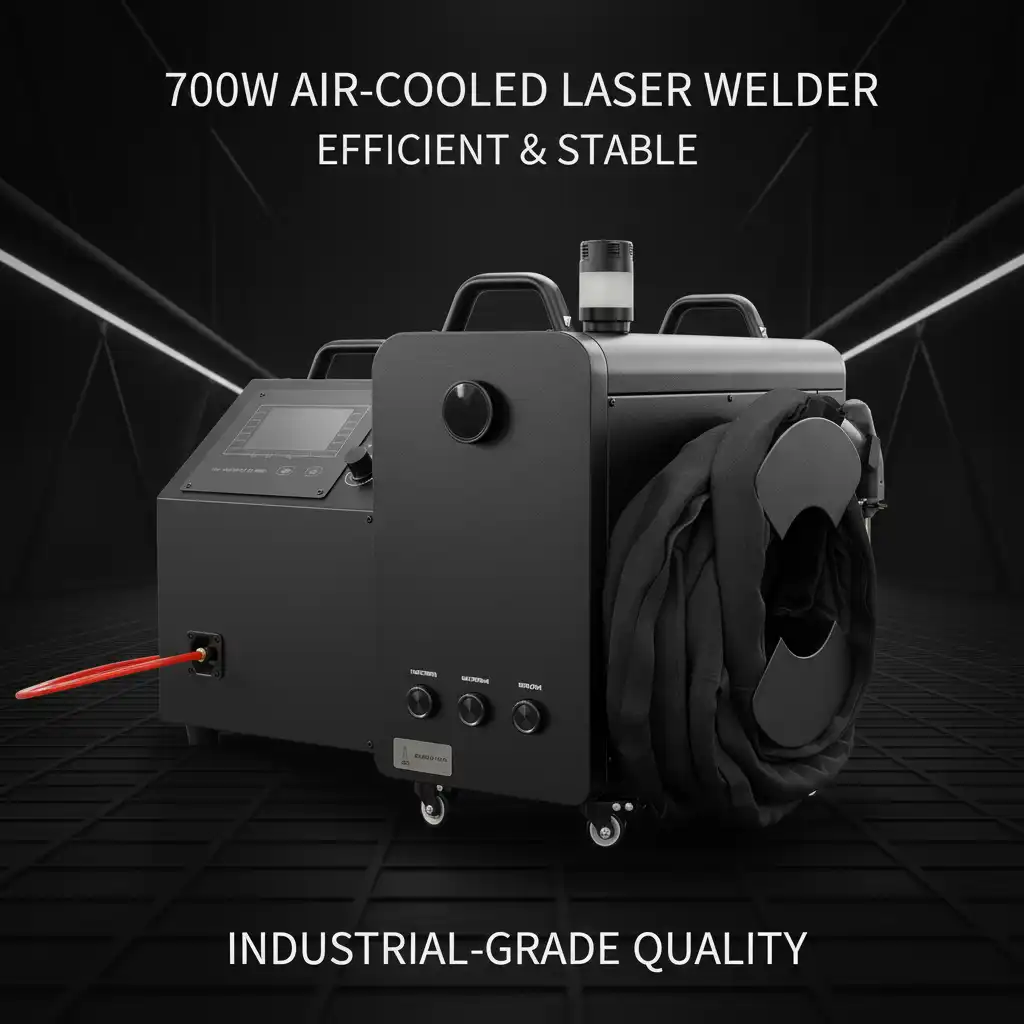
Choose 700W when thin-sheet control and portability come first.
The best 700W buyer has repeatable, clean parts, stable fit-up and a moderate workload. The machine should be selected from an accepted weld—not only from the lowest power or purchase price.
- Thin stainless, mild steel or galvanized sheet
- Cabinets, kitchenware, signs and light frames
- Small workshops and flexible repair stations
- Jobs where less heat and finishing can save time
Thicker sections or frequent aluminum
If the hardest normal job needs more penetration, higher travel speed or a wider process window, compare 1200W or 1500W using the same sample.
Uncontrolled gaps still need correction
Stable cutting, bending, clamping, joint location and filler strategy matter. More watts do not make variable fit-up disappear.
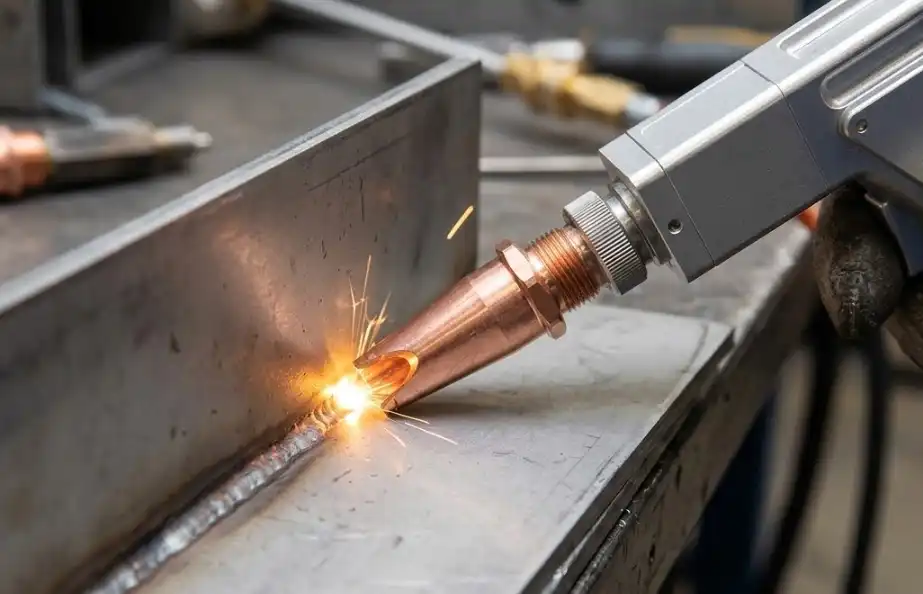
Remove the external chiller—not the process discipline.
An integrated air-cooled system reduces the machine footprint and daily water-system tasks. It can be easier to place near changing workstations, but the quoted ambient rating and permitted beam-on workload still need to match the real shop.
Where a 700W air-cooled welder can make practical sense
Use these as starting application families. The final decision comes from the material, joint, gap, required penetration, finish and accepted output.
Kitchenware and stainless products
Shelves, thin cabinets, sink components and visible stainless parts with controlled seams.
Check: surface finish and discolorationElectrical boxes and enclosures
Thin housings, covers, brackets and folded sheet assemblies with repeatable joints.
Check: corner fit-up and distortionSigns and display frames
Light frames, advertising structures and decorative work where seam appearance affects delivery.
Check: cosmetic acceptance criteriaDoors, windows and light hardware
Selected steel or galvanized components with accessible straight, lap and corner joints.
Check: coating fumes and joint accessRepair and maintenance parts
Known thin metals and controlled repairs that can be brought into a safe laser work area.
Check: alloy, coating and reflection pathSmall-batch sheet fabrication
Recurring parts where faster joining and reduced grinding can lower accepted-part cost.
Check: total job time, not travel speedTreat 0.3–2.0 mm as a trial range—not a universal limit
The existing 700W product direction is centered on thin sheet. Actual capability changes with material grade, joint design, gap, wire, beam settings, position, shielding gas and the required weld performance.
| Material | Early planning range | Common work | What to prove |
|---|---|---|---|
| Stainless steel | About 0.3–2.0 mm | Kitchenware, cabinets, shelves, decorative sheet | Penetration, color, distortion and finish |
| Carbon steel | About 0.5–2.0 mm | Light frames, brackets, panels and enclosures | Fusion, joint gap, bead profile and strength |
| Galvanized sheet | About 0.5–1.5 mm | Doors, ventilation parts and light housings | Coating behavior, porosity, fumes and corrosion repair |
| Aluminum | Thin sheet, case by case | Selected light parts and controlled repairs | Alloy, reflectivity, porosity, filler and process stability |
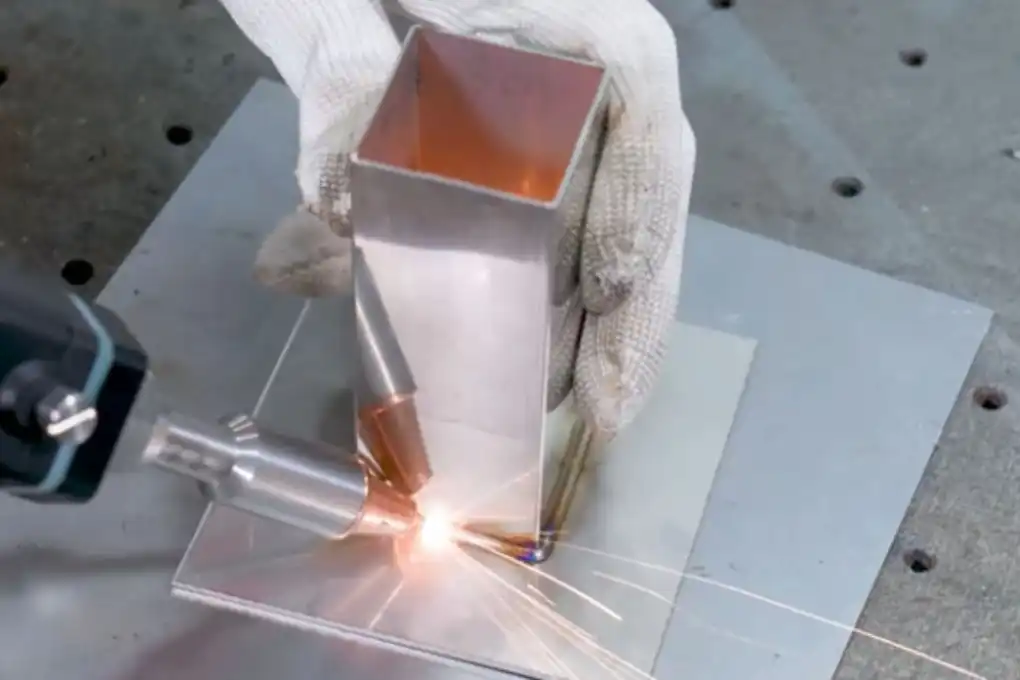
Approve the joint—not only the bright seam.
A clean-looking weld can still miss penetration, hide pores or fail the real service requirement. Define acceptance before the demonstration so the sample answers the buying question.
Use the specification as a quotation checklist
The final offer should name the exact source, cooling rating, welding head, cable, wire configuration, power supply, accessories, safety controls and service scope. Values below are the current product-page planning basis.
| Model direction | OP-AW700 compact handheld air-cooled laser welder |
| Laser output | 700W fiber laser welding system |
| Cooling method | Integrated air cooling; no external water-chiller cabinet |
| Operation | Handheld welding for accessible seams and light fabrication |
| Planning thickness | Commonly about 0.3–2.0 mm depending on material, joint and process |
| Material direction | Stainless steel, carbon steel, galvanized sheet and selected thin aluminum work |
| Wire feeding | Optional according to controlled gap, bead volume and metallurgy |
| Support | Sample testing, configuration review, export preparation and online guidance |
Configure the system around accepted production
The welder is only one part of the process. Stable fixtures, suitable filler, shielding, extraction and safety controls turn a sample result into repeatable work.
Fixture and fit-up
Hold seam position, gap and part orientation inside the validated process window.
Wire feeder when needed
Use filler for a defined gap, bead or metallurgy need—not as a substitute for uncontrolled parts.
Shielding and extraction
Select gas and source capture around the material, coating and weld quality target.
Laser-controlled work area
Plan barriers, access control, interlocks, beam management, PPE and fire controls.
Buy the lowest power that meets the accepted-output target
More output can expand the process window, but the value appears only when it improves accepted parts per shift or avoids extra work on the real job.
Start here for controlled light work
Best when the production mix is thin, accessible and moderate, and the sample already meets the weld requirement.
- Small workshop footprint
- Selected repair and light fabrication
- Lowest-power option in this comparison
More headroom for regular sheet work
Compare when recurring parts reach the edge of the 700W result, aluminum is frequent or throughput needs increase.
- Higher output while retaining air cooling
- Broader material and thickness trials
- Useful next comparison step
Choose from workload evidence
Evaluate for more demanding thickness, speed or daily output. Confirm cooling, site power and process quality in the exact configuration.
- More usable power headroom
- Higher site and safety-planning importance
- Trial the same hardest normal part
Prove the 700W process before the machine ships
A representative sample test should include the difficult normal condition, record the main settings and use the same acceptance logic planned for production.
Share the job
Material, thickness, joint, gap, position, photos and drawing.
Define acceptance
Penetration, appearance, distortion, strength and inspection needs.
Run boundary trials
Test normal and difficult gaps, parts and production conditions.
Compare output
Measure accepted cycle time, finishing, rework and operator handling.
Lock the quote
Confirm power, head, wire, gas, safety, electrical and support scope.
Plan Class 4 controls before delivery.
An open-beam handheld fiber laser can create serious direct and reflected radiation hazards, fire risk and welding fumes. A compact machine is not permission to use it on an uncontrolled open shop floor.
Review OSHA laser-hazard informationRestrict access
Use a validated enclosure or laser-controlled area with barriers, signs and entry controls.
Control reflections
Assess direct, diffuse and specular paths for each part, fixture and work position.
Match the wavelength
Use a competent laser-safety program and correctly rated eyewear, helmet and protective clothing.
Capture at source
Review metal and coating hazards, provide suitable extraction and maintain fire controls.
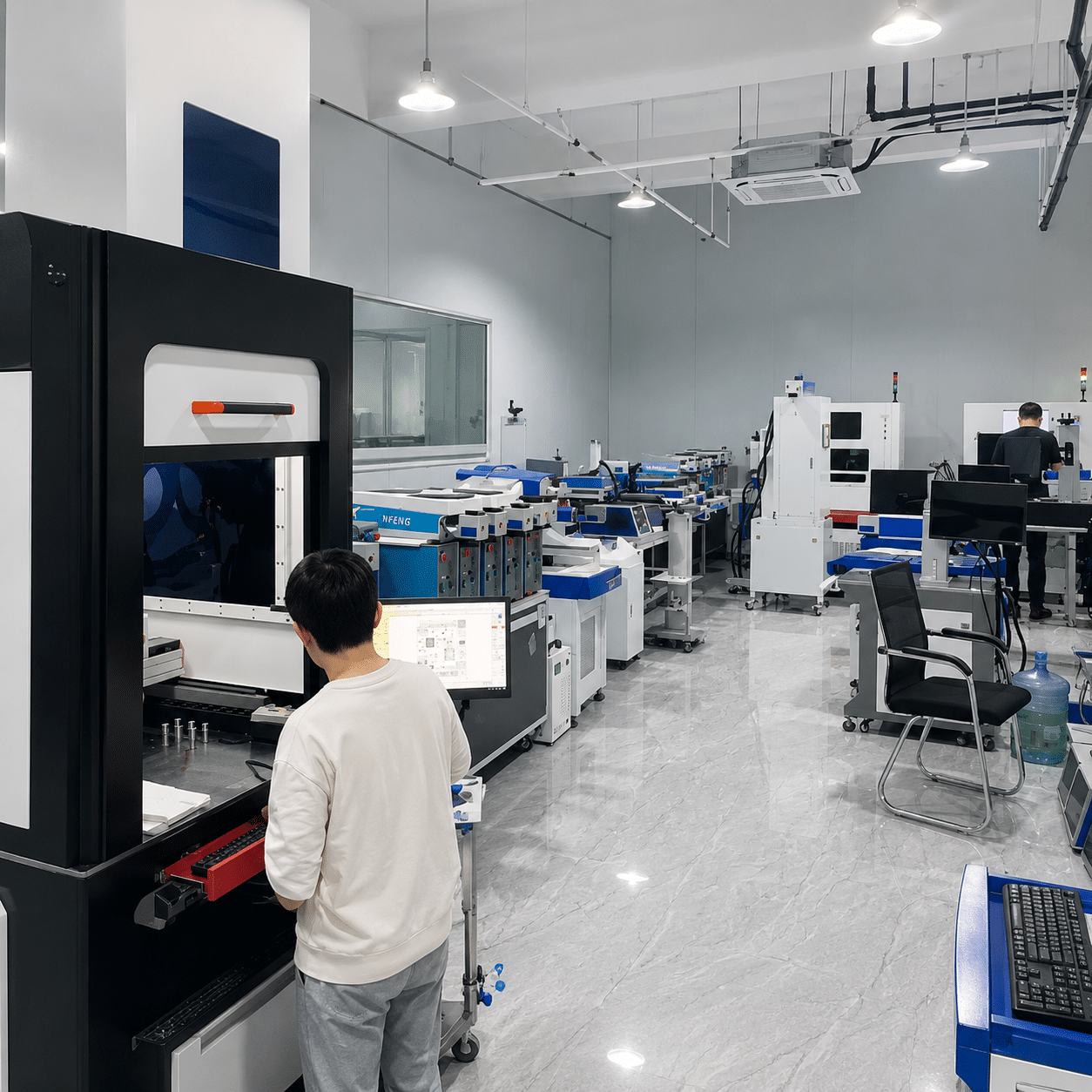
One project path from sample to delivery
OceanPlayer Laser supports machine selection, application testing, configuration review, export preparation, operation guidance and after-sales communication for international buyers.
Compare the full welding system before requesting a quote
These current OceanPlayer Laser pages help you compare cooling, wire feeding, broader power choices, process basics and ownership cost.
Air-Cooled Laser Welder
Compare compact air-cooled systems by workload and workshop fit.
Explore air-cooled systems → System OverviewHandheld Laser Welding Machine
Review manual welding systems, applications and buying factors.
Explore handheld welders → Gap and Bead ControlLaser Welder with Wire Feeder
Understand when filler wire supports a defined joint requirement.
Compare wire feeding → Power Comparison1000W / 1500W / 2000W
Compare higher-power handheld laser welding directions.
Compare power classes → Buyer EducationLaser Welding Guide
Review joints, materials, gas, wire, cooling and validation.
Read the welding guide → Budget PlanningHandheld Welder Cost
Look beyond machine price to installation, safety and accepted output.
Plan ownership cost → Project ProofCase Studies
Review applications and practical project evidence.
See project examples → Engineering SupportContact Sales
Send the material, joint, workload and destination for a matched quote.
Discuss the project →Questions buyers ask before choosing a 700W air-cooled welder
What is a 700W air-cooled laser welder used for?
What thickness can a 700W laser welder handle?
Does a 700W air-cooled welder need a water chiller?
Is 700W enough for a small repair shop?
When should I choose 1200W instead of 700W?
Does the 700W laser welder need filler wire?
Can a clean-looking bead prove the weld is strong?
Can OceanPlayer Laser test my parts before I order?
Send the joint. Prove the weld. Then configure the machine.
Tell OceanPlayer Laser the alloy, thickness, gap, position, accepted weld requirement and daily output. We will help determine whether 700W is sufficient or the next power class is the better investment.