
Laser Rust Removal vs Chemical Methods
Laser rust removal and chemical rust removal solve different production problems. Laser cleaning is often stronger for dry, localized, line-of-sight work where repeatability and selective control matter. Chemical methods can be stronger for immersed batches, internal geometry and low-capital intermittent work. The correct choice depends on the alloy, rust layer, final surface requirement, throughput, utilities, waste route and safety controls—not a universal speed claim.
Choose laser first for localized or repeatable rust removal without a liquid bath. Choose a chemical route first for immersed batches or hard-to-reach geometry. Test both when high-strength steel, tight dimensions, a valuable finish or coating adhesion controls the decision.
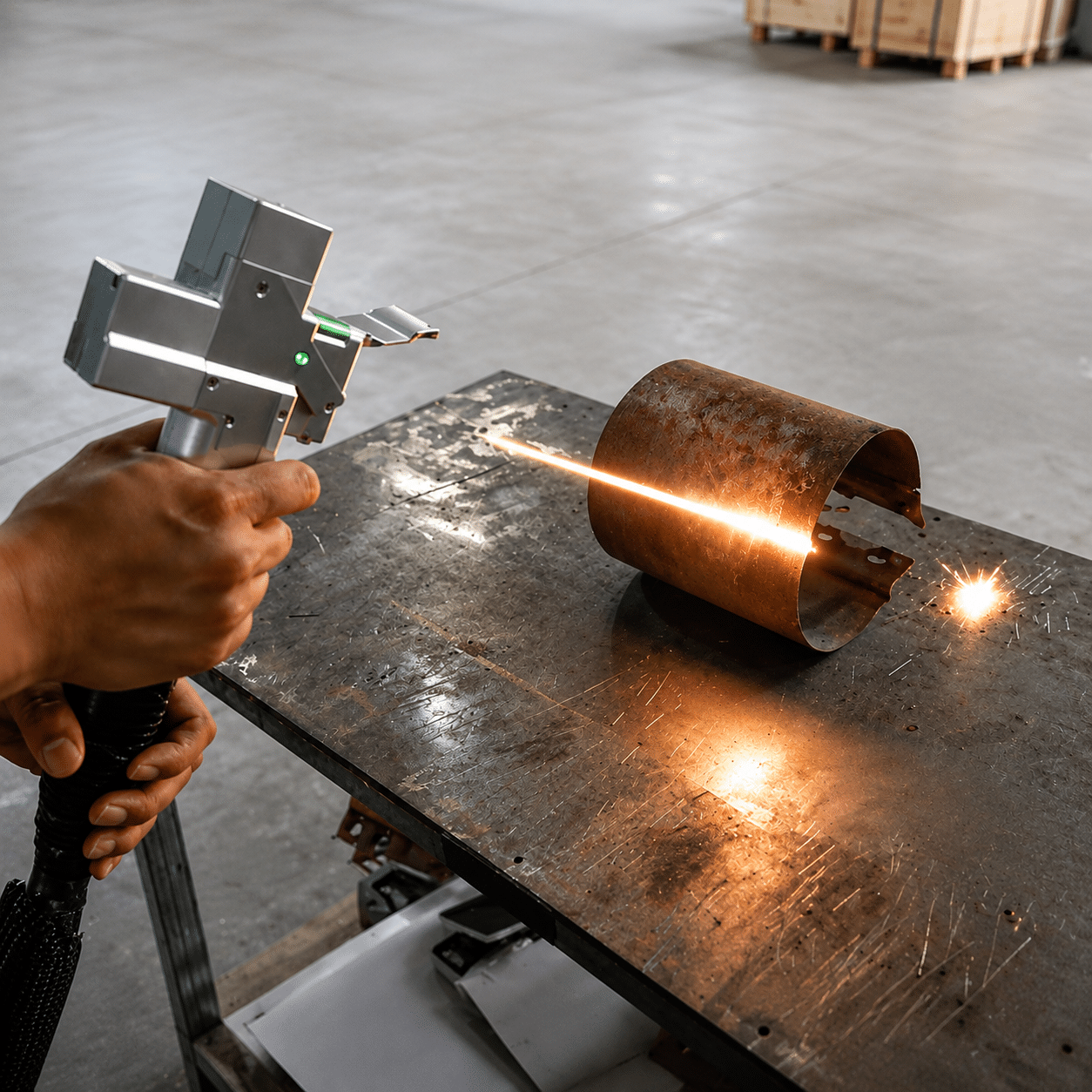 Compare the complete process
Also verify surface profile, residue, dimensions, adhesion readiness and the complete return-to-production cycle.
Start with the part and finish, not the method.
A visually bright surface can still be unacceptable. The best process is the one that meets the specified cleanliness, profile, dimensions and downstream performance at the lowest complete risk-adjusted cost.
Neither route is automatically faster, greener or safer for every rust-removal job.
No chemical bath; strong fit for local zones, automation and immediate visual feedback.
Liquids can contact recesses and internal surfaces that an optical beam cannot see directly.
Check profile, salts/residue, flash rust, dimensions and downstream coating or joining performance.
Which rust-removal method is better?
Laser rust removal usually earns the first trial when the job is localized, repeatable and accessible to the beam. Typical examples include weld zones, machinery frames, molds, tools, automotive parts, repair areas and production fixtures. A controlled scan can remove oxide without adding abrasive media or immersing the part. The tradeoff is that the process requires optical line of sight, qualified parameters, laser safety controls and source-capture extraction.
Chemical rust removal usually earns the first trial when liquid access is the main advantage. Immersion can treat batches of small parts, recesses, threads, undercuts and internal surfaces that are difficult to scan. Acids can remove rust quickly but can also attack base metal, create corrosive waste and introduce hydrogen-related risk in susceptible steels. Milder chelating systems may reduce those risks, but often need more dwell time and still require rinsing, drying and bath management.
Localized rust; large parts that should not be immersed; production cells; repeatable scan paths; dry workflow; masking or liquid containment is undesirable; waste volume and chemical handling are major constraints.
High-volume baskets of small parts; threads and internal passages; complex three-dimensional access; low utilization; an established wash/rinse/dry line already exists; the alloy and downstream process tolerate the chemistry.
High-strength steel, unknown alloy, valuable patina, thin material, tight tolerance, mixed rust and coating, adhesion-critical preparation or an acceptance requirement that cannot tolerate either residue or surface change.
Laser and chemicals reach the result through different process chains.
The mechanism determines access, utilities, waste, inspection and the surface risks that must be qualified.
Optical energy removes the oxide layer
A scanning beam delivers controlled energy to the rusted surface. Depending on wavelength, pulse structure and process window, removal can involve ablation, rapid thermal expansion, vapor pressure and vibration at the oxide–metal interface.
Pulse energy, frequency, spot size, focus, scan width, speed and overlap set the local interaction.
The rust fragments, detaches, melts or vaporizes while the substrate receives some heat.
Particles, fumes and vapors leave the work zone and require suitable local extraction and filtration.
Non-contact does not mean zero substrate effect. Too much fluence, dwell or overlap can alter color, roughness, hardness or geometry. A 2024 Q235 study measured surface morphology and roughness after laser removal of a paint-rust layer.
Chemistry dissolves, complexes or converts corrosion
The part is immersed, brushed, sprayed or wrapped with a chemical system. Acids dissolve iron oxides and may attack exposed metal. Chelants bind metal ions more selectively. Converters react with oxide rather than fully removing it.
Concentration, temperature, agitation, access and dwell determine reaction uniformity.
Inhibitors and bath monitoring can limit base-metal attack, but do not remove every alloy-specific risk.
Residual chemistry and water must be removed; the surface may need immediate protection against flash rust.
The liquid reaches complex geometry, but the process boundary includes bath condition, carryover, rinse water, drying, wastewater and chemical-compatible downstream steps.
Separate acids, chelants and converters before making a fair comparison.
“Chemical rust removal” can describe products with very different speed, residue, safety and final-surface behavior.
Fast oxide dissolution with a narrow control window
Hydrochloric, phosphoric, sulfuric, citric and proprietary acid systems can dissolve rust. Strong acids may remove scale rapidly, but exposed metal attack, pitting, fumes, dimensional loss and hydrogen uptake must be considered. Inhibitors can help control base-metal attack but do not make every steel safe.
Best fit: established industrial bath with alloy-specific controlsMilder handling with longer dwell
Chelants bind dissolved iron and can remove corrosion with less aggressive acid attack in many applications. They can be useful for restoration and small parts, but bath loading, temperature, time, residue and rinse/dry steps still control performance.
Best fit: sensitive parts, restoration and soak-compatible geometryStabilization before a compatible coating
Converters react with remaining oxide and create a new layer intended to support a specified coating system. They are useful where complete removal is impractical, but the result is not bare metal. Compatibility, film thickness and coating instructions matter.
Best fit: maintenance coating systems designed around conversionImmersion plus electrical current
Electrolysis can loosen rust on conductive parts while preserving detail, which can suit restoration work. It requires a tank, electrolyte, electrical setup, post-rinse and rapid drying. Hydrogen evolution and material compatibility require competent process control.
Best fit: removable parts where detail preservation outranks speedLaser rust removal vs chemical methods: the complete picture
Use this table to define a trial and quotation. The answer can change with part geometry, rust grade, alloy and the required downstream finish.
| Decision factor | Laser rust removal | Chemical rust removal |
|---|---|---|
| Removal mechanism | Scanning optical energy removes oxide through ablation and rapid thermomechanical effects. | Acid dissolution, chelation, electrochemical action or chemical conversion depending on the product. |
| Access | Line of sight required. Focus and scan angle must reach the contaminated surface. | Liquid contact required. Immersion can reach threads, recesses and internal geometry if wetting and drainage are adequate. |
| Part size | Strong fit for large, fixed or difficult-to-immerse parts and localized repair zones. | Strong fit for parts that fit the bath or can be wrapped, sprayed or circulated internally. |
| Batch processing | Requires scanning or automation for each surface; fixtures can increase repeatability. | Many small parts can be immersed together, subject to part contact, agitation and bath uniformity. |
| Selectivity | High spatial control after the energy window and scan path are qualified. | Masking, inhibitor chemistry and dwell control selectivity; liquids react wherever they contact. |
| Base-metal risk | Excess energy or dwell can change roughness, color, hardness, coating or dimensions. | Over-pickling can cause metal loss, pitting, smut, dimensional change and hydrogen uptake. |
| High-strength steel | Avoids acid pickling but still requires thermal and metallurgical qualification. | Hydrogen embrittlement controls may be required; material strength and process specification are critical. |
| Surface residue | No liquid residue, but deposited/redeposited particles and plume products must be evaluated. | Rinsing, neutralization and drying must remove chemistry, dissolved salts and carryover. |
| Flash rust | A dry process can reduce water-driven flash rust, but the bare surface can still reoxidize in humid air. | Water-based rinse and drying create a clear flash-rust risk unless the next protective step is controlled. |
| Utilities | Electrical supply, extraction, controlled area/enclosure, interlocks and possibly automation. | Chemical storage, compatible tanks/pumps, ventilation, water, rinse stages, drying and wastewater management. |
| Consumables | Extractor filters, protective windows/optics and other scheduled maintenance items. | Chemicals, inhibitors, bath replenishment, test kits, rinse water, neutralizer and PPE. |
| Waste | Concentrated particles and filter waste based on the removed contamination. | Spent bath, rinse water, sludge and containers; classification depends on chemistry and contaminants. |
| Speed | Can be fast on localized, accessible zones; multiple passes and complex geometry reduce output. | Can process many small parts at once; dwell, rinse, dry and bath loading determine total cycle. |
| Automation | Strong fit for robotic paths, recipes and process monitoring after qualification. | Strong fit for automated immersion lines, conveyors and monitored bath sequences. |
| Best economic pattern | Frequent or high-value use where capital is spread over many productive hours and chemical handling is avoided. | Intermittent work, batch immersion or an existing chemical line where lower incremental capital outweighs recurring chemistry and wastewater cost. |
| Evidence required | For either method: accepted cleanliness, profile/roughness, dimensions, residue or salt checks, flash-rust observation, coating or joining performance, complete cycle time, utilities, waste and operator controls. | |
Planning comparison only. A proprietary chemical, laser wavelength, beam delivery, alloy or acceptance specification can reverse the general direction above.
Judge the surface that the next operation receives.
Rust can disappear while salts, residues, an unsuitable profile or hidden material damage remains. Define acceptance around the next manufacturing or service step.
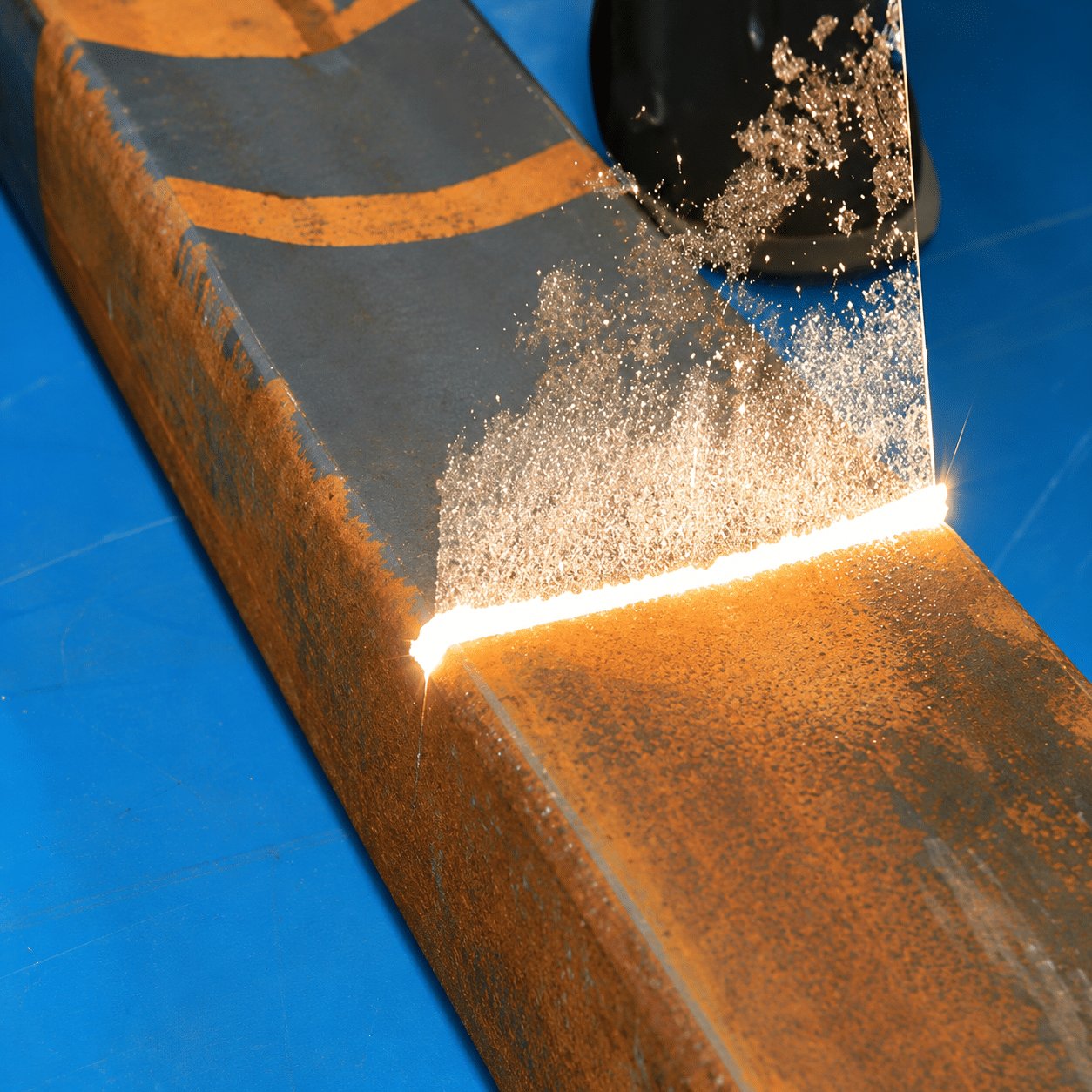
Image shows a representative laser rust-removal result. It does not by itself prove coating readiness, salt removal, profile, dimensional conformity or long-term corrosion performance.
Do not compare machine price with a bottle of rust remover.
Compare complete, accepted output. Include the work before and after the visible rust disappears.
Laser cleaning cost boundary
Capital-ledChemical cleaning cost boundary
Consumption-ledAccepted cost per part or m² = capital allocation + labor + complete cycle time + utilities + consumables + waste + safety/compliance + inspection + rework + downtimeNeither method is automatically “green” or hazard-free.
Laser concentrates hazards around radiation, plume and electrical/fire controls. Chemical methods concentrate hazards around corrosivity, contact, vapor, storage, spills and liquid waste.
Laser cleaning controls
Rust-removal systems are commonly high-power industrial lasers. The hazard assessment must include direct, scattered and reflected energy, especially around reflective metal.
The plume composition depends on rust, paint, oil, plating and base material. Use source-capture extraction and filters selected for the actual contaminant.
Hot particles, combustible coatings, electrical systems, moving equipment, compressed gas and automation introduce hazards beyond eye and skin exposure.
Use the enclosure, interlocks, access restrictions, training, signage and PPE required by the product design, hazard analysis and applicable standards.
Chemical cleaning controls
Acids and alkalis can create severe eye, skin and respiratory hazards. The SDS, concentration, temperature and method of application control the exposure plan.
Mixing incompatible cleaners or neutralizers can produce heat, pressure or toxic gas. Tanks, pumps, seals and containers must match the chemistry.
Acid-related hydrogen charging is a specific concern for susceptible high-strength steels. Apply the material and process specification—not a generic soak time.
Spent solution and rinse water may be corrosive or hazardous because of pH, dissolved metals or removed coatings. Characterize waste under local rules.
Choose by geometry, volume and the next process.
The same factory may use laser for one rusted component and chemistry for another.
Large machinery and fixed structures
Laser often earns the first trial because the asset is difficult to immerse and cleaning can be localized. Confirm access, extraction and the accepted area rate.
Typical first route: laserSmall fasteners and batch parts
Immersion can treat many parts and hidden surfaces simultaneously. High-strength fasteners require hydrogen-embrittlement controls and the correct specification.
Typical first route: chemical lineWeld and coating preparation
Laser can create a dry, targeted preparation zone. Chemical methods can clean complete parts. Test adhesion, weld quality, residues and the time until the next operation.
Typical first route: controlled comparisonAutomotive and remanufacturing
Laser suits repeatable cells and selective areas around features. Chemical soaking suits removable components and complex internal geometry. Part mix decides the economics.
Typical first route: split by component familyHeritage and restoration
Patina, inscriptions, thin sections and unknown repairs make aggressive removal risky. Milder chelation, electrolysis or carefully qualified pulsed laser may be appropriate.
Typical first route: conservator-led sample testShip, rail and heavy fabrication
Laser can avoid liquid containment on local zones, while chemistry may fit removable parts or established treatment lines. Broad areas may require a third-method comparison such as blasting.
Typical first route: compare all viable processesRun a trial that procurement can actually use.
Compare both routes on representative rust, the same acceptance criteria and the complete stop-to-start cycle.
Identify the base material
Alloy, heat treatment, hardness/strength, thickness, coating, prior repairs, dimensions and critical features.
Classify the corrosion
Light flash rust, atmospheric rust, scale, pitting, mixed paint-rust layer, salts, oil or unknown deposit; record area and thickness.
Define the required final surface
Bare metal, retained patina, coating-ready, weld-ready, electrically conductive, dimensionally unchanged or converter-compatible.
Freeze the acceptance tests
Visual grade, roughness/profile, dust, salts/residue, dimensions, hardness/metallurgy where relevant and downstream adhesion or joining tests.
Measure the complete cycle
Setup, masking, access, cleaning, repositioning, rinse or extraction, drying, inspection, cleanup and return to production.
Record utilities and waste
Electricity, extraction and filters versus chemistry, water, ventilation, heating, neutralization, drying and waste characterization.
Inspect immediately and after exposure
Check flash rust, reoxidation, residue, staining and the surface after the specified humidity, storage or coating delay.
Approve a controlled process
Lock parameters, bath controls, safe work method, inspection frequency, maintenance, retraining and change-control triggers.
Send the rusted part—not just the surface area.
Oceanplayer can review whether laser cleaning deserves a controlled trial and recommend a pulsed or CW starting route. A useful request includes the alloy, rust condition, final-surface requirement and production target.
Turn the comparison into a measured project.
Laser Cleaning Feasibility Checker
Screen the material, contamination, geometry and surface risks before choosing power.
Check feasibility → Laser routePulsed vs CW Comparison Tool
Compare control, heat input and output once laser cleaning is feasible.
Compare laser types → Production planningCleaning Efficiency Calculator
Estimate accepted coverage from validated width, speed, overlap and passes.
Plan throughput → Tool centerFind My Cleaner
Move through machine selection, parameters, site planning and cost tools.
Open tool center →Laser vs chemical rust removal FAQ
Short answers to common maintenance, purchasing and process questions.
Is laser rust removal better than chemical rust removal?
Not universally. Laser is often stronger for dry, localized, repeatable and line-of-sight cleaning. Chemical methods are often stronger for immersed batches, threads, recesses and internal geometry. The alloy, rust layer, final surface, annual volume, utilities, waste and safety controls determine which method should be tested first.
Is laser rust removal faster than chemicals?
It can be faster on accessible localized zones because there is no bath, rinse or drying stage. Chemicals can process many small parts simultaneously and reach complex geometry. Compare the complete cycle: setup, treatment, repositioning, rinse or extraction, drying, inspection and return to production.
Does laser rust removal damage metal?
It can if the process window is wrong. Excess fluence, dwell, overlap or heat accumulation can change color, roughness, hardness, coating or dimensions. A qualified process matches wavelength, pulse structure, focus and scan parameters to the rust and substrate.
Can acid rust remover damage steel?
Yes. Acid can attack exposed base metal after the oxide is removed, causing pitting, smut, dimensional loss and hydrogen uptake. Concentration, inhibitor, temperature, dwell, agitation, alloy and bath condition must be controlled.
What is the hydrogen-embrittlement risk?
Acid cleaning and other hydrogen-charging processes can create serious risk in susceptible high-strength steels. ASTM B849 addresses pretreatments intended to reduce susceptibility for certain iron or steel processing routes. Follow the applicable material and manufacturing specification rather than a generic cleaning recipe.
Does laser cleaning create waste?
Yes. It avoids a liquid bath and abrasive media, but rust and other contamination become airborne particles, fumes or deposited debris. Source extraction captures material in filters, which must be handled according to its contents.
Are chemical rust removers environmentally friendly?
Some products are milder than strong mineral acids, but every process still has a material, water, energy, packaging and waste footprint. Evaluate the actual formulation, bath life, rinse water, dissolved metals, neutralization and local disposal route.
Can a rust converter replace rust removal?
Only when the coating system is designed for it. A converter reacts with remaining oxide and leaves a new layer; it does not produce the same bare-metal surface as complete removal. Follow the converter and topcoat manufacturer's compatibility and preparation instructions.
Which method is better before painting?
The better method is the one that produces the specified cleanliness, profile and residue level for the coating. Laser may provide dry targeted preparation; a chemical line may clean full geometry. Validate adhesion, soluble residue, dust, flash rust and the coating delay.
Which laser is used for rust removal?
Pulsed fiber lasers are commonly selected where surface control and lower average heat input matter. CW fiber lasers are often considered for heavier rust and larger robust surfaces where output is more important. A sample test should determine the practical type and power range.
Can laser cleaning remove rust from aluminum or copper?
Aluminum and copper do not form iron rust, but they can carry oxide, corrosion products or contamination. Their optical and thermal behavior differs from steel, so do not reuse a steel rust-removal recipe. Treat them as separate application-development projects.
What should I send for a laser rust-removal test?
Send a representative part or coupon, alloy and heat-treatment information, clear photos, rust and coating identity, critical dimensions, required final surface, downstream operation, annual volume, access conditions and target cycle time.