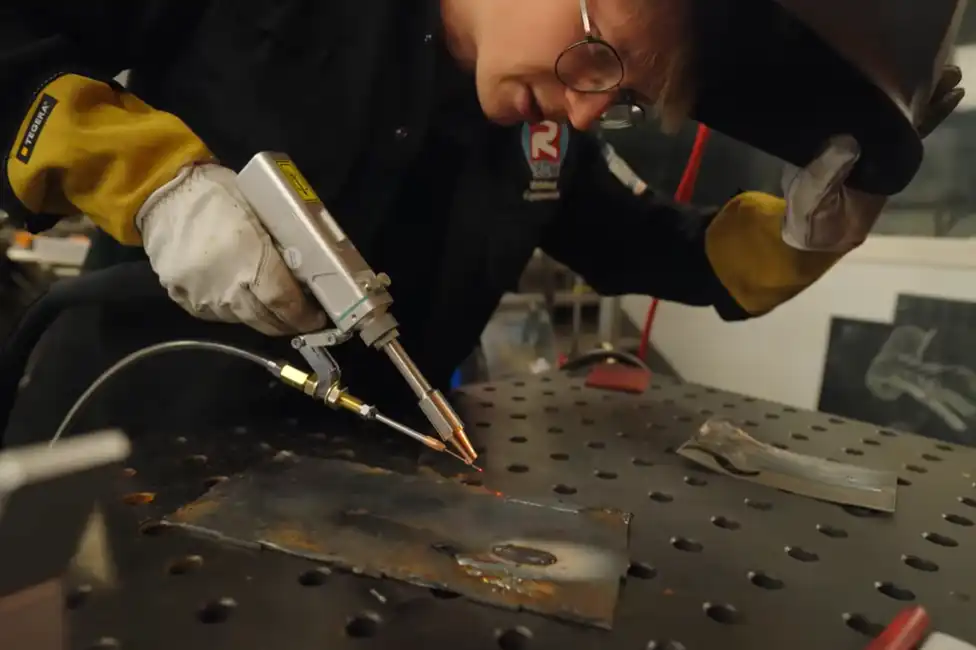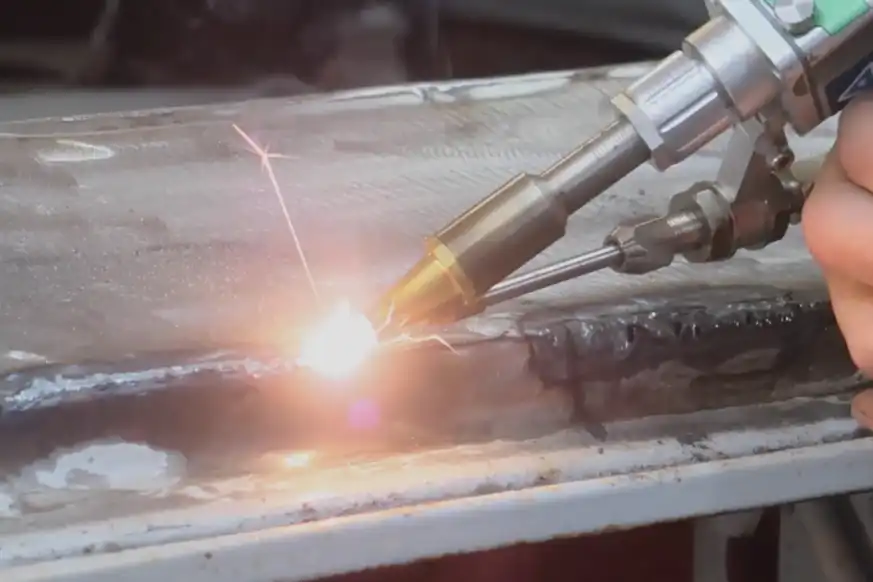
Laser Welder with Wire Feeder for Stronger Seams, Better Gap Filling and Cleaner Welds.
Oceanplayer laser welders with wire feeder help improve weld formation when parts have small gaps, uneven fit-up or thicker joints. Add filler wire for stronger seams, smoother bead shape and more forgiving production on stainless steel, carbon steel, galvanized sheet and aluminum.
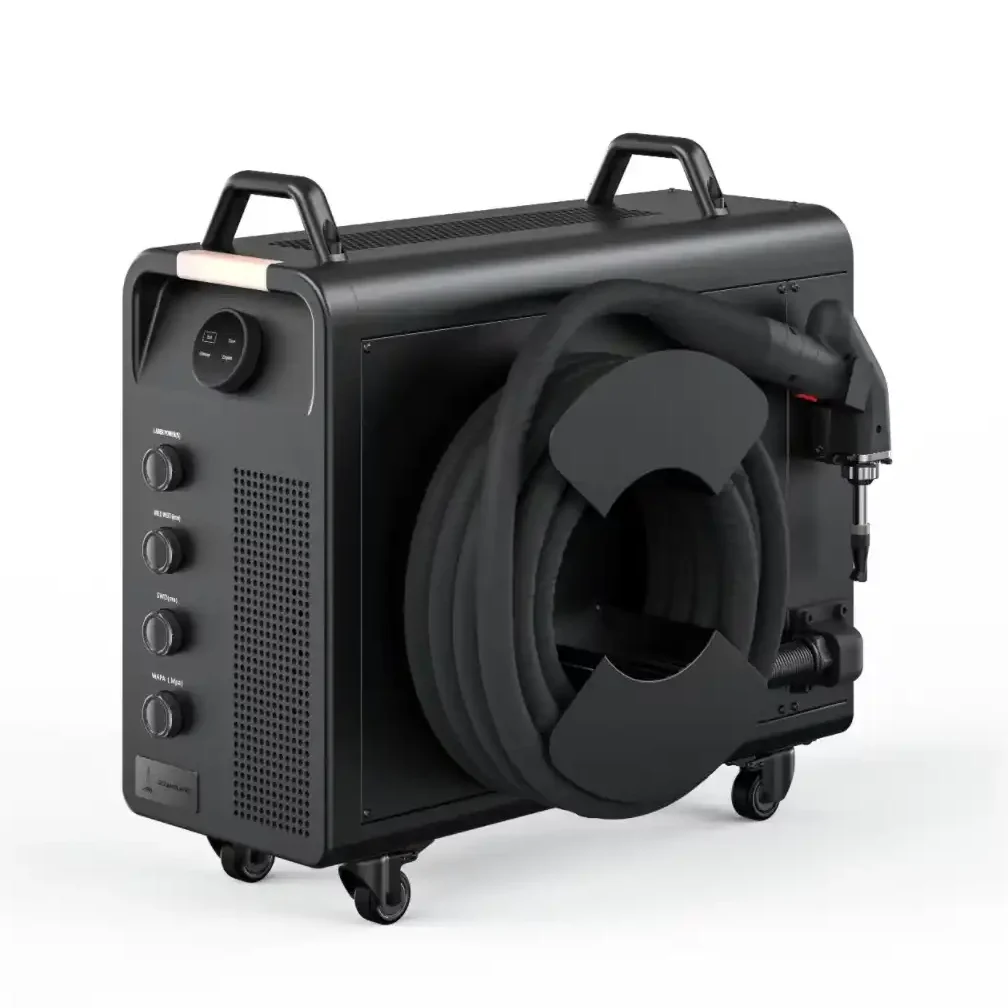
- Automatic wire feeding
- Better gap tolerance
- Sample welding test available
Improve welding results when real parts have gaps, edges and fit-up variation
Laser welding without filler wire works best when parts fit tightly. A wire feeder adds controlled filler metal, helping create a fuller seam when the joint needs more material or better edge bridging.
Better Gap Filling
Filler wire helps bridge small joint gaps, uneven edges and corner joints where a pure fusion weld may look underfilled.
Smoother Weld Appearance
Controlled wire feeding can produce a fuller bead with more consistent seam shape, especially on visible stainless steel and sheet metal products.
More Stable Production
Adjustable wire speed, laser power and wobble width help tune the process for different materials, thicknesses and joint styles.
Where a laser welder with wire feeder gives you a clear advantage
This configuration is especially useful when weld strength, seam fullness and surface appearance matter, but part fit-up is not always perfect.
- Stainless steel cabinets, doors, frames, shelves and kitchen equipment
- Carbon steel frames, brackets, enclosures, machinery covers and structural parts
- Galvanized sheet metal welding where edges need a fuller seam
- Aluminum fabrication requiring filler material for better joint formation
- Repair welding, edge build-up and parts with small dimensional variation
- Visible welds where bead consistency and finishing time are important
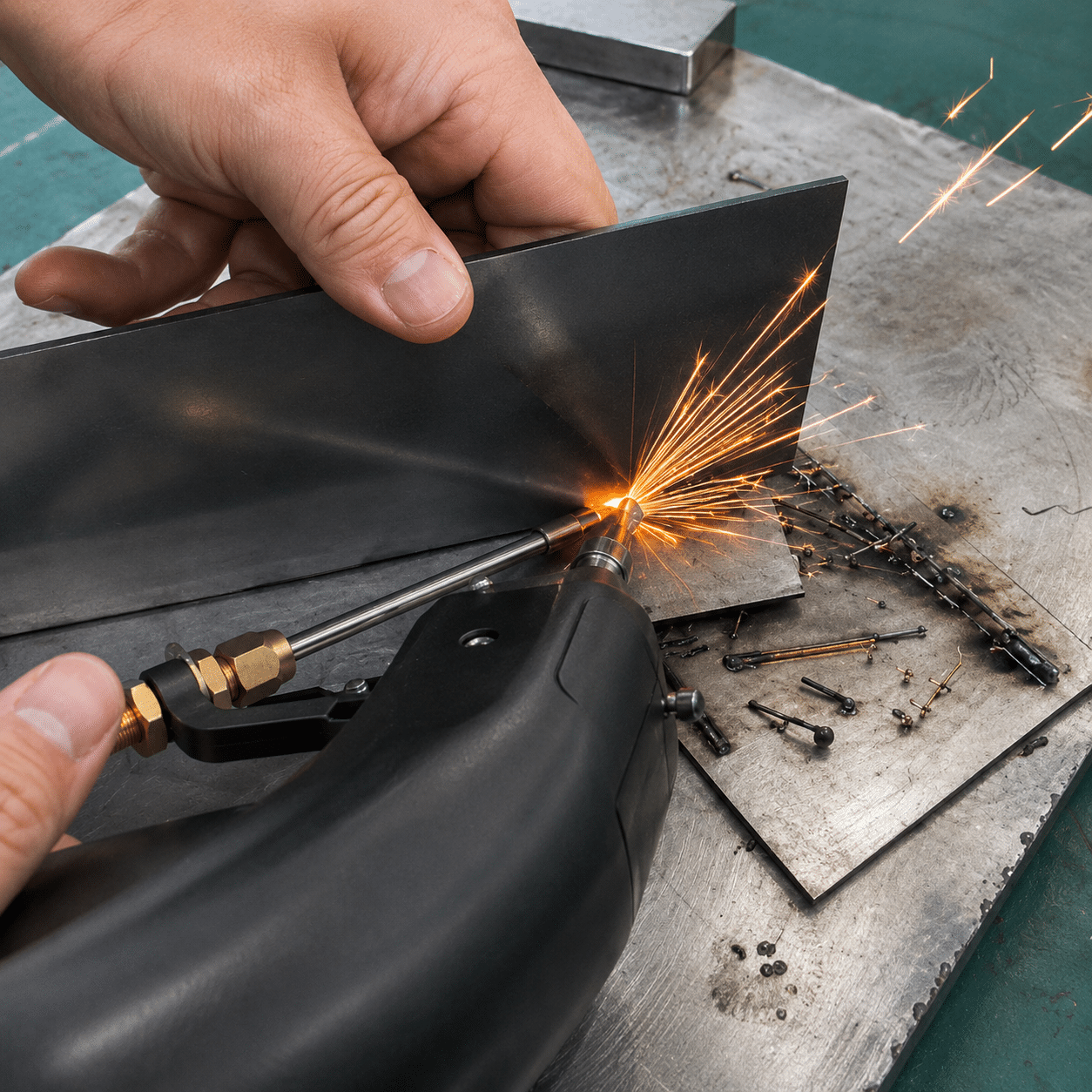
Match wire feeding to your joint gap and weld requirement
A correct setup depends on material thickness, joint design, gap size, wire diameter and target weld appearance. Sample testing helps confirm the best parameters before ordering.
| Working Condition | Recommended Setup | Why It Helps | Common Result |
|---|---|---|---|
| Tight lap or butt joint | Laser welding with optional light wire feed | Adds seam volume when appearance needs improvement | Cleaner surface and reduced finishing |
| Small visible joint gap | Wire feeder with matched wire diameter | Filler metal bridges the gap and supports bead shape | Fuller seam and fewer undercut defects |
| Corner or edge welding | Wire feeder plus adjustable wobble width | Stabilizes molten pool on edges and corners | More consistent corner seam |
| Aluminum or thicker part | Higher power and suitable aluminum wire | Supports fusion and filler addition at the same time | Better joint formation and strength |
Check the details that matter before choosing a wire feed laser welder
The right machine should not only weld fast. It should handle your real part gaps, wire type, operator habits and daily production volume.
Can it handle my gap?
Share photos, material thickness and gap size so the welding test can confirm if wire feeding gives the seam result you need.
Will the seam look clean?
Wire speed, laser power, swing width and travel speed all affect bead shape. Parameter support helps shorten setup time.
Which wire should I use?
Stainless steel, carbon steel and aluminum require different wire choices. Matching wire to base material improves weld quality.
Choose the right wire material and diameter for your welding job
Wire selection affects seam strength, bead appearance and post-weld finishing. Oceanplayer can help match wire feeder settings to the material and joint design.
| Base Material | Common Wire Choice | Typical Wire Diameter | Typical Applications |
|---|---|---|---|
| Stainless Steel | Stainless welding wire | 0.8mm / 1.0mm / 1.2mm | Cabinets, tanks, doors, kitchen equipment, visible seams |
| Carbon Steel | Mild steel welding wire | 0.8mm / 1.0mm / 1.2mm / 1.6mm | Frames, brackets, machinery parts and sheet metal fabrication |
| Galvanized Sheet | Matched steel wire | 0.8mm / 1.0mm / 1.2mm | Enclosures, ducting, panels and light steel products |
| Aluminum | Aluminum welding wire | 1.0mm / 1.2mm / 1.6mm | Aluminum frames, covers, thin plates and custom fabrication |
See how filler wire improves seam fullness and edge coverage
Before choosing a configuration, compare weld results on your own material. A test weld can show bead appearance, penetration, filling performance and required finishing work.
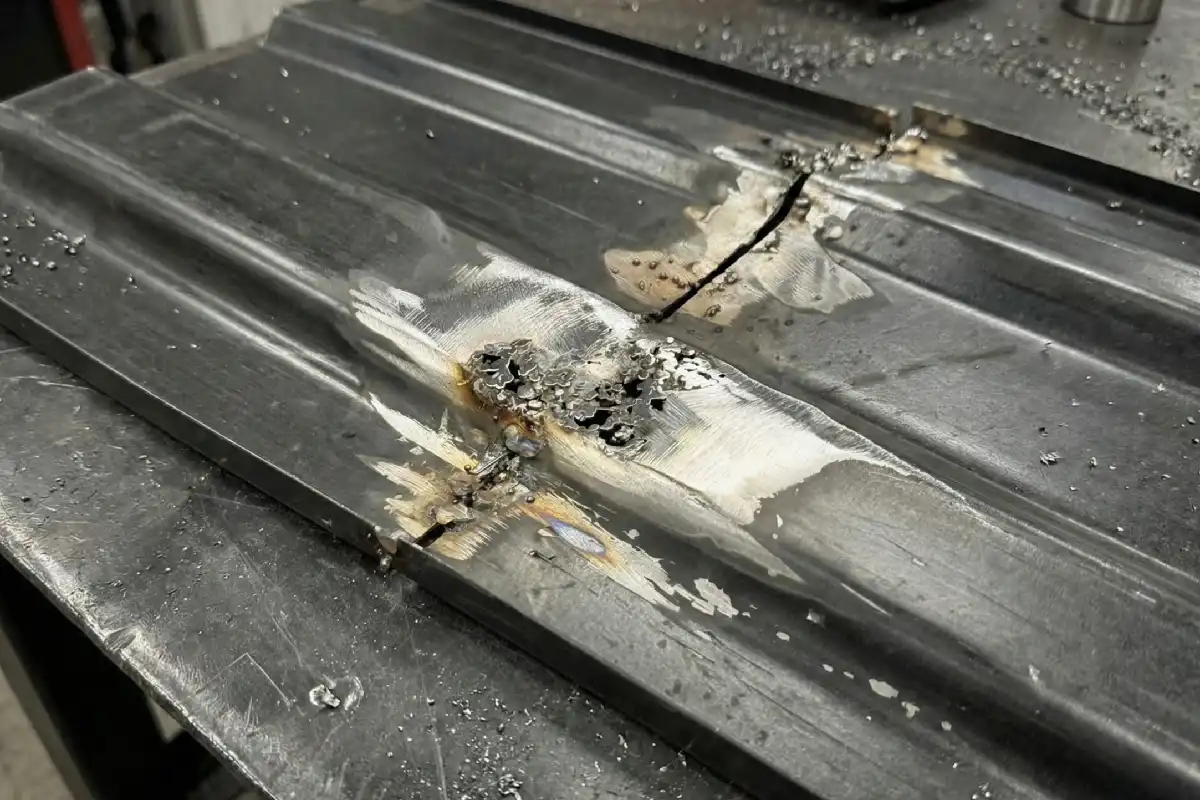
Small gaps can leave the seam underfilled
When parts do not fit tightly, pure fusion welding may leave a shallow bead, edge undercut or appearance that needs more finishing.
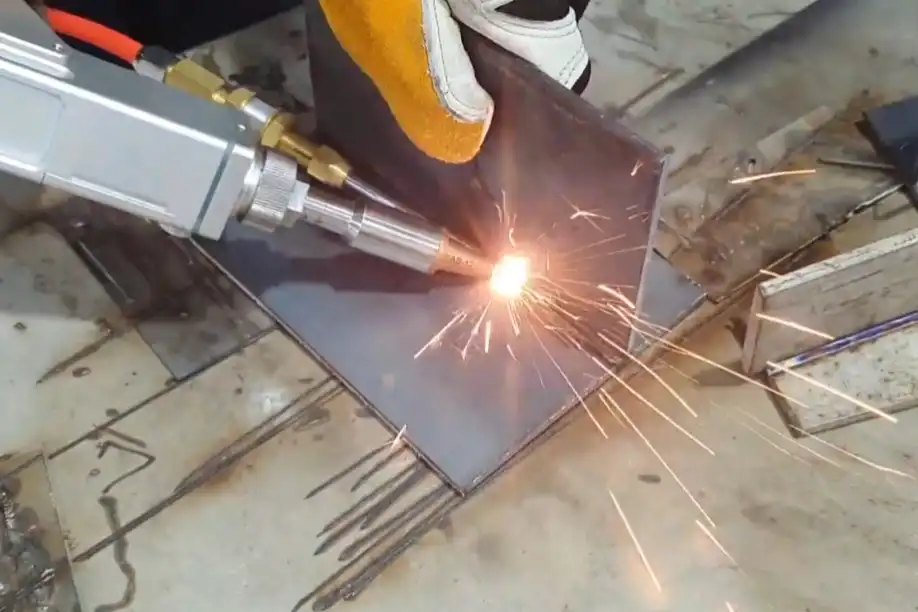
Filler wire creates a fuller and more consistent weld
Automatic wire feeding adds material into the weld pool, helping improve bead shape, joint fill and visible seam quality.
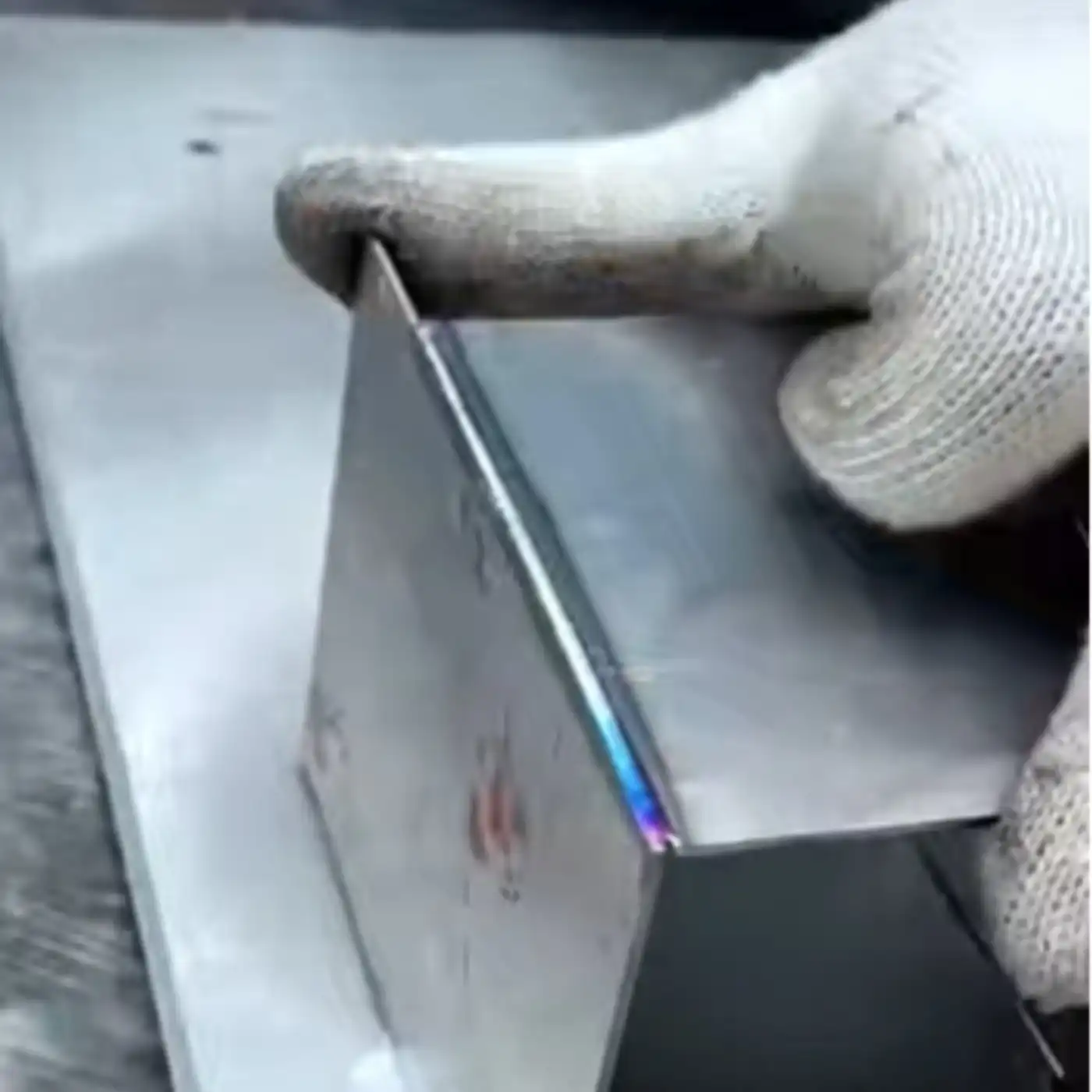
Review typical welds for different materials and joint styles
Clear weld photos help confirm seam appearance, edge coverage and finishing requirements before you select the final machine configuration.
Watch wire feeding performance on real welding conditions
Use welding videos to check feeding stability, seam shape, operator movement and final weld appearance before confirming your setup.
Stainless Steel Wire Feed Welding
Review seam appearance, travel speed and filler wire control on stainless steel sheet and fabricated parts.
Gap Filling Welding Demo
Check how filler wire supports the weld pool when parts have small gaps, edge variation or imperfect fit-up.
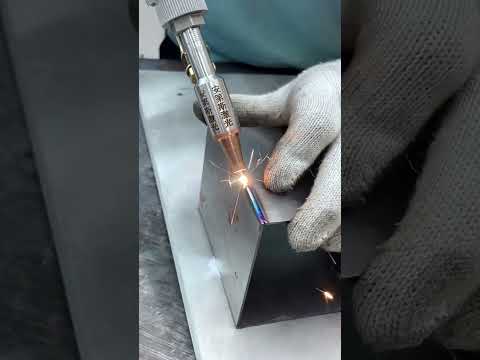
Aluminum Welding with Wire Feed
See how matched wire, power and travel speed help create a better aluminum joint.
Key specifications for the laser welder with wire feeder
Review the main configuration options before requesting a quote. The final setup can be matched to your material, thickness, wire type and daily welding workload.
Laser Welding System
Wire Feeder Setup
Choose the right wire feed welding configuration
A good setup balances weld thickness, gap filling, seam appearance, operator skill and daily production target.
1000W-1500W with Wire Feeder
Suitable for thin sheet metal, stainless products, light frames and workshops that need clean visible seams.
- You weld thin to medium sheet metal
- Your priority is clean appearance
- You want easier setup and lower starting cost
1500W-2000W with Wire Feeder
A balanced choice for many fabrication shops that need stronger seams, wider material coverage and reliable daily output.
- You weld stainless, carbon steel or galvanized sheet
- Your joints sometimes have small gaps
- You want strong cost-performance for production
2000W-3000W with Wire Feeder
Better for thicker parts, longer welds, stronger filled seams and production lines that need higher welding capacity.
- You weld thicker metal or larger parts
- You need stronger filled joints
- You want higher speed and wider process range
Should you weld with filler wire or without filler wire?
Laser Welding Without Wire
- Best when parts fit tightly with minimal gap
- Fast and clean for thin sheet and precision fabrication
- Less hardware around the welding area
- May be less forgiving when joints are uneven or underfilled
Oceanplayer Laser Welder with Wire Feeder
- Better for gaps, corner seams and joints that need more filler material
- Supports fuller weld beads and improved visible appearance
- Useful for stainless steel, carbon steel, galvanized sheet and aluminum
- Good fit when seam strength and repeatability matter
Send your material and gap requirement before choosing the final setup
A sample welding test helps confirm wire diameter, laser power, feeding speed, wobble width and final seam appearance on your real workpiece.
Share Your Workpiece
Send material type, thickness, joint design, gap size and target weld appearance.
Test Wire Feed Welding
Our engineers test wire diameter, feeding speed, laser power and travel speed.
Confirm Configuration
Receive a recommended power, cooling method, wire feeder setup and process notes.

Oceanplayer helps you match machine, wire and process before shipment
Get practical support for material testing, welding parameters, machine configuration, export packing and remote training, so the machine arrives with a clearer setup direction.
Explore more Oceanplayer laser welding resources
Compare related welding machines and application pages so you can choose the right setup for material, thickness, appearance and production speed.