

What Weld Bead Colors Reveal About Your Welds
Weld color is evidence of surface oxidation, shielding conditions and thermal exposure—but it is not a standalone strength test. On stainless steel, darker heat tint often points to a thicker oxide and reduced local corrosion resistance. On titanium, color can signal atmospheric contamination and possible embrittlement. On carbon steel and aluminum, the same colors can mean something entirely different.
Use color as an early diagnostic clue, then identify the material, process, bead location and acceptance standard. A bright bead can still hide lack of fusion or porosity, while a colored stainless weld may be mechanically sound yet require oxide removal to restore corrosion performance.
 Color is a clue—not a certificate
Material chemistry, oxygen exposure, temperature, time, surface finish and lighting all influence the color you see.
TIG welding photo: Mak04, public domain.The meaning changes with the metal
Before comparing a bead to a color chart, confirm what was welded and what the finished part must do. One universal “good weld color” chart does not exist.
Gold, blue or purple heat tint means an oxide film formed. Darker tint generally indicates a thicker oxide, but the project specification decides acceptance and cleaning.
Silver to light straw is the normal target for many procedures. Blue, green, gray or white can indicate serious contamination and may require removal or rework.
Blue or brown may record thermal exposure and oxygen, while black scale or soot deserves investigation. Geometry, cracks, fusion and procedure remain decisive.
Aluminum does not use the stainless “rainbow” logic. Soot location, shielding, travel direction, oxide removal, filler alloy and porosity checks matter more.
What creates rainbow weld colors?
When hot metal is exposed to oxygen, its surface oxidizes. On stainless steel, the transparent oxide becomes thicker as temperature, time and oxygen exposure increase. Light reflected from the top of that film interferes with light reflected from the metal-oxide interface, producing straw, gold, purple and blue colors. The color is therefore an optical effect related to oxide thickness—not paint left by the arc.
That mechanism explains why color can be useful, but it also explains why a universal temperature chart is unreliable. Alloy composition, oxygen concentration, shielding gas, heating duration, surface roughness and lighting change the apparent shade. British Stainless Steel Association guidance specifically cautions that published stainless heat-tint charts depend on test conditions and can only indicate temperature.
Color does not prove weld strength
A camera can see the surface; it cannot see incomplete penetration, lack of sidewall fusion, buried porosity, hydrogen cracking or an incorrect filler metal. A silver bead may have been welded too cold. A dark bead may have adequate penetration yet inadequate shielding or post-weld corrosion performance. Visual appearance is one inspection input, not a mechanical-property certificate.
Color becomes more meaningful when the location is known
Face tint, root tint and heat-affected-zone (HAZ) tint can point to different causes. A clean face with a black, sugared stainless root strongly suggests inadequate back purging. A dark band only at a restart can indicate lost shielding or excessive dwell. A uniform tint across a wide area can reflect high heat input or slow cooling.
The same shade can carry five different messages.
This sequence is most recognizable on stainless steel. It must not be transferred directly to titanium, aluminum or carbon steel.
Minimum visible tint
Suggests limited surface oxidation, but still says nothing by itself about penetration, fusion or internal porosity.
Light oxide film
May be permitted in some fabrication criteria and rejected or removed in stricter sanitary or corrosion service.
Thicker heat tint
On stainless, it signals greater oxidation and a stronger reason to review heat input, shielding and post-weld treatment.
Severe oxidation or scale
Often accompanies failed purge, heavy atmospheric exposure or surface scale and requires inspection before acceptance.
Material-specific warning
White titanium can be severely contaminated; black aluminum smut has a different cause and must be judged by location and defects.
What common weld bead colors actually reveal
These are diagnostic starting points. Project acceptance comes from the applicable drawing, WPS, customer specification, code and engineering authority.
| Material | Silver / no visible tint | Straw / gold / brown | Blue / purple | Gray / black / white |
|---|---|---|---|---|
| Austenitic stainless steel | Low visible heat tint; generally favorable for corrosion performance. Still inspect fusion and geometry. | Light-to-moderate oxide. Acceptance varies; corrosion or sanitary service may require removal. | Thicker oxide and stronger indication of reduced local corrosion resistance. Review shielding, heat input and cleaning. | Heavy oxidation, scale or sugaring. Typically a serious purge/shielding problem and often unacceptable before remediation. |
| Titanium | Bright silver is the preferred visual outcome for many procedures. | Light straw through brown can be accepted under some classifications and procedures; verify the exact criterion. | Violet or blue may be rejected in stricter classes and can indicate oxygen/nitrogen pickup. Do not polish and assume the problem is gone. | Green, gray or white generally indicates severe contamination. Rework requirements are procedure- and authority-controlled. |
| Carbon or low-alloy steel | A clean metallic surface can support inspection but does not prove soundness. | Temper colors record thermal exposure and oxidation. Their meaning depends on alloy and service. | May reflect heat history; not automatically a structural defect. Inspect profile, undercut, cracking, scale and WPS compliance. | Black oxide, soot or scale can obstruct visual inspection and point to contamination or excessive oxidation. |
| Aluminum | Clean, bright bead appearance is desirable, but porosity may still be hidden. | Brownish deposits or “pepper” can indicate contamination, oxide or AC balance/cleaning issues in TIG. | The stainless heat-tint sequence is not a useful acceptance chart for aluminum. | Black smut beside a MIG bead may occur with magnesium-bearing filler; soot on the bead or heavy sooting can signal gas, voltage, technique or contamination problems. |
AWS publishes separate discoloration guidance for sanitary stainless tubing and aerospace fusion welding. The criteria differ because material, joint location and service class differ. See AWS D18.2 and the publicly available AWS D17.1 amendment.
Diagnose a weld color before changing parameters.
Select the closest combination. The result prioritizes the next inspection and process check; it does not issue a code acceptance decision.

Why darker stainless color raises a corrosion question.
Stainless steel relies on a thin passive chromium-rich surface film. Welding in the presence of oxygen produces a thicker visible oxide and can leave a chromium-depleted region directly beneath it. The result is not merely cosmetic when the component relies on resistance to water, chlorides, food products or chemicals.
Silver or nearly colorless: suggests that shielding and heat exposure limited visible oxide. It is a favorable process indicator, but a macrosection or other inspection may still be needed to prove fusion.
Pale yellow to gold: indicates a light oxide film. Some specifications accept it; other sanitary or corrosion-focused applications require removal. Acceptance cannot be guessed from color popularity.
Blue to purple: generally indicates a thicker oxide and higher susceptibility to localized corrosion. Review heat input, gas coverage, purge oxygen and how long shielding continued during cooling.
Gray, black or sugared root: points to severe oxidation. On a stainless tube root, investigate purge leaks, insufficient purge time, excessive pressure, poor dams, early purge removal or a hot restart.
Similar bead geometry can hide different heat-tint outcomes.
A 2025 open-access study of orbital TIG welding on AISI 316L sanitary tube evaluated full penetration, tensile strength and internal discoloration separately. Some specimens achieved good geometry yet exceeded the study’s AWS D18.2 discoloration threshold—exactly why color and fusion cannot be collapsed into one judgment.
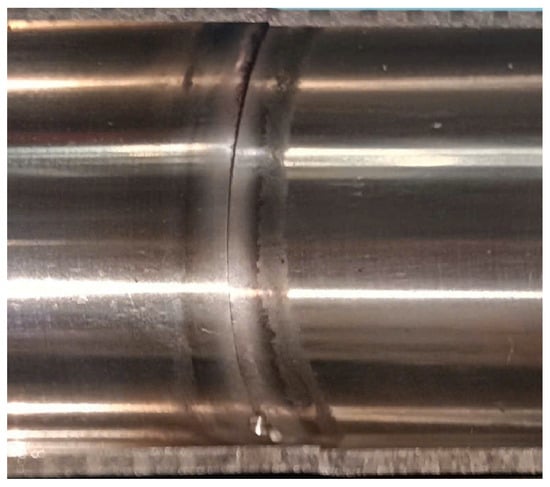
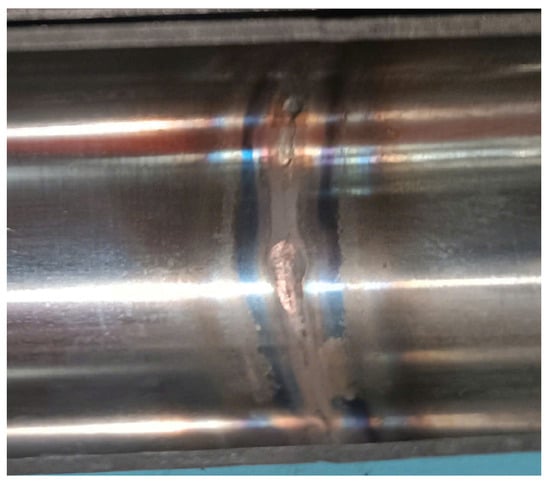
Color is valuable when the material, surface, camera/lighting and reference criterion are controlled. It is not reliable when a front-side decorative bead is compared with a chart intended for the inside of purged sanitary tubing.
On titanium, color can indicate contamination and embrittlement.
Hot titanium has a strong affinity for oxygen, nitrogen and hydrogen. Atmospheric pickup can change mechanical behavior, so titanium color is treated more seriously than decorative heat tint on ordinary steel.
Silver / bright metallic
The normal visual target for controlled titanium GTAW. Continue to verify joint geometry, penetration and the procedure’s inspection requirements.
Direction: favorable visual result.Light straw to brown
May be accepted by some procedures and service classes. AWS aerospace criteria show that acceptance can vary with weld class and color level.
Direction: compare with the exact specification.Violet / blue / green
Indicates greater atmospheric interaction. Stricter classes reject violet or blue near the weld, while some lower classes may permit limited conditions or require removal.
Direction: hold and obtain authority approval.Gray / white / flaky
Severe contamination is likely. Surface polishing does not reverse oxygen or nitrogen absorbed into hot titanium weld metal.
Direction: follow the rework procedure.Carbon steel and aluminum need different visual logic.
“Light is good, dark is bad” is too simple to guide production across materials.
Temper color
Blue, purple or brown records surface oxidation and a thermal cycle. It may matter for appearance, hardness or later coating, but it does not independently show tensile strength or penetration.
Inspect: cracking, undercut, profile, fusion and WPS compliance.Visibility problem
Heavy black oxide, soot or flux residue can hide surface discontinuities. Clean the weld enough for visual inspection and investigate why oxidation or contamination was excessive.
Inspect: surface after cleaning, then NDT as required.Smut location matters
Black smut at the sides can occur from vaporized magnesium and may be removable. Soot on the bead or a heavily blackened weld calls for checks of gas coverage, voltage, push angle, speed and cleanliness.
Inspect: cut section or suitable porosity test when critical.Oxide and contamination
Brown “pepper,” a dirty puddle or unexpected rust-colored deposits can point to oxide, poor cleaning, incorrect AC balance or contaminated tungsten.
Inspect: dedicated tools, surface cleaning, tungsten and gas path.Six variables that change weld bead color.
Correct the system rather than increasing gas or lowering current blindly.
Heat input and travel
High current/power, slow travel, long dwell, wide weaving or repeated starts can keep the surface hot long enough to grow a thicker oxide. Too little heat can still create lack of fusion.
Record power/current, voltage and actual travel speed together.Shielding gas coverage
Low flow, empty cylinders, wrong gas, leaks, blocked diffusers, small cups or excessive torch distance can expose hot metal. Excessive flow can also create turbulence and entrain air.
More flow is not automatically better coverage.Back purging
Tube roots need enough purge time, a verified low-oxygen atmosphere, suitable dams and continued protection until the root cools. A clean face does not prove the root was protected.
Measure purge oxygen where the procedure requires it.Post-flow and trailing shield
Stopping gas while the crater, tungsten or titanium weld is still hot allows rapid oxidation. Large or hot titanium welds may need a trailing shield beyond the torch cup.
Match post-flow to heat and procedure, not habit.Surface contamination
Oil, fingerprints, moisture, paint, oxide, embedded carbon-steel particles and dirty filler can change both color and soundness. Cleaning must use material-compatible tools and solvents.
Clean both sides of the joint and the filler.Alloy and surface finish
Chromium level, titanium grade, aluminum filler, roughness and prior finishing change oxidation rate and reflected color. Identical settings do not guarantee identical shades.
Compare like material, surface and lighting.How to fix dark or inconsistent weld discoloration.
Change one verified cause at a time and preserve evidence from the original condition.
Hold and identify
Record material grade, process, filler, gas, location and service. Photograph the face and root under consistent neutral lighting before cleaning.
Do not erase evidence first.Verify the gas path
Confirm cylinder, purity, hoses, fittings, torch body, diffuser, nozzle, cup and flow at the torch. Shield the area from drafts without creating a confined-space hazard.
Repair leaks before raising flow.Reduce unnecessary heat
Check arc length, focus, current/power, speed, pulse, wobble, weave and dwell. Preserve the minimum energy needed for required fusion.
Never trade penetration for a prettier color.Prove the result
Repeat on the actual joint, then inspect color, bead geometry, root, cross-section and required NDT or performance tests. Update the qualified process window.
Accept by evidence and specification.Can weld colors be removed safely?
Yes, surface heat tint can often be removed mechanically, chemically or electrochemically. But “the color is gone” does not automatically mean the full corrosion-resistant surface has been restored. The method must remove the oxide and, where required, the chromium-depleted layer without embedding iron, smearing defects or damaging the finished surface.
Mechanical cleaning
Dedicated stainless-steel brushes, controlled grinding, abrasive blasting or polishing can remove discoloration. Tools previously used on carbon steel can contaminate stainless. Aggressive polishing can smear metal over defects or create a surface rougher than the service permits.
Pickling and passivation
Pickling can remove heat tint and affected surface metal; passivation treatments support formation of a protective passive film after the surface is properly clean. These are distinct operations. The appropriate sequence depends on alloy, surface finish, product chemistry and customer specification.
Electrochemical cleaning
Electrochemical systems can locally remove tint and restore a bright surface with less aggressive chemistry in some applications. They still require a risk assessment, correct electrolyte, ventilation and proof that the final surface meets the corrosion or hygienic requirement.
What weld bead color cannot reveal.
A useful inspection plan separates surface condition from joint integrity.
Penetration depth
A surface shade cannot show whether the root fused. Use a representative macrosection, radiography, ultrasonic testing or another procedure-approved method.
Subsurface porosity
A clean silver surface can cover internal pores caused by hydrogen, contamination, unstable keyhole behavior or poor shielding inside the joint.
Cracks
Color cannot rule out hot cracking, hydrogen-assisted cracking, crater cracking or microcracking. Visual, penetrant, magnetic, ultrasonic or other inspection may be required.
Filler compatibility
A beautiful bead can be made with the wrong filler alloy. Verify consumable classification, batch, base-metal combination and dilution.
Mechanical properties
Tensile strength, fatigue, toughness and hardness require material/procedure evidence. Color can guide investigation but does not measure these properties.
Corrosion after cleaning
Removing visible tint is not a corrosion test. Surface chemistry, roughness, embedded iron and service media may require passivation checks or corrosion testing.
Cleaner color starts with a stable process window.
Handheld and automated laser welding can produce narrow seams and limited heat-affected zones, but laser energy does not eliminate oxidation. Power, travel speed, wobble width, focus, shielding gas, nozzle position, plume extraction, material surface and joint fit-up all affect bead color.
For stainless steel, a dark laser-welded seam may indicate excessive thermal exposure or poor gas coverage. For galvanized material, smoke and deposits can be related to zinc vapor. For aluminum, soot and porosity require alloy-specific investigation. The correct response is a sample matrix that measures color alongside penetration, bead geometry, distortion and strength—not a cosmetic parameter change alone.
- Record power, speed, focus, wobble, filler wire and gas for every sample.
- Inspect steady-state sections separately from starts, stops and corners.
- Set color acceptance from the end-use requirement, not a social-media photograph.
Weld bead color FAQ
What causes rainbow colors on a weld?
Hot metal reacts with oxygen and forms a thin surface oxide. Light reflected from that oxide and the metal beneath it interferes, producing straw, gold, purple and blue. Alloy, oxide thickness, oxygen, time, temperature and surface finish all affect the apparent color.
Does a blue weld mean it is weak?
Not automatically. On stainless steel it indicates a thicker surface oxide and can warn of reduced local corrosion resistance. On titanium it may indicate harmful atmospheric contamination. On carbon steel it may mainly show thermal oxidation. Strength and fusion require separate evidence.
What is the best weld color on stainless steel?
Silver or minimal visible tint is generally the most favorable visual outcome. However, pale straw or other levels may be permitted by a project specification, while sanitary or corrosion service may require removal of visible heat tint.
Is gold color acceptable on stainless steel welds?
It can be acceptable in some fabrication criteria, but not universally. Gold still indicates an oxide film. The alloy, bead/root location, service environment and governing acceptance standard decide whether it can remain or must be removed.
Why is the front of my stainless weld clean but the back is black?
The face shielding may be adequate while the root lacks back purge. Check purge dams, leaks, oxygen level, purge time, pressure, root temperature and how long gas protection continued after welding.
What titanium weld colors are acceptable?
Bright silver is the preferred target, and light straw through brown may be accepted under some procedures. Violet, blue, green, gray or white receive stricter treatment. AWS criteria vary by weld class, so the applicable procedure must control acceptance.
Can I polish a blue titanium weld and use it?
Do not assume so. Surface polishing removes color but cannot reverse oxygen or nitrogen absorbed into hot titanium. Hold the part and follow the engineering authority’s inspection or rework procedure.
Why does my aluminum MIG weld have black soot?
Smut can result from vaporized alloying elements and may appear beside the bead, especially with magnesium-bearing filler. Heavy soot or soot on the bead can also indicate inadequate shielding, voltage, drag angle, excessive distance, drafts or contamination.
Can weld color show penetration?
No. Color records surface oxidation and thermal/shielding conditions. It cannot show the full fusion boundary. Use a macrosection or the inspection method required by the application.
Will more shielding gas make a weld silver?
Not always. Too little flow loses protection, while too much can create turbulence and pull air into the gas envelope. Check leaks, nozzle/cup, torch distance, angle, drafts and the specified flow range before increasing gas.
Can stainless weld heat tint be removed?
Yes, by suitable mechanical, pickling or electrochemical methods. The correct method must remove the oxide and any affected surface as required without introducing iron contamination or unacceptable roughness.
Does a beautiful weld automatically pass inspection?
No. Appearance cannot prove filler identity, penetration, internal porosity, cracks, hardness, strength or corrosion performance. A beautiful bead must still meet the drawing, WPS, visual criteria and required NDT or testing.
Sources used for this weld color guide
Material-specific conclusions were checked against welding institutes, standards publishers, regulators, manufacturers and open research.
This guide is educational and does not replace a welding procedure specification, customer acceptance criterion, code, qualified welding inspector, engineering authority, safety assessment or chemical product instructions.
Validate color, penetration and speed on the same sample.
Share the material, thickness, joint, current process, required finish and acceptance criteria. Oceanplayer can develop a laser welding trial that records bead color alongside fusion, distortion, wire use and production speed.