

Average Prices for 100W to 1000W Pulse Laser Cleaners
A practical 2026 planning budget runs from about $4,000 for a basic 100W pulsed cleaner to $95,000 or more for a supported 1000W industrial system. Power matters, but the laser source, pulse energy, cooling, safety package, automation and local support explain much of the spread.
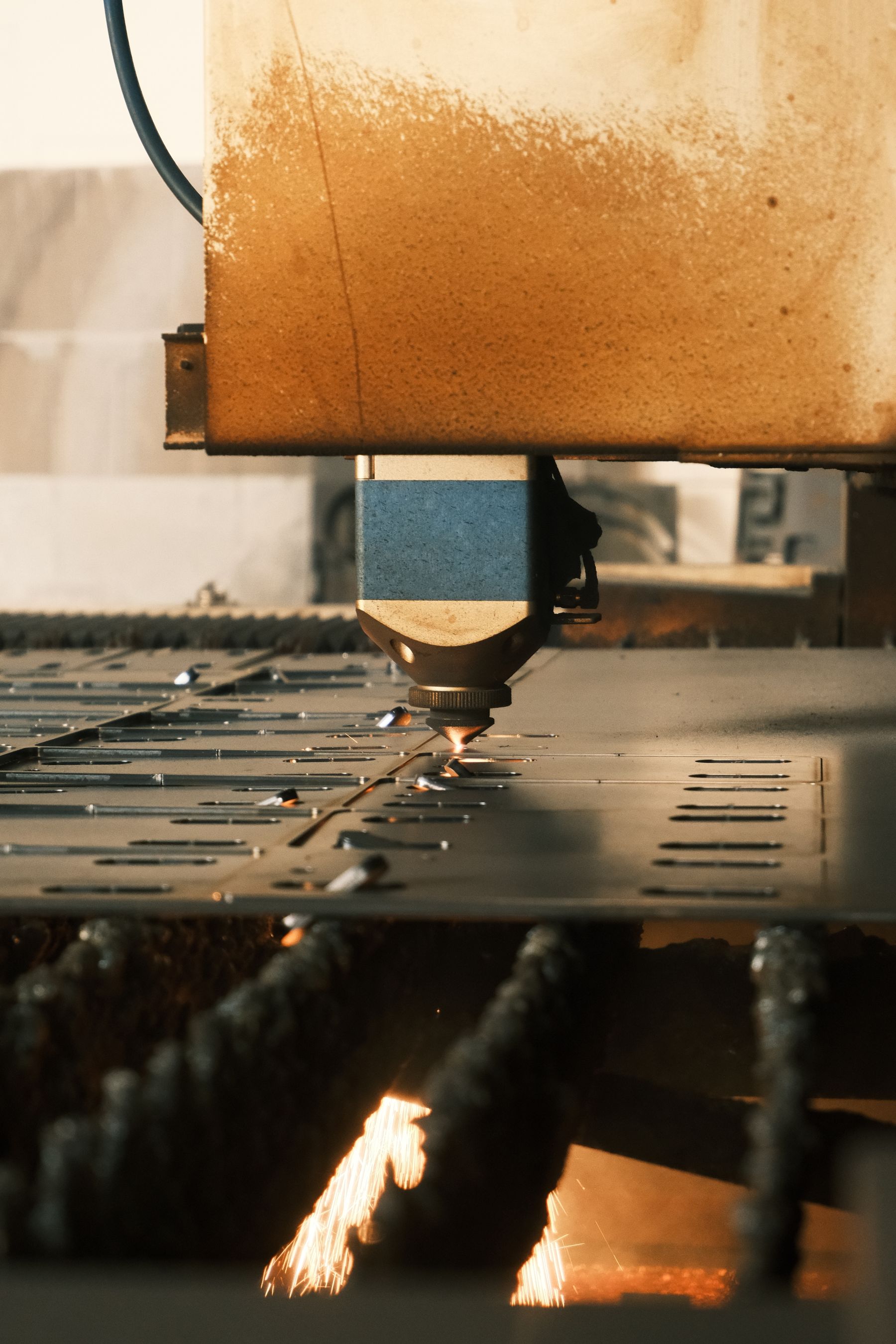
Photo: Cemrecan Yurtman / Pexels. Representative industrial laser environment.
How much does a pulse laser cleaner cost?
For a handheld or portable pulsed fiber laser cleaner, most buyers should plan around $8,000–$35,000 for 200W to 500W equipment. A bare 100W import can sit below that range, while a 1000W machine with a high-energy source, water cooling, industrial controls, enclosure or robot integration can move far above it.
The ranges in this guide are budgeting bands assembled from public 2026 listings and buyer guides—not a universal market index. A quote is only comparable when it names the exact laser source, pulse energy, cooling method, scan head, included safety equipment, shipping terms, warranty and service location.
Two machines with the same average power can have different pulse energy, spot behavior, duty cycle and support. Ask each supplier to process the same sample under a stated acceptance criterion.
Portable precision cleaning and smaller work areas.
Higher throughput, larger scan fields and broader job mix.
Large-area or automated work with a much wider integration cost.
A planning allowance for logistics, controls, extraction and commissioning.
Typical 2026 pulse laser cleaner price ranges by wattage
The following bands are useful for early capital planning in U.S. dollars. They cover a mixture of publicly advertised OEM machines, supported packages and industrial systems. They do not include every tax, duty, facility modification or custom automation charge.
| Average power | Planning price band | Typical package at this level | Best buying fit | Key comparison question |
|---|---|---|---|---|
| 100W | $4,000–$9,000 | Compact or backpack-style pulsed unit, commonly air cooled | Fine work, small parts, light contamination and mobile service | What are the pulse energy and supported parameter range? |
| 200W | $8,000–$15,000 | Portable industrial package with broader scan and parameter control | Molds, precision rust, weld preparation and mixed workshop work | Which source model, lens set and support package are included? |
| 300W | $10,000–$18,000 | Air-cooled industrial unit; supported local packages can cost more | Service businesses, larger parts and higher daily utilization | Is the advertised pulse energy suitable for the target coating? |
| 500W | $18,000–$35,000 | High-energy air- or water-cooled system, sometimes automation ready | Production cleaning, thicker layers and broader surface areas | What duty cycle, cooling requirement and optic warranty apply? |
| 1000W | $30,000–$95,000+ | High-power handheld, cabinet or integrated cell depending on supplier | Large-area work, short takt times and engineered automation | Is the quote a bare source, handheld machine or complete safe cell? |
Observed public prices vary sharply: 300W equipment has recently been advertised around $9,995–$15,599, 500W packages around $18,444–$28,142, and 500W/1000W product families from about $21,699 before configuration differences. High-power integrated systems can be much higher. Prices checked July 22, 2026; confirm current quotes and Incoterms.
At 1000W, the label may describe anything from an OEM handheld package to a single-mode industrial source installed in a robot-ready Class 1 cell. The laser rating alone cannot tell you what is included.
What do you actually get at each price level?
100W–200W
Plan $4K–$15KThis is the entry point for pulsed cleaning where mobility, lower electrical demand and fine control matter more than maximum area rate.
- Air cooling is common.
- Good fit for smaller parts and localized cleaning.
- Ask whether the price includes multiple lenses and verified settings.
- Do not assume all 200W sources deliver the same pulse energy.
300W–500W
Plan $10K–$35KThis band gives many industrial buyers a workable balance between portability, pulse energy, daily throughput and capital cost.
- Air-cooled 300W packages can remain mobile.
- 500W options may add heavier cooling and optics.
- Local training and stocked optics can justify a higher quote.
- Sample processing is essential before choosing 300W or 500W.
1000W
Plan $30K–$95K+High average power makes sense when the application has enough area, repetition and cycle-time pressure to use it. Integration can cost as much as the laser hardware.
- Expect water cooling or substantial thermal management.
- Define handheld, gantry, robot or enclosed-cell scope.
- Require a safety concept and extraction design.
- Confirm power supply, footprint and commissioning responsibilities.
Why pulsed cleaners cost more than many CW machines
Pulsed systems accumulate energy and release it in short bursts, producing peak power above their average-power rating. This makes it possible to cross a contaminant’s ablation threshold while limiting the time available for heat to spread into the substrate. A CW laser supplies energy continuously and is often chosen for aggressive removal on robust steel where area rate matters more than fine thermal control.
Higher precision, higher source cost
Best suited to selective cleaning, sensitive substrates, molds, weld preparation and controlled surface treatment.
- Compare pulse energy, pulse width and frequency range.
- Lower average power does not mean low peak power.
- Process flexibility depends on source and scanner controls.
- A sample test should establish the real processing window.
Lower entry cost for heavy removal
Often attractive for thick rust or paint on heavy steel, especially when some heat input or surface change is acceptable.
- Common CW power ratings are much higher than pulsed ratings.
- Do not compare a 200W pulsed unit to a 200W CW unit by wattage alone.
- Heat tint, distortion and substrate effect require evaluation.
- Use the application result and required takt time to decide.
Six factors that move the price more than buyers expect
Price variation is not automatically evidence that one supplier is overpriced. It often means the quotes describe different systems. Normalize these six fields before comparing totals.
Laser source and pulse energy
The exact source model defines average power, pulse energy, pulse width, frequency range, beam mode and serviceability. “500W pulsed” is not a complete specification.
Cooling and duty cycle
Compact air cooling reduces size and infrastructure. Higher-power or long-duty systems may need a chiller, approved water quality and more maintenance.
Scanner, lenses and working field
Scan pattern, focal length, working distance and field size affect access and energy distribution. Extra lens sets and 3D focus control increase capability and cost.
Safety architecture
A handheld laser delivered without barriers is not equivalent to an interlocked Class 1 workstation. Enclosures, interlocks, shutters, warning devices and hazard analysis add real value.
Automation and controls
Robot interfaces, PLC integration, part fixtures, autofocus, vision and validation turn a laser into a production system—and can exceed the cost of a portable machine.
Support and commercial terms
Local commissioning, application development, stocked optics, warranty response and clear Incoterms reduce project risk. Their price should be visible, not hidden.

More watts do not guarantee the lowest cleaning cost
A higher-power cleaner can increase area rate only when the source, scanner, focal condition and motion strategy place useful energy on the contamination. Thin oxide on a small precision part may not benefit from the widest or most powerful system. Heavy, irregular coatings may require multiple passes even when average power is high.
Ask the supplier to report the sample material, contamination, cleaned area, number of passes, elapsed processing time, parameter set and acceptance result. That evidence is more valuable than a promotional “square meters per hour” number measured on an unknown surface.
Compare the cost per accepted part or accepted square meter—not purchase price per watt.
Estimate the delivered budget and five-year ownership allowance
Select a power band and package level, then adjust logistics, safety and annual service assumptions. This is a capital-planning estimate, not a supplier quotation or financing offer.
The machine midpoint represents a supported 300W handheld package. Taxes, financing, labor, electricity and downtime are excluded.
Calculate ROI from verified work—not a generic payback promise
Pulse laser cleaners do not have a universal 9-, 12- or 18-month payback. The result depends on how many accepted parts the process can complete, how much current labor and consumable expense it removes, and whether the laser creates new sellable capacity.
avoided labor + avoided consumables + avoided outsourcing + recoverable capacity value − laser operating cost − added maintenanceSimple payback perioddelivered project investment ÷ verified annual net benefitTreat capacity value conservatively: count it only when the business can sell or use the additional output.
Use monthly job demand
Model the number of billable cleaning hours, travel, setup, extraction filters and realistic utilization. A portable 100W–300W unit may be more valuable than unused high power.
Use accepted parts per shift
Compare labor, consumables, reject rate, takt time and downtime using the same part and acceptance standard. Include fixtures and automation.
Use outage and access cost
For maintenance work, avoided outage time, containment and waste handling may outweigh electricity or optic expense. Document the assumptions separately.
What should every comparable laser-cleaner quote include?
Send every supplier the same application brief and request the same response structure. This turns a collection of prices into an auditable equipment decision.
- Exact manufacturer and model of the pulsed laser source
- Average power, maximum pulse energy, pulse-width and frequency ranges
- Single-mode or multimode beam and stated beam-quality information
- Scanner axes, scan patterns, field lens, working distance and field size
- Cooling method, rated input power and permitted duty conditions
- Handheld head weight, fiber length, cabinet weight and dimensions
- Included safety eyewear, barriers, enclosure, interlocks and warning system
- Fume extraction scope, filter types and replacement costs
- Software functions, parameter access and recipe storage
- Sample-test report with material, contamination, area, time and result
- Warranty exclusions, service response, spare-parts stock and remote support
- Incoterm, freight, duty, installation, training, acceptance and payment terms
A quote that lists only wattage, a photo and a total price is not complete enough for an industrial purchase decision.
Safety and extraction are part of the machine cost
Industrial pulse laser cleaners are commonly Class 4 sources when operated with an accessible beam. Direct, reflected and scattered radiation must be evaluated for the actual wavelength, beam path and workspace. Laser interaction with rust, paint, oil or plating can also release material-specific airborne contaminants.
OSHA guidance emphasizes hazard evaluation, beam-path control, training, controlled areas and adequate ventilation for fumes produced by laser material interactions. Final controls should be designed by a qualified laser-safety and industrial-hygiene team for the site.
- Hazard analysisDefine the nominal hazard zone, reflective surfaces, access and foreseeable misuse.
- Engineering controlsPrefer enclosure, interlocks, beam stops, shutters and extraction over reliance on PPE alone.
- Eyewear selectionMatch wavelength and required optical density to the verified hazard assessment.
- Plume controlCapture at source and select filters based on the coating and substrate being removed.
- Training and proceduresAssign responsibility, document operating limits and prepare emergency steps before production.
Send your sample, required finish and production target
Oceanplayer can recommend a realistic pulsed or CW route after reviewing the base material, contamination, area, geometry, acceptable surface change, duty cycle and site requirements. A sample test gives you evidence for power selection and budget comparison.
- Base material and thickness
- Rust, paint, oxide, oil or other layer
- Cleaning area and required daily output
- Photos plus an actual sample where possible
- Surface acceptance and downstream process
- Country, power supply and operating environment
Pulse laser cleaner price FAQ
How much is a 100W pulse laser cleaning machine?
A practical 2026 planning range is about $4,000–$9,000 for a basic 100W pulsed cleaner. Portability, battery operation, source type, lenses, local support and included safety equipment can move the quote outside that band.
What is the average price of a 200W pulsed laser cleaner?
Plan roughly $8,000–$15,000 for many 200W portable packages. Current public listings show some 200W equipment around $7,999–$11,599, but a locally supported package with training, optics and warranty may cost more.
How much does a 300W pulse laser cleaner cost?
A useful planning band is $10,000–$18,000. Public 2026 examples include 300W packages near $9,995, $13,120 and $15,599. Compare pulse energy and support rather than assuming the lowest 300W quote is equivalent.
What should I budget for a 500W pulsed laser cleaning machine?
Budget approximately $18,000–$35,000 for many 500W systems. Public examples around $18,444 and $28,142 demonstrate how cooling, source, package and support create a wide spread.
Why can a 1000W pulse laser cleaner cost more than $80,000?
A high-end 1000W quote may include a high-energy single-mode source, industrial cooling, automation interfaces, autofocus, enclosure, extraction, controls, process development and commissioning. A lower quote may cover only a handheld package, so compare system boundaries.
Is a pulsed laser cleaner more expensive than a CW cleaner?
Usually yes at the machine level because the pulsed source and control system are more complex. However, the correct comparison is not equal wattage. Compare the ability to meet substrate-quality and throughput requirements, then calculate cost per accepted part.
Are shipping, duties and fume extraction included in the advertised price?
Sometimes, but never assume they are. Ask for the Incoterm, destination charges, duty responsibility, extraction specification, filter set, enclosure, installation and training as separate quote lines.
How can I choose between 200W, 300W and 500W without overpaying?
Run the same representative sample on each realistic option. Record cleaned area, elapsed time, passes, parameter set, substrate effect and acceptance result. Use that data with your annual workload and downtime cost to select the lowest total cost—not the highest wattage.
Sources used for this guide
- SFX Laser — current public laser-cleaner product listings, accessed July 22, 2026.
- Michigan Laser Restorations — public 300W and 500W system prices, accessed July 22, 2026.
- Alibaba SmartBuy — pulsed laser cleaning machine buying and price guide, accessed July 22, 2026.
- Laserax — industrial laser ablation, pulse power and process parameters.
- Laserax — industrial pulsed laser cleaning system families.
- Laser Photonics — pulsed versus continuous-wave cleaning considerations.
- OSHA — laser hazards overview.
- OSHA Technical Manual, Section III, Chapter 6 — laser hazard control and ventilation.