

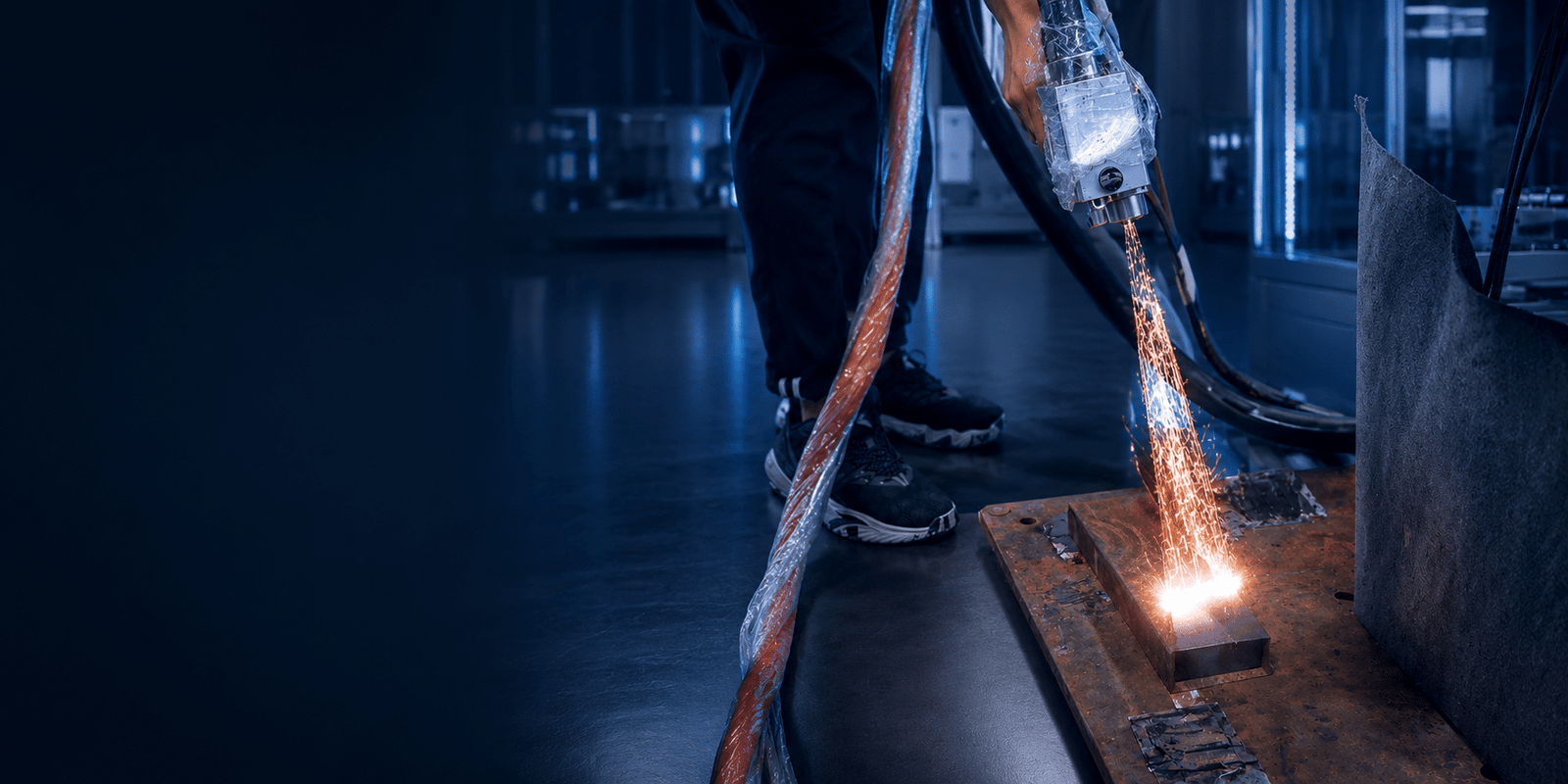
Laser cleaning efficiency calculator
Estimate effective cleaning rate, project hours, output per shift and completion time from your working width, travel speed, overlap, number of passes and productive time.
- m²/hour and ft²/hour
- Shift and project planning
- Overlap and multi-pass adjustment
- No registration required
Turn process settings into a realistic production estimate
Enter measured values from a trial whenever possible. The calculator separates ideal one-pass coverage from effective output after overlap, repeat passes and non-cleaning time.
Why actual output is lower than the ideal scan rate
The theoretical rate only describes how much surface a single uninterrupted pass could cover. Production planning must also include overlap, repeated passes and productive time.
Four factors that can change laser cleaning efficiency
Two machines with the same rated power can deliver different results when the contaminant, finish requirement, motion and workflow are different.
Contamination load
Thick rust, multilayer paint and compact scale usually require slower movement, more energy or additional passes.
Surface acceptance
A controlled finish on molds, stainless steel or thin parts may limit speed and power even when faster removal is possible.
Part geometry
Edges, recesses, welds and irregular parts reduce useful scan time and increase repositioning compared with flat plates.
Workflow design
Fixtures, extraction, loading, operator access and automation determine how much of each shift is truly productive.
Compare how settings change effective cleaning output
These examples demonstrate the calculation method and are not guaranteed machine rates. Your accepted finish and measured trial data should control the final plan.
Small parts and controlled surfaces
60 mm width, 28 mm/s forward speed, 20% overlap, two passes and 75% productive time.
Regular rust and coating work
120 mm width, 50 mm/s forward speed, 25% overlap, two passes and 70% productive time.
Higher-speed bulk removal
160 mm width, 70 mm/s forward speed, 15% overlap, one pass and 80% productive time.
Use the right value for each efficiency input
Consistent input definitions make supplier comparisons and internal production estimates easier to trust.
| Input | What To Measure | Common Planning Error | Better Practice |
|---|---|---|---|
| Cleaning width | The accepted clean band after one forward movement | Using the maximum scanner field even when the edges are not fully cleaned | Measure the uniform finished band on the actual part |
| Forward speed | Distance traveled across the workpiece per second | Entering the internal galvo scan speed | Time the operator, robot or axis over a known surface length |
| Path overlap | Repeated width between adjacent cleaning paths | Assuming zero overlap on manual work | Use enough overlap to prevent untreated lines and include it in the estimate |
| Pass count | Full treatments needed to reach the accepted finish | Reporting the first visible change as complete cleaning | Count every pass needed for the customer-approved result |
| Productive time | Share of the shift when the beam is cleaning accepted work | Planning the full shift as uninterrupted operation | Include loading, movement, inspection, extraction checks and breaks |
Increase cleaning output without sacrificing the required finish
The fastest route is not always more laser power. Improve the complete process around the beam and validate each change against surface quality.
Reduce avoidable passes
Optimize power, pulse settings, focal position and movement speed so each pass contributes useful removal without damaging the base material.
- Compare one-pass and multi-pass finishes
- Check edge quality across the full scan width
- Record accepted settings by job type
Increase productive time
Fixtures, part staging and ergonomic access reduce repositioning and make operator movement more consistent across the shift.
- Prepare the next part during cleaning
- Standardize distance and angle
- Keep extraction close to the active zone
Stabilize repeat production
Robots or motion stages can control speed, overlap and path location when volume and part consistency justify automation.
- Confirm part variation and fixture repeatability
- Plan loading and safety interlocks
- Measure the full cell cycle, not beam time alone
Measure your actual cleaning rate before sizing production.
Send a representative part or material sample. Oceanplayer can compare settings, record the accepted cleaning width and speed, and help turn the result into a practical output plan.
Define the finish
Share the material, contaminant and accepted surface condition.
Record the process
Measure width, movement speed, overlap, passes and handling time.
Plan production
Compare machine power, operating format, daily output and project timing.
Continue your laser cleaning selection
Use the efficiency estimate together with machine type, power, energy density and application requirements.
Laser cleaning efficiency questions
Use these answers to compare estimates and prepare a more reliable material test.