

Laser Welding Glasses: How to Select Real Protection
Laser welding glasses are wavelength-specific protective filters, not ordinary tinted safety glasses. The correct choice depends on the laser emission, worst-case exposure, required optical density, task geometry, fit and the applicable safety standard.
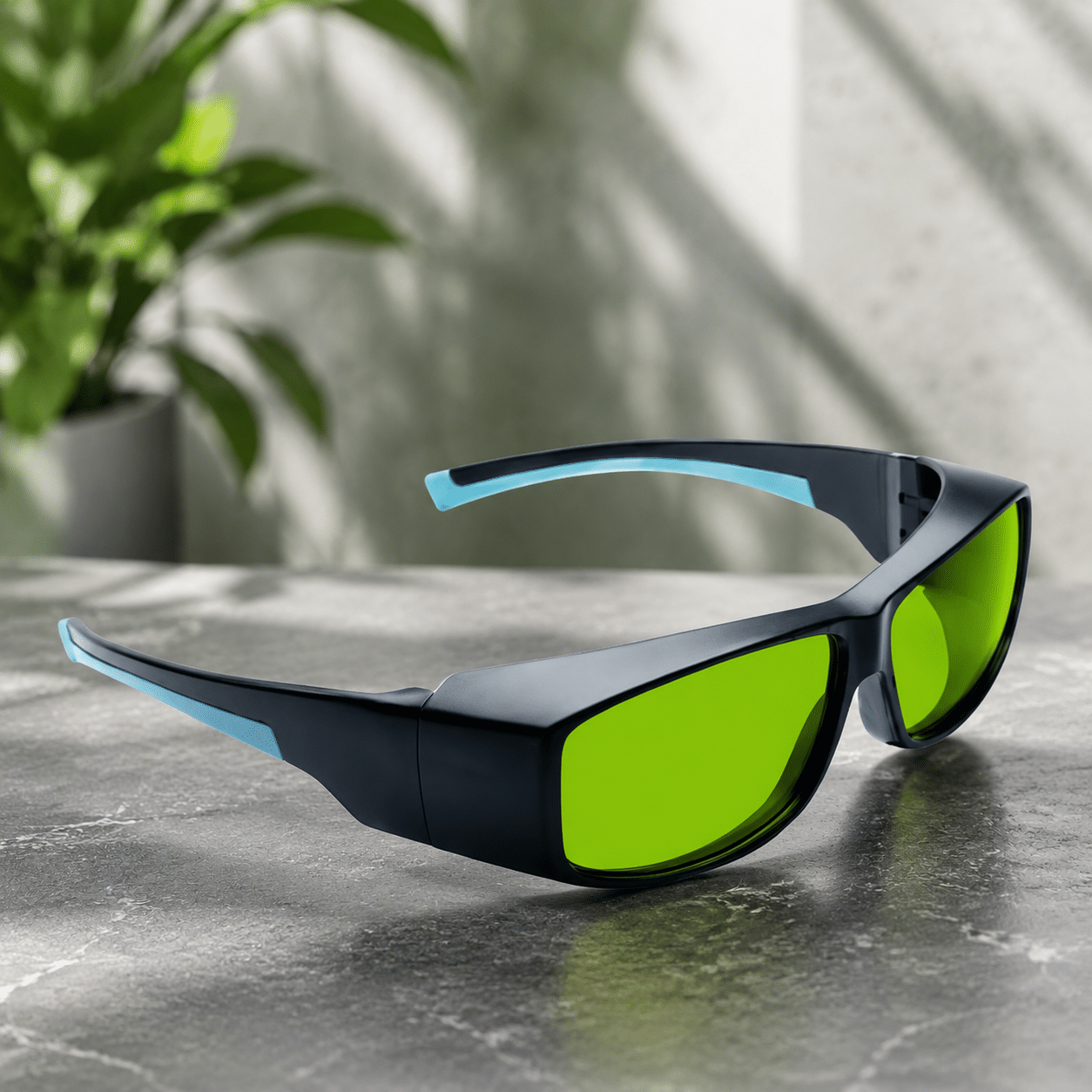
Four non-negotiables before anyone puts on the glasses
Laser eye protection is a specification problem. These four checks matter more than lens color, price or a broad claim such as "fiber laser compatible."
Confirm every accessible laser wavelength, maximum credible output and whether the source is continuous-wave, pulsed or multi-wavelength.
Required optical density is derived from the evaluated exposure and maximum permissible exposure. There is no universal OD for every laser welder.
The eyewear documentation must cover the actual wavelength range, rating, laser mode, frame and applicable product standard.
Use enclosure, shielding, interlocks, restricted access, trained operators and task-specific face or impact protection where the assessment requires it.
What are laser welding glasses?
Laser welding glasses are personal protective equipment designed to attenuate specific laser wavelengths before the radiation reaches the eye. The filter material, coating, frame and side protection are evaluated as a complete product. The eyewear should carry legible markings and documentation that let a laser safety professional connect the product to the actual hazard assessment.
They are not simply dark glasses. A lens can look clear and still absorb a near-infrared laser wavelength, while a very dark visible lens may provide little or no protection at the welding laser wavelength. This is why color and darkness cannot substitute for a verified spectral rating.
Attenuate listed wavelengths
The filter reduces laser radiation within its marked spectral band when used within the certified conditions.
Replace engineering controls
Eyewear cannot substitute for a properly enclosed beam path, interlocks, barriers or restricted access.
Address non-beam hazards
Impact, spatter, hot particles and bright process emissions may require additional rated face and eye protection.
Fit the person and the task
Coverage, prescription compatibility, visible light transmission and peripheral vision affect whether protection stays correctly positioned.
Laser welding creates more than one eye hazard
A credible assessment separates direct and reflected beam hazards from secondary process emissions and ordinary workshop hazards. Each category can require a different control.
Direct beam
A direct Class 4 beam can deliver hazardous energy faster than a person can blink or turn away. Eyewear is not permission to view or intercept it.
Specular reflection
Shiny copper, aluminum, stainless steel, tools and fixtures can redirect a concentrated reflection. The direction may change with work angle and part geometry.
Diffuse and scattered radiation
Scattered energy can remain hazardous within the nominal hazard zone. Distance, enclosure, barriers and measurement or calculation determine the boundary.
Process and workshop hazards
Bright process emission, plume, hot metal, spatter, sharp edges, fume and impact are separate hazards. Laser spectral protection alone may not address them.
Build safety into the laser cell before selecting PPE
Protective eyewear is important, but it is the final layer. A robust system reduces the probability that the eyes can be exposed in the first place.
Eliminate access
Use a fully enclosed process where practicable. Design the work so no person needs to be inside the hazard zone during emission.
Most effectiveEngineering controls
Interlocks, beam stops, screened viewing windows, barriers, key control, emergency stops and secure fixtures manage predictable failure paths.
Design into equipmentControlled area
Restrict access, define the nominal hazard zone, control reflective objects and use warning systems appropriate to the laser classification.
Control people and spaceProcedure and training
Qualified work instructions, alignment rules, maintenance states, authorization and a laser safety officer make controls repeatable.
Administrative layerEye and face PPE
Wear wavelength-rated protection selected from the hazard analysis, with any required impact, spatter and face coverage.
Last line of defenseMachine-level safety requirements for laser processing systems are addressed by ISO 11553-1; product classification is addressed by IEC 60825-1.
OD is a calculation, not a universal shopping number
Optical density describes logarithmic attenuation at a stated wavelength. The required rating must be determined from the worst credible exposure and the applicable maximum permissible exposure.
H0 is the anticipated unprotected exposure, and MPE is the applicable maximum permissible exposure for the wavelength, duration and exposure conditions. Irradiance-based forms use the same ratio concept.
This formula explains the relationship. It is not a substitute for a complete laser hazard evaluation, product test data or approval by the responsible laser safety professional.Is your eyewear selection package ready for approval?
This checker does not calculate OD. It reveals whether the minimum information needed for a competent review is present.
Describe your documentation
Select the closest answer. The planning status updates immediately.
The core inputs appear available. Confirm the selected product against the written hazard assessment, inspect the eyewear and verify the work-area controls before use.
- Keep the specification with the equipment safety file
- Train users on marking, inspection and limitations
- This status never authorizes direct beam viewing
Laser glasses, safety glasses and welding helmets are not interchangeable
Each product addresses a different hazard. A complete task assessment may require laser attenuation plus impact-rated eyewear and full-face protection.
| Protection type | Primary purpose | Laser wavelength protection? | Key limitation | Planning status |
|---|---|---|---|---|
| Ordinary clear safety glasses | Impact, particles and general workplace eye protection when appropriately rated | Not unless explicitly certified and marked for the laser wavelength | Clear or tinted appearance gives no reliable laser attenuation information | Not a substitute |
| Conventional arc-welding filter or helmet | Arc radiation, visible brightness, UV/IR and mechanical hazards within its rated use | Not automatically; shade number is not a laser OD specification | May not cover the laser wavelength or credible reflected-beam exposure | Verify separately |
| Laser protective spectacles or goggles | Attenuation of marked wavelength bands at the certified protection rating | Yes, only within the documented spectral range and conditions | May not provide full-face, spatter or all impact protection | Core laser PPE |
| Laser welding face protection | Task-specific laser attenuation with extended face coverage and other rated functions | Only if the complete product is marked and certified for the laser | Coverage, VLT, viewing window, mode and integration still require review | Task dependent |
Which standard answers which question?
Standards have different scopes. Verify the current edition and local legal requirements for the country where the equipment will be installed.
IEC 60825-1
Addresses safety of laser products, classification and product requirements. It does not by itself select an operator's eyewear for a specific task.
View IEC recordISO 11553-1
Addresses hazards generated by laser processing machines and the measures needed to reduce risk, including machine-level controls.
View ISO recordANSI Z136.1
Provides a framework for safe use of lasers, including hazard evaluation, control measures and laser safety officer responsibilities in the United States.
View LIA recordISO 19818-1
Specifies requirements, test methods and marking for protectors intended against accidental exposure to laser radiation in the stated range.
View ISO recordEN 207
Defines requirements and testing for laser protective eyewear, using protection levels and test conditions that are not identical to an OD-only label.
View BSI recordANSI/ISEA Z87.1
Addresses occupational eye and face hazards such as impact and splash. It should not be treated as the laser spectral-selection standard.
View ISEA updateSeven things to verify on the marking and datasheet
A marketplace title is not a safety specification. Match the physical product marking to traceable documentation and the written hazard analysis.
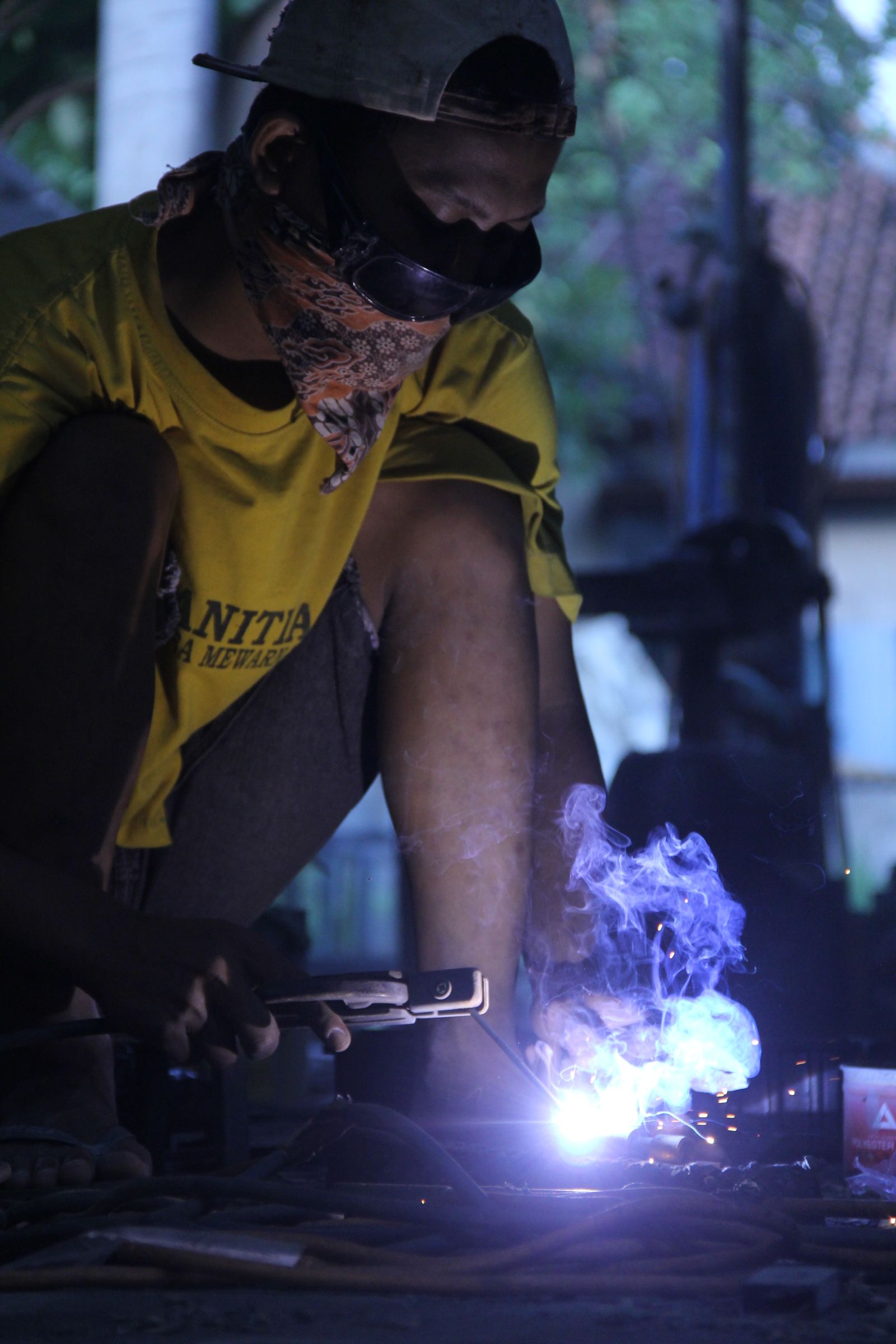
Illustrative industrial PPE photo by Eky Rima Nurya Ganda via Pexels. The pictured eyewear is not presented as approved for any laser.
The marked band must include every relevant accessible emission, not merely the nearest common nominal wavelength.
Confirm OD or the applicable LB/protection level under the relevant standard. Do not mix rating systems without technical review.
Continuous-wave, pulsed and ultrashort-pulse sources can involve different test and damage considerations. Verify the product scope.
VLT affects task visibility. Protection must remain adequate while allowing the operator to see fixtures, seams and indicators safely.
Check temple, top, bottom and side entry paths. The frame is part of the certified protector, not a cosmetic accessory.
Verify manufacturer, model, certificate or declaration, test standard, rating and markings. Avoid untraceable duplicate listings.
Follow the manufacturer's cleaning, storage, damage inspection and replacement instructions for the exact lens and frame.
Protection must still work after an hour on the job
Poor fit, fogging, low visibility and pressure points create predictable misuse. Human factors belong in the selection process, not after procurement.
Control viewing angles
Choose coverage that remains protective when the operator turns, looks downward or works beside a reflective fixture. Goggles or a face protector may be needed.
Balance VLT and color
Enough visible light transmission is needed to identify seams, fixtures and warnings. Do not increase OD beyond the evaluated requirement simply for reassurance.
Fit the actual wearer
Adjustability, nose support, temple pressure, weight and compatibility with respirators or hearing protection affect consistent use.
Do not improvise over eyewear
Use an approved over-the-glass or prescription solution. Gaps created by stacking incompatible frames can defeat side coverage.
Inspect every time; replace by condition and guidance
There is no universal service-life clock for every filter. Condition, exposure, chemical contact, cleaning history and the manufacturer's instructions determine when a protector leaves service.
Read the marking
Confirm the assigned model, wavelength range and rating. Make sure the marking remains legible and matches the work authorization.
Check lens and frame
Look for cracks, deep scratches, coating damage, discoloration, warping, loose temples and gaps that affect coverage.
Use approved methods
Remove particles without grinding them into the lens. Use only cleaning products and cloths allowed by the manufacturer.
Protect the filter
Keep eyewear in a clean closed case away from heat, chemicals, sunlight, sharp tools and abrasive shop dust.
Quarantine damage
Remove questionable eyewear from service immediately. Do not repair filters or substitute frames unless the manufacturer explicitly permits it.
Stop work and activate the site's incident plan
Secure the laser, preserve the scene and obtain prompt medical evaluation through the designated occupational or emergency pathway. Do not continue operating because vision seems normal; some injury may not be immediately obvious. Report the event so controls, training and equipment can be reviewed before restart.
What to send a supplier before asking for eyewear
A serious recommendation starts with source and task data. Send a complete package so the supplier, system integrator and safety professional are evaluating the same configuration.
Laser identification
Manufacturer, model, laser class, exact wavelength(s), maximum output, pulse duration and repetition rate where applicable.
Beam delivery
Handheld or fixed head, collimation, focus, work distance, scan/wobble mode, alignment state and any service mode.
Process geometry
Materials, reflectivity, joint orientation, fixtures, part size and credible reflection paths across normal and foreseeable abnormal use.
Machine controls
Enclosure, interlocks, barriers, viewing windows, access doors, emergency stop, controlled-area boundary and maintenance conditions.
Wearer and task needs
Prescription lenses, face coverage, impact/spatter rating, respirator compatibility, VLT, field of view and shift duration.
Jurisdiction and approval
Installation country, applicable standards, organization policy, responsible laser safety officer and documentation language.
Laser welding glasses FAQ
Concise answers to the most common safety and purchasing questions.
Do I need special glasses for laser welding?
Yes, whenever the hazard assessment requires personal eye protection. The product must be rated for the actual laser wavelength(s) and the required protection level. Ordinary safety glasses, sunglasses and generic welding filters cannot be assumed to provide laser protection.
What OD is needed for a handheld fiber laser welder?
There is no universal OD that safely applies to every handheld fiber laser welder. Required OD is calculated from wavelength, output, beam characteristics, exposure duration, work geometry, accessible emission and the applicable MPE. The responsible laser safety professional should approve the final selection.
Are OD 6 or OD 7 glasses always enough?
No. An OD value has meaning only at the stated wavelength and under the product's certified conditions. If the spectral band does not include the laser, the printed number is irrelevant. A required value can also be above or below a familiar rule of thumb.
Can I use a normal auto-darkening welding helmet?
Not as proof of laser protection. An arc-welding shade rating does not establish wavelength-specific laser attenuation. A helmet or face protector must be explicitly evaluated and marked for the laser hazard, while also addressing process brightness, impact and spatter as required.
Does lens color show which laser it protects against?
No. Lens color mainly affects visible appearance and transmission. Protection is established by the documented spectral range, rating, certification and complete product marking, not by whether the lens looks green, orange, blue or dark.
Is higher optical density always safer?
Only if the rating applies to the wavelength and remains suitable for the task. Excessive attenuation can reduce visible light transmission and make fixtures, seams or warnings harder to see. Select the required protection with adequate visibility rather than maximizing a number without analysis.
Do laser glasses protect against reflections from copper or aluminum?
Correctly selected eyewear may reduce exposure at its specified wavelengths, but highly reflective parts can create dangerous specular paths. Control the reflection through process geometry, fixtures, barriers, enclosure and restricted access instead of treating eyewear as the primary solution.
How often should laser welding glasses be replaced?
Follow the manufacturer's inspection and replacement criteria. Replace or quarantine eyewear with cracks, deep scratches, coating damage, chemical attack, discoloration, warped frames, loose parts or illegible markings. There is no single hour-based replacement interval for all products.
Can prescription glasses be worn underneath?
Use a protector specifically designed for over-the-glass wear or a certified prescription option. The combination must maintain coverage, fit and the required rating without creating side gaps or forcing the laser protector out of position.
Who should approve laser welding eye protection?
The organization should assign a qualified laser safety professional or laser safety officer in accordance with its jurisdiction and safety program. The approval should connect the hazard analysis, machine controls, eyewear certificate, wearer needs and written procedure.
Send the laser and task data, not just an OD request
Oceanplayer can provide system documentation and help connect your application, machine configuration, enclosure concept and validation plan. Final PPE approval remains with the responsible safety professional for the installation.