

Annealing vs Tempering vs Quenching: Key Differences
Annealing usually makes metal easier to form or machine. Quenching rapidly cools it and can harden suitable steel. Tempering reheats hardened steel to reduce brittleness and set its final properties. These are different jobs, not interchangeable treatments. The right choice depends on the alloy, its starting condition and what the finished part must do.
For many hardenable steels, the sequence is heat → quench → temper. Annealing may come earlier for manufacturing, but it is not automatically part of every hardening cycle.
Compare the three processes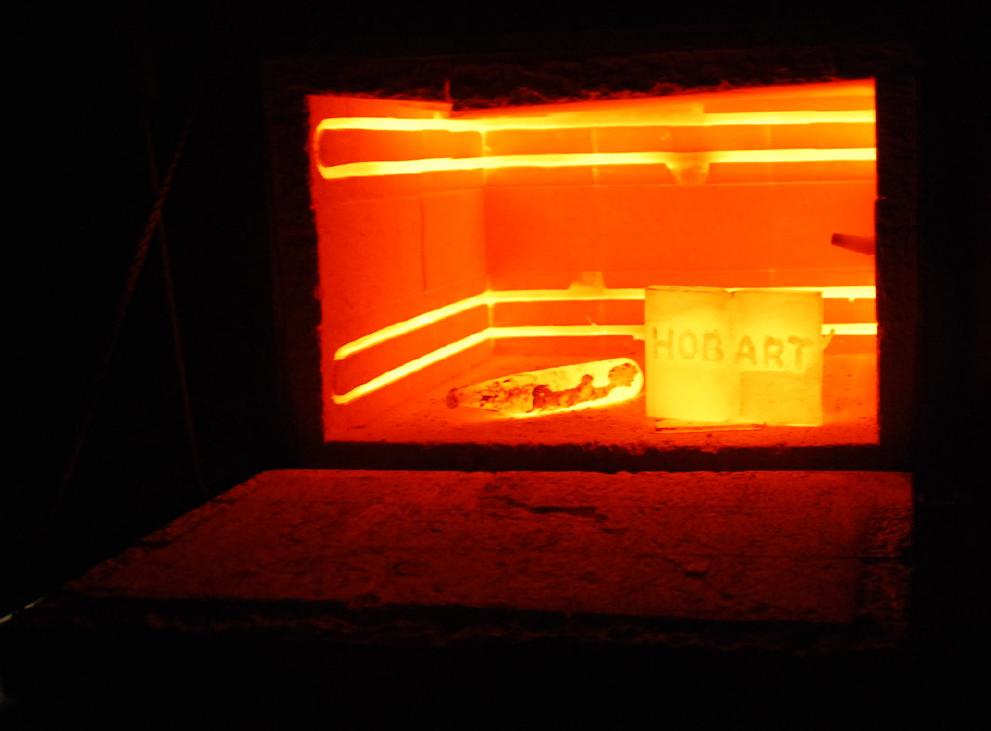
What Is the Difference Between Annealing, Quenching and Tempering?
The easiest way to compare them is by the required result. Annealing changes material toward a useful soft or restored condition. Quenching controls rapid cooling. Tempering adjusts a hardened steel after that cooling step.
| Comparison | Annealing | Quenching | Tempering |
|---|---|---|---|
| Main purpose | Improve softness, ductility or the starting structure. | Cool fast enough to create or retain a chosen structure. | Balance hardness, toughness and stability in hardened steel. |
| Common steel route | Heat, hold and cool according to the named anneal. | Rapid cooling after austenitizing: heating to form the required austenite structure. | Reheat after hardening, below the temperature where austenite starts to form. |
| Usual effect | Often lowers hardness and restores formability. | Can greatly raise hardness, but also stress and brittleness. | Usually trades some hardness for a more useful property balance. |
| Typical use | Preparing stock for forming or machining. | Hardening suitable shafts, tools or wear parts. | Making a quenched part fit for its service loads. |
| Important exception | Not every anneal uses slow cooling; some solution anneals need rapid cooling. | Quenching does not harden every metal. Aluminum and austenitic stainless follow different rules. | Not simply “the hotter, the tougher”: some alloys have restricted tempering ranges. |
| What to verify | Final condition, formability, hardness and surface quality. | Hardness distribution, cracking, distortion and core response. | Final hardness, required mechanical properties and dimensional stability. |
On a small screen, scroll the table sideways to compare all three processes.

What Does Annealing Do to Metal?
Annealing changes the metal’s internal structure so it can meet a manufacturing or service need. A common goal is to reverse work hardening: the increase in hardness caused by bending, drawing or other cold deformation.
A strip that has become difficult to bend may regain ductility—the ability to deform without cracking—after an appropriate anneal. This does not mean annealing repairs an existing crack. It changes the material condition, not the fact that a defect exists.
“Annealed” is still incomplete without the alloy and the type of anneal. Common steel treatments include:
- Full annealing: a controlled heating and slow-cooling route used to obtain a softer structure.
- Process or recrystallization annealing: restores ductility after cold work, often without the full transformation used in a full anneal.
- Spheroidizing: changes carbides into a more rounded form, helping suitable high-carbon steels during machining or cold forming.
The process name must match the intended result. Bodycote’s annealing overview explains its role in reversing work hardening and enabling further fabrication.
Is Annealing the Same as Normalizing or Stress Relieving?
No. In common carbon-steel practice, normalizing uses heating followed by air cooling and often leaves a stronger, harder condition than a full anneal. Section thickness still changes the result. Stress relieving mainly targets residual stresses and is not a substitute for full annealing.
For a precision part that moves during machining, stress relief may be worth evaluating. For stock that needs more deformation, a formability-focused anneal may be the relevant route. Specify the actual goal instead of asking a supplier simply to “heat treat it.”
How Does Quenching Harden Steel?
Suitable steel hardens when a controlled cooling path changes its internal structure—not merely because hot metal touches cold liquid. First, the steel is heated to form the required austenite. Cooling fast enough can then produce martensite, a hard structure formed without the long-range movement of atoms needed for slower transformations.
Slower cooling may instead produce ferrite and pearlite, or other structures depending on the temperature path. Real quenched parts may contain more than martensite, including austenite that remains after cooling.
Hardness vs Hardenability
Hardness is a measured resistance to indentation at a particular location. Hardenability describes how deeply steel can develop a hardened structure under a given cooling condition.
This difference matters for thick parts. Their centers lose heat more slowly than their surfaces. A high surface-hardness reading therefore does not prove that a shaft’s core has reached the required condition.
Illustrative example: a thin pin and a thick shaft made from the same steel are quenched in the same medium. The shaft may have a softer core because it cools more slowly. The next check is a hardness profile and grade-specific hardenability data—not an automatic increase in furnace temperature.

How Do You Choose a Quenching Medium?
Choose a cooling route that can achieve the required structure through the relevant section without unacceptable cracking or distortion. “Faster” is not automatically better.
- Water or brine can cool aggressively, but may raise cracking and distortion risk.
- Quench oil is generally less severe than water; its condition and fire controls still matter.
- Polymer solutions provide a controllable response, but concentration, temperature and contamination affect it.
- Gas or air can suit some alloys and sections. Not every steel can harden adequately by these routes.
Transfer delay, bath temperature, agitation, part spacing and geometry all affect the actual cooling history. Specialized hot-bath and interrupted-quench treatments require their own procedures; they are not interchangeable tank options.
Why Is Steel Tempered After Quenching?
Freshly quenched steel may be hard but too brittle or highly stressed for service. Tempering reheats that steel below its lower critical transformation temperature—below the point where austenite begins to form during heating—to adjust the structure and properties.
The usual tradeoff is less hardness in exchange for better toughness and reduced stress. Toughness means the ability to absorb energy before fracture; it is not the same as hardness or stiffness.
Temperature, time and the grade all matter. Some tool steels show secondary hardening: hardness can rise again as carbides form and the structure changes during tempering. Some alloys also lose toughness in particular temperature ranges. The response is therefore not always a smooth “hotter means softer and tougher” curve.
Some grades need multiple tempers to deal with structural changes between cycles. Uddeholm’s tool-steel heat-treatment guide explains these effects and why equal hardness readings need not mean equal material performance.
For quench-hardened steel, follow the specified time between quenching and tempering. Leaving a highly stressed part untreated can increase cracking risk. A high hardness reading is not a reason to skip the temper.
Bodycote’s tempering guidance describes the hardness–toughness objective and the importance of avoiding unsuitable temperature intervals for the grade.

What Is the Correct Heat-Treatment Sequence?
For conventional quench hardening of steel, austenitize → quench → temper is the key sequence. Annealing is a separate treatment that may prepare material earlier. The sequence changes when the goal or alloy changes.
Use when prior working has left insufficient ductility.
- Confirm alloy and starting condition.
- Apply the appropriate anneal.
- Verify formability and surface condition.
- Continue forming or machining.
Use when the design needs a specified hard, tough condition.
- Austenitize under controlled conditions.
- Quench by the qualified route.
- Temper according to the grade.
- Inspect the finished part.
Use the alloy’s precipitation-hardening route, not a steel recipe.
- Solution heat treat.
- Quench as specified.
- Naturally or artificially age.
- Verify the required temper and properties.
An annealed steel part can later be hardened if its grade is suitable. But annealing an already quenched-and-tempered component will change the properties you previously established. Plan the entire manufacturing route before the final heat treatment.
How Does the Metal Grade Change the Process?
The same cooling action can produce different results in different metals. Read the full grade and condition on the material certificate before choosing a process.
Low-Carbon, Medium-Carbon and Alloy Steels
Plain low-carbon steels have limited ability to reach high martensitic hardness through their full section. A hard surface over a ductile core may instead require a case-hardening route. Medium-carbon and suitable alloy steels are common quench-and-temper candidates, but the section size still limits the result.
If you are choosing a grade rather than a cycle, compare the material-level tradeoffs in 1018 vs 1045 steel and 4340 steel properties and selection. Do not assume that a familiar grade name guarantees the finished part’s hardness.
Stainless Steel
Martensitic stainless steels can be hardened and tempered. Common austenitic grades such as 304 and 316 do not harden by the same conventional quench-and-temper route. They are commonly solution annealed and rapidly cooled to obtain the intended condition.
That rapid cooling illustrates why “quenching always makes metal harder” is misleading. Outokumpu’s post-fabrication guidance describes solution annealing and the importance of the cooling route. Ferritic, duplex and precipitation-hardening stainless steels also need family- and grade-specific treatment; “stainless” is not a heat-treatment instruction.
Heat-Treatable Aluminum Alloys
Alloys such as 6061 can be solution treated, quenched and aged. The quench helps retain alloying elements in solution; aging then develops strengthening precipitates. This is different from creating and tempering martensite in steel.
In aluminum, temper describes a material condition. It does not mean the alloy underwent steel-style tempering. Not all aluminum alloys respond to solution treatment and aging. See Bodycote’s aluminum solution-and-age explanation and the grade-specific 2024 aluminum temper guide.
Which Temperatures and Holding Times Should You Use?
Use a grade-specific, approved process—not a generic chart for “steel.” The treatment name describes an objective or a stage; it does not supply the full production instructions.
A furnace setpoint also does not prove that the center of the load has reached the required temperature. Part size, load arrangement, heating rate and the defined start of the holding period all matter.
- Material: exact grade, heat lot, product form and prior condition.
- Heating: preheat stages where needed, atmosphere, temperature limits and how the load temperature is established.
- Holding: required time and whether it begins at furnace recovery or verified part temperature.
- Cooling: transfer limit, medium, temperature, flow and load arrangement.
- Final condition: temper sequence, hardness range, toughness or strength requirements, and dimensional limits.
Do not copy a temperature from a photograph or a micrograph. A successful treatment of one sample does not establish the correct cycle for a different alloy, section or service requirement.
High-temperature work and quench systems involve burn, fire, fume and equipment hazards. Cycle development and changes belong within the facility’s approved procedures and trained heat-treatment operation.
Why Do Heat-Treated Parts Crack, Warp or Stay Soft?
Start with the observed defect and the process record. Several different causes can produce the same symptom, so changing one temperature or switching quench media without evidence can make the problem worse.
| Observed problem | Possible contributors | Useful evidence to check |
|---|---|---|
| Cracks after hardening | Stress concentration, existing defects, severe or uneven cooling, unsuitable thermal cycle or delay before tempering. | Crack location, geometry, prior inspection, quench record and timing. Hold suspect parts for evaluation rather than assuming tempering will repair them. |
| Warping or runout | Uneven sections, residual stresses, racking or nonuniform heating and cooling. | Before/after dimensions, part orientation, fixture contact and load arrangement. |
| Low hardness or soft spots | Wrong material, unsuitable heating, inadequate cooling, surface decarburization or an unreliable hardness test. | Material certificate, thermal record, surface preparation and a mapped set of hardness readings. |
| Hard surface, soft core | Section size exceeds the grade’s response under the actual cooling conditions. | Surface-to-core hardness profile and grade-specific hardenability evidence. |
| Unexpected result after tempering | Wrong grade, incorrect temperature or hold, incomplete cycle, or an alloy-specific tempering response. | Part-temperature evidence, number of tempers, cooling history and the supplier’s tempering curve. |
| Scale or a soft surface layer | Oxidizing atmosphere, leaks or loss of surface carbon during heating. | Atmosphere record, metallographic depth of the affected layer and available machining allowance. |
Scroll sideways on smaller screens. These checks help investigate a cause; they do not authorize rework or release.
What Should You Specify and Inspect After Heat Treatment?
A useful specification connects the finished properties to the material and process records. One hardness reading cannot prove toughness, core hardness, dimensional accuracy or freedom from cracks.
- Identify the material and condition. Include the grade, applicable specification, heat lot, drawing revision, starting condition and required final treatment.
- Define measurable acceptance limits. State the hardness scale and test locations, critical dimensions, surface limits, and mechanical or crack-testing requirements where needed.
- Retain the actual cycle record. Include heating and holding evidence, cooling or quench conditions, and the temper sequence—not just the furnace program name.
- Inspect representative locations. Thick sections, thin edges, case depth and critical surfaces may need different checks. Agree on sampling and any test coupons before processing.
- Control the next manufacturing step. Plan grinding, straightening, welding or other heating that could change the accepted condition. Define who can approve rework.
For an RFQ, send the drawing, grade, prior processing, target properties, distortion limits and required records. This lets the heat-treatment provider assess feasibility and quote a meaningful process instead of pricing an undefined “hardening” operation.
Can You Laser Process Heat-Treated Metal?
Possibly, but the heat-treatment condition must be part of the application review. Welding introduces a new local heating-and-cooling cycle; the weld and nearby heat-affected zone may not retain the parent material’s properties.
Do not assume a narrow laser weld removes the need for metallurgical checks. For quenched-and-tempered steel, later heat treatment can also change the original condition. TWI’s postweld heat-treatment guidance explains why this thermal history matters.
For laser cleaning, define what must be removed and what must remain unchanged, including surface finish, dimensions or a functional surface layer. Test representative material in its actual condition rather than using an untreated substitute.
Discuss a laser application with Oceanplayer Laser. Share the grade and heat-treatment condition, part drawing or photos, thickness, welding or cleaning objective, and the required acceptance checks.
Discuss my laser applicationTechnical References
These references explain the underlying processes. Production cycles and acceptance limits must come from the material, drawing and process specifications that apply to the part.
- NBS Monograph 88 — Heat Treatment and Properties of Iron and Steel, Digges, Rosenberg and Geil, 1966. Foundational treatment descriptions, section-size effects and microstructure; a historical reference, not a current manufacturing specification.
- Bodycote — Annealing. Work hardening, ductility and the purpose of different annealing treatments.
- Bodycote — Tempering. Hardness–toughness balance, temperature and time, and grade-specific restrictions.
- Bodycote — Solution and Age: Aluminium Alloys. The solution-treatment, quench and aging sequence.
- TWI — Postweld Heat Treatment and Stress Relief. How later thermal processing can affect a quenched-and-tempered steel.