
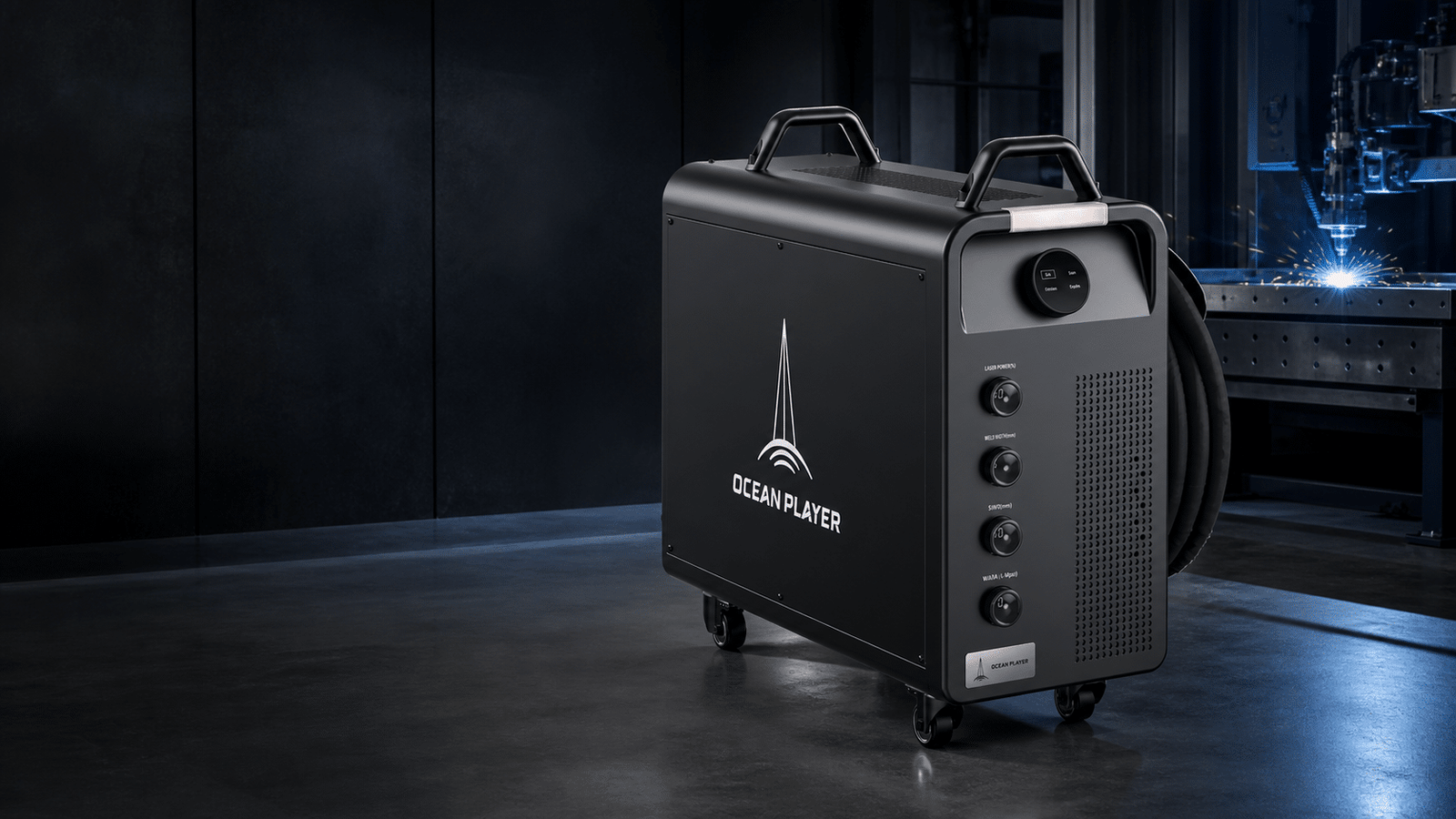
Laser Welding Machines for Cleaner Seams, Faster Fabrication and Reliable Production.
Choose handheld, air-cooled, water-cooled, wire-fed or robotic laser welding equipment for stainless steel, carbon steel, aluminum, galvanized sheet, tubes and production assemblies. Oceanplayer helps match power, cooling, wire feeding and automation to your parts.
- Handheld and robotic systems
- Air-cooled and water-cooled options
- Sample welding test available
Select a machine around the weld result and production goal
Machine power matters, but weld quality also depends on joint design, fit-up, material, shielding gas, wire selection, travel speed and operator control.
Reduce spatter, discoloration and finishing work when joint preparation and parameters are suitable.
Control deformation on sheet metal, cabinets, enclosures and visible assemblies.
Give operators a guided process for repeatable workshop welding across common joints.
Match cooling, wire feeding and automation to the required duty cycle and part volume.
Compare Oceanplayer laser welding machine types
Start with how the machine will be used, then compare cooling, power, wire feeding and automation requirements.
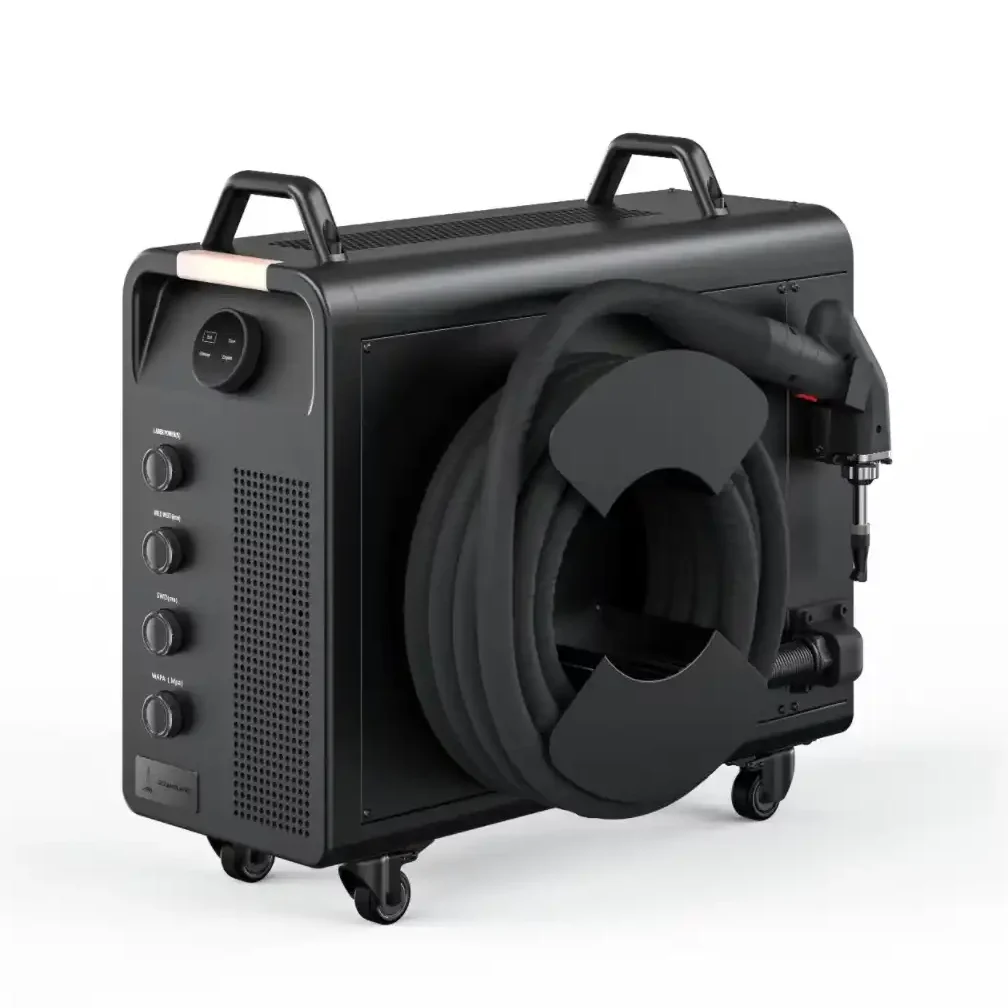
Handheld Laser Welding Machine
Move between workstations and weld sheet metal, frames, cabinets, tubes and repair parts with a hand-guided welding gun.
Explore Handheld Welders
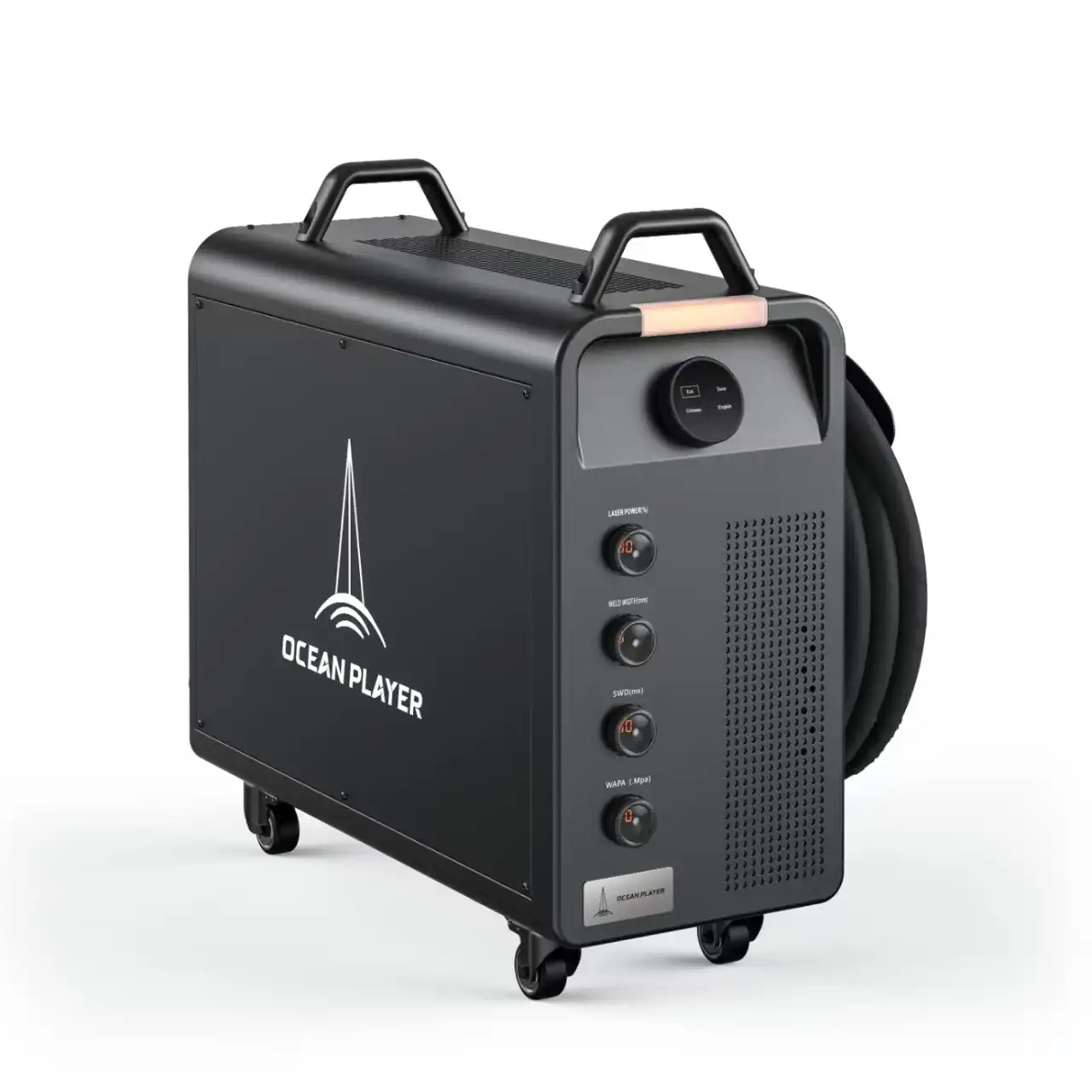
Air-Cooled Laser Welder
Reduce machine size and eliminate the external water chiller for mobile or space-conscious welding work.
Explore Air-Cooled Welders
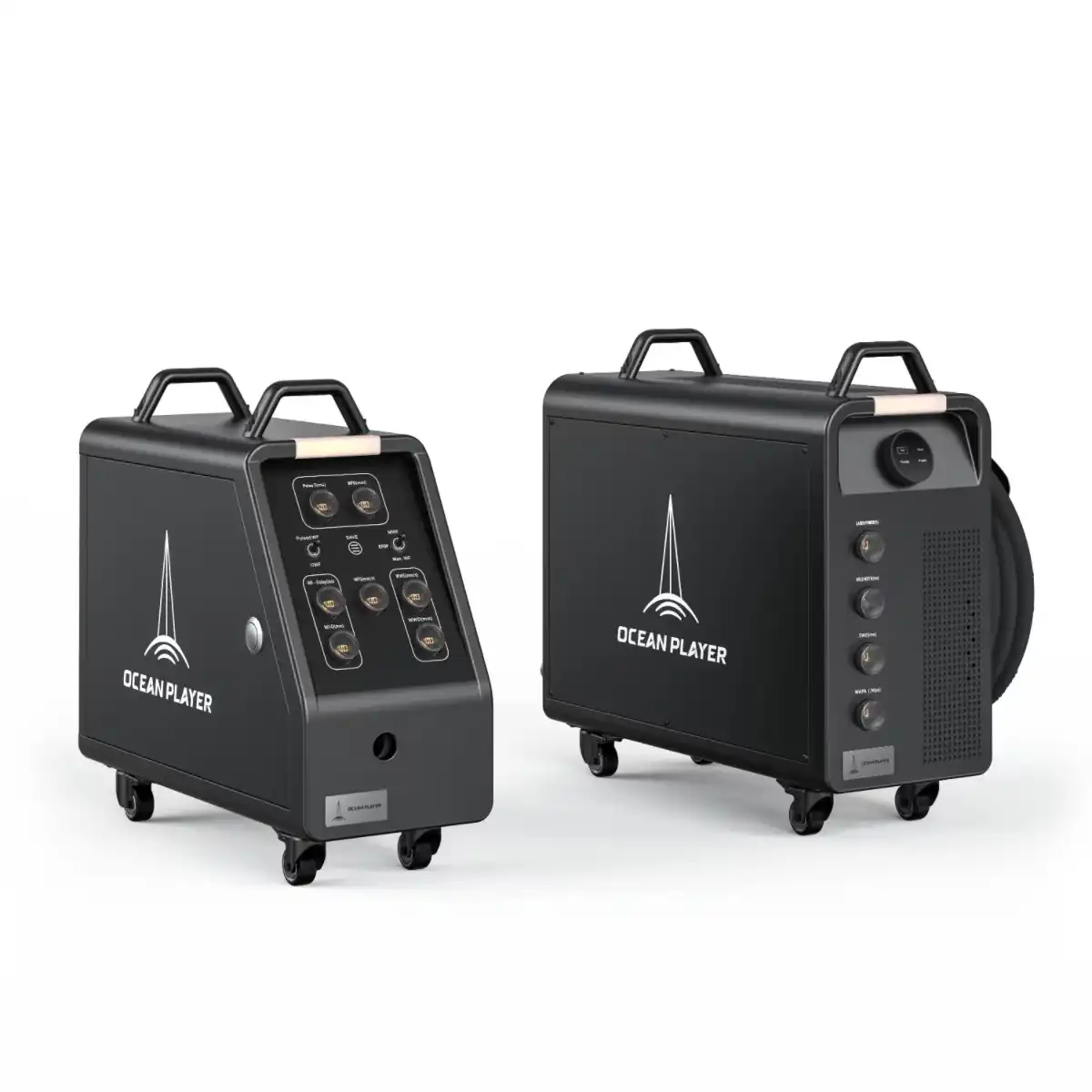
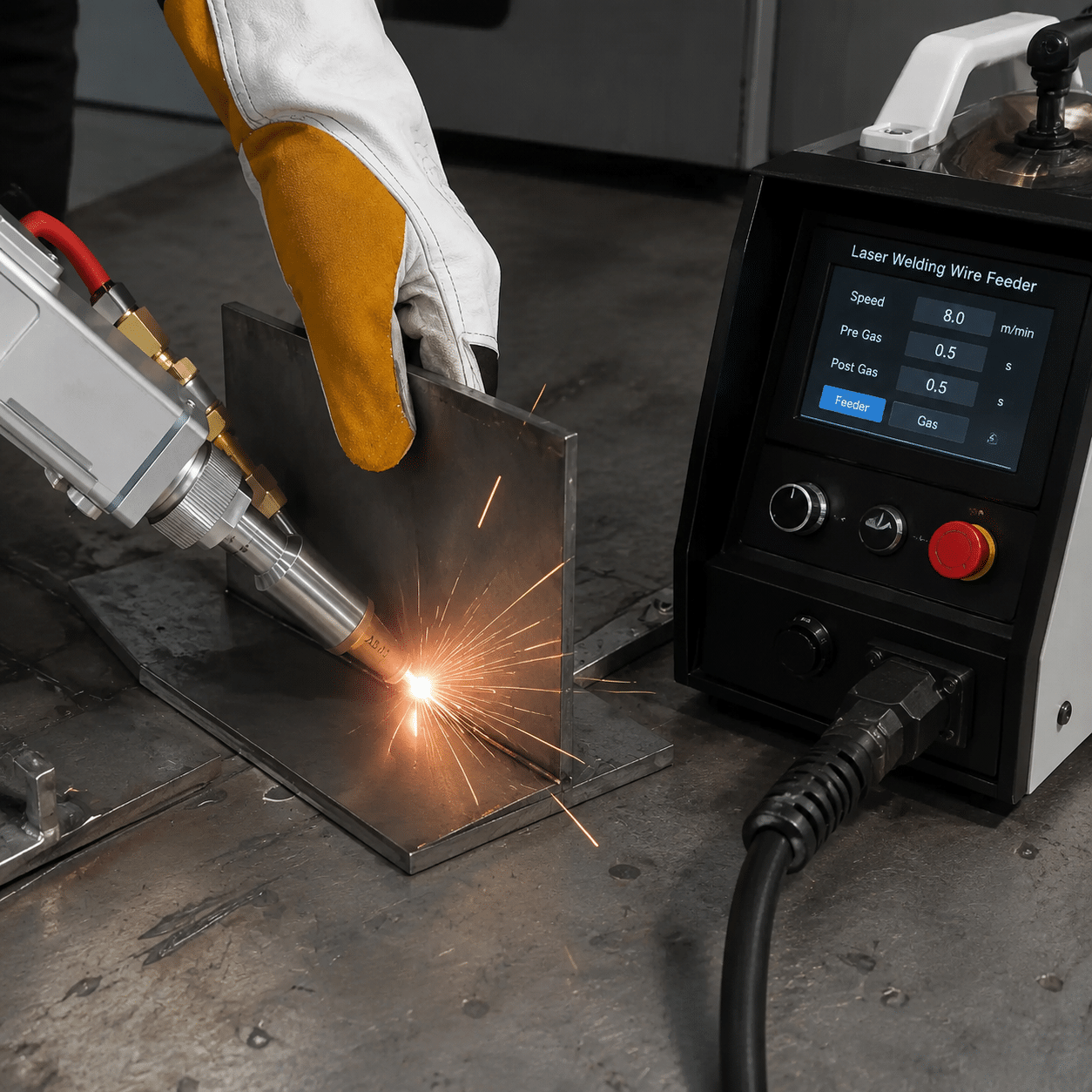
Laser Welder with Wire Feeder
Add filler wire when joints have wider gaps, bead profile needs reinforcement or material matching requires consumable control.
Explore Wire-Fed WeldersBuild the system around how you actually weld
Choose the operating format first, then cooling and filler wire. This avoids selecting power without considering the full production workflow.
Handheld or Robotic
Handheld welding provides flexibility for varied parts. Robotic welding supports repeatable paths and controlled cycle time.
- Part variety and batch size
- Joint accessibility
- Operator or automation workflow
Air or Water Cooling
Air cooling supports compact systems. Water cooling is often chosen for sustained production and thermal stability.
- Continuous welding time
- Workshop temperature
- Mobility and installation space
Wire or Autogenous Welding
Weld without wire when fit-up is controlled. Add wire when gaps, reinforcement or alloy matching require filler metal.
- Joint gap and edge condition
- Bead profile requirement
- Material and filler compatibility
Plan the process around material response and joint design
Sample welding should confirm penetration, appearance, strength, deformation, shielding gas and filler wire for the actual part.
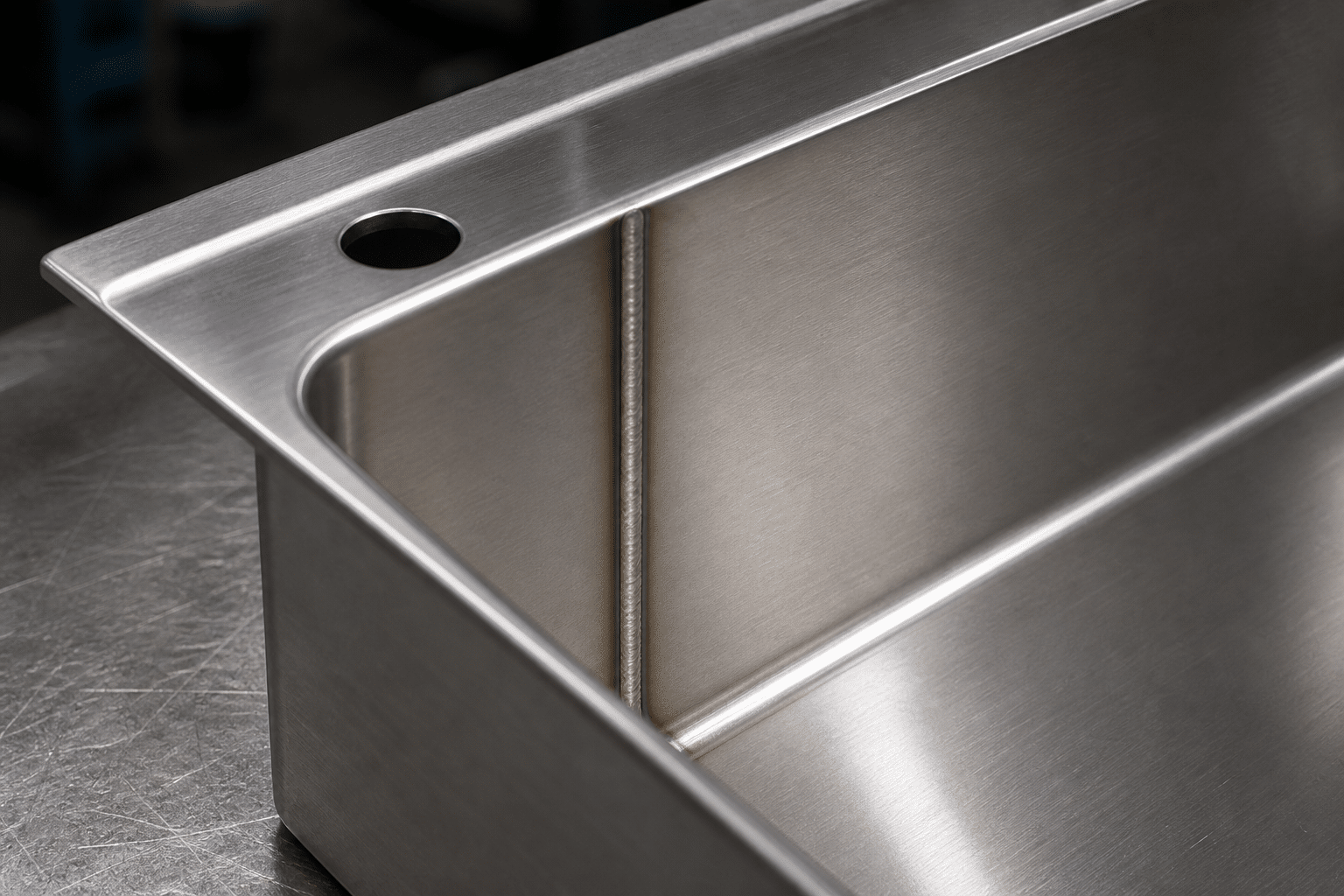
Stainless Steel
Cabinets, sinks, enclosures, equipment housings and visible metalwork.
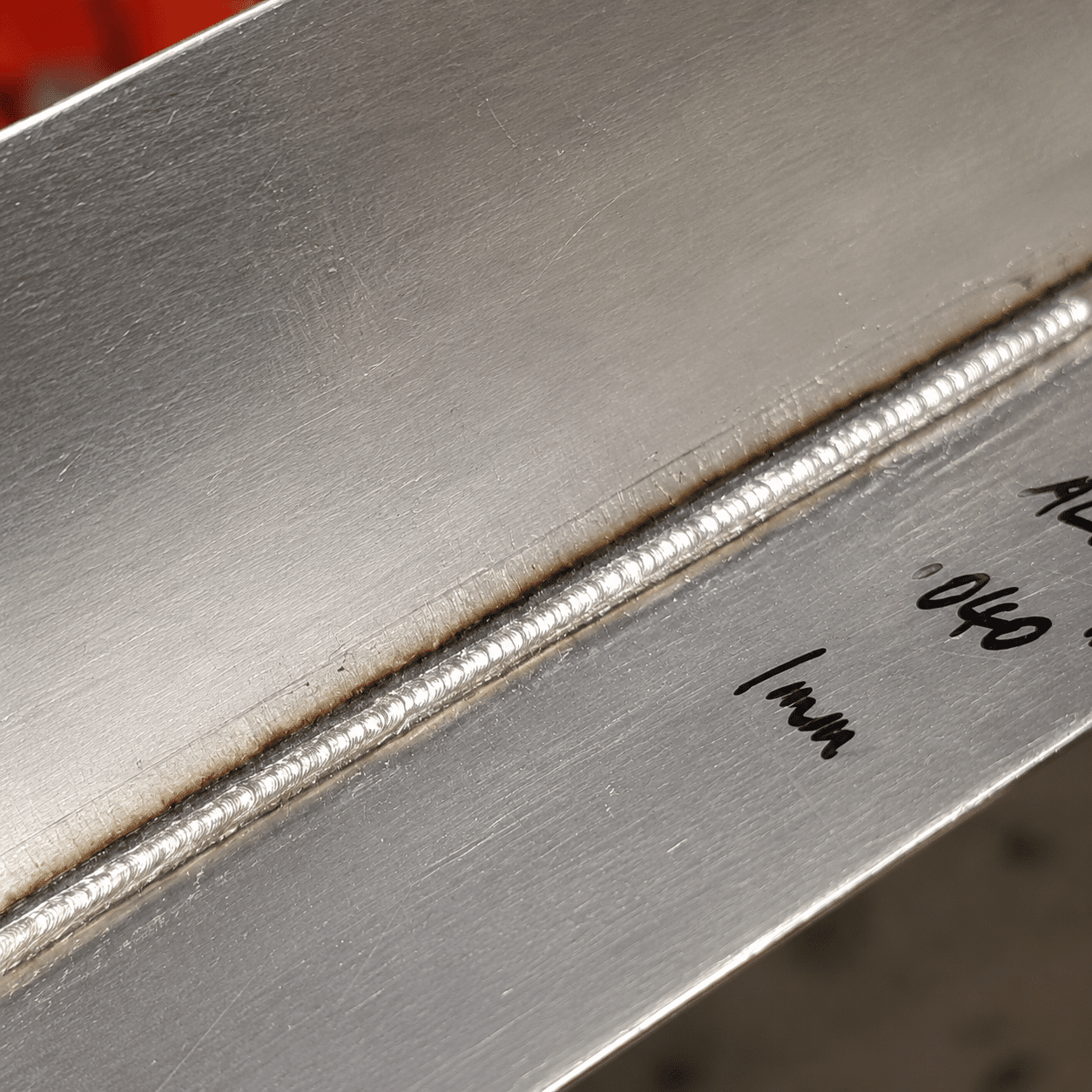
Aluminum
Lightweight assemblies, frames, enclosures and selected battery components.
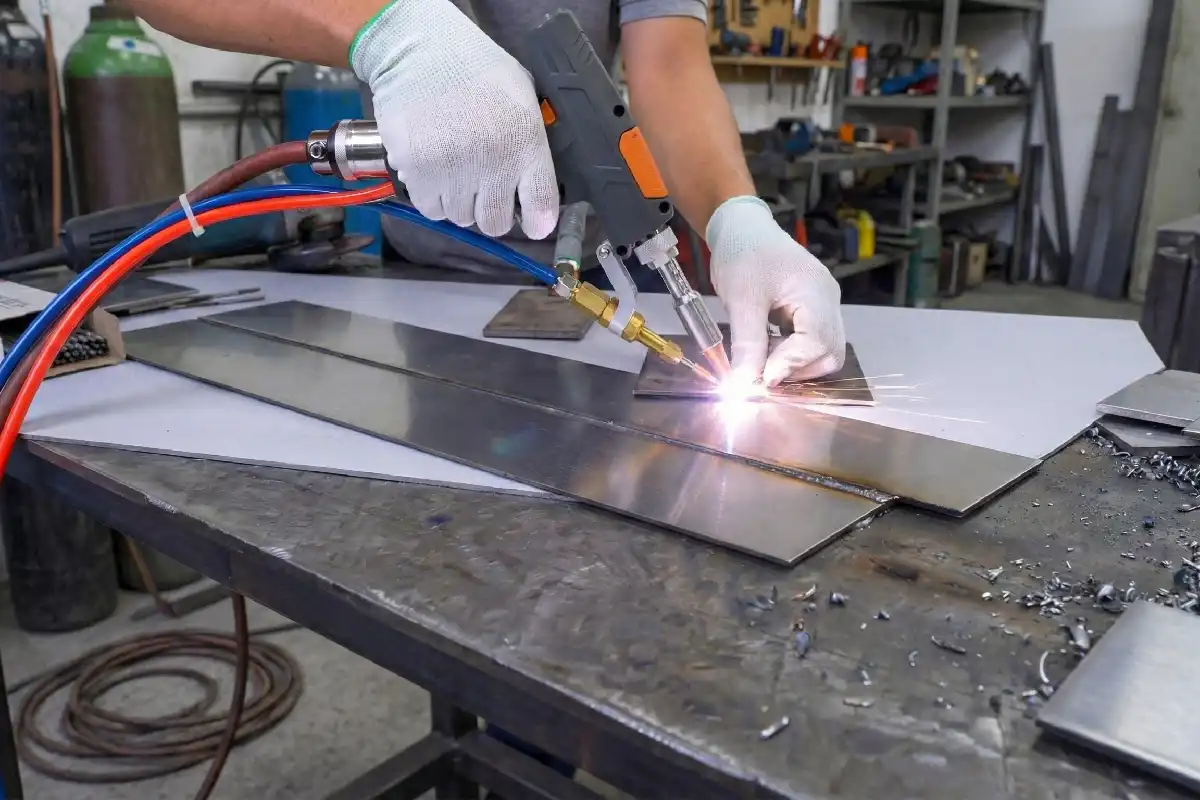
Galvanized Steel
Fabricated sheet parts where coating behavior and ventilation need process control.
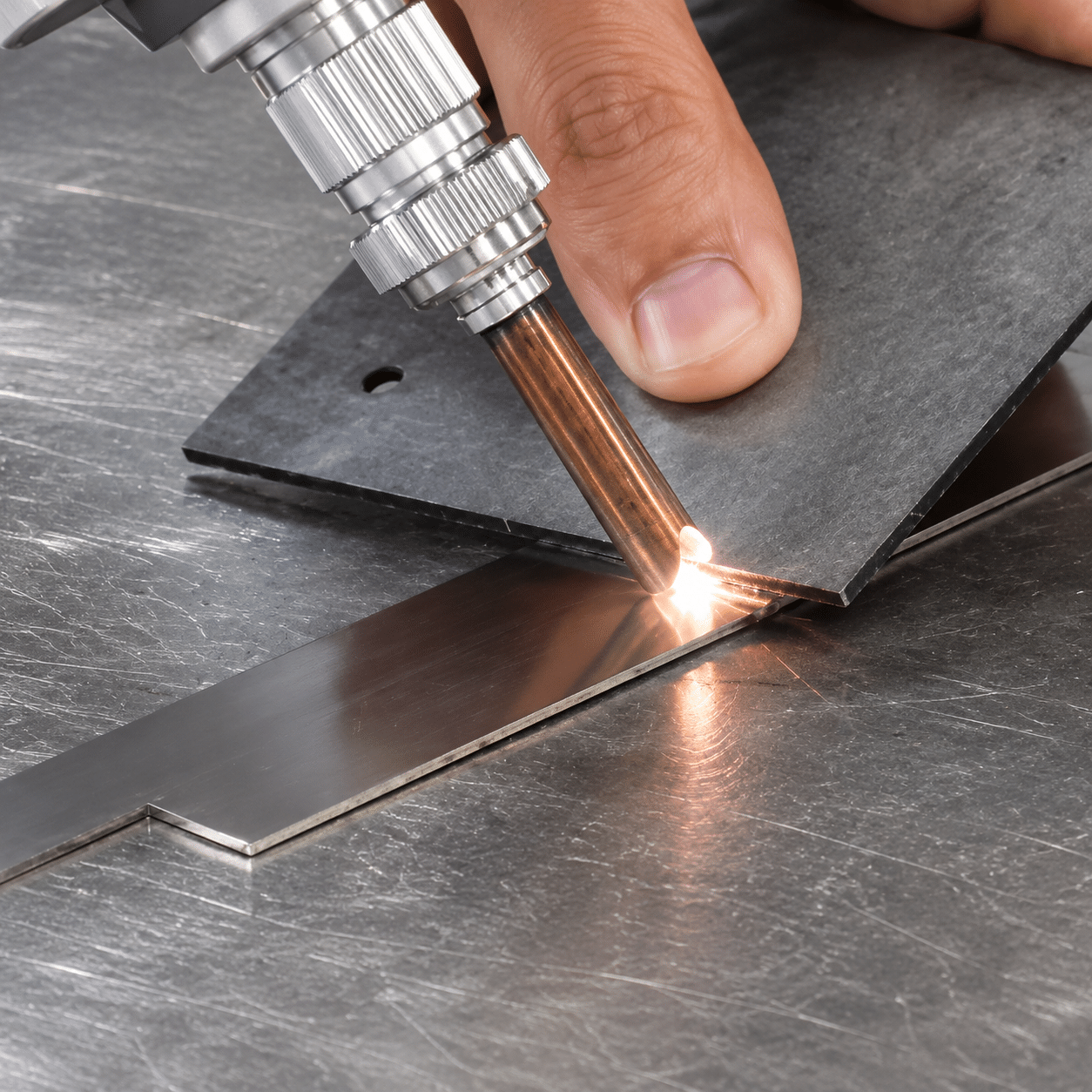
Sheet Metal
Lap, butt, corner and fillet joints for fabrication and visible assemblies.
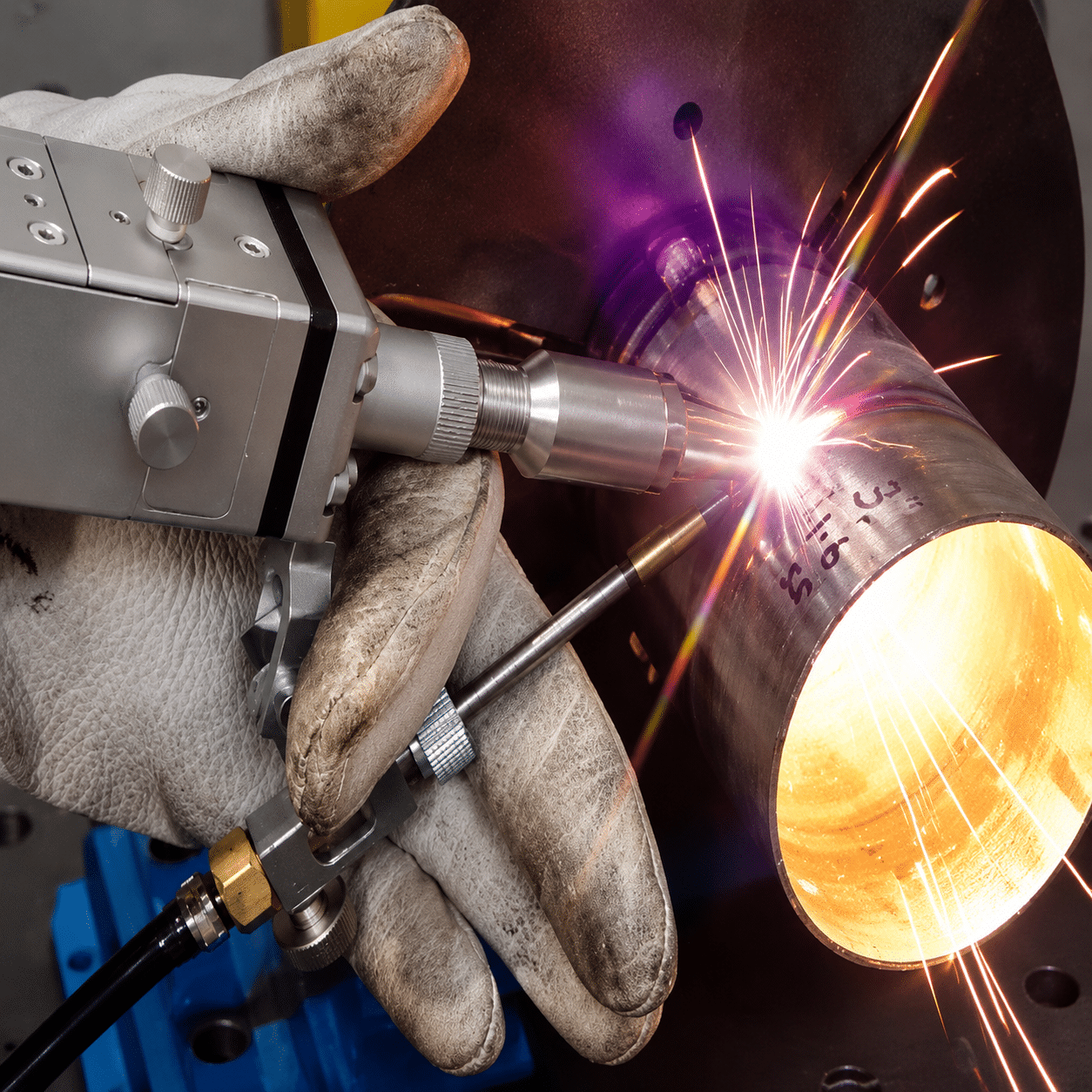
Pipes & Tubes
Round components, fittings, frames and tubular products with suitable fixtures.
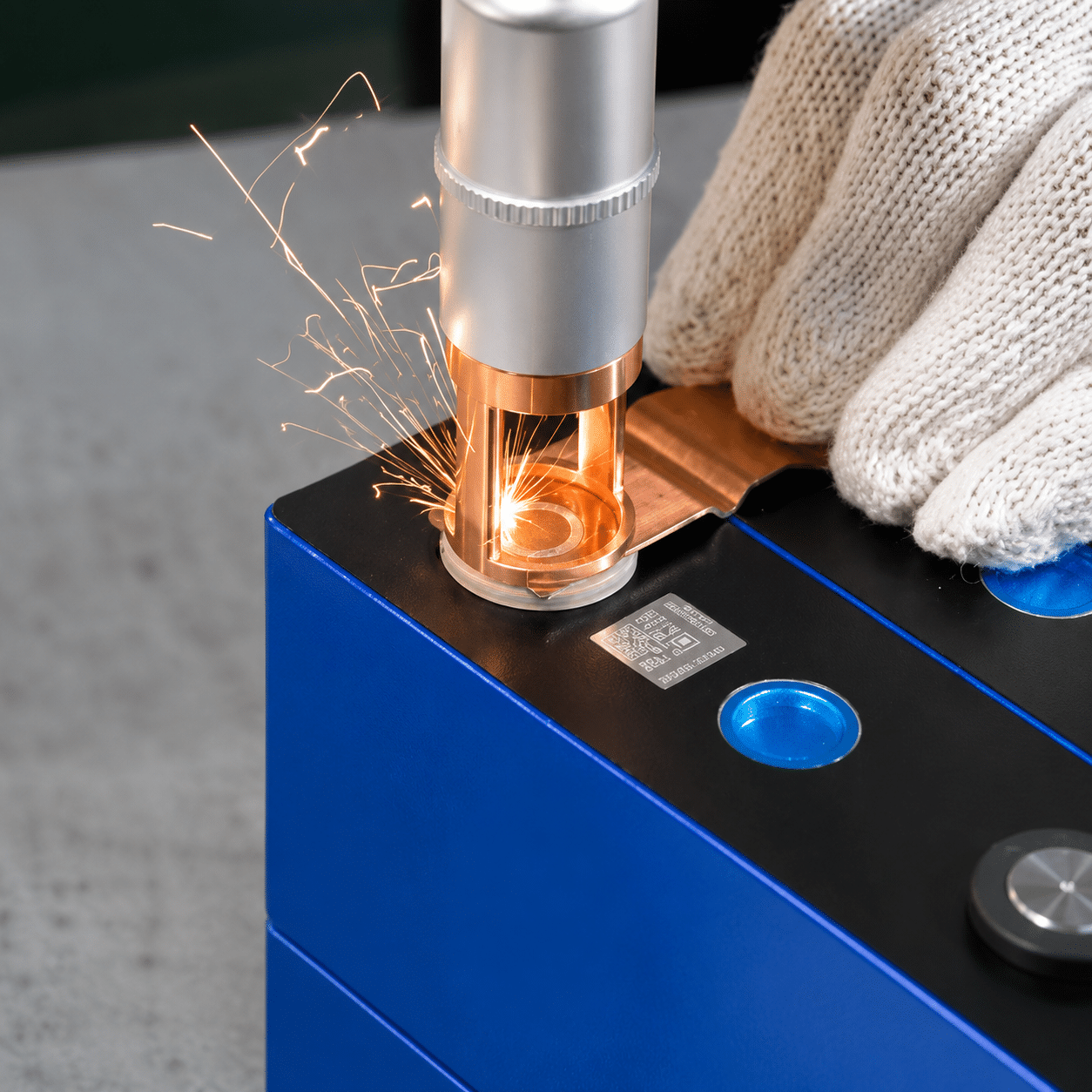
Battery Components
Controlled joining for tabs, trays, enclosures and selected conductive parts.
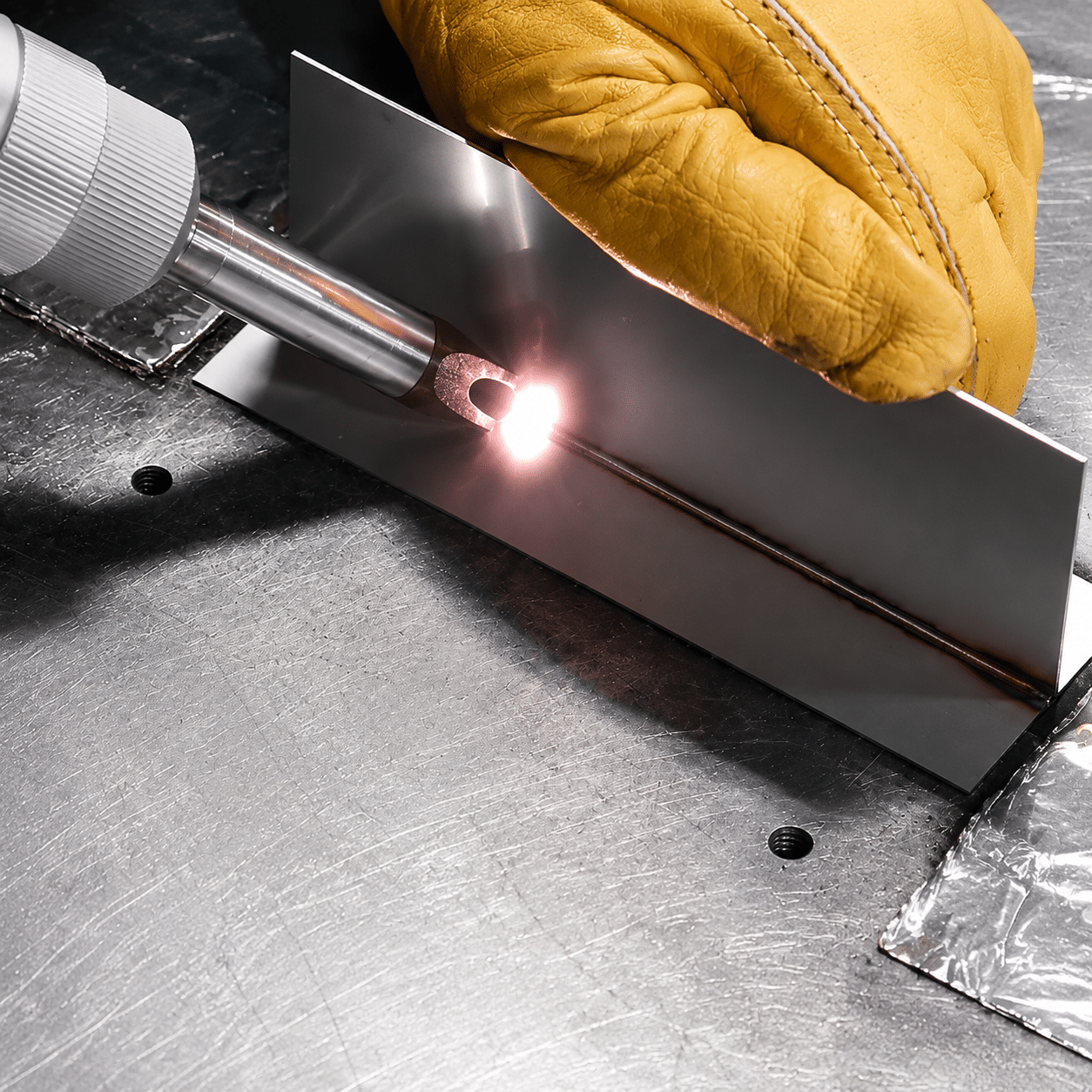
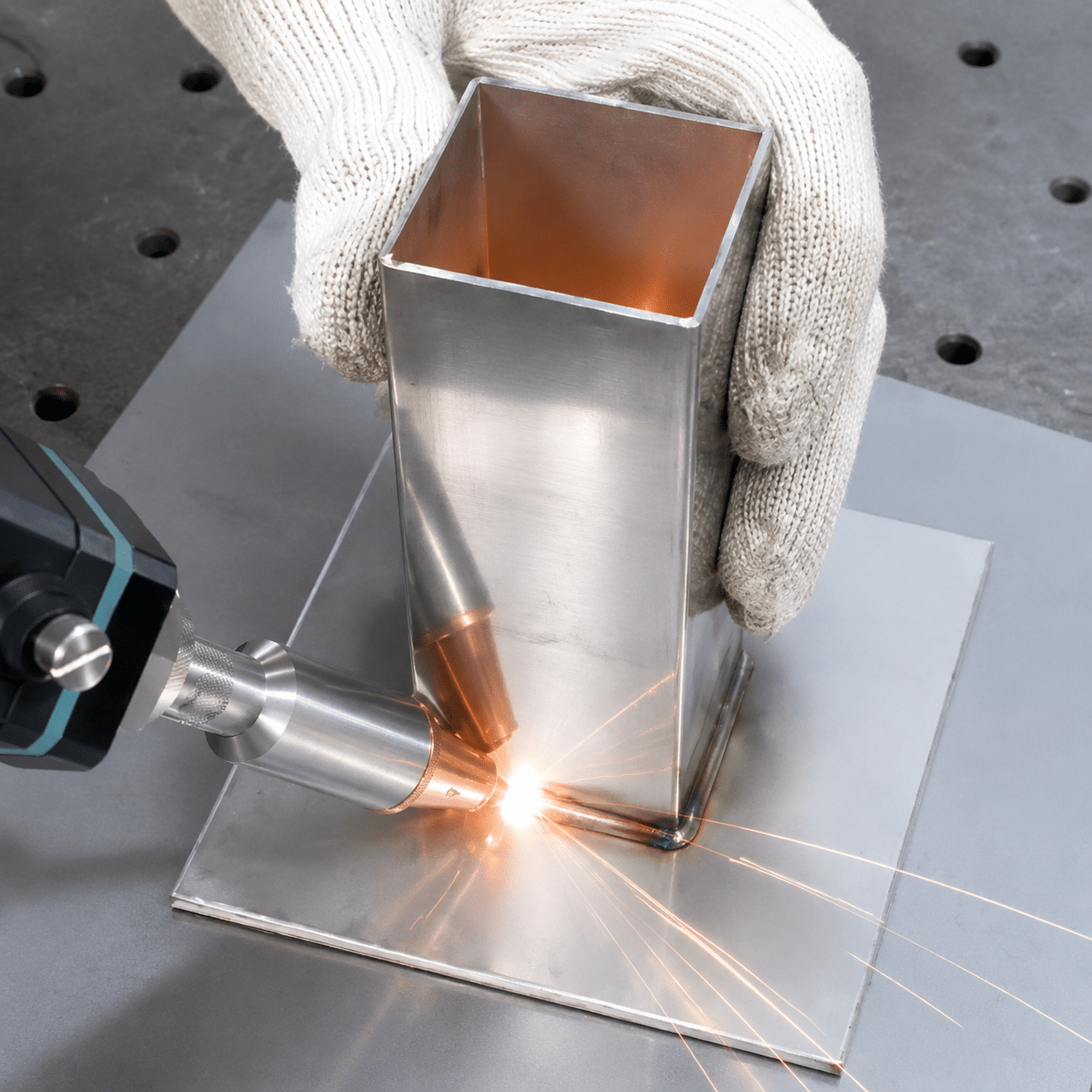
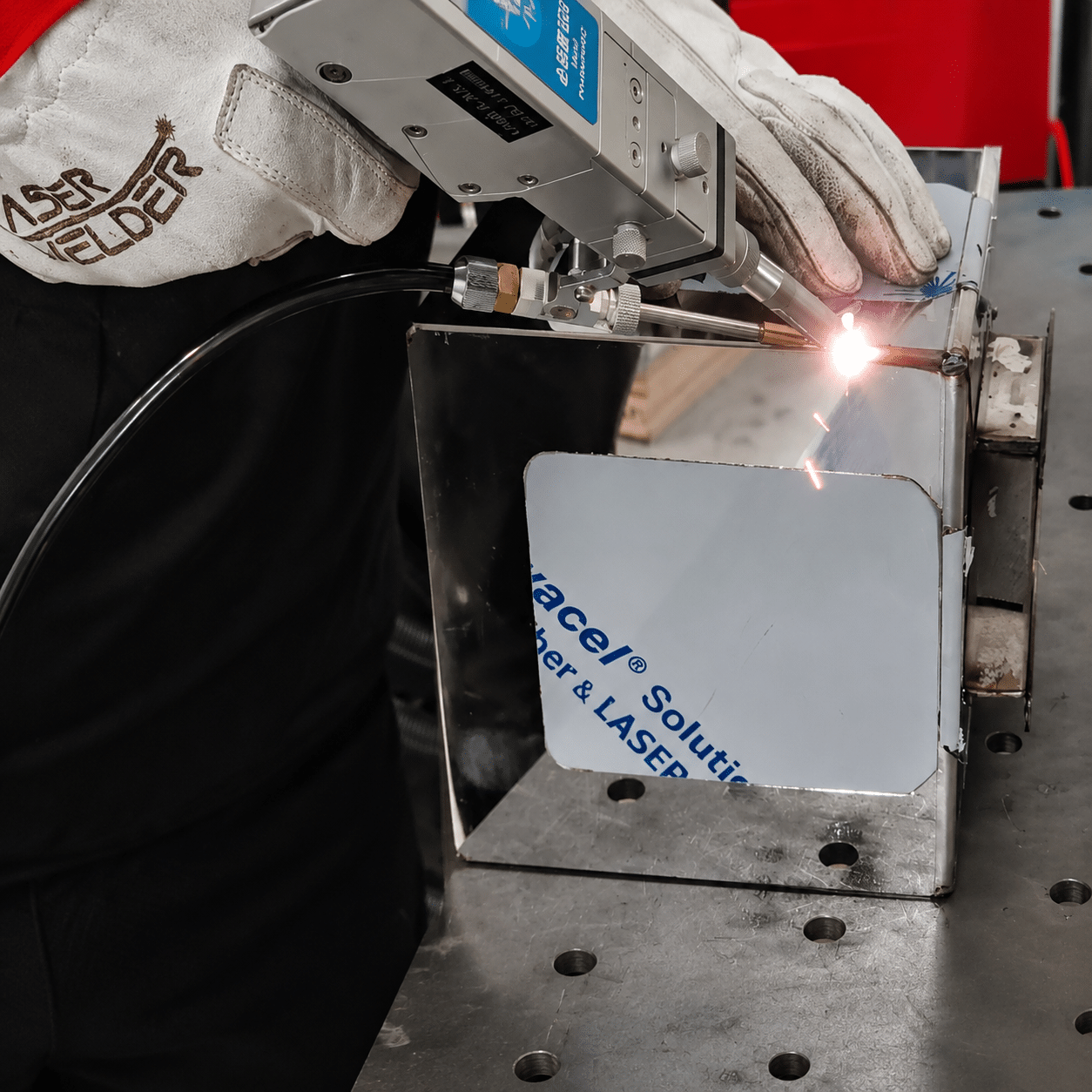
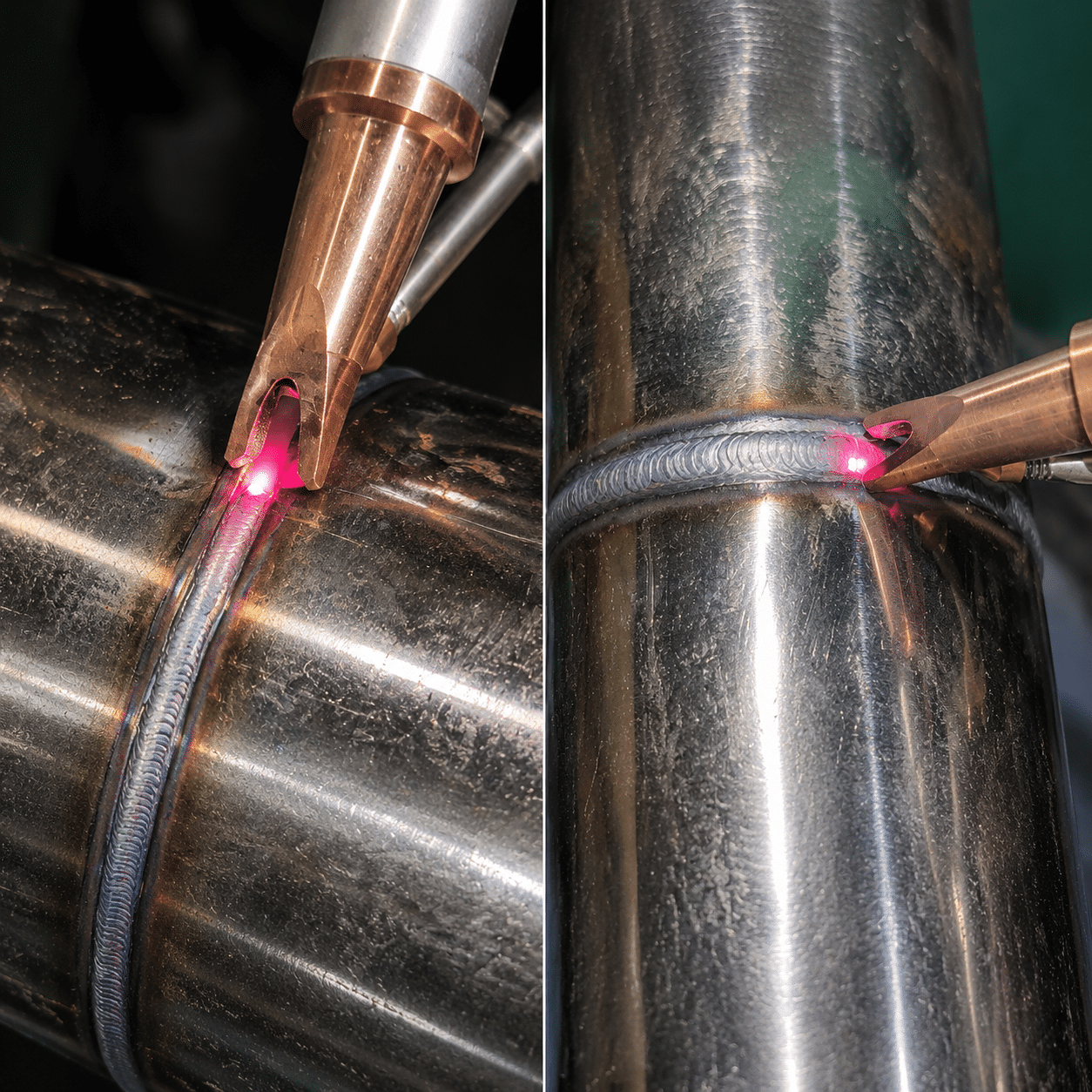
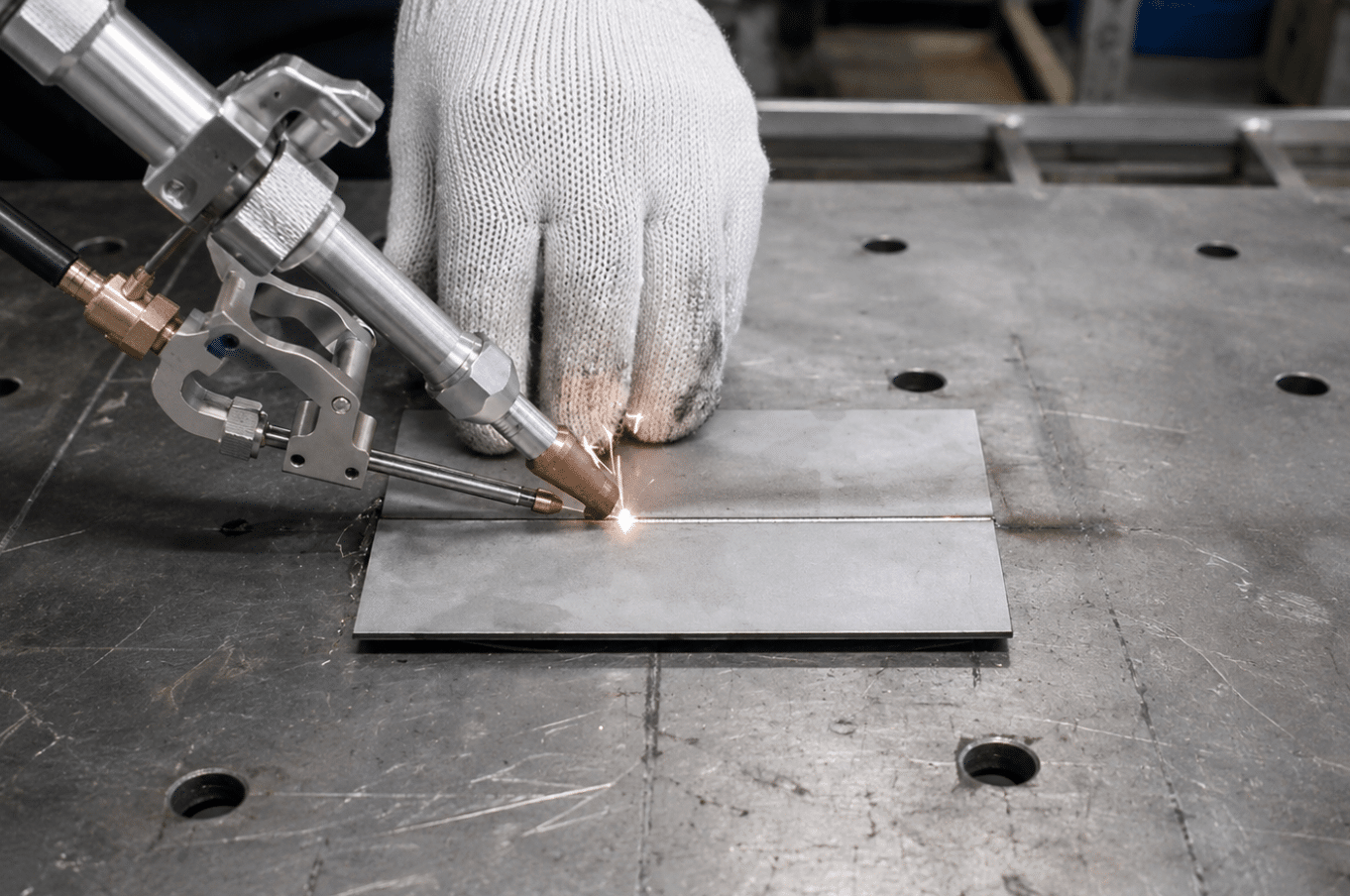
Inspect seam appearance across different metals and joints
Result photos help you evaluate bead shape, discoloration, fit-up, penetration and post-weld finishing before confirming a machine.
Watch welding speed, hand movement and final seam quality
Compare handheld operation, wire feeding and robotic production before selecting the system format.
Handheld Sheet Welding
Review travel speed, operator movement and seam appearance on common fabrication work.
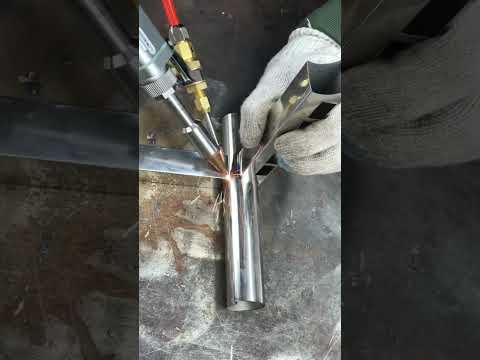
Wire Feeder Welding
See how filler wire supports wider joints, bead reinforcement and less consistent fit-up.
Robotic Welding Cell
Watch repeatable robot paths, fixtures and controlled production cycle time.
Choose power and cooling by thickness, speed and duty cycle
The final capability depends on material, joint design, fit-up, focal position, travel speed and whether filler wire is used. Confirm the actual part through sample welding.
A practical starting point for thinner work, controlled heat input and intermittent workshop welding.
A common choice for varied workshop parts that need a balance of speed, penetration and flexibility.
Better suited to heavier work or faster production when joint preparation and cooling are matched correctly.
Choose Air Cooling When
Portability and compact installation are more important than long continuous welding periods.
- Limited workshop space
- Movement between work areas
- Intermittent or flexible production
Choose Water Cooling When
Thermal stability and sustained operation are priorities for regular production workloads.
- Longer daily welding time
- Higher ambient temperature
- Stable workshop production

Good welding starts before the laser is switched on
Laser welding works best with stable joint position and controlled gaps. The fixture, edge condition, wire and shielding gas can be as important as machine power.
- Use fixtures to keep seams aligned and focal distance stable
- Clean oil, oxide and coating residue from the weld zone
- Add filler wire when the gap or bead profile requires it
- Match wire chemistry to the base material and weld requirement
- Verify shielding gas flow, nozzle position and ventilation
Compare laser welding with TIG and MIG workflows
No process is best for every joint. Compare speed, fit-up, heat input, operator skill and production flexibility using your actual parts.
| Decision Point | Handheld Laser Welding | TIG Welding | MIG Welding |
|---|---|---|---|
| Typical strength | Fast travel and concentrated heat input on suitable joints | Precise manual control and broad established practice | High deposition and practical fabrication speed |
| Fit-up requirement | Benefits from consistent alignment; wire feeder helps with gaps | Flexible control for varied joints with skilled operation | More tolerant of some fabrication gaps with filler wire |
| Heat and deformation | Concentrated energy can reduce overall heat input | Slower travel may increase heat accumulation | Depends on transfer mode, settings and joint design |
| Operator workflow | Guided handheld movement with laser safety training | Requires coordinated torch and filler control | Familiar process with wire and parameter control |
| Best evaluation method | Sample the same joint and compare strength, appearance, distortion, cycle time and finishing work | ||
Plan welding quality together with safety and process control
A complete system includes more than the laser source. Review protection, extraction, shielding gas, consumables and workstation layout before installation.
Laser Protection
Use a controlled area, wavelength-rated protection, interlocks and guarding appropriate to the setup.
Fume Control
Capture welding fumes and coating emissions according to the material and surface condition.
Shielding Gas
Confirm gas type, purity, flow and nozzle position for the selected metal and weld result.
Process Records
Store suitable recipes and inspection criteria for repeatable work across operators and batches.
Check seam quality on your own parts before configuration.
A sample test helps verify power, cooling, wire, shielding gas, welding speed, fit-up tolerance, appearance and deformation before the final quotation.
Share Part Details
Send material, thickness, joint, gap, photos and target quality.
Run the Weld Test
Compare power, speed, wobble, wire and shielding gas settings.
Review the Result
Check seam appearance, penetration, deformation and production fit.
Move from sample welding to a complete production setup
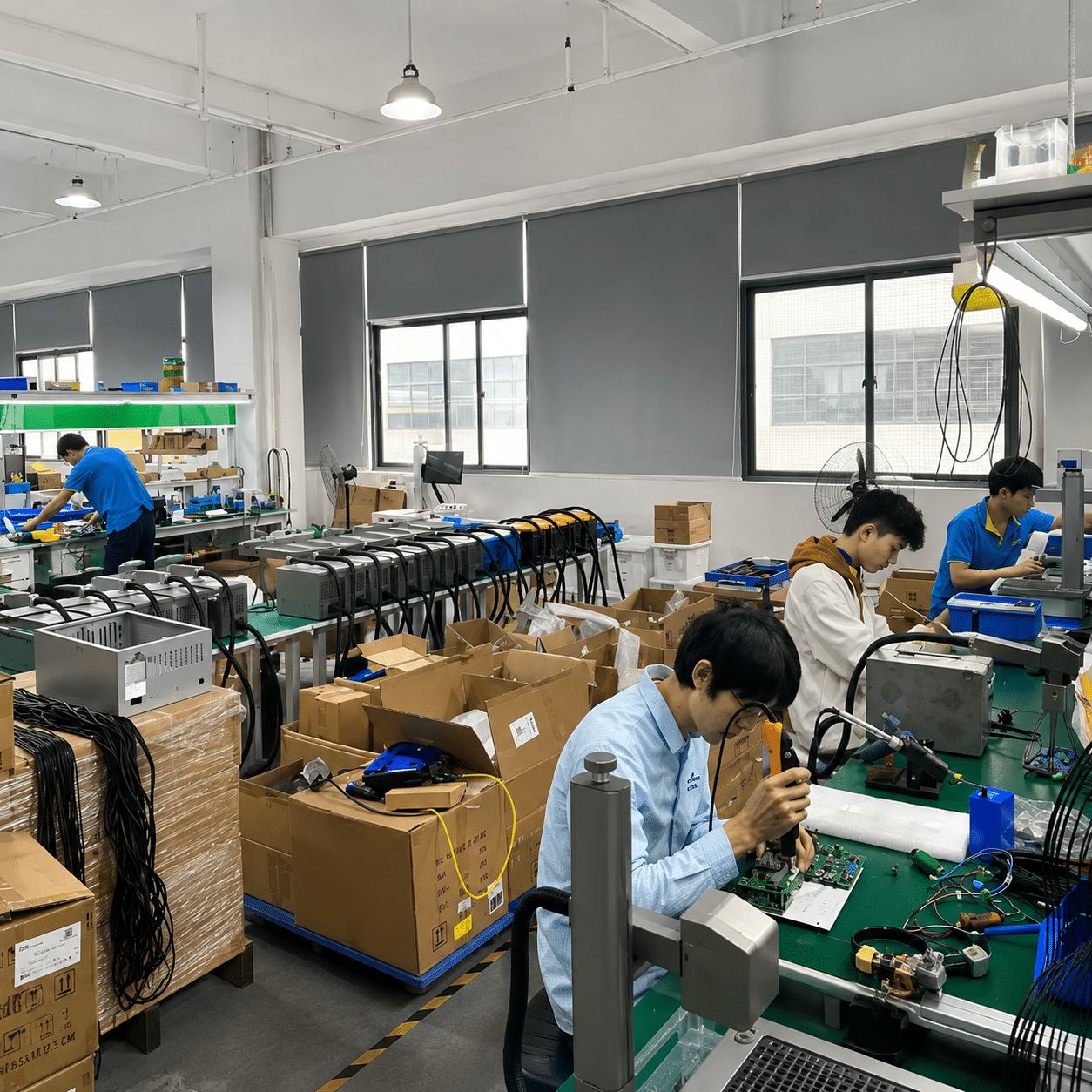
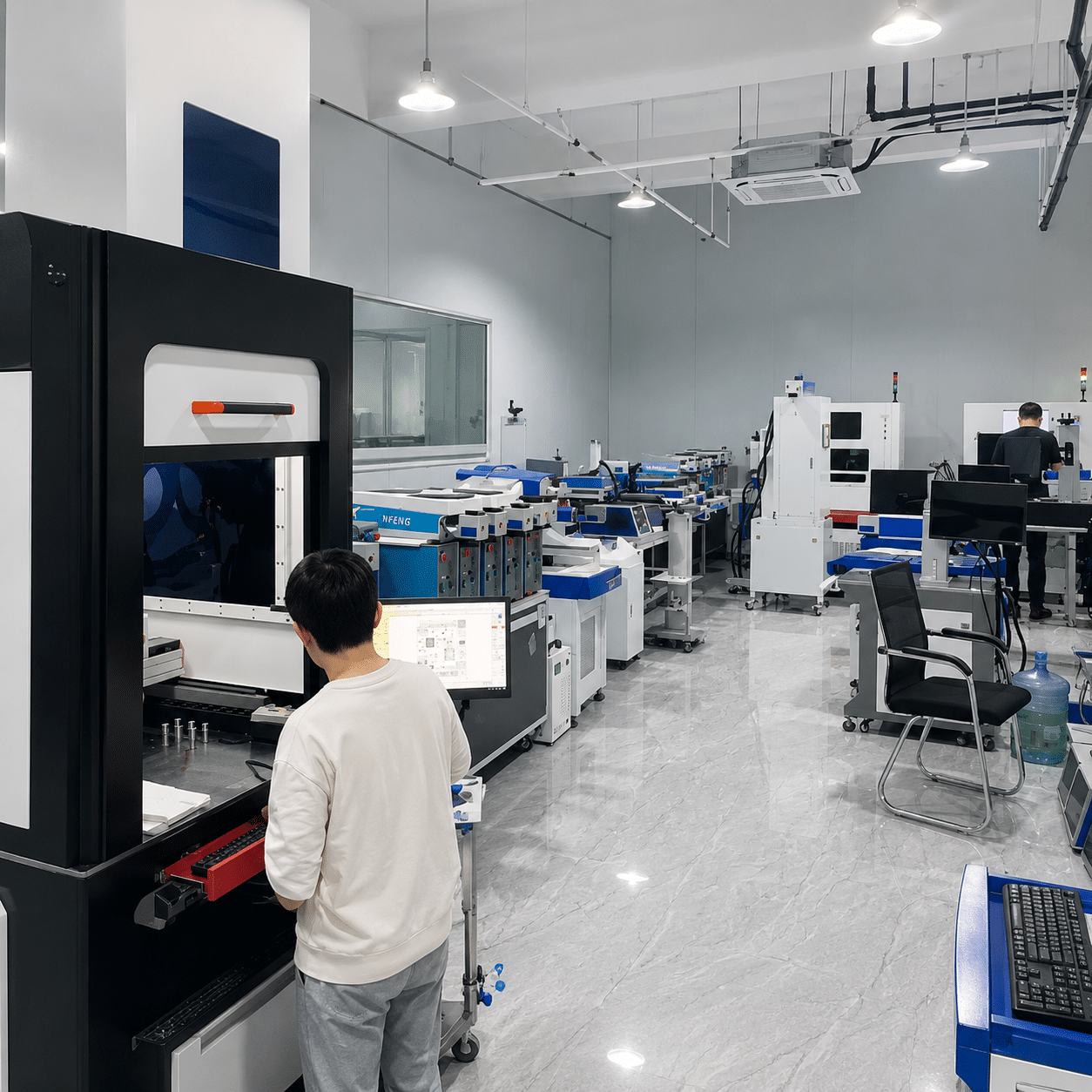
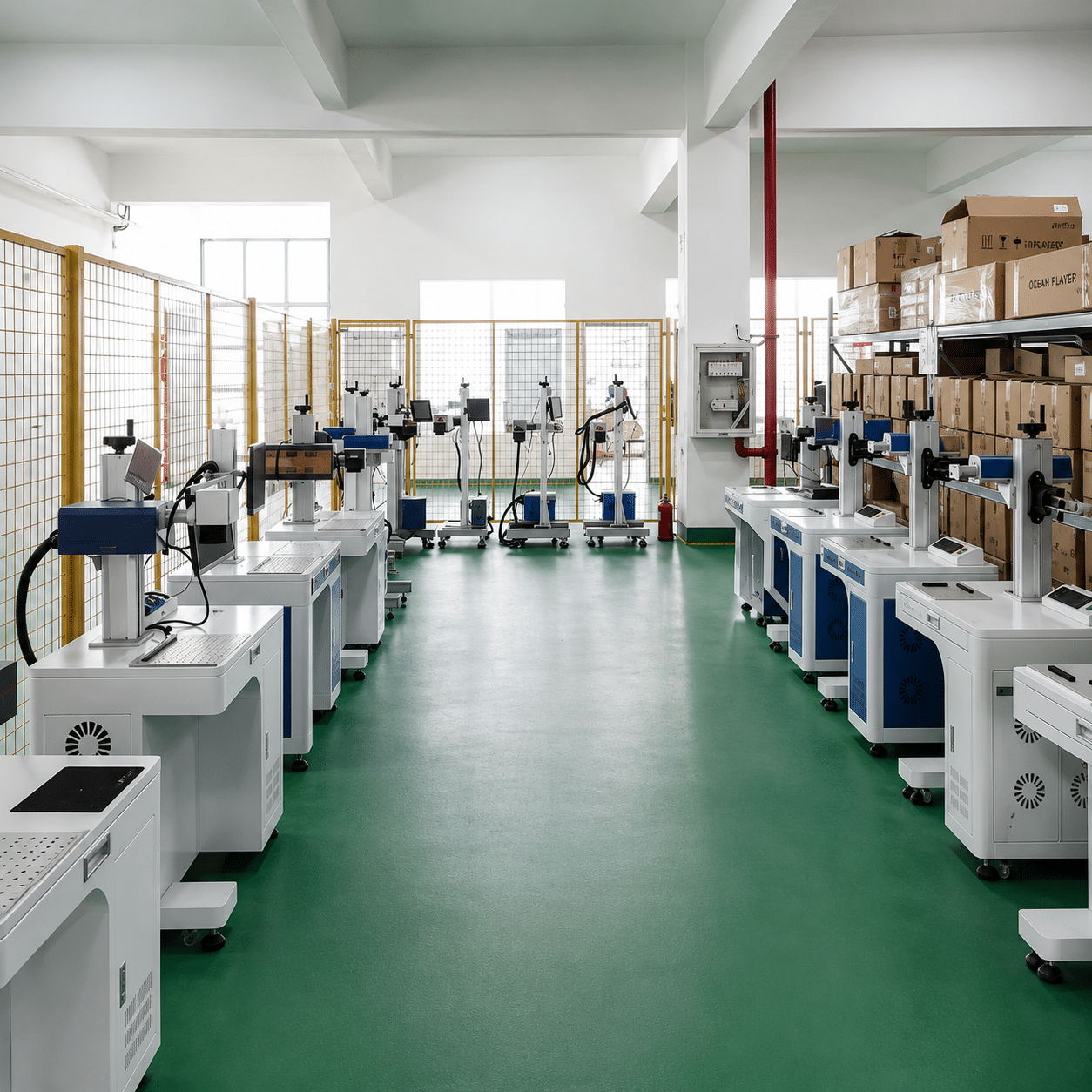
Oceanplayer supports system selection, application testing, accessories, packing and remote startup guidance for industrial laser welding projects.
- Power, cooling and laser source selection
- Welding head, nozzles, wire feeder and consumable planning
- Robot, fixture, enclosure and extraction options
- Voltage, export packing and delivery coordination
- Operation guidance and after-sales communication
Compare related laser welding products and guides
Use these pages to narrow the machine format, material, power and expected seam result.
Laser Welding Machine FAQ
Practical answers about machine types, materials, power, cooling, wire feeding and sample testing.