
Medical Device Laser Marking for UDI Codes, Serial Numbers, Black Marks and Durable Traceability.
Oceanplayer helps medical device manufacturers mark stainless steel instruments, titanium parts, implants, surgical tools, plastic components and packaging-related parts with permanent, readable and production-ready laser marks. Build the right process around material, surface finish, code size, contrast, corrosion resistance and validation requirements.
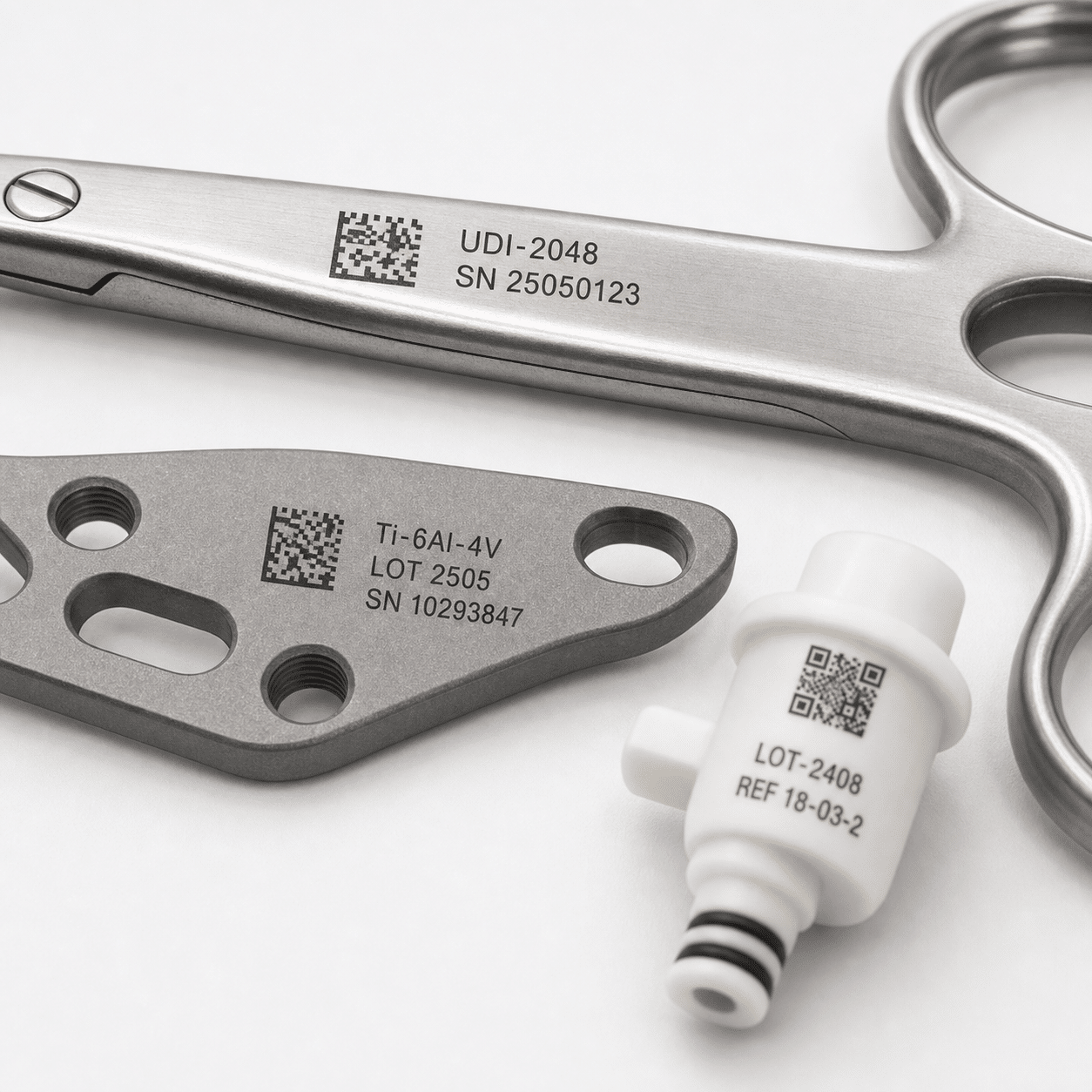
- UDI, QR code, Data Matrix and serial number marking
- Black marking on stainless steel medical tools
Medical marking needs readable codes, stable contrast and surface-safe processing
Medical device marks often need to remain readable through handling, cleaning, sterilization, packaging and service life. Laser selection should consider code grading, corrosion behavior, surface finish and production data workflow.
UDI codes must stay readable
Laser marking can create compact Data Matrix codes, QR codes and serial numbers directly on metal or plastic device parts.
Surface quality matters
Medical parts may require clear contrast without excessive surface damage, burrs, deep grooves or hard-to-clean residues.
Traceability needs data control
Batch numbers, device IDs, variable data and scanner verification can be integrated into workstation or automated marking workflows.
Build a medical marking process around code quality and part protection
The marking result depends on material, laser source, focus, pulse settings, fixture stability, code data and inspection method. A controlled workflow helps reduce unreadable marks and rework.
Confirm part surface
Check stainless steel grade, titanium, plastic, coating and surface finish.
Define mark content
Set UDI, Data Matrix, serial number, batch code, logo or text size.
Hold parts repeatably
Use fixtures or rotary tools for curved tools, tubes, handles and small parts.
Check readability
Review contrast, scanner readability, surface finish and durability needs.
Medical device parts suitable for laser marking
Laser marking can support permanent identification on many medical and healthcare components when the material, surface finish and regulatory marking target are clearly defined.
- Surgical instruments, forceps, scissors, clamps, handles and stainless steel tools.
- Titanium parts, orthopedic instruments, selected implants and dental components.
- UDI Data Matrix codes, QR codes, serial numbers, batch codes and logos.
- Plastic medical housings, connectors, device covers and selected polymer parts.
- Round parts, tubes, rings and small components with rotary or precision fixtures.
Select medical laser marking equipment by material and mark requirement
The best machine depends on stainless steel grade, titanium alloy, plastic type, desired contrast, code size, production volume and inspection requirement.
| Marking Requirement | Common Laser Choice | Best Use | What To Confirm |
|---|---|---|---|
| Black mark on stainless steel | MOPA laser marker | Surgical tools, UDI codes, logos and visible marks | Pulse settings, surface finish, corrosion requirement and passivation process |
| Standard serial number or logo | Fiber laser marking machine | Metal instruments, tags, plates and device components | Contrast, speed, mark depth and code size |
| Titanium medical parts | Fiber or MOPA laser marker | Dental parts, orthopedic tools and selected titanium components | Color/contrast target, heat effect and surface requirement |
| Plastic medical components | UV laser marker or suitable fiber setup | Housings, connectors, covers and polymer device parts | Plastic type, additive, mark contrast and melting risk |
| Batch traceability workflow | Automated laser marking system | UDI codes, serial numbers, scanner verification and line marking | Data input, code grading, fixture design and integration method |
Medical marking should be planned around readability, surface behavior and production control.
For medical devices, a good mark is not only visible. It should match the material, code size, cleaning process, corrosion requirement and traceability workflow. Sample testing helps confirm contrast, readability and surface condition before equipment selection.
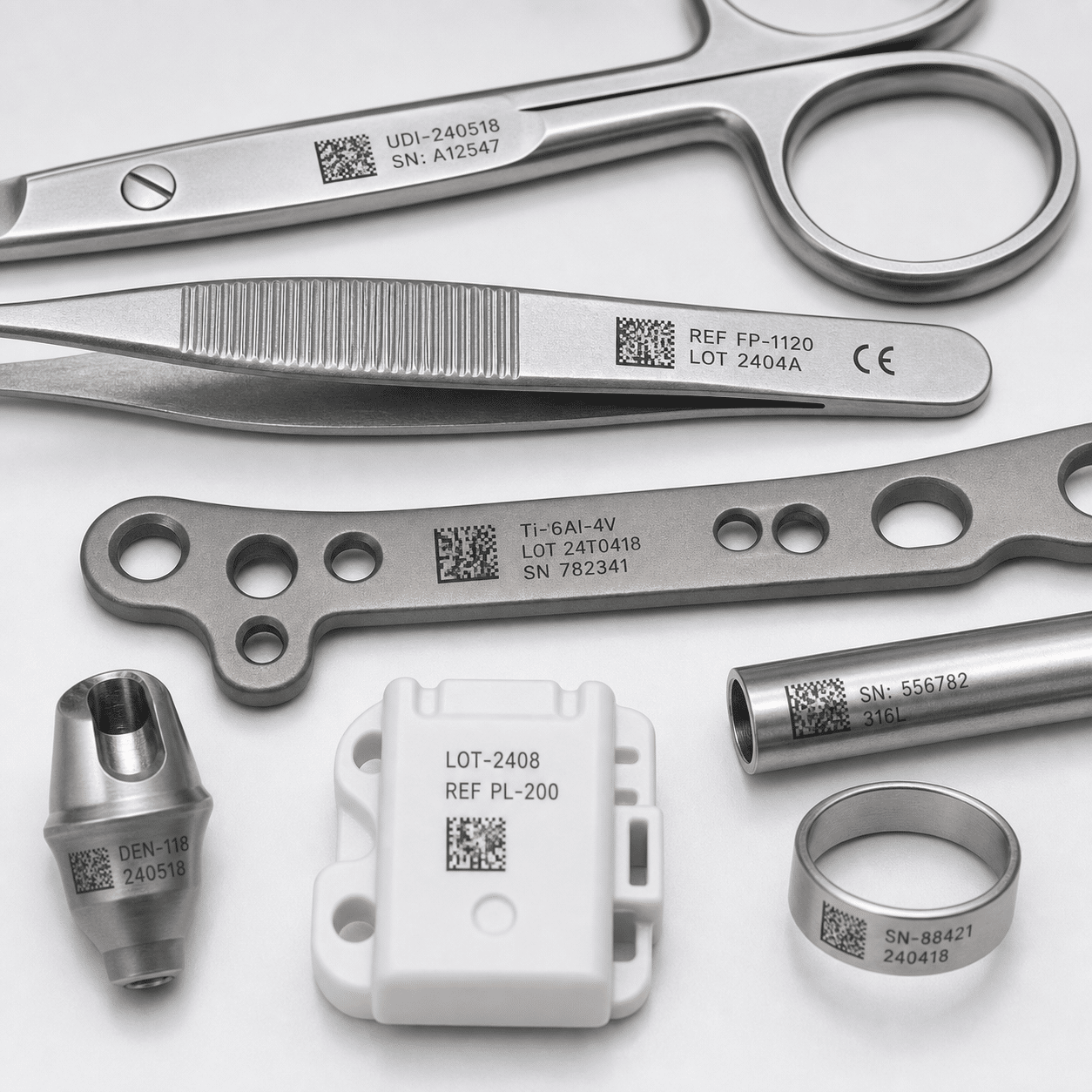
Review medical laser marking results across codes, materials and devices
Review common marking results for surgical tools, stainless black marks, titanium parts, UDI codes, plastic medical components and rotary marking.
Choose a medical marking system for material, code quality and production workflow
Medical device projects may need MOPA black marking, fiber engraving, UV marking for plastics, rotary fixtures, scanner verification or automated part handling.
MOPA Laser Marking Machine
For black marks on stainless steel, fine contrast control and selected medical tool applications.
Fiber Laser Marking Machine
For serial numbers, logos, standard codes and durable marks on many metal medical parts.
UV Laser Marking Machine
For selected plastics, sensitive parts and clean high-contrast marks with low thermal impact.
Rotary Marking Setup
For round handles, tubes, cylinders, rings and curved medical parts that need aligned marks.
Vision and Scanner Check
For code readability confirmation, variable data checks and production quality control.
Automated Marking System
For fixtures, trays, conveyors, serial data, UDI workflows and batch production.
Confirm these details before selecting a medical device laser marking system
Clear part and mark details help select the laser source, fixture, software workflow, scanner check and automation level.
Material and surface finish
Share stainless steel grade, titanium, plastic type, coating, polish level and cleaning process.
Mark content and size
Confirm UDI, Data Matrix, QR code, serial number, logo, text height and available mark area.
Contrast and durability target
Define black mark, white mark, engraving depth, corrosion requirement and expected service conditions.
Part geometry
Flat, curved, round, tiny, polished or irregular parts may need special fixtures or rotary tools.
Data workflow
Batch data, serial numbers, database input, scanner verification and code grading should be planned early.
Production volume
Daily output, tray loading, operator workflow and automation needs affect the final marking system.
Send medical parts and confirm mark readability before choosing the system.
Share material, surface finish, mark size, code content, durability requirement, production volume and scanner needs. Oceanplayer can help compare MOPA, fiber, UV, rotary and automated marking configurations.
Share Part Details
Send material, surface finish, drawing, photos and required mark content.
Test Marking Parameters
Review contrast, readability, mark size, surface effect and marking speed.
Choose Configuration
Select MOPA, fiber, UV, rotary fixture, scanner check or automated marking system.
Explore more Oceanplayer medical marking resources
Compare related marking machines and application pages to choose the right laser system for medical device traceability.