

1000W Laser Cleaning Machine: CW or Pulsed?
A 1000W laser cleaning machine can be continuous-wave (CW) or pulsed, and the two are not interchangeable. For bulk removal on robust steel, CW is often worth testing first. For selective cleaning and tighter surface limits, compare pulsed systems. Choose the machine that meets your finish and production target on a representative part—not the wattage alone.
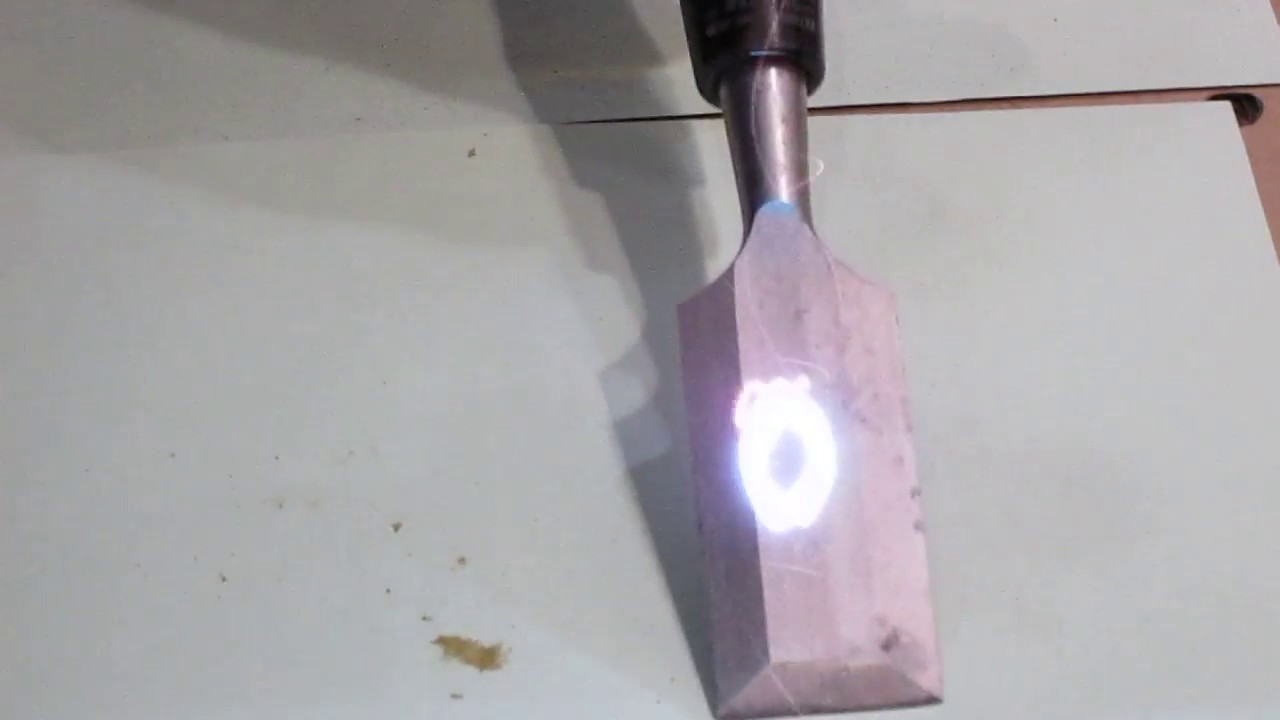
Should you choose a 1000W CW or pulsed laser cleaner?
Start with the surface you must deliver. Removing a thick layer from a heavy steel bracket is different from cleaning a polished mold without changing its finish. Both jobs may involve rust, but they do not call for the same process.
Use the table to choose which machine to trial first. It is a starting point for a sample test, not a guaranteed material-compatibility chart.
Swipe the table sideways to compare all columns.
| Your main job | What to compare first | What must pass the test |
|---|---|---|
| Broad rust or paint removal on robust carbon steel | A 1000W CW system, alongside alternatives if the area is large | Required cleanliness and profile, acceptable heat effects, and useful complete-job output |
| Molds, tooling, or parts with a controlled finish | Pulsed cleaning; include lower-power models if the workload is small | No unacceptable change in texture, dimensions, coating, or part function |
| Thin sheet, edges, or heat-sensitive assemblies | A carefully controlled pulsed process and other suitable methods | Flatness, temperature limits, surface condition, and repeatability at edges |
| Cleaning before coating, welding, or bonding | The process that meets the next operation’s surface requirements | Relevant contamination checks and successful downstream tests—not brightness alone |
| Deeply pitted, heavily scaled, or mixed-condition parts | Both modes against mechanical or combined preparation | Residue in pits, remaining substrate condition, total passes, and total cost |
Do not buy more power to solve an undefined cleaning problem. First decide what must be removed, what must remain unchanged, and how the finished part will be accepted.
What does 1000W actually tell you?
For these machines, 1000W normally describes the laser’s rated average optical output power. It does not tell you the pulse energy, the power available at every setting, the electricity drawn by the complete system, or the cleaning speed on your material.
A watt is one joule per second. If two lasers each deliver an average optical power of 1000W over one second, each delivers 1000 joules during that second. Pulsing changes how the energy arrives; it does not automatically mean less total optical energy or less heat in the part.
For pulsed machines, ask about pulse energy and frequency
A pulsed laser sends energy in short bursts. Two sources with the same average power can have different energy per pulse, pulse lengths, beam shapes, and useful operating ranges. These differences affect whether a layer is removed cleanly or the metal underneath is altered.
A simple relationship—not a machine setting
Average power = pulse energy × pulse frequency
For a uniform pulse train, 1 millijoule per pulse × 1,000,000 pulses per second = 1000W. That arithmetic does not mean every 1000W source can operate at that combination. Request the manufacturer’s permitted combinations of pulse energy, pulse duration, frequency, and average power.
Check whether “pulsed” describes the source or a control setting
Switching a CW beam on and off is not automatically equivalent to a short-pulse cleaning source. Ask for the exact laser-source model and its output specifications. A control-screen frequency or a “pulse mode” label is not enough to establish peak power or cleaning behavior.
Background: IPG Photonics explains laser cleaning and parameter-dependent removal.
Does pulsed cleaning protect the surface better than CW?
Pulsed cleaning can provide more ways to control selective removal, but neither mode is damage-proof. The useful operating range is the combination that removes the unwanted layer while keeping changes to the substrate within your limits. The substrate is the material underneath the contamination.
Why CW cleaning needs careful heat control
CW delivers energy continuously while the beam is on. Its result depends on how quickly that energy moves across the part, how much the surface absorbs, and how often the same area is covered. Slow travel, high overlap, or repeated passes can concentrate heat. The outcome can include discoloration, distortion, or local melting.
That does not rule out CW for surface preparation. It means the supplier must demonstrate the required finish under realistic working conditions, including corners and places where an operator may slow down.
Why a pulsed machine can still damage metal
A pulse must deliver enough energy to remove the unwanted layer, but excessive local energy can also mark or melt the base material. Closely spaced pulses and overlapping passes can build up heat. A short pulse alone is not proof of a cold or harmless process.
Published example: oxide cleaning on Q235B steel
Zhang and colleagues studied oxide removal from Q235B carbon steel. Their results showed craters and, under some conditions, remelting after pulsed cleaning. Changing the cleaning parameters changed both removal and surface quality. The study supports checking the cleaned metal, not simply checking that the oxide disappeared.
This was a specific laboratory study, not a head-to-head 1000W machine acceptance test. Its settings should not be copied to another material or source.
Can a 1000W laser cleaner remove heavy rust and paint?
It can remove these layers in suitable applications, but “heavy rust” is not a complete test specification. Loose corrosion, tightly bonded scale, deep pits, and several paint layers can require different preparation and multiple passes.
Start with the hardest representative area. Record the material, coating identity and thickness where known, corrosion condition, geometry, and required finish. A clean-looking flat patch does not prove the same rate inside a flange, along an edge, or at the bottom of a pit.
Laser cleaning removes material from the surface; it does not replace steel already lost to corrosion. Check the remaining part condition separately when wall thickness or structural integrity matters.

Rust and paint removal before recoating
The coating specification should define the surface you need. Relevant checks may include residual contamination, soluble salts, dust, and surface profile. A bright finish does not prove that every requirement has been met. If laser cleaning leaves an unsuitable profile or residue, include an additional preparation step in both the trial and the quotation.
Molds, thin sheet, and selective cleaning
For valuable tooling or thin material, test the features most likely to be damaged: polished areas, fine textures, edges, coatings that must remain, and sections with little support. For pre-weld or bonding work, include the actual next operation. The right result is a part that performs correctly, not only a part that looks cleaner.
Stop before testing an unidentified coating. Identify possible hazardous constituents and plan plume capture, handling, and waste controls first. Laser removal does not make the original contamination harmless.
How fast is a 1000W laser cleaning machine?
There is no reliable universal m²/h figure for the 1000W class. Cleaning rate changes with layer thickness, adhesion, material, beam settings, access, number of passes, and the definition of “clean.” A scanner’s speed in mm/s is not the machine’s accepted output in m²/h.
For buying decisions, count the area that passes inspection and the time needed to deliver it. Include the same time boundary for every candidate: handling, cleaning, repositioning, routine checks, and rework. State separately whether initial site setup is included.
Example: why a demo rate can overstate job output
Imagine that 12m² passes inspection. The laser was active for one hour, but handling, repositioning, inspection, and rework add two more hours.
12m² ÷ 3 elapsed hours = 4m²/h
The beam-on rate is 12m²/h; the complete-job rate is 4m²/h. If the surface needs two passes, do not count its area twice. These are illustrative numbers, not a performance claim for any 1000W machine.
Also run the system long enough to reveal thermal limits, extraction maintenance, operator fatigue, and changes in surface condition. A short edited demonstration cannot establish sustained shift output.
Once your trial has produced an accepted rate, use the laser-cleaning shift output planner to estimate capacity using your actual operating assumptions.
How much does a complete 1000W laser cleaning system cost?
A 1000W label is not enough to give a dependable purchase price. CW and pulsed sources, scan heads, cooling systems, extraction, and service packages can differ substantially. Pulsed systems often carry a higher initial price, but compare current written quotations for the exact configuration rather than applying a fixed multiplier.
Compare installed cost and cost per accepted square metre. A lower machine price may not be the lower project cost if it needs more passes, more finishing, or more downtime.
- Machine and delivery
- Laser source, head and lenses, fiber length, cooling, controls, shipping, taxes, commissioning, training, warranty, and local service.
- Site and process equipment
- Electrical work, suitable laser guarding, extraction and ducting, fixtures, handling aids, and any automation or outdoor work arrangements.
- Operating and maintenance costs
- Labor, electricity, filters, protective windows and other wear parts, cooling maintenance, inspections, and waste handling.
- Useful production
- Accepted output after repeat passes, rejected surfaces, and rework—not the nominal area swept by the beam.
For an hourly comparison: divide your all-in hourly cost by accepted m²/h using the same operating period. For one-off site work, also allow for mobilization and setup. Do not assume electricity is the largest cost or that “no blasting media” means no consumables.
If you only have occasional small jobs, compare outsourced cleaning or a lower-power pulsed machine before buying a 1000W system. If large-area removal dominates, compare the complete result against higher-power CW equipment and established preparation methods.
What power supply and cooling does a 1000W cleaner need?
Use the exact system’s installation data—not its optical wattage. The laser, chiller, controls, and extraction all draw electricity. Voltage, phase, full-load current, starting demand, and protective devices must be checked for your site.
Published specifications show why a universal answer is unsafe. These two examples both state 1000W optical output, but list different electrical arrangements.
Swipe the table sideways to see both example systems.
| Published specification | ALFA-1000-CL-CH | PULSAR SHARK P CL 1000M |
|---|---|---|
| Source type | Continuous-wave | Pulsed MOPA |
| Rated optical power | 1000W | 1000W |
| Published electrical information | Single-phase 220V; 30A; 6kW | 400V / 7000W; phase and current are not stated in this one-page sheet |
| Cooling | Water cooling for the source, scanner, and collimator | Water cooling; the sheet also identifies internal head cooling |
Sources: ALFA published specifications and PULSAR manufacturer data sheet. Listed input ratings are not measured energy consumption or proof that one laser mode is more efficient.
Confirm what the input figure includes, especially an external extractor. Have a qualified electrical professional assess the supply and protection. For mobile work, generator selection also needs the complete load, starting behavior, and power-quality requirements. Our power-supply and generator guide explains the planning inputs.
Cooling is model-specific. Confirm permitted ambient conditions, coolant requirements, freeze protection where relevant, ventilation clearance, and continuous-duty limits. Then test the planned workload under comparable conditions. Do not assume that “handheld” means lightweight, air-cooled, or suitable for a normal wall socket.
What safety controls does handheld 1000W cleaning require?
Open-beam industrial cleaners at this power present Class 4 hazards. Direct and reflected laser energy can injure eyes and skin, and the process can create fire and airborne-contamination risks. Switching from CW to pulsed does not remove the need for a properly designed safety system.
Control the beam and access
A competent laser-safety assessment should address the workpiece, reflections, openings, guarding or enclosure, interlocks, and controlled access. Include setup, maintenance, and foreseeable failures.
Specify suitable protective eyewear for the actual wavelength and exposure assessment. Eyewear and training support the controls; they do not replace containment or make an open public work area acceptable.
Capture emissions and manage residue
Choose extraction for the actual coating and substrate. Laser-generated contaminants can include particles and gases. A particulate filter alone does not establish control of every gas or vapor.
Plan filter changes, collected-waste handling, fire prevention, and maintenance. Evaluate the process with extraction running in its intended production configuration.
Safety background: OSHA Technical Manual: laser hazards and controls; Berkeley Lab: laser-generated air contaminants. Requirements depend on the equipment, site, material, and jurisdiction.
When is 500W pulsed or higher-power CW a better choice?
Choose the smallest suitable system that meets the workload with a reliable margin. A 1000W machine is not automatically the best middle ground between cost and output.
Compare a lower-power pulsed cleaner for smaller, sensitive jobs
If a 200–500W pulsed system meets the surface requirement and daily output, the additional capacity of 1000W may not earn back its cost. Check access, handling weight, service needs, and the time spent moving parts; the laser may not be the bottleneck.
Compare higher-power CW when bulk removal limits output
If a 1000W CW system produces an acceptable surface but cannot meet the rate, trial a higher-power CW model on the same work. The 1000W–3000W CW cleaner range provides a starting point for configuration discussions. More rated power does not guarantee a proportional increase in accepted output.
Where access, deep corrosion, required surface profile, or waste controls dominate the job, changing preparation method can be more useful than adding watts. Compare the complete workflow, including any mechanical preparation needed before or after laser cleaning.
What should you test before buying a 1000W laser cleaner?
Ask the supplier to turn the demonstration into a repeatable acceptance test. A useful report shows the starting condition, exact machine configuration, settings, elapsed time, surface results, and limits of the evidence.
- Define the acceptable finished surface.State what must be removed and what must remain unchanged. Agree on inspection methods and limits appropriate to coating, welding, bonding, tooling, or maintenance.
- Use representative parts and difficult areas.Include variation in contamination, thickness, pits, edges, geometry, and access. Identify hazardous layers before running the trial.
- Record the complete setup.Identify the source, head, lens, focus or working distance, scan pattern, power, travel and overlap. For pulsed sources, record pulse settings and available output at those settings.
- Time the whole agreed work cycle.Record passes, handling, inspection, and rework using the same boundary for each machine. Run enough repeated work to test the intended duty and normal variation.
- Check the next operation and write the acceptance conditions.Where relevant, coat, weld, or bond trial pieces and inspect the result. Put the agreed material range, quality limits, output conditions, and retest process into the purchase documentation.
The final choice: favor CW when it delivers the required bulk-removal result at the better complete-job cost. Favor pulsed when its controllability creates a useful advantage for your surface limits. If neither passes the representative test, change the process or configuration before committing to a machine.
Compare the right 1000W configuration for your parts
Send Oceanplayer Laser the base material and thickness, layer type and thickness if known, close-up and overall photos, required finish, area or parts per shift, and available site power. Include a difficult sample so the comparison reflects the real job.
New to laser cleaning? Start with the laser cleaning guide for the wider process and equipment context.
Technical references
- IPG Photonics: What Is Laser Cleaning? — removal mechanisms and process parameters.
- Zhang et al., Materials 18(6), 1247 (2025) — oxide removal and surface changes in Q235B carbon steel.
- ALFA-1000-CL-CH specifications — one published 1000W CW system.
- PULSAR SHARK P CL 1000M data sheet — one published 1000W pulsed system.
- OSHA Technical Manual, Section III, Chapter 6 — laser hazards and control measures.
- Berkeley Lab: Non-Beam Hazards — airborne contaminants and engineering controls.