
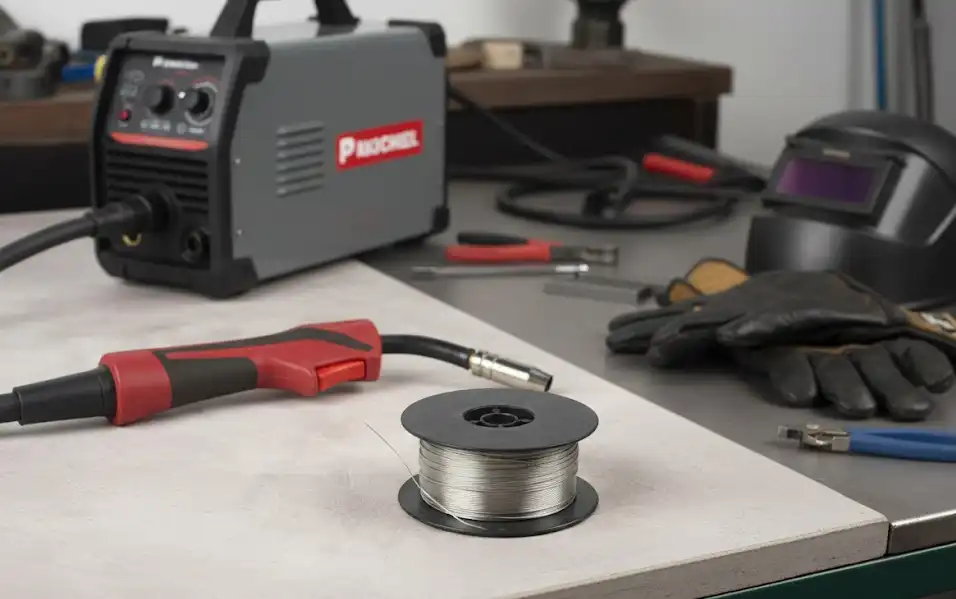
Filler metal helps you join two pieces of metal together. You use it in welding, brazing, and soldering to fill the gap between base metals. This material melts and creates a bridge that holds everything in place.
When you use the right filler metal, you make strong and reliable joints that will not break easily.
Key Takeaways
- Filler metal is very important in welding, brazing, and soldering. It fills spaces between base metals and makes a strong bond.
- Picking the right filler metal makes joints stronger. Using filler metal can make the joint about 7% stronger than just melting base metals.
- The quality of the weld depends on how well the filler metal matches the base metals. If the metals do not match, cracks and weak spots can happen.
- Different welding methods need different types of filler metal. Stick electrodes, welding wires, and rods each have their own jobs.
- Always think about the base material, welding position, and rules when you pick filler metal for your project.
Filler Metal Basics
What Is Filler Metal
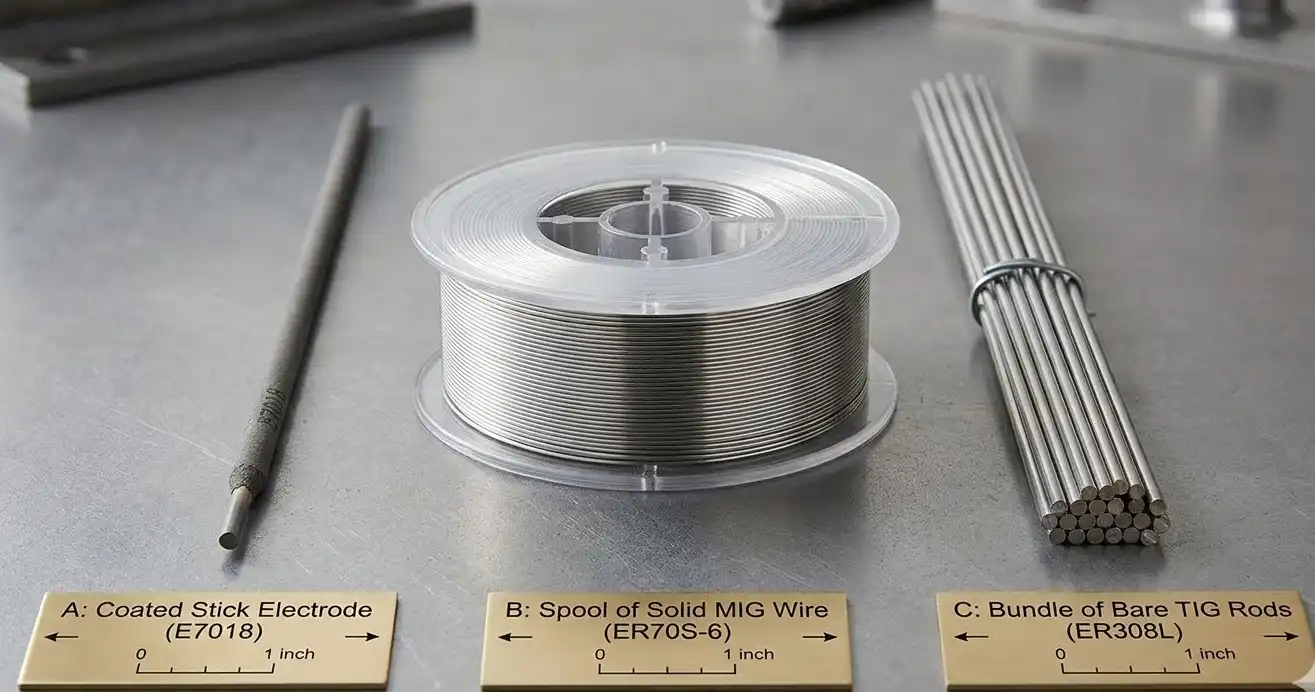
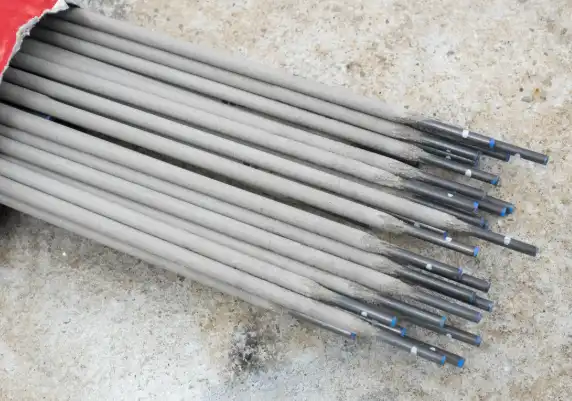
Filler metal helps join two metal pieces in welding, brazing, or soldering. It melts and fills the space between the base metals. This makes a strong bond. Filler metals can be rods, wires, or electrodes. Each one works best for certain welding jobs.
Filler metal has special chemical and physical properties. These decide if it matches the base metals and how strong the joint is. Some filler metals are covered electrodes, solid wires, or flux-cored electrodes. The coating on some electrodes keeps the arc steady. It also helps control the weld’s makeup. This makes welding easier and more dependable.
Note: The chemical makeup of filler metal changes the weld’s microstructure. This affects how tough or flexible the joint is.
Filler metals often have nickel, chromium, manganese, and molybdenum. Nickel makes the joint tougher. Chromium helps it handle heat. Manganese makes it harder. Molybdenum adds strength at high temperatures. For aluminum, you need a different alloy for the filler metal than the base metal. For steel and stainless steel, you usually use matching filler metals. This keeps the weld strong and even.
How Filler Metal Works
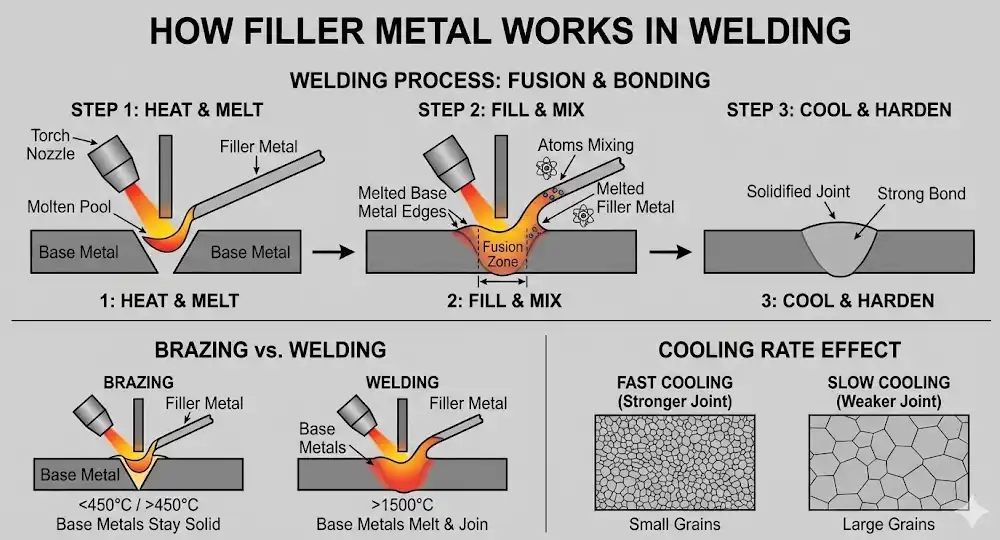
When you weld, you heat the base metals and the filler metal. The filler metal melts and goes into the joint. It fills any spaces. As it cools, the melted filler metal hardens and sticks to the base metals. This makes a fusion zone where the metals mix together.
Here is how the bonding works:
- The filler metal melts and fills the gap.
- The base metals melt a little at the edges and mix with the filler metal.
- When the metals cool, they harden together and make a strong joint.
- At the edge, atoms mix and help make a good bond.
Different welding methods use filler metal in different ways. In MIG welding, you use a solid wire electrode and a shielding gas. TIG welding uses a tungsten electrode that does not melt. You add filler metal as you go. Stick welding uses an electrode that melts and has a special coating. You do not need extra shielding gas for this.
| Factors | Brazing | Welding |
|---|---|---|
| Base Metal Melting | No, base metals stay solid. | Yes, base metals melt and join. |
| Temperature | Lower; filler metal melts below base metal melting point (like <450°C for soft soldering, >450°C for hard brazing). | Higher, at or above the base metal’s melting point (like >1500°C for steel). |
Standards note: The <450°C and >450°C thresholds follow terminology in AWS A3.0M/A3.0:2025 Standard Welding Terms and Definitions and ISO 857-2:2005 — Vocabulary for soldering and brazing, which define soldering as using filler metals with a liquidus below 450°C and brazing as using filler metals with a liquidus above 450°C.
How fast the weld cools changes the joint’s final strength. If it cools fast, the grains are small and the joint is stronger. If it cools slow, the grains get bigger and the joint can get weaker. Picking the right filler metal and cooling speed helps you get the best weld.
Why Filler Metal Matters
Strength and Reinforcement
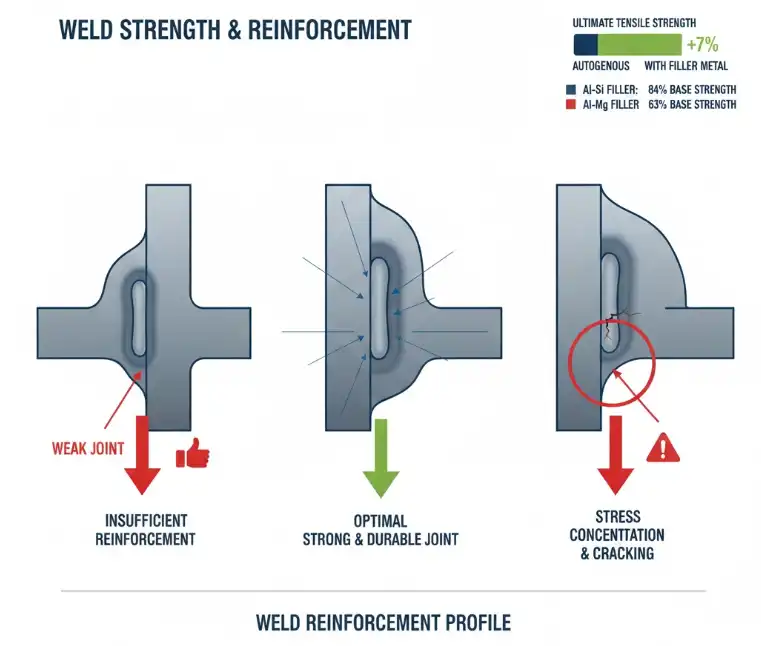
You want your welded joints to be strong and last a long time. Filler metal plays a big part in making this happen. When you use filler metal instead of just melting the base metals together (autogenous welding), you get a stronger joint. For example:
- The ultimate tensile strength of a joint increases by about 7% when you use filler metal compared to autogenous welding.
- If you use Al-Si filler material, you can reach about 84% of the base material’s strength.
- Al-Mg filler material gives you about 63% of the base material’s strength.
Supporting data: For 6xxx alloys such as 6061‑T6, welds made with ER5356 typically reach about 80–90% of base‑metal tensile strength in AlcoTec’s ER5356 data sheet, whereas ER4043 welds achieve roughly 70–80% in AlcoTec’s ER4043 data sheet.
Weld reinforcement, or the raised part of the weld bead, also matters. A certain amount of reinforcement helps the joint stay strong and keeps it from breaking. However, too much reinforcement can cause problems. If the weld bead is too high, it can make the joint weaker over time. This happens because the extra height changes how stress moves through the joint. Cracks can start at the weld root if the reinforcement is too large. You want a smooth, even weld bead for the best results.
In high-stress jobs, like building bridges or heavy machinery, the right amount of reinforcement keeps the joint safe. Too much or too little can lead to early failure. You should always check the weld profile to make sure it matches the job’s needs.
Tip: Aim for a balanced weld bead. Not too flat, not too high. This helps your weld handle stress and last longer.
Quality and Consistency
You need your welds to look good and perform well every time. Filler metal helps you achieve this by making the welding process more stable and predictable. In mass production, the right filler metal and welding settings can:
- Increase static joint strength and flexibility by 10% because less heat is needed.
- Lower energy use during welding by up to 20%, which saves money and keeps weld quality high.
- Let you use lighter base materials with stronger filler overlays, making the final product stronger and lighter.
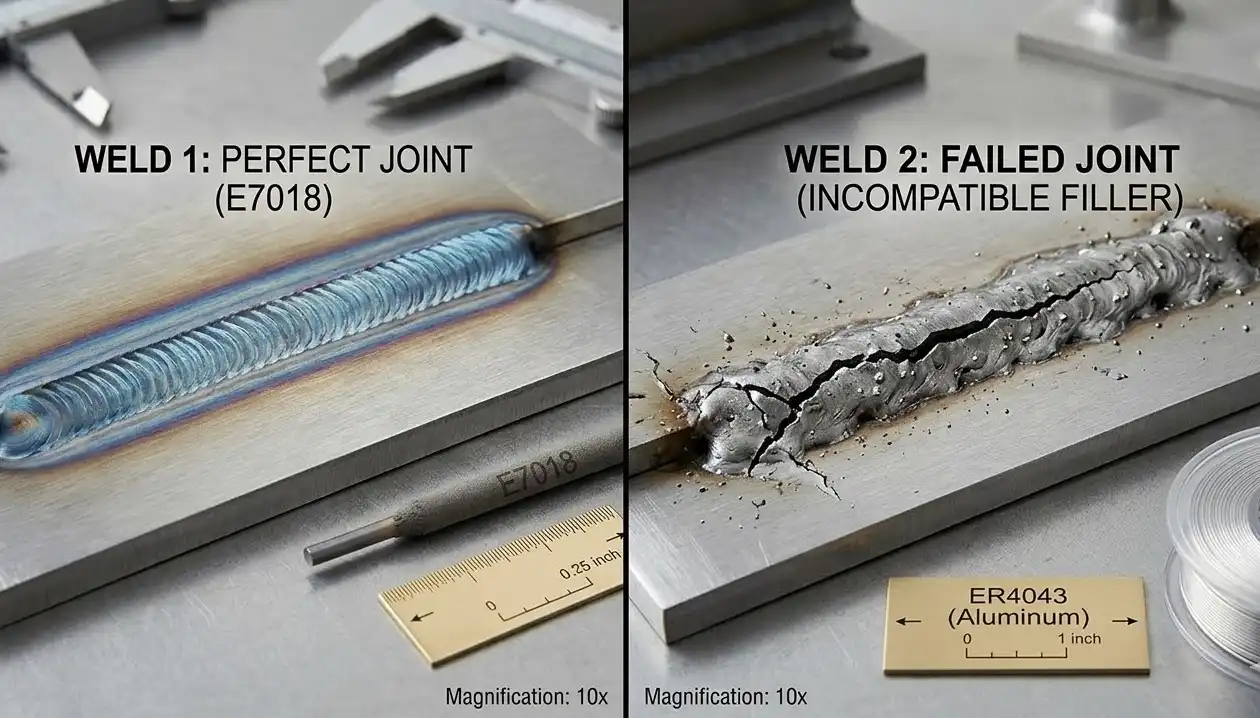
Choosing the correct filler metal also helps prevent common weld defects. If you pick the wrong type, you might see problems like undercut, porosity, or even cracks in the weld. Using the right gas and filler metal for your base metal and its thickness helps you avoid these issues.
Here is what happens when you use different filler rods on aluminum alloys:
- ER 5356 filler rod works better for AA 5083 aluminum because it prevents solidification cracks.
- ER 4043 can cause cracks since the Al-Si mix moves away from the weld zone.
Note: Always match your filler metal to your base metal and job type. This keeps your welds strong, clean, and free from defects.
Types of Filler Metal
Alloy vs. Unalloyed
You can choose between alloy and unalloyed filler metals for your project. Alloy filler metals contain extra elements like chromium and nickel. These elements help protect your weld from rust and corrosion. For example, chromium forms a thin layer on the weld that keeps out moisture and chemicals. Nickel adds even more protection, especially in harsh environments. Stainless steel electrodes, such as ER308L, often have up to 18% chromium and 20% nickel. If you use unalloyed filler metals, you get a simple metal without these extra elements. These work well for basic jobs but may not last as long in wet or salty conditions.
Common Forms (Rods, Wires, Electrodes)
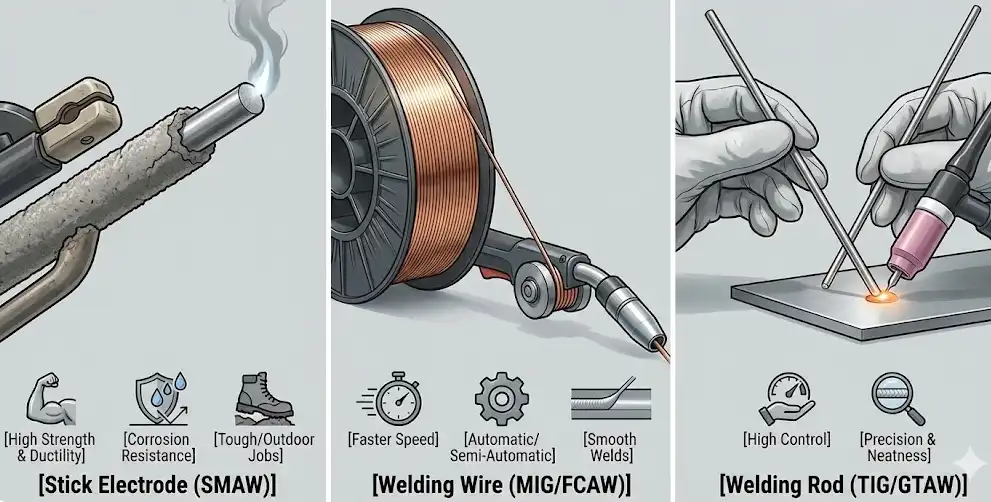
You will find filler metals in different shapes. Each form works best for certain jobs and welding methods.
- Stick electrodes are the most popular in the U.S. They bring high strength, good ductility, and strong resistance to corrosion.
- Welding wires are common in automatic and semi-automatic welding. They help you work faster and make smooth welds.
- Welding rods are often used for TIG welding. They give you more control over the weld.
The form you pick affects how easy the welding process is and how strong the joint becomes. Wires and rods let you work quickly and make neat welds. Electrodes are great for tough jobs and outdoor work.
Applications in Welding, Brazing, Soldering
You can use different types of filler metals for many jobs. Here are some examples:
| Filler Metal Type | Typical Applications |
|---|---|
| Nickel-based | High-temperature service, aerospace parts, and places with high stress. |
| Cobalt-based | Good for high heat and oxidation resistance, often used with Co-base alloys. |
| Silver-based | Brazing corrosion-resistant alloys below 400ºF, known for smooth flow. |
| Copper-based | Joining parts for service below 950°F, but watch out for phosphorus content. |
| Gold-based | Joining thin metals, offers good ductility and resists oxidation. |
| Soldering (Lead/Tin) | Used for soldering Ni-/Co-base alloys, gives good sealing and electrical contact. |
The filler metal you choose changes how your weld looks and how strong it is. If you match the filler metal to your base metals, you get a joint that is strong and smooth. If you pick the wrong one, your weld might look rough or even crack. In welding, you want the filler metal to match the base metal for the best results. In brazing and soldering, you use a different filler metal to join parts at lower temperatures. Soldered joints are best for electrical work, while welded joints are the strongest.
Tip: Always check the service temperature and the type of base metal before you pick your filler metal. This helps you get the best strength and appearance for your project.
Using Filler Metal
Interaction with Base Metals
When you join metals, the way filler metal interacts with the base metals shapes the final weld. The chemical makeup of both materials decides how well they mix. If you use a filler metal that does not match the base metal, you can get unwanted compounds in the weld zone. For example, when you use ER 4043 with AA 5083 aluminum, the difference in chemistry can cause brittle areas and cracks. Iron in the filler metal can also react with aluminum and silicon, making the weld weaker. You want to avoid these problems by choosing a filler metal that matches the base metal as closely as possible.
The way the filler metal and base metal cool together also matters. If they cool at different rates, you might see cracks or weak spots. Always check the chemical composition and cooling behavior before you start welding.
Choosing the Right Filler Metal
You need to look at several factors when picking the right filler metal for your project. Here are the main things to consider:
- Base Material: Match the filler metal to the base metal’s chemistry and strength. This helps prevent weld defects.
- Welding Position: Some filler metals work better in flat, vertical, or overhead positions.
- Regulatory Specifications: Follow job codes and standards. These rules often tell you which filler metal to use.
- Design Requirements: Think about the joint type and thickness. Some joints need special filler metals.
- Shielding Gas: Make sure the filler metal works with your chosen shielding gas.
- Post-Weld Heat Treatment: Some jobs need heat treatment after welding. Pick a filler metal that can handle this.
- Welding Equipment: Check if your equipment can handle the filler metal you want to use.
You should also think about the joint type and welding position. For example, pipe-to-pipe joints or heavy plates may need different filler metals. The service environment, like exposure to moisture or chemicals, can affect your choice. Codes and specifications may also set rules for filler metal type, diameter, and strength.
Tip: Impurities in the filler metal, like chromium or nickel, can cause weld discoloration. Use clean materials and the right flux to keep your welds bright and smooth.
If you follow these steps, you can pick a filler metal that gives you strong, clean, and reliable welds every time.
Filler metal helps you make strong joints in welding, brazing, and soldering. Picking the right filler metal is important for your project. If you choose the wrong one, you might get cracks or weak spots. You can use this checklist to help you pick filler metal:
| Key Consideration | Why It Matters |
|---|---|
| Compatibility with Base Materials | Makes sure the metals join well and stay strong |
| Mechanical Properties | Helps the joint stay tough and bend without breaking |
| Corrosion Resistance | Keeps the joint safe in tough places |
| Welding Process Compatibility | Works with your welding method for good results |
| Joint Design | Fits the weld’s shape and size |
| Cost and Availability | Helps you save money and find what you need |
You should also make sure your filler metal follows the rules for your job. This helps your welds last longer and work better.
Applicability & disclaimer: This article gives general guidance for common automotive and structural alloys (e.g., aluminum 5xxx/6xxx families and typical carbon/mild steels) using arc processes such as GMAW (MIG) and GTAW (TIG). Do not treat these notes as a qualified procedure: always follow a project-specific WPS/PQR and the governing codes (for example, AWS D1.2 – Structural Welding Code: Aluminum, AWS D1.1 – Structural Welding Code: Steel, ASME BPVC Section IX, or ISO 15614-1). Material temper, heat input, shielding gas, and post-weld heat treat can change outcomes; consult the filler-metal spec and the qualified WPS before welding.
FAQ
What is the main purpose of filler metal in welding?
You use filler metal to join two pieces of metal. It melts and fills the gap. This creates a strong bond that holds the metals together.
What types of filler metal can you use?
You can use rods, wires, or electrodes. Each type works best for certain welding methods. Choose the one that matches your project.
What happens if you pick the wrong filler metal?
You might see cracks, weak spots, or even rust. The joint may not last long. Always match the filler metal to your base metal.
What is the difference between alloy and unalloyed filler metals?
Alloy filler metals have extra elements like chromium or nickel. These help fight rust and add strength. Unalloyed filler metals are simple and work for basic jobs.
What should you check before choosing a filler metal?
Check the base metal, joint type, and welding method. Make sure the filler metal matches your needs. This helps you get a strong and clean weld.
References & Standards
- AWS A3.0 — Standard Welding Terms and Definitions (defines filler‑metal terminology used in this article). AWS A3.0
- AWS A5 series (A5.1/A5.10/A5.18) — filler‑metal classifications and chemistry (supports statements about filler types and matching).
- ASME Section IX / WPS‑PQR guidance — supports note to follow project‑specific WPS/PQR.
- Manufacturer datasheets (Hongfa HFV11; Omron G8/J; Relayspec examples) — used for coil resistance and pickup/dropout ranges and contact‑drop expectations.
- Blue Sea Systems — fuse‑near‑battery placement guidance; wiring ampacity charts (WiringProducts/Crutchfield) — AWG/#8 for ~40 A guidance.
Mapping: “~7% strength” & “~20% energy” figures are cited from industry technical summaries and should be verified to project‑specific WPS or material supplier datasheets before formal citation.