

Light structure versus concentrated mass
7 Property Differences Between Titanium and Tungsten
Titanium and tungsten solve almost opposite engineering problems. Titanium provides useful strength with low mass and strong corrosion performance; tungsten provides extraordinary density, stiffness and a melting point unmatched by any other pure metal. The correct comparison starts by naming the exact grade, product form and tungsten family.
Choose a qualified titanium grade when low mass, corrosion resistance and structural efficiency dominate.
Use pure tungsten where compact mass, low thermal expansion or refractory-metal behavior is the real requirement.
Cemented WC normally contains tungsten carbide grains plus a cobalt or nickel binder and behaves like a hard cermet.
“Titanium” and “tungsten” are family names, not complete purchase specifications or service approvals.
Quick answer
Titanium is the lightweight structural choice; tungsten is the dense refractory choice.
For equal volume, pure tungsten is about 4.3 times heavier than pure titanium. Tungsten also has roughly 3.5 times titanium’s elastic modulus and a melting point about 1,740°C higher. Titanium alloys, however, deliver far better strength per unit mass and are available in corrosion-resistant, fabricable grades for aircraft, chemical equipment and medical devices.
Name the material first
Examples include commercially pure Grade 2 and Ti-6Al-4V Grade 5. Their properties and allowed standards differ.
Very dense and stiff, normally produced through powder-metallurgy and thermomechanical routes.
A dense composite-like alloy selected for machinable ballast, shielding or compact counterweights.
Hard tungsten-carbide grains held by a metallic binder; this is the “tungsten carbide” used in many tools and rings.
Representative comparison
Titanium vs tungsten properties at a glance
These values are orientation numbers for room-temperature material selection, not universal acceptance limits. Titanium values change with grade and heat treatment; tungsten values change with purity, processing, grain structure and test direction. Cemented carbide is listed separately because it is not pure tungsten.
| Property | Commercially pure titanium | Ti-6Al-4V Grade 5 | Pure tungsten | Cemented WC-Co |
|---|---|---|---|---|
| Material class | Unalloyed wrought titanium | Alpha-beta titanium alloy | Refractory metal | Ceramic-metal composite |
| Density | About 4.51 g/cm³ | About 4.43 g/cm³ | About 19.25–19.3 g/cm³ | Often roughly 14–15.5 g/cm³, binder dependent |
| Melting behavior | Elemental titanium: about 1,670°C | Melts over an alloy range, not one exact point | About 3,414–3,422°C | Manufactured by liquid-phase sintering; binder governs service limits |
| Elastic modulus | About 105–116 GPa by grade | About 110–120 GPa | About 400–411 GPa | High, but grade/binder dependent |
| Thermal conductivity | Moderate to low for a metal | Low, commonly around 6–8 W/m·K at room temperature | High relative to titanium alloys; purity and temperature matter | Varies strongly with WC grain size and binder |
| Hardness / damage mode | Relatively soft; can gall or scratch | Harder and stronger than CP grades but still damage tolerant | Hard, but room-temperature brittleness and condition matter | Very high indentation hardness; can chip or fracture under impact |
| Corrosion behavior | Strong passivity in many oxidizing and chloride services | Good in many environments; not identical to CP grades | Environment and temperature dependent; oxidation is a key high-temperature issue | Binder may control corrosion and exposure risk |
| Typical manufacturing route | Wrought sheet, plate, tube, bar, forging | Wrought or additively manufactured products with qualified processing | Powder metallurgy, sintering, hot working, grinding or EDM | Press/sinter or injection-mold routes, then finish grinding |
| Typical selection reason | Corrosion resistance and fabrication | Specific strength and fatigue-capable structures | Density, stiffness, hot-zone or electrode function | Wear resistance and edge retention |
The seven differences
The fastest way to understand titanium versus tungsten
Each property changes the winning material. Read them as a sequence of design questions rather than a scorecard.
Density
Pure tungsten packs about 4.3 times the mass into the same volume.
Hardness
WC-Co dominates abrasive wear; titanium offers more forgiving deformation and toughness.
Temperature
Tungsten has the highest melting point of any pure metal, but oxidation and brittleness still govern service.
Mechanical
Tungsten is much stiffer; titanium alloys deliver far higher specific strength.
Heat & current
Pure tungsten generally moves heat and electrical current more readily than titanium alloys.
Corrosion
Titanium’s passive film is a central advantage, but approval remains environment specific.
Manufacture
Titanium is difficult yet broadly fabricable; tungsten and carbide rely heavily on powder routes and grinding.
Difference 01 · density and weight
Equal volume makes tungsten about 4.3× heavier
Density is the clearest difference between titanium and tungsten. The Royal Society of Chemistry lists elemental titanium at 4.506 g/cm³ and tungsten at 19.3 g/cm³. That ratio is approximately 4.28—not 2.5. The design implication depends on whether mass is a penalty or a functional feature.
When titanium benefits the system
Low density helps aircraft structures, rotating parts, portable assemblies, medical instruments and any mechanism where inertia, payload, ergonomics or energy consumption matter. Ti-6Al-4V combines this low density with high tensile strength, so its strength-to-weight performance is much more useful than comparing tensile values alone.
- Lower moving mass can reduce drive loads and acceleration energy.
- Weight savings can compound across fasteners, supports and handling equipment.
- Final geometry and fatigue design still control the part—not density alone.
When tungsten benefits the system
High density is valuable when a compact part must carry mass: counterweights, balance masses, vibration control, shielding and confined ballast. Pure tungsten is not always the best fabricated form; tungsten heavy alloys can provide a more practical machining route while retaining high density.
- More mass fits inside a restricted envelope.
- Dense shielding can reduce component thickness for a defined radiation spectrum.
- Shipping, support loads and handling may increase with the same advantage.
Equal-volume mass calculator
Enter a solid volume to compare theoretical mass. Values ignore holes, coatings, porosity and composition variations.
Use certified density for the actual grade and lot when mass, balance or shielding performance is critical.
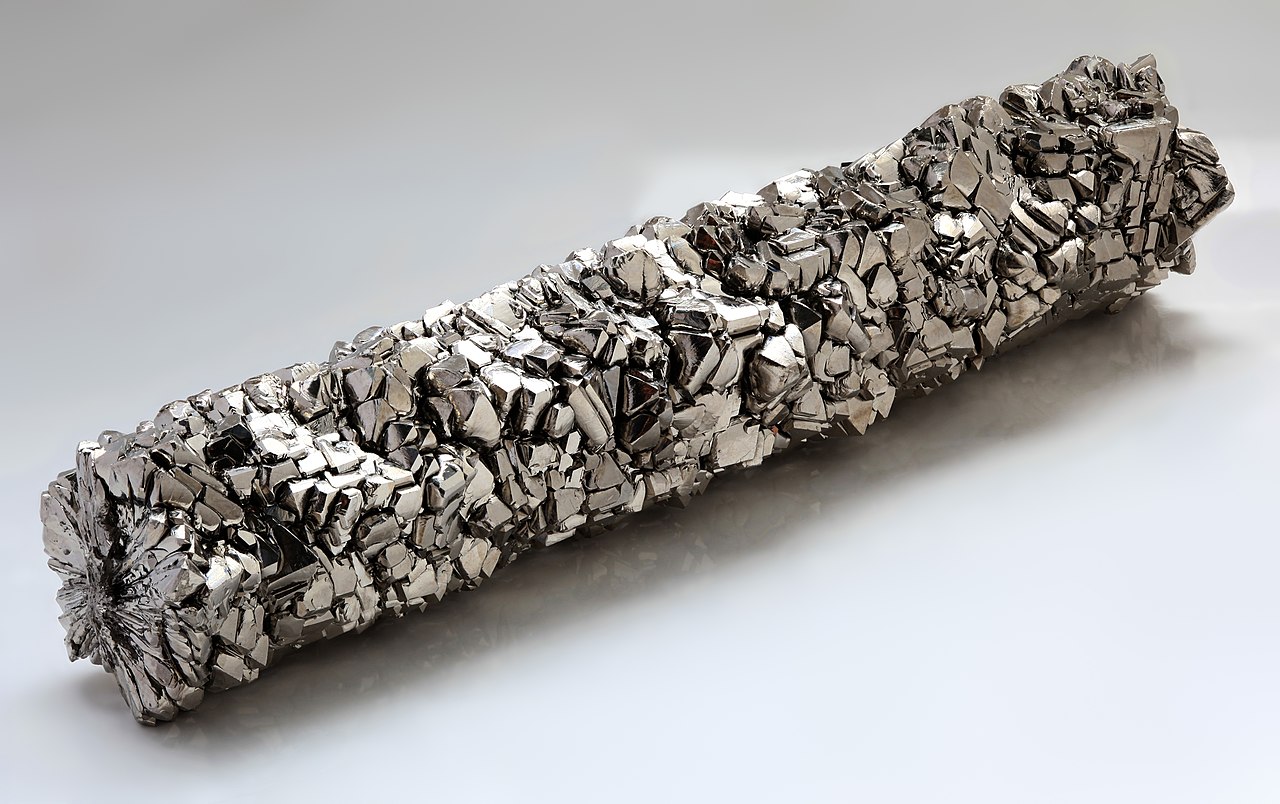

Difference 02 · hardness, wear and toughness
“Tungsten is harder” is incomplete—and often compares the wrong material
Pure tungsten, tungsten heavy alloy and cemented tungsten carbide do not have the same hardness or damage mode. The dramatic scratch resistance associated with cutting tools and many rings normally comes from cemented WC-Co, not from a piece of pure tungsten metal.
Hardness controls indentation and wear
Hardness tests measure resistance to localized plastic deformation under a defined method and load. Cemented carbide achieves very high indentation hardness and maintains an edge in abrasive service. Its performance changes with carbide grain size, binder fraction, binder chemistry and residual stress.
- Specify an actual Vickers, Rockwell A or supplier grade value.
- Do not use Mohs mineral hardness as a precision engineering specification.
- Match coating and substrate to the real wear mechanism.
Toughness controls crack tolerance
A hard material can still chip when impact, vibration, poor support or interrupted contact creates a crack-driving stress. Titanium alloys are much less hard than cemented carbide but can deform and absorb damage in ways that a brittle cutting insert cannot.
- Separate abrasion, impact, fatigue and overload in the failure analysis.
- Do not infer fracture toughness from scratch resistance.
- Use edge preparation, support geometry and grade selection to control chipping.

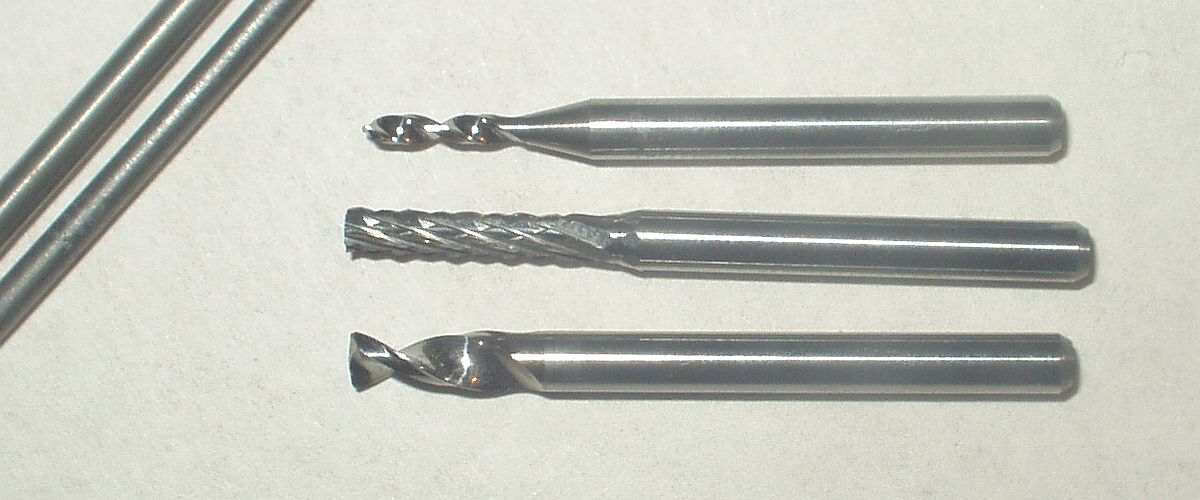
Difference 03 · melting point and temperature
Tungsten’s melting point is exceptional, but melting is not the service limit
The RSC lists tungsten’s melting point around 3,414°C and titanium’s around 1,670°C. That makes tungsten the highest-melting pure metal. It does not mean an unprotected tungsten part can operate indefinitely near that temperature, or that a titanium alloy can work safely until elemental titanium melts.
What limits titanium first
For titanium alloys, creep, oxidation, microstructural stability, loss of strength, environmental interaction and design-code limits normally matter long before melting. The useful temperature range depends on alloy, product condition, exposure time, stress and atmosphere.
- Do not copy one Grade 5 temperature limit to all titanium grades.
- Evaluate dwell time and cyclic exposure as well as peak temperature.
- Control oxygen, nitrogen and hydrogen when hot titanium is processed or welded.
What limits tungsten first
For tungsten, room-temperature brittleness, recrystallization, oxidation, creep, grain growth, joining and thermal-shock stresses can govern the design. Vacuum or inert hot-zone performance cannot be transferred automatically to air.
- Define atmosphere, pressure and oxygen potential.
- Check the brittle-to-ductile transition and product orientation.
- Review thermal gradients and attachment design, not only peak temperature.
Difference 04 · strength and stiffness
Tungsten is far stiffer; titanium is far more structurally efficient by mass
Young’s modulus describes elastic stiffness, not ultimate strength. The RSC reports roughly 411 GPa for tungsten and about 116 GPa for elemental titanium. A tungsten member of the same geometry can deflect much less elastically, but it also weighs over four times as much.
Titanium: design around specific properties
Ti-6Al-4V is widely selected because a useful combination of tensile strength, fatigue capability and fracture resistance is delivered at about 4.43 g/cm³. The benefit appears when the design is allowed to exploit section shape, load path and reduced mass.
- Compare specific strength: strength divided by density.
- Compare specific stiffness when deflection and natural frequency matter.
- Use minimum certified properties for the exact product form and direction.
Tungsten: stiffness with concentrated mass
Pure tungsten’s high modulus is valuable where dimensional stiffness, compact density or thermal expansion control matter. Tensile properties are not one universal number: processing history, purity, temperature, grain size and test orientation strongly influence behavior.
- Do not call tungsten “stronger” without naming the failure criterion.
- Review compressive, flexural, tensile and fracture behavior separately.
- Ask for lot and orientation data when brittle failure is credible.
Difference 05 · thermal and electrical behavior
Pure tungsten moves heat more readily; titanium alloys hold heat near the process zone
Pure tungsten’s room-temperature thermal conductivity is much higher than that of common titanium alloys. Ti-6Al-4V is particularly low for a metal, which affects machining temperature, weld-pool behavior, heat-affected-zone development and thermal-interface design.
Thermal conductivity is not heat resistance
A material can have high thermal conductivity yet still oxidize, creep or fracture in the service environment. Conversely, low conductivity can help localize welding heat but also concentrates cutting temperature at the tool-work interface.
- Use temperature-dependent conductivity, heat capacity and emissivity.
- Include contact resistance, coatings and joint interfaces.
- Model transient heat flow for short laser cycles or thermal shock.
Electrical behavior depends on product condition
Tungsten’s electrical and thermal behavior supports electrode, heating-element and electronic applications. Titanium is a substantially poorer conductor than copper and tungsten, but its oxide film, surface finish, connection pressure and temperature can dominate contact performance.
- Specify bulk resistivity and contact resistance separately.
- Do not assume a polished surface guarantees a stable electrical contact.
- Validate current density, temperature rise and connection life in the assembly.
Difference 06 · corrosion and medical use
Titanium’s passive film is powerful—but “corrosion proof” is not a specification
Titanium forms a thin, adherent oxide film that gives excellent resistance in many oxidizing and chloride environments. TIMET’s corrosion guidance still recommends testing under the actual anticipated conditions because alloy grade, temperature, concentration, crevices and contaminants can change the result.
Titanium advantages and limits
Commercially pure titanium is widely used in chemical processing, seawater heat exchange and other services where the passive film remains stable. Reducing acids, fluoride-bearing media, tight crevices or elevated temperature may require another titanium grade, corrosion allowance or a different material.
- Name all chemicals, concentrations, temperatures and wet-time cycles.
- Check galvanic couples, crevice geometry and deposits.
- Choose the grade from environment data—not the word “titanium.”
Tungsten and carbide need their own review
Pure tungsten can oxidize significantly at elevated temperature, while tungsten heavy alloys and cemented carbides introduce nickel, iron or cobalt phases that may control corrosion. For carbide, binder attack can undermine the hard WC skeleton even when the surface initially looks sound.
- Ask for binder chemistry and corrosion data for the complete grade.
- Do not transfer vacuum performance to humid or oxidizing service.
- Evaluate dust and grinding exposure as well as finished-part corrosion.
Biocompatibility is product specific
ASTM F136 covers wrought Ti-6Al-4V ELI alloy for surgical implant applications. That does not make every titanium grade, finish, manufacturing route or finished device medically approved. Implant design also depends on cleanliness, surface state, fatigue, wear debris, sterilization and the applicable regulatory pathway.
- Use the exact implant material standard and traceable product route.
- Separate material biocompatibility from finished-device approval.
- Validate surface treatment and manufacturing residues.
Cobalt-bound carbide is not “inert tungsten”
NIOSH describes cemented tungsten carbide as a mixture containing WC and often 5–15% cobalt, with some products using nickel or other constituents. Occupational exposure during manufacturing or grinding therefore depends on the complete mixture and airborne particle control—not just elemental tungsten.
- Review the current SDS and occupational exposure limits.
- Capture grinding and polishing dust at the source.
- Do not describe a WC-Co product as pure or universally hypoallergenic.
Difference 07 · manufacturing, joining and cost
Both are difficult materials—but they are difficult in different ways
Titanium can be forged, rolled, machined and fusion welded with mature controls. Tungsten metal and cemented carbide rely more heavily on powder metallurgy, sintering, hot working, electrical-discharge machining and grinding. Finished-part cost follows the complete process route, not a raw price per kilogram.
Titanium manufacturing risks
Titanium alloys have low thermal conductivity, chemical affinity with cutting tools and a tendency toward galling. Machining needs rigid setups, suitable tooling and controlled heat. Fusion welding needs exceptional cleanliness and inert shielding because hot titanium absorbs oxygen, nitrogen and hydrogen.
- Cite the grade, product specification, temper or condition and certificate.
- Control surface contamination before welding or heat treatment.
- Qualify weld shielding, penetration, porosity, color and mechanical criteria.
Tungsten and carbide manufacturing risks
Tungsten’s very high melting point and brittle behavior make conventional melt processing and room-temperature forming difficult. Powder characteristics, pressing, sintering, porosity, grain structure and thermomechanical history all influence performance. Cemented carbide adds binder and grain-size design.
- Define purity, dopants, density, porosity and orientation.
- Budget for diamond grinding, EDM or near-net-shape tooling where applicable.
- Protect workers from process dust according to the actual mixture and SDS.
Can titanium and tungsten be joined?
Direct fusion joining is not a routine substitution for a same-alloy weld. Their extreme melting-temperature mismatch, different thermal expansion, brittle phase risk, wetting behavior and joint stresses demand a dedicated development route.
- Consider diffusion bonding, brazing with engineered interlayers, mechanical attachment or functionally graded transitions.
- Use representative joint thickness, surface preparation and thermal cycle.
- Inspect the interface and test the property that governs service.
Why a live quotation beats a “price per kg” table
Price changes with grade, form, dimensions, certification, order volume, machining stock, grinding, testing, scrap recovery and delivery risk. Tungsten is also treated as a critical mineral in the current USGS framework, which can add sourcing and traceability concerns.
- Compare delivered finished-part cost, not commodity headlines.
- Include tool life, cycle time, yield, inspection and rework.
- Qualify alternates before a supply interruption, not after it.
Application matrix
Where each material family earns its place
These are selection patterns, not automatic approvals. A useful application name must be followed by grade, product form, loading, temperature, atmosphere, lifetime and validation requirements.
Aircraft and high-performance structures
Ti-6Al-4V is widely used when specific strength, fatigue capability and corrosion resistance justify higher manufacturing cost. The actual product direction, forged or wrought route, inspection class and joining process matter.
Primary question: how much performance is delivered per kilogram?Chemical and marine equipment
CP grades support heat exchangers, piping and process equipment in many services where passivity remains stable. Grade selection must follow real chemistry, temperature and crevice conditions.
Primary question: is the passive film stable in the complete environment?Hot-zone, electrode and electronic components
Tungsten’s melting point, stiffness, density and low thermal expansion support furnace, electrode, heating and electronics roles. Atmosphere, recrystallization, attachment and thermal shock remain design constraints.
Primary question: what fails before melting?Compact counterweights and shielding
Heavy alloys put high density into machinable counterweights, balance masses and shielding geometries. Nickel/iron chemistry, radiation energy, geometry and certification determine performance.
Primary question: how much mass or attenuation must fit in the available space?Cutting, drilling and wear components
WC-based grades give high indentation hardness and compressive performance for tools, nozzles and wear parts. Binder fraction, grain size, coating, support and interrupted loading decide tool life.
Primary question: is wear or chipping the dominant failure mode?Titanium vs tungsten-carbide jewelry
Titanium favors low mass and a ductile metal response. WC-based rings favor heft and scratch resistance but can fracture. Binder chemistry, skin sensitivity, sizing and emergency-removal guidance should come from the actual supplier.
Primary question: do you prefer light comfort or hard, weighty feel?

Interactive decision aid
Choose the function before choosing the material name
This selector identifies a material family to investigate. It does not approve a grade, service temperature, implant, shielding design or joining procedure.
Describe the design driver
Select the closest requirement. The recommendation updates instantly.
Start with a titanium grade
Low mass and structural efficiency normally point first to a qualified titanium alloy such as Ti-6Al-4V, subject to the actual load, product form and environment.
- Define minimum strength, fatigue spectrum and stiffness.
- State product form, material standard and certification.
- Validate machining, joining, surface condition and inspection.
Engineering-screening result only. Confirm the grade and finished component against the governing standard and representative test.
Procurement framework
What a complete titanium or tungsten purchase description needs
A material family name cannot control chemistry, microstructure, mechanical properties or finished performance. Put the variables that matter on the drawing, purchase order and inspection plan.
Which material family and exact grade?
State CP titanium, Ti-6Al-4V, pure tungsten, tungsten heavy alloy or cemented carbide. Include UNS, ASTM, AMS, ISO, EN or supplier grade where applicable.
What product form and condition?
Identify sheet, plate, bar, tube, forging, powder-metallurgy blank, sintered insert or finished assembly. Add annealed, stress-relieved, forged, recrystallized or other condition.
What chemistry must be controlled?
For titanium, include oxygen and other interstitial limits when relevant. For tungsten products, state purity, dopants, heavy-alloy constituents or carbide binder percentage and chemistry.
Which properties are acceptance criteria?
Use minimum tensile, hardness, density, porosity, conductivity, dimensional, fracture or corrosion requirements supported by the governing specification—not an internet average.
What traceability and tests are required?
Define material certificates, heat or lot identity, test direction, NDT, metallography, dimensional inspection, contamination control and any customer source approval.
How will the part be manufactured?
Review forging, machining, grinding, EDM, welding, brazing, diffusion bonding, coating and heat-treatment effects before releasing material or tooling.
What environment must the part survive?
State atmosphere, chemicals, radiation spectrum, pressure, peak and sustained temperature, cycles, loads, wear mechanism, cleaning and lifetime.
How will substitutions be controlled?
Require written approval before changing grade, binder, purity, product form, supplier route, heat treatment or standard. “Equivalent tungsten” is not a technical definition.
Avoid these selection errors
Six mistakes that make titanium vs tungsten comparisons fail
Calling carbide “tungsten”
Pure W, tungsten heavy alloy and WC-Co have different density, hardness, toughness, corrosion, machinability and exposure considerations.
Fix: require chemistry and product family on the quote.Using one tensile number as “strength”
Yield, ultimate, fatigue, creep, compression and fracture behavior answer different questions. Tungsten data also vary strongly with processing and orientation.
Fix: define the governing load case and test.Equating hardness with toughness
A very hard carbide can resist wear yet chip under impact. A softer titanium alloy can scratch yet continue carrying load after local deformation.
Fix: name the actual failure mechanism.Designing from melting point
Oxidation, creep, recrystallization, phase stability and joint behavior usually determine allowable service far below melting.
Fix: define stress, atmosphere, time and cycles.Assuming corrosion or medical approval
Titanium passivity is environment dependent, and an ASTM implant-alloy standard is not approval of every finished device or process.
Fix: qualify the actual grade, surface and application.Buying on raw price alone
Yield, grinding, EDM, tooling, scrap, certification, inspection and lead-time risk can dominate the delivered cost of a finished component.
Fix: compare qualified cost per accepted part.Continue the engineering decision
Related Oceanplayer laser-welding resources
If a titanium component will be laser welded—or a tungsten-containing assembly requires a dissimilar-material study—move from the material comparison into a controlled process-development plan.
Review beam delivery, joint fit-up, shielding, wire feeding, heat control and inspection in one practical sequence.
Read the guide →Engineering toolWelding Heat Input CalculatorCalculate nominal line energy and compare power, speed, efficiency and multi-pass input without treating the result as qualification.
Use the calculator →Free toolsLaser Engineering ToolkitContinue into welding, cleaning, marking and automation calculators for early-stage process planning.
Open the toolkit →EquipmentHandheld Laser Welding MachineExplore flexible welding-system architecture for suitable fabricated metal joints and qualified applications.
View the system →Filler-wire systemLaser Welder With Wire FeederReview a platform for joints that need controlled filler addition, wider process windows or gap management.
Explore wire-feed welding →Application validationSample TestingSend the real material certificate, geometry and acceptance criteria for representative welding trials.
Plan a sample test →Frequently asked questions
Titanium vs tungsten FAQs
Is tungsten heavier than titanium?
Is tungsten stronger than titanium?
Which is harder: titanium or tungsten?
Which has the higher melting point?
Is titanium more corrosion resistant than tungsten?
Can titanium and tungsten be welded together?
Is tungsten carbide the same as tungsten?
Which is better for jewelry: titanium or tungsten?
Why is titanium used for implants but tungsten carbide for tools?
Which material is more expensive?
Technical references
Sources used to correct and expand this guide
The article separates pure elements, titanium alloys, tungsten heavy alloys and cemented carbides, and avoids unsupported project anecdotes or fixed market-price claims.
- Royal Society of Chemistry — Titanium element information, density, melting point and modulus.
- Royal Society of Chemistry — Tungsten element information, density, melting point and modulus.
- ATI — Ti-6Al-4V Grade 5 technical data sheet.
- Plansee Group — Tungsten characteristics, density, manufacturing and applications.
- TIMET — Corrosion resistance of titanium.
- ASTM International — F136, wrought Ti-6Al-4V ELI for surgical implant applications.
- NIOSH — Cemented tungsten carbide composition and occupational information.
- OSHA — Combustible dust overview, including titanium-dust incidents.
- TWI — Weldability of titanium and titanium alloys.
- U.S. Geological Survey — Mineral Commodity Summaries 2026.
- Japan Welding Society — Diffusion bonding of tungsten to titanium.
Need to laser weld or validate a difficult material combination?
Share the exact grade, material certificate, thickness, joint drawing, surface condition and acceptance criteria. Oceanplayer can help structure a representative sample test and identify a practical laser-system direction without treating a property table as a weld procedure.