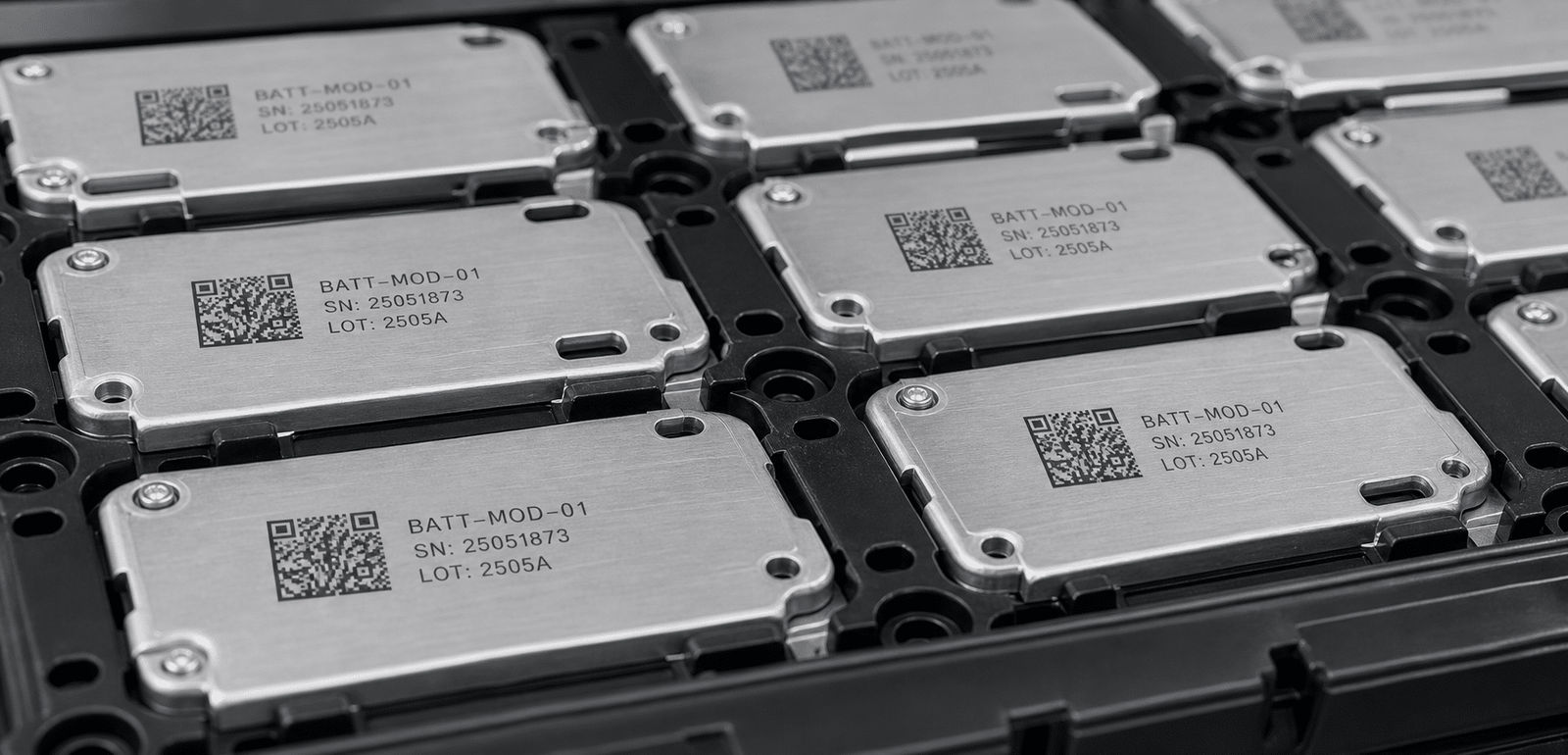
Build cleaner joints, stronger welds and reliable traceability across battery packs, busbars, aluminum housings, EV motor parts and charging components.
- Battery tray cleaning
- Busbar welding
- Module traceability
- EV part marking
Battery and EV factories need processes that remove contamination, reduce rework, protect base materials and keep every part identifiable through production and service life.
Remove oxide, oil, coating residue and handling contamination before welding, bonding, sealing or assembly.
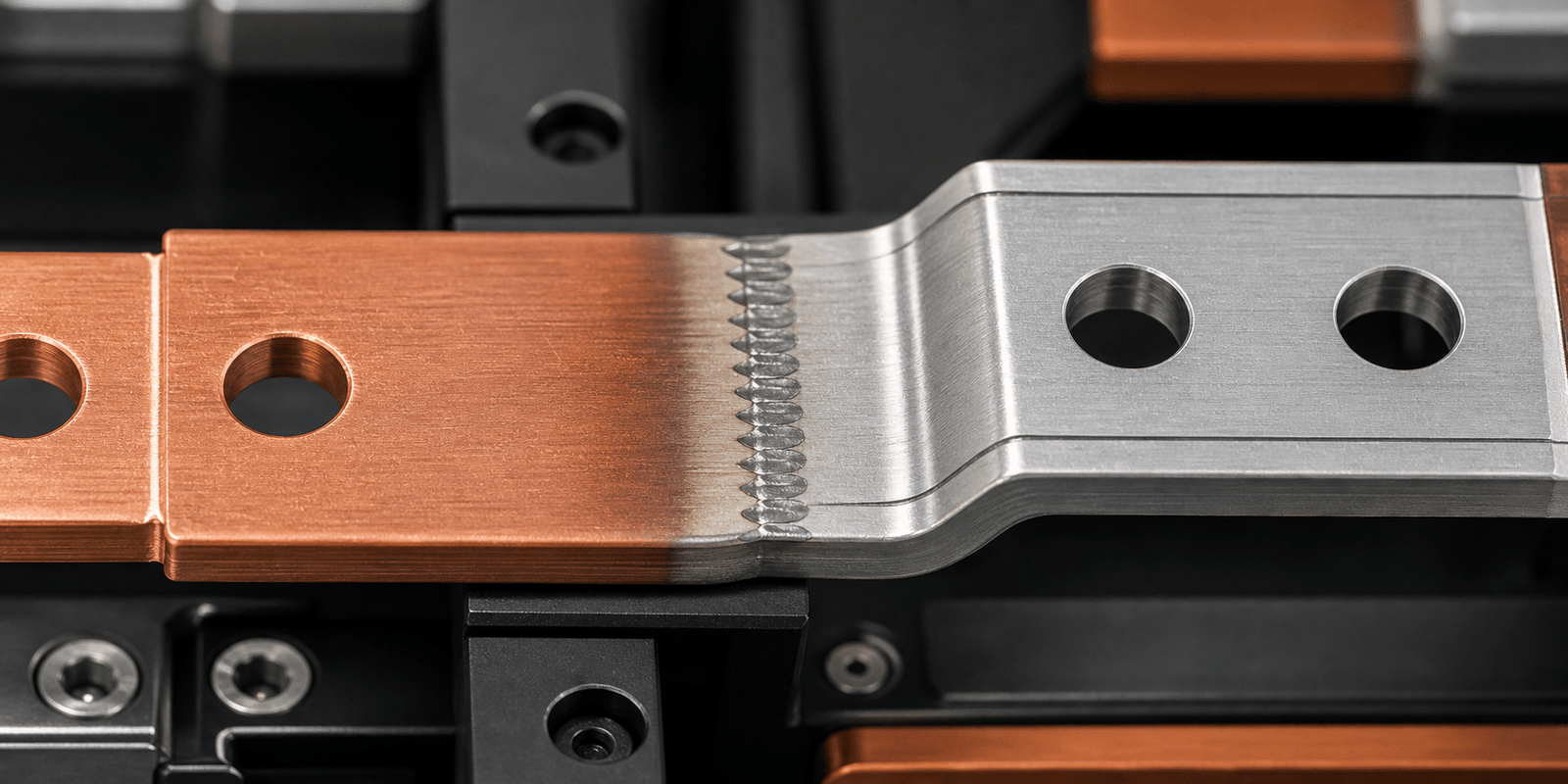
Prepare copper, aluminum and nickel-plated parts so weld appearance, electrical contact and repeatability are easier to control.
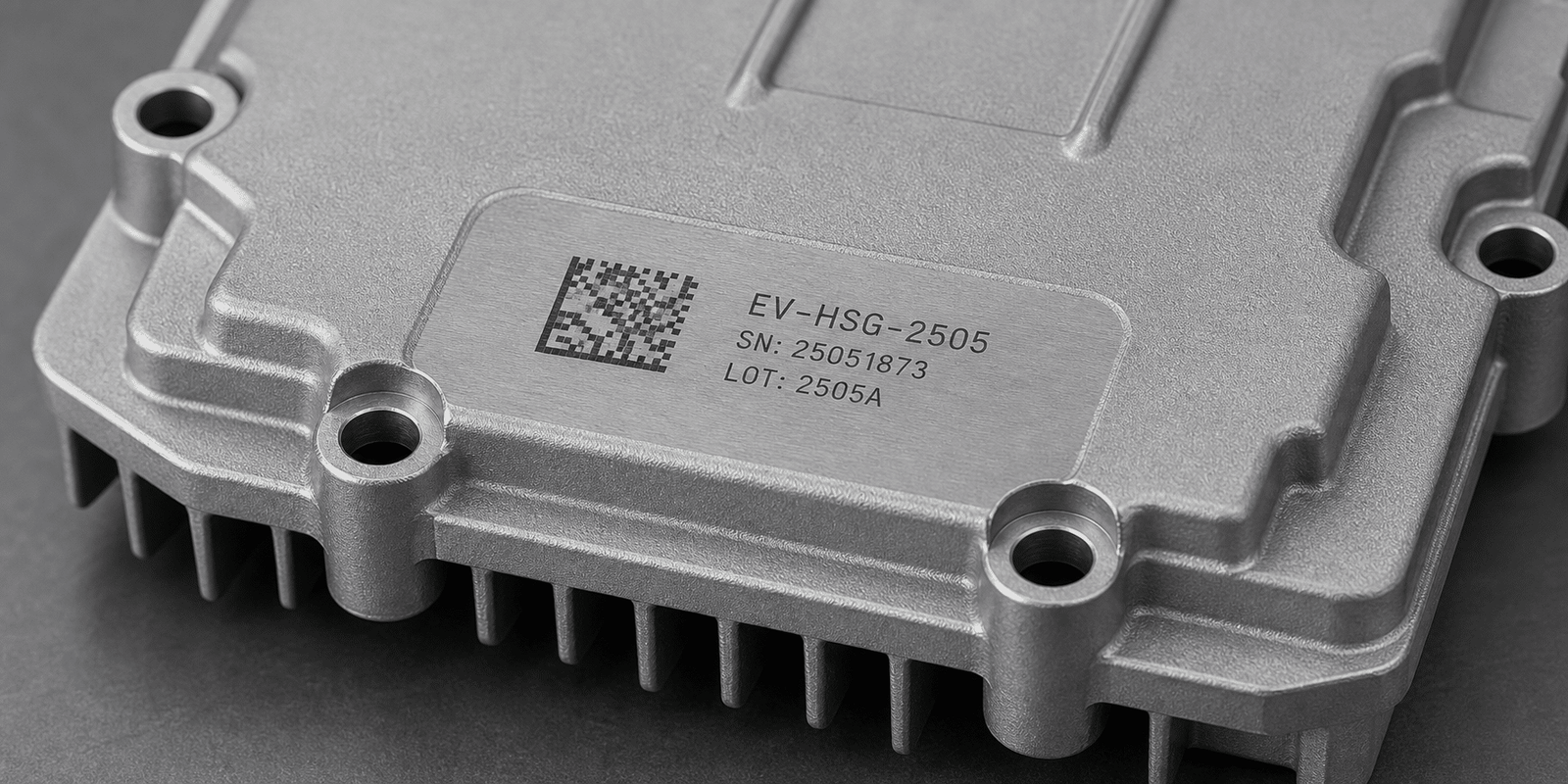
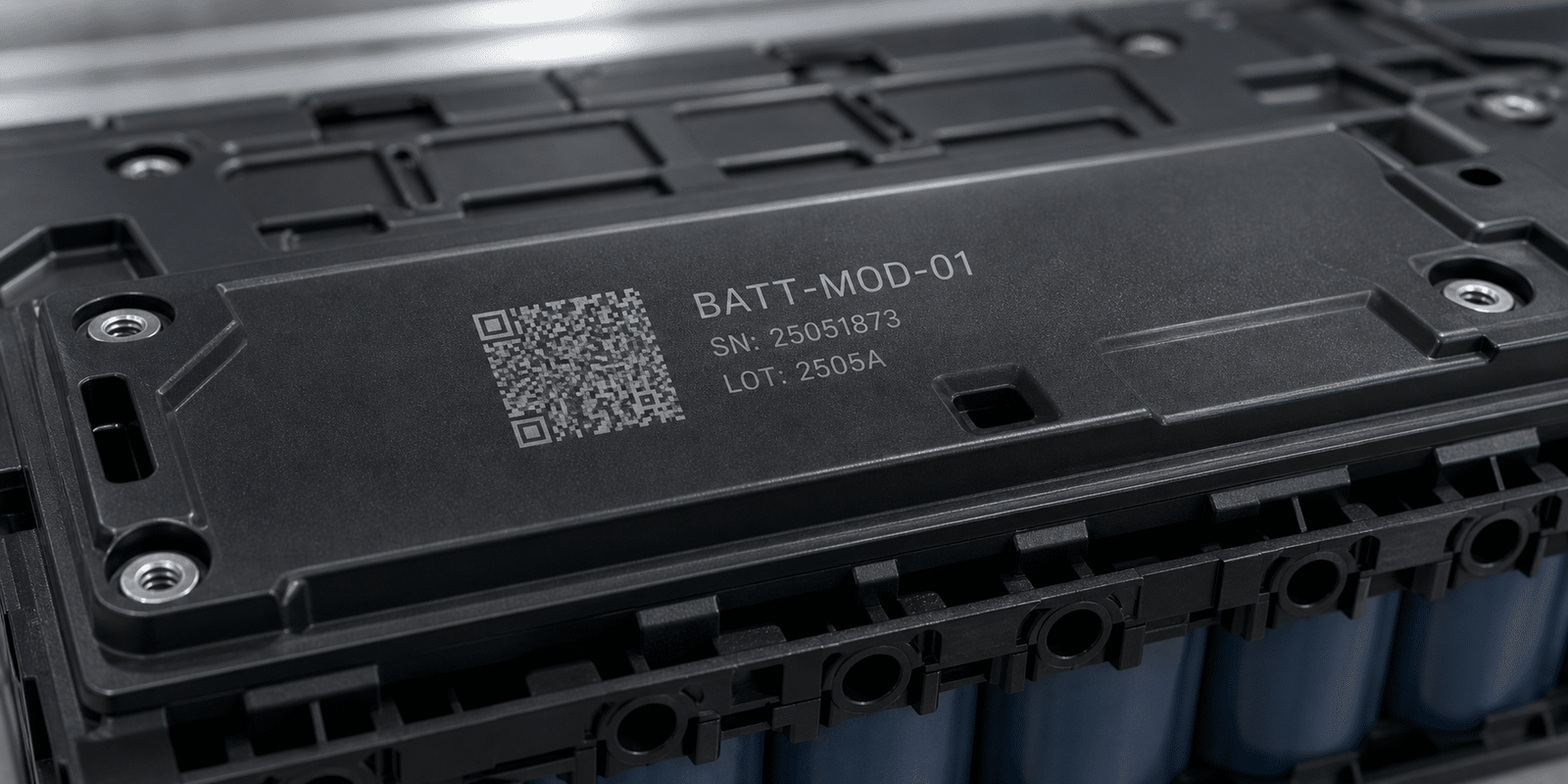
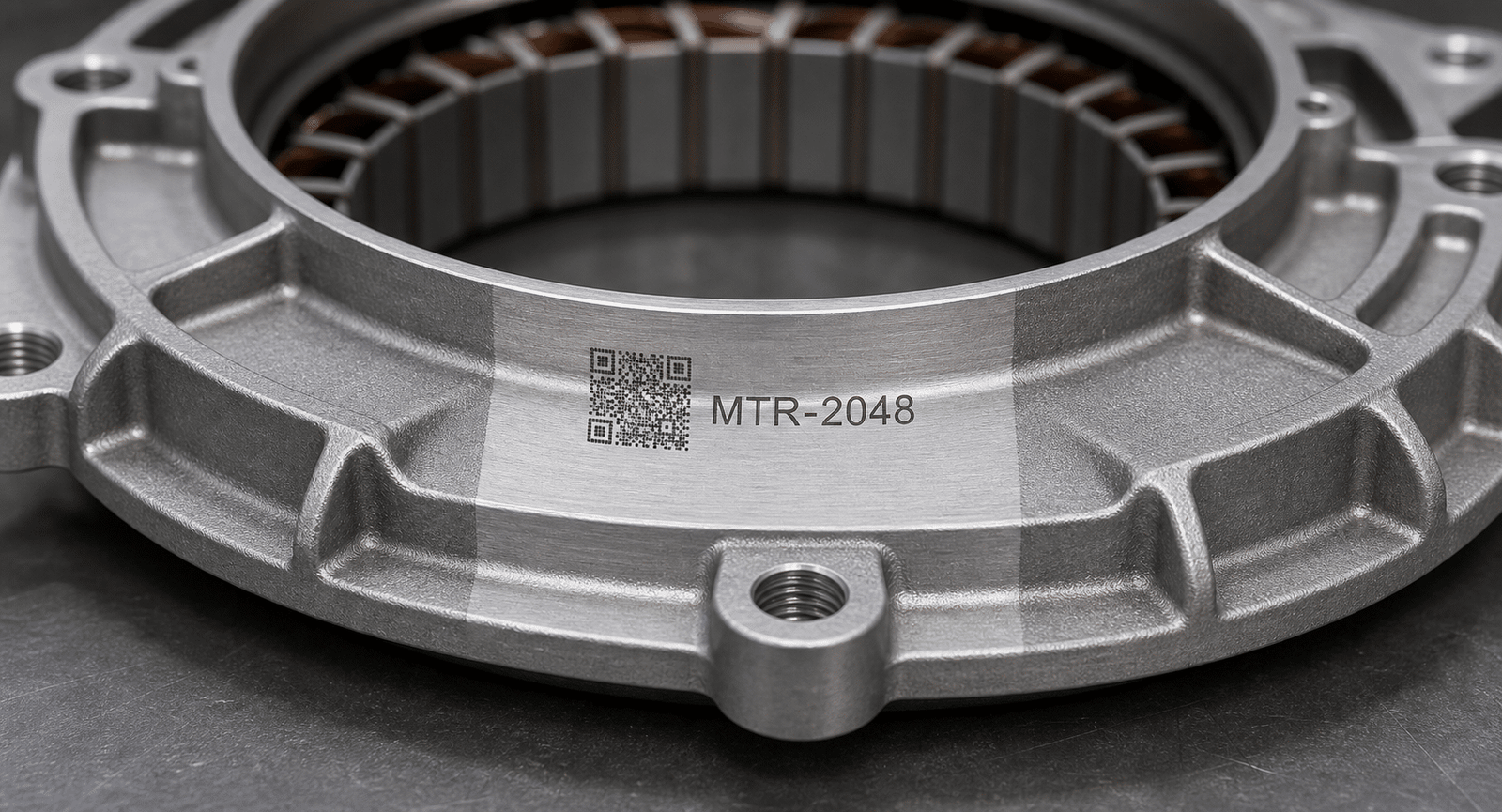
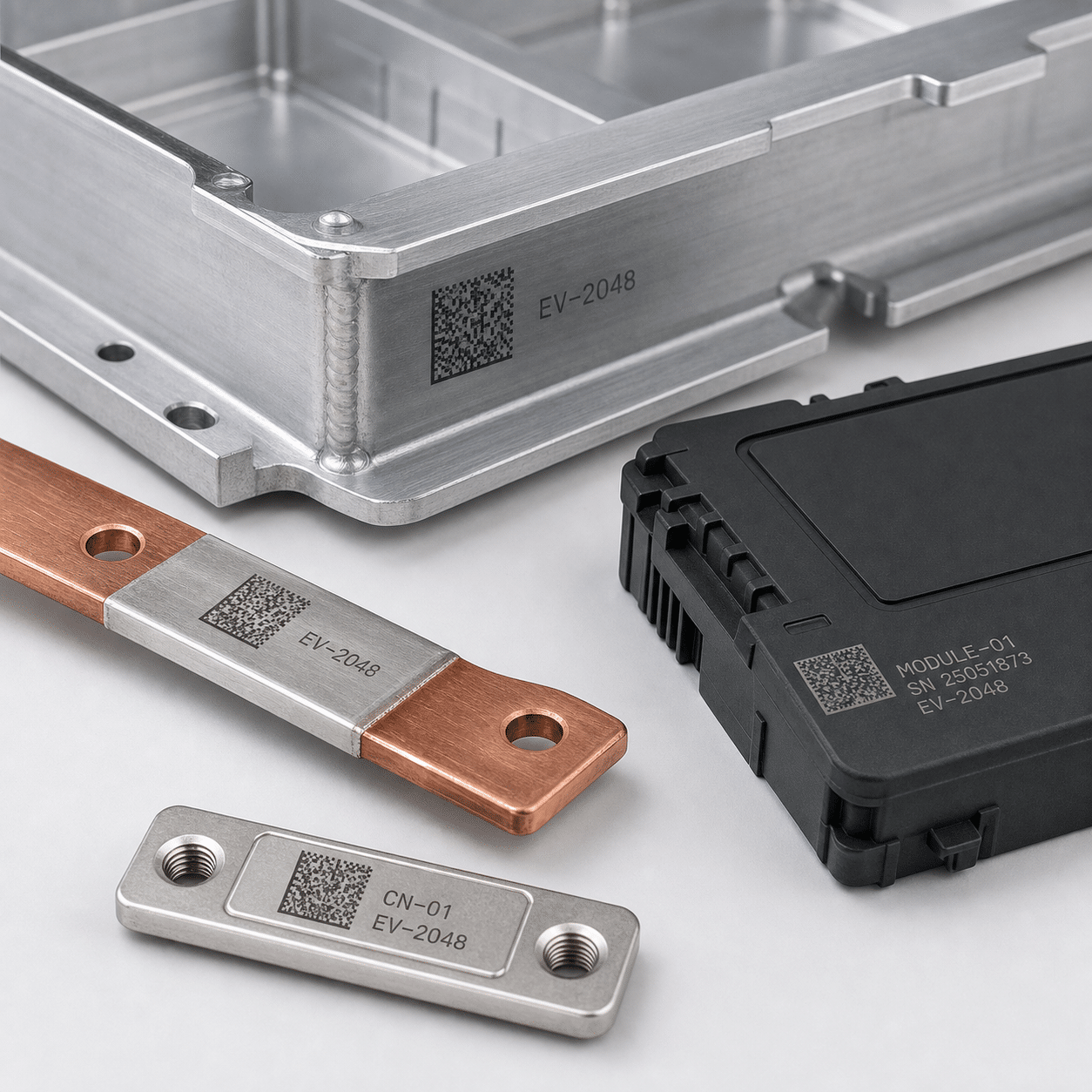
Create durable serial numbers, QR codes, Data Matrix codes and part IDs on metal and plastic EV components.
Use laser cleaning, welding and marking at the steps where surface preparation, joining quality and identification matter most.
Mark trays, plates, busbars, covers and housings for batch control before assembly.
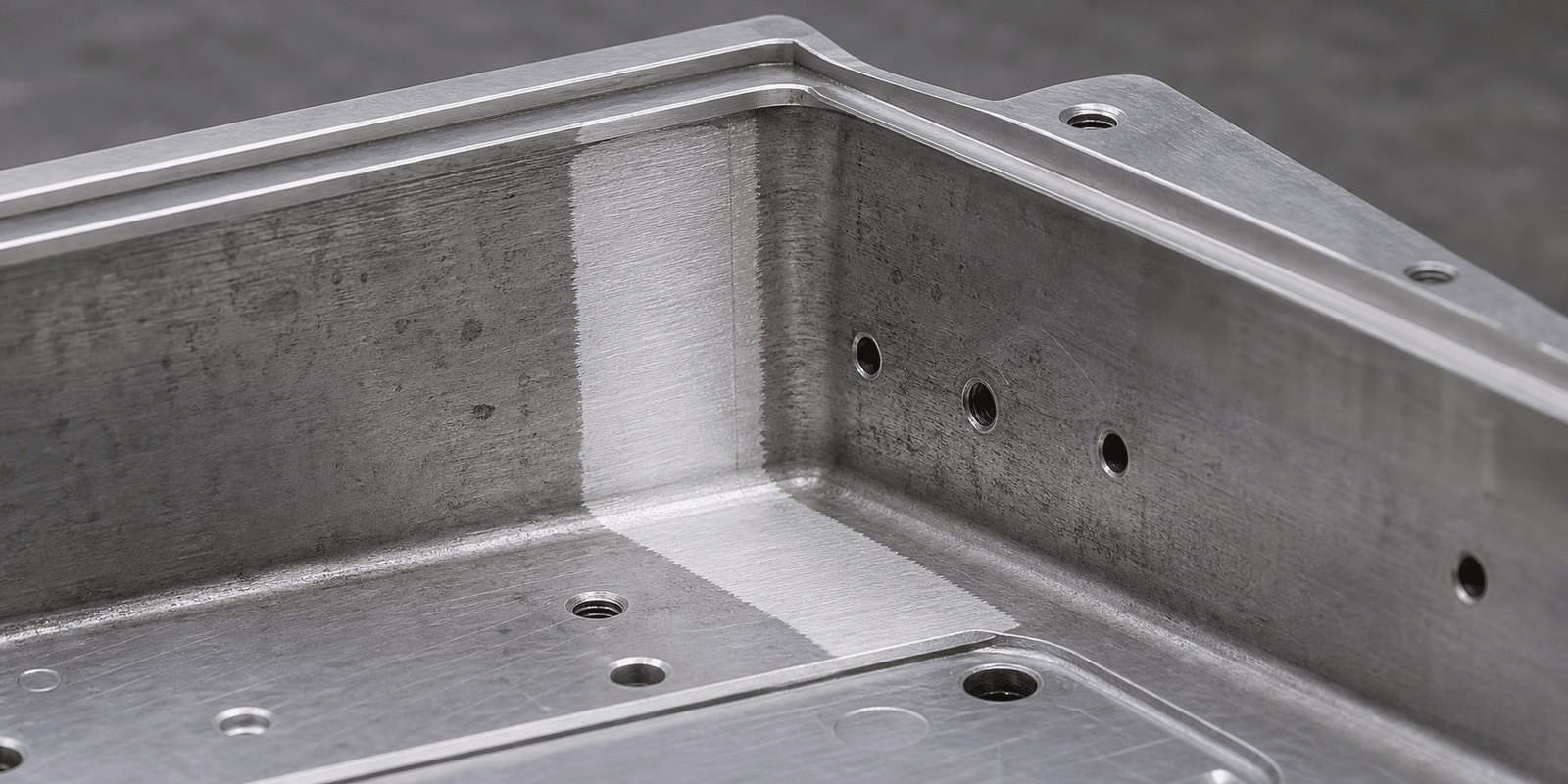
Clean oxide, oil and coating residue from weld zones without abrasive media or chemical washing.
Join busbars, thin metal parts, enclosures and brackets with controlled heat input.
Inspect weld appearance, code readability and surface condition for stable production release.
Keep permanent IDs visible through storage, assembly, shipment and service documentation.
Choose the process by material, surface condition, line speed, required code contrast and the amount of automation needed.
Clean aluminum, steel or coated surfaces before welding, sealing, coating repair and assembly.
Prepare copper, aluminum and plated conductive parts for more consistent weld contact and surface finish.
Mark housings, shafts, stator parts and metal covers with readable IDs for production tracking.
Mark logos, ratings, serial numbers and QR codes on metal and plastic connector components.
The best configuration depends on material, contamination, required weld result, code size, part handling and production volume.
| EV Production Need | Recommended Laser Solution | Typical Parts | What To Confirm |
|---|---|---|---|
| Oxide and oil removal before welding | Pulsed laser cleaning or automated laser cleaning | Battery trays, busbars, aluminum covers and steel brackets | Material, contamination type, cleaning width and cycle time |
| Conductive metal joining | Handheld or automated fiber laser welding | Busbars, tabs, sheet metal cases and connector parts | Material stack, thickness, fixture, weld length and inspection method |
| Permanent product identification | Fiber, MOPA or UV laser marking | Battery housings, plastic covers, cable parts and EV nameplates | Code contrast, code size, substrate and scan readability |
| Robotic production cell | Robotic laser cleaning, welding or marking system | Large trays, battery frames, motor housings and repetitive parts | Reach, fixture, safety enclosure, loading method and takt time |
Laser processing helps production teams control weld preparation, reduce secondary cleaning and maintain clear part identification.
Target only the working area so surrounding coatings, labels, sealing zones and base materials are easier to protect.
Remove localized contamination before joining to support better appearance, fewer defects and more repeatable weld behavior.
Mark codes that stay with the component through assembly, testing, shipment, maintenance and warranty tracking.
Compare battery tray cleaning, busbar welds, plastic part marking, metal housing codes and automated production cells before planning your process.


Start with manual processing for trials and flexible work, then move toward robotic or automated cells when repeatability and takt time become the priority.
Oceanplayer can help evaluate the material, recommend the process, arrange laser parameters and prepare a configuration for manual operation, robot loading or inline integration.
Flexible welding, cleaning and marking for repair, samples and small batches.
Stable path control for battery trays, large frames and repeat parts.
Automated marking or cleaning stations for production lines.
Fixtures, safety enclosure, fume extraction and data connection options.
A clear sample test starts with the part, material, surface condition and production target. These details help narrow down power, optics, tooling and automation needs.
Send part photos, material details and your target result. We can help review the process path and recommend a practical laser configuration.
Send material, thickness, surface condition and photos of the working area.
Define cleaning quality, weld result, marking contrast or automation goal.
Get a process suggestion with machine type, key options and next test steps.
Compare related equipment and application pages to choose the right process for cleaning, welding, marking and automated production.
Review common questions about cleaning, welding, marking and automation for EV component production.