oceanplayer

Oceanplayer Laser Equipment | Cleaning, Welding, Marking, Automation Sample Testing | Global Shipping | OEM/ODM Support
Pipe Laser Welding

Pipe Laser Welding for Clean Circumferential Seams, Tube Joints and Faster Fabrication.

Oceanplayer pipe laser welding solutions help weld round tubes, square tubes, thin-wall pipes, stainless pipes, carbon steel pipes and aluminum profiles with cleaner seams, controlled heat input and efficient production. Choose handheld, wire-feeder, rotary fixture or robotic laser welding based on pipe diameter, wall thickness, joint type, gap control and required sealing quality.
  • Round pipe and square tube welding
  • Rotary fixture and wire feeder options
  • Sample welding test available
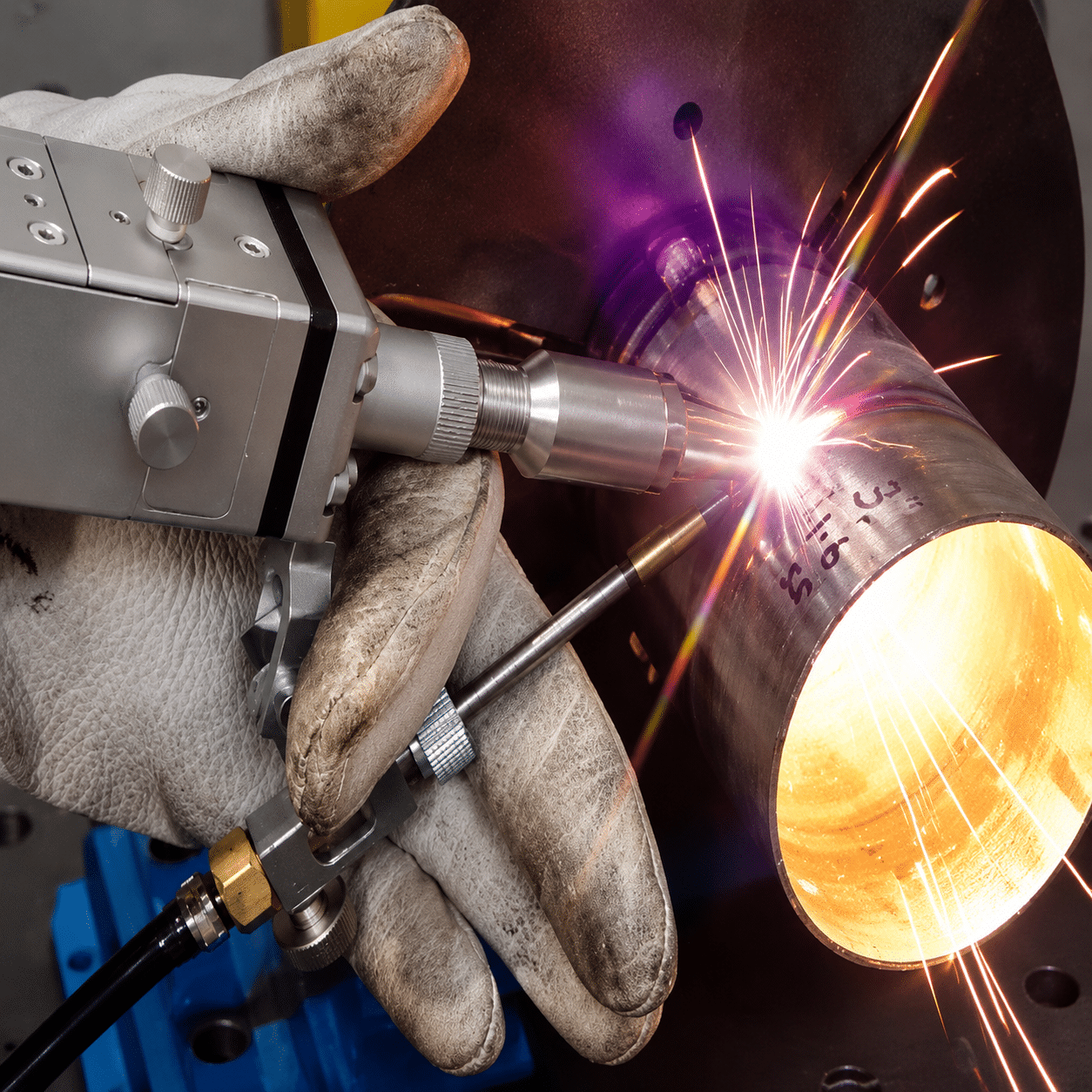
Pipe laser welding machine welding round tube seam
Cleaner tube seamsBuilt for pipes, frames, fittings and tubular assemblies
TubeRound & square
360°Rotary seam
WireGap filling
Clean Ring SeamsImprove appearance on visible pipe and tube products
Less Heat DistortionProtect thin-wall tubes and small fittings
Fixture FriendlyUse rotary fixtures for repeated pipe seams
Sample ProofCheck sealing, strength and appearance before ordering
Customer Concerns

Pipe welding problems that laser welding can help solve

Pipe and tube welding needs stable penetration, clean seam appearance and good alignment. Laser welding can help reduce heat distortion and finishing work when fixtures, gaps and parameters are controlled.

Uneven circumferential seams

Rotary fixtures and stable laser parameters help create smoother ring welds around round pipes and fittings.

Gaps and tube alignment

Pipe fit-up affects strength and appearance. Wire feeding and fixtures can help manage small gaps and edge mismatch.

Burn-through on thin-wall pipe

Controlled heat input helps reduce burn-through, deformation and large heat-affected zones on thin tubes.

Application Range

Where pipe laser welding is a strong fit

Laser welding is useful for pipe and tube products that need neat seams, lower distortion, efficient production and repeatable quality.

  • Stainless steel pipes, carbon steel pipes, galvanized tubes and aluminum profiles.
  • Round tube ring seams, square tube frames, pipe fittings and tubular assemblies.
  • Furniture frames, railings, racks, handles, brackets and display structures.
  • Small tanks, pressure-free containers, exhaust parts and mechanical pipe assemblies.
  • Repeated production seams using rotary fixtures, positioning tables or robotic systems.
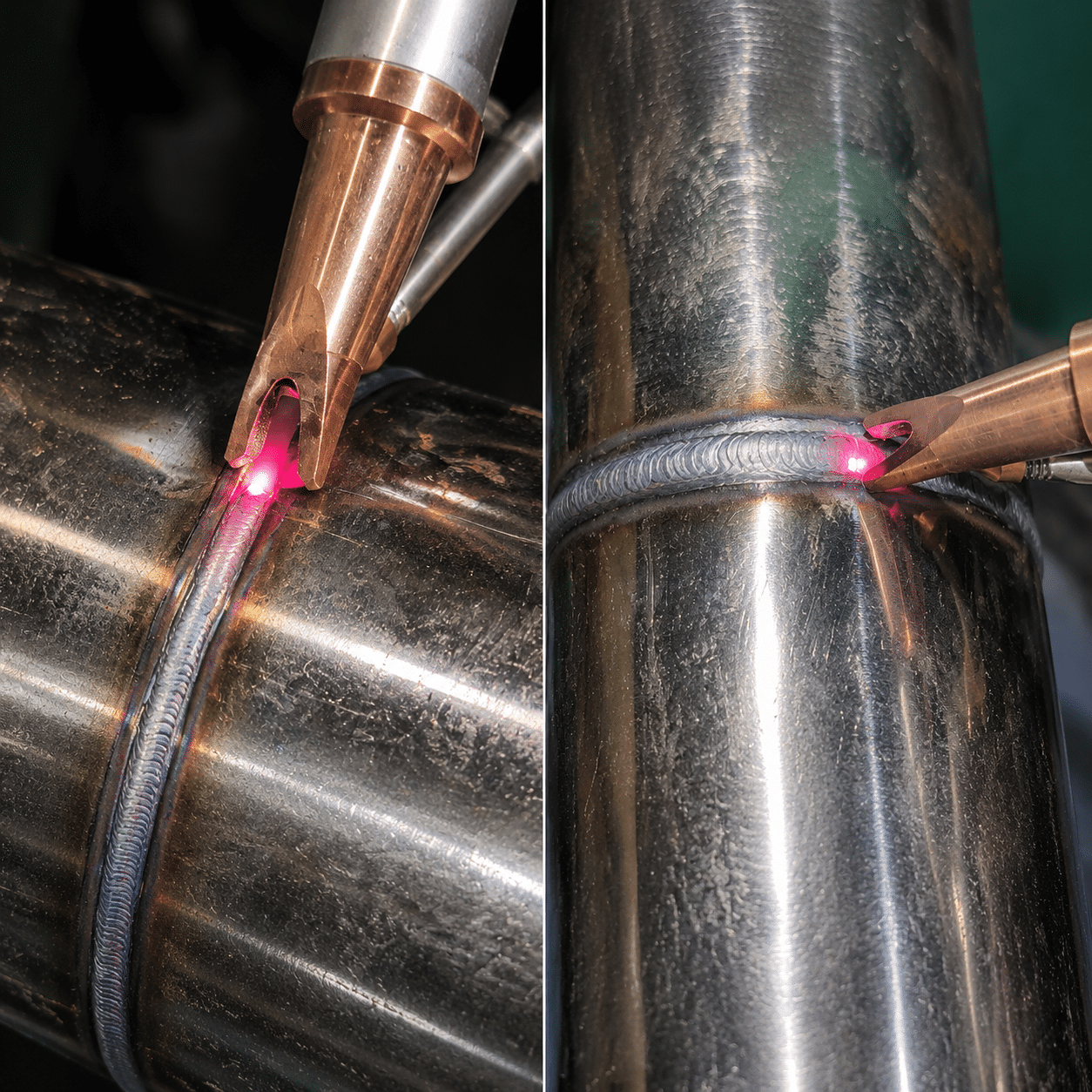
Pipe laser welding applications for round tubes square tubes fittings and frames
Pipe Process Factors

What decides pipe laser welding quality?

Clean pipe welds depend on pipe material, wall thickness, diameter, joint fit-up, rotation stability, shielding gas, wire feeding and whether the seam must be sealed or only structural.

Rotation

Use stable rotary motion

For 360-degree pipe seams, a rotary fixture helps maintain speed, distance and seam consistency.

  • Match rotation speed to welding speed
  • Keep pipe centered
  • Control start-stop overlap
Sealing

Define strength and leak requirements

Decorative tube seams, structural seams and leak-resistant seams need different penetration and inspection standards.

  • Confirm pressure or no-pressure use
  • Check penetration target
  • Plan inspection after welding
Thickness Guide

Select laser welding setup by pipe wall thickness and joint type

The right configuration depends on pipe material, diameter, wall thickness, joint type, gap condition, welding speed and sealing requirement.

Pipe Or Tube WorkpieceCommon SetupBest UseWhat To Check
0.5-1.2mm thin-wall tube1000W-1500W with controlled parametersDecorative tubes, light frames and small fittingsBurn-through, alignment and heat distortion
1.2-3.0mm pipe wall1500W-2000W handheld or rotary laser welderFrames, fittings, handles and tube assembliesPenetration, seam appearance and rotation stability
3.0-5.0mm pipe wall2000W-3000W with suitable joint designHeavier tube structures and mechanical partsJoint prep, wire feeding and penetration depth
Round pipe ring seamRotary fixture laser weldingFittings, sleeves, circular joints and repeated seamsConcentricity, start-stop overlap and shielding
Square tube and frame jointsHandheld or fixture-assisted weldingFurniture, railings, racks and structural framesCorner gaps, seam finish and fixture support
Welding Results Gallery

Review pipe laser welding results across common tube products

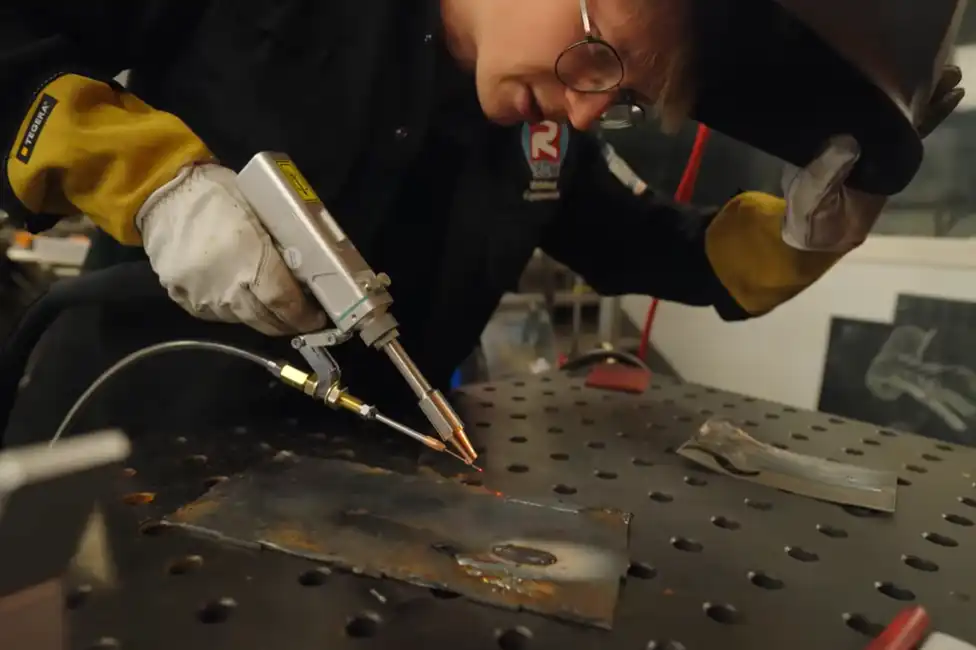
Compare welding samples for round pipes, square tubes, ring seams, fittings, frames and wire-fed tube joints.
Video Demonstration

Watch pipe laser welding on real tube workpieces

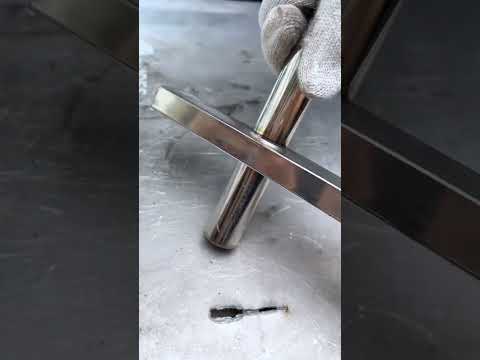
See pipe rotation, seam formation, wire feeding and final weld appearance before choosing your machine configuration.
Machine Configuration

Match the laser welding setup to your pipe welding workflow

Pipe welding may need a flexible handheld welder, a rotary fixture, wire feeding, water cooling or robotic positioning depending on diameter, volume and seam requirement.

Handheld Laser Welder

Flexible option for pipe frames, fittings, repair work and varied tube assemblies.

Rotary Fixture

Useful for repeated circular seams where stable 360-degree welding is required.

Wire Feeder Option

Helpful when pipe ends have gaps, edge variation or seams that need extra fill.

Water-Cooled Laser Welder

Recommended for longer duty cycles, higher power and thicker pipe production welding.

Robotic Laser Welding

Suitable for repeated tube frames, fittings and pipe assemblies with stable geometry.

Safety and Extraction

Plan laser protection, smoke extraction, shielding gas and fixture safety before production use.

Laser vs Traditional Welding

Why pipe fabricators compare laser welding with TIG and MIG

Laser welding is often selected when pipe and tube products need cleaner seams, faster welding and less heat distortion than traditional methods.

MethodBest ForMain ConcernWhen Laser Helps
Laser WeldingThin-wall pipe, visible tube seams and repeated ring weldsNeeds fit-up, safety and parameter controlCleaner seam, faster speed and lower heat input
TIG WeldingPrecise manual tube welding and small batchesSlower speed and higher skill demandLaser can improve output for repeated tube seams
MIG WeldingThicker pipe and structural fabricationMore spatter and wider welds on visible partsLaser can reduce polishing on thin or visible tubes
Mechanical JoiningAssemblies that do not need continuous weldsExtra fittings, holes and sealing limitationsLaser can create continuous welded joints when needed
Before You Choose

Confirm these details before selecting a pipe laser welder

Clear pipe information helps recommend laser power, wire feeding, rotary fixture, shielding, cooling method and sample welding parameters.

Pipe material and wall thickness

Share stainless steel, carbon steel, galvanized steel or aluminum pipe material and wall thickness range.

Diameter and joint type

Round pipe, square tube, ring seam, butt joint, lap joint and frame joints need different positioning methods.

Sealing or strength target

Leak-resistant seams, decorative seams and structural seams need different testing and penetration standards.

Gap and cutting quality

Pipe end quality affects seam stability. Larger gaps may need wire feeding or improved cutting preparation.

Production volume

One-off welding may suit handheld work, while repeated circular seams may benefit from rotary fixtures or automation.

Post-weld finish

Confirm whether the seam will be polished, brushed, coated, painted, pressure tested or assembled directly.

Sample Welding Test

Send your pipe sample and get a practical welding recommendation.

Share material, diameter, wall thickness, joint type, gap size, seam photos, sealing requirement and production volume. Oceanplayer can recommend laser power, wire feeder options, rotary fixture setup and sample welding parameters.

01

Share Pipe Details

Send material, diameter, wall thickness, joint type and target seam result.

02

Test Welding Parameters

Check power, speed, rotation, shielding gas, wire feeding and seam quality.

03

Choose Configuration

Select handheld, rotary, water-cooled, wire-feeder or robotic pipe welding setup.

FAQ

Pipe Laser Welding FAQ

Can laser welding be used for pipes and tubes?
Yes. Laser welding can be used for round pipes, square tubes, fittings, frames and thin-wall tube assemblies when fit-up, shielding and parameters are properly controlled.
Can laser welding make a 360-degree pipe seam?
Yes. A rotary fixture can rotate the pipe for a controlled circumferential seam. This is useful for repeated round pipe joints, sleeves and fittings.
Do I need a wire feeder for pipe laser welding?
A wire feeder is useful when pipe ends have small gaps, edge mismatch or seam filling requirements. Tight joints can often be welded without filler wire depending on the application.
Can laser welding reduce distortion on thin-wall tubes?
Laser welding usually has lower heat input than many traditional methods, which can help reduce deformation and burn-through when parameters and fixtures are correct.
Which pipe details are needed for a sample test?
Material, diameter, wall thickness, joint type, gap size, sealing requirement, seam photos and production volume help determine the best machine configuration and welding parameters.