

3 Ways Thermal Conductivity Affects Weld Defects
Thermal conductivity affects welding by moving heat away from the joint. It helps determine whether the edges fuse, how the weld and nearby metal cool, and where uneven heating creates stress and distortion. But it is not a defect diagnosis by itself: the alloy, joint shape, heat source, contamination, and fixture can change the outcome.

What does thermal conductivity mean in welding?
Thermal conductivity describes how readily heat travels through a material. Its symbol is k, and its common unit is W/(m·K). With the same temperature gradient, a higher-conductivity material carries more heat away from the hot region.
Think of the cooler metal beside a weld as a heat sink. The weld pool needs enough energy to melt the required joint faces while heat is spreading into the rest of the part. A thick plate or a closely contacting backing bar can provide a much larger heat sink than a thin, unsupported edge.
Conductivity is different from heat capacity and laser absorption. Heat capacity describes the energy needed to raise a material’s temperature. Thermal diffusivity combines conductivity, density, and heat capacity to describe how quickly temperature changes spread. Laser absorption describes how much incident light enters the material as energy.
The sketch shows heat-flow paths, not a calculated temperature map. In a real weld, these properties vary with temperature. Melting also uses energy, and liquid metal flows. That is why a room-temperature conductivity number can explain a trend but cannot predict a complete weld. NASA’s welding-modeling discussion describes the need to combine thermal, liquid-flow, and mechanical properties.
What are the thermal conductivity values of common welding metals?
Copper and aluminum conduct heat much more readily than 304 stainless steel near room temperature. However, a value for elemental aluminum is not a value for every aluminum alloy. Grade, temper, and temperature must travel with the number.
| Material / condition | Conductivity W/(m·K) | Reference temperature | Data basis and limitation |
|---|---|---|---|
| Copper | 400 | 295 K (about 22°C) | NIST reference table; general metal reference, not a certificate for a particular copper product. |
| Aluminum | 235 | 295 K (about 22°C) | NIST reference table; not a 6061, 5083, or other alloy-specific value. |
| 6061-T6 / T651 aluminum | 167 | 20°C | Kaiser sheet, coil and plate data, page 2; typical value, Rev. 05/06. |
| 304 stainless steel | 15 | 295 K (about 22°C) | NIST reference table; use temperature-dependent data for a thermal model. |
Do not scale welding power by the conductivity ratio. A conductivity comparison is not a rule for choosing watts, current, travel speed, or preheat. The required melted volume, absorbed energy, and heat-loss paths are different parts of the problem.
For temperature-specific stainless data and unit conversions, see 304 stainless steel thermal conductivity: values and chart.
1. How does thermal conductivity affect fusion and penetration?
A strong heat sink can keep a joint face too cool to fuse properly. This is especially important at a cold start, near a thick attachment, or beside a contacting fixture. The top bead may look smooth while part of the root or sidewall remains unfused.
Keep the two terms separate. Fusion means the materials have melted together where the joint requires it. Penetration describes the depth reached by the weld. A deep central weld does not necessarily prove that both sidewalls fused. Our weld penetration guide explains the joint-level distinction.
Cold starts and warmed-up parts need separate checks
Aluminum is a useful example. AWS identifies difficult fusion at the arc start as one consequence of its high conductivity. Once welding continues, however, the surrounding part can warm up. A setting that was marginal at the beginning can create a larger pool later. AWS’s aluminum welding guide discusses start and end control for this reason.
Before increasing energy, inspect the joint gap, access, surface preparation, torch or beam position, and actual travel speed. A blocked sidewall or misaligned beam will not reliably improve just because more power is available. In arc welding, excessive current or slow travel can also let the pool run ahead and produce poor penetration. Australian Welding Institute: fusion imperfections.
Why can adding heat cause burn-through?
Too much local melting can produce burn-through, especially at a thin section, a wider gap, or a travel pause. A setting that solves a cold-start problem can therefore damage a warmed-up part.
Compare the joint against its required fusion, penetration, and root condition. Bead width and a smooth surface are not enough to approve a change.
Why laser absorption also affects penetration
Copper laser welding combines rapid heat conduction with wavelength-dependent absorption. Changing wavelength or beam shape can change how energy enters the workpiece; it does not change copper’s bulk conductivity. TRUMPF’s copper welding overview explains green-light coupling and infrared beam strategies.
In heat-conduction laser welding, the surface melts and heat travels into the part. In deep-penetration welding, a vapor cavity called a keyhole changes how energy is delivered below the surface. Conductivity still matters, but focus, power density, travel, and keyhole stability must be considered too. TRUMPF: heat-conduction welding.
2. How does weld cooling affect porosity, cracking, and the HAZ?
Heat flow changes the time spent hot and the cooling path, but the alloy determines what those changes do. The weld pool solidifies, while nearby unmelted metal can change its structure. That surrounding region is the heat-affected zone, or HAZ.
Porosity needs a gas source—not just fast cooling
Porosity consists of gas cavities trapped as the weld solidifies. Heat flow influences the time available for bubbles to escape, but it does not supply the gas. Moisture, oil, surface coatings, or poor shielding may be the more important cause. In aluminum, hydrogen from moisture and hydrocarbons is a major concern.
Check the contamination and shielding route before trying to “cure” pores with more heat. A longer-lived pool is not proof that the gas source has been removed. Australian Welding Institute: porosity causes.
Rapid cooling can harden susceptible steels
Some carbon and low-alloy steels can develop a hard, crack-sensitive structure during rapid cooling. Hydrogen cracking requires more than this structure alone: hydrogen and tensile stress must also be present. It may appear after the weld has cooled, so an immediate visual check is not always enough. TWI’s hydrogen-cracking guidance explains this combination.
The practical response depends on steel chemistry, thickness, restraint, hydrogen control, and the welding procedure specification (WPS). Do not apply a steel preheat or cooling rule to aluminum simply because both joints crack.
Heat-treatable aluminum can soften beside the weld
For heat-treatable aluminum such as 6061-T6, welding can disturb the strengthening structure and reduce strength in the HAZ. This is not the same mechanism as hardening in a susceptible steel. Aluminum solidification cracks also depend on filler compatibility, weld shape, and restraint—not conductivity alone. TWI: aluminum-alloy weldability.
Where strength matters, verify the welded-joint properties required by the design. The base-metal T6 strength should not automatically be assigned to the as-welded region.
Heat tint is not the boundary of the HAZ. Surface color also depends on oxidation, shielding, and surface condition. A narrow colored band does not prove a narrow softened zone or acceptable strength. Use the specified examination or property test. TWI explains HAZ size and heat tint.
3. How does thermal conductivity affect weld distortion?
Conductivity helps shape temperature differences; uneven expansion and contraction turn those differences into stress and movement. Hot metal tries to expand against cooler material. As the joint cools, it contracts. When restraint and stress cause permanent deformation, the part can bend, twist, or shrink away from its required dimensions.
Low conductivity does not automatically mean more distortion
Conductivity must be considered alongside thermal expansion, stiffness, yield behavior, thickness, and weld location. A high-conductivity aluminum sheet can still distort badly because heat spreading does not cancel expansion and weld shrinkage.
A thin panel with a long weld is a different problem from a compact, thick component. Comparing only their material values misses the structural response. TWI’s distortion overview discusses these interacting factors.
Check the part after cooling and release
A fixture has two jobs that should not be confused: it restrains movement, and its contact can carry heat away. The adjacent photograph shows deformation in an unrestrained welded sample; it does not compare material conductivities. A part held flat during welding may move when released. Record dimensions in the condition required by the drawing or inspection plan, not only while it is clamped.
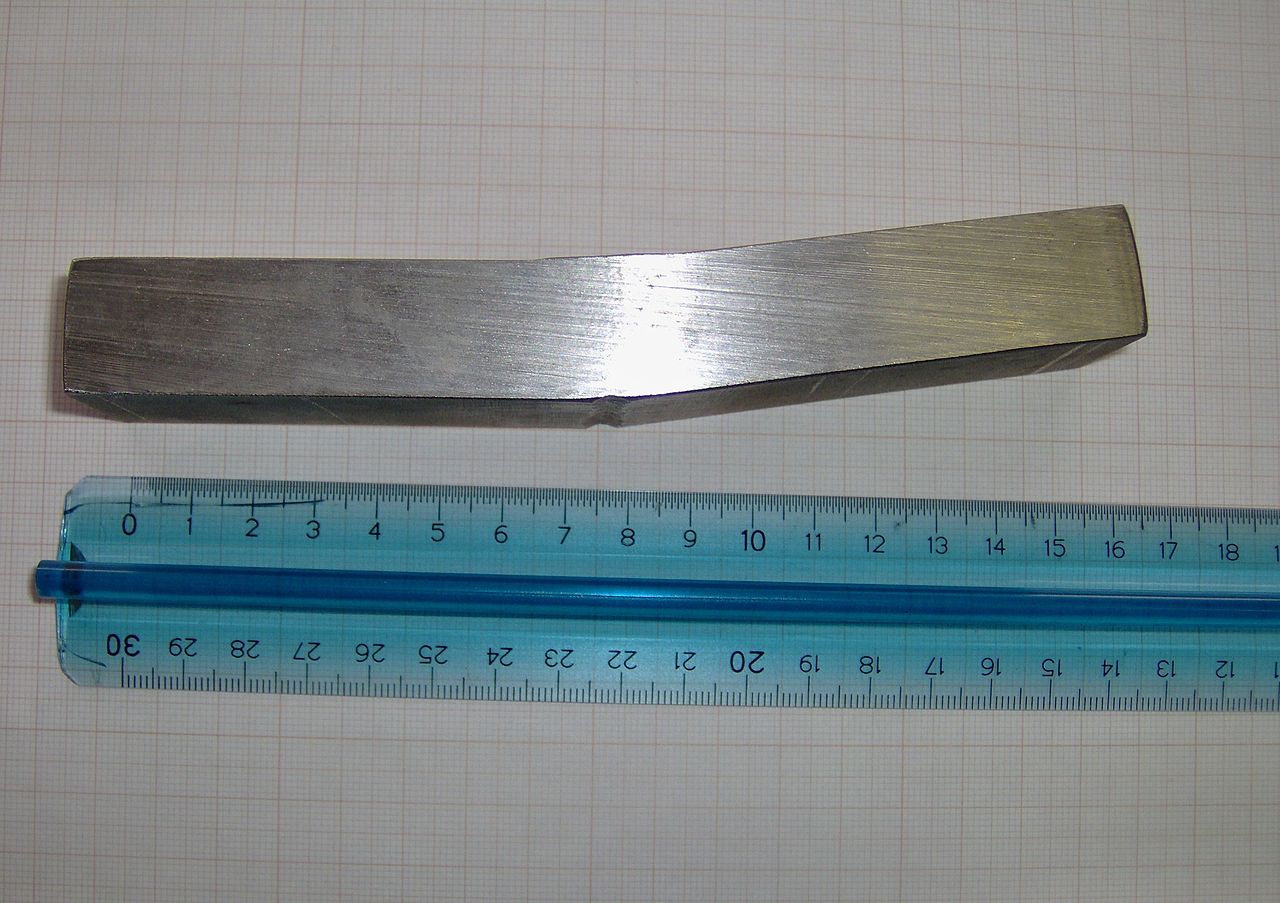
Useful controls may include a balanced weld sequence, a joint that avoids unnecessary weld volume, repeatable fixture contact, and limits on heat accumulation. Each change must still meet fusion and strength requirements. Reducing heat until the panel stays straight is not a successful fix if the joint no longer fuses. TWI: why welding creates distortion.
Why can the same setting work on one part and fail on the next?
The machine can repeat a setting while the thermal starting condition changes. The part may begin warmer, the fixture may retain heat, or a pause between cycles may be shorter. Differences in thickness and fixture contact can also change the heat-loss path.
A cold-start versus repeated-cycle example
Hypothetical shop situation: a 6061-T6 assembly shows incomplete fusion near the start of the first seam. Later in a batch, the same recipe gives excessive root melting. The tempting response is to choose a compromise power setting.
A better first question is whether the part and fixture begin each weld in the same condition. Mark comparable start, middle, and end locations. Record the starting temperatures, actual travel, gaps, and cycle pauses. Then compare the required joint measurements at those locations.
If the results track temperature while the other factors are controlled, heat accumulation becomes a stronger explanation. If they track a changing gap or beam position instead, investigate that cause. These are possible observations for a proposed trial, not published Oceanplayer Laser test results.
Use the finding to define a repeatable starting condition and a permitted production range. Changing power, start/end control, cooling time, or fixture design then becomes a controlled procedure change, not a guess based on the alloy name.
How do you identify a heat-flow problem before changing weld settings?
Start with the location and timing of the imperfection. The table below gives investigation priorities, not a one-to-one diagnosis. Whether an imperfection is rejectable depends on the applicable acceptance requirements.
| Observed symptom | Possible heat-flow link | Competing cause to check | Useful comparison |
|---|---|---|---|
| Poor fusion at the start | Cold part or backing removes heat quickly. | Start timing, oxide, access, or beam/torch alignment. | Start sections with the same gap and measured starting condition. |
| Deeper penetration later | Part or fixture temperature rises during production. | Slower travel, larger gap, or changed focus. | Start/middle/end sections plus a travel and temperature record. |
| Pores in the weld | Solidification affects whether gas escapes. | Moisture, oil, shielding problems, or unstable laser keyhole. | Controlled cleaning/shielding trial and suitable internal inspection. |
| Cracks after welding | Thermal cycle affects structure and stress. | Wrong filler, alloy susceptibility, hydrogen, or high restraint. | Crack location and timing, grade/filler records, and required metallurgical checks. |
| Panel bends or twists | Uneven heating and contraction. | Joint layout, weld volume, sequence, or inconsistent clamping. | Dimensions after cooling and release using the same datums. |
| Burn-through at one spot | Local heat builds up or the heat sink becomes smaller. | Thin section, wide gap, motion pause, or excessive local energy. | Thickness/gap map and process record at the exact defect location. |
What should a traceable weld trial record include?
Agree on the required result before testing: fusion and penetration for the joint, allowed imperfections, cooled dimensions, and any strength or leak requirement. Take the numerical limits from the drawing and applicable procedure—not from the conductivity table.
- Record the material and setup. Give each trial a sample ID. Record alloy and temper, thickness and gap in mm, joint drawing, surface preparation, filler, shielding, and fixture contact. For laser trials, also record source wavelength and operating mode, delivered power in W at the defined measurement point, focus or spot configuration, wobble settings, and travel speed in mm/s.
- Change one suspected factor at a time. Keep the inspection locations and measurement method consistent. If temperature is the variable, record part and fixture temperature in °C at marked locations and times. Use the same suitable measurement method; uncorrected infrared readings on reflective bare metal can be misleading.
- Verify the required result—not only the appearance. Link the sample ID to start/middle/end section images with a scale, measured fusion and penetration, and cooled/released dimensions. Add mechanical, leak, or suitable nondestructive tests when required. Record pass/fail against each agreed limit, including failed samples.
- Repeat across the production conditions. Include cold starts, warmed-up operation, and relevant interruptions. Keep the approved safety and extraction configuration in place. A single good coupon does not establish the complete operating range.
Cross-sections reveal only the locations examined. For production acceptance, the inspection method, coverage, and limits must suit the joint; one attractive section does not certify an entire weld.
Should you preheat or change filler to solve the problem?
Neither choice should be made from thermal conductivity alone. Preheat changes the starting temperature and cooling conditions, so it may be useful when the material and qualified procedure require it. It does not repair poor access, remove a gas leak, or make an incompatible filler suitable.
For susceptible steels, preheat is part of a broader hydrogen-cracking control plan. For heat-treatable aluminum, additional heating also needs to be considered against the required material condition and joint properties. Use the applicable WPS and material guidance rather than a generic preheat temperature.
Filler selection is primarily about base-metal compatibility, crack resistance, required properties, and service conditions. Matching conductivity is not the goal. For a practical alloy-specific comparison, see 5356 vs 4043 vs 4643 filler for 6061 aluminum.
The useful rule: treat heat flow as one part of the evidence. First identify the defect mechanism, then qualify a change that improves the joint without creating a new problem elsewhere.
Send Oceanplayer Laser the exact alloy and temper, thickness, joint sketch, defect photos, current settings, and required inspection result. Include whether the issue occurs at the cold start, during a long seam, or after repeated parts.
Discuss the joint and trial conditions →Related welding guides
Sources and image credits
- NIST reference tables and Kaiser 6061 technical data, page 2 — the material values and reference conditions used above.
- AWS: A Guide to Great Aluminum Welds and Australian Welding Institute: fusion and porosity — cold starts, joint access, and gas-related imperfections.
- TWI: hydrogen cracks in steels, aluminum-alloy weldability, and the heat-affected zone — material-specific cracking, softening, and inspection limits.
- TWI: preventing and correcting distortion and what causes distortion — expansion, contraction, restraint, and permanent movement.
- TRUMPF: copper welding and heat-conduction welding — optical coupling and the difference between laser welding modes.
- NASA NTRS: The Importance of Properties in Modeling — why welding analysis needs more than one room-temperature material property.
- Fluke: infrared thermometer measurement — emissivity and reflective-metal measurement limitations.
- Laser-welding photo: Krorc. Welded-plate deformation photo: Claudio Nardi. Both via Wikimedia Commons under CC BY-SA 3.0; resized, not cropped. These third-party images illustrate processes, not Oceanplayer Laser test results.