

Top 10 Industries for Laser Cleaning Machine Applications
Laser cleaning is used for tasks such as mold maintenance, coating removal and surface preparation in automotive, manufacturing, aerospace and other industries. The best fit is a reachable surface where precise removal solves a real problem. Choose a machine by the material, unwanted layer and required finish—not by the industry name alone.
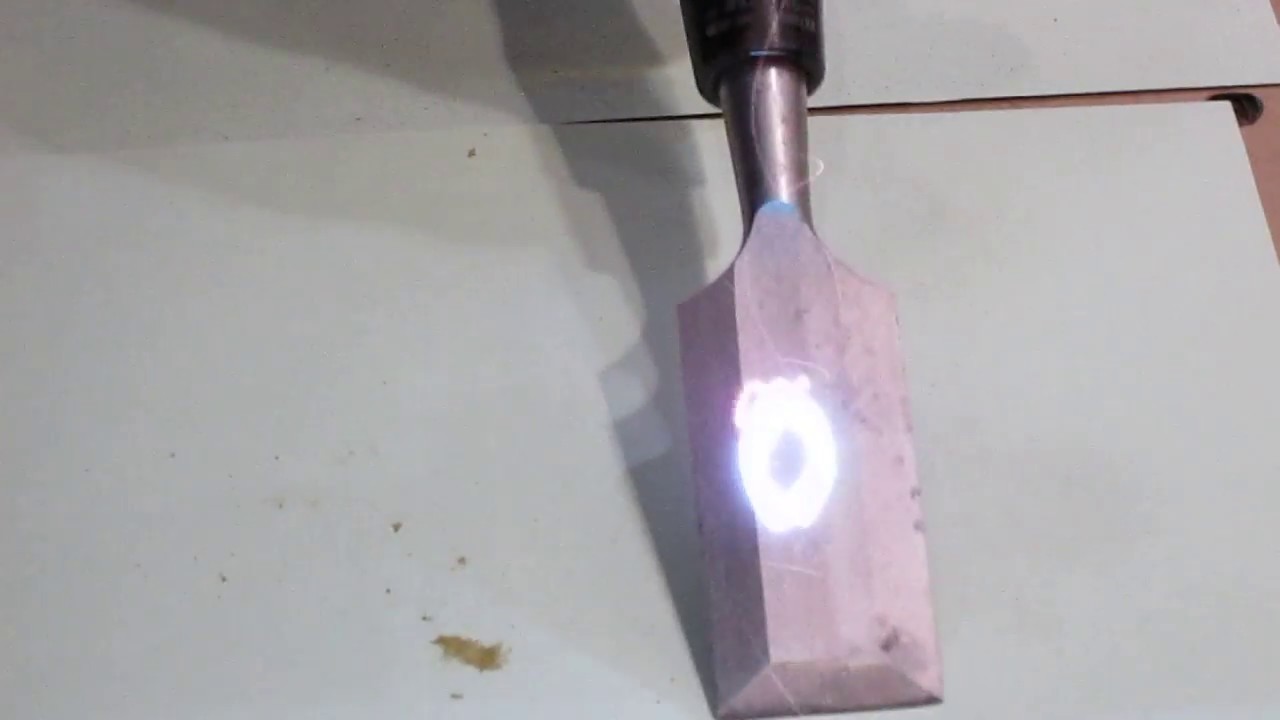
Background: cropped demonstration frame by Laser Photonics, via Wikimedia Commons, CC BY 3.0. It illustrates the process, not Oceanplayer Laser test results.
Which cleaning jobs are a good fit for a laser?
Start with the job you want to improve. A small, repeated cleaning zone may justify a laser even when a whole structure would be cheaper to blast. These conditions are a useful first screen, before a sample test.
| Your situation | Why a laser may help | What could rule it out |
|---|---|---|
| Only one zone needs cleaning | Target a weld path, contact pad or bonding strip without treating the whole part. | The beam or extraction nozzle cannot reach the full zone. |
| Surface shape or finish must be preserved | A qualified process can remove a layer without abrasive contact. | The settings needed for removal also damage the base material. |
| Cleaning media creates extra work | Avoid adding grit and reduce some media-handling steps. | Fume capture, filter service and residue disposal still make the job impractical. |
| The same task repeats in production | Fixtures and programmed paths can make treatment more repeatable. | Incoming contamination varies beyond the tested range. |
| A large area needs a specified coating profile | Consider laser treatment for local repair areas first. | Blasting achieves the required roughness and accepted area rate at lower total cost. |
On a narrow screen, scroll the table sideways to compare all three columns.
What can laser cleaning remove, and can it damage the surface?
Depending on the material and laser settings, the process can remove rust, paint, oxides, thin oil films and production residues. The surface absorbs laser energy, which can break up, detach or vaporize the unwanted layer. Extraction collects the released material.
The useful operating range is called a process window: enough energy to remove the layer, while keeping the base material within its allowed limits. Wavelength, pulse duration, energy at the surface, overlap and travel speed all affect that window. Fraunhofer ILT describes these interactions and application-specific laser selection.
Non-contact does not mean damage-free. Excessive exposure can change color, roughness, dimensions or surface chemistry. A clean-looking surface may still fail its next welding, bonding or coating step.
For the broader process explanation, see the laser cleaning guide. The examples below focus on what each industry needs from the result.
10 industries and their laser cleaning applications
These are ten application areas, not a market-share ranking. Some involve repeat production tasks; others need specialist development or approval. The checks below are practical planning points, not proof that a particular part or machine is qualified.
1. Automotive and EV manufacturing
Selected weld paths, adhesive zones and electrical interfaces are useful starting points. Cleaning can remove unwanted films or coatings only where the next joining step needs a different surface.
For example, Laserax reports a battery study using a 100 W pulsed fiber laser before tab-to-busbar welding, with electrical resistance among the outcomes examined. That is a specific test, not a power recommendation for every battery design. Read the supplier’s test description.
Check: joint strength, electrical resistance or bond durability on your materials. Confirm which plating or protective coating must remain.
2. Aerospace manufacturing and maintenance
Coating removal and preparation of selected aircraft components can benefit from precise area control. IPG describes cleaning applications on components such as turbine parts and wheels. See IPG’s application overview.
However, thin skins, composite resins and protective layers can have very different damage limits. Approval for one component does not authorize the same recipe on another.
Check: the approved maintenance or manufacturing route, allowable material loss and required inspection. Obtain the responsible engineering authority’s approval before changing the process.
3. General manufacturing, molds and tooling
Residue on a mold can affect release, texture and part appearance. Laser cleaning is worth testing when abrasive cleaning or repeated handling risks changing fine surface details.
A 2018 tire-mold study used a 250 W pulsed YAG laser and investigated how energy density and peak power affected removal. Its settings belong to that test setup and cannot be transferred directly to a modern fiber cleaner. Read the published experiment.
Check: mold texture, vent condition and the quality of parts made after cleaning. Include removal, transport and reinstallation time in the comparison.
4. Energy and industrial infrastructure
Local corrosion and coating removal on accessible steel structures can be a useful maintenance application. Fraunhofer ILT describes mobile treatment of structures including high-voltage pylons and large tanks.
A controlled workshop job differs from field work near live equipment, fuels or a process plant. Access, isolation and the ability to contain emissions may matter more than nominal laser power.
Check: the coating specification, surface condition and site work authorization. Do not use ordinary cleaning equipment in a potentially explosive atmosphere without an approved, application-specific arrangement.
A production-line application is more than the cleaning head. Parts must arrive in a known position, with a known surface condition. The line also needs room for safe beam containment, extraction, handling and inspection.
For pre-weld work, make the weld after cleaning and inspect it. A photograph of bright metal cannot demonstrate penetration or joint strength. The guide to laser cleaning before welding explains this next-step check.


5. Shipbuilding and marine repair
Accessible repair zones can be better candidates than an entire hull. Local cleaning may reduce the amount of surrounding surface that needs treatment and containment.
Marine exposure adds another question: is the surface ready for the specified coating? Removing visible rust does not by itself prove that salts, dust and roughness meet the paint system’s requirements.
Check: the required cleanliness, soluble-salt test and surface profile before repainting. Compare accepted area per hour with the current method, including access and cleanup.
6. Rail and heavy-equipment maintenance
Laser cleaning can be considered for accessible repair areas and inspection surfaces. Rail-head cleaning is a separate, specialized application: Fraunhofer ILT describes mobile systems developed for this task.
A train-mounted rail-treatment system and a handheld workshop cleaner are not interchangeable. Each has different positioning, safety and performance requirements.
Check: the actual surface function, dimensions and approved maintenance procedure. For running rails, the infrastructure owner must define the required rail performance and acceptance checks.
7. Defense equipment maintenance
Coating removal during authorized maintenance is a documented use. A 2020 U.S. Navy report describes an onboard laser-ablation demonstration and the further work needed on training, process instructions and environmental by-products.
The report specifically cautioned against treating the technology as a universal solution. Read the Navy’s demonstration report.
Check: the exact coating stack, equipment approval and waste controls. A successful demonstration is not blanket authorization for other platforms or materials.
8. Electrical and electronics manufacturing
Selected metal contacts, busbars and motor terminals may need coatings or residues removed before connection. Laserax describes these targeted electrical-contact applications.
This does not make a general-purpose cleaner suitable for a populated circuit board. Thin conductors, insulation and plated layers may be damaged before the unwanted material is fully removed.
Check: contact resistance, insulation integrity, coating retention and downstream joining quality. Specify the exact alloy and layer stack rather than simply requesting “electronics cleaning.”
9. Heritage and architectural conservation
Specialist lasers can remove selected dirt, deposits or old adhesives from cultural objects. Conservators must also preserve the original material, pigments and historically important surface layers.
The British Museum tested different materials with Nd:YAG and Er:YAG lasers. Some treatments worked well, while dark feathers suffered damage in Nd:YAG tests. The project shows why material-specific trials matter.
Check: conservation objectives, mock-up tests and possible invisible changes. Do not apply an industrial rust-removal recipe to an artifact.
10. Food and beverage equipment maintenance
Selected equipment residues may be candidates for removal during controlled maintenance. Whether the surface contacts food changes the acceptance requirements.
Visible cleanliness is not proof of sanitation. For U.S. facilities covered by 21 CFR 117.35, cleaning must address contamination and allergen cross-contact; sanitizing requirements depend on the operation. See the sanitary-operations requirements.
Check: surface compatibility, residue control and the facility’s approved sanitation verification. Do not replace a validated cleaning or sanitation program based only on appearance.
How should you judge laser cleaning case studies?
The important result changes with the job. The tire-mold experiment examined cleaning behavior. The Navy demonstration also examined how the process could be introduced and sustained. The conservation project checked whether treatment altered fragile materials.
Ask a supplier for evidence that answers your question. If your problem is bond failure, request bonded-sample testing. If it is lost maintenance time, compare the complete maintenance cycle. If appearance must remain unchanged, agree on color and finish limits before testing.
Third-party examples establish that an application is possible under certain conditions. They do not establish the performance of an untested Oceanplayer Laser configuration or your workpiece.


Should you choose pulsed or CW laser cleaning?
Both can be useful. Pulsed lasers deliver energy in short bursts; continuous-wave (CW) lasers deliver it continuously. The right choice depends on the cleaning result and allowable surface change, not a fixed industry-to-machine match.
When pulsed cleaning deserves the first trial
Consider pulsed process development when thin layers, detailed features or tight surface limits make controlled energy delivery important. Pulse energy, duration and overlap still need to match the task.
Pulsed does not automatically mean low heat or zero damage. Repeated passes can accumulate heat. Review pulsed laser cleaning systems after defining the sample and acceptance limits.
When CW cleaning deserves comparison
CW equipment can be a candidate for rust or coating removal on robust metal where the tested heat input and finish are acceptable.
Do not trade a higher visible removal rate for distortion, unwanted melting or a surface that fails the next operation. Compare both routes at the same accepted endpoint and with the intended extraction running.
Specialist work may need a different wavelength or laser architecture altogether. A power label alone cannot tell you whether a machine suits an artifact, composite or delicate electrical surface.
When is another cleaning method the better choice?
Keep the current process as the benchmark. Laser cleaning earns its place when it improves the accepted result or the complete workflow.
- Large-area coating preparation: blasting may be more practical when coverage and a specified anchor profile—the texture that helps a coating grip—dominate the job.
- Heavy bulk oil or loose contamination: a suitable preliminary cleaning method may reduce the amount the laser must remove. Assess chemical compatibility and any remaining residue.
- Hidden passages or deep recesses: a laser needs an optical path to the target. Immersion, circulation or another accessible method may reach areas a scan head cannot.
- Uncertain material or hazardous coating: identify it before testing. Unknown contamination is not a reason to increase power and try again.
Sometimes a combined route is best: remove bulk contamination first, then laser-clean a defined functional zone. Compare the combined route with the whole existing process, including drying, handling and waste.
How should you test an application before buying?
Use a sample trial to answer two questions: can the required surface be produced, and can it be produced reliably at the required rate?
- Describe the incoming part. Record alloy, thickness, finish, geometry and the unwanted layer. Include normal and difficult production samples, not only an easy flat coupon.
- Define the result before cleaning. State what must be removed, what must stay and what counts as damage. Agree on measurable limits appropriate to the drawing or process specification.
- Record the tested configuration. Include source and head, power, pulse settings if applicable, focus, scan pattern, travel speed, overlap, passes and extraction arrangement.
- Inspect and run the next process. Combine surface checks with the real coating, bonding, welding, molding or electrical test. Use the same method and acceptance limits for the current cleaning process.
- Measure the complete cycle. Include loading, positioning, cleaning, inspection, rework and routine stops. Repeat across representative samples and report how many passed.
Useful measurements depend on the job: layer thickness in µm, surface roughness such as Ra in µm, permitted dimensional change in mm, contact resistance in µΩ, or an agreed adhesion or weld test. Use a defined measurement method and test conditions; a number without its method can be misleading.
How do you compare cleaning speed and total cost?
A scan-speed figure is not a production rate. Measure accepted parts per hour, or accepted square metres per hour for comparable surfaces. Extra passes, handling and rejected areas must remain in the calculation.
Cost per accepted part = total relevant process cost ÷ accepted parts
Use the same period and scope for both alternatives. Include labor, equipment ownership or rental, electricity, optics, filters, waste handling, maintenance and rework. Add the cost of the safety enclosure and extraction when comparing the complete investment.
Illustrative calculation: a process costing $120 per hour and producing 30 accepted parts per hour costs $4 per accepted part. If output falls to 20 accepted parts with the same hourly cost, it rises to $6. These are assumed figures, not a machine price or productivity claim.
When does automation make sense?
A robot or gantry can repeat a qualified path and reduce manual positioning variation. It cannot fix a recipe that damages the part. Compare fixture changeover, part access and cleaning-cycle variation before selecting an automated laser cleaning system.
What safety and waste controls belong in the plan?
Open high-power cleaning beams can injure eyes and skin; reflections and fire are also hazards. Princeton’s laser-safety guide explains direct and reflected exposure. Have a competent laser-safety professional assess the actual installation and workpiece.
- Control the beam: assess containment, access, reflections, interlocks and maintenance conditions. Eyewear must be selected for the laser and exposure conditions; it does not replace engineered controls.
- Capture the plume: match extraction and filtration to the removed material and the process. Removing the need for abrasive media does not remove fumes or captured waste.
- Plan the work area: include fire precautions, electrical supply, operator training, surrounding people and site-specific work restrictions.
Price and test the intended safety configuration from the start. Turning extraction off for a faster demonstration does not represent the production process.
What should you send for a laser cleaning assessment?
Give Oceanplayer Laser the information that determines the process: material and thickness, layer type and thickness if known, part dimensions, clear photos, required finish and target output. Include anything that must not change, the next manufacturing step and whether the job is in a workshop or on site.
Start with one representative part family. The next useful step is a documented sample comparison against your present method, followed by a machine proposal tied to the result.
Sources and application evidence
- Fraunhofer ILT — Laser Cleaning: removal mechanisms, laser configurations and examples including rail heads and large structures.
- IPG Photonics — Laser Cleaning: manufacturer application descriptions. Broad benefit statements do not replace a part-specific test.
- Laserax — Battery Laser Cleaning: electrical-contact preparation and a supplier-reported tab-to-busbar trial.
- Zhang et al., Laser Technology, 2018: tire-mold experiment using a pulsed YAG source.
- U.S. Navy, February 2020 — Shipboard laser-ablation demonstration: maintenance trials and technology-transition requirements.
- British Museum — Tackling conservation challenges using lasers: material-dependent benefits and damage findings.
- 21 CFR 117.35 — Sanitary operations: U.S. food-facility cleaning and sanitation requirements.
- Princeton EHS — Laser Hazards: beam, reflection and other laser hazards.