

1500W Fiber Laser Welding Machine Price
Public online listings checked in July 2026 place several openly priced 1500W handheld fiber laser welders at roughly US$5,200–US$10,800. Lower direct-import offers and higher premium or locally supported systems can sit outside that window. The useful number is the delivered, production-ready cost—not the machine headline alone.
Compare cooling method, fiber source, welding head, wire feeder, electrical requirements, safety package, extraction, freight, taxes, training, warranty and sample-test evidence on the same scope. A US$5,000 machine can become the more expensive purchase if those items are missing.
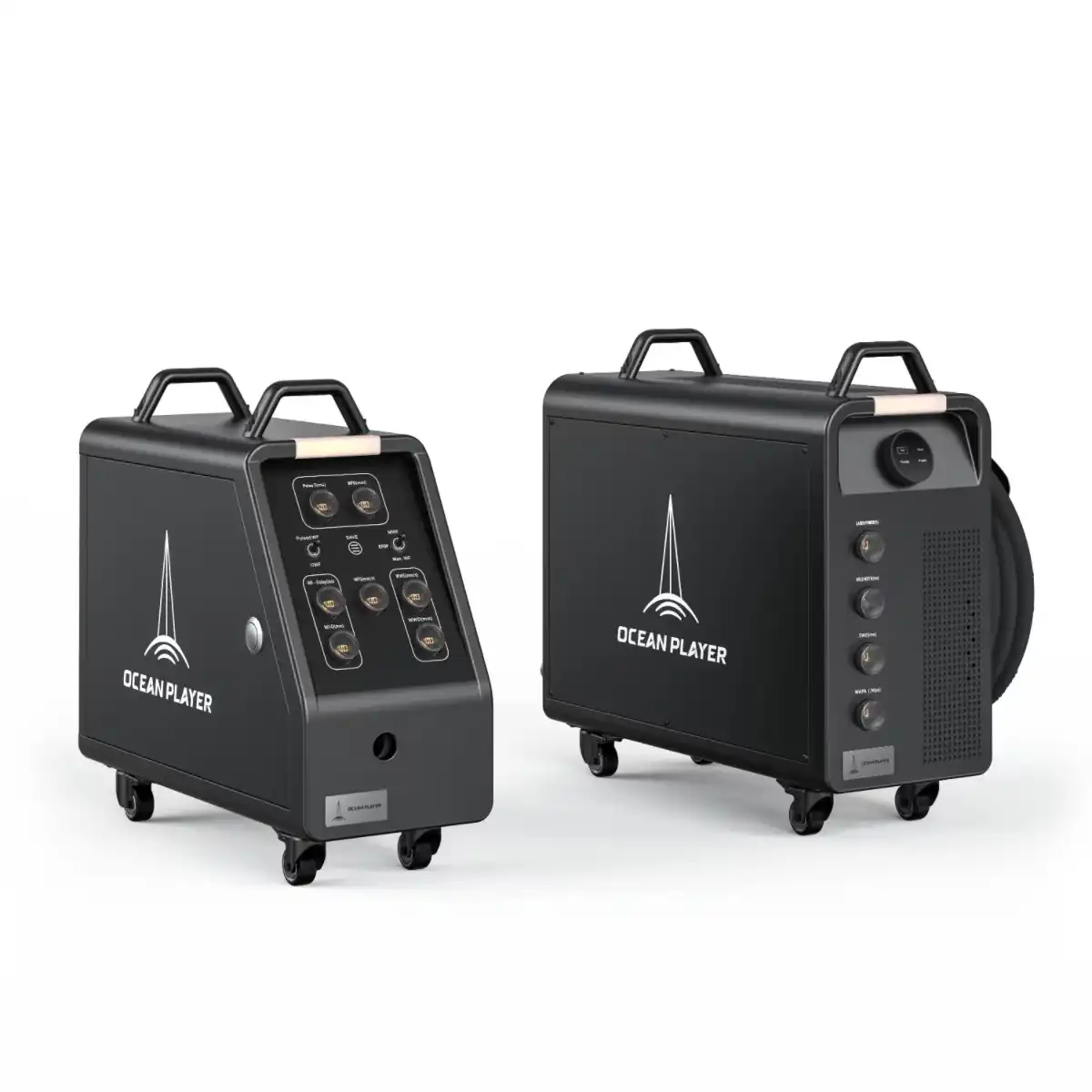
A low price is useful only when the scope is complete.
Use public prices to establish a conversation range, then normalize every supplier quote to the same destination, configuration and acceptance test. The strongest quote is the one that proves the process on your parts and defines who pays when installation, training or performance falls outside the promise.
Observed public listing prices for four 1500W handheld systems checked in July 2026; sale prices can change.
Wire feeder, starter consumables, gas equipment, extraction, safety controls and commissioning may be included—or separate.
Ask for EXW, FOB, CIF or DDP terms, destination, taxes, unloading, electrical work and training in writing.
Price matters only after the system demonstrates an acceptable weld on the real alloy, thickness, joint and production condition.
What does a 1500W fiber laser welding machine cost in 2026?
The table below is a public online listing snapshot, not a universal market average. It demonstrates how four 1500W handheld products can occupy different price points while also differing in cooling, warehouse location, shipping language and support scope.
| Public listing checked July 2026 | Displayed price | Configuration signal | What still requires confirmation |
|---|---|---|---|
| Triumph 1500W 4-in-1 View listing | US$5,199 Mexico warehouse variant shown when checked | 1500W, 220V single phase, wire feeder, compact multi-function presentation | Current stock, destination eligibility, exact shipping scope, tax, warranty service location and acceptance criteria |
| OMTech handheld fiber laser welder View listing | US$5,499.99 sale price displayed when checked | 1500W 3-in-1 package with wire feeder; free shipping and one-year warranty were displayed | Sale duration, destination exclusions, electrical work, safety enclosure, extraction, training and production qualification |
| Herolaser air-cooled portable welder View listing | US$6,749 sale price displayed when checked | 1500W air-cooled system with wire feeder and 220V configuration description | Delivery terms, available accessories, certification for destination, warranty response and local technical capability |
| G5-1500WC handheld laser View listing | US$10,800 sale price displayed when checked | 1500W water-cooled industrial package with preset controls and double-wobble positioning | Wire-feeder scope, freight, tax, installation, laser-safety package, training and application sign-off |
Prices are public online listing snapshots checked in July 2026 and may change without notice. Currency conversion, destination, taxes, freight, duties, unloading, installation and local compliance can materially change the final cost.
A marketplace listing, a local-stock machine and a premium dealer package are not equivalent products merely because all say 1500W. A useful price comparison must identify the same laser output, cooling architecture, beam delivery, wire-feed capability, safety scope, destination and support obligation.
What should be included in a 1500W laser welder quote?
The machine cabinet is only one part of a usable welding system. Ask the supplier to mark every line item as included, optional, locally supplied or excluded. That single exercise makes price comparisons much more honest.
Confirm the source manufacturer and model, rated continuous output, operating mode, cooling method, environmental range, electrical demand, alarm history access and warranty treatment for the laser source.
Specify wobble patterns and range, focusing optics, protective windows, nozzle set, delivery-cable length, torch weight, connector type, interlocks and replacement-part availability.
State single or dual feeder, supported wire diameters, drive rolls, liners, feed tubes, synchronization, included spools and whether parameter presets account for filler-wire delivery.
Clarify regulator, flow meter, hoses, gas specification, nozzle delivery and fume extraction. Shielding gas protects the weld; it does not replace ventilation or laser-generated fume control.
Handheld fiber welding uses a high-power Class 4 beam. A production system may require a controlled cell, laser-safe barriers, interlocked access, warning devices, suitable eyewear and documented procedures.
Define remote or on-site commissioning, operator and maintenance training, parameter development, service response, spare-parts stock, warranty exclusions and the acceptance test that releases final payment.
Eight factors that move a 1500W fiber laser welder up or down in price.
Laser power is visible in the product name, but it is not the only engineering or commercial variable. These factors explain much of the gap between a basic direct-import offer and a locally supported production package.
Fiber laser source and beam behavior
The source affects beam quality, reflected-light protection, stability, serviceability, diagnostics and the supplier’s ability to support a failure. Ask for the exact source model and serial-number traceability, not just a brand family in a brochure.
Air-cooled or water-cooled architecture
Air-cooled designs can reduce footprint and coolant maintenance. Water-cooled cabinets may support demanding duty cycles with a dedicated chiller. Neither label proves production suitability; compare rated ambient temperature, continuous duty and cooling alarms.
Welding head and wobble control
A higher-value head may provide more controlled scan patterns, repeatable calibration, better protective-optics management and easier parameter storage. Replacement optics, nozzles and service access influence lifetime cost.
Wire feeder capability
Some listed prices include a single feeder; others make it optional. Dual-wire capability, stable low-speed feeding, correct drive rolls and synchronized presets can matter when bridging gaps or adding filler alloy.
Certification and safety engineering
A machine label is not the same as a compliant workplace. Documentation, electrical certification, emission controls, interlocks and integration into a controlled area add real engineering work—and reduce avoidable risk.
Local inventory and logistics
Warehouse stock can shorten delivery and simplify returns, but inventory, trucking and local support add cost. Direct factory shipment may reduce headline price while transferring freight, customs, unloading and coordination to the buyer.
Application development
A supplier that tests your exact material, joint, fit-up and finish target is selling more than hardware. Useful deliverables include sample coupons, parameter records, speed evidence, macro sections when needed and a clear process window.
Warranty and service response
Compare the covered components, labor, freight, remote diagnosis, on-site availability, response time and parts location. A long warranty headline is less useful if the process for obtaining service is undefined.
Choose the price tier by risk ownership—not prestige.
The right route depends on the buyer’s internal engineering, safety and maintenance capability. A capable integrator may safely purchase a hardware-focused package. A first-time laser user may gain more value from local commissioning and process support.
Direct-import, hardware-focused
Best for: buyers that can review specifications, manage international logistics, build the controlled work area, qualify welding procedures and maintain the machine.
Price behavior: often the lowest headline figure, but freight, duty, broker fees, safety, extraction, commissioning and service travel may sit outside the quote.
Critical question: who owns the result if the machine arrives intact but does not meet the proposed production weld?
Distributor or local-stock package
Best for: small and medium fabricators that want faster delivery, familiar payment terms and a reachable service contact without purchasing a full turnkey cell.
Price behavior: the public listings in the snapshot largely sit here, although support scope varies significantly.
Critical question: does “local support” mean application engineering and field service, or only phone and email assistance?
Premium integrated solution
Best for: regulated sites, high-value production, multi-shift use or teams that require documented safety, training, acceptance and response commitments.
Price behavior: frequently quote-only and higher than a machine listing because engineering, safeguards, installation and qualification are bundled.
Critical question: which measurable production and safety deliverables are included before final acceptance?
Calculate the landed cost before comparing supplier discounts.
A practical total-cost estimate should include everything required to unload, power, safeguard, commission and operate the machine on the first qualified job.
The seller makes the goods available at its premises. The buyer normally carries most transport, export, import and delivery responsibilities. A low EXW number is far from a delivered system price.
Used for sea freight at a named port. The seller’s and buyer’s obligations change at the agreed point. Confirm inland transport, port charges, insurance, destination costs and customs separately.
The quoted amount may include freight and insurance to a named destination port, but not necessarily destination handling, customs clearance, duty, tax, inland delivery or unloading.
Often the closest trade term to a delivered commercial number, but still confirm unloading, site access, installation, electrical connection, training and local tax treatment in the written quote.
Ask every supplier for both the machine/package subtotal and the estimated production-ready total at your site. Keep optional accessories visible rather than hiding them in a single number. This makes negotiation easier without deleting a necessary safety or process item.
Air-cooled vs water-cooled: the price difference is only part of the decision.
Cooling architecture changes footprint, weight, maintenance and environmental limits. Compare the actual machine datasheet, rated duty cycle and local climate. “Portable” and “industrial” are marketing words unless the supplier defines how the machine performs at your ambient temperature and shift pattern.
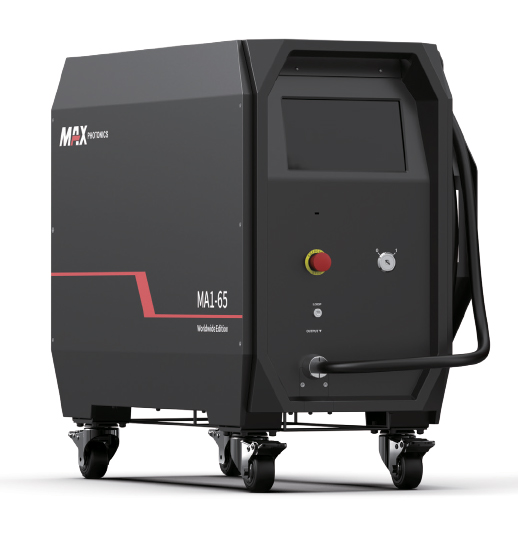

Ask an air-cooled supplier
What is the rated continuous output at the highest expected ambient temperature? How is the cooling path protected from dust? What happens when the unit reaches a thermal limit? Is 1500W continuous output available across the stated operating range?
Ask a water-cooled supplier
What coolant specification and replacement interval apply? How are condensation, low flow, temperature and conductivity monitored? Is the chiller included inside the cabinet? Which maintenance tasks and spare parts belong to the cooling loop?
Choose the machine from the joint—not from a generic thickness chart.
A 1500W handheld welder is commonly positioned for thin-to-medium sheet fabrication, but achievable penetration and travel speed vary with alloy, joint type, fit-up, beam profile, focus, wobble, filler wire, shielding and acceptance criteria. Supplier thickness claims are starting points for testing, not guaranteed limits for every part.

Use representative material, joint geometry, fit-up and access. Then measure penetration, fusion, distortion, surface finish and repeatability at the proposed production speed.
Application image: IPG Photonics LightWELD.
Stainless, carbon steel, galvanized sheet or aluminum assemblies with controlled fit-up, accessible seams and a defined cosmetic or production target are strong candidates for sample testing.
Reflectivity, conductivity, metallurgical compatibility and filler selection can narrow the process window. Ask for evidence on the exact grades and joint design.
Handheld welding, auxiliary cutting and seam cleaning do not make a universal fabrication cell. Dedicated cutting, cleaning or automated welding may be more productive and controllable.
Send every supplier the same request for quotation.
A structured RFQ prevents a weak quote from looking cheaper simply because it omits details. Attach part drawings or photos, annual volume, material certificates and the acceptance standard whenever possible.
List grade, coating, surface condition, thickness range and whether parts include oil, oxide, plating or heat-sensitive finishes.
Provide butt, lap, corner or fillet geometry, nominal gap, edge preparation, access angle and fixture condition.
Define penetration, strength, leak tightness, distortion, bead appearance, spatter, porosity and post-processing limits.
State seam length, parts per shift, shifts per day, target cycle time, changeovers and expected duty cycle.
Request exact source, cooling, head, cable, feeder, wire range, gas scope, nozzles, optics, controls and software.
Confirm site voltage and phase, breaker and current, plug, ambient range, humidity, dust, floor space and machine weight.
Ask which guards, interlocks, PPE, warning devices and fume-control items are included and which remain site responsibilities.
Specify Incoterm, destination, freight, duty, tax, unloading, installation, commissioning, training and acceptance payment.
Request separate terms for source, head, optics, feeder, cooling and controller plus response time and parts location.
Require parameters, measured speed, gas and wire use, photos, cross-section or test evidence appropriate to the application.
Walk away from a quote that cannot explain what you are buying.
A low price does not automatically signal poor equipment, and a high price does not guarantee good support. The warning signs are missing traceability, undefined responsibility and promises that cannot be tested.
Only “1500W” is specified
No exact laser source, cooling architecture, head model, wire feeder, electrical drawing or bill of materials means the delivered configuration can differ from the marketing page.
Thickness is guaranteed without context
A claim such as “welds 4 mm” is incomplete without alloy, joint, penetration target, travel speed, focus, wobble, filler and test evidence.
Safety is reduced to eyewear
High-power handheld laser welding needs a controlled work area and a site-specific risk assessment. Glasses alone do not manage direct, reflected or scattered beam hazards.
The sample looks good only from above
Top-bead appearance cannot confirm penetration, lack of fusion, porosity, cracking or mechanical performance. Request an acceptance method matched to the part.
Shipping is “included” without a destination scope
Clarify duty, tax, customs, broker fees, inland delivery, liftgate, unloading, site access and damage claims. “Free shipping” may still exclude important site costs.
Warranty has no response process
A warranty length without service location, diagnostic steps, parts dispatch timing, labor responsibility or return freight does not define downtime risk.
Evaluate payback from qualified output—not a “faster than TIG” slogan.
A 1500W handheld laser welder can improve travel speed and reduce finishing on suitable work, but the financial result depends on actual arc-on time, joint preparation, fixtures, rework, operator utilization, consumables, gas, maintenance and demand for the added capacity.
Record labor hours, preparation, tack time, welding, repositioning, grinding, straightening, rework, inspection and throughput on the same part family.
Include setup, wire and gas changes, optical-window checks, extraction, fixture use and operator learning—not only the fastest demonstration seam.
Extra capacity has financial value only if the shop can sell or use it. Separate labor savings, avoided rework and new contribution margin.
Include the machine, freight, safety, extraction, electrical work, training, qualification, spares and expected service—not just the product-page price.
Send Oceanplayer your material, joint and production target.
We can review the application, recommend a 1500W or alternative configuration, identify required accessories and prepare a quote with a clear commercial boundary. For stronger evidence, include representative parts for a sample welding test.
1500W fiber laser welder price FAQ.
How much does a 1500W fiber laser welding machine cost?
Public online listings checked in July 2026 showed several 1500W handheld fiber laser welding machines at approximately US$5,200 to US$10,800. Direct-import offers can be lower and premium locally supported or integrated packages can be higher. Compare the delivered, production-ready scope rather than treating this snapshot as a universal average.
Why are some 1500W laser welders much cheaper than others?
The price can change with the laser source, air or water cooling, welding head, wire feeder, electrical certification, included accessories, warehouse location, freight terms, warranty, safety package, training and application support. Two machines with the same wattage may transfer very different responsibilities to the buyer.
Is a wire feeder included in the 1500W laser welder price?
Sometimes. Some public packages include a feeder while others sell it separately. Confirm whether the quote includes single or dual wire feeding, supported wire diameters, drive rolls, liners, feed tubes, synchronization, starter wire and operator training.
Is an air-cooled 1500W laser welder cheaper than a water-cooled model?
Not always. Air cooling can reduce footprint and coolant maintenance, while water-cooled systems include a chiller and coolant circuit. Brand, support, head, source and package scope can outweigh the cooling difference. Compare duty cycle and ambient limits for the actual application.
Does the listed price include shipping, duty and tax?
It depends on the seller, warehouse and destination. Ask for the Incoterm and named destination in writing. Even when shipping is included, duty, tax, customs fees, unloading, site delivery, installation or electrical work may remain outside the price.
What extra equipment is required for handheld laser welding?
A production installation may need a controlled laser area or enclosure, interlocks, warning devices, wavelength-appropriate eyewear and clothing, source-capture extraction, shielding-gas equipment, a suitable electrical circuit, fixtures, consumables and documented training. Requirements must follow the site risk assessment and local rules.
Can a 1500W laser welder weld 4 mm metal?
Some suppliers publish capabilities around that range for selected metals, but thickness alone is not enough to guarantee a weld. Alloy, joint type, fit-up, required penetration, travel speed, focus, wobble, filler wire and acceptance criteria determine the usable process window. Test the exact part.
Is 1500W enough for stainless steel and aluminum?
It can be a practical power class for many thin-to-medium stainless-steel and aluminum fabrication tasks. Aluminum’s thermal conductivity, reflectivity, oxide and filler requirements can make the process more demanding. A representative sample test should establish speed, penetration, appearance and repeatability.
Should I buy from a factory or a local distributor?
A factory-direct purchase can reduce headline cost if the buyer can manage specifications, logistics, safety integration and service. A capable local distributor may add inventory, commissioning, training and faster support. Choose according to which risks your organization can manage internally.
What warranty terms matter most?
Check coverage separately for the laser source, welding head, optics, cooling system, wire feeder and controller. Also confirm labor, remote diagnosis, response time, replacement-part location, on-site service, travel charges, return freight and conditions that void coverage.
How can I compare two 1500W laser welder quotations?
Send both suppliers the same material, joint, volume and acceptance requirements. Normalize the source, cooling, head, feeder, consumables, safety, extraction, shipping, taxes, installation, training, warranty and sample-test deliverables. Then compare delivered production-ready cost and risk ownership.
How do I know whether the machine will pay back?
Measure the current process and a qualified laser cycle on the same part. Include preparation, welding, finishing, rework, utilization, consumables, maintenance and saleable demand. Divide the production-ready investment by the realizable annual operating benefit, and test conservative scenarios before purchasing.
Sources used for this buyer's guide.
Current prices were checked on the linked public product pages in July 2026. Technical product pages illustrate configuration differences; supplier claims should be verified for the intended application.
- OMTech — 1500W Handheld Fiber Laser Welding Machine
- Triumphlaser — 1500W 4-in-1 Handheld Laser Welder
- Herolaser — 1500W Air-Cooled Portable Laser Welder
- Laser Welder — G5-1500WC Handheld Laser
- IPG Photonics — LightWELD Handheld Laser Welding and Cleaning
- Maxphotonics — MA1 Handheld Laser Welding System
- JASIC — LS-15000F / LS-20000F Water-Cooled Handheld Laser Welding Machine