

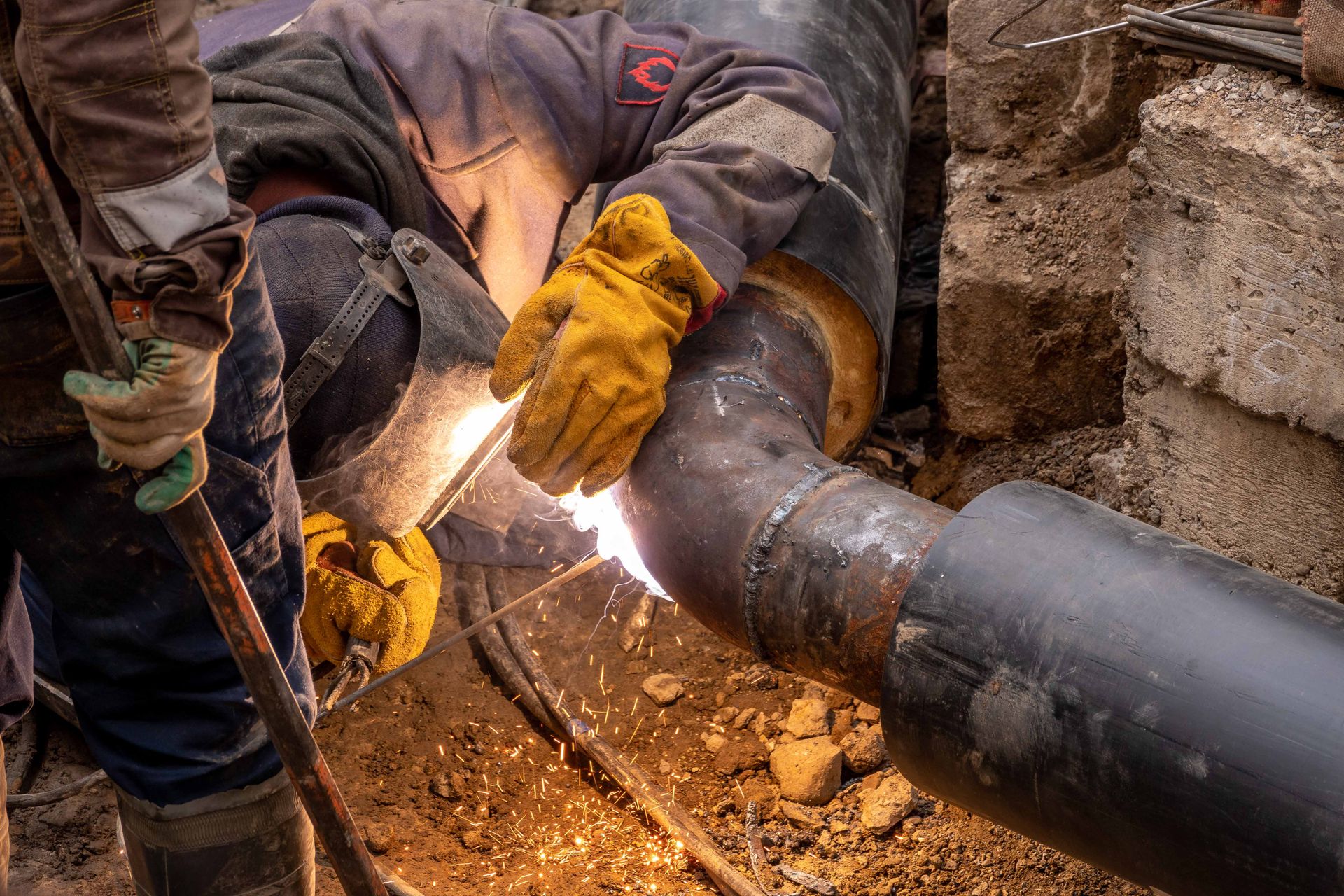
Composition, properties, heat treatment, welding and material selection
4130 Carbon Steel Properties, Composition & Uses
“4130 carbon steel” is a common search term, but SAE 4130 is technically a heat-treatable chromium-molybdenum low-alloy steel. It is valued for tubular structures, aircraft-quality products and highly loaded components, yet its usable properties depend on product form, section size, supplied condition, heat treatment and the specification on the purchase order.
Its nominal chemistry is about 0.30% carbon, 0.95% chromium and 0.20% molybdenum. Those deliberate alloy additions place it in the SAE chromium-molybdenum low-alloy family.
Compared with plain-carbon steel, chromium and molybdenum improve hardenability and tempering response while the lower carbon level is friendlier to welding than 4140.
“4130” alone is incomplete. A reliable order identifies tube, bar, sheet or plate; the governing ASTM/SAE specification; dimensions; condition; testing; and traceability.
Thickness, restraint, hydrogen control, starting condition and required properties determine preheat, filler, interpass control, PWHT and inspection.
What is 4130 carbon steel?
A low-alloy steel whose properties are created by processing
Often called “4130 carbon steel” in search results and supplier conversations, SAE 4130—also identified as UNS G41300—is technically a chromium-molybdenum low-alloy steel with nominally 0.30% carbon. The “41” identifies the chromium-molybdenum family in the traditional SAE system; the final two digits indicate the nominal carbon level in hundredths of a percent.
That designation describes chemistry, not a single finished strength. A cold-drawn tube, a normalized bar, a spheroidize-annealed sheet and a quenched-and-tempered pressure component may share the 4130 name while having different hardness, ductility, residual stress and weld response. This is why an engineering drawing should never stop at “4130 steel.”
The current SAE catalog separates product forms deliberately. SAE J404 applies to alloy-steel chemical compositions for bar-related products and explicitly directs sheet, strip and mechanical tubing to other specifications. Aircraft-quality 4130 also appears in distinct AMS specifications for sheet, bar, seamless tube and welded tube. The specification is part of the material definition.
Commonly published SAE 4130 range; the exact product specification governs.
Raises hardenability; it does not make 4130 stainless or corrosion-proof.
Supports hardenability and strength retention during tempering.
Very close to other carbon and low-alloy steels; weight savings come from design, not a lighter density.
Chemical composition
What is in 4130—and what each element changes
The following ranges are widely used for SAE 4130 chemistry. They are useful for orientation, but the purchase specification and mill test report remain controlling because allowable limits can vary with product form and quality level.
| Element | Typical range, wt% | Engineering role | What to verify |
|---|---|---|---|
| Carbon (C) | 0.28–0.33 | Controls achievable hardness, martensite formation and much of the weld hardening risk. | Actual heat chemistry; do not assume the midpoint. |
| Manganese (Mn) | 0.40–0.60 | Supports hardenability and deoxidation and combines with sulfur. | Product-analysis tolerances in the governing standard. |
| Silicon (Si) | 0.15–0.35 | Acts mainly as a deoxidizer and contributes modest solid-solution strengthening. | Whether the product specification uses this same range. |
| Chromium (Cr) | 0.80–1.10 | Improves hardenability and supports wear resistance after suitable heat treatment. | Do not confuse this level with stainless-steel corrosion resistance. |
| Molybdenum (Mo) | 0.15–0.25 | Improves hardenability and tempering response and helps resist softening at elevated tempering temperatures. | Actual heat result, especially when qualifying heat treatment. |
| Phosphorus (P) | 0.035 max* | Residual element normally restricted because excess content can reduce toughness. | Aircraft-quality specifications may impose different or tighter controls. |
| Sulfur (S) | 0.040 max* | Residual element; inclusions can influence ductility, fatigue and weld behavior. | Cleanliness requirements and transverse properties where critical. |
*Common SAE/ASTM chemistry limits for general reference. Use the current edition of the purchased product specification for acceptance.

SAE says J404 does not apply to sheet, strip or mechanical tubing; those forms are directed to product-specific standards.
It does not tell the buyer whether the material is annealed, normalized, stress relieved or quenched and tempered.
It points to a defined AMS product specification with its own scope, quality provisions and test requirements.
Match the heat number, chemical analysis, mechanical results, product specification and condition to the purchase order.
Mechanical properties
Why “What is the strength of 4130?” has no single answer
Mechanical properties change with section size, product form, prior cold work, austenitizing cycle, quench severity, tempering temperature and test direction. A number copied from one datasheet cannot safely be assigned to every 4130 part.
Annealed / spheroidized
Selected when machinability or forming is the priority. Lower hardness improves cutting and deformation, but it is not automatically the final structural condition.
Normalized
Air cooling from the austenitizing range refines and resets the microstructure. Many tubular and structural products are supplied normalized or normalized and tempered.
Quenched & tempered
Quenching creates high hardness; tempering then trades strength for toughness. Section size and hardenability determine whether the target condition is reached through the section.
Welded condition
The fusion zone and HAZ receive different thermal cycles from the base metal. Local hardness, toughness and residual stress can govern even when the parent material certificate is excellent.
| Published specification or source | Product and condition | Publicly stated property | What it proves |
|---|---|---|---|
| SAE AMS6374F2025 revision | Aircraft-quality, seamless round tubing | 95 ksi (655 MPa) tensile-strength class in the specification title | One legitimate 4130 tube can be specified at a 95 ksi strength level. |
| SAE AMS6362G2024 revision | Seamless 4130 tubing | 150 ksi (1034 MPa) tensile-strength class in the specification title | The same nominal alloy can be supplied at a much higher strength when processed to a different condition. |
| SAE AMS6348F | Aircraft-quality normalized bar | Specification defines normalized 4130 bar as a distinct product | Bar values cannot automatically be transferred to sheet or thin-wall tube. |
| Manufacturer datasheet | General 4130 reference | Approx. density 7.80 g/cm³ (0.283 lb/in³) | 4130 is not substantially lighter than mild steel; any mass reduction comes from allowable geometry and design. |
Heat treatment
The heat-treatment route should follow the final load case
4130 responds strongly to thermal processing. That versatility is valuable, but it also means a generic temperature copied from a handbook is not a complete production instruction. Furnace uniformity, atmosphere, transfer time, quench medium, agitation, section size and tempering all matter.
Start with the final requirement
Define tensile/yield targets, hardness range, impact or fatigue needs, distortion limit, machining allowance and whether welding occurs before or after heat treatment.
Choose the supplied condition
Annealed or spheroidized stock can simplify forming and machining. Normalized material can provide a more uniform starting structure for many fabricated parts.
Develop the full cycle
Specify heating rate, austenitizing window, soak logic, quench, temper, straightening and any stress relief with a qualified heat-treat source.
Verify the part—not only the furnace chart
Use hardness mapping, mechanical tests, microstructure, decarburization checks and dimensional inspection at locations that represent the component.
How each common condition changes manufacturing
| Condition | Why it is used | What can go wrong | What should be written down |
|---|---|---|---|
| Spheroidized / annealed | Machining, cold forming and preparation for later hardening. | Surface decarburization, nonuniform hardness or an assumption that soft stock already meets final structural properties. | Applicable AMS/ASTM condition, maximum hardness if specified, decarb limits and downstream heat treatment. |
| Normalized | Microstructure refinement and a repeatable starting condition. | Different cooling rates between thin and thick sections; distortion; properties that differ from a quoted bar sample. | Product specification, thickness range, normalization requirement and required mechanical tests. |
| Quenched and tempered | Higher strength and controlled hardness with recovered toughness. | Quench cracking, insufficient through-hardening, excessive retained stress or tempering that misses the target window. | Required strength/hardness range, test location, quench/temper procedure, temper restrictions and inspection. |
| Post-weld thermal treatment | Reduce residual stress, temper hard microstructures or restore a qualified property window. | Over-tempering the parent material, distortion, oxidation or applying a generic cycle to a previously heat-treated part. | Qualified WPS/PQR, heating method, thermocouple locations, ramp/hold/cool requirements and acceptance tests. |
For critical aerospace, pressure, motorsport or energy components, use the current governing specification and an approved heat-treatment procedure. Exact cycles should come from the material/product standard, engineering authority and qualified processor—not from a general blog table.
Weldability and laser welding
4130 can be welded, but the HAZ must be engineered
4130 is usually considered more weldable than 4140 because it contains less carbon, yet it remains a hardenable alloy. Rapid cooling can form hard martensitic regions in the fusion zone or heat-affected zone. Hydrogen, restraint and tensile residual stress can then combine to create delayed cracking.
Normalized tubing and quenched-and-tempered plate do not have the same HAZ risk or post-weld property target. Record hardness and condition before procedure development.
Fit-up, gap, root geometry and restraint control dilution, cooling rate and stress. Laser welding is especially sensitive to consistent joint fit-up.
Autogenous laser welding, undermatching filler and strength-matching filler create different metallurgy and stress distribution. Select by the required joint performance and subsequent heat treatment.
Preheat, interpass and PWHT are procedure variables. They must remain compatible with the parent material’s original temper and the governing code.
Use macrosections, hardness traverses, tensile/bend tests, NDT and—where relevant—impact or fatigue testing to prove the actual production window.
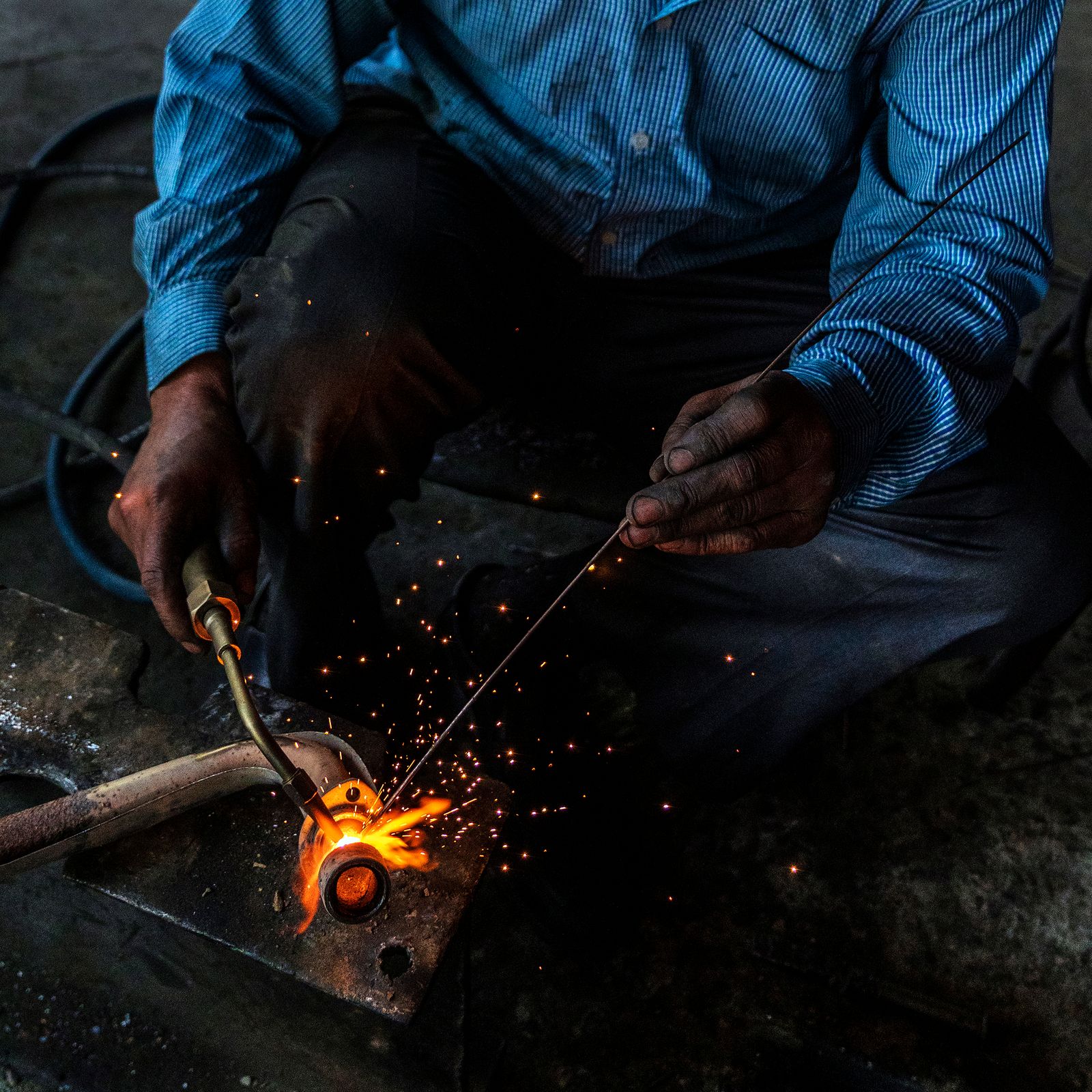
Can 4130 steel be laser welded?
Yes—but a narrow HAZ is not automatically a safe HAZ. Laser welding’s concentrated energy can produce a narrow fusion zone and limited overall heat input. It also creates steep thermal gradients and rapid cooling, which can form martensite in a hardenable steel.
A peer-reviewed comparison of TIG and laser welding on AISI 4130 reported that, in that experiment, the laser fusion and heat-affected zones were much narrower than the TIG equivalents; both processes produced martensite, and post-weld heat treatment improved ductility. Another study found that the fatigue crack-growth response of laser-welded 4130 depended strongly on weld tempering/PWHT.
The practical conclusion is not “laser is always better” or “4130 needs one fixed recipe.” It is that high travel speed, beam profile, focus, joint gap, shielding, starting condition and post-weld treatment must be qualified as one process window.
A sensible 4130 laser-welding qualification sequence
Lock the material
Record specification, heat number, chemistry, product form, thickness, condition, surface coating and target properties.
Screen the window
Vary power, travel speed, focus/wobble, shielding, wire strategy and any controlled preheat across representative coupons.
Measure the joint
Check penetration, porosity, underfill, HAZ width, hardness profile, microstructure and distortion—not appearance alone.
Prove production
Repeat at tolerance limits, qualify thermal treatment if needed, document the WPS/PQR and retain traceable inspection records.
Key uses
Where 4130 earns its place—and where it may not
The alloy is most compelling when geometry, joining, cyclic loading and heat-treatment response matter together. It is less compelling when corrosion resistance, very high through-section hardenability or lowest material cost dominates.
Fuselage members, mounts and fittings
Aircraft-quality tubing and sheet can be used in welded structures and fittings when the drawing calls out the correct AMS material, condition and approved repair/fabrication method. FAA AC 43.13-1B includes 4130 tubing guidance, but the FAA states that manufacturer data takes priority and applicability must be established.
Decision driver: traceability + approved joining procedureRoll cages and tubular chassis
4130 can permit efficient tubular structures, but sanctioning-body rules govern diameter, wall thickness, material, welding method and inspection. “Stronger alloy” is never permission to reduce section below the applicable rulebook.
Decision driver: rule compliance + weld qualityButted frames and stressed tube assemblies
Chromoly tubing supports thin, shaped and butted sections with a useful combination of stiffness, fatigue resistance and repairability. Ride feel comes from tube diameter, wall profile and frame design—not from the alloy name alone.
Decision driver: tube design + fatigue validationShafts, fasteners, gears and tooling components
Heat-treated 4130 can serve components that need moderate hardenability, strength and toughness. For larger sections or more demanding wear/hardness targets, 4140, 4340 or another grade may be more appropriate.
Decision driver: section size + through-hardeningWellhead, connector and pressure-service parts
4130 is used in oil-and-gas equipment under product-specific and service-specific requirements. Sour-service hardness, welding, qualification and NACE/ISO requirements can dominate the material selection.
Decision driver: service environment + codeCorrosive exposure or oversized hardened sections
About 1% chromium does not make 4130 stainless. If bare corrosion resistance is required, or if a large section needs very deep hardening, another alloy or a complete coating/heat-treatment system may be the better choice.
Decision driver: corrosion system + hardenability depth

Material comparison
4130 vs 4140, 1020 DOM, 25CrMo4 and 304 stainless
These materials are not ranked from “weak” to “strong.” Each label represents a different chemistry, manufacturing route or corrosion strategy. Select by the finished component and governing standard.
| Option | What the name means | Where it can outperform 4130 | Main substitution warning |
|---|---|---|---|
| SAE 4140 | Cr-Mo steel with nominally about 0.40% carbon. | Higher hardenability and strength/wear potential in suitable heat-treated parts, especially solid sections. | More carbon generally increases welding sensitivity. Do not substitute without redesigning the joining and heat-treatment route. |
| 1020 DOM tubing | “DOM” describes a drawn-over-mandrel manufacturing route; 1020 describes chemistry. | Lower material cost, easy fabrication and good dimensional control where the required strength and rulebook allow it. | DOM is not a grade. Cold work changes properties; use the tubing specification and certified mechanical values. |
| 25CrMo4 / 1.7218 | European Cr-Mo grade under EN product standards. | Can be the correct choice for European designs and supply chains written around EN chemistry, delivery condition and testing. | Chemistry ranges overlap 4130 but are not identical. Treat it as a cross-reference candidate, not automatic equivalence. |
| 304 stainless | Austenitic Cr-Ni stainless steel. | Far better general corrosion resistance and a different fabrication/service profile. | Density is similar, strength strategy is different, and heat treatment/welding behavior is not interchangeable with 4130. |
| SAE 4340 | Ni-Cr-Mo alloy steel with greater hardenability. | Large or highly loaded heat-treated sections that need deeper hardening and high toughness. | Greater cost and process sensitivity; welding and heat treatment require a separate qualified plan. |
Purchasing and quality control
How to write a 4130 purchase order that can be inspected
A usable purchase description turns the alloy name into verifiable requirements. The exact list depends on the sector, but the logic is consistent.
Name the product
Tube, welded tube, seamless tube, bar, forging, sheet or plate; nominal dimensions; tolerances; surface finish and quantity.
Cite the standard
State the current ASTM/SAE/AMS product specification and any applicable revision, supplemental quality level or customer specification.
Define the condition
Annealed, normalized, normalized and tempered, stress relieved, or a specified strength/hardness range with test locations.
Close traceability
Require MTR/CoC, heat/lot identification, chemistry, mechanical tests, NDT if required, origin requirements and marking.
| Product need | Relevant specification family | Public scope | Buyer action |
|---|---|---|---|
| General seamless mechanical tube | ASTM A519/A519M | Seamless carbon and alloy-steel mechanical tubing. | Specify grade, size, condition, finish, test requirements and supplementary requirements. |
| Aircraft-quality seamless tube | SAE AMS6360 | 4130 aircraft-quality seamless mechanical tubing in defined thermal conditions. | Select the correct revision/condition and required strength class. |
| Aircraft-quality welded tube | SAE AMS6373 | 4130 aircraft-quality welded tubing. | Do not replace with seamless or commercial tube unless the design authority permits it. |
| Aircraft-quality bar | SAE AMS6348 | Normalized 4130 low-alloy steel bar. | Confirm bar size, cleanliness/quality level, condition and mechanical requirements. |
| Sheet, strip or plate | SAE AMS6350 / AMS6351 or applicable ASTM product standard | Separate specifications cover aircraft-quality sheet/strip/plate and spheroidized material. | Do not use a tube or bar datasheet to accept flat product. |
Planning tool
4130 material-route selector
Choose the closest project conditions. The result is a planning direction for specifications and testing—not a material approval or heat-treatment recipe.
Describe the component
Focus on the finished part and its highest-risk manufacturing step.
Start with a tube specification and weld qualification
For a welded tubular structure, product-form traceability and the final joint condition matter more than a generic strength number.
- Define seamless or welded tube and the governing ASTM/AMS standard.
- Record supplied condition, heat chemistry and actual wall tolerance.
- Qualify the joint with hardness traverse, macrosection and required mechanical tests.
Use a qualified materials engineer, welding engineer and applicable code/design authority for final selection.
Failure prevention
Six mistakes that turn good 4130 into a bad component
Using one universal tensile strength
A 95 ksi tube specification and a 150 ksi tube specification can both describe genuine 4130. Use the certified condition and required strength class.
Calling DOM a steel grade
DOM describes a tubing manufacturing route. Chemistry, cold work, dimensions and mechanical requirements still need their own specification.
Assuming thin tube never needs preheat
Thin sections often behave favorably, but cold shop temperature, high restraint, high carbon equivalent or a heavy attachment can change the cooling rate and cracking risk.
Adding PWHT without checking the original temper
An arbitrary stress-relief cycle can over-temper the parent material, reduce strength or distort the assembly. Thermal treatment belongs in the qualified procedure.
Accepting appearance as weld qualification
A bright, narrow bead may still hide incomplete penetration, porosity, hard martensite, lack of fusion or an unsuitable fatigue profile.
Substituting a “similar” international grade
25CrMo4 and 4130 overlap in use and chemistry, but product standards, ranges, delivery conditions and testing are not identical. Obtain engineering approval.
Continue the engineering path
Use the material data to plan the weld—not to skip testing
If your project involves 4130 tube, sheet or machined components, the next step is to connect the certified material condition to a realistic joint, fixture and inspection plan.
Understand laser process modes, fit-up, shielding, heat input and quality controls before choosing equipment.
Read the guide → Engineering toolWelding Heat Input CalculatorCompare power, speed and effective process energy during early parameter planning.
Open the calculator → Application validationSample TestingUse representative material and joint geometry to evaluate penetration, HAZ, appearance and production feasibility.
Plan a sample test → Equipment planningLaser Welder SelectorMatch thickness, material, duty cycle and production needs to a machine direction.
Find a welder → Parameter strategyLaser Welding ParametersSee how power, speed, focus, wobble, wire and shielding interact.
Review parameters → Product familyLaser Welding MachinesExplore handheld and production welding systems for qualified metal-joining applications.
View systems →Frequently asked questions
4130 carbon steel properties FAQ
Is 4130 steel stronger than mild steel?
What is the hardness of 4130 steel?
Does 4130 steel rust?
Can 4130 be laser welded?
Can thin-wall 4130 tubing be welded without preheat?
What is the difference between 4130 and 4140?
Is 25CrMo4 the same as 4130?
What does 4130N mean?
Is 4130 suitable for roll cages?
What should be checked on a 4130 mill test report?
Technical references
Sources used to qualify the engineering claims
- SAE J404, Chemical Compositions of SAE Alloy Steels. Scope explains the SAE alloy-steel chemical-composition system and directs sheet, strip and mechanical tubing to product-specific standards.
- ASTM A519/A519M-24a, Seamless Carbon and Alloy Steel Mechanical Tubing. Covers several grades of hot-finished or cold-finished seamless mechanical tubing and requires a joining procedure suitable for the grade, condition and intended service.
- ASTM A829/A829M-25, Alloy Structural Steel Plates. Shows why plate condition and separately specified tensile requirements matter when purchasing structural-quality alloy plate.
- ASTM Committee A01.09. Lists A519/A519M as the standard specification for seamless carbon and alloy-steel mechanical tubing.
- SAE AMS6360R. Aircraft-quality seamless 4130 mechanical tubing in defined thermal conditions.
- SAE AMS6374F. Aircraft-quality 4130 seamless round tubing, 95 ksi tensile-strength class.
- SAE AMS6362G. 4130 seamless tubing, 150 ksi tensile-strength class.
- SAE AMS6373 series. Aircraft-quality 4130 welded tubing.
- FAA AC 43.13-1B with Change 1. Acceptable aircraft inspection/repair methods when applicable and not contrary to manufacturer data.
- Lima et al., “An Analysis of the Mechanical Behavior of AISI 4130 Steel after TIG and Laser Welding Process”, Procedia Engineering, 2015.
- “Mechanical properties and fatigue crack growth rate of laser-welded 4130 steel”, International Journal of Fatigue, 1992.
- Miller, “TIG Welding Chromoly Steel? 5 Tips to Improve Results”. Practical discussion of filler selection and chromoly welding variables.
- TSM Steel, AISI 4130 Technical Datasheet. Published chemistry ranges and general material characteristics.
- Gautier Specialty Metals, 4130 Alloy Technical Data. Identification, chemistry and approximate density.
Turn the 4130 material certificate into a qualified laser-welding window
Share the product specification, supplied condition, thickness, joint drawing, target penetration and inspection requirement. Oceanplayer can use representative coupons to evaluate a practical machine and process direction.