


Nickel-Plated Steel Properties: What the Coating Really Changes
Nickel-plated steel is a two-material system, not a new steel grade. The steel substrate supplies most of the strength, stiffness and magnetism; the nickel coating changes surface corrosion behavior, appearance, contact performance and wear. Its success depends on coating continuity, thickness distribution, edge condition, substrate strength and the operations performed after plating.
Photo: Encik Tekateki / Wikimedia Commons, CC BY-SA 4.0.
What are the main properties of nickel-plated steel?
Nickel-plated steel combines a load-bearing steel core with a thin nickel-rich surface. It is commonly selected when a manufacturer wants the formability, stiffness, magnetic response and cost structure of steel together with a cleaner metallic finish, improved surface stability and a surface that can be engineered for contact, wear or corrosion requirements.
The coating does not turn carbon steel into stainless steel. A pore, scratch, cut edge or cracked bend can expose the steel. Because nickel is more noble than iron, corrosion at a small exposed steel area can become localized. That is why “nickel plated” alone is not a complete specification.
The steel and the nickel do different jobs
A datasheet for the steel substrate cannot describe the deposited nickel, and a coating specification cannot replace the steel grade. Treating them as separate but interacting layers is the fastest way to understand nickel-plated steel properties.
Steel core
Controls section strength, stiffness, deep-draw behavior, springback, fatigue response, magnetic behavior and much of the electrical path through the part. Low-carbon sheet is common because it forms readily, but the exact grade must match the structural and manufacturing requirement.
Preparation and adhesion
Cleaning, activation and strike chemistry determine whether the nickel is bonded to a chemically active surface. Oil, scale, oxides, smut or poor rinsing can create blisters and peeling even when the final deposit looks bright.
Nickel coating
Controls appearance, surface hardness, soldering and contact behavior, wear response and barrier corrosion performance. Chemistry, additives, phosphorus content, internal stress, thickness and porosity vary by process.
A magnet test can indicate a ferromagnetic core, but it cannot prove coating type, nickel thickness or corrosion capability. Zinc-plated, chrome-plated and many other coated steels are also strongly magnetic. Use coating-thickness measurement, XRF, microscopy or supplier documentation for a production decision.

Why one strength number is misleading
The deposited layer is normally a small fraction of the total section, so tensile strength and stiffness are usually dominated by the steel. However, a thin coating can still decide whether a contact tarnishes, a bend cracks, a spot weld is stable or rust starts at a cut edge.
For that reason, report mechanical requirements against the substrate specification and surface requirements against the coating specification. If the finished part is formed, welded or heat treated, add tests on the finished geometry—not only flat witness coupons.
Nickel plating begins long before nickel is deposited
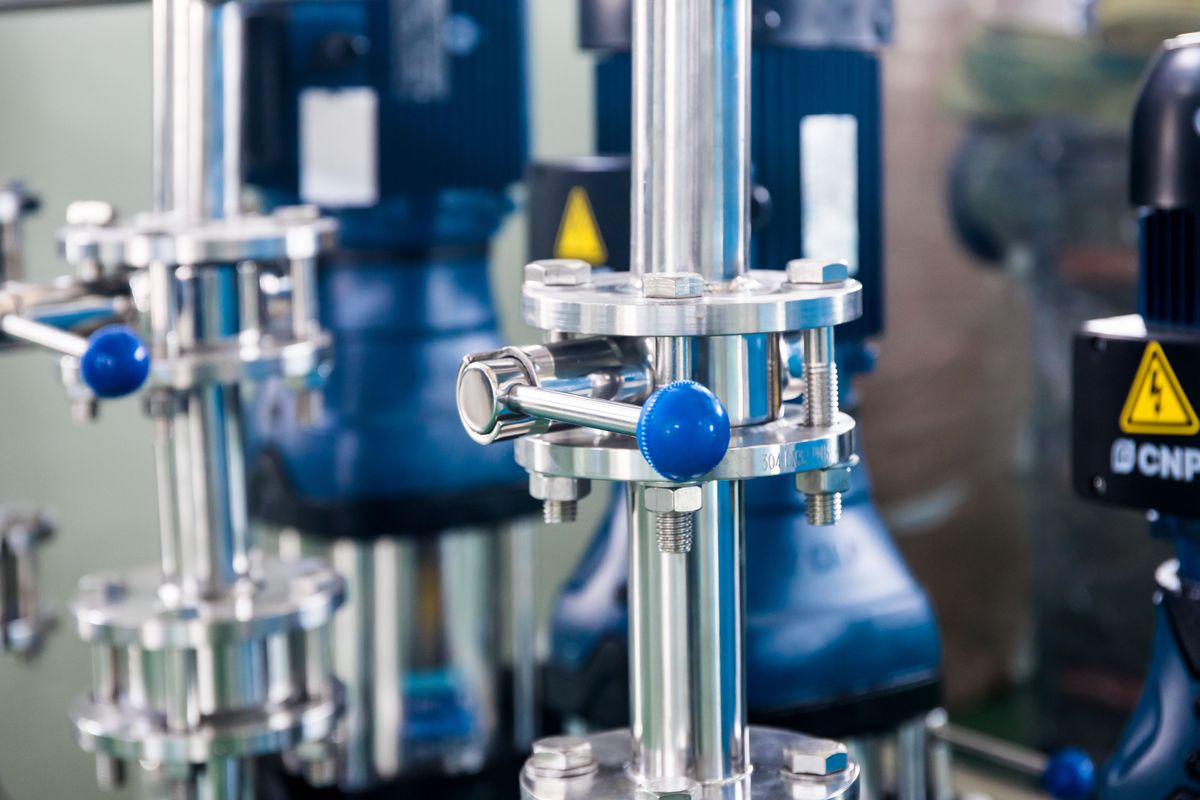
A representative electrolytic route cleans the steel, removes oxides, activates the surface and passes current through an aqueous nickel electrolyte. The workpiece is the cathode, so nickel ions are reduced and deposited on it. Rack plating is used when orientation and appearance matter; barrel plating efficiently handles large quantities of small hardware.
Electroless nickel uses an autocatalytic chemical reaction rather than an external current. It commonly produces a nickel-phosphorus deposit and can deliver more uniform thickness on recesses and complex geometry, but its composition and post-treatment must be specified separately from electrolytic nickel.
Remove oil, polishing compounds, drawing lubricant and particulate contamination.
Remove oxides and present a chemically active surface without excessive attack.
Use a compatible initial deposit when the substrate and process route require it.
Control bath chemistry, temperature, agitation, current density and loading.
Inspect thickness, adhesion, porosity, appearance and post-treatment records.
Read each property at the correct scale
Many weak comparisons quote the properties of pure nickel as if a thin nickel layer controlled the whole part. The practical interpretation below separates bulk behavior from surface behavior and identifies what must be measured on the actual finished component.
| Property | Main controlling factor | Practical interpretation | What to specify or test |
|---|---|---|---|
| Tensile strength and yield | Steel grade, condition and section | The thin nickel layer rarely replaces the substrate requirement. Forming or heat exposure may alter the steel. | Substrate standard, temper, thickness, direction and finished-part validation |
| Stiffness | Steel section geometry | Young’s modulus and component stiffness are essentially core-dominated for ordinary coating thicknesses. | Part geometry, substrate modulus and dimensional tolerance |
| Surface hardness | Nickel chemistry and process | Watts, sulfamate and electroless nickel can have different hardness and internal stress. Heat treatment can change electroless nickel. | Coating type, condition and microhardness method where functional |
| Corrosion resistance | Continuity, porosity, thickness distribution, edges and environment | Nickel is a barrier coating on steel. Small exposed steel areas can corrode locally once the barrier is breached. | Minimum local thickness, porosity, edge coverage and an exposure test tied to service |
| Magnetism | Usually the steel core | Strong attraction is common, but it does not identify the coating or prove that the part is nickel plated. | Use magnetism only as a screening observation |
| Electrical contact | Surface chemistry, roughness, load and interface design | Contact resistance is not the same as bulk resistivity. Oxide, contamination, force and fretting can dominate. | Contact resistance after the required environmental and cycling sequence |
| Wear and friction | Deposit hardness, thickness, counterface and lubrication | A bright decorative deposit is not automatically an engineering wear coating. | Coating type, thickness, roughness and representative wear test |
| Soldering and joining | Surface cleanliness, coating chemistry, age and process window | Some nickel surfaces solder or resistance-weld effectively; others require activation, flux, different current or surface preparation. | Production coupons and acceptance criteria for the real joint |
The table intentionally avoids universal values. Coating hardness, thickness and corrosion results are process-specific and should come from the approved supplier process and test method.
Choose a practical material and coating route
This selector identifies a starting point for technical discussion. It does not replace the steel standard, coating specification, corrosion testing, structural code or supplier process qualification.
Start with engineered electroplated nickel on low-carbon steel
For protected indoor service with ordinary geometry, an engineering nickel deposit on a defined low-carbon steel substrate is a practical first route to evaluate.
- Specify minimum local thickness and adhesion.
- Protect or test cut edges and formed regions.
- Validate the intended joining or contact process.
Confirm the final route with the coating supplier and finished-part testing.
Nickel protects steel only while the barrier system works
Nickel is comparatively noble to iron. On a continuous, well-adhered surface it separates steel from the environment. At a pore, scratch or cut edge, however, a small exposed steel area can become the local anodic site next to a much larger nickel-covered area. Moisture and salts can then drive localized corrosion and underfilm creep.
This is why a universal “hours to red rust” or “years of life” number is not trustworthy. Laboratory exposure depends on specimen preparation, defect population, geometry and acceptance threshold. Field life additionally depends on temperature, wet-dry cycles, chlorides, cleaning chemicals, handling damage and whether water is trapped at seams.
Continuous face
A smooth, fully covered face with adequate thickness and adhesion gives the coating its best chance to act as a barrier.
Pores and scratches
Very small defects expose steel and can become initiation sites even when most of the surface remains bright.
Edges and recesses
Electrolytic thickness distribution is current-density dependent. Sharp edges may build heavily while shielded recesses receive less; cut edges after plating are bare.
Chlorides and condensation
Salt deposits, condensation and crevices increase conductivity and keep defects wet, making a stainless or sacrificial system more attractive.
State the real environment, define the coating system and minimum local thickness, identify critical edges, then agree on a test and acceptance criterion. ASTM B117 describes salt-spray apparatus and practice; it does not by itself predict a universal service life or choose the right coating.
A thicker coating cannot rescue poor preparation or exposed geometry
Increasing deposit thickness can reduce the probability that a through-pore connects the environment to the substrate and can add wear allowance. But the value of added thickness depends on deposit quality, adhesion, underplate, roughness and distribution. A thick coating that blisters, cracks during drawing or misses a recess is still a failed system.
Specify minimum local thickness at functional locations rather than only an average. Mark measurement areas on the drawing, define whether edges and recesses are included, and require a method suited to the coating/substrate combination. XRF is useful for many production measurements; cross-section microscopy can confirm layer structure and local distribution.
Choose pre-plated strip or post-plate the finished part deliberately
Pre-plated sheet and strip offer efficient, consistent coil processing, but blanking exposes the steel at cut edges and severe forming strains the deposit. Post-plating covers the final geometry, yet electrolytic current distribution may make thickness nonuniform in deep recesses and creates additional handling and masking work.
Pre-plated material
Best starting point when: production volume is high, forming is controlled, surfaces are accessible and exposed edges are acceptable or separately protected.
- Qualify bend radius and draw severity on the exact coating.
- Inspect cracking at beads, corners and stretch zones.
- Decide how sheared edges and pierced holes will be protected.
- Control tool cleanliness to avoid dragging or galling the surface.
Post-plated component
Best starting point when: cut-edge coverage matters, the finished part can be cleaned and racked, or the forming strain would damage a pre-applied deposit.
- Design rack contact points and cosmetic zones.
- Review recessed areas for low current density.
- Confirm trapped solution can drain and rinse completely.
- Re-evaluate hydrogen exposure for susceptible steel.
A flat plated coupon proves bath capability; it does not prove that the finished bend, draw bead, hem, pierced hole or recessed pocket has adequate coating. Cross-section the actual high-strain and low-access regions during qualification.
Nickel-plated steel can be joined—but the coating is part of the process window
Resistance welding, laser welding, brazing and soldering interact with the plated surface in different ways. The correct question is not simply “can it be welded?” but whether the chosen coating, substrate, joint, surface condition and process produce the required nugget, penetration, contact resistance and fume control.
| Joining route | Why it may work | What can change | Qualification focus |
|---|---|---|---|
| Resistance spot / seam welding | Steel core provides a conductive structural path; plated sheet is widely processed by resistance methods. | Surface resistance, electrode wear, splash and nugget formation vary with coating and contact condition. | Weld schedule, electrode geometry, nugget size, peel strength and process monitoring |
| Laser welding | Localized heat input and high travel speed can join thin steel components. | Reflectivity, surface contamination, vaporization, porosity and coating redistribution can change stability. | Joint gap, focus, power, speed, shielding, fume capture and cross-section quality |
| Arc or fusion welding | Possible after an engineered procedure and appropriate preparation. | Coating enters or leaves the molten region, changes fume composition and may affect wetting or defects. | Procedure qualification, coating-removal boundary where required, filler, ventilation and corrosion restoration |
| Soldering / electrical attachment | A clean nickel surface can provide a usable termination surface. | Age, oxide, brightener residue, flux chemistry and heat cycle affect wetting. | Wetting, pull strength, contact resistance and aging after environmental exposure |
Do not copy a universal “grind back distance”
Whether plating must be removed—and how far—depends on the welding process, joint geometry, coating system, thickness, fume assessment and acceptance criteria. Establish the preparation in the qualified welding procedure. If nickel-containing fume may be generated, apply source-capture ventilation and an exposure-control program suited to the actual operation.
Hydrogen embrittlement cannot be solved by a generic bake recipe
Cleaning, pickling and electroplating can introduce hydrogen. High-strength, hardened or highly stressed steel is more susceptible to delayed cracking than ordinary low-carbon sheet. Risk depends on material strength and microstructure, residual and applied stress, surface condition, pretreatment and the permeability and thickness of the deposited coating.
ASTM B850 covers post-coating treatments intended to reduce susceptibility but explicitly states that treatment does not guarantee complete freedom from hydrogen degradation. ASTM B1031 provides a newer guide for developing substrate- and coating-specific thermal treatments and emphasizes empirical validation. That means the drawing should not blindly copy one temperature, one duration or one “within four hours” rule for every steel.
Before plating
- Confirm steel grade, hardness, heat treatment and residual-stress condition.
- Avoid unnecessarily aggressive acid exposure.
- Define masking, cleaning and activation with the approved plater.
- Identify safety-critical parts before quoting.
After plating
- Use the specified post-treatment sequence and recorded timing.
- Verify the treatment against the actual coating and substrate.
- Apply sustained-load or other embrittlement tests where required.
- Preserve lot traceability from heat treatment through release.
Best uses combine economical steel with a controlled functional surface
Nickel-plated steel is most compelling when the steel core already provides the required forming, stiffness and magnetic behavior, while the design benefits from a nickel-rich surface. Typical families include battery housings and hardware, electrical and electronic components, shielding enclosures, terminals, formed cans, springs, clips, fasteners, appliance hardware and decorative mechanical parts.
Application labels are not specifications. Battery tabs may be pure nickel, nickel-plated steel or another engineered conductor depending on current, weldability, thermal behavior and safety design. Likewise, a bright hardware finish may be decorative nickel, multilayer nickel or a sealed system. Confirm the exact material by certificate and testing.
Contacts and terminals
Useful when contact stability, soldering or resistance joining can be qualified while steel provides spring force or stiffness.
Cans and interconnect hardware
Selected in some cell and pack components where formability, welding behavior, cost and surface condition align with the electrical design.
Shielding and enclosures
Steel supplies magnetic response and structure; the finish supports corrosion control, appearance and assembly.
Clips, fasteners and tools
Suitable for protected service when wear, appearance and corrosion requirements match the specified coating system.
Nickel-plated steel vs stainless, pure nickel and zinc-plated steel
The correct alternative depends on the failure mode you are trying to prevent. Do not compare only purchase price or only salt-spray hours. Compare corrosion mechanism, joining, forming, electrical function, service temperature and the consequences of exposing the core.
| Decision factor | Nickel-plated steel | 304 stainless steel | Commercially pure nickel | Zinc-plated steel |
|---|---|---|---|---|
| Core material | Steel with nickel-rich surface | Corrosion-resistant alloy through the section | Nickel through the section | Steel with sacrificial zinc-rich surface |
| Response to a scratch | Exposed steel can corrode locally beside noble nickel | No separate coating to expose, though localized corrosion is still possible | No steel core to expose | Zinc can protect nearby exposed steel sacrificially while zinc remains |
| Cost structure | Often attractive for high-volume formed steel parts | Higher material cost but fewer coating dependencies | Usually highest material cost of these routes | Often economical for general steel hardware |
| Forming | Depends on substrate and whether coating is applied before or after forming | Good but work hardening and springback must be managed | Grade and temper dependent; not a direct steel substitute | Similar sequence and edge questions to other pre-plated steel |
| Joining | Must qualify coating interaction and fumes | Well-established welding routes with stainless-specific controls | Requires nickel-compatible process and filler where applicable | Fusion welding needs zinc-fume and porosity controls |
| Best starting point | Protected functional surfaces on economical steel | Wet, hygienic or corrosion-critical service through the section | Chemical, thermal or electrical applications that require nickel itself | General hardware needing sacrificial corrosion protection |
If damage to the coating is likely and the exposed edge must remain protected, evaluate zinc or zinc-nickel. If corrosion resistance must extend through the whole section, evaluate stainless steel. If current, chemistry or temperature demands nickel through the thickness, evaluate pure nickel. Use nickel-plated steel when the steel core is an advantage and the nickel surface can be kept continuous and qualified.
What common defects reveal about the process
The appearance and location of a defect often point toward the stage that needs investigation. Confirm the hypothesis with cross-sections, microscopy, thickness mapping, adhesion testing and process records instead of assuming every red stain is “thin plating.”
Bare steel after blanking
The part was likely cut after plating or the edge was not included in the coating requirement. Review sequence, edge seal or post-plate route.
Porosity or inclusions
Investigate substrate roughness, cleaning, deposit continuity, local thickness and whether the environment deposits chlorides.
Adhesion failure
Review oil removal, oxide activation, strike compatibility, rinsing, delay between stages and substrate condition.
Ductility mismatch
Compare coating internal stress and thickness with bend strain, substrate radius, tool condition and forming sequence.
Hydrogen or stress issue
Quarantine the lot. Review steel hardness, cleaning and plating exposure, post-treatment, sustained-load testing and traceability.
Surface/process interaction
Check coating type and thickness, contamination, electrode or focus condition, joint fit-up, current/power window and fume extraction.
Turn “nickel plated” into an auditable specification
A supplier cannot reliably quote or certify an undefined coating. State the design intent, the substrate and the acceptance methods. Critical dimensions should clarify whether they apply before or after plating.
- Substrate: steel grade, product form, condition, hardness or strength class, thickness and surface condition.
- Coating process: electrolytic nickel type or electroless nickel composition and condition.
- Layer system: direct nickel, strike, underplate, multilayer nickel, seal or topcoat as applicable.
- Thickness: minimum local value, measurement method and exact functional locations.
- Coverage: edges, holes, threads, recesses, rack marks, masked zones and cut-after-plate areas.
- Appearance: bright, satin or engineering finish; acceptable color, stains, pits and handling marks.
- Performance: adhesion, porosity, wear, contact resistance, corrosion or joining tests tied to service.
- Hydrogen controls: applicable pretreatment, post-treatment and embrittlement-relief verification.
- Compliance: required declarations such as RoHS, REACH or customer-restricted substances.
- Traceability: lot identity, process records, coating-thickness report and certificate retention.
- Finished-part validation: cross-sections at bends, edges or recesses and production joining coupons.
- Change control: approval required before changing bath family, brightener, underplate, source or post-treatment.
ASTM B689 covers engineering-use electroplated nickel coatings, including coating classification and tests such as thickness, adhesion and porosity. ASTM B733 covers autocatalytic electroless nickel-phosphorus coatings. Select the standard and service condition that actually fit the part; do not cite a standard number without completing the required classification and supplementary instructions.
Validate the coating, joint and laser process on the real part
Share the steel grade, coating certificate, thickness, joint drawing, surface condition and acceptance criteria. Oceanplayer can use that information to recommend a practical laser-welding direction and plan a sample test before production equipment is selected.
- Steel grade and hardness / temper
- Nickel process and thickness report
- Part dimensions, edge condition and joint design
- Required penetration, appearance and strength
- Production rate and inspection method
Nickel-plated steel properties FAQ
What is nickel-plated steel?
Nickel-plated steel is a steel substrate covered with an electrolytic nickel deposit or an autocatalytic nickel alloy deposit. The steel provides most bulk mechanical properties, while the coating changes the surface. A complete description must state both the substrate and coating system.
Does nickel-plated steel rust?
It can. A continuous coating acts as a barrier, but steel exposed at pores, scratches, cut edges or cracked bends can rust. The local galvanic relationship between nickel and the exposed steel makes defect geometry important. Service life therefore depends on more than nominal coating thickness.
Is nickel-plated steel magnetic?
Most nickel-plated carbon-steel products are strongly magnetic because the steel core dominates the response. Magnetism is only a screening clue: zinc-plated and chrome-plated steel can also be strongly magnetic, and the test does not measure nickel thickness or prove composition.
Is electroless nickel better than electroplated nickel?
Not universally. Electroless nickel can provide more uniform thickness on complex shapes and different hardness or corrosion behavior depending on phosphorus content and heat treatment. Electroplated nickel can be efficient, ductile and economical for many parts. Geometry, function, post-processing and cost determine the better route.
Can nickel-plated steel be laser welded?
Yes, some nickel-plated steel assemblies can be laser welded, but the process must be qualified. Coating type and thickness, contamination, joint gap, focus, power, speed, shielding and fume capture can influence penetration, porosity and stability. Test the actual lot and geometry rather than using a bare-steel parameter sheet.
What coating thickness should I specify?
There is no universal number. Choose thickness from the applicable coating standard and service condition, then define a minimum local value at functional locations. Consider pores, wear allowance, recessed geometry, edges, forming strain and the agreed corrosion or performance test.
Why does nickel plating peel from steel?
Common causes include residual oil, incomplete oxide removal, poor activation, incompatible strike chemistry, contamination between stages, excessive internal stress or deformation after plating. Cross-section and adhesion testing should be combined with a review of pretreatment and bath records.
Is nickel-plated steel safe for high-strength bolts?
It requires a formal hydrogen-embrittlement assessment. High-strength and hardened steels may absorb hydrogen during cleaning and plating and can fail later under stress. Use the applicable material and coating standards, qualified pretreatment and post-treatment, lot traceability and the specified embrittlement test. Do not rely on a generic bake schedule.
Is nickel-plated steel the same as stainless steel?
No. Stainless steel contains corrosion-resistant alloying elements through the section. Nickel-plated steel normally has a carbon- or alloy-steel core protected by a surface coating. Damage can expose the steel core, so the two routes behave differently at edges, scratches and welds.
Sources used for this guide
- Nickel Institute — Nickel Plating Handbook. Electroplating fundamentals, electrolyte families, engineering deposits, testing, troubleshooting and safety.
- ASTM B689 — Electrodeposited Engineering Nickel Coatings. Engineering coating classification and requirements including thickness, adhesion and porosity.
- ASTM Committee B08.03 — Metallic Coatings. Current listing for ASTM B733 electroless nickel-phosphorus coatings and related coating standards.
- ASTM B242 — Preparation of High-Carbon Steel for Electroplating. Special adhesion and embrittlement considerations for higher-carbon steel.
- ASTM B850 — Post-Coating Treatments of Steel for Reducing Hydrogen Embrittlement Risk. Scope and limitations of embrittlement-relief treatment.
- ASTM B1031 — Developing Hydrogen-Embrittlement Relief Thermal Treatments. Substrate- and coating-specific development and empirical validation of post-coating treatment.
- NIOSH — Local Exhaust Ventilation for Welding Fume. Source-capture engineering controls for welding operations.
- NIOSH — Criteria for a Recommended Standard: Welding, Brazing, and Thermal Cutting. Exposure reduction through engineering controls and work practices.
- ASTM B117 — Salt Spray (Fog) Apparatus and Practice. Laboratory exposure method; use with a product specification and defined acceptance criteria.