Why Does Copper Turn Green? Patina, Oxidation & Cleaning
Copper turns green because its surface first oxidizes, then reacts with moisture and compounds in the surrounding environment. The mature layer is usually a mixture of copper oxides, sulfates, carbonates, chlorides and other corrosion products—not one simple “green oxide.” The practical question is whether that layer is stable patina, active corrosion or a functional problem.
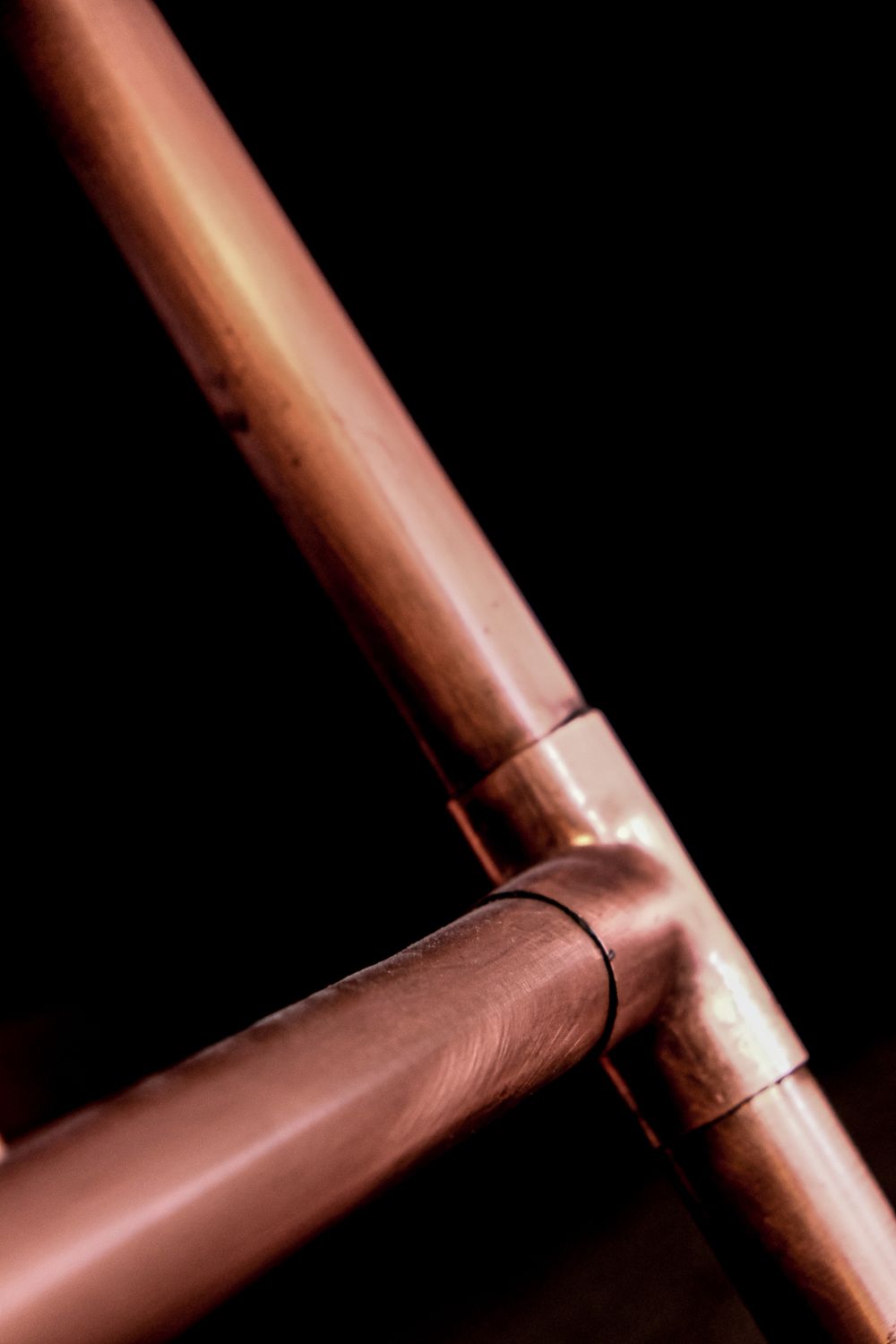
Photo by William Warby via Pexels.
Copper oxidation begins the process; moisture and local chemistry determine the mature color.
Indoor or arid copper may remain brown or black and never develop a dominant green layer.
Architectural and historic surfaces may rely on the patina for appearance and partial protection.
Color plus loss of function, recurring deposits or rapid change points to a different problem.
Patina, oxidation, corrosion, verdigris and rust are not synonyms.
Keeping these terms separate improves maintenance scopes, supplier communication and failure analysis. A request to “remove oxidation” could mean removing fingerprints, brown tarnish, a valued green finish, active chloride corrosion or a factory coating.
Oxidation
Copper atoms lose electrons and enter higher oxidation states while surface compounds form. Oxidation starts the weathering story, but oxidation alone does not describe the final green layer.
Corrosion
Chemical or electrochemical interaction causes material deterioration. It can be slow and acceptable in an architectural patina or localized and damaging at a wet joint.
Patina
A developed natural or artificial surface layer and appearance. It may be brown, black, green or blue and may be decorative, historic or partly protective.
Verdigris
Strictly, neutral or basic copper acetate. The word is used informally for almost any green copper, but sulfate-, carbonate- and chloride-rich surfaces are chemically different.
No in the technical sense. “Rust” normally names iron corrosion products. Copper certainly corrodes, but its green products are copper compounds and are better described as patina, tarnish or copper corrosion products.
Stable patina versus active copper corrosion
A mature, adherent patina often reduces the rate of further atmospheric weathering by limiting transport to the copper surface. That protection is conditional. New powder, recurring deposits, pits, flaking or loss of function require investigation.
- The surface is smooth or firmly bonded rather than erupting as fresh powder.
- Color development is gradual and consistent with the exposure and intended finish.
- There is no evidence of active leakage, deep pitting, cracking, perforation or thinning.
- The layer does not interfere with electrical contact, sealing, soldering, coating adhesion or hygiene.
- Water drains and the assembly can dry; deposits are not trapped in persistent crevices.
- Light-green powder appears rapidly, reforms after cleaning or accumulates around an object.
- Bright deposits cluster under washers, inside seams, around flux or beneath failed coating.
- Pits, pinholes, weeping joints, pressure loss or deformation are present.
- An electrical connection also shows resistance change, heating, arcing or unreliability.
- A historic patina flakes or changes abruptly after treatment or environmental change.
Six reasons not to polish first
Cleaning changes the visible surface; it does not diagnose why the deposit formed. Photograph representative areas and record the environment before disturbing evidence.
Fresh, loose material indicates that the reaction or contaminant source may still be active. Repeated wiping only removes the symptom.
Inspect for retained cleaner, flux, trapped moisture, coating failure, galvanic contact or a leak before treating the color.
Abrasive polishing can quickly expose nickel, steel, zinc, plastic or another substrate beneath a thin copper-containing layer.
An electrical interface is a functional and safety issue. De-energize under an approved procedure and follow the equipment maker’s limits.
External brightening does not correct water chemistry, wall loss, a pinhole or a failing joint. Test and repair the actual system.
Patina can contain evidence of age, manufacture, use and past finishes. Cleaning without research can permanently remove information.
How long does copper take to turn green?
It can take several years to decades. Published weathering examples help set expectations, but they are not schedules for another building, climate or component.
Historical Copper Development Association guidance shows faster development where moisture, pollutants or marine exposure support the reactions.
Lower atmospheric loading can lengthen the transition from brown and black films to a mature green appearance.
The National Park Service notes that its familiar green patina developed over decades—not immediately after the copper skin was installed.
Insufficient wetting or different local chemistry may prevent a sulfate-rich green layer from becoming dominant.
Time of wetness, humidity, condensation, rainfall, sulfur pollutants, marine or de-icing salt, temperature, orientation, slope, shelter, drainage, alloy, surface roughness, fabrication residue, adjacent materials and previous coatings all matter. Horizontal surfaces often weather faster than vertical ones because they remain wet longer.
The same green color can require seven different responses.
A roof, an antique, a water pipe and an electrical terminal cannot share one universal copper-cleaning recipe. Start with the component’s function and construction.
| Application | Is green normally acceptable? | Main question | Practical response |
|---|---|---|---|
| Roof, façade, gutter or statue | Often; it may be the intended finish | Drainage, seam integrity, staining of adjacent materials and compatibility of sealants or fasteners | Preserve stable patina; correct water traps and inspect joints before cosmetic treatment. |
| Historic or collectible object | Possibly; patina may carry value | Original finish, inscriptions, maker marks, coatings, plating and previous treatments | Avoid polishing; involve a conservator when significance or construction is uncertain. |
| Decorative solid copper | Owner preference if stable | Appearance, texture, detail loss and the maintenance frequency required to remain bright | Preserve or clean gently after confirming that the part is solid, uncoated copper. |
| Plated or lacquered item | It may indicate coating damage | Thin finish, exposed base metal and underfilm corrosion | Use only an approved coating cleaner or refer the item for refinishing. |
| External plumbing or HVAC tubing | Depends on condition | Condensation, flux residue, insulation, pitting, wall thickness and leakage | Dry and inspect; identify and correct the moisture or joint problem before removing the stain. |
| Potable-water or food-contact component | Do not judge by exterior color alone | Water chemistry, internal corrosion, copper release, hygiene and code requirements | Use manufacturer and qualified plumbing or food-safety guidance; do not improvise internal acid cleaning. |
| Electrical contact or terminal | Usually not on the current-carrying interface | Resistance, overheating, arcing, reliability, coating and contact geometry | De-energize under an approved procedure; inspect, clean, torque or replace within OEM limits. |
| Industrial part before welding, bonding or coating | Only if the next process accepts it | Adhesion, electrical conductivity, wetting, weld stability, roughness and residue limits | Define an acceptance criterion and qualify a repeatable cleaning process on representative coupons. |
Copper does not jump directly from orange metal to one green compound.
Fresh copper has a pinkish-orange metallic surface. Exposure to air produces extremely thin films and then reddish-brown cuprous oxide. Continued weathering can create darker oxide-rich layers. Where water, carbon dioxide, sulfur compounds, chlorides, organic acids or other species are available, additional copper compounds develop within and above those layers. The resulting surface may be green, blue-green, green-black or patchy brown and green.
That is why the phrase “copper oxide” is an incomplete explanation for green copper. Oxidation is fundamental, but the mature patina records its environment. A rain-washed roof in an industrial climate, a sheltered coastal ornament, a pipe joint exposed to flux residue and a lacquered decorative fitting can all become green for different reasons.
Whether that surface should be preserved, cleaned, protected or professionally inspected depends on texture, adhesion, rate of change, construction and service—not color alone.
Copper corrosion is not ordinary iron rust. Copper forms copper-containing corrosion products; “patina” describes a developed surface layer and appearance. “Verdigris” is also often used too broadly: in the strict chemical sense it refers to copper acetate, while many outdoor green patinas are richer in sulfate, carbonate or chloride compounds.
Should you preserve, clean or inspect the green copper?
Describe the closest real condition. This planning tool routes the surface toward a conservative next step; it does not diagnose chemistry or replace a qualified inspection.
Describe the copper item
Choose the closest combination. The recommendation updates instantly.
Do not create dust, apply acid or energize equipment to “test” an unknown deposit. Preserve evidence if failure analysis may be required.
A coherent architectural patina is often the intended finish. Manage drainage, document representative areas and avoid polishing it away solely to reveal bright copper.
How copper changes color from fresh metal to green patina
The sequence below is a useful engineering model, not a universal clock. The actual rate and final chemistry vary with humidity, rainfall, pollutants, salts, orientation, alloy, surface preparation and maintenance history.
Fresh copper
Pinkish-orange to red metallic copper with only an extremely thin initial film. Fingerprints, forming lubricants and fabrication heat tint can affect the next stage.
Reddish-brown
Cuprous oxide, Cu₂O, is commonly important. The surface may pass through iridescent, russet and chocolate-brown tones as the film develops.
Dark transition
Mixed oxide-rich layers, including cuprite and sometimes cupric oxide, can look dark brown, gray-brown or nearly black before green becomes dominant.
Mature patina
Green or blue-green mixtures may include basic copper sulfates, carbonates, chlorides and oxides. Exact compounds cannot be identified reliably from color alone.
More porous and more responsive to local moisture, sulfur compounds, carbonates, chlorides, runoff and maintenance residues. This layer largely controls the visible green or blue-green color.
Cuprite is often important next to the copper. A mature layered system can slow transport to the metal surface, which is why a coherent patina may reduce further atmospheric attack.
The remaining metal still matters. Cleaning can reveal pits or thinning, but it cannot restore lost wall thickness, repair a leak or recover an overheated electrical interface.
| Surface group | Typical appearance | Conditions often associated with it | What color alone cannot prove |
|---|---|---|---|
| Cuprite, Cu₂O | Red, reddish brown or dark beneath outer layers | Common early and inner atmospheric corrosion product | Its presence alone does not establish severity or remaining metal thickness. |
| Tenorite, CuO | Black or very dark | Further oxidation, heat and some chemical environments | Black color can also come from sulfides, soot, finishes or contamination. |
| Basic copper sulfates | Green to blue-green | Sulfur-containing atmospheric deposition and repeated wetting | Brochantite is common in many mature outdoor patinas, but local chemistry varies. |
| Basic copper carbonates | Green or blue-green | Carbonate-containing moisture and some natural or artificial patination conditions | Malachite or azurite should be confirmed analytically, not assigned by color. |
| Copper chlorides | Pale green, blue-green or light powder | Marine aerosol, de-icing salt, buried artifacts or chloride residue | Some chloride-containing patinas may be stable; loose recurring powder can be active. |
| Copper acetates | Green, blue-green or waxy green | Acetic-acid vapor, oils, leather, polish or cleaner residue | Indoor green deposits may reveal a contaminant source, not normal outdoor weathering. |
How to clean green copper without making the real problem worse
Cleaning may mean removing loose dust, washing away soil, dissolving corrosion products, polishing to bright metal, stripping a coating or preparing a surface for joining. Those are different operations. Begin with the least aggressive compatible method and favor reversible treatments where practical.
1. Define the required outcome
Decide whether the goal is to remove loose contamination while retaining patina, reveal bright copper, prepare a surface for coating or welding, restore electrical performance, investigate corrosion or protect an architectural finish. Write the acceptance criteria before selecting a cleaner.
2. Identify the construction
Determine whether the item is solid copper, brass, bronze, copper-plated, copper-clad, lacquered, waxed or intentionally patinated. Record joints, solder, brazing filler, sealants, adjacent stone, coatings and plastic or rubber components. A method that is safe for thick solid copper may destroy thin plating or attack a joined assembly.
3. Inspect and document before disturbing evidence
Photograph the whole item and representative close-ups. Record color, texture, adhesion, powder, pits, cracks, moisture, leaks, coating condition, heat marks, contact resistance or water staining. If the deposit may matter to failure analysis, preserve a sample rather than wiping everything away.
4. Correct the source first
Stop condensation, leaks, salt deposition, incompatible runoff, trapped polish, failed drainage or chemical exposure before treating the visible green product. Otherwise the deposit is likely to return and may conceal continuing wall loss.
Test a small area
Establish the gentlest effective cleaner, tool, dilution, contact time and agitation. Check gloss, color, texture, markings and adjacent materials after drying.
Use controlled contact
Apply with soft nonmetallic tools. Keep liquids out of seams, hollow handles, electrical insulation and porous adjacent materials unless the procedure explicitly manages them.
Remove every residue
Rinse or lift residues exactly as required. Dissolved copper, abrasives, acid, chloride and polish left in crevices can become the next corrosion source.
Dry and reinspect
Confirm that the part is fully dry, that powder or pits were not merely hidden and that the required electrical, hydraulic, dimensional or coating-preparation result was achieved.
Protect if appropriate
Apply a compatible wax or coating only where the service allows it. Record the product, batch, preparation and expected renewal interval.
Schedule monitoring
Inspect representative areas after the first exposure cycle. Compare photographs and functional measurements instead of relying on memory of color.
Dry dusting
Soft brushes or microfiber can remove loose dust from a sound, accessible surface. It will not remove bonded tarnish and must not snag weak plating or a flaking historic finish.
Mild detergent
A compatible mild detergent can remove grease and soil without intentionally stripping patina. Plan wetting, rinsing and drying so liquid cannot remain in seams or damage adjacent materials.
Purpose-made cleaner
Use only where the product label identifies the applicable metal and finish. Defined dilution, dwell time, rinsing, SDS and test patches are more controllable than an improvised recipe.
Abrasive polish
Polishing removes tarnish and some metal. Repeated polishing rounds detail, changes directional finish and can expose a substrate beneath plating. Use it only when bright metal is the intended result.
Acids can dissolve some copper oxides and carbonates, so bare copper may look brighter. The same acid can remove valued patina, etch copper, attack solder or another alloy phase and remain trapped in seams. Adding salt introduces chloride, which is unwelcome on copper. Baking soda does not prove that every acid or resulting salt has been removed, and the powder itself can scratch a polished or plated surface.
Hypochlorite bleach can corrode metals and may release toxic gases when mixed with acids or ammonia. Never mix bleach with vinegar, lemon juice, ammonia or another cleaner. Follow the product label, technical data and safety data sheet for ventilation, PPE, spill control and first aid.
When copper cleaning needs specialist control
Some components cannot be evaluated by appearance alone. The treatment must preserve health, safety, code compliance and required performance.
Patina may contain evidence of age, manufacture, burial, use and previous treatment. Clean without polishing when the intended appearance is uncertain, and obtain conservation advice for significant objects.
Have a qualified person apply lockout/tagout and verify absence of voltage. Follow OEM limits for contact material, plating, torque, cleaner and replacement. Do not coat a current-carrying interface casually.
Blue-green staining may accompany copper release, but color alone cannot establish water safety. Investigate water chemistry, temperature, flow, plumbing age and corrosion with the water utility or a qualified plumber.
Decorative exterior patina and a damaged food-contact surface are different issues. The FDA Food Code limits copper contact with acidic foods in many uses. Follow the vessel manufacturer and applicable local rules.
Use backflushing or clean-in-place treatment only under the equipment procedure. Confirm compatibility with copper, brazing, plates, gaskets and every wetted component, then verify final rinse quality.
Spent liquid can contain dissolved copper, acid, polish, abrasive and treatment chemicals. Collect and dispose of it according to site controls and local rules rather than routing it automatically to soil or a storm drain.
How to slow or prevent copper from turning green
If natural weathering is undesirable, prevention must reduce exposure or isolate the copper with a compatible, maintainable finish. No wax or clear coating should be assumed permanent.
| Control option | Best use | Main benefit | Trade-offs to specify |
|---|---|---|---|
| Environmental control | Indoor collections, stores, displays and controlled production areas | Reduces moisture, salts, pollutants, fingerprints and dust without altering the metal | Needs monitored humidity, housekeeping, compatible storage materials, gloves and pollutant control. |
| Drainage and detailing | Roofs, façades, gutters, flashing and outdoor equipment | Reduces persistent wetness, crevice deposits and uncontrolled runoff | Review slopes, laps, drip edges, sealants, fasteners, ventilation and access for inspection. |
| Microcrystalline or approved wax | Suitable decorative and conservation applications | Thin, repairable barrier with limited visual change | Application, buffing, handling, temperature, durability and renewal interval require control. |
| Clear organic coating | Bright or color-controlled copper where coating maintenance is accepted | Longer barrier life than an uncoated polished surface in suitable exposure | Surface preparation, edge coverage, UV stability, flexibility, repair and stripping all matter. |
| Natural patina | Architecture designed to weather visibly | No requirement to preserve bright copper; mature layers can slow further weathering | Color and timing vary. Manage runoff, sheltered zones, salt exposure and inspection access. |
| Factory pre-patination | Projects needing a green or aged appearance at installation | Reduces dependence on waiting for natural color development | Approve samples and color range; confirm forming, joining, repair, runoff and future weathering. |
Specify surface preparation, approved physical samples, edge and joint treatment, access, compatible cleaners, inspection intervals and coating renewal. “Maintenance-free bright copper” is not a defensible outdoor requirement.
Can laser cleaning remove green copper oxidation?
Yes, some copper oxides and corrosion layers can be removed with a qualified pulsed-laser process. But copper is reflective, thermally conductive and sensitive to an excessive energy window. A process that makes the surface look clean can still melt peaks, change roughness, re-oxidize the surface or alter a thin component.
Use laser cleaning as a controlled engineering process—not a universal restoration tool.
Laser cleaning is most defensible when the substrate, coating or oxide, required cleanliness and next production step are known. Industrial examples can include oxide removal before joining, removal of selected contamination before bonding or controlled preparation before coating. The acceptance plan should measure what matters after treatment: surface chemistry, electrical resistance, roughness, dimensional condition, wetting, weld stability or coating adhesion.
Valued architectural patina, historic surfaces, uncertain plating and unique artifacts are different. Their surface may be the intended finish or may contain evidence that should not be removed. A conservator-led assessment is more appropriate than a machine trial on the actual object.
- Known copper alloy and repeatable part geometry
- Defined oxide or contamination layer
- Accessible surface with controlled extraction
- Measurable downstream requirement
- Representative test coupons are available
- Historic or intentional patina
- Unknown plating, lacquer or previous repair
- Thin, delicate or inaccessible geometry
- Food, water or electrical service without an approved procedure
- No acceptance method beyond visual brightness
What to include in a copper finish or cleaning RFQ
A strong scope separates the visual intent from performance requirements. Attach drawings, exposure information, representative photos and an approved sample instead of asking a supplier simply to “remove the green” or “keep copper bright.”
Copper designation or alloy, temper, thickness, solid/clad/plated construction, substrate, joints, filler metals, sealants and traceability.
Mill, brushed, polished, oxidized, chemically patinated, natural-weathering, waxed, lacquered, coated or another controlled system.
Approved physical sample, viewing distance, gloss, texture, color range, directional variation, repair marks and timing of acceptance.
Interior or exterior, sheltered or rain-washed, marine or de-icing salt, pollution, condensation, process chemicals, cleaning agents, UV and abrasion.
Remaining thickness, roughness, conductivity, contact resistance, adhesion, wetting, cleanliness, weld quality, hygiene or water-quality requirement.
Approved tools and cleaners, test-patch requirement, rinse/dry procedure, renewal interval, prohibited chemicals, measurable defects and warranty boundaries.
Questions about green copper, patina and cleaning
Why does copper turn green?
Copper reacts gradually with oxygen, moisture and compounds in the surrounding environment. Early films are often oxide-rich and brown or dark. Continued exposure can form green or blue-green mixtures containing copper sulfates, carbonates, chlorides and related compounds. The exact mixture depends on the exposure.
What is the green layer on copper called?
It is generally called patina. “Verdigris” is widely used informally, but true verdigris is copper acetate. A roof patina dominated by basic copper sulfates is not chemically the same as acetate verdigris.
Is green copper rust?
It is corrosion, but not iron rust. Copper forms copper oxides, sulfates, carbonates, chlorides and other copper compounds. Calling both “rust” can hide differences in chemistry, protection and treatment.
Does green patina protect copper?
A compact, adherent mature patina can reduce the rate of further atmospheric weathering. Protection is conditional, not absolute. Loose powder, pits, persistent wetness, chloride contamination, coating failure or loss of function requires investigation.
How long does copper take to turn green?
There is no universal time. Historical examples range from several years in some industrial or coastal atmospheres to more than a decade in rural conditions; the Statue of Liberty took about 30 years. Arid or sheltered copper may remain brown.
Why does copper sometimes turn brown or black instead?
Brown and black oxide-rich layers commonly occur earlier in the weathering sequence. An indoor, dry or arid environment may not provide the moisture and atmospheric species needed for a dominant green sulfate or carbonate patina.
Is green copper dangerous to touch?
Color alone does not establish a health hazard. Risk depends on the specific compounds, amount and route of exposure. Avoid ingesting unknown deposits or creating dust. Food, drinking-water and occupational questions need application-specific guidance and testing.
Can vinegar remove green oxidation from copper?
Acetic acid can dissolve some copper corrosion products and brighten simple bare copper, but it is not universally safe. It may etch copper, attack solder or alloys, remove valued patina and remain in joints. Salt makes the risk worse by introducing chloride.
Should I clean green copper?
Only after identifying the object and deciding whether the layer is desired patina, cosmetic contamination or active corrosion. Stable architecture may be preserved; loose powder or a leaking pipe needs diagnosis; a historic item should not be polished casually.
How can I keep cleaned copper bright?
Reduce moisture, fingerprints, pollutants and salts. A suitable wax or professionally applied coating can help in some decorative uses, but it requires preparation, full edge coverage, inspection and renewal. Do not coat electrical, food or water-contact surfaces without an approved system.
What does light-green powder mean?
Fresh, loose, rapidly recurring light-green powder is a warning sign of active corrosion. On archaeological copper alloys it may indicate chloride-driven bronze disease. Isolate the moisture or salt source and obtain qualified conservation or corrosion advice.
Can laser cleaning remove copper patina?
Pulsed lasers can remove some copper oxides and corrosion layers, but outcome depends on wavelength, pulse duration, fluence, scan strategy, substrate and layer. A representative sample test should confirm that cleaning does not cause melting, re-oxidation, texture change or loss of required function.
Authoritative references used for this guide
The article distinguishes visual screening from material diagnosis and uses conservation, architecture, public-health and peer-reviewed sources for the relevant application boundaries.
- Copper Development Association — Copper in Architecture Design Handbook: weathering, patina, detailing, runoff and installation guidance.
- Copper Development Association — Sheet Copper Applications: natural weathering sequence and example exposure timelines.
- Copper Development Association — Atmospheric Corrosion Study: roof-patina analysis, cuprite, brochantite and weathering behavior.
- Canadian Conservation Institute Note 9/1 — Recognizing Active Corrosion: stable versus active copper-alloy surfaces.
- Canadian Conservation Institute Note 9/3 — Cleaning, Polishing and Protective Waxing: cleaning, polishing, preservation and test boundaries.
- Canadian Conservation Institute — Caring for Metal Objects: active corrosion and bronze-disease indicators.
- U.S. General Services Administration — Cleaning of Copper Alloy Objects: investigation, protection of adjacent materials and conservative cleaning methods.
- Library of Congress — Verdigris Research: chemical distinction between copper acetate verdigris and broader green patina terminology.
- U.S. National Park Service — Statue of Liberty FAQ: copper skin and approximate patina-development history.
- CDC/NIOSH Pocket Guide — Copper: occupational exposure and hazard context.
- U.S. EPA — Secondary Drinking Water Guidance: blue-green staining and drinking-water context.
- U.S. FDA Food Code, §4-101.14: copper and copper-alloy use limitations for food contact.
- Applied Surface Science — Laser Removal of Copper Oxides: parameter sensitivity, melting, resolidification and re-oxidation considerations.
Planning industrial copper-oxide removal?
Send representative copper samples, photos, alloy information, layer description and the next manufacturing step. Oceanplayer can help compare cleaning direction and document a sample-test result before equipment selection.
- Copper grade, alloy, temper and thickness
- Solid, plated, clad or coated construction
- Photos of representative and worst areas
- Layer type, history and likely contaminants
- Required appearance or downstream performance
- Part size, monthly volume and automation needs