


Fastest Rust Removal from Steel: Choose by the Finished Surface
For broad steel surfaces that need rust removal and a new coating profile, abrasive blasting is a strong starting point. For small repairs, power tools can save setup time; for selected areas where abrasive cleanup is difficult, laser cleaning may finish sooner. Immersion chemistry and waterjetting solve different access and contamination problems.
The useful comparison is time to an accepted surface—including preparation, cleanup and inspection—not just how quickly the rust disappears.
Rust photograph: Fumikas Sagisavas, CC0 1.0; cropped with a dark overlay. Appearance alone does not establish a preparation grade.

Which rust-removal method should you test first?
Use the job constraint to shortlist methods. These are conditional starting points, not measured speed rankings. A method only wins if it delivers the cleanliness, surface profile and part condition required by the next operation.
Scroll horizontally on smaller screens to read every column.
| Method | Strong starting fit | Where time can be saved | What can erase the gain |
|---|---|---|---|
| Abrasive blasting | Large accessible surfaces, adherent scale, coating work that needs a fresh profile | Removal and profile generation in one operation; continuous handling for suitable repeat parts | Containment, masking, compressor limits, abrasive recovery and waste handling |
| Laser cleaning | Localized corrosion, weld bands, selected features and assemblies that cannot tolerate abrasive ingress | Selective treatment without added blasting media | Slow removal on the actual rust, inaccessible features, extraction, laser controls or unacceptable surface change |
| Power tools | Small repairs, edges, bolts and maintenance access points | Short mobilization and direct access to small areas | Repeated passes, fatigue, polishing, gouging and a finish below the specified grade |
| Chemical removal | Removable parts with threads, recesses or geometry suited to immersion | Batch treatment and reduced hands-on work during soaking | Dwell time, trapped liquid, rinsing, drying, bath condition and material incompatibility |
| Waterjetting | Maintenance work where dust, coating removal or soluble contamination makes dry blasting difficult | Avoiding added abrasive; washing while removing surface material | Wastewater, access, flash rust or the need for a separate profiling operation |
A coating “profile” is the surface texture specified to help the coating bond. Removing visible rust and producing the right profile are separate requirements. Pure waterjetting exposes an existing profile; abrasive-containing wet blasting is a different process.
Check rust, mill scale and pits before timing a trial
Mill scale is the oxide layer formed during hot rolling. Its adhesion can make removal difficult even where little orange rust is visible. Also record old paint, oil, salts, inaccessible faces and the thickness or dimensional limits of the steel.
The ISO 8501-1 rust grades distinguish four starting appearances. They do not specify cleaning speed or the condition required after cleaning.
- AMostly adherent scale
- Much of the surface retains mill scale, with little or no rust.
- BRust beginning
- Rust is developing and mill scale has begun to flake.
- CSlight visible pitting
- Scale has corroded away or is removable by scraping; slight pits are visible to the unaided eye.
- DGeneral visible pitting
- Scale has corroded away and pitting is evident across the surface.
Cleaning does not restore lost metal. If corrosion has reduced a load-bearing section or a critical dimension, arrange the appropriate thickness or engineering assessment. A clean pit remains a pit.
Laser cleaning: test the value of selective removal
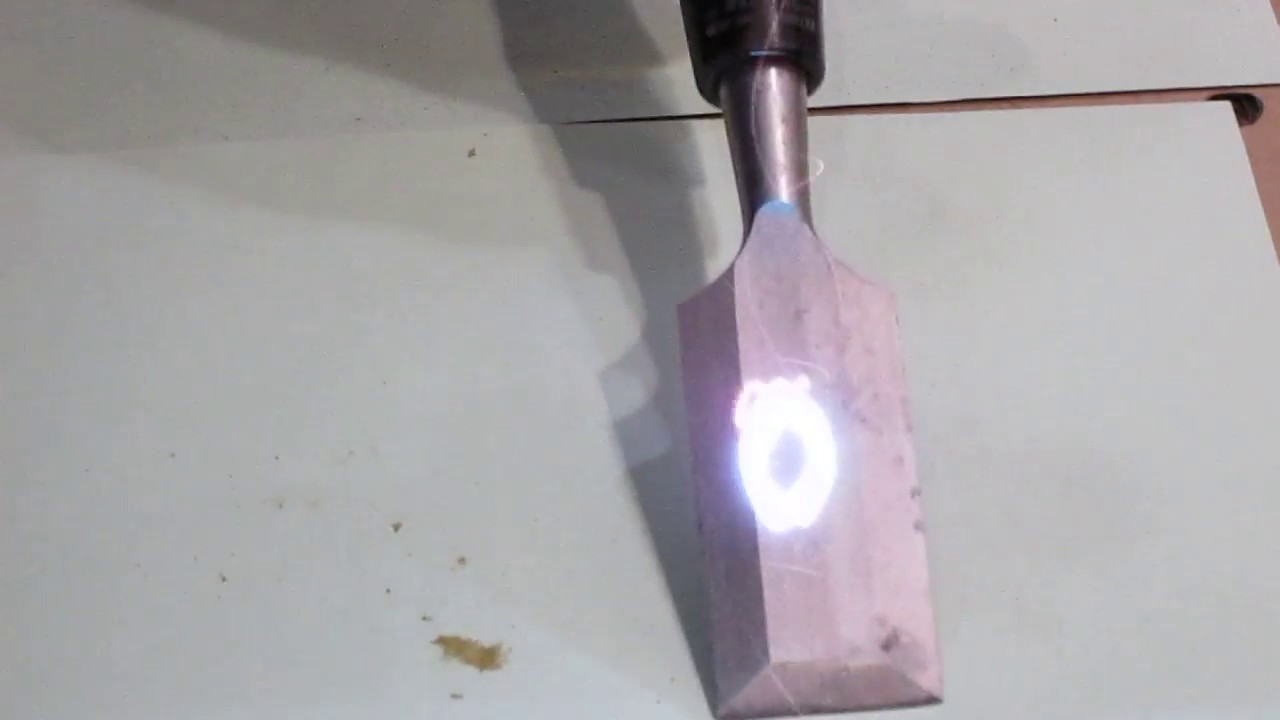
Laser cleaning directs optical energy at a surface layer so that it separates through heating, ablation and related effects. It can treat a selected band or feature without adding abrasive media. That can reduce masking and recovery work around assemblies, provided the beam can reach the target and nearby parts are protected.
The advantage is strongest when only a small part of a larger assembly needs treatment. On broad, heavily corroded steel, a slower active removal rate can outweigh the saving in cleanup. Test the actual oxide, coating and geometry; a clean strip in a video does not establish accepted square metres per shift.
Pulsed and continuous-wave systems need separate trials
Pulsed systems deliver energy in bursts; continuous-wave (CW) systems deliver it continuously during exposure. The mode alone does not determine throughput or damage. Power at the surface, pulse settings where applicable, spot size, focus, scan overlap and dwell all affect heat input and removal.
Evaluate the finished steel for unwanted heating, melting, texture change or dimensional loss. A laser-cleaned surface should not be assumed to retain its original profile or to meet a blast-cleaning profile requirement. For a closer comparison, use the pulsed-versus-CW guide.
No added abrasive does not mean no emissions. Removed rust and coating still require suitable capture and waste handling. Include laser access controls, reflected-beam controls and extraction in the timed setup.
Abrasive blasting: a strong choice for broad surfaces and a new profile
Abrasive particles remove corrosion and scale while changing the steel’s surface texture. Where both removal and a specified anchor profile are required, this can avoid a separate profiling step. Media selection and process conditions must suit the required finish and the substrate.
Air blasting suits many large or installed structures. For repeatable plates, beams and profiles, consider a wheel-blast line as well: Wheelabrator’s roller-conveyor systems illustrate continuous handling, blast treatment and abrasive recovery in one production arrangement. That handling advantage applies only to parts that fit the line.
Compare the full installation
Check access, masking, air supply, nozzle condition, abrasive supply and recovery. A high removal rate is of little use if the site cannot contain the dust or clear the spent media in time. Old coatings may also change the exposure controls and waste route.
Remove oil and grease through the specified pre-cleaning process; abrasive impact is not a substitute for degreasing. Inspect the achieved profile and cleanliness, especially at edges, corners and pits.

.jpg)


Power tools: often the quickest route to a small repair
A suitable grinder, scaler, sander or bristle tool can begin work with little mobilization. This makes power tools worth testing for small patches, edges and maintenance points where moving a blast system into position would take longer than the cleaning itself.
The tool name does not define the preparation grade
SSPC-SP 3 power-tool cleaning and SSPC-SP 11 power-tool cleaning to bare metal have different endpoints. SP 3 addresses loosely adherent material; SP 11 requires a substantially more demanding bare-metal and profile result. The archived FHWA inspection manual explains that distinction. Apply the edition and acceptance criteria named by the current project.
A wire wheel may polish over adherent material, and an aggressive disc may remove sound steel. Choose the head and technique for the specified result, then inspect pits and edges rather than relying on a bright appearance.
For larger areas, include tool changes, repositioning, operator fatigue, dust collection and repeated passes. A short demonstration on a comfortable flat patch can overstate sustained output.
Chemical removal: count elapsed time and hands-on labor separately
Immersion can reach exposed threads and recesses that a disc or straight-line beam cannot reach easily. Parts can soak as a batch while an operator does other work. That can reduce labor without shortening the elapsed time until the parts are ready.
Acid-based and chelating removers are different chemistries. A rust converter is different again: it reacts with rust and leaves a conversion layer, rather than simply delivering bare steel. Do not substitute one for another unless the downstream process permits that surface.
A product example: soaking is only part of the route
CRC’s Evapo-Rust instructions include preparation, soaking, rinsing and drying. Its guidance also says heavy grease should be removed first, and warns that some oxide finishes can be removed. This is why “safe for steel” does not establish compatibility with every finish or assembled part.
Use the actual product instructions and safety data sheet for concentration, temperature, dwell, rinsing and disposal. Include drainage from cavities, drying, bath condition and the next protective step in the cycle. Do not assume chemical removal creates the abrasive texture specified for a coating.
The laser-versus-chemical comparison explains these process and compatibility tradeoffs in more detail.


Waterjetting: evaluate dust, salts and the existing profile together
Consider waterjetting when dust or soluble contamination is a major constraint and the site can manage wastewater.
AMPP distinguishes waterjetting from wet abrasive blasting: pure waterjetting can reveal a profile left by earlier preparation, but it does not create a new anchor pattern. Wet blasting adds abrasive and can change the texture.
Check the surface after it dries
If the existing profile is unsuitable, include an additional profiling operation. Specify the waterjet cleanliness level and acceptable flash-rust condition with the coating system. Verify residual contamination rather than assuming one water pass has reached the project’s salt limit.
Flash rust can develop as steel dries. Coordinate drainage, drying, inspection and coating to avoid a second preparation cycle.
Measure time to an accepted surface
Set the same starting condition, cleaned area and acceptance requirements for each candidate. Start the clock when job-specific preparation begins and stop when cleanup and the agreed handoff are complete. Record active cleaning time separately so you can see whether removal or overhead controls completion.
Add separate drying, queue or protection time if it is outside those stages. Record elapsed time and labor-hours separately: two people working for one hour use two labor-hours, while parallel tasks should not be counted twice in the elapsed schedule.
Worked example: the faster pass can produce the slower job
Illustrative assumptions, not measured equipment performance: a 2 m² local repair, two qualified routes, the same accepted finish and sequential stages. The times below show the arithmetic only; they are not quoted blasting or laser-cleaning rates.
Scroll horizontally on smaller screens to compare the two scenarios.
| Stage | Blasting scenario | Laser scenario |
|---|---|---|
| Setup and protection | 60 min | 20 min |
| Active removal | 20 min | 40 min |
| Cleanup and waste handling | 30 min | 10 min |
| Inspection and handoff | 10 min | 10 min |
| Total job time | 120 min | 80 min |
Active removal rates are 6 m²/h and 3 m²/h respectively. Once all four stages are included, accepted-area rates become 1 m²/h and 1.5 m²/h. The assumed laser route finishes sooner despite a slower pass. Different setup times, areas or acceptance results can reverse that outcome.
Turn the example into a useful supplier trial
Use representative rust and awkward features as well as easy flat areas. Record rejected areas, extra passes, media or filter changes, part movement and the time needed to reach the next operation. If either route fails the agreed finish, include its rework before comparing completion time.
For ongoing planning, enter your measured assumptions into the rust and paint removal time estimator. A planning estimate does not replace repeat trials on the production mix.
Define acceptance before calling a method faster
For coating work, match the preparation method to the coating data sheet and project specification. The surface can look clean while failing a requirement that affects adhesion or service life.
- Cleanliness and profile: name the applicable preparation standard, permitted residual material and required texture.
- Contamination: specify the relevant oil, dust, soluble-salt or process-residue checks and limits.
- Substrate condition: confirm dimensions, remaining thickness and any prohibited heat or mechanical damage.
- Handoff conditions: define drying, acceptable flash rust and the environmental window for the next operation.
Use the standard for the actual process
AMPP’s surface-preparation standards distinguish dry blasting, wet blasting, waterjetting and power-tool work. A method name or bright-metal photograph does not demonstrate conformance, and cleanliness labels should not be treated as automatic equivalents across processes.
For laser preparation, AMPP SP21511-1-2024 addresses pulsed-laser preparation of ferrous metals, as recorded in AMPP’s 2024 report. Separately, ISO/FDIS 8504-6 was still under development when checked on September 10, 2026. A draft should not be represented as an issued International Standard or blanket equipment certification.
Include exposure controls in setup time
Identify the rust, coating and other material being removed before deciding on containment and waste handling. Blasting and tools need appropriate dust, particle and noise controls; chemistry needs the product-specific handling arrangements; waterjetting needs pressure-rated equipment and controlled access.
Laser work also requires an assessed beam path, protection from direct and reflected radiation, training and suitable emission capture. NIOSH explains these general industrial-laser hazards. Controls for the actual installation belong in the plan before the demonstration starts.
After acceptance, preserve the required condition until the next operation. The guide to painting after rust removal covers drying, flash rust and coating readiness.
Technical sources
- ISO 8501-1:2007 preview, section 2 — starting rust grades A–D; visual assessment is not a production-rate test.
- AMPP: waterjet and wet abrasive blast cleaning — the profile distinction and flash-rust considerations.
- FHWA Field Manual for Bridge Painting Inspection — archived explanation of cleaning methods, pre-cleaning and SP 3/SP 11 differences. Current project documents control contractual requirements.
- CRC Evapo-Rust instructions — a specific example of the preparation, soak, rinse and dry sequence; not a universal chemical-treatment recipe.
Equipment examples, standard status and industrial-laser safety guidance are linked in the relevant sections.
Compare a real part, a defined finish and a complete cycle.
Share the steel grade and thickness, rust and coating condition, area, difficult geometry and next operation with Oceanplayer Laser. Include the required finish and output so the discussion can focus on a representative cleaning trial.