oceanplayer

Oceanplayer Laser Equipment | Cleaning, Welding, Marking, Automation Sample Testing | Global Shipping | OEM/ODM Support
Battery Laser Welding

Battery Laser Welding for Tabs, Busbars, Housings and Pack Assembly.

Oceanplayer battery laser welding solutions help weld battery tabs, busbars, cell connectors, aluminum housings, battery trays and pack assemblies with controlled heat input, repeatable seams and production-ready automation options. Choose handheld, fixture-assisted or robotic laser welding based on material combination, joint design, weld strength, heat sensitivity and production volume.
  • Tab, busbar and connector welding
  • Copper, aluminum and nickel applications
  • Sample welding test available
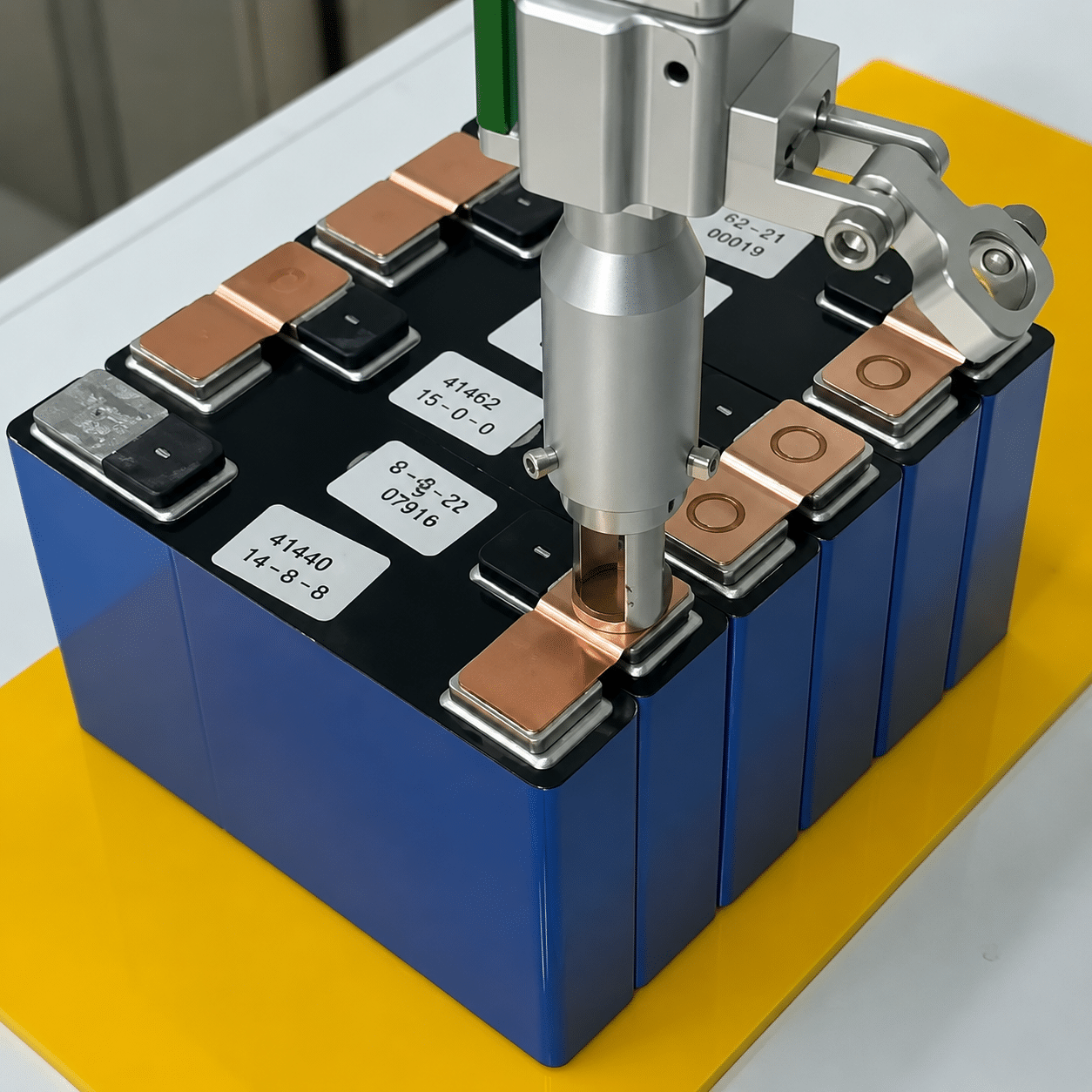
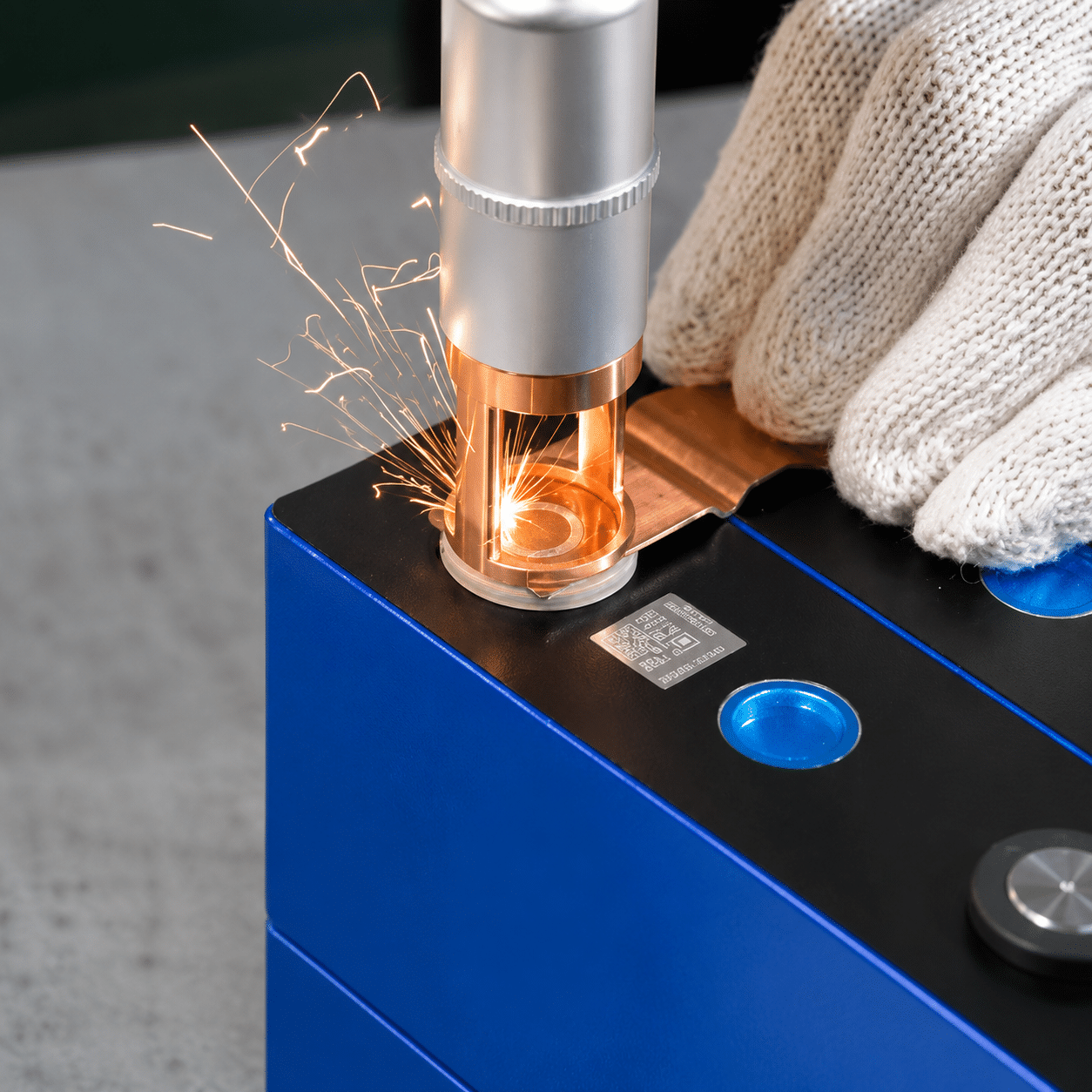
Battery laser welding machine welding tabs busbars and pack components
Stable battery joints Built for tabs, connectors, housings and pack production
Tabs Cell connection
Busbar Pack assembly
Auto Repeatability
Controlled Heat Input Protect heat-sensitive cells and nearby components
Repeatable Joints Improve consistency for tabs, busbars and connectors
Automation Ready Use fixtures, vision, rotary stages or robotic systems
Sample Proof Confirm strength, appearance and process window first
Customer Concerns

Battery welding problems that need a controlled laser process

Battery components are often thin, conductive and heat-sensitive. The welding process must balance strength, conductivity, heat input, spatter control and repeatability.

Heat-sensitive cells and parts

Laser parameters, fixture contact and welding path must control heat transfer to cells, seals and nearby components.

Tab and busbar consistency

Stable positioning and repeatable energy delivery help improve electrical connection quality across many cells.

Spatter and contamination risk

Controlled process settings and clean surfaces help reduce spatter, weak joints and contamination around battery assemblies.

Application Range

Where battery laser welding is a strong fit

Laser welding is useful for battery production and assembly tasks that need stable joints, controlled heat and repeatable results.

  • Battery tab welding for cylindrical, prismatic and pouch cell connections.
  • Busbar welding for battery modules, packs and energy storage systems.
  • Nickel strip, copper, aluminum and selected dissimilar metal connection work.
  • Battery tray, aluminum housing, cover, frame and enclosure welding.
  • Automated production lines with fixtures, positioning, vision and inspection steps.
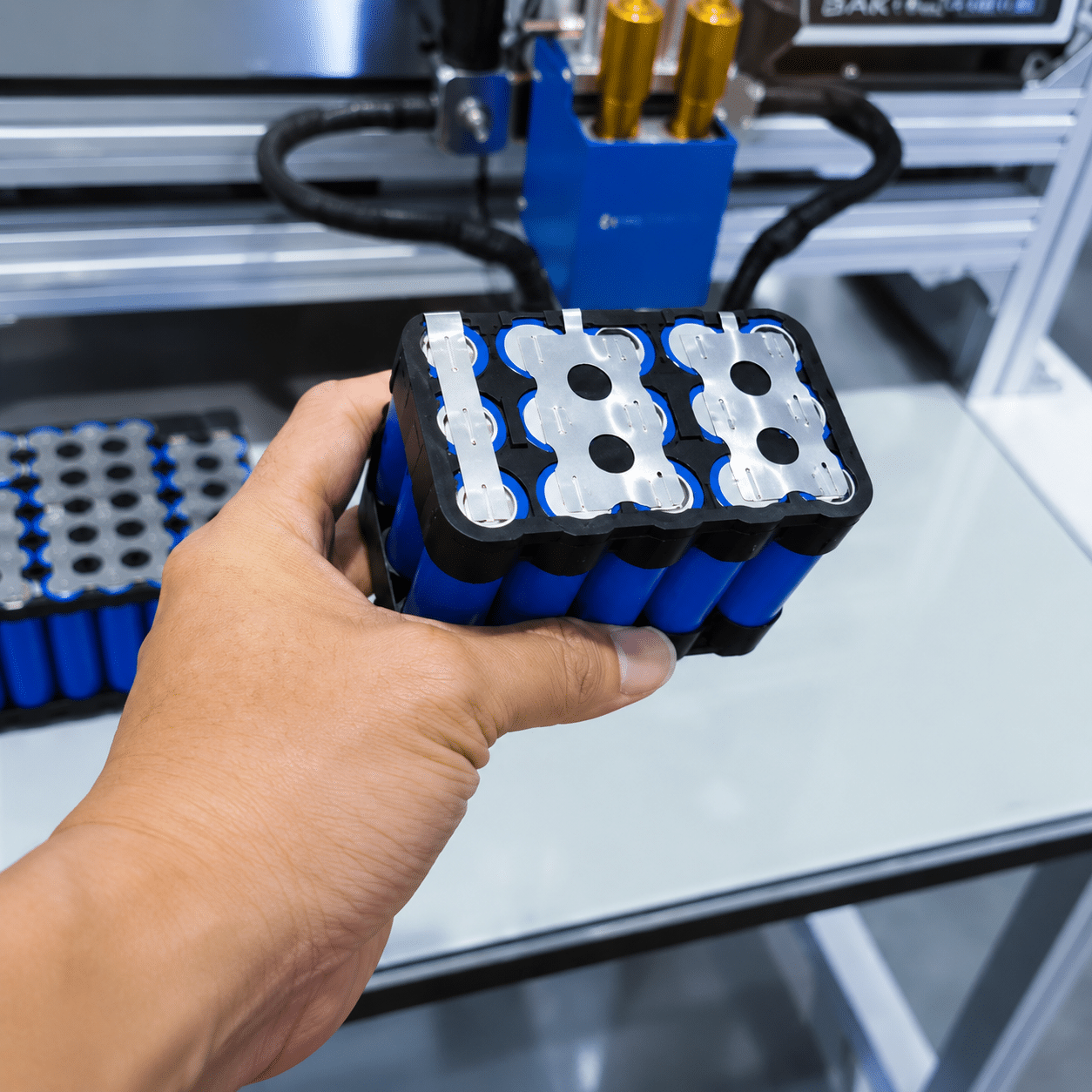
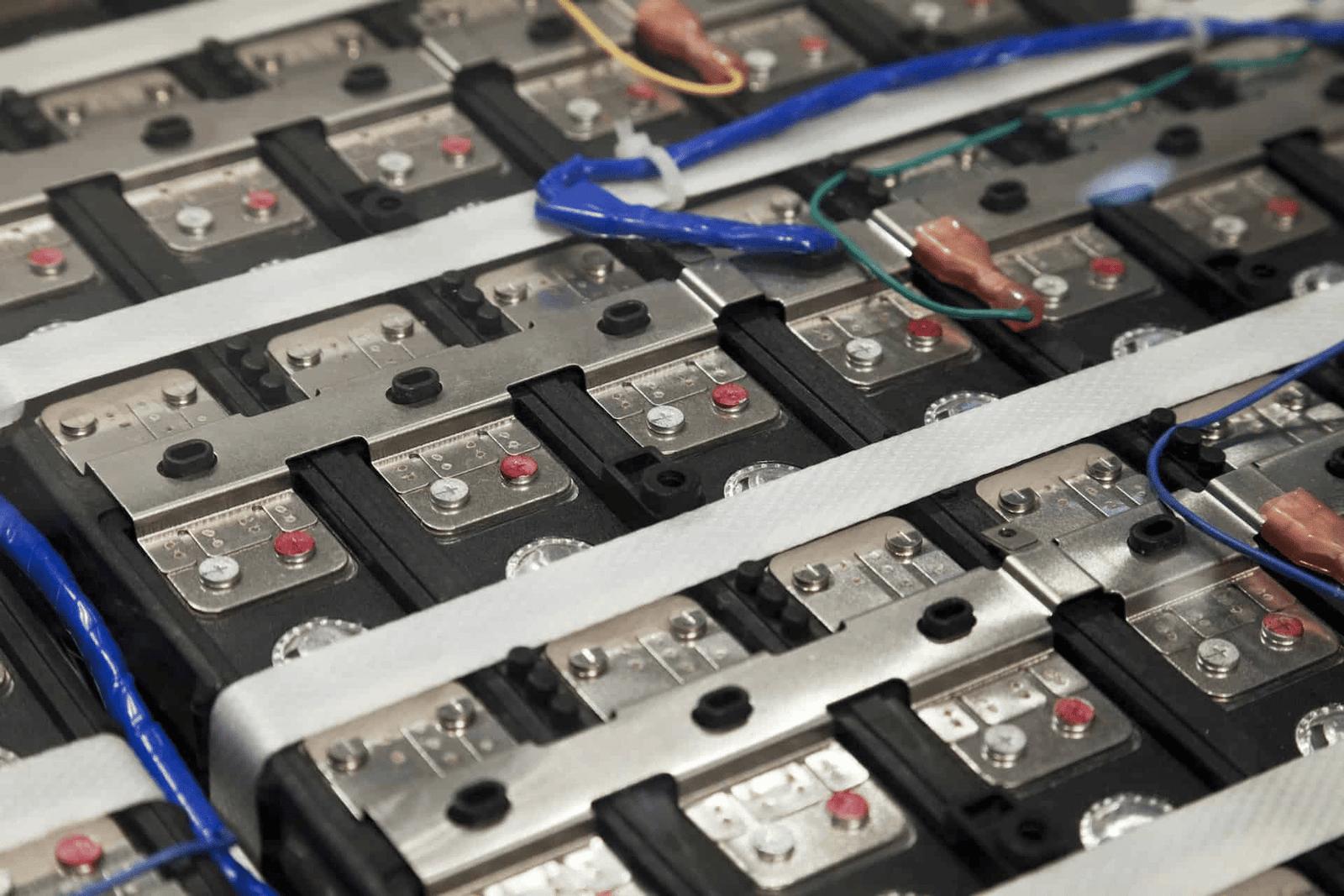
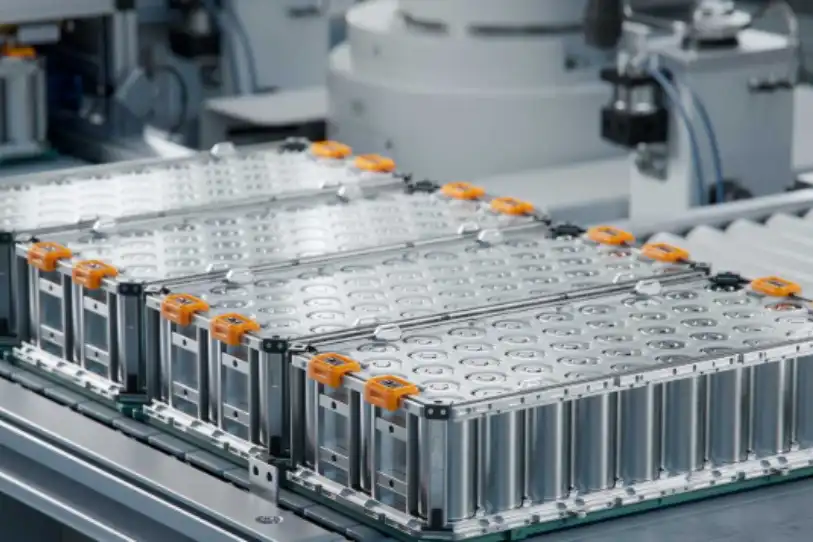
Battery laser welding applications for tabs busbars housings and battery packs
Battery Process Factors

What decides battery laser welding quality?

Good battery welds depend on material combination, contact pressure, surface cleanliness, fixture accuracy, energy stability, heat control and inspection method.

Contact

Control fixture pressure and position

Good contact reduces gaps, improves energy transfer and supports stable electrical connection quality.

  • Use repeatable clamping
  • Control tab flatness
  • Keep weld path stable
Inspection

Plan weld quality checks

Battery welds often need pull testing, resistance checks, visual inspection or process monitoring to confirm stability.

  • Define pull force target
  • Check resistance requirement
  • Review spatter and surface marks
Configuration Guide

Select the right setup by battery component and production volume

The best welding setup depends on material stack, weld pattern, joint strength, automation level, fixture design and safety requirements.

Battery Welding Task Common Setup Best Use What To Check
Nickel strip to cell terminal Pulsed or controlled fiber laser process Cell tab and connector welding Heat input, pull strength and surface marks
Copper or aluminum busbar Higher power fiber laser with fixture support Battery module and pack connections Reflectivity, penetration and electrical resistance
Thin tabs and foils Precise low-heat laser welding Pouch cells and delicate tab assemblies Burn-through, clamping and weld pattern
Battery tray or housing Handheld, fixture-assisted or robotic laser welding Aluminum cases, covers and structural parts Seam sealing, distortion and fixture accuracy
Repeated pack production Robotic or automated laser welding system High-volume battery lines Positioning, vision, extraction and process monitoring
Welding Results Gallery

Review battery laser welding results across common components

Compare welding samples for tabs, busbars, nickel strips, copper connectors, aluminum housings and battery pack assemblies.

Machine Configuration

Match the laser welding setup to your battery production process

Battery welding may need precise workholding, stable energy delivery, clean surfaces, fume extraction, safety protection and production inspection.

Fixture-Assisted Welding

Recommended for repeated tab, terminal and busbar welding where positioning and clamping must stay stable.

Robotic Laser Welding

Useful for battery modules, pack production and repeated paths across many cells or connectors.

Handheld Laser Welding

Suitable for battery housings, trays, frames, repair work and lower-volume structural welding.

Vision Positioning

Helps locate tabs, connectors and weld points more consistently in automated production.

Fume Extraction

Controls smoke, vapor and fine particles around battery welding workstations.

Quality Monitoring

Supports repeatable welding through sample tests, pull testing, resistance checks and process records.

Laser vs Other Joining

Why battery manufacturers compare laser welding with ultrasonic, resistance and mechanical joining

Laser welding is often selected when battery products need precise heat input, clean non-contact welding and automation-friendly repeatability.

Method Best For Main Concern When Laser Helps
Laser Welding Tabs, busbars, connectors, housings and automated paths Needs process development and accurate positioning Non-contact welding, repeatable energy and flexible weld patterns
Ultrasonic Welding Foils, tabs and selected soft metal stacks Tool wear, vibration and part geometry limits Laser can help with more complex paths and non-contact access
Resistance Welding Small tab and nickel strip connections Electrode wear, contact variation and limited materials Laser can improve flexibility and reduce electrode maintenance
Mechanical Fastening Serviceable joints and lower heat requirements Extra parts, added weight and contact resistance Laser can create compact welded electrical connections
Before You Choose

Confirm these details before selecting a battery laser welding system

Clear battery component information helps recommend laser type, power, fixture, motion system, inspection method and sample welding parameters.

Material stack and coating

Share whether the joint uses nickel, copper, aluminum, plated materials or dissimilar metal layers.

Thickness and weld pattern

Provide tab thickness, busbar thickness, weld shape, spot count, line length and target weld area.

Strength and resistance target

Define pull force, shear strength, electrical resistance and any internal inspection requirement.

Heat-sensitive limits

Confirm distance to cells, seals, insulation, electronics and heat-sensitive battery materials.

Automation level

Decide whether your process needs manual loading, fixture-assisted welding, robot motion or full line integration.

Safety and extraction

Plan laser enclosure, interlocks, smoke extraction, operator protection and process validation before production.

Sample Welding Test

Send your battery welding sample and get a practical process recommendation.

Share material stack, thickness, weld pattern, strength target, resistance target, fixture idea and production volume. Oceanplayer can recommend laser configuration, motion setup, fixture direction and sample welding parameters.

01

Share Component Details

Send material stack, thickness, weld pattern and target joint performance.

02

Test Welding Parameters

Check energy, speed, pattern, contact pressure, spatter and joint quality.

03

Choose Configuration

Select fixture-assisted, robotic, handheld or integrated battery welding setup.

FAQ

Battery Laser Welding FAQ

Can laser welding be used for battery tabs and busbars?
Yes. Laser welding can be used for battery tabs, busbars, connectors and selected cell connection work when materials, fixture contact, heat input and inspection requirements are properly defined.
Which battery materials can be laser welded?
Common battery welding materials include nickel, copper, aluminum, plated metals and selected dissimilar metal stacks. The exact process depends on thickness, coating, conductivity and joint design.
How do you reduce heat damage during battery laser welding?
Heat risk can be reduced by controlling laser energy, weld pattern, speed, clamping, heat path and distance to sensitive components. Sample testing is important before production.
Is robotic laser welding useful for battery production?
Yes. Robotic or automated laser welding is useful when battery packs require repeated weld positions, stable cycle time, process records and consistent joint quality.
What information is needed for a battery welding test?
Material stack, thickness, coating, weld pattern, strength target, resistance target, heat-sensitive limits, photos and production volume help determine the right laser configuration and parameters.