

How much does each weld seam actually cost to clean?
There is no fixed price. The defensible cost is setup divided by the accepted batch, plus loaded labor, machine time, energy, consumables, extraction, inspection, expected rework, safety controls and any travel or site cost.
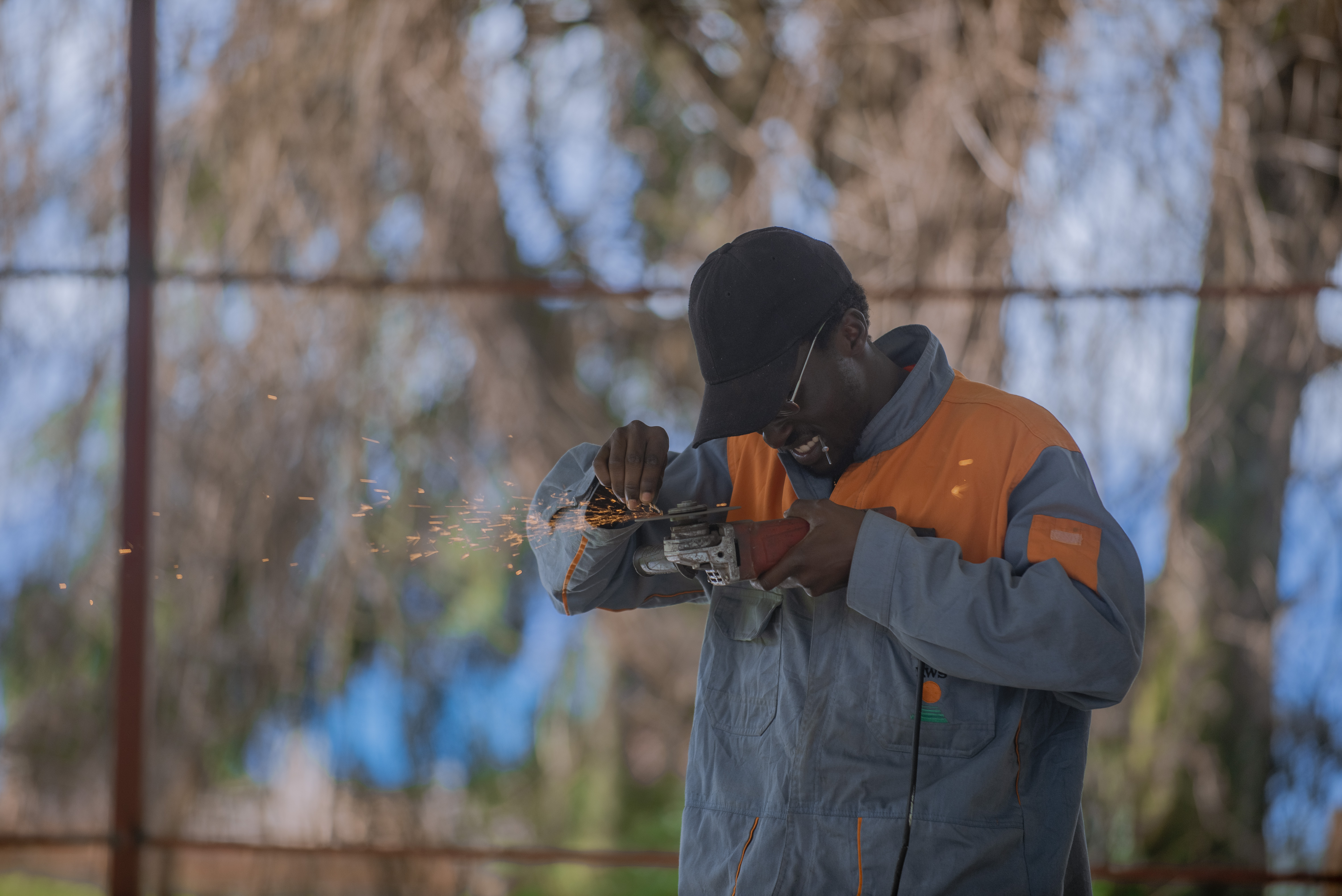

Attempts, repeats and rejected parts consume resources but do not increase accepted output.
The same setup can be minor across 500 seams and dominant across five repairs.
Cosmetic brightness, coating readiness and restored corrosion performance are not interchangeable endpoints.
A service price may add overhead, risk and profit; a machine rate may exclude labor, setup and travel.
Price the whole route, not the visible pass.
Weld seam cleaning cost is the total defined cost divided by accepted seams. Count setup, loading, focusing or tool preparation, cleaning, repositioning, extraction, inspection and expected rework. Then add fixed site costs across the batch.
Two seams with the same length may cost very different amounts. A straight outside seam can be quick. An inside corner may require two faces, masking, part rotation and a coating-readiness check. A short repair can cost more per metre than a long production seam because setup does not shrink with length.
Keep the result tied to one controlled seam family: same material, contaminant, geometry, cleaning band, sides, acceptance endpoint and normal variation.
Traceable production cost inside the agreed boundary. State whether supervision, maintenance, extraction, QA and occupancy are included.
An hourly allocation or billing basis. It may exclude setup, labor, travel, consumables or profit, so never compare the number by itself.
Internal cost plus overhead, risk, payment terms, warranty exposure and profit. A selling price is not evidence of production cost.

Record the bead, adjacent heat-affected surface, required band, root side, starts, stops and inspection zone. The pictured weld is MMA, not a laser-weld-cleaning result.
Photo: Tanel Eensoo / Wikimedia Commons, CC BY-SA 3.0.What counts as one weld seam?
A useful unit has controlled boundaries. Record cleaned length, band width, faces, full-coverage pass factor, material condition, access and the required endpoint. If any of these changes, the cost model should change too.
Aeffective = L × W × S × PExample: 2 m × 0.020 m × 2 faces × 1.5 passes = 0.12 m². This is a scope model, not a laser recipe.- LLength: include required run-in, run-out, starts and stops.
- WBand width: bead only, heat tint, coating edge or inspection zone.
- SSides: outside, inside, root face or both sides.
- PPass factor: full-coverage equivalents, including repeat or staged passes.
- ✓Endpoint: visual, coating-ready, passivation-ready, NDT-ready or another measured requirement.
The full cost-per-seam formula
A cost model is useful only when every input has a clear measurement rule. Add or remove categories when needed, but state the accounting boundary and avoid double counting.
B means accepted seams in the batch. If a seam must be repeated, the first attempt does not increase accepted output. Use hours for the rate terms and keep currency consistent.
Recipe confirmation, fixture, masking, calibration, controlled-area setup and paperwork spread across accepted output.
Operator or crew time multiplied by employer cost, not cash wage alone. Count attended work and paid nonproductive burden correctly.
Installed capital, service, maintenance and productive utilization allocated per hour, multiplied by actual machine time.
Laser or tool plus cooling, extraction, motion and auxiliaries. Optical laser power is not the facility input.
Windows, filters, abrasive, brushes, chemicals, wipes, masking, waste packaging and observed replacement frequency.
Handling, visual or dimensional checks, surface verification, records and any NDT required by the real seam function.
Observed rework probability multiplied by consequence, plus scrap where relevant. Do not hide failure inside an optimistic cycle.
Extraction, access control, permits, fire controls, containment, induction, mobilization, travel, standby and site equipment.
Include the employer costs that belong inside your accounting boundary, such as benefits, payroll burden, paid nonproductive time, training and supervision. U.S. BLS Employer Costs for Employee Compensation data can provide broad context, but it is not a laser-operator rate or a substitute for your payroll and accounting records.
Weld seam cleaning cost calculator
Enter one controlled seam family. The defaults adapt the fictional low-batch case below and add whole-system energy as a separate input. The result is an internal planning estimate, not a supplier price or guaranteed process result.
Why the same cleaning method produces very different unit costs
These three fictional cases show how batch size, attended time and site overhead change the answer. They are calculation demonstrations—not market prices, quotations or performance promises.
A stable fixture, 500 accepted seams and short handling spread setup thinly. The model uses $0.18 setup, $0.42 labor, $0.14 machine time, $0.08 consumables and extraction, and a $0.03 quality reserve per seam. Electricity is already inside the machine rate in this example.
Repeatable geometry and a large accepted batch—not a universal laser speed.
Twenty accepted seams carry $2.00 setup, $3.20 labor, $1.10 machine time, $0.02 whole-system energy, $0.35 consumables, $0.50 inspection and $0.20 expected quality cost per seam.
Setup and attended handling are spread over only twenty accepted seams.
A small site batch carries mobilization, induction, access control and slow positioning. The example uses $31.88 mobilization/induction, $7.33 labor, $2.08 equipment, $7.03 controlled-area and extraction setup, and $2.50 consumables plus inspection per seam.
The cleaning pass is a small part of a controlled field-service visit. Travel expenses, tax, access equipment, overnight accommodation and profit are excluded.
Replace every input with data from your material, seam family, operator, fixture, safety plan and acceptance rule. Report both the central value and normal spread after the process is stable.
Measure the complete cycle, not beam-on time
A published scan speed describes one motion under stated conditions. Production cost also includes handling, corners, stops, inspection and repeats. Time representative consecutive parts instead of one showcase seam.
Confirm recipe, optics or tool, extraction, fixture, masking and controlled area.
Identify the lot, place the part and protect nearby surfaces or components.
Set access, focus or contact angle and confirm the required cleaning band.
Record actual attended and machine time, including controlled starts and stops.
Count part rotation, inside corners, second faces and access interruptions.
Apply the agreed visual, surface, coating or NDT acceptance method.
Record repeats and rejects separately. Do not count attempts as accepted seams.
Handle, clean up, label, document and release the part to the next operation.
Freeze the seam definition and endpoint. After the operator and process stabilize, time a representative run. Record labor time, machine time, accepted output, rework and delays separately. Then report an average or median plus the observed range. NIST notes that manufacturing processes vary, so a single fastest cycle is not a reliable production model.
Laser, grinding, brushing, blasting or chemistry?
Compare methods only when they deliver the same accepted result. Removing loose soot is different from blending reinforcement, preparing for paint or restoring a specified stainless surface condition.

| Method | Best planning fit | Cost items people miss | Important boundary |
|---|---|---|---|
| Grinding | Profile change, excess reinforcement, defect excavation or strong mechanical action. | Abrasives, tool changes, dust capture, cleanup, hearing/face protection, finish matching and over-dressing risk. | Can alter geometry. It may be required when cleaning alone cannot correct the weld profile. |
| Brushing | Loose residue or mild surface cleanup where the approved finish allows it. | Dedicated stainless tools, operator time, tool wear, access and verification of embedded contamination. | May not remove heat tint or the affected surface layer to a corrosion- or hygiene-driven endpoint. |
| Blasting | Larger accessible areas where the specified texture and containment are acceptable. | Media, compressor, masking, enclosure, reclaim, cleanup, disposal and surface-profile inspection. | Risk of media inclusion, excessive roughness or damage to nearby finished surfaces must be controlled. |
| Chemical or electrochemical | Qualified oxide/heat-tint removal or stainless treatment where the service specification calls for it. | Application and dwell, electrolyte/acid, ventilation, PPE, rinse, neutralization, wastewater and verification. | Requires material-specific safety controls. A bright surface alone does not prove passivation or corrosion suitability. |
| Laser cleaning | Targeted, repeatable surface removal with a validated threshold window and controlled access. | Qualification, programming, handling, extraction/filter service, optics, electricity, safety area, inspection and rework. | It is a surface-treatment process—not a repair for cracks, lack of fusion, porosity, undercut or wrong weld geometry. |
A fair comparison starts with one drawing, one seam family, one acceptance endpoint and the same definition of accepted output. HSE guidance also distinguishes mechanical, electrochemical and pickling routes for stainless post-weld cleaning; the correct route depends on the required finish and service.
Pre-weld and post-weld cleaning have different endpoints
Pre-weld cleaning removes oil, dirt, oxide or coating that can disturb joining. Post-weld cleaning removes process by-products or prepares the surface for coating, inspection, corrosion service or appearance.
A machine can perform both tasks, but that does not make the recipes, band widths, acceptance tests or costs interchangeable.
Define contaminant, cleaned zone, time between cleaning and welding, and acceptable recontamination.
Define whether the seam must be visually clean, coating-ready, corrosion-ready or inspection-ready.
Surface cleaning cannot correct internal porosity, lack of fusion, cracks, undercut or wrong reinforcement.
Heat-tint removal and passivation are related decisions, but they are not the same acceptance statement.

For corrosion- or hygiene-sensitive stainless service, specify the required treatment and verification. The image shows a TIG lap joint, not a laser-cleaning result.
Photo: Joel Washing / Wikimedia Commons, CC BY 2.0.When does automation lower cost?
Automation can reduce operator variation and attended time on repeatable seams. It also adds fixture, programming, loading, guarding, integration and maintenance cost. The right answer depends on accepted volume and part stability.
Nbreak-even = (Fixed Costlaser − Fixed Costalternative) ÷ (Variable Costalternative − Variable Costlaser)Use the same accounting boundary for both routes. The denominator must be positive; otherwise the proposed laser route does not recover its extra fixed cost under those inputs.Usually lower fixed integration cost and flexible part handling. Unit cost may rise with long attended time, difficult ergonomics or operator variation.
Potentially more stable overlap, path and cycle. It needs repeatable datums, fixtures, loading logic, guarding and recovery plans.
An operator loads and verifies while motion controls the cleaning path. Separate attended labor from equipment occupation in the cost model.
If the project still works when volume is lower, utilization is weaker or variants increase, the business case is more robust.

A clean-looking seam is not automatically an accepted seam
Cleaning can expose the weld for inspection, remove qualified surface by-products or prepare the next operation. It cannot prove internal soundness or repair a bad joint. Build only the evidence your drawing, code and end use require.
If rework labor and machine time are already included in measured batch totals, do not add the same event again as a quality reserve. Add only costs that are not captured elsewhere.
What to send for a useful weld-cleaning quote
“How much per metre?” is not enough. Give suppliers the data needed to define scope, choose a test route and separate fixed setup from repeat production.
Send representative weld photos, alloy, seam length, cleaning-band width, sides, contaminant, batch size, access limits and the acceptance endpoint.
Drawing revision, alloy/grade, thickness, welding process, bead condition, coating and normal lot variation.
Length, band width, faces, joint type, straight runs, corners, internal features, obstruction and required rotation.
Identify oxide, soot, slag, oil, coating or other material. Define exactly what may remain and what must not be damaged.
Visual limit sample, coating-readiness test, stainless treatment requirement, NDT access, documentation and rejection rules.
Prototype, batch and annual quantities; shifts; variants; changeover frequency; peak demand; accepted-yield history.
Who provides fixtures, loading, extraction, safety area, travel, inspection, waste, maintenance, packaging and rework.
A 7-step route to a defensible cost
The goal is not the fastest clean sample. The goal is stable accepted output that represents the real production route.
Hold material, contaminant, geometry, band, access and endpoint constant. Split materially different seams into separate families.
Record setup, handling, cleaning, inspection, consumables, cleanup, queues, rework and accepted yield before changing equipment.
Agree the visual or functional acceptance method before timing. Otherwise a fast result may solve the wrong problem.
Include corners, starts, stops, access limits, material lots and realistic variation—not only a flat, easy coupon.
Separate operator, machine and fixed setup time. Record consecutive parts, interruptions, repeats and rejects.
Divide actual batch cost by accepted output. Show cost per seam first; add cost per metre or area only as a scope normalizer.
Change batch size, utilization, yield, labor, service and volume assumptions. Lock the process only after technical and financial gates pass.
Compare compliant processes—not unguarded demonstrations
Grinding, chemicals, blasting and lasers have different hazards and control costs. Excluding those controls makes the cheaper route look better only on paper.
- Laser: confirm the actual system classification, enclosure or controlled area, interlocks, beam/reflection control, trained access, suitable eyewear, fire controls and extraction.
- Plume and particulate: the removed material becomes captured fume or debris. Filter selection and disposal depend on alloy, coating and contamination.
- Grinding: count sparks, flying particles, wheel hazards, dust capture, cleanup and hearing/eye/face protection.
- Chemical treatment: include ventilation, PPE, incompatibility control, rinse, spill response, wastewater and disposal.
- Field work: add permits, induction, isolation, barriers, standby and site-specific access time.
OSHA notes that high-hazard laser systems can present eye, skin, reflection, fire and laser-generated-air-contaminant risks. Use the equipment manual and a competent site assessment.

Use these published resources to compare process fit, equipment architecture and the wider job-cost model. Each link routes to a current Oceanplayer Laser page.
Weld seam cleaning cost FAQ
Short answers for estimators, production engineers and buyers comparing manual cleanup, laser cleaning and automation.
Should setup cost be divided by produced seams or accepted seams?
Divide setup cost by accepted seams. Rejected parts and failed attempts still consume setup, labor and machine capacity, but they do not create accepted output. Report produced quantity, accepted quantity and first-pass yield separately so the denominator can be audited.
How should rework be counted without double counting?
Count the actual labor, machine time, consumables and inspection used for rework. If those events are already included in measured batch time and batch cost, do not add a second expected-rework allowance. Use either observed batch data or a probability-based reserve for planning, and state which method you used.
How many parts should be timed for a weld-cleaning cost study?
There is no universal sample size. After the setup and operator stabilize, time consecutive representative parts that include normal material, geometry and access variation. Report the sample size, accepted and rejected counts, average or median cycle, observed range and any interruptions.
Can post-weld laser cleaning replace grinding or passivation?
It depends on the required endpoint. Laser cleaning can remove validated surface residue or heat tint, but it does not reshape a weld or repair internal defects. A corrosion-sensitive stainless application may still require a specified passivation or verification route. Approve the finish and test method before comparing cost.
What should a supplier return after a timed sample test?
Ask for the exact sample condition, cleaning scope, accepted endpoint, locked parameter record, setup time, consecutive-part cycle data, accepted yield, inspection method, observed variation, consumables and extraction assumptions, plus photos of representative results and any substrate effect.

Sources and technical boundaries
Use current standards, the exact equipment manual and site rules for your project. The references below support costing, surface-treatment and safety principles; none supplies a universal cost per seam.
Supports separating machine rate, labor time, setup, tooling and defect cost.
Supports measuring process center and spread rather than relying on one fastest cycle.
Broad compensation context; not a laser-operator rate or substitute for shop accounting data.
Supports counting noise, exposure time and suitable controls when comparing finishing routes.
Distinguishes mechanical, electrochemical and pickling routes and their controls.
Explains why appearance and corrosion-performance questions must be separated.
Cleaning, descaling and passivation practices for stainless parts, equipment and systems.
Chemical passivation treatments and verification for stainless parts.
Shows that laser parameters influence removal and that over-cleaning can affect the substrate.
Supports separating surface cleaning from weld-defect removal and repair.
Covers beam, reflection, fire and laser-generated-air-contaminant controls.
Laser-processing-machine safety requirements; confirm current edition and project scope.
Oceanplayer Laser can review your seam family and plan a production-intent sample test. The output should separate batch setup, attended labor, machine time, inspection and accepted yield so you can compare routes on the same endpoint.