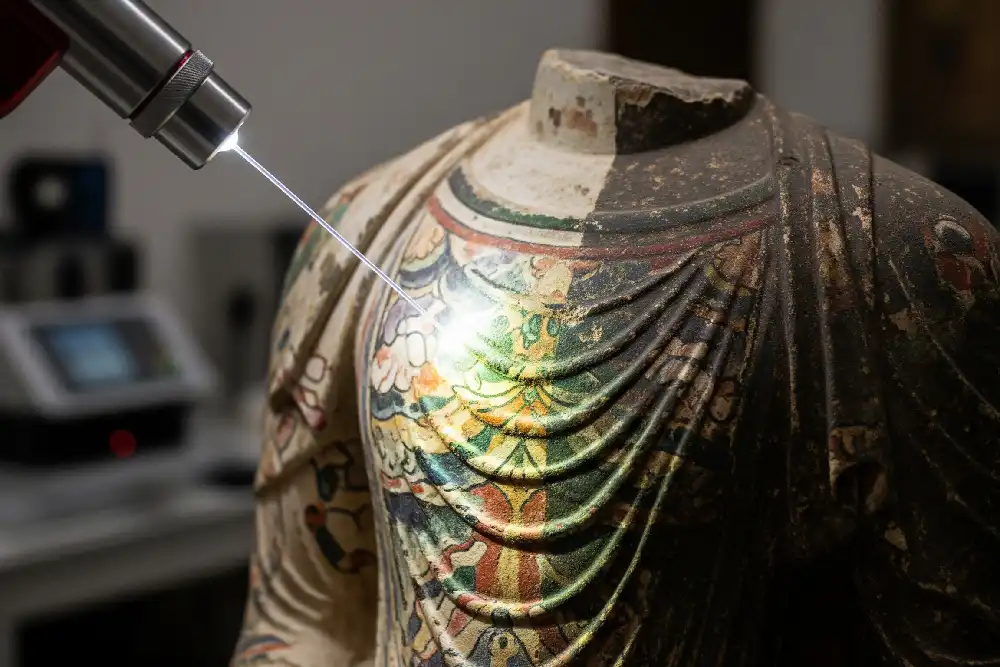
Imagine you are in front of a very old statue. The statue is covered in dirt and rust. Laser cleaning helps you take off these layers safely. You do not have to touch the statue’s surface. The laser only removes the dirty parts, like:
- Rust
- Mold
- Paint
- Paper labels
- Polymers
- Plastic
Museums use this way because it works better than old ways. You keep the artifact safe and do not use strong chemicals. This helps save history for people in the future. This technology changes how you take care of important relics.
Key Takeaways
- Laser cleaning takes off dirt and rust from old relics. It does not touch the surface of the object.
- This way is good for the earth. It does not use water or strong chemicals. This helps keep the environment safe.
- Laser cleaning is very exact. You can change it for different materials. This keeps the original artifact safe.
- Always try the laser on a small spot first. This helps you find the best settings for each artifact.
- As technology gets better, laser cleaning will be easier to use. It will also work better to save cultural heritage.
What is laser cleaning?
Technology overview
You might wonder how laser cleaning works. This technology uses strong light beams to clean things. You do not have to touch the object at all. The laser only hits the dirt or rust. The real material stays safe. Museums and experts like this way because it is fast and careful.
Laser cleaning uses some science ideas:
- Laser thermal ablation makes dirt turn into gas and go away.
- Laser thermal stress uses quick heat changes to break up dirt.
- Plasma shock waves shake off tiny bits when the laser hits.
You can change the laser’s settings for each material. This makes cleaning exact and quick. The artifact stays safe while you clean it.
How laser cleaning works
Laser cleaning lets you pick pulsed or continuous lasers. Pulsed lasers send short bursts of energy. These bursts stop too much heat from hurting the object. You can also change the color and strength of the laser. This helps match what each artifact needs. This way works well for metals, wood, and paintings. Pulsed lasers help you clean small details best.
Continuous lasers work faster but make more heat. Too much heat can hurt fragile things. For most old relics, pulsed lasers are safer. You can clean off dirt and stains but not harm the real material.
Tip: Always try the laser on a tiny spot first. This helps you pick the best settings for each artifact.
Laser cleaning applications in relic restoration
Stone, murals, and metal artifacts
Laser cleaning works on many stone relics. Museums use it for limestone and sandstone statues. The table below shows how laser cleaning keeps stone safe. It works better than older cleaning ways.
| Stone Type | Cleaning Method | Conservation State Comparison |
|---|---|---|
| Istria limestone | Laser cleaning | Better preservation compared to mechanical/chemical |
| Botticino limestone | Laser cleaning | Better preservation compared to mechanical/chemical |
| Nanto sandstone | Laser cleaning | Better preservation compared to mechanical/chemical |
Laser cleaning also helps murals. Scientists tested lasers on old paintings. Lasers can take off varnish and other layers. The artwork does not get hurt. Here is a summary of some studies:
| Study | Findings |
|---|---|
| Iwanicka et al. (2018) | Used special tools to see how lasers clean varnish. They learned about the art’s layers and chemicals. |
| Striova et al. (2015) | Watched lasers remove shellac varnish from murals. The paint stayed safe. |
| Striova et al. (2016) | Cleaned calcium oxalate from murals. Lasers worked well and kept the art safe. |
Laser cleaning helps metal relics too. You can clean rust and dirt from coins and statues. Museums like this because you do not touch the object. The table below shows good and hard parts of laser cleaning for metal relics.
| Benefits | Challenges |
|---|---|
| Eco-friendliness | Need for specialized equipment |
| High precision | Potential inefficiencies in certain contexts |
| Minimal risk of damage to artifacts | High dust pollution risk |
| Strong controllability | Chemical waste requires professional treatment |
| Preservation of the original appearance | |
| Non-contact, energy-controlled cleaning method |
Note: Laser cleaning works for stone, murals, and metal. You must pick the right settings for each material.
Wood, ceramics, and fragile objects
Laser cleaning works on wood and ceramics. You can clean old wooden statues and boxes. This way does not scratch or break them. For ceramics, laser cleaning uses nano-cutting. This process changes how the laser removes material. The laser makes a thin layer you can peel off. The ceramic stays strong and smooth. Studies show the right laser power stops cracks under the surface. The ceramic looks good and stays whole. You do not need much polishing after cleaning.
Lasers clean fragile things like feathers, paper, and textiles. Museums use gentle laser settings for dust and stains. You keep the object safe because you do not touch it.
Contaminants removed by laser cleaning
Laser cleaning removes many kinds of dirt and coatings. Here are some common things lasers clean:
- Corrosion
- Oil
- Epoxy
- Paint
- Powder coatings
- Oxides
- Rubber
- Radioactive particles
- Carbonaceous deposits
- Electrolytes
- Anti-rust coatings
Laser cleaning works better than old ways for thick dirt and corrosion. Some studies show lasers clean gilded objects and silver easier than chemicals or scrubbing. The results depend on the material. You must test each artifact first.
Case studies
Museums and scientists use laser cleaning on famous relics. Here are some examples:
- The British Museum started using lasers in 2005. They use it on delicate things like feathers and ancient metals.
- Italian and French experts cleaned Romanesque sculptures in Lacona, Italy. They used special lasers and checked results with microscopes.
You can measure how well laser cleaning works. Look at color and surface changes. Some studies use color charts to show how much dirt is gone. Others check how rough the surface is after cleaning. For example:
| Study | Findings | Methodology |
|---|---|---|
| Artwork Cleaning | Color charts show how clean the object is. | CIE-Lab* color space analysis. |
| Surface Changes | You can check how smooth or rough the surface is. | RMS and maximum roughness depth evaluations. |
| Ancient Chinese Bronze Vessel | Laser cleaning was faster than chemicals or hand tools. | Laser-chemical method with solvent treatment. |
- Laser cleaning gives better color and surface results.
- You can see small color changes that show cleaning worked.
- You can check surface roughness to keep the artifact safe.
Tip: Always test laser cleaning on a small spot first. This helps you find the best settings and keep the relic safe.
Advantages of laser cleaning
Precision and safety
Laser cleaning gives very exact results. The laser only hits the dirt or stains. You can control where the laser goes. This means you do not hurt the artifact. Museums use lasers to clean one layer at a time. You can clean a tiny spot or a big area. The table below shows how studies prove laser cleaning is safe and precise:
| Study Title | Key Findings |
|---|---|
| Laser cleaning in the conservation of archaeological artifacts | Shows lasers remove dirt without hurting the real material. |
| The laser as a tool for the cleaning of Cultural Heritage | New tools help clean art safely. Pulse length matters for good results. |
| YAG LASER CLEANING OF ARCHAEOLOGICAL MATERIALS IN JORDANIAN MUSEUMS | YAG lasers clean one layer at a time or just a small spot. |
| Laser Cleaning Applications for Religious Objects | Lasers clean well and keep artifacts safe. |
You stay safe by following museum rules. Always wear special glasses. Work in a safe place. Experts check risks and make safety plans for each job. One study showed laser cleaning keeps rattan mats clean and safe.
Non-contact and non-destructive
Laser cleaning does not touch the artifact. The laser works from far away. This keeps fragile things safe. Studies show lasers clean silk and cloth with no damage. You can clean delicate items and keep them strong. Experts use lasers for big jobs, like the Sigismund Chapel. The process does not hurt the art. Brushes and chemicals can scratch or wear surfaces. Lasers remove paint and dirt but do not harm the real surface.
- Laser cleaning keeps surfaces safe.
- You can change the laser for different dirt.
- Laser pulses turn dirt into vapor, not the artifact.
- You do not damage things by scrubbing or using harsh chemicals.
Environmental benefits
Laser cleaning helps the environment. It does not use water or strong chemicals. You do not make extra waste. The table below shows how laser cleaning is good for nature:
| Environmental Benefit | Description |
|---|---|
| Eliminates Hazardous Chemicals | Stops toxic fumes and lowers chemical risks. |
| Zero Water Consumption | Saves water because cleaning does not need it. |
| No Abrasive or Residual Waste | Makes no extra waste. Dirt turns to vapor and is caught. |
| Energy-Efficient Operation | Uses energy wisely and lowers pollution. |
| Reduced Environmental Contamination | Stops chemicals from getting into soil, air, and water. |
| Longer Equipment Lifespan | Keeps tools working longer and helps the planet. |
You do not need biocides or solvents. You control dust better than sandblasting. Laser cleaning works for many kinds of dirt and does not hurt the earth.
Limitations and challenges
Material sensitivity
Laser cleaning works for many relics, but some materials can be risky. Some metals reflect laser light. This can hurt the machine. PVC and halogenated compounds make toxic gases when hit by lasers. Porous ceramics and stones hold water. If you use a laser before drying, steam explosions can happen. Always check the material before cleaning.
| Material Type | Risks Identified | Methodology |
|---|---|---|
| High Reflectivity Metals | Can reflect laser light, causing damage to laser | Theoretical analysis |
| PVC and Halogenated Compounds | Release toxic gases during laser interaction | Practical experiments |
| Porous Ceramics and Stones | Risk of steam explosions if not dried | Safety guidelines |
Some artifacts, like buried copper or iron, can get damaged easily. Bronze, silver, and lead are also very sensitive to laser cleaning. You should test each item first. Use the right settings to keep it safe.
Equipment and cost
Laser cleaning machines are expensive. A basic machine can cost $10,000. Fancy machines can cost over $100,000. You also pay for repairs and upkeep. Nozzles and other parts add to the cost. Training is needed for safe use.
- Buying a machine costs $10,000 or more.
- You must pay for repairs and upkeep.
- Parts like nozzles cost extra.
- Training is needed for safety.
Laser cleaning costs more at first than old ways. Over time, you save money. You use fewer supplies and need less help.
| Aspect | Laser Cleaning | Traditional Methods |
|---|---|---|
| Initial Investment | Higher | Lower |
| Ongoing Costs | Lower | Higher |
| Labor Costs | Reduced | Higher |
| Downtime | Minimal | More |
| Environmental Compliance | Lower costs | Higher costs |
Training and integration
You need to learn how to use laser cleaning machines. Training teaches you about lasers, machine parts, and safety. You must know how to run the machine and keep it working. Museums want you to follow safety rules and wear gear.
| Training Component | Description |
|---|---|
| Understanding Laser Technology | Learn about laser physics and machine parts. |
| Safety Protocols | Follow safety rules and manage waste. |
| Machine Operation | Master basic and advanced techniques. |
| Maintenance Procedures | Perform routine checks and fix problems. |
Museums have problems when they start using laser cleaning. Cleaning is forever, so you must think hard before starting. Laser cleaning can change the color of stones, like making them yellow. You need to test and work with scientists to keep relics safe.
- Cleaning is forever, so you must decide carefully.
- Cleaning can remove history from the artifact.
- Some stones turn yellow after laser cleaning.
- You need to test and work with experts to protect relics.
Future of laser cleaning in conservation
Emerging trends
Many new things are changing how we clean old artifacts. Museums and scientists use laser cleaning more now. This way gives you better control and accuracy. You can remove only the dirt or unwanted layers. The real surface stays safe. Laser cleaning does not need water or chemicals. This helps keep the earth clean. You can use lasers on metals, ceramics, and more. It works for art, statues, and old buildings. As technology gets better, laser cleaning costs less. More museums and groups can buy these machines.
Here are some big trends to watch:
- More control for cleaning fragile surfaces
- No water or chemicals needed
- Works on many materials and objects
- Lower prices and easier to get
New tools like 3D laser scanning are being used. Computers help make models of artifacts. These tools help you save and even rebuild lost treasures. Non-invasive ways let you clean and study things without hurting them.
Innovations and research
Scientists are making laser cleaning safer and better. New machines let you change many settings at once. You can clean different things with one device. Experts study how lasers work with each material. They want to find the best way for every job. Some new lasers can tell dirt from the real surface. This helps you avoid mistakes.
Some museums, like the V&A Museum, work with scientists. They test new laser methods together. They look at how lasers affect plastics and other new materials. Teams share ideas to find the safest ways to clean old objects.
You will see these changes too:
- Cleaning is less harsh and more controlled
- New laser devices give more exact results
- We learn more about how lasers work with each material
- Museums, scientists, and conservators work as a team
Tip: As technology grows, you will get more ways to protect and share history with everyone.
Laser cleaning is a strong way to keep old relics safe. It has many good points but also some problems. The table below lists the main ideas:
| Benefits | Challenges |
|---|---|
| Precision | High initial costs |
| Environmental friendliness | Energy consumption |
| Improved surface quality | Safety concerns |
| Versatility | Need for careful process optimization |
Using this technology helps save culture for people in the future. New studies and better machines will make laser cleaning safer and work even better.
FAQ
What types of artifacts can you clean with lasers?
You can use laser cleaning on stone, metal, wood, ceramics, and even fragile items like textiles or paper. Always test a small area first to make sure the artifact stays safe.
Does laser cleaning damage the original surface?
Laser cleaning does not touch the artifact. You control the laser to remove only dirt or unwanted layers. If you use the right settings, the original surface stays safe.
Is laser cleaning safe for the environment?
Yes! Laser cleaning does not use water or harsh chemicals. You do not create toxic waste. This method helps protect both artifacts and the environment.
How do you know which laser settings to use?
You test the laser on a small spot first. Experts look at the results and adjust the settings. This helps you find the safest and most effective way to clean each artifact.
Can you use laser cleaning at home?
Laser cleaning machines cost a lot and need special training. You should not try this at home. Museums and experts use these tools to keep artifacts safe.
See also
How to set laser parameters for optimal cleaning effect
Common problems and solutions in the use of laser cleaning machines
How to Use a Customized Laser Cleaning Solution for Better Results