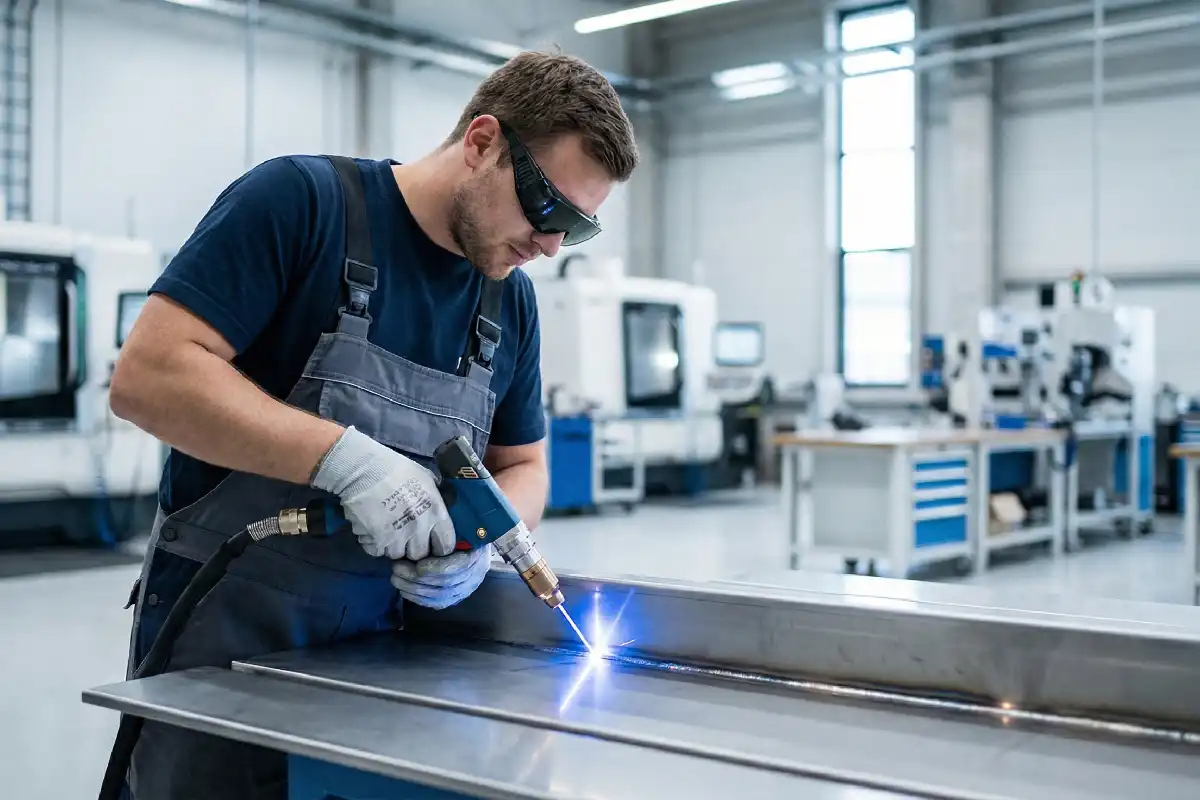
You might ask if laser welding is easy to use. The answer is yes. Handheld laser welders make welding much easier than old ways. You can learn the basics in just a few hours. Traditional welding can take weeks to learn. Many beginners say they get great results fast. The controls are easy to understand, so you do not need much training.
- You can use handheld laser welders with easy-to-use interfaces.
- Automatic features help you not make mistakes.
- Most people say they get good welds after a little practice.
| Advantage | Description |
|---|---|
| Effectiveness with Thin Metals | Works very well on thin stainless steel, aluminum, and small metal parts. |
| High Speed and Minimal Post-Processing | Welds fast with little spatter and almost no cleaning needed. |
| Compact and Portable | Small size and easy to move around. |
Tip: If you are new to welding, you will find laser welding much easier than you think.
Key Takeaways
- Handheld laser welders are easy to use. Beginners can learn the basics fast. It only takes a few hours to start.
- Automatic features help lower mistakes. Simple controls make welding safer. Welding is easier for everyone.
- Laser welding works well on many materials. You can use it on steel, aluminum, and plastics. You do not need a lot of training.
- You can learn quickly with laser welding. This means you start real projects sooner. You spend less time learning and more time making things.
- Safety is very important. Always wear protective gear. Follow safety rules to stay safe while welding.
Why laser welding is easy
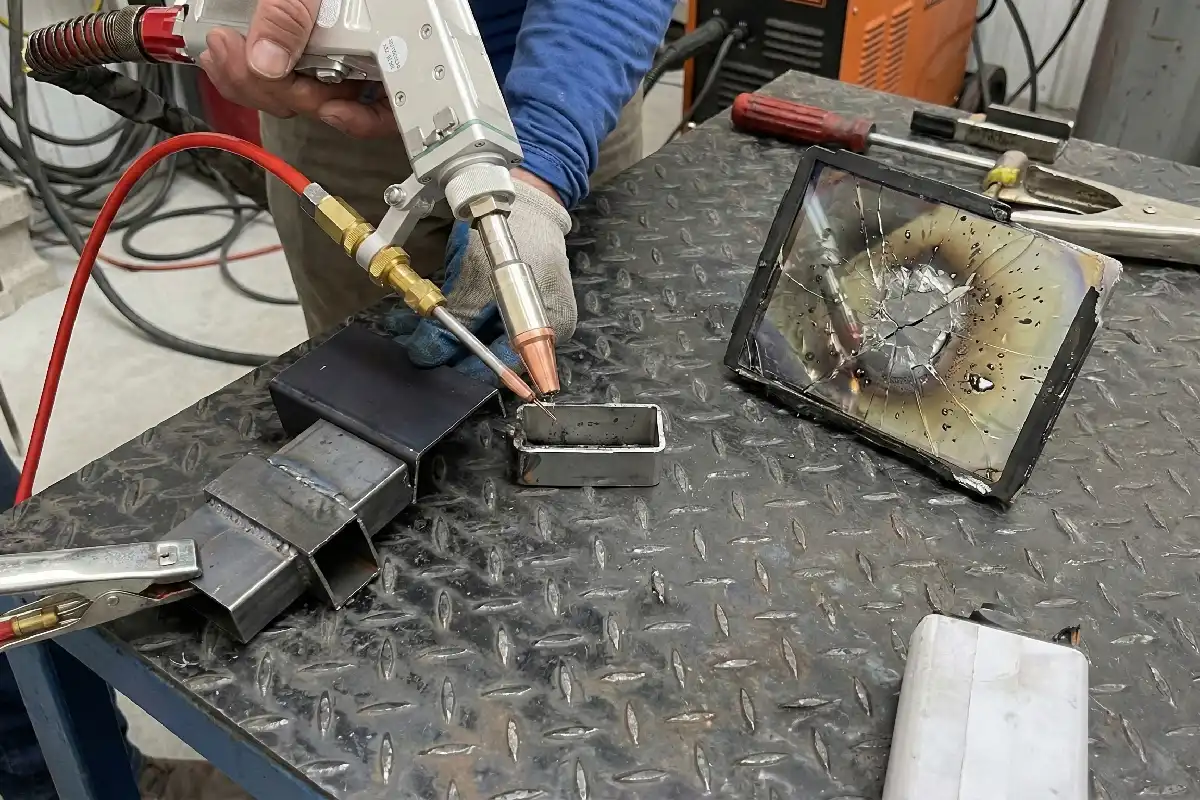
Intuitive controls
You’ll notice how easy it feels to use a handheld laser welder. The controls make sense right away. You can adjust the laser power and focus with simple buttons. Many machines show you clear prompts on the screen, so you know what to do next. Some models even have a 7-inch color touchscreen. You just tap and swipe to change settings. The menus help you find features fast. You get real-time feedback, so you can see if everything works as it should.
- Lightweight design lets you move the welder with little effort.
- Ergonomic grips keep your hands comfortable and help you avoid strain.
- Visual indicators guide you through each step.
| Feature | Description |
|---|---|
| Intuitive Interface | User-friendly controls and clear navigation make welding simple. |
| Menu Navigation | Organized menus let you access features quickly. |
| Visual Feedback | Real-time indicators help you monitor and troubleshoot. |
| Customization Options | You can set up the interface to match your workflow. |
Tip: If you ever feel unsure, just follow the prompts on the screen. The machine helps you every step of the way.
Less training needed
You don’t need weeks of practice to get started with laser welding. Most people learn the basics in a few hours. The machines do a lot of the hard work for you. You don’t have to worry about sparks or spatter as much as with older methods. The weld pool stays calm, so you get smooth results. You spend less time fixing mistakes.
| Evidence | Description |
|---|---|
| Lower Maintenance | Fewer moving parts mean less downtime and easier care. |
| Precision | You get consistent, high-quality welds every time. |
| Reduced Skill Requirements | Less turbulence and fewer sparks make welding safer and simpler. |
| Ease of Use | You don’t need to adjust as many settings by hand. |
| Intricate Designs | You can work on small parts and detailed shapes with confidence. |
Laser welding works on many materials. You can weld steel, stainless steel, aluminum, copper, titanium, and even some plastics. This flexibility means you don’t need special training for each type.
| Material | Compatibility with Handheld Laser Welders | Notes on Ease of Use |
|---|---|---|
| Steel | Yes | Handles heat well |
| Stainless Steel | Yes | Works for thick and thin pieces |
| Aluminum | Yes | Great for thin sheets |
| Copper | Yes | Good for precise jobs |
| Titanium | Yes | Perfect for delicate parts |
| Plastics | Some types | Advanced models can weld certain plastics |
Quick learning curve
You’ll pick up laser welding faster than you think. The machines remember your settings and can automate some steps. You don’t have to memorize complicated instructions. Semiautomatic functions help you repeat tasks with ease. If you make a mistake, the system gives you feedback right away. You can fix problems before they get worse.
Recent improvements make learning even easier. Forced air-cooling keeps the machine running smoothly. Compact designs let you weld in tight spaces. Adjustable power settings and real-time feedback help you get the best results. Digital twins and inline monitoring systems show you what’s happening inside the weld, so you can avoid defects.
- You can weld from different angles with lightweight handheld guns.
- You get help from predictive technology that guides your work.
- You spend less time learning and more time creating strong welds.
Note: You don’t need to be an expert to get professional results. The technology does most of the heavy lifting for you.
Getting started with laser welding
Basic skills for beginners
You do not need lots of experience to begin laser welding. You only need a few simple skills. Fine motor skills help you move the welder smoothly. Good hand-eye coordination helps you follow the weld line. Spatial awareness lets you see how far and deep you are working. It is useful to know how to set welding parameters for each job. Safety awareness is very important. Always watch your surroundings and protect yourself from laser dangers.
- Fine motor skills help you control the welder.
- Hand-eye coordination helps you weld accurately.
- Spatial awareness helps you judge space and depth.
- Knowing welding settings helps with different projects.
- Safety awareness keeps you safe from laser risks.
Tip: Try practicing on scrap metal before you start a real project. This helps you get better and feel more confident.
Safety essentials
Safety is the most important thing when using a handheld laser welder. You need the right equipment and must follow safety rules. Here is what you need:
| Safety Equipment | Description |
|---|---|
| Radiation Protective Glasses | These glasses protect your eyes from laser light. |
| Protective Clothing | Wear clothes that cover your body when using strong welders. |
You should remember these safety steps:
- Make sure a Laser Safety Officer is in your workspace.
- Look for hazards before you begin.
- Always follow safe steps when you weld.
- Get training about laser dangers.
- Watch out for electric risks, fumes, and fire.
- Stay away from direct or reflected laser beams.
Note: Always wear your safety gear and keep your area clean. Being safe helps you focus and do better welding.
First steps to operate
Are you ready to try laser welding? Here is a simple guide to help you start:
- Put on your safety gear and check your workspace.
- Set up the machine by connecting all the parts as shown in the manual.
- Clean your metal pieces and put them on a steady table.
- Change the laser settings for your metal.
- Start welding and test your settings on scrap metal first.
- After welding, look for problems and clean your area.
If you have trouble, do not worry. Beginners sometimes make mistakes like slag splash or uneven welds. You can fix these by changing power, cleaning the metal, or adjusting wire speed. Keep practicing and you will get better every time.
Tip: Learn about your machine’s safety features, like the emergency stop button. This helps you feel safe while you work.
Challenges and misconceptions
Common myths
Some people say laser welding is easy for everyone. That is not always true. There are myths that can confuse you. You might think you do not need any training. But learning basic welding helps you learn faster. Laser welding is not just plug-and-play. You still need to know how welding works and how to stay safe. Laser welders need regular care like other machines. Training does not always come from the manufacturer. Sometimes you need extra practice or lessons. Maintenance is not always simple. You must clean your machine and check it often.
- You do not need experience, but it helps you learn.
- You must know safety rules before you start.
- Machines need cleaning and checking often.
- Extra training helps you get better results.
- Keeping your welder clean helps it last longer.
Tip: If you want to start laser welding, ask for training. Learn how to take care of your machine. This helps you avoid problems later.
Troubleshooting tips
Sometimes welding does not go as planned. You can fix most problems with a few steps. Here is a quick guide to help you solve issues:
| Problem Description | Solution |
|---|---|
| Unstable laser power | Clean the optical parts. Check the cooling system and power supply. |
| Poor weld quality | Change welding settings. Look at the welding head. |
| Inaccurate beam focusing | Fix the optics. Replace any broken parts. |
| Cooling system failure | Check the pipes. Clean the system. Adjust the water flow. |
| Lack of penetration in welding | Make the pulse wider. Use more current. Change the focus. |
| Welder does not output laser | Check the fuse and power supply. Look for leaks in the laser cavity. |
| Weakening of the laser beam | Change the cooling water. Clean the UV glass tube. Fix the optical path. |
| Weld seam is black | Turn on the protective gas. Make sure the airflow is right. |
Note: If you have trouble, look at your machine’s manual. Most problems are easy to fix.
Overcoming the learning curve
Learning laser welding might seem hard at first. Modern machines make it easier for you. Many welders have settings already programmed. Automated controls help you avoid mistakes. Touchscreens show you what to do next. You can get good results even if you are new. Training takes less time than older ways. You can start working faster.
- Laser welders are made to be easy to use.
- Automatic controls help you do things right.
- Touchscreens guide you step by step.
- Training is short, so you start projects soon.
Tip: Practice on scrap metal first. Use your machine’s guides. You will get better and feel more confident quickly.
Laser welding vs. traditional welding
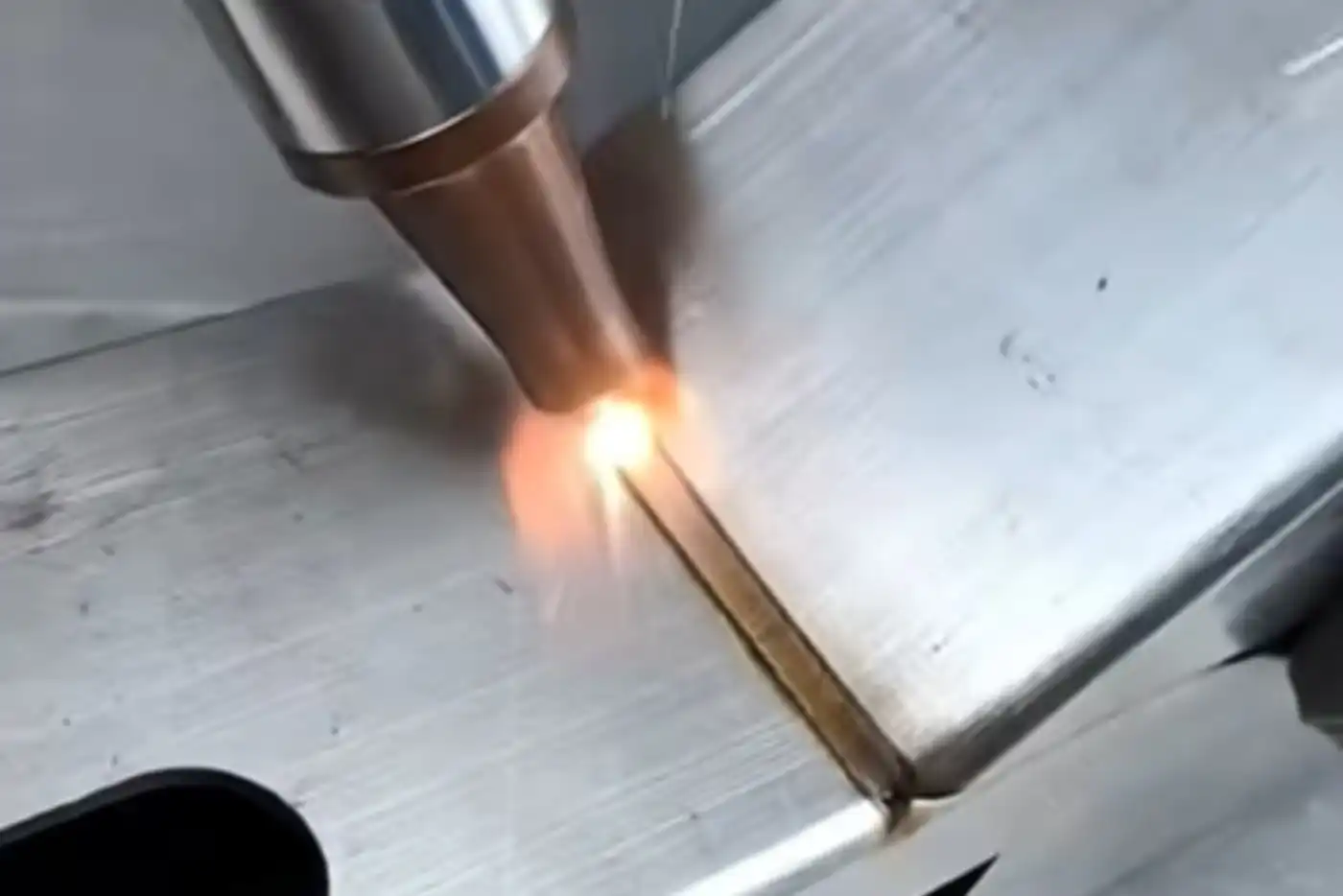
Ease of use comparison
When you compare laser welding to traditional welding, you notice big differences. Laser welding machines have controls that are easy to understand. You can start using them right away and not feel confused. Traditional welding is harder to learn. You need more practice and skill to get good welds. It can take weeks before you feel comfortable with the tools.
Here’s a simple table to show the differences:
| Feature | Handheld Laser Welders | Traditional Welding Methods |
|---|---|---|
| Ease of Use | Intuitive controls, user-friendly design | Requires skilled operators for consistent results |
| Portability | Lightweight and portable | More cumbersome and less portable |
| Operator Expertise Required | Less expertise needed | Extensive expertise required |
| Post-Weld Cleaning | Negligible spatter and emissions | Extensive post-weld cleaning needed |
Laser welding is easier to learn and use. The machines are light and simple to move. You do not need to be an expert to make strong welds.
Training and accessibility
If you want to start welding, you might wonder about training. Laser welding takes less time and money to learn. Training for handheld laser welding costs between $1,000 and $5,000 per person. Traditional welding costs more because classes are longer and harder.
Laser welding also lets you finish jobs faster. You can complete a project up to four times quicker than with MIG welding. Some machines weld as fast as 10 meters each minute. Traditional welding only goes 1 to 3 meters per minute. You save time and can do more work.
Best choice for beginners
If you are new to welding, handheld laser welders are a smart pick. The controls are easy to use and there are preset modes to help you learn. Safety features keep you safe while you work. You can make good welds with less bending or warping, even if you are just starting.
- You learn fast because the controls are simple.
- The learning curve is short, so you can start real projects soon.
- You work safely and well, which helps you feel confident.
Tip: If you want to try welding for the first time, laser welding is a great way to begin. You spend less time learning and more time making things.
You can begin laser welding and feel sure of yourself. The controls are simple to use, and you only need a little practice. Look at these models that have useful features:
| Model | Key Features |
|---|---|
| G6-3000AC | You can change settings for different materials fast |
| G5-1500WCUS2WC | Double wobble helps make cleaner welds |
| G5-2000WCUS2W | It gives smooth moves and lets you set up quickly |
| G6-1500AC | It goes deep and is easy to use |
Ready to try?
- Start with easy projects
- Make simple plans
- Learn how to care for your machine
- Teach your group
- Try new jobs
Tip: Practice laser welding on scrap metal first. You will see good results quickly!
FAQ
How long does it take to learn laser welding?
You can learn the basics in just a few hours. Most people feel comfortable after a day of practice. You do not need weeks of training.
Do I need special power for a handheld laser welder?
Most handheld laser welders plug into a standard outlet. You do not need special wiring at home or in your shop.
What materials can I weld with a laser welder?
You can weld many metals, like:
- Stainless steel
- Aluminum
- Copper
- Titanium
Some machines even work with certain plastics.
Is laser welding safe for beginners?
Yes! You stay safe if you wear the right gear and follow safety rules. Always use protective glasses and keep your workspace clean.
Fiber Laser Cutters and the Materials They Handle Best
What Are Fibre Laser Welding Machines and How Do They Work
What Makes Laser Cleaning Technology Different from Traditional Methods