The biggest difference between galvanized steel plate and ordinary steel plate is the zinc coating on galvanized steel sheet. If you want to do a project in 2026, you may ask which steel plate is better for you. Corrosion resistance, how long it lasts, and price are important things to think about. Look at the table below to see how these things are different:
| Attribute | Galvanized Steel Sheet | Ordinary Steel Plate |
|---|---|---|
| Corrosion Resistance | Better because of zinc coating | Not as good, needs more coatings |
| Durability | Can last 20–50 years or longer | Does not last as long |
| Initial Cost | Costs less | Costs more |
| Maintenance | Needs less fixing | Needs more fixing |
You should always think about where you will use the steel and what your project needs before you pick one.
Key Takeaways
- Galvanized steel has a zinc layer that stops rust. This makes it great for outside and wet places. Ordinary steel costs less but needs care often. You must paint it to keep it from rusting.
- Pick galvanized steel if you want it to last long. It works best in tough weather. Galvanized steel can last 25 to 50 years. Ordinary steel lasts 10 to 15 years if you do not take care of it.
- For inside jobs, ordinary steel is a smart pick. It costs less and is easy to shape. Think about where you will use the steel. Galvanized steel works better in wet or salty spots.
- Check your budget before you buy. Galvanized steel costs more at first. But it saves money later because you do not need much care.
- Always choose the right steel for your project. This keeps things safe and makes them last longer.
Galvanized Steel Sheet Overview
What Is Galvanized Steel?
Galvanized steel is strong and works for many jobs. It has a zinc coating that protects it from rust. This coating keeps the steel safe from rain and wind. You see galvanized steel in wet or rough places. It is used for bridges, roofs, and machines. Galvanized steel lasts a long time and stays tough.
Zinc Coating Process
To make galvanized steel, regular steel gets a zinc layer. The most common way is hot-dip galvanizing. In this method, steel goes into melted zinc. The zinc sticks and forms a shield. This shield blocks water, air, and things that cause rust. Hot-dip galvanizing makes a thick, even zinc layer. Some factories use electro-galvanizing. This uses electricity to add a thin zinc layer. Both ways protect steel, but hot-dip is better for hard jobs.
Surface Features
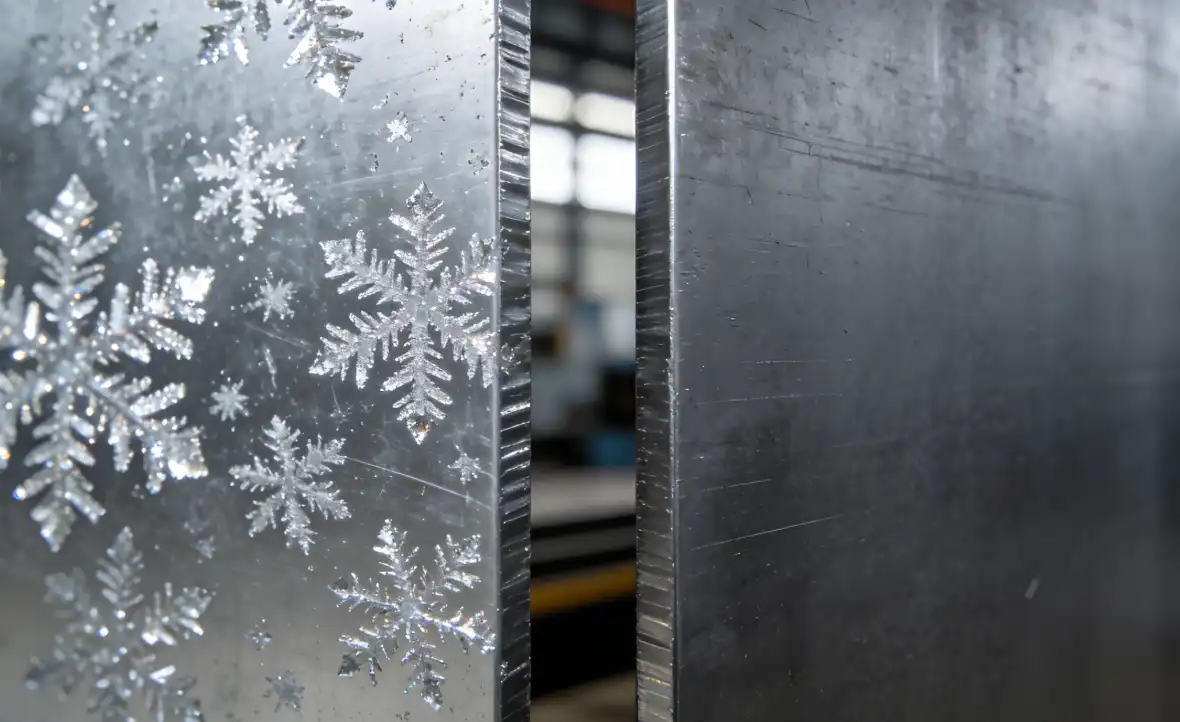
Galvanized steel sheet looks shiny with a special pattern. The pattern comes from zinc cooling and getting hard. This look is nice and helps stop scratches. The zinc coating makes cleaning easy and keeps steel looking new. Galvanized steel works well in wet, salty, or rainy places.
Tip: Galvanized steel can last 50 years in the country and about 25 years in cities or near the sea.
Types of Galvanized Steel Sheet
You can choose different galvanized steel sheets for more or less protection. The two main types are hot-dip and electro-galvanized.
Hot-Dip
Hot-dip galvanized steel has a thick, strong zinc layer. Steel is dipped in melted zinc to cover it all. This gives great rust protection, even in tough places. There are grades like G30, G60, G90, and G235. Higher numbers mean more zinc and better protection.
| Type | Coating Method | Coating Weight (oz/ft²) | Key Properties | Typical Applications |
|---|---|---|---|---|
| G30 | Hot-Dip Galvanizing | 0.30 | Moderate corrosion resistance | Construction, automotive |
| G60 | Hot-Dip Galvanizing | 0.60 | Good corrosion resistance | Appliances, HVAC systems |
| G90 | Hot-Dip Galvanizing | 0.90 | High corrosion resistance | Electrical cabinets, farm equipment |
| G235 | Hot-Dip Galvanizing | 2.35 | Excellent corrosion resistance | Heavy-duty industrial applications |
Hot-dip galvanized steel is best for outdoor, marine, or factory jobs. The thick zinc layer keeps steel safe from rust and harm.
Electro-Galvanized
Electro-galvanized steel uses electricity to put on a thin zinc layer. This makes the steel smooth and shiny. It is good for inside jobs or places that do not need much protection. People use it for car parts, home items, or electronics. It does not last as long as hot-dip, but still helps stop rust.
| Characteristic | Description |
|---|---|
| Durability | Galvanized steel is very tough and can handle rough places. |
| Corrosion Resistance | The zinc layer stops water and air from causing rust. |
| Lifespan | It can last 50 years in the country and 25 years in cities or by the sea. |
| Manufacturing Process | Hot-dip galvanizing makes a thick, even zinc layer for better safety. |
| Applications | Used for bridges, roofs, machines, car parts, and farm tools. |
| Resistance to Environmental Factors | Works well in wet, salty, or rainy places. |
When you pick galvanized steel sheet, you get a material that can handle hard places. Hot-dip galvanizing gives the most protection. Electro-galvanized steel is good for lighter jobs. Both types use zinc to keep your projects safe and strong.
Ordinary Steel Plate Overview
What Is Ordinary Steel?
Ordinary steel plate is a simple kind of steel. People use it in many projects. You see it in buildings, bridges, and machines. This steel does not have a zinc coating. It is strong and works well for many things.
Composition
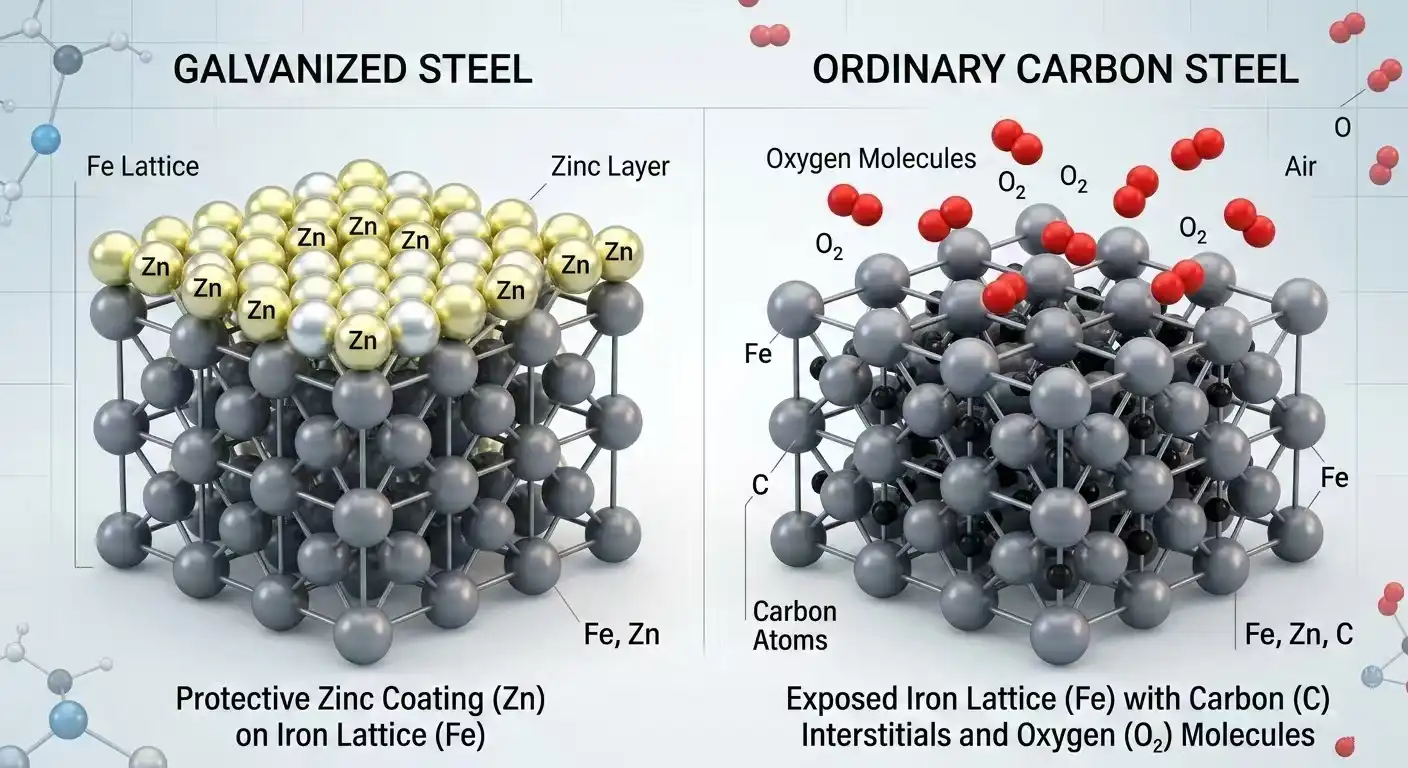
Ordinary steel plate is made from iron and a little carbon. Sometimes, other things like manganese or silicon are added. These make the steel stronger. The carbon amount is low. This helps the steel stay tough and easy to shape. You can cut, weld, or bend it for different jobs. That is why builders and engineers like to use it.
Surface and Finish
Ordinary steel plate has a smooth, gray look. When it is new, it can look a little shiny. If you leave it outside, the surface can change. Rain and air can make it rust if you do not protect it. You can paint or coat the steel to stop rust. The finish depends on how it is made and what you need.
Tip: To help your steel plate last longer, always use paint or a coating. This is very important for outdoor projects.
Common Grades
There are many grades of ordinary steel plate. Each grade is good for different things. Here are some grades you might see:
| Grade | Main Feature | Typical Use |
|---|---|---|
| Q235 | Good strength, easy to weld | Building frames, machinery parts |
| Q345 | Higher strength | Bridges, heavy equipment |
| A36 | Standard structural steel | Construction, shipbuilding |
| S235JR | Good toughness | Beams, columns, general structures |
Ordinary steel plate has many good points:
- It is strong and lasts a long time in buildings and machines.
- It has a good strength-to-weight ratio, so it is stable but not too heavy.
- It can handle stress, so it works well for hard jobs.
- You can use it for building, shipbuilding, cars, and big machines.
- It is easy to cut, weld, and shape into many forms.
You often see ordinary steel plates in these places:
- Bridge decks and building frames.
- Heavy floors and platforms.
- Parts like beams, girders, and columns.
- Big projects like stadiums and factories.
Ordinary steel plate helps you build strong and steady things. You can trust it for jobs that need strength and flexibility. If you protect the surface, it will last even longer.
Key Differences
Composition & Coating
When you compare galvanized steel to ordinary steel, you notice big differences in what they are made of and how they are protected. Galvanized steel starts as regular steel, but it gets a special zinc layer on the outside. This zinc layer acts as a protective coating. It keeps the steel safe from things like water and air that can cause rust.
Ordinary steel does not have this extra layer. It is just iron mixed with a small amount of carbon. Sometimes, you find other elements like manganese or silicon in ordinary steel, but these do not give the same level of protection as zinc.
Metallurgical research shows that galvanized steel plates have a higher coating weight. This means the zinc layer is thicker and forms a stronger shield. The microstructure of the zinc coating can change if you add more zinc, which can make the steel even tougher. The steel underneath the zinc also matters. If the steel has elements like silicon, phosphorus, or aluminum, the zinc layer can become thicker and better at protecting the steel.
Here is a quick comparison:
| Feature | Galvanized Steel | Ordinary Steel |
|---|---|---|
| Main Material | Steel with zinc coating | Steel only |
| Protective Coating | Yes (zinc layer) | No |
| Coating Weight | High | None |
| Extra Elements | Can affect zinc layer quality | May improve strength |
Note: The zinc layer on galvanized steel acts as a barrier and also reacts with the environment to form a passivation layer. This makes the steel last longer.
Corrosion Resistance
You want your project to last, so you need to think about how well each steel type fights rust. Galvanized steel stands out because the zinc layer gives it strong corrosion resistance. The zinc acts as a shield, stopping water and air from reaching the steel. Even if the surface gets scratched, the zinc will protect the steel underneath.
Ordinary steel does not have this kind of shield. If you leave it outside, it will start to rust quickly. You can paint it or add another protective coating, but these do not work as well as zinc. You will need to check and fix ordinary steel more often to keep it from rusting.
- Galvanized steel:
- Has a built-in protective coating.
- Offers long-lasting corrosion resistance.
- Needs less maintenance.
- Ordinary steel:
- Rusts easily without extra protection.
- Needs paint or other coatings to slow down rust.
- Requires more care over time.
Tip: If you need steel for outdoor or wet places, galvanized steel is the better choice for corrosion resistance.
Structural Support
Both galvanized steel and ordinary steel can give strong support for buildings, bridges, and machines. The main difference comes from the protective coating. Galvanized steel keeps its strength longer because the zinc layer stops rust从 eating away at the metal. This means you can trust it to hold up under heavy loads for many years.
Ordinary steel is also strong, but it can lose strength if it starts to rust. Rust makes the steel weaker and can cause problems in the future. You need to check ordinary steel more often and fix any rust spots to keep it safe.
- Galvanized steel works well for:
- Outdoor structures
- Bridges
- Farm equipment
- Any place where you need long-lasting support
- Ordinary steel works best for:
- Indoor projects
- Places where you can control moisture
- Jobs where you can check and fix the steel often
Remember: The right choice depends on where you use the steel and how much care you can give it.
Appearance
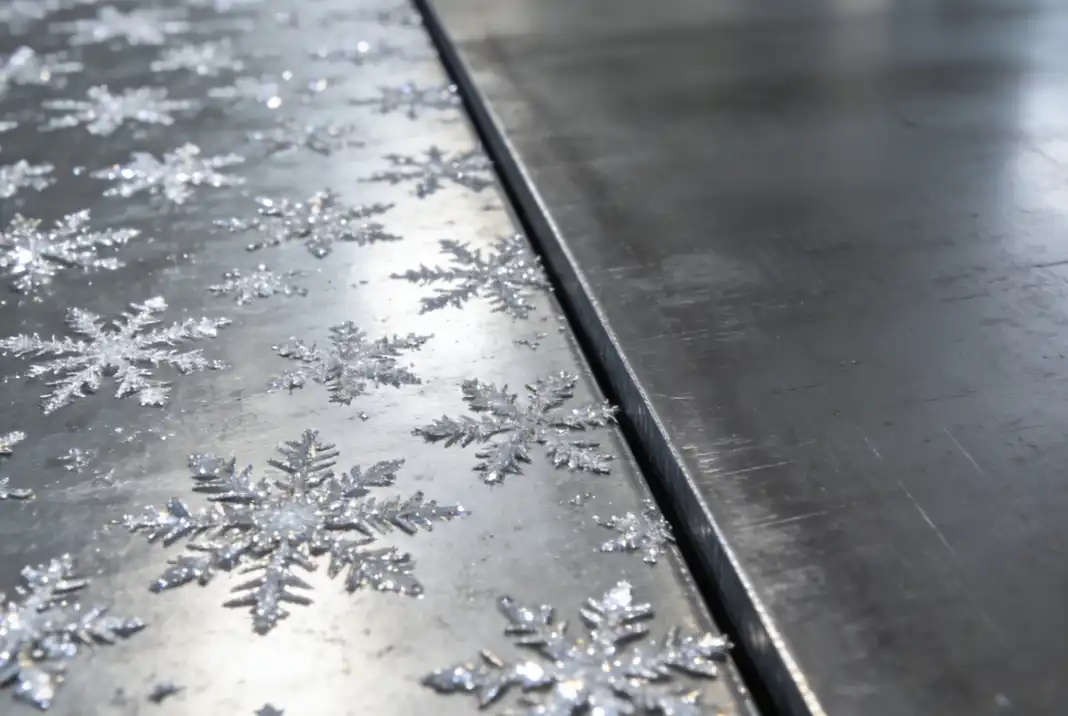
You can spot the difference between galvanized steel and ordinary steel by looking at their surfaces. Galvanized steel often shows a matte gray color. Sometimes, you see a mottled or patchy look because of the way the zinc layer forms. The surface can feel rough or have small ridges, especially if the steel has more phosphorus. Over time, galvanized steel turns into a uniform gray color as it weathers.
Ordinary steel usually looks bright and shiny when new. The surface feels smooth. It does not have the same patterns or roughness as galvanized steel. If you leave ordinary steel outside, it will start to rust and lose its shine.
Here is a table to help you compare:
| Characteristic | Galvanized Steel | Ordinary Steel |
|---|---|---|
| Appearance | Matte gray or mottled | Bright and shiny |
| Coating Thickness | Thick, gives longer protection | Thin, less durable |
| Surface Texture | Can be rough with ridges | Smooth |
| Cooling Reaction | Dull or shiny, depends on cooling rate | Not applicable |
| Weathering | Turns uniform matte gray over time | Not applicable |
Tip: If you want a steel plate that keeps a uniform look outdoors, galvanized steel is a good choice. Ordinary steel needs extra care to stay shiny.
Maintenance
You need to think about how much work you want to do to keep your steel in good shape. Galvanized steel makes your job easier. The zinc coating protects the steel, so you do not need to paint or treat it every year. In many cases, the coating lasts over thirty years without needing a touch-up. You only need to clean it sometimes to remove dirt.
Ordinary steel needs more attention. You must paint or treat it every year to stop rust. If you forget, the steel will start to rust and get weak. This means you spend more time and money on upkeep.
Here is what you should remember:
- Galvanized steel needs little maintenance. The zinc layer protects it from rust.
- You only need to clean galvanized steel to keep it looking good.
- Ordinary steel needs regular painting or treatment to avoid rust.
- You must check ordinary steel often, especially in wet places.
- Galvanized steel works better in places with lots of moisture.
Note: If you want to save time and money on maintenance, galvanized steel is the better choice for most outdoor projects.
Pros and Cons
Galvanized Steel: Advantages
Corrosion Resistance
Galvanized steel protects well against rust. The zinc coating acts like a shield. It keeps water and chemicals away from the steel. This shield helps the steel last longer. Galvanized steel stays strong in wet or salty places. It also works well in factories.
| Advantage | Description |
|---|---|
| Corrosion Resistance | The zinc coating protects the steel from things like water and air. This makes the steel last longer and stay strong. |
Structural Strength
Galvanized steel is strong for many jobs. The zinc layer sticks tightly to the steel. It does not chip or break easily. You can use it for bridges and buildings. It is good for machines too. Galvanized steel can hold heavy loads. It lowers the chance of problems in tough jobs.
| Advantage | Description |
|---|---|
| Structural Strength | Galvanized steel is tough and helps prevent problems in hard jobs. |
Service Life
Galvanized steel lasts for many years. The zinc coating keeps the steel safe. You do not need to fix it often. This saves money and time. Galvanized steel is a smart choice for outside or factory projects.
| Advantage | Description |
|---|---|
| Service Life | Galvanized steel lasts a long time and costs less to keep up. |
Galvanized Steel: Disadvantages
Coating Damage Risk
Galvanized steel has some downsides. It costs more at first. The surface can look uneven. Sometimes, the steel gets weak from hydrogen. The coating can get scratched or damaged. If you weld it, you must wear safety gear because the fumes are dangerous.
If you scratch the zinc layer, the steel can rust. You must be careful when handling galvanized steel. If you weld or cut it, use safety gear. The fumes can hurt you.
Cost
- Galvanized steel costs more at the start.
- The benefits can make up for the price later, but the first cost is high.
You pay more for galvanized steel than for ordinary steel. The zinc coating adds to the price. You may save money later, but you need to plan for the higher cost.
Ordinary Steel: Advantages
Cost-Effectiveness
- Ordinary steel saves money and time. It is quick to use, so builders finish faster.
- It costs less and lasts long, so you do not need to fix or replace it often.
Ordinary steel is cheaper than galvanized steel. You can buy it easily. It is good for jobs where you do not need extra rust protection.
Fabrication Ease
- Ordinary steel is light and easy to install. You can put it together quickly.
- It comes in many grades and thicknesses for different jobs.
You can cut, weld, and shape ordinary steel with simple tools. This makes it good for custom work. You finish faster because it is easy to handle and use.
Ordinary Steel: Disadvantages
Rust Prone
You need to know that ordinary steel plate rusts easily. When you use it outside, rain and moisture touch the surface. This contact starts a chemical reaction called oxidation. The steel turns reddish-brown and flakes away. You call this rust. Rust weakens the steel and makes it look old.
Ordinary steel, especially carbon steel, does not have a protective layer. Water, air, and even dew can start the rusting process. If you do not protect the steel, it will break down faster than other types of steel. You may see rust spots in just a few days if you leave the steel outside.
Tip: Always check your steel for rust if you use it outdoors. Early rust can spread quickly.
Rust does not just change how the steel looks. It also makes the steel weaker. Over time, rust eats away at the metal. This can cause parts to fail or break. You may need to replace the steel sooner than you planned.
Maintenance
You must spend more time and money to keep ordinary steel in good shape. Since it rusts easily, you need to add a protective coating. Paint, oil, or special sprays can help. You must check the steel often and fix any damage right away.
Here is a simple table to show what you need to do:
| Task | How Often | Why It Matters |
|---|---|---|
| Painting | Every 1–2 years | Stops rust from starting |
| Cleaning | Every few months | Removes dirt and moisture |
| Inspection | Twice a year | Finds rust or damage early |
| Repairing | As needed | Fixes rust spots or weak areas |
If you skip these steps, rust will spread. The steel will get weaker and may not last as long as you want. You may need to repaint or repair the steel many times during its life.
Note: Ordinary steel needs more care than galvanized steel. You must plan for regular maintenance if you choose it for outdoor projects.
You may save money when you buy ordinary steel, but you will spend more on upkeep. You need to think about the time and cost of maintenance before you decide. If you want a material that needs less care, you may want to look at other options.
Applications
When you choose between galvanized steel and ordinary steel, you need to think about where you will use them. Each type works best in certain places. Let’s look at some common uses for both.
Galvanized Steel Uses
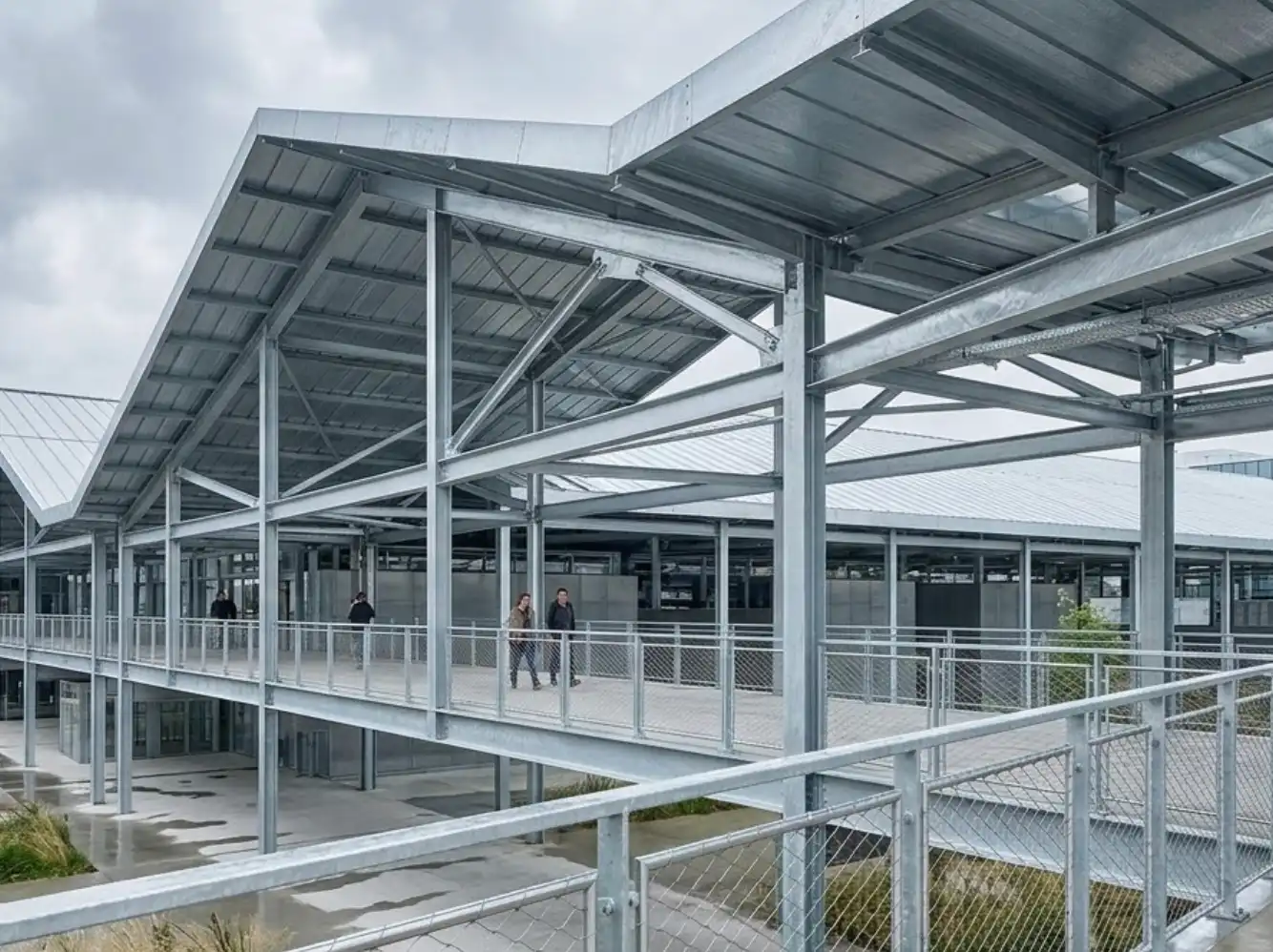
Galvanized steel stands out because of its zinc coating. This coating helps it fight rust and last longer, especially outside. You see galvanized steel in many industries.
Construction
You find galvanized steel in many building projects. Builders use it for:
- Load-bearing columns and beams
- Trusses for roofs and bridges
- Roofing sheets and cladding
- Gutters and downspouts
- Guardrails and safety barriers
Galvanized steel works well for these jobs because it stays strong and does not rust easily. You can trust it for bridges, tunnels, and communication towers. It also helps keep buildings safe by supporting heavy loads.
Outdoor/Marine
Galvanized steel handles tough weather. You see it in places with lots of rain, salt, or wind. People use it for:
- Fencing and guardrails along roads
- Bridge components that face water and air
- Roof decking and outdoor stairs
- Platforms and walkways near the sea
The zinc coating protects the steel from water and salt. This makes it a smart choice for outdoor and marine projects. You do not need to worry about rust as much.
Tip: Galvanized steel is a top pick for outdoor jobs because it lasts longer in wet and salty places.
Automotive
Car makers use galvanized steel for many parts. You find it in:
- Car body panels
- Exhaust systems
- Structural supports inside vehicles
Galvanized steel helps cars last longer. The zinc layer keeps rust away, even when cars face rain or snow. This means you get safer and stronger vehicles.
Ordinary Steel Uses
Ordinary steel does not have a zinc coating. It works best where you can control the environment or where rust is not a big problem.
Indoor
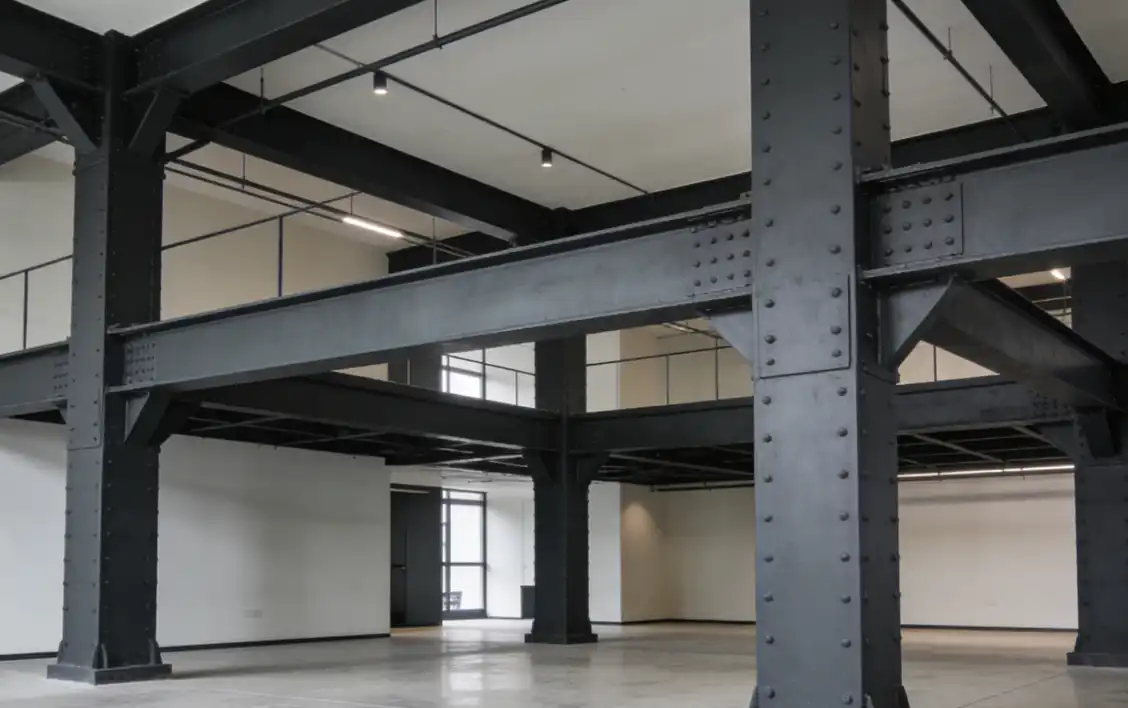
You often see ordinary steel inside buildings. People use it for:
- Beams and columns in offices or homes
- Floor supports and platforms
- Shelving and storage racks
Inside, you do not have as much moisture. Ordinary steel stays strong and does not rust quickly. You can paint it for extra protection.
Machinery
Many machines use ordinary steel parts. You find it in:
- Machine frames and bases
- Gears and shafts
- Tools and equipment
Ordinary steel is easy to cut, weld, and shape. This makes it a good choice for custom machine parts. You can fix or replace parts without much trouble.
Note: If you use ordinary steel outside, remember to add paint or another coating to stop rust.
When you match the right steel to your project, you get better results. Galvanized steel works best for outdoor, wet, or salty places. Ordinary steel fits indoor jobs and machines where you can control the air and moisture.
Cost Comparison
Material Costs
When you compare the price of galvanized steel and ordinary steel in 2026, you see both are more expensive than before. Many things affect these prices. Energy costs are high. Raw materials cost more. You will not see a big drop in prices soon. Instead, prices may go up and down a little.
- Galvanized steel costs more than ordinary steel because of the zinc coating.
- Both types stay expensive because making steel uses a lot of energy.
- More people want galvanized steel for new buildings and green projects. This makes the price go up.
- You may see price changes, but not a big crash.
If you look at prices in different places, you see some changes:
| Region / Supply mode | Price band (USD/MT) | Notes |
|---|---|---|
| China domestic / export capable mills | 650 to 920 | Coating mass, width, payment terms, plus trade remedies in destination market |
| India domestic | 750 to 1,050 | Domestic demand swings and zinc cost pass through can be fast |
| United States domestic | 1,000 to 1,400 | Higher conversion, labor, energy; trade protections change import parity |
| EU domestic | 900 to 1,300 | Carbon costs and energy pricing can dominate conversion cost |
You should check prices in your area before you buy. Local rules and energy costs can change the price a lot.
Maintenance & Longevity
You need to think about how long your steel will last and how much you will spend to keep it in good shape. Galvanized steel gives you a zinc coating that protects the steel for many years. You do not need to repaint or fix it often. Ordinary steel needs more care. You must repaint it every few years to stop rust.
| Type of Steel | Maintenance Frequency | Longevity | Cost Implications |
|---|---|---|---|
| Galvanized Steel | Minimal to no maintenance for 25-30 years | 25-30 years | Lower total lifecycle costs due to reduced maintenance needs |
| Ordinary Steel | Repainting every 5-7 years | 10-15 years | 2-3 times the initial coating cost over 30 years due to frequent maintenance |
Galvanized steel lasts longer and costs less to keep up. Ordinary steel may cost less at first, but you will spend more on paint and repairs over time.
Tip: If you want to save money in the long run, galvanized steel is a smart choice for outdoor or wet places.
Value for Money
You want to get the best value for your project. Galvanized steel costs more when you buy it, but you save money later. You do not need to repaint or fix it as much. It lasts longer, so you do not need to replace it soon. Ordinary steel is cheaper to buy, but you will spend more on care and repairs.
- Galvanized steel gives you better value if you need long life and low upkeep.
- Ordinary steel works well for indoor jobs or places where you can check and fix it often.
- Think about where you will use the steel and how much you want to spend over time.
If you plan for the future, galvanized steel helps you save money and time. You get strong, long-lasting steel that needs less work.
Choosing for 2026
Environmental Factors
You need to think about where your project will be. Some places have lots of rain, salt, or chemicals in the air. These things can hurt steel over time. Galvanized steel is good for tough places. The zinc coating keeps water and air away from the steel. This stops rust and helps your project stay strong for many years.
Here is a table that shows how each steel type works in different places:
| Factor | Galvanized Steel | Ordinary Steel |
|---|---|---|
| Corrosion Resistance | Coated with zinc for protection | Requires additional protective measures |
| Environmental Conditions | Suitable for moisture, salt water, etc. | Prone to rust without protection |
| Maintenance Costs | Lower due to corrosion resistance | Higher due to potential rust damage |
Galvanized steel lasts longer in wet or salty places. You do not need to fix it as much. Ordinary steel can rust fast if you do not paint or coat it. You will spend more time and money to keep it working well.
When you think about the environment, you should also think about the planet. Galvanized steel plates last longer, so you do not need to replace them often. This saves raw materials and makes less pollution from making new steel. Zinc is easy to recycle. But making galvanized steel uses a lot of energy and can make greenhouse gases. Sometimes, zinc can get into the ground or water if you do not handle the steel right. You should always follow safety rules to help nature.
Tip: If your project will face rain, snow, or salt, galvanized steel is a smart choice. It lasts longer and needs less work.
Budget Considerations
You want to get the most for your money. Galvanized steel costs more when you buy it. The zinc coating makes the price higher. But you save money later because you do not need to repaint or fix it as much. Ordinary steel is cheaper at first. You can use it if you do not have a lot of money. But you will spend more on paint, repairs, and maybe even new parts.
When you plan your budget, think about the whole life of your project. Spending more on galvanized steel now can save you money later. You will not need to stop work for repairs or buy new steel as often. This helps you finish your project on time and keep costs low.
If you do not have much money, you can use ordinary steel for indoor jobs or dry places. You can also use it if you have people who can check and fix the steel often. For outdoor or wet places, galvanized steel gives you better value over time.
Note: Picking a stronger steel plate, even if it costs more, can help you spend less on fixing and replacing it later.
Application-Based Advice
You should pick the steel that fits your project. Each kind of steel is best for certain jobs. Here is a table to help you choose the right steel for your work:
| Property | A40 Galvannealed Steel | A60 Galvannealed Steel |
|---|---|---|
| Corrosion Resistance | Suitable for less critical applications | High corrosion resistance, ideal for automotive, construction, and appliances |
| Weldability | Good for general applications | Excellent for HVAC and building reinforcements |
| Paintability | Good adhesion without pre-treatment | Excellent for exterior panels of appliances and vehicles |
| Formability | Can be shaped without damaging coating | Versatile for various industrial applications |
| Durability | Moderate durability | Exceptional durability against harsh elements and chemicals |
You can use galvanized steel for bridges, outdoor stairs, and car parts. It is also good for roofs, fences, and anything that gets rain or salt. If you need steel for machines or inside supports, ordinary steel is a good choice. You can cut, weld, and shape it easily。
Here are some tips for 2026:
- Use galvanized steel for outdoor, marine, or factory jobs.
- Pick ordinary steel for indoor jobs or dry places.
- Choose A60 galvannealed steel for the best protection in tough places.
- Use A40 galvannealed steel for jobs that do not need as much protection.
Remember: The right steel plate helps your project last longer and saves you money. Always think about where you will use the steel and how much care you can give it.
Final Conclusion
You now know that galvanized steel plates do not rust as fast. They also last longer than ordinary steel plates. Ordinary steel is cheaper but needs more work to keep it nice. Think about what your project needs and where you will use the steel. Use this table to help you decide:
| Factor | Considerations |
|---|---|
| Durability | Picking the right grade makes steel last longer and work better. |
| Cost | Better grades cost more, so match your choice to your budget. |
| Maintenance | The surface finish changes how much work you need to do to keep steel nice. |
- If your project gets very hot or has high pressure, use pressure vessel steel plates.
- Mild steel plates are strong and help you save money.
- Make sure your steel is easy to weld, bend, and cut.
You can ask a steel expert for help that fits your project.
FAQ
What makes galvanized steel different from ordinary steel?
Galvanized steel has a zinc coating. This coating protects the steel from rust. Ordinary steel does not have this layer, so it can rust faster.
Can you use ordinary steel outside?
You can use ordinary steel outside, but you must paint or coat it. Without protection, it will rust quickly in rain or wet places.
How long does galvanized steel last?
Galvanized steel can last 25 to 50 years. The zinc coating keeps it strong and stops rust. You do not need to fix it often.
Is galvanized steel more expensive than ordinary steel?
Yes, galvanized steel costs more at first. The zinc coating adds to the price. You save money later because you do not need much maintenance.
Can you weld galvanized steel?
You can weld galvanized steel, but you must use safety gear. The zinc coating creates fumes that are dangerous. Always work in a well-ventilated area.
Which steel is better for indoor projects?
Ordinary steel works well for indoor jobs. You do not need as much protection from rust. It is easy to cut, weld, and shape.
Does galvanized steel need painting?
You do not need to paint galvanized steel for most jobs. The zinc coating protects it. If you want a different color, you can paint it.