
You might wonder if you need to spray paint immediately after rust removal. Quick action helps stop rust from coming back, but you do not always have to paint right away. What matters most is how well you prep the surface. Many people make mistakes like not cleaning the metal enough, painting when it is too humid or cold, or rushing the drying time. These steps can make or break your final result. If you want the paint to last, focus on thorough rust removal, clean and dry the area, and use a good primer before you start painting.
Key Takeaways
- Work fast after rust removal to stop new rust. Water and air can make rust come back in just a few hours.
- Always clean and dry the metal well before painting. This helps the paint stick better and last longer.
- Use a rust-blocking primer before you spray paint. This step is very important to keep the metal safe and make the paint last.
- Look at the weather before you start painting. The best humidity is under 60%. The best temperature is between 55° and 75°F.
- Put on two coats of primer and two coats of spray paint. This gives the most protection and keeps rust away.
Should You Spray Paint Immediately?
Risks of Waiting After Rust Removal
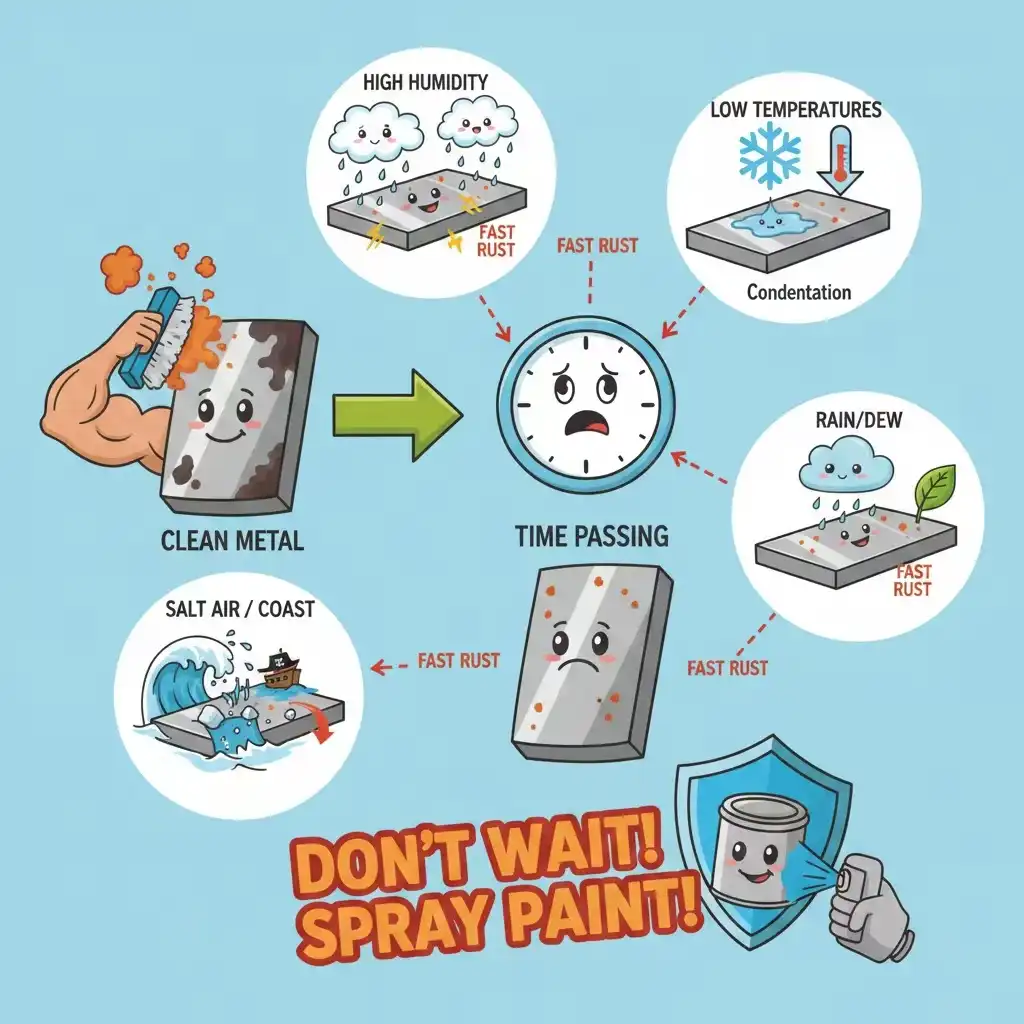
You might think you have plenty of time after removing rust, but waiting too long can cause problems. When you leave bare metal exposed, moisture and air start working against you. These elements quickly bring rust back, sometimes within hours, especially if you live in a humid area or near the coast. If you delay, you risk undoing all your hard work.
Here are some things that speed up rust if you do not spray paint immediately:
- High humidity can cause flash rust to form on clean metal.
- Low temperatures may lead to condensation, which helps rust start again.
- Salt air, common near the ocean, makes metal surfaces rust even faster.
- Rain, humidity, or even morning dew can trigger oxidation.
Tip: If you see moisture or condensation on your metal surface, rust can return before you know it. Try to keep your workspace dry and paint as soon as you can.
If you wait too long, you may face these long-term effects:
| Effect | Explanation |
|---|---|
| Continued rust formation | Rust keeps spreading under the paint, since paint does not stop the chemical reaction causing rust. |
| Poor paint adhesion | Rust creates an uneven surface, so paint does not stick well and may flake off. |
| Complications for future repairs | Painting over rust can weaken the metal, making future repairs harder and less effective. |
When Is Immediate Painting Necessary?
You do not always need to spray paint immediately after rust removal, but sometimes quick action is best. If you work outside or in a humid place, you should paint soon after cleaning the metal. This helps seal the surface and keeps moisture and air away, which stops rust from coming back.
Here is what you should look for before painting:
- Make sure the surface is dry. If you use a rust-blocking primer like Krylon Rust Tough, it dries to the touch in about 20 minutes. You can add a topcoat after 30 minutes.
- Check the weather. The best conditions for spray painting are:
- Humidity below 60%. High humidity slows drying and can cause problems.
- Temperature between 55° and 75°F. Extreme temperatures can make paint bubble or dry too slowly.
- No wind. Wind can blow paint away and make coverage uneven.
Note: Good surface preparation matters as much as timing. Clean off all rust, dry the metal, and use a primer before you spray paint immediately. This gives you the best results and keeps rust away longer.
If you follow these steps, you protect your metal and make your paint job last. Acting quickly after rust removal is not always required, but it is the safest way to keep rust from coming back.
Safety and Environmental Notes
Before you start any testing, protect yourself and the environment. Wear chemical-resistant gloves, safety goggles, and a NIOSH‑approved organic‑vapor respirator for indoor spraying; add a coverall if needed. Use local exhaust or a spray booth (mechanical ventilation) to keep solvent vapors well below OSHA PELs and away from 10% of the LEL, and never spray near open flames. Follow product Safety Data Sheets (SDS) and local hazardous‑waste rules when disposing of leftover paint or aerosol cans to reduce health risks and improve credibility (OSHA painting guidance, NIOSH respirator info).
After Rust Removal
Cleaning and Drying the Surface
You just finished removing rust, but your job is not done yet. Cleaning and drying the metal surface comes next. If you leave any dirt, oil, or moisture, your paint will not stick well. Here’s what you should do:
- Rinse the metal with clean water to remove any leftover cleaning solution.
- Wipe the surface with a clean cloth to get rid of moisture.
- Use forced air, a vacuum, or hot air to dry hard-to-reach spots.
- Check for any damp areas. Make sure the metal feels dry to the touch.
Tip: Moisture trapped under paint can cause it to peel or bubble. Always double-check that your surface is dry before you move on.
A clean, dry surface helps spray paint stick better and last longer. Skipping this step can lead to chipping and peeling, which means you might have to start over.
Using a Rust-Blocking Primer
After cleaning and drying, you need to use a rust-blocking primer. This step is important if you want your paint job to last. A good primer bonds tightly to the metal and blocks moisture. It also helps the paint stick and keeps rust from coming back.
- Rust-blocking primers turn rusty spots into a paintable surface.
- They work on both indoor and outdoor projects.
- Primers like Eastwood Rust Encapsulator Platinum and Rust Grip offer strong protection and easy application.
If you skip the primer, your paint may peel, flake, or chip. You also risk rust returning, especially if you live in a humid area.
Applying Spray Paint for Protection
- Quantified pre-spray checklist (follow product TDS if it conflicts):
- Spray distance: hold the gun or aerosol 20–30 cm (8–12 in) from the surface; for HVLP aim 15–20 cm (6–8 in).
- Dry film thickness: target ~25–35 µm (1st coat); total dry film 50–70 µm for good corrosion resistance.
- Coat timing: light tack/flash 5–15 minutes between thin coats; typical recoat window 30–60 minutes; full cure 24 hours.
- Environment: humidity <60%; surface temperature at least 3°C (5°F) above the dew point; avoid direct sun or windy conditions.
If any of the above conflicts with the product Technical Data Sheet (TDS), follow the TDS.
Spray paint protects metal mainly by forming a physical barrier that keeps water and oxygen away and by using rust‑inhibiting additives (for example, zinc‑based inhibitors) that slow corrosion. True “self‑healing” behavior is limited to specialist coatings or paint‑protection films under specific heat‑activation conditions and requires manufacturer TDS to verify.
Note: Never paint over flaky rust. Always remove loose rust first. This gives you a smooth, strong finish that lasts.
Product Selection
Choosing the Right Primer
Picking the right primer for metal makes a big difference in how well your paint job lasts. You want a primer that blocks rust and sticks to the surface. Here’s what you should look for:
- Check the type of metal you have. Some primers work better on steel, iron, or aluminum.
- Think about how you cleaned the surface. A primer with strong adhesion helps if you sanded or used chemicals.
- Look at your environment. If you live near the ocean or in a humid area, choose a primer with anti-corrosive additives.
- Decide what you want the finished project to look like. Some primers dry smooth, while others have a matte finish.
- Pick a primer that matches your application method. Spray, brush, or roll—each works best with certain primers.
Quality primers often use zinc phosphate, zinc chromate, or zinc dust. These ingredients form a shield on the metal and stop rust from coming back. You can find primers like epoxy, rust-inhibiting, self-etching, and direct-to-metal. Each type works best for different metals and conditions.
| Primer Type | Key Features | Best For |
|---|---|---|
| Epoxy | Tough, chemical-resistant, sticks well | Marine, auto, industry |
| Rust-inhibiting | Blocks oxidation, uses zinc compounds | Steel, iron |
| Self-etching | Helps paint stick, good for aluminum, galvanized | Aluminum, galvanized |
| Direct-to-metal (DTM) | Low-VOC, works on many metals | Various metal surfaces |
Tip: Choosing the wrong primer wastes time and money. Always check the label for rust-blocking features.
Best Spray Paints for Metal
When you want to spray paint immediately after priming, you need a product that protects metal and looks good. Some brands stand out for rust prevention and durability:
- Eastwood Rust Encapsulator resists UV rays and stops rust from spreading.
- Spectrum Series offers strong corrosion protection and a hard finish.
- Rust Destroyer works well on rusty surfaces and lasts for years, even in tough weather.
You should look for these features in spray paints for metal:
- Weather resistance for outdoor use.
- A finish that matches your style, like high gloss or matte.
- Fast drying time to save you effort.
- 2-in-1 primer and paint for convenience, though separate primer often works better.
- Color options that fit your project.
Rust-inhibiting paints create a barrier between metal and oxygen. This barrier lowers the chance of rust coming back. Many users say Rust Destroyer sticks well, covers rust, and keeps metal protected for a long time—even near the ocean.
Note: For the best results, apply two coats of primer and two coats of spray paint. This gives your metal strong protection and a smooth finish.
You don’t always have to paint immediately after rust removal, but acting promptly helps. With a proper coating system, sufficient film thickness, and routine maintenance, protection typically ranges from about 3–15+ years depending on environment corrosivity, application quality, and the coating manufacturer’s Technical Data Sheet—consult the TDS for firm lifespan claims.
- Prep the surface well.
- Apply a rust-blocking primer.
- Use two coats of protective spray paint.
- Check for chips and touch up as needed.
| DIY vs. Pro Results | DIY Outcomes | Professional Results |
|---|---|---|
| Lifespan | Good, but may need touch-ups | Longer-lasting, fewer issues |
Stick to these steps for a finish that looks great and lasts.
References
For drying, recoat times and application guidance, consult the manufacturers’ technical datasheets and application guides: Krylon product and industrial guide[1]; Rust‑Oleum product datasheets and Stops Rust TDS[2]; Eastwood product pages and technical info for Rust Encapsulator/Rust Converter[3]; and Rust Grip product/application notes where available[4]. These manufacturer TDS/Application Guide pages provide the definitive dry‑to‑touch, recoat windows and environmental recommendations cited earlier in the Product Selection section.
[1] Krylon — product pages & industrial product guide: https://www.krylon.com/en/products/all-products
[2] Rust‑Oleum — product datasheets (Stops Rust; Painter’s Touch TDS): https://www.rustoleum.com/products/product-datasheet
[3] Eastwood — product pages and technical info: https://www.eastwood.com/
[4] Rust Grip — product information and application notes (manufacturer site or distributor TDS)
FAQ
What happens if you skip the primer after rust removal?
If you skip the primer, paint may peel or chip fast. Rust can return quickly. Primer helps paint stick and blocks moisture. You get better results with primer.
What should you do if rust returns before painting?
Wipe off any new rust with a clean cloth or use a rust remover again. Dry the surface well. Start over with cleaning and priming before you paint.
What kind of spray paint works best for metal?
Look for spray paint labeled “rust-inhibiting” or “for metal.” These paints protect against moisture and last longer. Brands like Rust-Oleum or Krylon work well.
What is the best way to clean metal before painting?
Use water and mild soap to wash the metal. Dry it with a clean towel. For tough spots, use rubbing alcohol or a degreaser. Make sure the surface feels dry before you paint.
What should you avoid when spray painting after rust removal?
Don’t paint over wet or dirty surfaces.
Don’t skip primer.
Don’t spray in high humidity or cold weather.
These mistakes can cause peeling, bubbling, or rust to return.