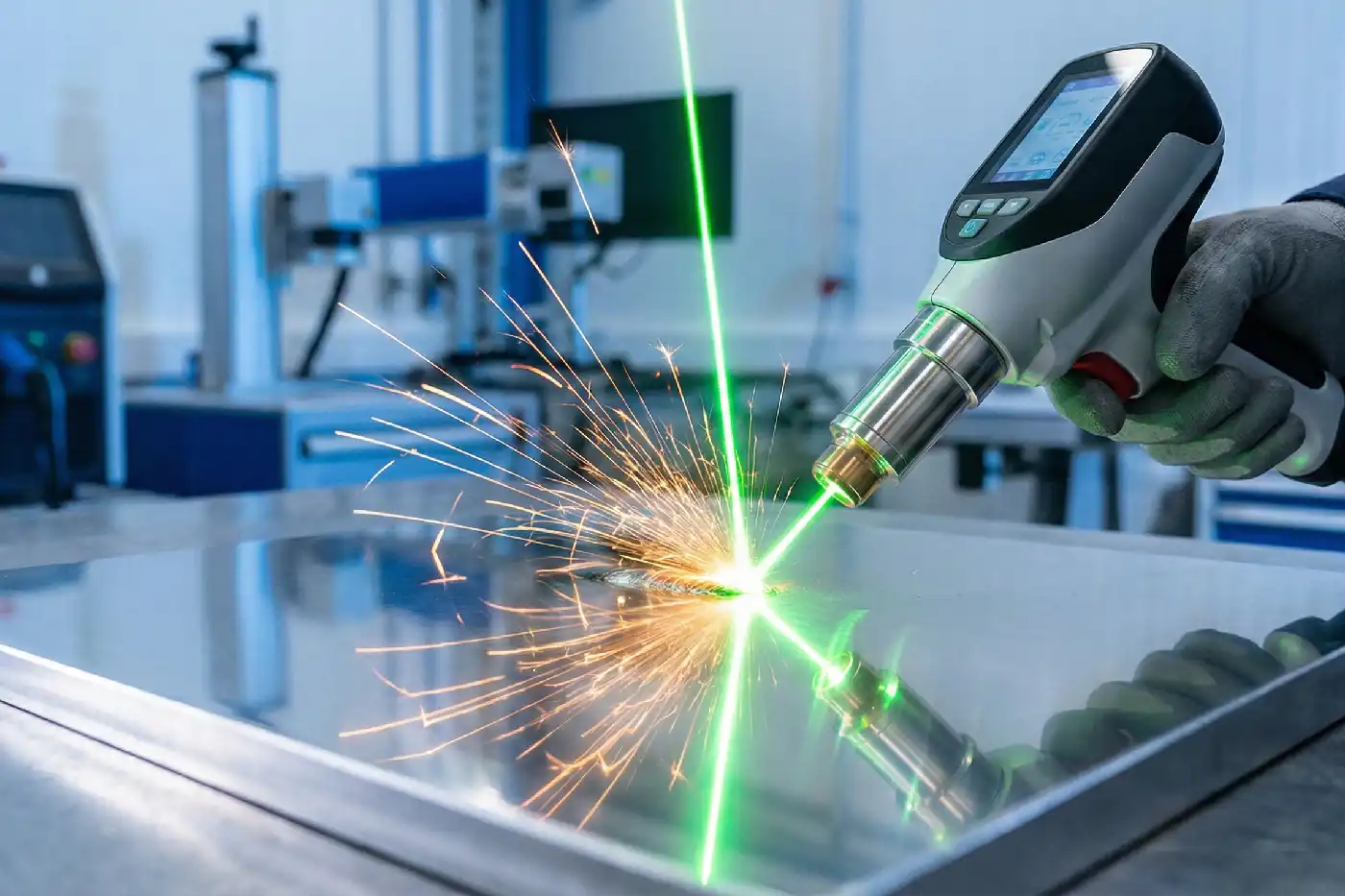
Welding high reflective materials like aluminum, copper, and magnesium is risky. You can get burns, electric shock, breathe bad fumes, or start a fire. The table below lists common safety problems:
| Common Risks and Safety Incidents | Description |
|---|---|
| Burns | Happens if you do not wear the right protective gear. |
| Electric Shock | Very dangerous and can hurt or kill you. It happens if you touch metal with electricity. |
| Fumes and Gases | Can make you sick now or later. You need good airflow. |
| Fire and Explosions | Hot sparks can start fires. Keep things that burn away. |
You should wear gloves and clothes that do not burn. Use a helmet with shields on the sides. Make sure the air moves well in your workspace. Pick the best laser and settings to keep your tools safe and help you weld high reflective materials better.
Key Takeaways
- Always wear safety gear. This includes a welding helmet, gloves, and flame-resistant clothes. These protect you from burns and electric shock.
- Use fiber lasers for aluminum. Use green lasers for copper and gold. This helps the metal absorb heat better. It also makes welds cleaner.
- Make sure your workspace has good airflow. This lowers harmful fumes. It keeps the area safe while you weld.
- Check your equipment often. Take care of protective optics and sensors. This stops damage from reflected laser energy.
- Clean metal surfaces before welding. This cuts down on spatter and pores. It helps make welds stronger and smoother.
Welding High Reflective Materials: Safety and Equipment
Safety Precautions for Reflective Surfaces
Welding high reflective materials can be dangerous. You deal with strong heat, bad fumes, and bright ultraviolet light. You need to protect yourself from burns and eye injuries. Electrical shock is also a risk. Here are the main dangers you should know:
- Harmful fumes like cadmium can make you very sick or even kill you.
- Ultraviolet radiation from metals like aluminum can make ozone. Ozone can make it hard to breathe.
- Hot sparks and slag can burn your skin.
- Heat stress can make you tired or dizzy.
- Invisible ultraviolet light can hurt your eyes. It can cause pain or blurry vision.
- Electrical shock can happen, especially in wet or small spaces.
- Sparks can start fires if things that burn are close.
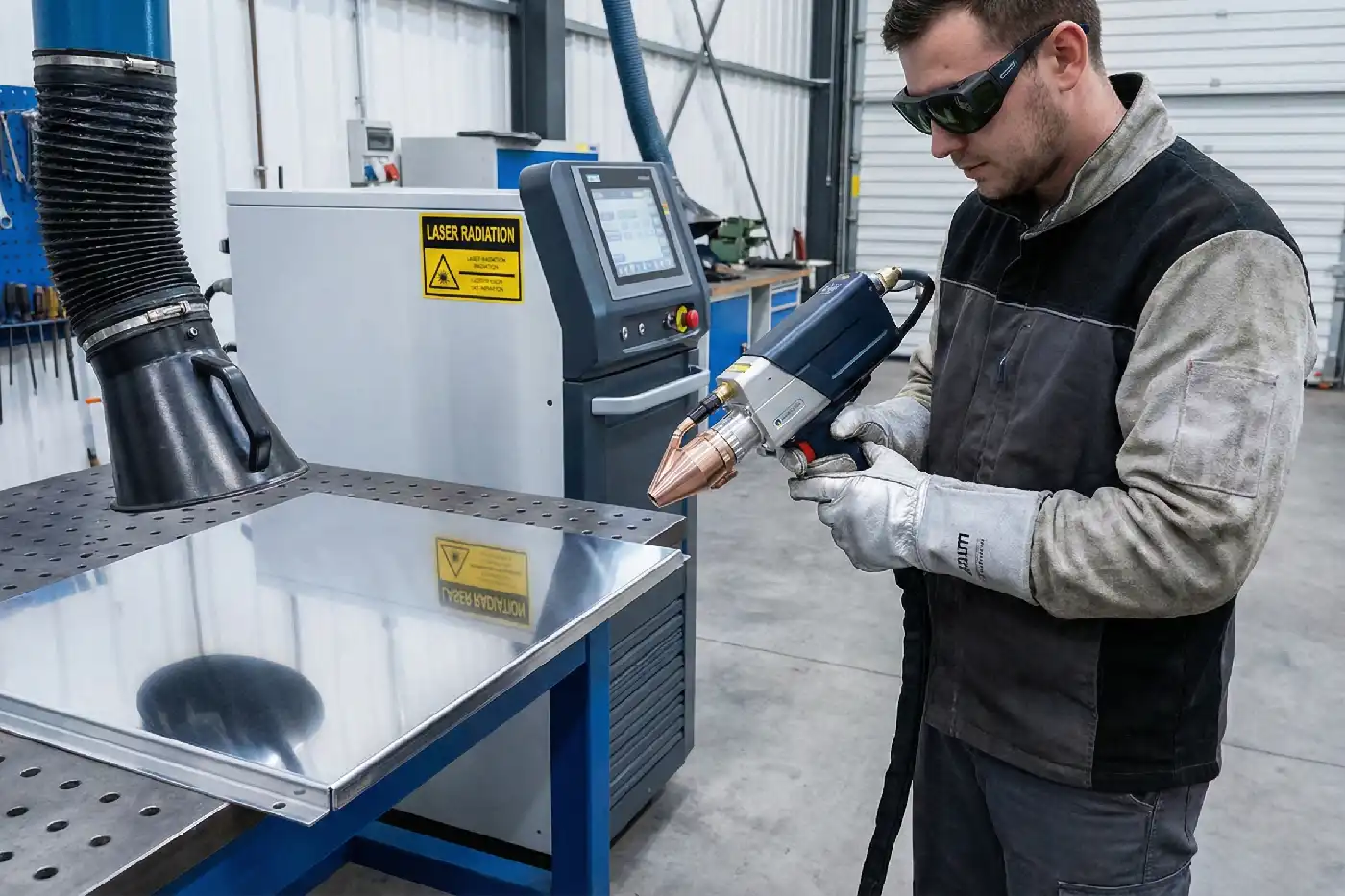
You should always wear the right gear. Pick a helmet that fits well to block bright light. Wear long sleeves and pants made from fabric that does not burn. Cover your head with a cap that resists fire. Make sure your workspace has good airflow to keep fumes away. Training helps you learn how to use safety gear and spot dangers. You can join programs that teach you about laser classes, risks, and what to do in emergencies.
Tip: Always check your gear before welding high reflective materials. Replace anything broken right away.
Protecting Optical Components
Reflected laser energy can hurt your welding equipment. You need to protect your eyes and the optical parts of your tools. Use safety glasses or visors that block laser light. Pick a welding helmet with auto-darkening filters made for lasers. Wear flame-resistant clothes to protect your skin from ultraviolet and infrared rays. Use masks so you do not breathe in bad fumes.
Keep things that burn away from your work area. Remove or cover anything that can reflect laser light. Put up barriers or curtains to make a safe zone. Make sure the welding area is secure so reflections do not hurt you or your equipment. Find shiny surfaces that might bounce laser beams and fix them before you start.
Here is a table that shows common problems with optical components and how to fix them:
| Causes | Effects | Solutions |
|---|---|---|
| High Reflectivity | Welds may not go deep; quality changes | Use fiber lasers for better absorption |
| Beam Reflections | Laser source or optics can get damaged | Prepare surfaces to lower reflectivity |
| Incorrect Wavelength | Energy loss, spatter, or blowouts | Tilt the workpiece to avoid direct reflections |
| Polished Surfaces | More reflection | Use protective optics and sensors |
Monitoring and Isolation Systems
Modern welding equipment uses smart systems to keep you safe. These systems watch for back-reflected light and react very fast if something goes wrong. They help stop damage to your tools. Optical isolation technology blocks over 99% of reflected light. This protects important parts when welding high reflective materials.
You should control the welding area carefully. Use laser shields or curtains to keep the work zone safe. Monitoring systems track optical signals and warn you about problems. Training programs teach you how to use these systems and what to do in emergencies. Green laser technology now helps you weld metals like copper and gold better. These lasers give you deeper welds and cleaner results.
Note: Always follow safety rules and use the newest equipment to lower risks when welding high reflective materials.
Laser Selection and Settings
Fiber Lasers for Aluminum Welding
Fiber lasers help a lot when welding aluminum. They make welds that are exact, so you do not fix mistakes as much. Fiber lasers work quickly, so you finish jobs faster and save money. You can change the laser beam for different shapes and thicknesses. This helps you make strong and neat welds every time. Fiber lasers also make less waste and use fewer supplies, which is good for the planet. You see less mess and fewer problems, so your welds look smooth.
- Benefits of Fiber Lasers:
- Exact welds for hard jobs
- Fast welding speeds
- Easy to use on many materials
- Clean welds with less mess
- Lower costs and less waste
Check the technical details before welding high reflective materials. The table below shows what is important:
| Specification | Description |
|---|---|
| Reflectivity | Aluminum bounces back over 85% of laser energy. |
| Laser Wavelength | Fiber lasers work best at 1070-1080 nm. |
| Spot Size | Small spots melt metal faster. |
| Pulse Intensity | High intensity helps the metal take in more energy. |
| Protective Coatings | Coatings keep your optics safe from harm. |
| Back-reflection Sensors | Sensors protect your tools from stray light. |
Green Lasers for Copper and Gold
Copper and gold bounce back most laser energy, so you need a new way. Green lasers work better because these metals take in green light more than infrared. You get smoother welds and less mess. Green lasers also use power better, so you waste less.
| Feature | Green Lasers | Infrared Lasers |
|---|---|---|
| Absorption Rate | >60% | <5% |
| Energy Efficiency | High | Low |
| Spatter | Less | More |
| Weld Quality | Smoother | Not as steady |
Tip: Green lasers help metals take in light up to eight times more than infrared lasers. This gives you cleaner welds and saves power.
Adjusting Beam Angle and Focus
You can make welds better by changing the beam angle and focus. If you change the focus, you change how deep and wide the weld goes. The best focus is on the top or just inside the joint. This gives you strong and neat welds. If you tilt the welding head, you change the spot size. A bigger angle makes the weld look different and lowers the power in one spot. Too much tilt can make welds weaker.
| Adjustment | Impact on Weld Quality |
|---|---|
| Focus position (top/surface) | Better shape and deeper welds |
| Increased angle of inclination | Bigger area, but less power and weaker welds |
Always test your settings before welding high reflective materials. This helps you get the best welds and keeps your tools safe.
Optimizing Performance
Stable Output and Quality Welds
You can get steady results and good welds by using the right settings. Some important settings are:
- Laser power: Use fiber lasers with more than 6 kW. This gives better welds.
- Welding speed: Change the speed to control heat and weld depth.
- Focal position: Move the focus to help the weld go through and lower spatter.
- Laser type: Green lasers work best for thin sheets. They help the metal take in more energy.
- Protective steps: Change lenses often and use pure assist gases. This keeps the process steady.
If you set these things right, you control the weld’s shape, depth, and quality. High laser power lets you make deeper welds. Changing the focus changes the spot size and power. This helps make strong welds.
Reducing Spatter and Pores
Spatter and pores can make welds weak or messy. You can lower these problems by:
- Use metal-cored wires. They make a wider arc and less spatter.
- Change wire size and voltage to find the best settings.
- Clean the metal to remove mill scale. This lowers spatter.
- Try adjustable-ring-mode laser welding. It keeps vapor steady and stops sudden changes.
- Preheat the metal to the right temperature before welding.
Tip: Clean metal and the right wire help you get smooth welds with fewer holes.
Cost-Efficient Techniques
You can save money and still get good welds by picking the best way for your job. Here is a table to help you compare:
| Technique | Description | Best Use |
|---|---|---|
| Keyhole Welding | Uses high power for deep, narrow welds. | Thick materials |
| Conduction-Limited Welding | Uses less energy for shallow welds. | Thin or delicate parts |
| Hybrid Welding | Mixes laser and arc welding for tough jobs. | Complex or large projects |
Welding high reflective materials gets easier and cheaper when you use the right technique. You get better welds and use less energy.
Material Compatibility
Universal Design for Multiple Metals
Sometimes you need to weld more than one reflective metal. Universal design lets you use the same tools for many metals. But each metal acts in its own way when heated. Some metals get bigger more than others. Some can take in bad stuff while welding. You need to look for weak spots where metals join together. The table below lists problems you might find:
| Challenge Type | Description |
|---|---|
| Thermal Expansion and Melting Point | Different materials get bigger and smaller at different speeds. This can cause stress and bending. |
| Reactivity and Contamination | Some metals can take in bad things while welding. This can make the metal break easily. |
| Microstructural Incompatibilities | Different metals can make hard and weak spots at the weld. This can make the joint break. |
| Mechanical Property Mismatches | Metals have different strength and stretchiness. This can make stress uneven and cause breaks. |
Tip: Always check the melting point and reactivity of each metal before welding. This helps you stop weak welds and damage.
Sourcing and Localization
You need to pick the right metals for your work. Local suppliers can give you metals that fit your needs. You save time and money by getting metals close to your shop. You also get help if you have questions about the metal. Ask your supplier about the metal’s grade and surface finish. This helps you choose the best way to weld.
Keep a record of where you get your metals. If you have a problem with a weld, you can check where the metal came from. Local sourcing helps you get metals that follow safety rules in your area.
Adapting to Material Variations
You need to change your welding method for each reflective metal. Some metals need more laser power. Others need a different focus spot. You can make your welds better by changing these things:
- Change laser power for metals like copper and aluminum.
- Move the focus spot to help the metal take in more energy.
- Change welding speed to control heat and how deep the weld goes.
- Clean the metal and take off any coatings.
- Pick the right shielding gas to stop rust and keep the weld strong.
You get better welds when you match your settings to the metal. Try different changes until you find what works best for your job.
Actionable Tips for Welding High Reflective Materials
Step-by-Step Welding Guide
You can weld high reflective materials if you follow steps. First, clean the metal. Take off oil, dust, and coatings. Pick the right laser and settings for your job. Put on all your safety gear before starting. Make sure your workspace has good airflow. Keep things that can burn far away. Try your equipment on scrap metal to check your settings. Hold the torch at the right angle. Move your hand at a steady speed. Watch the weld pool as you work. Change your speed or power if you see problems. Let the weld cool down slowly so it does not crack.
Tip: Always check your shielding gas flow before you start. This helps stop pores and weak welds.
Common Mistakes to Avoid
Many welders make mistakes with high reflective metals. You can stop these problems if you know what to look for:
| Mistake | Description | How to Avoid It |
|---|---|---|
| Incorrect Welding Technique | Wrong torch angle or speed causes poor welds and spatter. | Keep a steady hand and correct angle. |
| Poor Heat Control | Too much heat burns through; too little makes weak welds. | Test settings on scrap and adjust power. |
| Ignoring Safety Precautions | Not wearing gear leads to injuries. | Use proper PPE and ventilate workspace. |
| Cracking and Distortion | Fast cooling causes cracks. | Preheat and cool metal slowly. |
| Not Checking for Porosity | Dirty surfaces or low gas flow cause weak joints. | Clean metal and check gas flow. |
Always clean your metal before welding. Use the right technique and check your tools. This helps you weld high reflective materials better.
Quick Reference Checklist
Check this list before you start welding. It helps you stay safe and make strong welds:
- Auto-darkening or fixed shade welding helmet
- Safety glasses with side shields
- Welding gloves for your process
- Long-sleeve shirt and long pants made from natural fibers
- Closed-toe leather shoes
- Welding cap or hood
- Respirator for confined spaces or coated metals
- Welding jacket or apron for high-amperage jobs
- Hearing protection for grinding or cutting
- Heat-reflective clothing for overhead welding
Note: Look at this checklist every time you get ready to weld high reflective materials. This helps you avoid getting hurt and makes your welds better.
You can weld high-reflective materials if you follow safe steps. Keep your workspace clean. Remove things that can catch fire. Use spark shields to block sparks. Make sure air moves well in your work area. Pick the right laser for your metal. Use the best inert gas for welding. The table below gives important facts from new studies:
| Key Insights | Description |
|---|---|
| Challenges in Welding | It is hard to get good welds with different metals. |
| Reflectivity Issues | Copper and aluminum bounce back almost all laser energy. |
| Specialized Configurations | Special lasers and safety steps make welding harder. |
Share your welding stories or ask questions in the comments. Your ideas help other people learn.
FAQ
What safety gear do you need for welding high-reflective materials?
You need a welding helmet with side shields, flame-resistant gloves, and a long-sleeve shirt. Wear safety glasses and closed-toe shoes. Use a respirator if you work in tight spaces or with coated metals.
Why does reflectivity matter in welding?
Reflectivity can bounce laser energy back to you or your equipment. You risk burns, eye injuries, and damaged tools. You must choose the right laser and angle to reduce these risks.
How do you prevent spatter and pores in welds?
Clean the metal before welding. Use metal-cored wires and adjust your welding speed. Preheat the metal if needed. Check your shielding gas flow to keep welds smooth and strong.
Which laser works best for copper and gold?
Green lasers work best for copper and gold. These metals absorb green light better than infrared. You get deeper welds and less spatter when you use green lasers.
Can you weld different reflective metals together?
You can weld different reflective metals together. You must check their melting points and reactivity. Adjust your laser settings and use the right shielding gas to avoid weak joints.
What is Wobble Laser Welding? Solving Fit-up Gaps
Shielding Gas: Nitrogen vs. Argon in Laser Welding
Three in one laser machine really worth your money
How Does Laser Wire Feeding Technology Improve Welding Precision