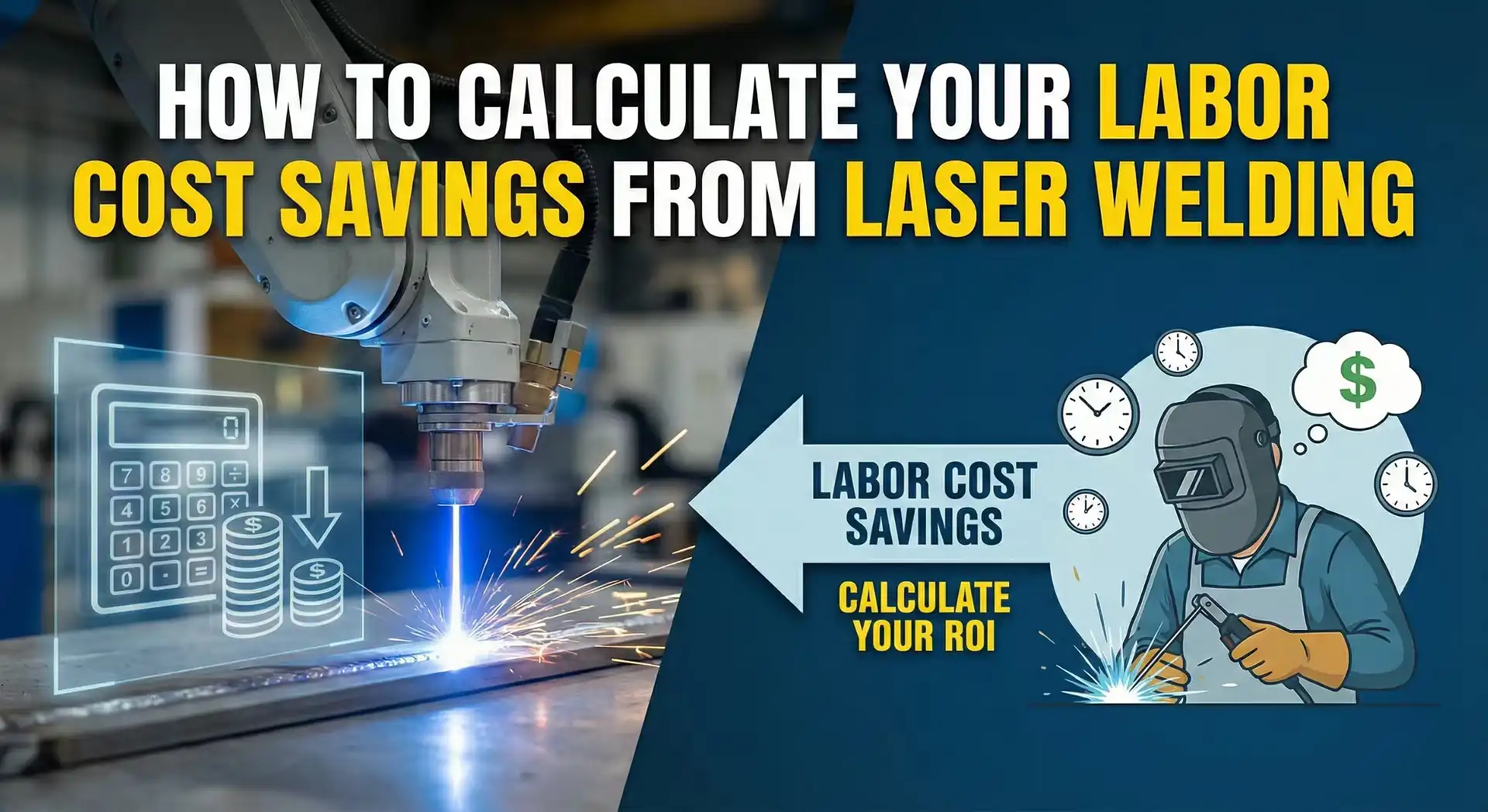
If you want to know how to lower your welding labor costs, consider the labor cost of laser welding. Laser welding can help you achieve this goal. Many companies are now adopting automated welding systems, which significantly reduce cycle times and minimize post-weld work. Automatic laser welding machines not only help you save money but also increase efficiency. These machines lower mistakes and require fewer skilled workers, leading to a decrease in labor costs of laser welding. With robots handling more of the work and making fewer errors, it’s essential to evaluate your current welding costs and consider what changes you want to implement. You will find useful steps and real data to assist you in making informed decisions.
Key Takeaways
- Laser welding lowers labor costs because it uses machines and needs fewer skilled workers.
- Gather correct information about how welding is done now to find out what makes labor cost more and to figure out how much you can save.
- Use an easy formula to look at the costs of regular welding and laser welding, and include all the costs.
- Buying laser welding machines can help you save money for a long time, work faster, and waste less material.
- Workers need training and help often to get the most from laser welding and keep making good products.
Labor Cost of Laser Welding: Calculation Steps
Identify Labor Cost Drivers
You need to know what makes labor costs go up. Automation, skill level, and post-weld work are important. Automation helps you work faster. It also means you need fewer skilled workers. This leads to fewer mistakes and less fixing. If you need less skill, you can pay workers less. Less post-weld work, like grinding and cleaning, saves time too.
Tip: When you start, look at automation, skill level, and post-weld work.
Gather Your Welding Data
You need good data to figure out labor costs. Start by writing down how you weld now. Count the hours spent welding, cleaning, and fixing mistakes. Write down how much you pay each worker. Notice any times when work stops or slows down. Problems can include bad measurements, parts that do not fit, and waiting for parts. Make sure you include these problems in your notes.
- Problems with collecting data
- Trouble measuring things right
- Work slows down because of mistakes
- Waiting for parts to arrive
- Getting the wrong parts
- Parts that do not fit well, so clamping takes longer
- Weld cell layout that is not good
- Stopping work for maintenance
- Fixing bad welds because of quality problems
Calculate Traditional Welding Labor Costs
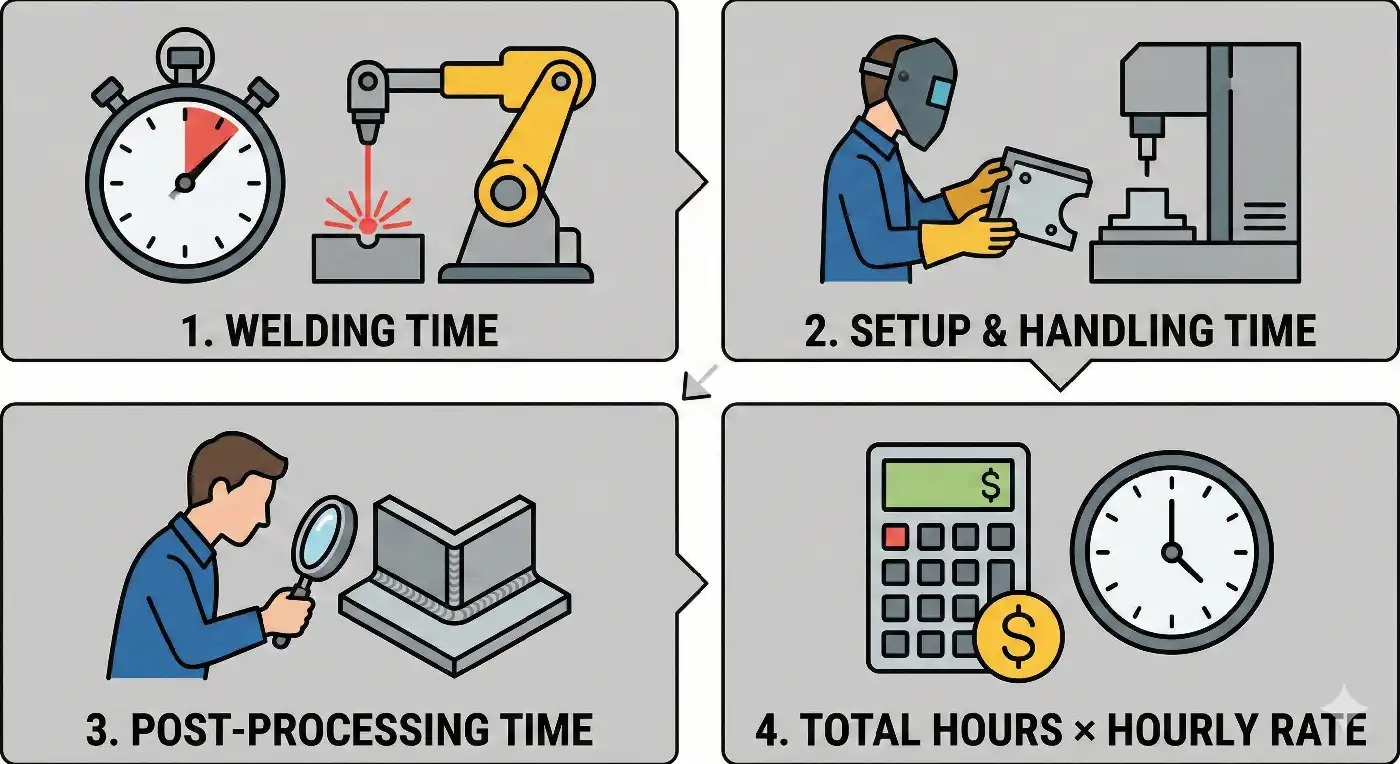
You can use easy steps to find your welding labor costs:
- List all the jobs needed for welding.
- Write down how much each job pays per hour.
- Guess how many hours each job takes.
- Multiply pay by hours to get the labor cost.
- Add extra costs like taxes and benefits.
- Remember other costs, like overtime and special tools.
This way, you can see your labor costs. For example, in five years, labor for MIG/TIG welding can cost $440,000.
| Cost Component | Laser Welder | Traditional MIG/TIG |
|---|---|---|
| Labor (5 yrs) | $175,000 | $440,000 |
Calculate Laser Welding Labor Costs
Laser welding changes how you work. Automation makes jobs faster and cheaper. You need fewer workers, so labor costs go down. Labor cost for laser welding includes pay, hours, and extra costs. You also save time because there is less post-weld work. Laser welding removes many steps, like lots of fixturing and grinding.
| Example | Benefit |
|---|---|
| Fewer non-welding steps | No need for lots of fixturing and less grinding |
| Less distortion | Makes less distortion in tricky shapes and tight parts |
| No weld prep | Less edge beveling and less grinding after welding |
| Easier fixture designs | Fewer steps mean easier fixtures |
| High precision and efficiency | Good for jobs that need to be fast and exact |
| Less heat distortion | Less cleaning and fixing after welding |
You will see that laser welding labor costs are much lower. In five years, you might spend only $175,000 on labor.
Compare and Analyze Savings
Now you can look at both ways and compare. Use your data to see how much you save. Check things like first cost, running costs, fixing costs, how fast you work, and how fast you get your money back.
| Metric | Traditional Laser Welding | Laser-Assisted Joining |
|---|---|---|
| Initial Investment | Higher | 15-30% more |
| Operational Expenses | More energy used | 10-20% less energy |
| Maintenance Costs | Higher | 12-18% lower |
| Production Efficiency | Slower | 15-25% faster |
| Return on Investment (ROI) | Slower | 8-14 months sooner |
Show your results in a clear way. Use tables and charts to show labor costs for both ways. Talk about what this means for your business. Show how automation, less skill needed, and less post-weld work save money.
Note: When you share your results, use easy charts and simple words. Show how your data helps your business work better and cost less.
If you follow these steps, you can find your labor cost savings and decide if laser welding is right for you.
Key Factors Affecting Labor Savings
Welding Speed and Efficiency
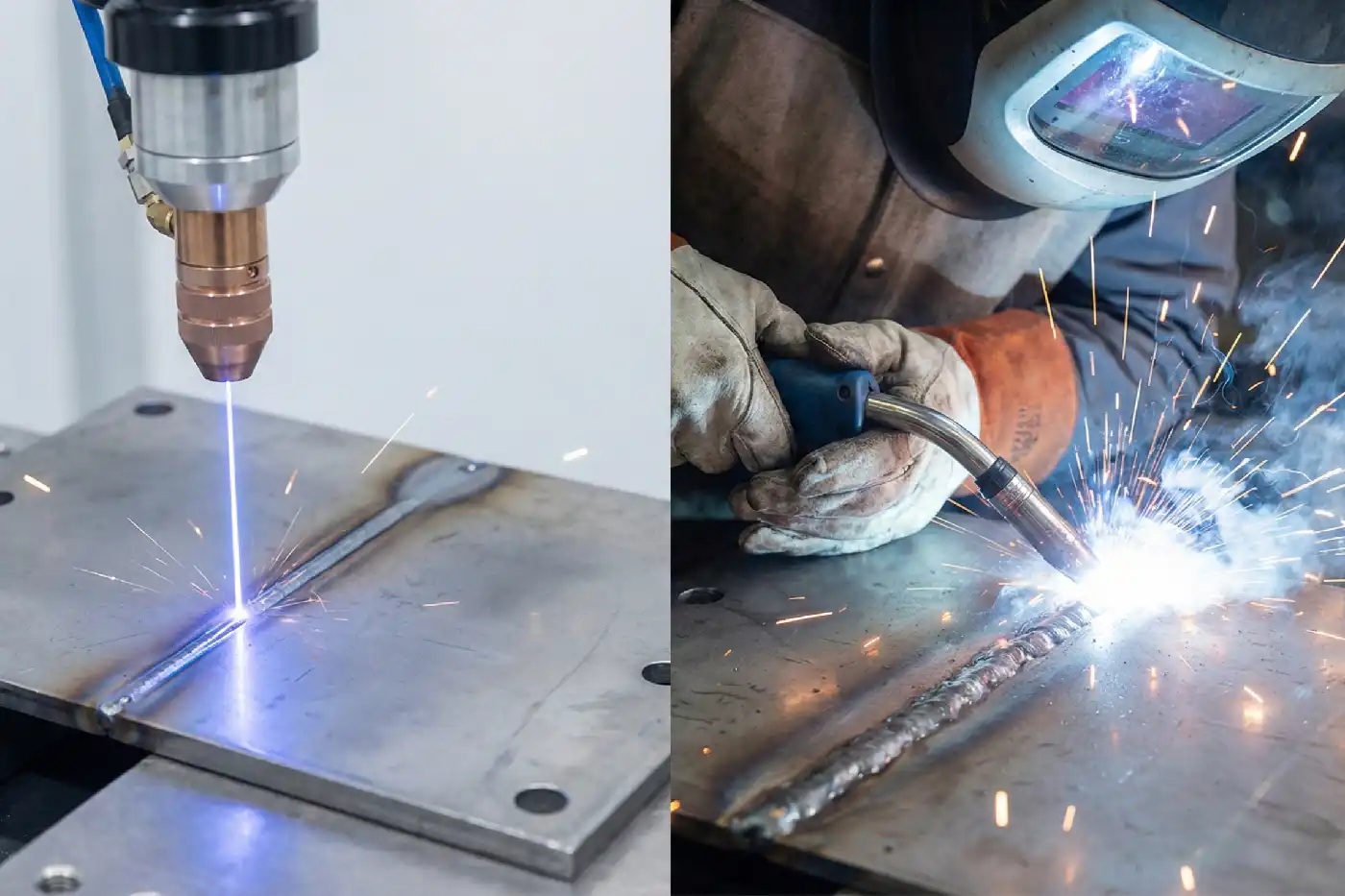
Laser welding lets you work much faster than before. It is quicker than MIG or TIG welding, especially on thin metal. The laser makes a small weld pool. This helps you finish parts quickly. You can weld without stopping, so jobs get done faster. Faster welding means the fusion zone is smaller. The heat-affected area is also smaller. You spend less time on each weld. You use less energy for every joint.
- Laser welding is faster than MIG and TIG welding.
- Each weld uses less energy.
- Smaller fusion zones mean less heat damage.
Laser welding lets you make more parts in less time. This helps you earn more money.
Skill Level and Training
Laser welding does not need as many skilled workers. Automation does many jobs for you. This lowers your labor costs. You might pay more to train workers at first. But you save money when you make lots of parts. Machines keep the quality the same every time. Traditional welding needs skilled workers. Skilled workers can be hard to find and cost more. You may also pay more for fixing mistakes and slower work.
| Aspect | Laser Welding | Traditional Welding |
|---|---|---|
| Initial Training Costs | Higher because of special training | Lower, but skilled workers needed |
| Operating Costs | Lower for big jobs because of speed | Higher because of mistakes and fixes |
| Labor Requirements | Fewer workers needed because of robots | More workers needed with special skills |
| Quality Consistency | High because machines control it | Changes depending on worker skill |
Laser welding means you need fewer skilled workers. It also keeps your quality high.
Downtime and Setup Reduction
Laser welding systems help you cut downtime and setup time. These systems can make setup time half as long. Remote diagnostics help you fix problems fast. Less downtime means you weld more and wait less. You can change jobs faster and have fewer stops. This helps you finish work on time.
Tip: Use remote diagnostics to fix problems fast and keep working.
Material Waste and Scrap Savings
Laser welding helps you waste less material. You make very exact welds, so you use less metal. You also throw away fewer parts. This helps you work faster and spend less money. Traditional welding wastes more material. This makes labor and supply costs go up.
| Welding Method | Material Waste Reduction | Impact on Labor Costs |
|---|---|---|
| Laser Welding | Up to 20% less waste | Good for labor costs and saves money |
| Traditional Welding | More waste | Costs more for labor and supplies |
When you waste less, you save money and work better. You see labor costs go down as you use less material and fix fewer mistakes.
Laser Welding vs. Traditional Welding
Cost Comparison Example
You can see how laser welding and traditional welding are different by looking at real numbers. Many companies buy laser welding machines and see savings fast. For example, a company might spend $150,000 at first. But they save $50,000 on labor every year. They also waste $20,000 less in scrap and pay only $10,000 for maintenance each year. Most companies get their money back in about 24 months.
| Item | Amount (USD) |
|---|---|
| Initial Investment | $150,000 |
| Annual Labor Cost Savings | $50,000 |
| Annual Scrap Reduction | $20,000 |
| Annual Maintenance Cost | $10,000 |
| Estimated ROI Period | 24 months |
Laser welding can also lower your cost per meter by $3. This means you spend less money on every part you make.
Annual Savings Potential
You can save a lot of money each year with laser welding. Most companies cut labor costs by 35% to 50%. Automation lets machines work longer and with fewer people. You do not need as many skilled welders, so you save on pay and training. You also finish jobs faster and make fewer mistakes.
- You can save 35% to 50% on labor costs each year.
- Automation lets you work longer with less stopping.
- You need fewer workers to do the same work.
Lessons from Real-World Cases
Many companies have switched and seen great results. Automated laser welding can make production up to 40% faster. In car factories, you can weld hundreds of joints with almost no stopping. Companies like AutoTech Innovations made their assembly line 35% more efficient after using laser welding. One shop in Phoenix made $140 more each day after buying a laser welder. They got their money back in just 18 days.
You can look at these examples to see how laser welding labor costs can help your business grow and stay ahead.
Applying Savings to Your Business
Collecting and Analyzing Your Data
Begin by getting good data from your welding work. Write down how many hours your team spends welding. Also, track time spent cleaning up and fixing mistakes. Write down each worker’s hourly wage and any overtime pay. You should also keep track of downtime, scrap rates, and how many parts you make each shift. This helps you see your starting labor costs.
Tip: Use a simple spreadsheet to keep your data neat. This helps you find patterns and compare before and after laser welding.
Using a Simple Savings Formula
You can figure out your labor cost savings with an easy formula:
Labor Cost Savings = (Traditional Labor Cost + Post-Weld Labor Cost) - (Laser Welding Labor Cost + Laser Post-Weld Labor Cost)
For example, you can look at manual TIG welding and automated laser welding. Laser welding costs more at first, but yearly labor costs are lower. You also spend less time on post-processing and make more parts. These things help you save money and make more profit in the first year.
| Metric | Manual TIG Welding | Automated Laser Welding |
|---|---|---|
| Initial Investment | Lower | Higher |
| Annual Labor Cost | Higher | Lower |
| Post-Processing Labor | Higher | Lower |
| Throughput | Lower | Higher |
| Payback Period | Longer | Shorter |
Ensuring Accurate Results
You can get better results by using good habits. Check your data for mistakes or missing numbers. Look at your numbers for a few months to see real changes. Many companies use their savings to help their business in different ways:
- Make more parts by working faster and cutting cycle times.
- Get better welds, so you waste less material.
- Let skilled workers do more important jobs.
- Grow your production quickly with automation.
Note: Good calculations help you make smart choices and get the most from your investment.
Addressing Investment and Support
Initial Equipment Costs
When you think about switching to laser welding, you see it costs more at first. Laser welding systems are more expensive than regular welding setups. You pay extra for new technology and automation. The table below shows the usual price ranges:
| Welding Type | Initial Cost Range |
|---|---|
| Laser Welding | $30,000 – $500,000+ |
| Traditional Welding | $2,000 – $5,000 (basic) |
| $10,000 – $50,000 (advanced) |
Laser welding needs a bigger starting budget. But this money gives you better features and helps your business grow in the future.
Long-Term Labor Savings
Laser welding lets you save money as time goes on. You can work faster and need fewer skilled workers. New machines help you do more work and need less fixing. You should look at the total cost, not just the price to buy. The table below shows important points:
| Aspect | Details |
|---|---|
| Productivity Gains | New laser welding machines help you work much faster than old ones. |
| Maintenance Costs | New machines usually cost less to fix, so you save money. |
| Total Cost of Ownership | You should compare the total cost, not just the price to buy. |
| Long-term Efficiency | Getting new machines can help you work better and faster, so the cost is worth it. |
Laser welding also helps you waste less material. You make better welds and can get new customers in car and electronics businesses. You can also make more products and sell in new places.
Tip: Buying laser welding helps your business do well for a long time and stay strong against other companies.
Ongoing Support and Training
To keep saving money on labor, you need good support and training. You should give:
- Full training for your workers
- Help with technical problems
- Regular check-ups for your machines
- Updates to keep your equipment working well
Laser welding needs you to pay attention all the time. You keep your machines working and your team ready. This helps you keep making good products and working fast.
Note: With the right help and training, you get the most from your machines and stay ahead of others.
You can figure out how much money you save with laser welding by using easy steps and your own numbers. Try the formula to see how it helps your business. Think about these steps to save even more:
- Use machines to do work and pay less for labor
- Weld faster and finish jobs quicker
- Make better welds so you have fewer mistakes
- Check welds the same way every time for good quality
- Pick machines that can do different jobs
Buying new technology lets you work faster and keep saving money as time goes on.
FAQ
How does laser welding reduce labor costs?
Laser welding uses machines to do work faster. You do not need as many skilled workers. The machines make fewer errors. You spend less time fixing problems and cleaning up.
What data should you collect to calculate savings?
You should write down welding hours and how much you pay workers. Track any time when work stops. Count how much scrap you throw away. Also, note how much work is done after welding. Good data helps you see how much you save with laser welding.
Is laser welding suitable for all materials?
Laser welding works best on metals like steel, aluminum, and copper. You should check if your material fits the machine before you buy it.
How quickly can you see a return on investment?
Most companies get their money back in 12 to 24 months. You save money because labor costs go down. You also waste less and finish jobs faster.
Minimum distance between welds stories from real welders
What is the average width of the heat affected zone for steel welding
How to Narrow the Heat-Affected Zone in Welding Processes
Which welding process has the smallest heat affected zone?