
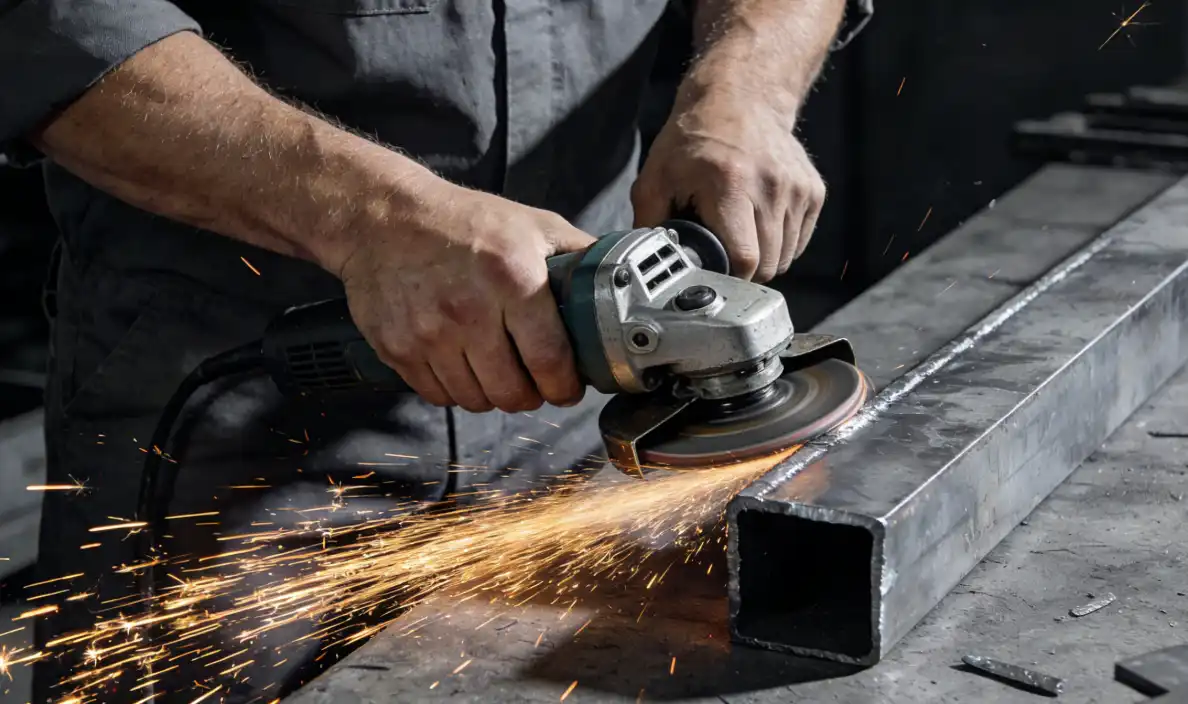
You can determine whether steel is galvanized by checking a few things. Look for a dull gray surface. See if there is a spangled pattern. Check if there is little or no rust. Try easy tests like using a magnet. You can put vinegar on the steel. You can heat a small spot and see if there is residue. For a better check, use a magnetic thickness gauge. You can also ask for lab tests. These steps help you determine whether steel is galvanized or if it is another kind of zinc coated steel. Careful checking helps you avoid mistakes.
Key Takeaways
- Look for a dull gray color and a shiny pattern. This can help you find galvanized steel.
- Check for rust on the steel. If there is little or no rust, the zinc coating is good.
- Try the magnet test. If the magnet sticks, the steel is probably galvanized.
- Put vinegar on the steel. If you see white powder, zinc is there.
- Heat a small spot on the steel. If you see white stuff, it means there is a zinc coating.
- For better results, use a magnetic thickness gauge. This tool measures the zinc layer.
- Ask an expert if you are not sure or if safety rules are strict.
- Always look at the edges and corners. Make sure the coating is even to confirm galvanization.
Visual Identification of Galvanized Steel
Start by looking at the steel’s surface. Visual clues help you see if steel has been galvanized. Here is what you should notice.
Surface Appearance and Spangle
Matte Gray Color
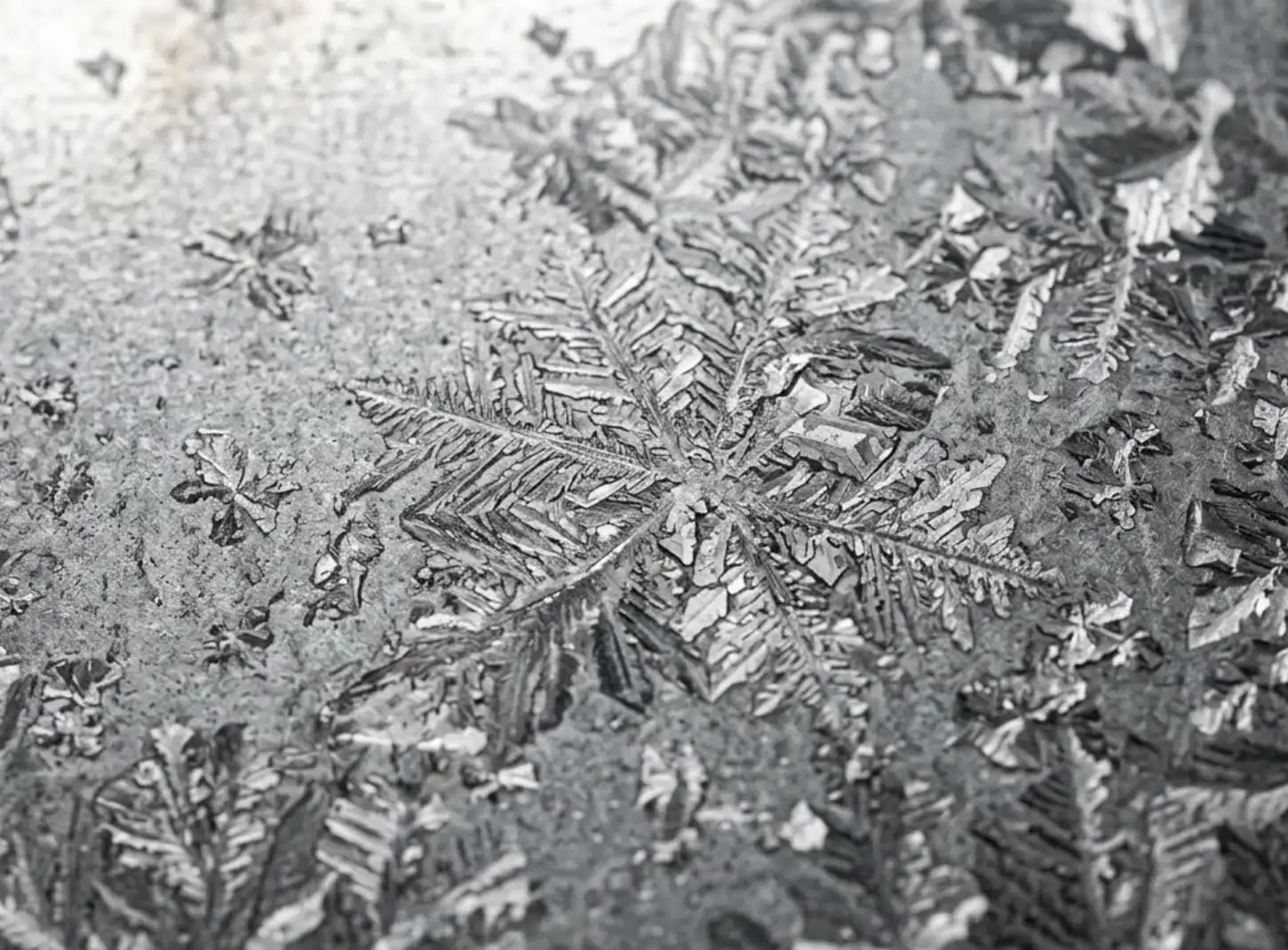
When you look at galvanized steel, it often looks dull and gray. At first, it might look shiny. Over time, it turns gray. This happens because the zinc reacts with air. If the finish is all gray, it is likely galvanized. The coating should cover the whole surface. If you see spots or thin areas, the steel may not be fully protected.
Tip: Always look for even color. If the color is not even, the coating may not be good.
Spangled Texture
Spangle is another thing to look for. You might see a pattern like tiny snowflakes or crystals. This spangle forms when zinc cools down. The pattern can be big or small. Sometimes it is easy to see. Other times, it is hard to notice.
Here’s a quick table to help you with spangle:
| What Causes Spangle? | What It Looks Like | Why It Matters |
|---|---|---|
| Lead or antimony added to zinc bath | Crystals and dendritic shapes | Shows zinc coating is present and affects corrosion resistance |
The spangle on hot-dip galvanized steel has zinc grains 10 to 25 micrometers thick. The size can be from 0.1 mm to a few mm. If you see this pattern, it is a good clue.
Rust and Corrosion Signs
Galvanized steel does not rust easily. If you see no rust, that is a good sign. The zinc keeps water away from the steel. When you check steel, look at corners and seams for rust. If you find rust, the steel may not be galvanized or the coating is damaged.
Here are some types of corrosion you might see on steel that is not galvanized:
- Galvanic corrosion: Happens when two metals touch and there is water.
- Pitting corrosion: Looks like small holes or pits.
- Microbial corrosion: Caused by bacteria, even without air.
- High-temperature corrosion: Happens when steel gets very hot.
- Crevice corrosion: Shows up in tight spaces where water stays.
If you do not see these, the steel likely has a zinc layer.
Edge and Finish Clues
Edges and corners are important to check. Galvanized steel usually has even coating on edges and corners. Other coatings might miss these spots. If you see a spangled or patchy look on the edges, that is another clue. Painted or coated steels often look smooth and may not cover edges well.
Here’s a table comparing edge and finish features:
| Feature | Galvanized Steel | Other Coated Steels |
|---|---|---|
| Coverage | Uniform (inside, outside, corners & edges) | May not cover edges uniformly |
| Corrosion Resistance | Sacrificial zinc layer | Depends on coating type |
| Surface Appearance | Spangled or mottled | Smooth or painted finishes |
Note: Always check edges and corners. If the coating is missing or thin, the steel may not be galvanized.
By using these clues, you can tell if steel is galvanized. Careful checking helps you avoid mistakes and makes sure the steel lasts longer.
How to Tell if Steel Has Been Galvanized with Simple Tests
You do not always need fancy tools to determine whether steel has been galvanized. You can try a few simple tests right in your workshop or garage. These tests help you with quick identification and make your inspection process easier.
Magnet Test
The magnet test is one of the easiest ways to check steel. Here’s how you do it:
- Grab a small magnet.
- Hold the magnet close to the steel surface.
- See if the magnet sticks.
If the magnet pulls toward the steel, you probably have galvanized steel. The zinc coating does not stop the steel from being magnetic, but you might notice the pull feels a little weaker than plain steel. If the magnet does not stick at all, you might have aluminum or copper, not steel.
Tip: Always use a clean magnet for the best results.
Vinegar Reaction
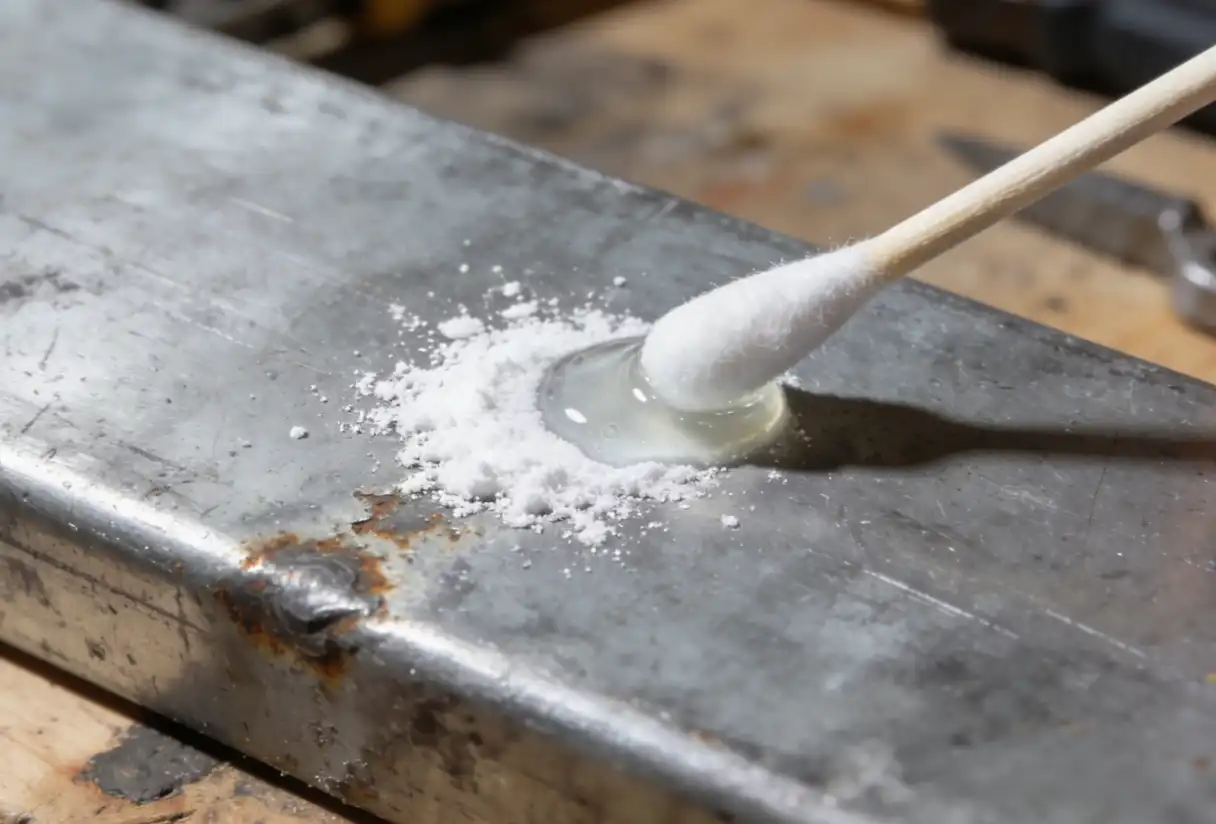
You can use vinegar to help determine whether steel has a zinc coating. Vinegar is a mild acid and reacts with zinc. Here’s what you do:
- Pour a small amount of white vinegar into a cup.
- Dip a cotton swab or cloth into the vinegar.
- Rub the wet swab on a small spot of the steel.
- Wait a few minutes and watch for changes.
What should you look for? If the steel is galvanized, the vinegar will react with the zinc. You might see a white powdery spot form. This is called white rust. It shows that the zinc is there and doing its job. If you see red rust, the zinc layer is gone or damaged, and the steel is starting to rust.
- Zinc reacts with acids like vinegar, causing corrosion.
- White rust means the zinc is still protecting the steel.
- Red rust means the steel is exposed.
Safety Note: Wear gloves and goggles when using vinegar. Wash your hands after the test.
Heat Test for Residue
The heat test is another way to check for a zinc coating, but you need to be careful. Here’s how you do it:
- Use a small torch or lighter.
- Heat a tiny spot on the steel for a few seconds.
- Let the spot cool down.
- Look for a white or gray powdery residue.
If you see this powder, it means there was zinc on the steel. The heat made the zinc turn into zinc oxide, which looks like ash. If you do not see any residue, the steel may not be galvanized.
Warning: Always do this test in a well-ventilated area. Do not breathe in the fumes. Zinc fumes can be harmful.
These simple tests help you determine whether steel has a zinc coating. They make your identification process faster and more reliable. If you are still not sure after these tests, you can try more advanced methods or ask an expert.
Accurate Identification with Measurement Tools
If you want to know for sure if steel is galvanized, you need more than just looking or doing easy tests. Measurement tools help you check the zinc coating thickness and avoid mistakes. These tools give you reliable results.
Magnetic Thickness Gauge
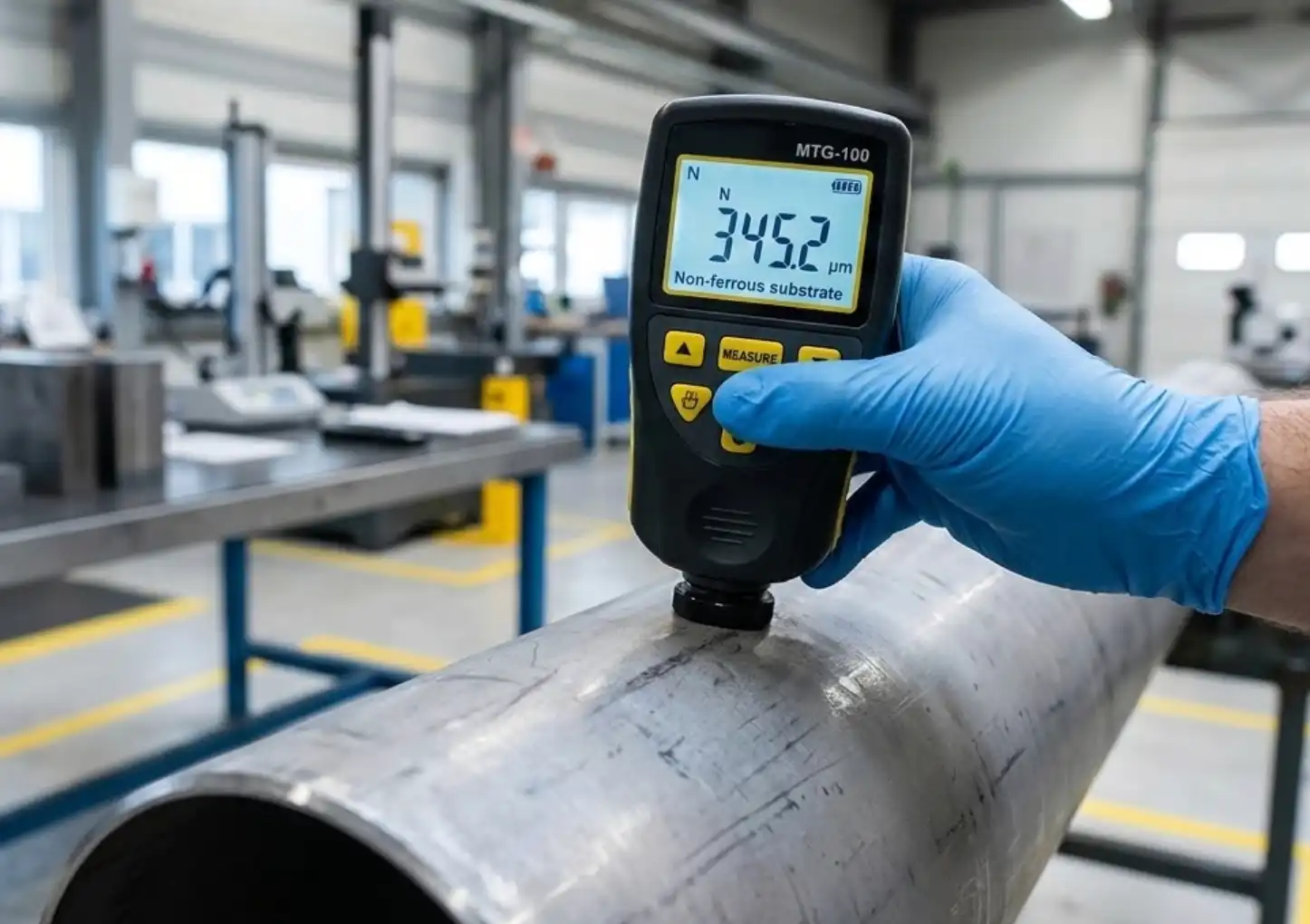
A magnetic thickness gauge is a popular tool for checking steel. You can use it outside or in a workshop. This tool measures the coating thickness without hurting the steel. Here’s how you use it:
- Put the gauge on the steel.
- Look at the display to see the number.
- Compare the number to the standard thickness for galvanized steel.
You do not have to scratch or damage the steel. The gauge works by checking how the magnetic field changes through the zinc layer. It gives you a number for the coating thickness. This helps you check your steel and makes your inspection better.
Tip: For the best results, measure an uncoated piece first. This helps you set the gauge for the base metal. ASTM standards say you should do this to avoid mistakes.
Here’s a table showing different ways to measure coating thickness:
| Measurement Method | Description |
|---|---|
| Magnetic Thickness Gauges | Non-destructive, simple, fast, and inexpensive method that follows international standards. |
| Stripping & Weighing | You remove the coating and weigh the steel. |
| Weighing Before & After Galvanizing | You check the weight before and after the process. |
| Optical Microscopy | You use a microscope to measure the coating. |
Magnetic thickness gauges are the best for checking steel in the field. They save time and keep the steel safe.
Non-Destructive Field Tests
Non-destructive field tests help you check steel without causing damage. You can use these tests on big structures. They help you measure coating thickness and make sure the zinc layer is still working.
Here are reasons why these tests are good:
- You save money by finding problems early.
- You spot safety issues before they get worse.
- You do not hurt the steel or the environment.
- You check if buildings or bridges need more protection.
- You find hidden defects that could cause trouble during earthquakes.
Electronic thickness gauges give you even better results. They are easy to use and show numbers on a screen. You do not have to reset them every time you change the probe angle. This makes your measurements faster and more accurate.
Note: Always follow the instructions for your tool. Take readings at different spots for the best results.
Using these tools and tests helps you know if steel is galvanized. You can trust your inspection and make smart choices about repairs or maintenance.
Laboratory Methods for Hot Dip Galvanized Steel
Sometimes, simple tests are not enough. You may need lab tests to be sure. These tests help you see what is on and inside the steel. Use them when your results are not clear or you need proof for safety.
Spectroscopy Analysis
Spectroscopy helps you find out what is on the steel. You can use X-ray diffraction or Raman spectroscopy. These tests show if the steel is hot dip galvanized or not. Hot dip galvanized steel has zinc compounds like simonkolleite. Non-galvanized steel has iron hydroxides such as Lepidocrocite and Goethite.
Here’s what happens with spectroscopy:
- You can see zinc compounds if the steel is hot dip galvanized.
- You can spot iron compounds if the steel is not galvanized.
- You get clear answers to help you decide.
If you need proof for a big job or for rules, spectroscopy gives you good results.
Metallurgical Examination
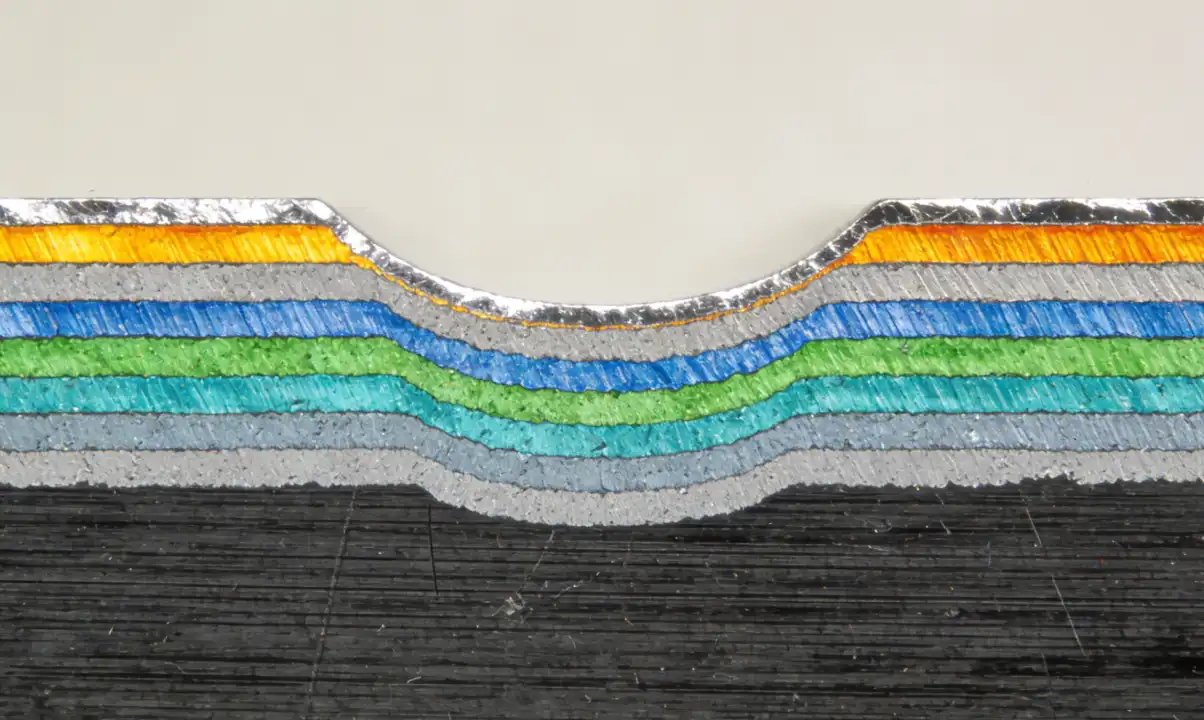
Microscopy is another way to check steel. You cut a sample and look at it with a microscope. This shows the layers where zinc meets steel. Hot dip galvanized steel has many layers. These layers stick together well and stop rust. The outside layers wear away slowly and protect the steel until the zinc is gone.
Here’s a table showing what you see with a microscope:
| Metallurgical Feature | Description |
|---|---|
| Multiple metallurgical layers | Show strong bonding and stop rust well |
| Outer layers | Wear away slowly and protect steel until zinc is gone |
You can use lab tests when you need to be sure. If you work in building, making things, or safety, lab tests help you meet rules. You can trust lab results because they are the best way to check hot dip galvanized coatings.
If you are not sure about your check, or need proof for rules, lab tests are the best choice.
Galvanization vs. Other Coatings
It can be hard to tell galvanized steel from other coated metals. Paint and electroplating sometimes look the same. You need to check carefully to know for sure.
Paint and Zinc Coating Differences
Painted steel and galvanized steel both stop rust. They work in different ways. You can see the differences if you look at the surface and watch how the coating changes.
Here’s a table showing the main differences:
| Feature | Galvanized Steel | Painted Steel |
|---|---|---|
| Coating Type | Zinc coating that forms a protective layer | Paint for corrosion resistance and aesthetics |
| Thickness | 45–85 μm (up to 100 μm for thicker sections) | 150–250 μm (3-coat system) |
| Lifespan | 50–100 years without major maintenance | 15–25 years, requires periodic touch-ups |
| Environmental Resistance | Excellent, resists salt spray, UV, heat | Sensitive to UV, humidity, and temperature fluctuations |
| Coverage | Uniform coverage, including hard-to-reach areas | Manual application may leave weak spots |
| Life-Cycle Cost | Higher initial cost, lowest long-term cost | Lower upfront cost, higher maintenance costs over time |
| Aesthetics | Standard grey metallic look | Wide range of colors and finishes |
If you see a gray surface with spangle, it is likely hot dip galvanized steel. Painted steel is smooth and comes in many colors. Paint can chip or peel, especially at the edges. Galvanized steel keeps its coating even in corners. Check seams and corners when you inspect. If you see bare metal or rust under paint, the paint is not protecting the steel.
Tip: Always check for even coverage and signs of damage. Paint needs fixing, but hot dip galvanized steel lasts longer.
Hot Dip vs. Electroplated Steel
Zinc coatings can be put on steel in two ways. Hot dip galvanized steel has a thick, rough coating. You can see spangle or mottled patterns. Electroplated steel is smooth and shiny with a thin layer.
You can measure the coating thickness with a magnetic gauge or other tools. Hot dip galvanized steel has a thicker zinc layer than electroplated steel.
Try physical tests if you want more details. You can use X-ray fluorescence, eddy current testing, or cross-section microscopy. These tests show the difference in layer thickness and structure.
If you see a rough, gray surface with patterns, it is probably hot dip galvanized steel. If the surface is smooth and shiny, it is likely electroplated. Hot dip galvanized steel protects better and lasts longer. Electroplated steel works indoors but may not handle bad weather.
Note: Use more than one method to check. Looking helps, but measuring thickness gives proof.
You can avoid mistakes by checking the surface, measuring the coating, and using simple tests. This way, you make sure your steel has the right protection.
When to Seek Expert Help for Identification
Sometimes, you do all the tests but still feel unsure. If you have problems or need to follow strict rules, it is smart to ask a professional for help. Here are signs you should call an expert.
Unclear Results
Your tests might show mixed results. You may see some signs of a zinc coating, but the surface looks strange. Sometimes, you find spots that look bare or rough. These things make it hard to tell what kind of steel you have. For example, hydrogen blisters can form between the steel and the zinc layer. This happens if there are oxide deposits or if the steel was not cleaned well. You might also see:
- Bare spots from poor cleaning, welding slag, or rolling problems
- Rough areas from uneven zinc layers or chemical changes in the steel
If you see these problems, your inspection may not give a clear answer. You might have to guess if the steel is hot dip galvanized or not. In these cases, a professional can help. Experts use special tools and lab tests to check the coating. They know how to find hidden problems that you might miss.
If you feel stuck or your results do not make sense, ask for help. Getting another opinion can save you time and money.
You should also get expert help in these cases:
- Checking old buildings or bridges
- When you are not sure about the coating
Safety and Compliance Needs
Some jobs have very strict safety rules. You might work on a building, bridge, or other structure where the steel must meet certain standards. The International Building Code (IBC) and National Fire Protection Association (NFPA) have rules for fire-resistant materials. If you need to prove your steel is hot dip galvanized, you may need special tests like ASTM E119 or UL 263. Sometimes, you need a third-party certificate from labs like Underwriters Laboratories (UL).
Here is a checklist for when you need a professional:
- You must follow building codes or fire safety rules
- You need official test results for insurance or legal reasons
- The project needs a third-party certificate
Tip: Always check the project rules before you start. If you need certified results, only a professional can give them.
When you have unclear results or strict safety rules, expert help makes sure you get the right answer. You protect your project and avoid mistakes by getting the facts about your hot dip galvanized steel.
You can tell if steel is galvanized by looking at the surface, doing easy tests, and measuring the coating. If you are still not sure, you should ask an expert for help. Knowing for sure keeps your project safe and strong. Here is a simple guide:
| Method | Description |
|---|---|
| Visual Characteristics | Check for a shiny, metallic look that shows a zinc coating. |
| Magnet Tests | Try a magnet to see if the steel is magnetic. |
| Scratch Tests | Scratch the top to find zinc under paint or rust. |
| Coating Thickness Measurement | Use special tools to see if the zinc layer is thick enough. |
Be careful to avoid common mistakes. Good planning and careful work stop problems.
| Common Error | Prevention Method |
|---|---|
| Inadequate design causing venting and drainage deficiencies | Make sure the design lets air and water move out. |
| Incompatible steel chemistry | Pick steel with the right mix of metals. |
| Insufficient pre-galvanizing surface preparation | Clean the steel well before you galvanize it. |
| Improper post-galvanizing handling | Be gentle with the steel after it is galvanized. |
Checklist for identifying galvanized steel:
- Look for a gray or spangled surface
- Try magnet and scratch tests
- Measure coating thickness
- Ask an expert if you need proof
FAQ
How can you tell if steel is galvanized just by looking?
You can spot galvanized steel by its dull gray color and spangled, crystal-like pattern. If you see little or no rust, that’s another good sign.
Does a magnet always stick to galvanized steel?
Yes, a magnet will stick because the steel underneath is still magnetic. The zinc coating does not change this property.
What happens if you scratch galvanized steel?
If you scratch it, you might see a shiny layer under the gray surface. That’s the zinc. If you see rust right away, the steel may not be galvanized.
Can you use vinegar to test for galvanization?
Yes! Dab a little vinegar on the steel. If you see white powder form, that’s zinc reacting. No reaction? The steel might not be galvanized.
Is galvanized steel safe to use outdoors?
Absolutely! Galvanized steel resists rust and weather. You can use it for fences, roofs, or outdoor furniture.
How thick should the zinc coating be?
Most galvanized steel has a zinc layer between 45 and 100 micrometers thick. You can check this with a magnetic thickness gauge.
Can you paint over galvanized steel?
You can, but you need to clean and prime it first. Paint sticks better if you rough up the surface a bit.