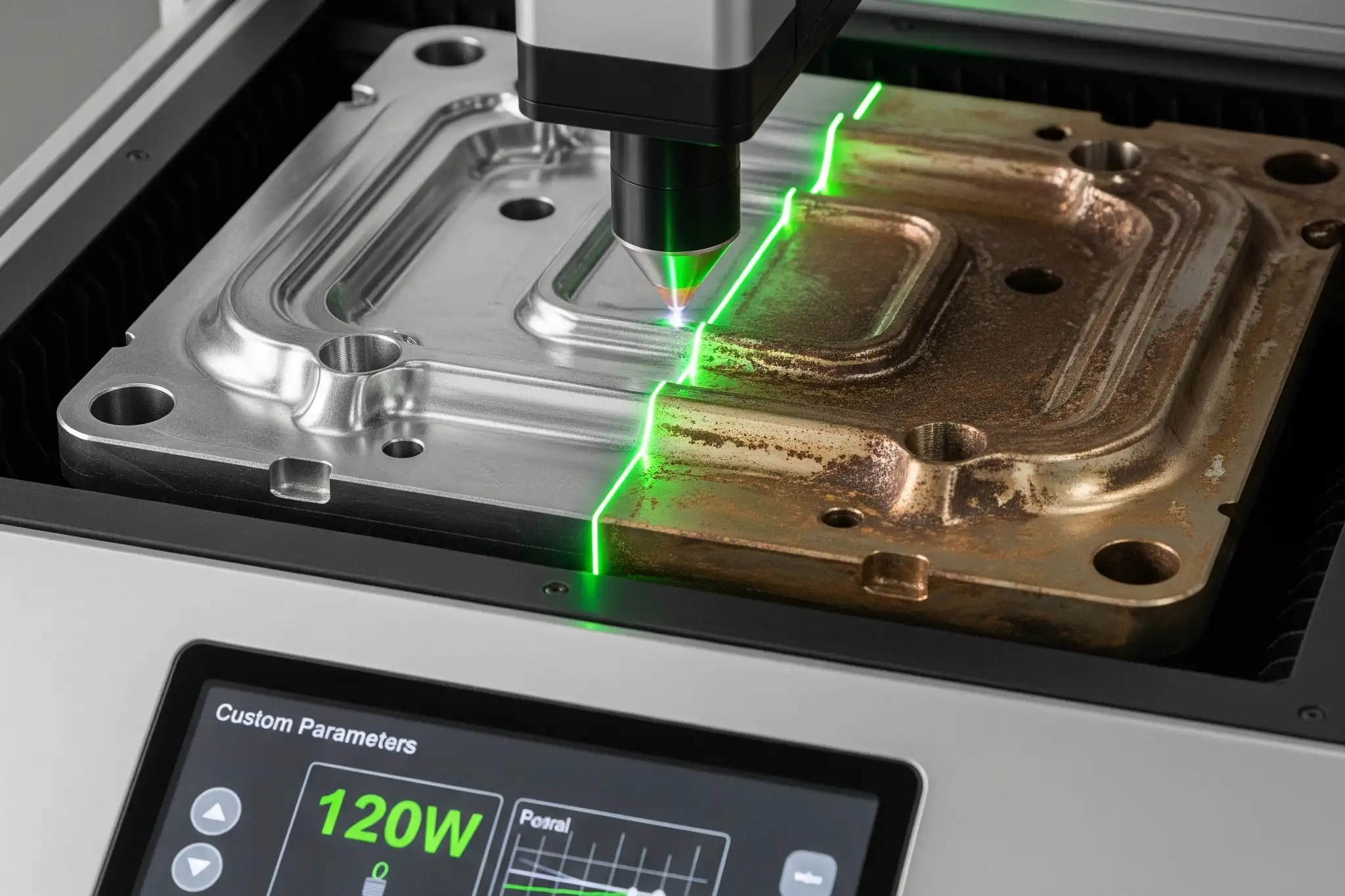
When you pick a customized laser cleaning solution, you get better results for your business. Every industry has its own problems. You may need to take off corrosion, dangerous coatings, or hard deposits from metal. You might want to get parts ready for welding or keep molds and machines clean.
| Industry Sector | Applications |
|---|---|
| Automotive | Paint removal, mold cleaning, surface preparation before welding or bonding. |
| Aerospace | High precision and repeatability in cleaning processes. |
| Cultural Heritage | Restoration of delicate surfaces without mechanical contact. |
With Cofun’s advanced laser technology, cleaning is faster. You have less downtime and spend less money. Your equipment lasts longer and your workplace is safer.
Key Takeaways
- Figure out what you need to clean. Look at the material and what is dirty. This helps you clean well and keeps your tools safe.
- Pick the right laser type and power for your job. Fiber lasers are best for metals. CO2 lasers work well for things that are not metal.
- Test a small area before cleaning everything. This helps you find good settings. It also stops you from hurting the material.
- Follow safety rules and get your workspace ready. This keeps you and your team safe. It also helps you clean better.
- Talk to laser cleaning experts for advice that fits your needs. Their help can save you time. It can also make your cleaning better.
Assessing Cleaning Needs
You should know what you are cleaning before you begin. This helps you get good results and keeps your tools safe.
Material and Contaminant Identification
Look closely at the surface you want to clean. Is it steel, aluminum, or copper? Each one reacts in its own way to laser cleaning. Next, find out what you need to remove. Is it rust, paint, or oil? Some things come off easily. Others need more power. If you are not sure, ask a laser cleaning expert. They can test a small spot before you clean everything.
Defining Cleaning Goals
Set clear goals for your cleaning job. Do you want to take off all the coating? Or do you just want to clean the surface for bonding? Maybe you need to get a part ready for welding. Or you want to fix an old machine. Your goals help you make good choices. Here is a table to help you think about the main things:
| Factor | Description |
|---|---|
| Laser Power | Helps clean better if the oxide layer is thick or hard. |
| Laser Parameters | Pulse energy, frequency, and pulse width make cleaning work better. |
| Materials | Each material needs its own laser settings and cleaning plan. |
| Cleaning Head and Optical System | Good quality helps focus the laser and clean well. |
| Cleaning Distance and Speed | Being close and moving at the right speed helps cleaning. |
| Size of the Cleaning Area | You may need to change the program for different areas. |
Think about these things when you plan your cleaning. Your laser cleaning solution should fit your needs.
Project Scope Evaluation
Check how big and hard your job is. Is the area small or large? Do you need to clean one thing or many? Make a list of all the parts and surfaces. This helps you pick the right tools and settings. If your job is big or tricky, ask for a free sample test or advice. Companies like Cofun can help you get the best results.
Tip: Take pictures and write notes while you check. This helps you explain your needs to a laser cleaning expert.
Choosing a Customized Laser Cleaning Solution
If you want great results, pick the right laser cleaning solution. This choice makes cleaning faster, safer, and saves money. Let’s see how you can find the best one for your job.
Selecting Laser Type and Power
You need to match the laser type and power to your job. Fiber lasers are good for cleaning metal. They remove rust, paint, and tough dirt. Fiber lasers have a small focus point. This helps them clean with high power and accuracy. You will find fiber lasers in car, plane, and factory work. They are best for metal.
CO2 lasers are better for non-metal things. They work well on plastic, cloth, and wood. You might see CO2 lasers in food or medicine factories. If you need to clean or mark non-metal parts, use a CO2 laser.
Power is important, too. Some jobs need only 20 watts. Others need up to 1,600 watts. Thick rust or heavy coatings need more power. For soft surfaces, use less power to keep them safe. Always check what you are cleaning. Match the laser and power to your job.
Tip: If you do not know which laser or power to use, ask for a free test. Cofun can show you real results before you choose.
Customizing for Application Needs
Every industry has different cleaning problems. That is why a custom laser cleaning solution works better. You can change the power, cleaning head, and software to fit your needs. For example, use a gentle setting for old art. Use a strong beam for metal in a factory.
Here is how you can change your solution:
| Customization Aspect | Description |
|---|---|
| Power Range | Pick from 20 to 1,600 watts for different jobs. |
| Application Testing | Test your materials in labs to find the best settings. |
| Training and Support | Get training to use the machine safely and well. |
Laser cleaning is good for the environment. It does not use chemicals. You do not make toxic waste. The only leftover is a little dust, which you can collect. This keeps your workplace clean and green.
| Evidence Type | Description |
|---|---|
| Chemical-Free | Laser cleaning does not need dangerous chemicals, so it is safer. |
| Eco-Friendly | It makes no toxic waste, so it is better for nature. |
| Minimal Environmental Impact | It makes very little waste, and you can collect it safely. |
| Environmental Cleanup | It can help clean up oil spills without hurting nature. |
Consulting with Experts
You do not have to choose alone. Laser cleaning experts can help you. They listen to your needs and look at your materials. They help you pick the right machine and settings. Experts can even make a plan that fits your work.
Here is how experts help you:
- You get advice for your cleaning needs.
- An expert talks with you to learn about your project.
- You get a solution that works with your work process.
If you want to see how laser cleaning works on your parts, Cofun gives free tests and advice. This way, you know what to expect before you buy.
Note: Working with experts saves time and money. You get better results and make fewer mistakes.
Picking the right laser cleaning solution gives you new technology, helps the environment, and fits your industry. With Cofun’s help, you can clean smarter, safer, and greener.
Preparation and Safety
Before you start with your customized laser cleaning solution, you need to get ready. Good preparation keeps you safe and helps you get the best results.
Safety Measures and PPE
Laser cleaning uses powerful beams. You must protect yourself and others. Here’s a quick guide to the main safety steps and gear you need:
| Safety Measure / PPE | Description |
|---|---|
| Controlled Access | Only let trained people into the work area. |
| Warning Signs | Put up clear signs about laser hazards and safety gear. |
| Laser Barriers | Use barriers to block the laser from reaching other spaces. |
| Safety Goggles | Always wear goggles to protect your eyes from laser light. |
| Protective Clothing | Wear gloves and safety clothes to stop burns and heat. |
| Ventilation | Make sure the air is clean and free from fumes or dust. |
| Fire Safety Measures | Use fire-resistant materials and have fire control ready. |
| Training and Certification | Get trained and certified in laser safety before you start. |
Tip: Never skip safety steps. Even a quick job needs full protection.
Workspace Setup
A good workspace makes your job easier and safer. Follow these steps to set up your area:
- Check your equipment and the room before you begin.
- Make sure emergency stops and safety locks work.
- Keep the area tidy and remove anything that can catch fire.
- Check that your safety gear fits and works well.
- Talk with your team so everyone knows the plan.
- Use lockout/tagout steps when you do maintenance.
You can work faster and safer when your space is ready.
Sample Testing
Before you clean the whole surface, test a small spot. Sample testing helps you see how the material reacts. You can adjust the laser’s power and speed to get the best results. This step lets you find the right settings for your job. You protect the surface and avoid mistakes.
When you test, you learn how the material and dirt behave. You can change your plan if you need to. This way, you get the best cleaning without damage. Testing first saves time and gives you confidence in your process.
Operating the Solution
Once you have your system ready, it’s time to start cleaning. Cofun’s laser cleaning machines make this step simple and reliable. You can follow these steps to get the best results and keep your work safe.
System Configuration
You want your laser cleaning system to work at its best. Here’s how you can set it up for top performance:
- Identify the Material and Contaminant
Check what you are cleaning. Is it steel, aluminum, or something else? Look at the dirt or coating you want to remove. - Set Initial Laser Parameters
Adjust the laser’s power, pulse duration, wavelength, pulse frequency, scanning speed, and beam spot size. Start with the settings recommended by Cofun or from your sample test. - Conduct Tests and Adjustments
Try out your settings on a small area. Watch how the surface reacts. If you see any damage or if the dirt does not come off, change the settings. You can adjust the power or speed until you see clean results without harming the base material. - Monitoring and Quality Control
Set up a way to watch the cleaning as it happens. Use cameras or sensors if your system has them. Check the cleaned area often to make sure you get the results you want.
Tip: Always write down your best settings for each job. This helps you work faster next time.
Cleaning Techniques
You can use different cleaning techniques depending on what you need to remove. The laser works by hitting the surface and making the dirt or coating disappear. The laser only removes what you want, so the base stays safe.
Some things you can clean with your system:
- Industrial oils and fats
- Rust and metal oxides
- Paint residues and coatings
- Metal particles
- Dust and dirt from the environment
- Electrolyte residues
- Lubricant leftovers
- Pathogens (in special cases like medical tools)
The laser uses three main ways to clean:
- Direct vaporization: The laser heats the dirt so much that it turns into gas and goes away.
- Photothermal ablation: The laser makes the dirt very hot, so it pops off the surface.
- Photomechanical ablation: The laser creates a shock wave that knocks the dirt off.
You get high precision and do not touch the surface. You do not need chemicals or extra materials. The process is fast, repeatable, and works on many shapes and sizes. Cofun’s machines can be hand-held or set up for automatic cleaning, so you can clean big or small parts easily.
Note: Move the cleaning head at a steady speed. Do not stay in one spot too long. This keeps the surface safe and gives you even results.
Monitoring and Adjustments
You want to keep your cleaning quality high. Cofun’s systems help you do this with smart tools and easy controls.
| Monitoring Tool/Strategy | Description |
|---|---|
| Real-time monitoring | Use cameras, microscopes, or sensors to watch the cleaning as it happens. You can spot problems right away. |
| Advanced sensors | Get feedback on the surface with special sensors. These can tell you if the area is clean or if you need to adjust. |
| Automated adjustments | The system can change the laser’s power or speed by itself if it senses a problem. |
| Post-process inspection | After cleaning, use tools to check the surface. Make sure it looks and feels right. |
You get better results when you watch the process closely. Real-time monitoring lets you catch problems early, like missed spots or overheating. Data logging helps you track your work and improve over time. If you see something wrong, you can change the settings right away. This keeps your cleaning safe and even.
Tip: Always check your cleaned parts before moving to the next step. This helps you catch any issues and keeps your work top-notch.
Cofun’s laser cleaning machines are built for easy use and strong performance. You can trust them to clean well, protect your materials, and save you time. When you use a customized laser cleaning solution, you get a system that fits your job and helps you work smarter every day.
Optimizing and Maintaining Results
Expert Tips for Quality
You want the best results from your customized laser cleaning solution. Here are some expert tips to help you get there:
- Pick the right laser type for your cleaning job.
- Know the material you are working with and the kind of dirt or coating you need to remove.
- Make sure you and your team have proper training and always follow safety steps.
If you ever feel unsure, Cofun’s experts can guide you. Their global service network means you get help when you need it, no matter where you work.
Troubleshooting Issues
Sometimes, things do not go as planned. If you notice the cleaning is not working well, try these steps:
- Check the laser settings. Make sure the power and speed match your material.
- Look at the lenses. Clean them with a soft cloth if you see dust or smudges.
- Watch for system alerts. These can warn you about overheating or other problems.
- If you see uneven cleaning, check the alignment of the laser head.
- Keep a log of any issues and what you did to fix them. This helps you spot patterns and solve problems faster.
If you cannot fix the problem, reach out to Cofun’s support team for quick help.
Routine Maintenance
Regular care keeps your machine running strong. Here’s what you should do:
- Clean the lenses often to stop dust from blocking the laser.
- Replace worn parts right away to avoid bigger problems.
- Check and clean the cooling system to prevent overheating.
- Schedule yearly inspections and recalibrations with a professional.
- Keep your machine’s software up to date for the best performance.
- Write down all maintenance in a logbook.
Taking these steps helps your equipment last longer and work better every day.
You get better results if you follow each step. A customized laser cleaning solution works best this way. Here is a simple look at the process:
| Step | What You Do |
|---|---|
| Define cleaning needs | Find out your material and what you want gone |
| Prepare and test | Get your workspace ready and test a small spot |
| Operate and monitor | Use good settings and watch the cleaning happen |
| Optimize and maintain | Check your results and take care of your machine |
If you choose Cofun, you get expert help. You save energy and your workplace stays cleaner. Want to try it? Ask for a free test or talk to an expert today!
FAQ
How do you know which laser settings to use?
Start with the recommended settings from Cofun or your sample test. If you see the surface is not clean or gets damaged, adjust the power or speed. Always test on a small spot first.
Can you use Cofun laser cleaning machines on painted surfaces?
Yes, you can. Cofun’s machines remove paint without hurting the base material. Just pick the right power and move the cleaning head slowly. Always test a small area before cleaning the whole surface.
What should you do if the laser cleaning is not working well?
Check your laser settings and clean the lens. Make sure the cleaning head is aligned. If you still have trouble, contact Cofun’s support team for help.
Is laser cleaning safe for the environment?
Yes! Laser cleaning does not use chemicals. You only get a little dust, which you can collect easily. This keeps your workspace and the environment clean.
Do you need special training to use a laser cleaning machine?
You do. Cofun offers training and support. You learn how to use the machine safely and get the best results. Always follow safety rules and wear the right gear.
See also
How to Operate a Handheld Laser Cleaning Machine Safely
How to combine laser cleaning machine with industrial robots
What Is the Range of Laser Cutting Thickness for Common Materials