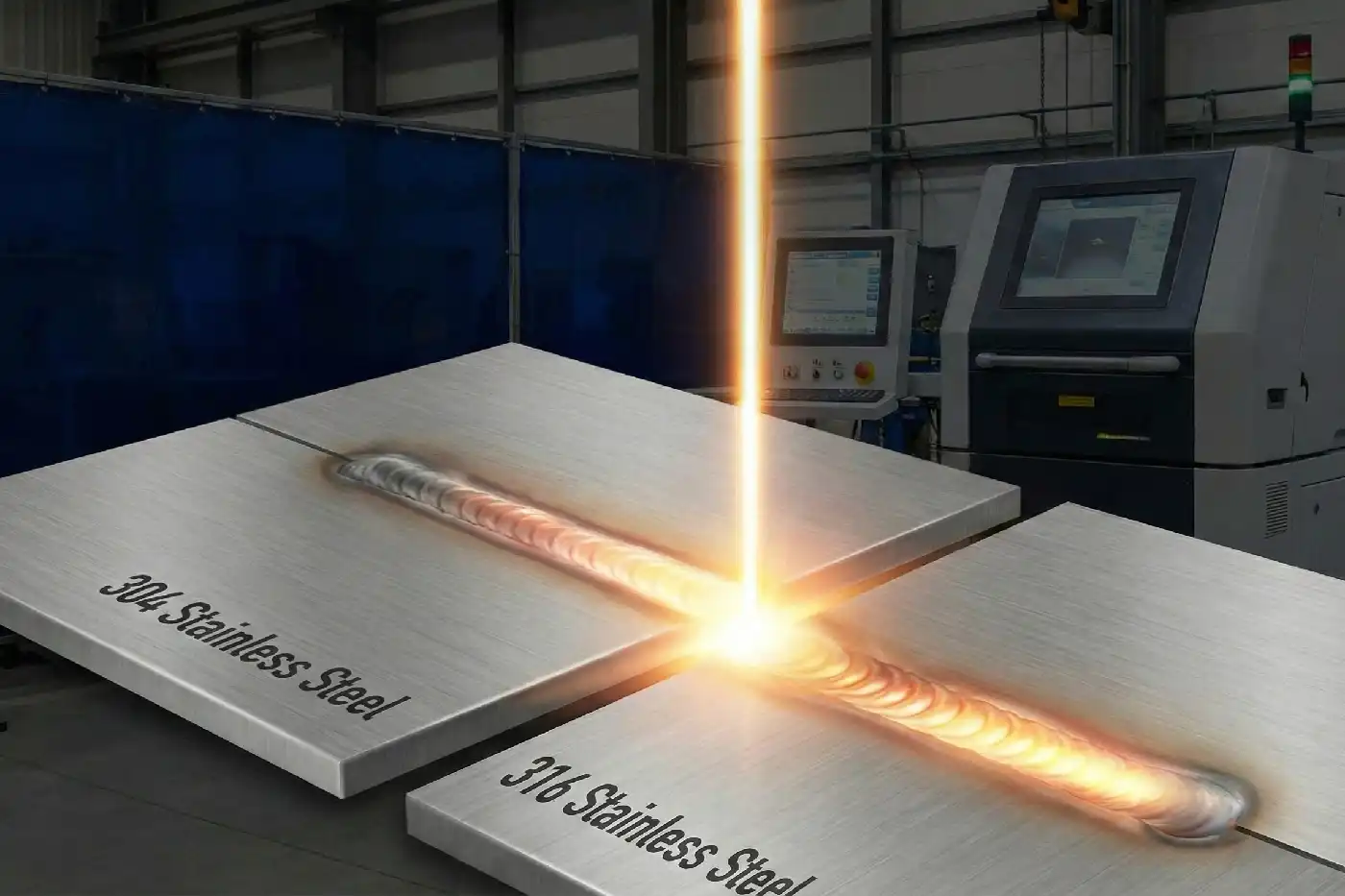
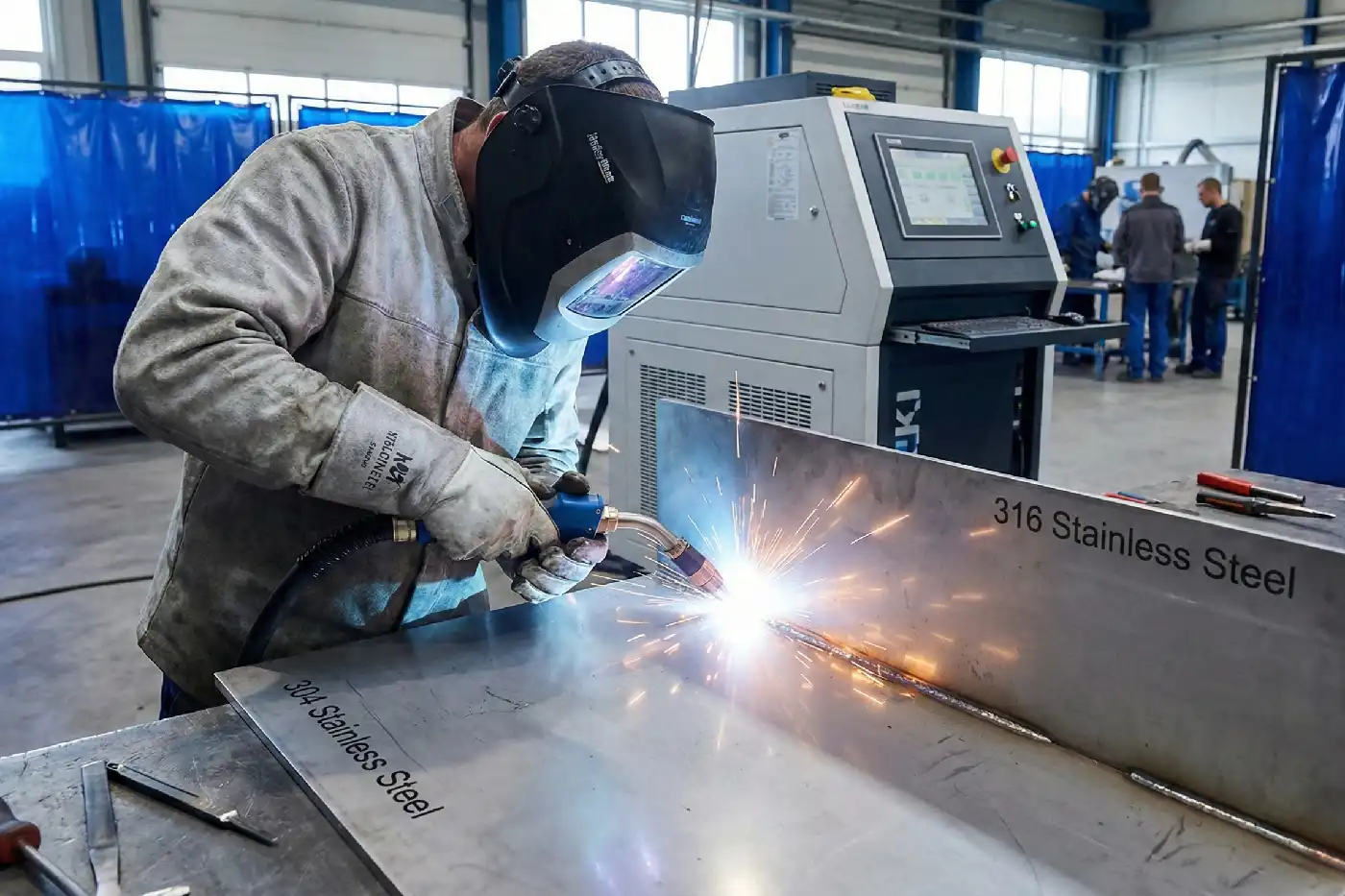
304 and 316 stainless steel have distinct properties that affect welding. 304 stainless steel is easier to weld, while 316 stainless steel resists corrosion better. Choosing between these two alloys can significantly influence your laser welding results. Both types of stainless steel feature a chromium oxide layer that prevents corrosion during the welding process. However, excessive heat can damage this protective layer, and failing to clean the surface properly can also compromise it. When the protective layers are damaged, the corrosion resistance in the weld is reduced. To ensure a strong weld, you need shielding gases to protect it, and cleaning the metal is essential. Following these steps will help your weld last longer. Selecting the right alloy, whether it’s 304 or 316 stainless steel, is crucial, especially depending on whether you are working in a shop or at home.
Key Takeaways
- Pick 304 stainless steel if you want easy welding and lower costs. It works well in dry places or inside buildings.
- Use 316 stainless steel if you need better corrosion resistance. It is good for tough places like near the ocean or with chemicals.
- Clean the metal before welding. This helps make strong and smooth welds. It also stops problems from happening.
- Change the laser settings for each type of stainless steel. This helps you get the best weld quality.
- Check your welds often and take care of them. This makes them last longer and keeps things safe.
304 and 316 Stainless Steel: Which Is Better?
Quick Answer and Key Factors
If you want a fast answer, you should know that 304 and 316 stainless steel both work well for laser welding. You will find that 304 stainless steel is easier to weld. It gives you excellent results in most situations. You should choose 316 stainless steel if you need better corrosion resistance, especially in places with salt or chemicals.
Here are the main factors that help you decide which alloy fits your needs:
- 304 stainless steel works best for general use. It does not perform well in salty or harsh chemical environments.
- 316 stainless steel is the top choice for marine settings or anywhere you expect exposure to chlorine or chloride salts.
- Your decision depends on where you plan to use the welded part and what kind of environment it will face.
You can look at how experts rate weldability for laser welding:
| Stainless Steel Grade | Weldability |
|---|---|
| 304 | Excellent |
| 316 | Good |
This table shows that you will find 304 stainless steel easier to weld. You can expect fewer problems during the process. 316 stainless steel still gives you good welds, but you may need to pay more attention to technique and settings.
Tip: If you work in a shop or at home and do not need extra corrosion protection, you can save time and effort by choosing 304 stainless steel.
Why Alloy Choice Matters
You need to pick the right alloy for your project. The type of stainless steel you use affects the weld quality and how long your part will last. When you select the correct alloy, you make sure the welded area keeps its strength and corrosion resistance. Each type of stainless steel, like austenitic or duplex, has special features. These features change how the metal reacts to laser welding. If you match the alloy to your needs, you get a weld that stays strong and looks good.
304 and 316 stainless steel offer different benefits. You should think about the environment and the job before you decide. If you choose wisely, you avoid problems like rust, cracking, or weak welds. You also make sure your project meets safety and performance standards.
304 and 316 Stainless Steel: Properties for Laser Welding
Chemical Composition and Molybdenum Content
It is important to know what 304 and 316 stainless steel are made of before welding. The biggest difference between them is how much molybdenum they have. Molybdenum helps metal fight corrosion. You can see the differences in this table:
| Stainless Steel Grade | Chromium Content | Nickel Content | Molybdenum Content |
|---|---|---|---|
| 304 | 18% | 8% | 0% |
| 316 | 16-18% | 10-14% | 2-3% |
304 stainless steel does not have molybdenum. This means it does not protect as well against some kinds of corrosion. 316 stainless steel has 2-3% molybdenum. This extra part helps 316 stainless steel stop pitting and crevice corrosion. Pick 316 if your welds will be near salty water or strong chemicals.
Note: Molybdenum is what makes 316 stainless steel different from 304. It helps your welds last longer in tough places.
Corrosion Resistance Comparison
When you weld stainless steel, you want it to stay strong and not rust. Both 304 and 316 stainless steel make a chromium oxide layer. This layer keeps the metal safe from most corrosion. The molybdenum in 316 stainless steel makes this layer even better. You get more protection from chlorine and chemicals.
Here is a quick look:
- 304 stainless steel gives you okay corrosion resistance. It works best inside and in dry places.
- 316 stainless steel gives you better corrosion resistance. It can handle saltwater, chlorine, and strong chemicals.
If your welds need to last in hard conditions, pick 316 stainless steel. The molybdenum makes the chromium oxide layer stronger. You will see fewer problems with pitting and crevice corrosion.
Mechanical Properties Impacting Welds
You want your welds to be strong and last a long time. The mechanical properties of 304 and 316 stainless steel change how your welds work. 316 stainless steel has higher tensile strength, about 830 MPa. This means welded parts can take more force before breaking. Molybdenum also helps with wear resistance, so welds last longer when rubbed or moved.
304 stainless steel has a single-phase microstructure. This makes it easier to weld and less likely to crack. 316 stainless steel has a biphasic structure with both α-Fe and γ-Fe. This gives extra strength but needs more careful welding.
| Property | 316 Stainless Steel with Mo | 304 Stainless Steel |
|---|---|---|
| Corrosion Resistance | Improved | Moderate |
| Mechanical Strength | High tensile strength (~830 MPa) | Lower than 316 with Mo |
| Wear Resistance | Enhanced | Lower |
| Microstructure | Biphasic | Single phase |
Tip: If you want easy welding and good results for most jobs, use 304 stainless steel. If you need more strength and corrosion resistance, 316 stainless steel is better.
Both 304 and 316 stainless steel have good points. Your choice depends on where and how you use them.
Weldability of 304 and 316 Stainless Steel
Ferrite Content and Cracking Risk
When you weld stainless steel, you want to avoid hot cracking. Ferrite content plays a big role in this. If you use 304 and 316 stainless steel, you benefit from their higher ferrite levels. Ferrite helps the weld solidify in a way that reduces cracking. If the weld solidifies with more austenite, the risk of hot cracking goes up. You should know that welds with more ferrite are safer and last longer. This is important when you use laser welding, which heats metal quickly.
Tip: Always check the ferrite content before you start welding. More ferrite means less chance of cracks.
Line Energy Requirements
Laser welding needs the right amount of energy. You must adjust the line energy for each type of stainless steel. The table below shows what works best:
| Stainless Steel Type | Line Energy Requirement | Weld Quality |
|---|---|---|
| 304 | Higher | Better |
| 316 | Lower | Inferior |
If you use more line energy with 304 stainless steel, you get deeper welds and better results. With 316 stainless steel, less line energy is needed, but the weld quality may not be as high. The way you set your laser affects the grain structure and hardness. For example, using pulsed current can change the grain shape and make the weld stronger.
Recommended Welding Rods
Choosing the right welding rod helps you get strong, corrosion-resistant welds. Here are some good options:
- E316 rods work for both AC and DC+ welding. They give you a stable arc and easy slag removal.
- Pick a rod that matches or is better than your base metal. 316 rods work for both 304 and 316 stainless steel.
- ER316 and ER316L rods are best for welding 316 and 316L stainless steel. They resist corrosion, especially in salty or chemical environments. ER316L has low carbon, which helps prevent carbide buildup.
The rod you choose affects the weld’s microstructure and how well it resists corrosion. ER316L rods are great for marine and chemical jobs because they keep welds strong and safe.
Weld Quality and Performance
Weld Appearance and Integrity
After you finish a laser weld, you want it to look nice. The weld should be shiny and smooth. There should not be any cracks or holes. You want the bead to look even. It should not have dips or bumps. If you use the right settings, the weld will have strong edges. The finish will look clean. Shielding gas keeps the weld bright. It stops dark spots from forming. Clean the metal before you start welding. This helps prevent stains and rough spots. A neat weld looks better. It also lasts longer.
Strength and Durability
Your welds need to be strong. Laser welding makes tough joints if you use the right heat. The welded area should be as strong as the base metal. Sometimes it can be even stronger. If you control the heat, you avoid weak spots. Good welds do not bend or break easily. They can handle pulling and pushing. In tough places, the right filler helps welds last longer. Always check your welds after they cool. Look for cracks or signs of wear.
Common Defects and Prevention
Laser welding can cause problems if you do not follow good steps. Here is a table that shows common defects and how to stop them:
| Defect Type | Description | Prevention Method |
|---|---|---|
| Hot Cracking | Cracks from fast heating and cooling | Change laser power and welding speed |
| Porosity | Gas bubbles stuck in the weld | Clean metal and use good shielding gas |
| Poor Fusion | Weld does not join the base metals well | Use the right heat and electrode/gas settings |
| Slag Inclusions | Non-metal bits in the weld | Keep things clean and control the welding area |
| Lack of Fusion | Base metals do not melt together | Use enough heat and the right welding speed |
| Incomplete Penetration | Weld does not go deep enough | Use more heat or slow down welding speed |
| Undercuts | Grooves along the weld edges | Lower heat and change welding speed |
| Distortion | Warping from uneven heating | Clamp and support materials during welding |
| Contamination | Bad stuff in the weld | Clean base metals before welding |
| Heat Tints | Color changes from too much heat | Control heat and use good shielding |
| Weld Decay | Weld gets weaker over time | Use corrosion-resistant filler and treat welds after |
Tip: Always clean your materials. Set the right welding settings. Use good support. These steps help you avoid most welding problems.
Application Suitability
Corrosive Environments
You need to think about where you will use your welded parts. If you work in places with lots of moisture, salt, or chemicals, you should choose 316 stainless steel. This alloy has 2% molybdenum, which helps it fight corrosion much better than 304 stainless steel. You will see 316 stainless steel used in harsh environments because it stands up to acids, salty water, and chloride. Here are some places where 316 stainless steel works best:
- Marine applications, like boat fittings and docks
- Chemical processing plants
- Medical devices that need to stay clean and rust-free
If you weld parts for dry or indoor spaces, 304 stainless steel gives you good results. It does not protect as well against strong chemicals or salt, but it works fine for most everyday uses.
Industrial and Commercial Uses
You will find both 304 and 316 stainless steel in many industries. Each type fits different jobs. Look at this table to see where you might use each alloy:
| Stainless Steel Type | Common Applications |
|---|---|
| 304 | Kitchen equipment, brewing tanks, dairy processing, automotive parts, architectural structures |
| 316 | Marine fittings, chemical processing, pharmaceutical equipment, offshore platforms |
If you need parts for food or drink production, 304 stainless steel is a popular choice. You see it in kitchens, breweries, and car parts. For jobs near the ocean or with strong chemicals, 316 stainless steel is better. It keeps your welds strong and safe.
Cost and Availability
You should also think about price and how easy it is to get the metal. 304 stainless steel costs less and is easier to find. Most suppliers have it in stock. You save money if you do not need extra corrosion protection. The price difference between 304 and 316 stainless steel can be 20% to 50%. If you need 316L powder, you might pay $50 to $100 per kilogram. 304L is cheaper and works for many jobs. If your project needs top corrosion resistance, you should spend more for 316 stainless steel. You also need a higher grade welding rod for 316 stainless steel.
Tip: Choose 304 stainless steel for most jobs to save money. Pick 316 stainless steel for tough environments, even if it costs more.
Practical Recommendations
Choosing the Right Alloy
Pick the alloy that fits your project. If you want easy welding, use 304 stainless steel. It costs less and works well inside. Use it where there are no strong chemicals. If you need more corrosion resistance, pick 316 stainless steel. It works better in places with salt or chemicals. You see it used in boats, labs, and hospitals. Always think about where your part will go and how much stress it will get. This table can help you choose:
| Project Need | Best Alloy |
|---|---|
| General indoor use | 304 Stainless Steel |
| Marine or chemical exposure | 316 Stainless Steel |
Tip: 304 stainless steel saves money and time for most jobs. Pick 316 stainless steel if you need more protection.
Tips for High-Quality Laser Welds
You can make better welds by following some steps. First, clean the metal before you start. Take off oxide layers, stains, and spatter. You can use laser cleaning, chemicals, or polishing. Change the laser power for thick or thin metal. More power makes deeper welds, but too much can burn thin pieces. Set the welding speed to control heat and stop warping. Where you focus the laser matters. It changes how big and strong the laser spot is.
- Clean the weld area before you begin.
- Use chemical pickling or electrochemical cleaning for passivation.
- Polish the weld to make it smooth.
- Use stress relief heat treatment for some stainless steel.
Note: Passivation brings back the protective oxide layer. This helps your weld fight rust for a long time.
Post-Weld Maintenance
Take care of your welds after you finish. Clean the weld to get rid of oxides and dirt. Use grinding, polishing, or pickling to make the weld look better and last longer. Check your welded parts often. Look for cracks, color changes, or damage.
- Clean and treat the weld surface.
- Polish for a better look and longer life.
- Check your welds often to find problems early.
Regular checks help your welded parts last longer. Good care keeps them strong, even in hard places.
You now know the key differences between 304 and 316 stainless steel for laser welding.
- Choose 304 stainless steel for easy welding and lower cost in dry or indoor settings.
- Pick 316 stainless steel when you need strong corrosion resistance in harsh environments.
Tip: Always match the alloy to your project’s needs. Think about where you will use the welded part and how much protection it requires.
FAQ
Can you laser weld 304 and 316 stainless steel together?
Yes, you can weld 304 and 316 stainless steel together. You should use a filler rod that matches the higher alloy, usually 316. This helps your weld resist corrosion and stay strong.
What shielding gas works best for laser welding stainless steel?
You should use pure argon or a mix of argon and helium. These gases protect your weld from air and keep the weld clean. Argon works well for most jobs. Helium helps with deeper welds.
Do you need to clean stainless steel before laser welding?
You must clean stainless steel before welding. Remove oil, dirt, and oxide layers. Use a wire brush or chemical cleaner. Clean metal helps you get a strong, smooth weld.
Why does 316 stainless steel cost more than 304?
316 stainless steel costs more because it contains molybdenum. This metal improves corrosion resistance. You pay extra for better protection in tough environments.
Shielding Gas: Nitrogen vs. Argon in Laser Welding
How Much Should You Pay for Laser Welding Services
Three in one laser machine really worth your money
How Does Laser Wire Feeding Technology Improve Welding Precision