If you are asking if an auto-darkening welding helmet is worth more money, you are not the only one. Many welders pick them because they are safer and easier to use. Look at these facts:
- More than 59% of welding jobs in the U.S. use auto-darkening helmets.
- 44% of bosses changed from passive to auto-darkening for better safety.
You may think passive helmets are easy to use, but auto-darkening helmets change quickly and help your neck feel better. Think about how much you weld and what kinds of projects you do.
Key Takeaways
- Auto-darkening helmets protect your eyes right away. They get dark fast when you start welding. This makes them safer and easier to use.
- Passive helmets cost less and last longer. They are good for people who weld sometimes or do easy jobs. You have to lift the helmet to see your work.
- Think about how often you weld and what kind of welding you do. Auto-darkening helmets are best for people who weld a lot or need to be exact. Passive helmets are fine for simple jobs.
- Always look at your helmet for safety parts and a good fit. This helps keep you safe when you weld.
- Buying a good auto-darkening helmet can make welding more comfortable. It also helps you work faster, especially if you weld often or do different jobs.
Passive vs Auto-darkening Welding Helmet
How Each Type Works
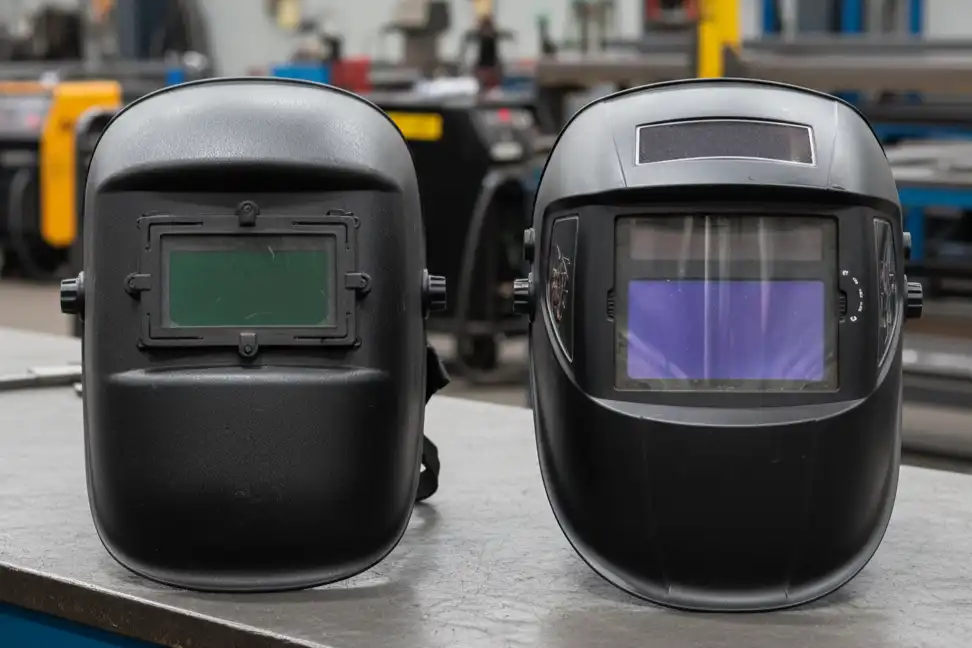
You might want to know how these helmets work. Passive helmets have a lens that stays dark all the time. You put the helmet on and start welding. The lens does not change. When you want to see your work, you have to lift the helmet up. This type is good for simple jobs or if you do not weld a lot.
Auto-darkening helmets use sensors and electronics. When you start welding, the lens gets dark very fast. You can see your work before you start welding. The helmet protects your eyes right away. This makes welding easier and you do not need to lift your helmet all the time.
Here is a table to show the differences:
| Feature | Auto-Darkening Helmets | Passive Helmets |
|---|---|---|
| Lens Technology | Automatic shade adjustment (great for TIG, MIG) | Fixed shade (best for stick welding) |
| Convenience | No need to lift helmet between welds | Manual adjustment needed |
| Cost | More expensive | More affordable |
| Durability | Adjustable, easy to maintain | Simple, robust design |
| Suitability | Good for frequent or precise welding | Good for basic or occasional welding |
Lens Technology and Switching
The lens is important for welding. Passive helmets have one dark lens, usually shade 10 or higher. This keeps your eyes safe, but you cannot see well when you are not welding. You have to lift the helmet to check your work.
Auto-darkening helmets have special lenses with sensors. The sensors see the welding arc and make the lens dark right away. You do not need to move your helmet or stop working. Some helmets let you change the shade, so you can use them for different jobs. Some helmets also have a grinding mode, which is helpful.
Here is a table to compare the features:
| Feature | Auto-Darkening Helmets | Passive Helmets |
|---|---|---|
| Instant Arc Protection | Yes, instant protection | No, manual adjustment |
| Visibility | Clear lens before welding, better visibility | Limited visibility when not welding |
| Shade Range | Wide range, adjustable | Single shade only |
| Grinding Mode | Yes, easy to switch | No, must lift helmet |
| Weight | Usually heavier | Often lighter |
| Maintenance | Needs battery or solar upkeep | No electronics to fail |
Tip: If you switch between welding and grinding a lot, an auto-darkening helmet can help you save time and energy.
Safety and Eye Protection
Your eyes need strong protection when you weld. Both helmets block harmful UV and IR rays. Auto-darkening helmets protect your eyes right away. The sensors see the arc and darken the lens fast. You do not have to worry about flashes.
Passive helmets protect your eyes too, but you must put the helmet down before you start. If you forget, you could hurt your eyes.
Here are some safety facts:
- Auto-darkening helmets get dark fast and block UV and IR rays.
- Sensors give you protection as soon as you start welding.
- Passive helmets need you to move the helmet and do not protect instantly.
- You should wear full-body gear to stay safe from heat and sparks.
- Helmets that meet ANSI rules protect your face and work with safety glasses.
Note: No matter which helmet you use, make sure it fits well and is safe. This will protect your eyes and skin.
Pros and Cons Overview
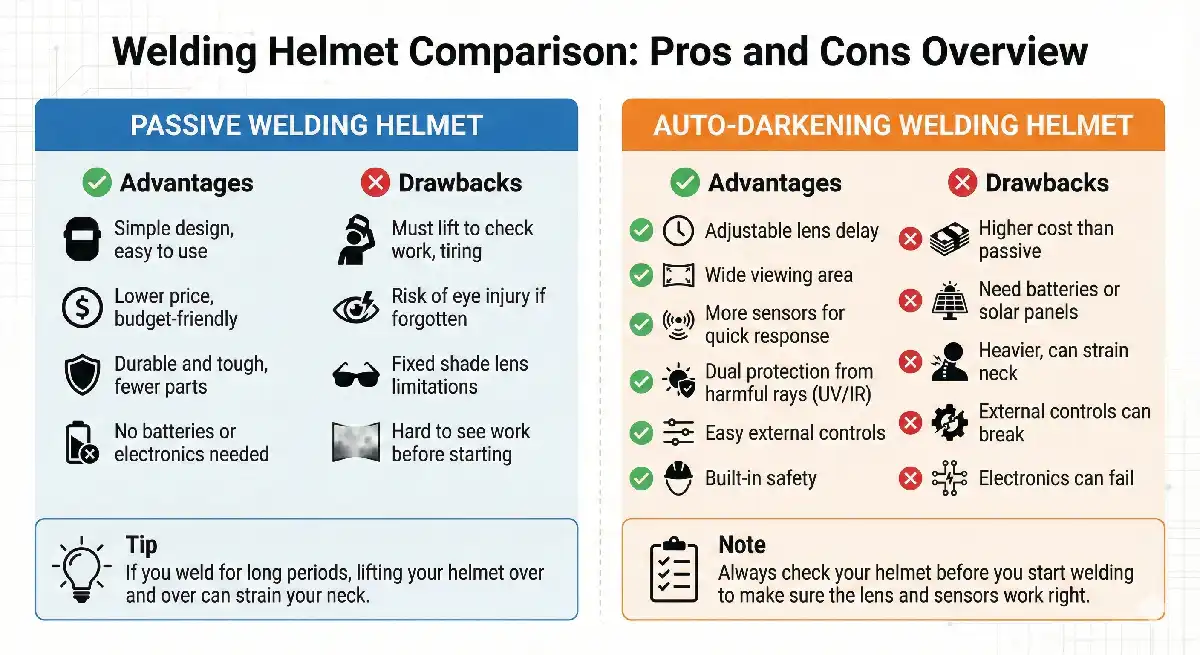
Passive Welding Helmet Advantages
You might like a passive welding helmet if you want something simple. These helmets have a fixed shade lens, so you always know what to expect. You do not need batteries or electronics. Many welders say passive helmets last a long time because they have fewer parts that can break. You can trust them for basic welding jobs. They often cost less, which helps if you are on a tight budget.
Here are some reasons people choose passive helmets:
- Simple design makes them easy to use.
- Lower price fits most budgets.
- Durable and tough for rough work.
- No batteries or electronics to worry about.
Passive Welding Helmet Drawbacks
Passive helmets have some downsides. You must lift the helmet every time you want to check your work. This can get tiring, especially if you weld a lot. If you forget to put the helmet down before striking an arc, you risk hurting your eyes. The fixed shade lens does not work well for all types of welding. You may find it hard to see your work before you start.
Tip: If you weld for long periods, lifting your helmet over and over can strain your neck.
Auto-darkening Welding Helmet Advantages
Auto-darkening helmets make welding easier and safer. You can see your work before you start, and the lens darkens in a split second when you strike an arc. Many users love the adjustable delay feature. You can set how fast the lens changes, which helps with different welding tasks. A larger viewing area lets you see more of your project. Helmets with extra sensors respond better, even if you weld in tricky positions. You get protection from both ultraviolet and infrared rays, keeping your eyes safe. Some helmets let you adjust settings from the outside, so you do not need to take off your helmet.
Auto-darkening helmet benefits:
- Adjustable lens delay for different jobs.
- Wide viewing area for better vision.
- More sensors for quick response.
- Dual protection from harmful rays.
- Easy-to-use external controls.
- Built-in safety even when lens is clear.
Auto-darkening Welding Helmet Drawbacks
Auto-darkening helmets cost more than passive ones. You need to check batteries or solar panels to keep them working. Some helmets feel heavier, which can bother your neck after a long day. External controls make adjustments easy, but they might break if you drop your helmet. Electronics can fail over time, so you may need repairs.
Note: Always check your helmet before you start welding to make sure the lens and sensors work right.
Cost and Durability Factors
Price Comparison
When you shop for a welding helmet, price matters. You want to get the best value for your money. Passive helmets usually cost less. Auto-darkening helmets cost more because they have extra features and electronics.
Here’s a quick look at the price range:
| Helmet Type | Price Range |
|---|---|
| Passive Welding Helmets | Generally lower cost |
| Auto-Darkening Helmets | Higher cost |
If you weld only once in a while, a passive helmet might save you money. If you weld every day or need more comfort, you might find the higher price of an auto-darkening helmet worth it.
Maintenance and Repairs
Both types of helmets need care to last a long time. You should keep the lens clean and check for damage. Auto-darkening helmets need a bit more attention because of their batteries and sensors. Sometimes, you might need to replace the lens or fix the electronics.
Here are some common maintenance issues and solutions:
| Maintenance Issue | Possible Causes and Solutions |
|---|---|
| Dirty Lens | Clean with a soft, lint-free cloth and lens cleaner. Avoid harsh chemicals. |
| Scratched or Damaged Lens | Inspect often. Replace if scratched or damaged. |
| Fogging | Use anti-fog spray or make sure your helmet has good airflow. |
| Helmet Does Not Turn On | Check batteries or connections. Replace batteries if needed. |
| Helmet Does Not Cover Required Shade | Adjust settings or replace the lens module if it does not work right. |
Tip: Regular cleaning and quick checks help your helmet last longer and keep you safe.
Lifespan and Reliability
Passive helmets have a simple design. They last a long time because they have fewer parts that can break. Auto-darkening helmets have more features, so you might need to replace batteries or fix sensors over time. If you use your helmet a lot, you may notice more wear and tear on an auto-darkening model.
Think about how often you weld. If you work on big projects every week, you might want the comfort and speed of an auto-darkening helmet, even if it needs more care. If you weld only now and then, a passive helmet could last for years with little trouble.
Choosing Your Welding Helmet
Factors to Consider
Picking the right helmet can feel tricky, but you can make it easier by looking at a few key things:
- Lens type: Do you want a fixed passive shade or an adjustable auto-darkening filter?
- Optical quality: Clear vision helps you work better.
- Shade range: Some jobs need a darker lens, while others do not.
- Viewing area: A bigger window lets you see more of your project.
- Comfort and fit: You will wear your helmet for long stretches, so it should feel good.
- Controls: Auto-darkening helmets often have easy-to-use settings.
- Airflow: Some helmets work with powered air-purifying respirators for extra safety.
If you weld a lot or do high-intensity work, you might want an auto-darkening helmet. It adjusts the lens for you and keeps your neck from getting sore. For occasional or simple jobs, a passive helmet could be enough.
Best for Beginners
If you are just starting out, you want a helmet that is easy to use and keeps you safe. Auto-darkening helmets work well for beginners because:
- The lens changes shade automatically, so you do not have to flip the helmet down.
- You get better eye protection, which is important when you are learning.
- These helmets are user-friendly and help you focus on your welding, not your gear.
Passive helmets can also be a good choice for beginners who want something simple and affordable. Here is a quick look:
| Feature | Why It Helps Beginners |
|---|---|
| Simplicity | No electronics, easy to use |
| Durability | Tough and reliable |
| Affordability | Good for tight budgets |
| Large Viewing Area | Makes it easier to see your work |
| Comfortable Fit | Adjustable headgear for comfort |
| Lightweight | Less strain during long practice sessions |
Tip: If you want less fuss and more focus on learning, try an auto-darkening helmet.
Best for Experienced Welders
If you have welded for a while, you probably know what you like. You might want a helmet that matches your work style. Auto-darkening helmets are great for frequent welders or those who do TIG or MIG welding. They let you work faster and with more accuracy. You can adjust the shade and controls for different jobs.
Passive helmets still work well for pros who want a tough, no-nonsense helmet for stick welding or quick repairs. You save money and get a helmet that lasts.
Remember: The best welding helmet is the one that fits your needs, feels comfortable, and keeps you safe.
Is Auto-darkening Worth It?
Main Considerations Recap
You want to make sure you get the right helmet for your needs. Auto-darkening helmets offer a lot of features that make welding safer and easier. Let’s look at what matters most when you decide if it’s worth the investment:
| Feature | Description |
|---|---|
| Lens Reaction Time | Fast reaction time (1/25,000 of a second or quicker) protects your eyes from intense light. |
| Adjustable Sensitivity & Delay | You can change settings for different jobs and comfort during long tasks. |
| Shade Range | Wide range (shades #9 to #13) lets you use the helmet for many types of welding. |
| Viewing Area | Bigger viewing area helps you see more and reduces neck strain. |
| Comfort and Fit | Adjustable headgear and lightweight materials keep you comfortable for hours. |
| Power Source | Dual power options (batteries and solar) keep your helmet working when you need it. |
| Durability and Build Quality | Strong materials mean your helmet lasts longer and keeps you safe. |
| Safety Standards | Helmets that meet ANSI Z87.1 or EN379 protect your eyes and face. |
| Price and Warranty | You should balance quality and cost, and check the warranty for coverage on defects. |
You also need to think about cost, safety, and convenience. Auto-darkening helmets cost more, but they give you constant eye protection and help you avoid injuries like flash burns. You don’t have to lift your helmet every time you want to check your work, which saves time and keeps you comfortable. If you’re new to welding, these helmets help you avoid bad starts and make learning easier.
Tip: If you weld often or for long periods, comfort and safety matter even more. Auto-darkening helmets can make a big difference.
Who Should Invest
You might wonder if you should spend extra on an auto-darkening helmet. Here’s who benefits most:
- You weld several times a week or work on big projects.
- You switch between different welding types, like MIG, TIG, or plasma cutting.
- You want the best eye protection and don’t want to risk arc flashes.
- You care about comfort and want to avoid neck strain.
- You like having adjustable settings for different jobs.
- You want a helmet that works for both welding and grinding.
Many professionals say auto-darkening helmets are the gold standard for safety. You don’t need to lift your helmet between welds, which keeps your eyes safe and helps you work faster. Brands like Speedglas and Miller Infinity get high marks for comfort, clarity, and extra modes. Jackson helmets give you better visibility, while Hobart helmets work well for occasional use.
Note: If you weld for a living or do lots of different jobs, investing in a top-quality auto-darkening helmet pays off in safety and convenience.
When Passive Is Enough
You don’t always need the fanciest helmet. Passive welding helmets work well when your welding conditions stay the same and you don’t need to adjust your lens often. These helmets use a fixed shade lens, usually set to shade 10, which is good for steady welding tasks. If you only weld now and then, or you do simple stick welding, a passive helmet can be enough.
Here’s when a passive helmet makes sense:
- You weld once in a while, maybe for hobbies or small repairs.
- Your budget is tight and you want something affordable.
- You work in stable conditions and don’t need to change shades.
- You prefer a simple design with fewer parts to break.
Passive helmets protect your eyes, but you have to lift the helmet between welds to see your work. This can get tiring if you weld for long periods. If you want a helmet that just works and doesn’t need batteries or extra care, passive is a good choice.
Reminder: Always check your helmet for damage and make sure it fits well. Safety comes first, no matter which type you choose.
You have a lot to think about when picking your welding helmet. Auto-darkening helmets boost safety, comfort, and speed. They adjust to changing light and help you spot mistakes fast. Passive helmets keep things simple and cost less.
Here’s a quick guide:
| Type | Best For |
|---|---|
| Passive Helmet | Hobbyists, small jobs |
| Auto-darkening | Pros, frequent welders |
Think about your welding style, comfort, and budget. Weigh the pros and cons before you buy. Your eyes and safety matter most!
FAQ
What is the main difference between passive and auto-darkening helmets?
You get a fixed dark lens with a passive helmet. An auto-darkening helmet changes shade when you start welding. You do not need to flip your helmet up and down with auto-darkening.
Do auto-darkening helmets need batteries?
Yes, most auto-darkening helmets use batteries. Some also have solar panels. You should check the power source before you start welding to stay safe.
Can I use a passive helmet for all types of welding?
You can use a passive helmet for many welding jobs. It works best for simple tasks like stick welding. If you switch between welding types, you may want an auto-darkening helmet.
How do I know if my helmet is safe?
Look for safety labels like ANSI Z87.1 or EN379. These show your helmet meets safety standards. You should also check for cracks or damage before each use.
Is an auto-darkening helmet good for beginners?
Yes! You do not need to worry about flipping your helmet down. You get better eye protection and can focus on learning to weld. Many beginners find auto-darkening helmets easier to use.
How Much Should You Pay for Laser Welding Services
Three in one laser machine really worth your money
How Does Laser Wire Feeding Technology Improve Welding Precision