
Application in sheet metal processing
Laser welding technology is an ideal choice for processing stainless steel sheet metal parts. It provides a high-energy beam, non-contact connection method, ensuring that the weld seam is exquisite, firm, and has a small heat affected zone, which can effectively improve the aesthetics and overall structural strength of the product.
The advantages of laser welding in sheet metal processing
Say goodbye to the drawbacks of traditional welding, such as rough weld seams, easy deformation, and the need for extensive post-processing polishing. We provide professional laser welding solutions to provide high-strength and aesthetically pleasing connections for various sheet metal structural components, completely revolutionizing your production process.
- High strength and long service life: achieving deep penetration and dense welding seams, with connection strength far exceeding traditional processes, ensuring the sturdiness and reliability of sheet metal products, and extending their service life.
- Exquisite welds, no need for polishing: narrow and smooth welds, precise control of penetration depth. No or minimal polishing is required to meet the finished product requirements, greatly saving post-processing steps and costs.
- Minimal thermal deformation: The energy of the laser beam is highly concentrated, and the heat affected zone is extremely small, which can effectively prevent warping deformation of thin plate parts during welding and ensure product assembly accuracy.
- Significant improvement in production efficiency: welding speed is fast, easy to achieve automated or semi automated operations, efficiency is several times higher than traditional welding, and the delivery cycle is significantly shortened.
Through laser welding, you can obtain sturdy and reliable structural connections, minimize rework and material waste, lower overall manufacturing costs, and enhance the competitiveness and added value of sheet metal products in the market.
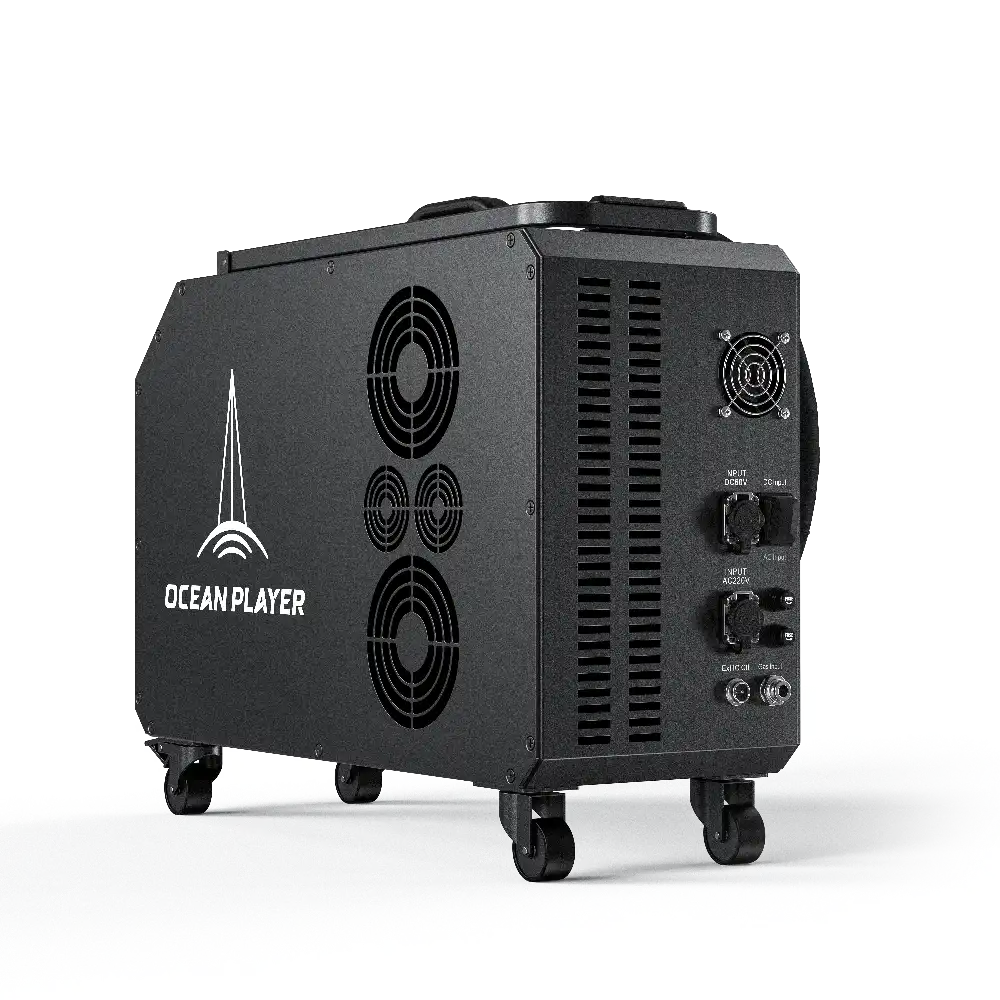
Fiber laser handheld welding machine

Integrated laser welding machine

Precision metal laser welding machine
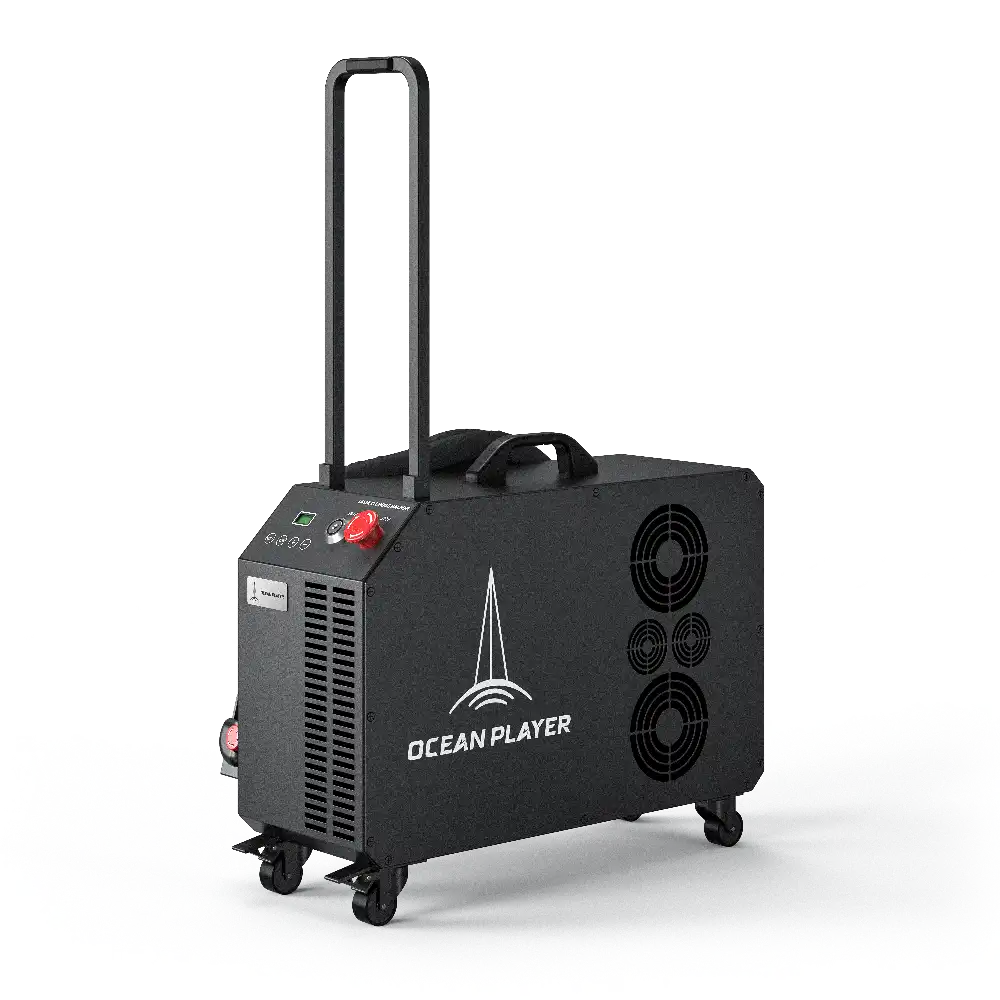
Portable laser welding machine integrated machine
If you need to customize the functionality and appearance of the product, please contact us and we will provide you with the best solution
Principles and advantages of laser welding technology in sheet metal applications
1. Definition and Basic Advantages
We use high-energy density laser beams to precisely focus on the joints of sheet metal materials. Within milliseconds, the material instantly melts and solidifies, forming a dense and uniform metallurgical bonding weld. As a non-contact, efficient, and clean connection method, laser welding can perfectly maintain the original strength and corrosion resistance of sheet metal parts, making it an ideal choice for manufacturing high-quality sheet metal structural parts.
2. Core application focus
Traditional welding methods, such as arc welding and argon arc welding, often result in rough welds, severe thermal deformation, and defects such as slag inclusion and porosity, requiring a significant amount of time for subsequent grinding and polishing. Our laser welding core application advantages include:
- High precision and structural stability: Ensure high dimensional accuracy and structural stability at the connection of sheet metal structural components, providing solid guarantees for product safety and load-bearing capacity.
- Improving appearance quality and brand value: Uniform and beautiful welds minimize welding marks, making the sheet metal surface more delicate, significantly enhancing the added value of product appearance and brand image.
- Welding ability of ultra-thin plates and irregular parts: capable of handling thin-walled sheet metal profiles and complex curved workpieces that are difficult to handle with traditional methods, achieving seamless and high-quality connections.
Through efficient and precise laser welding, we can endow sheet metal structural components with clear and durable connection strength, significantly extending product service life, and enhancing their overall value and market competitiveness.
Operating procedures and quality control standards
In order to achieve high-strength connections, beautiful welds, and minimize thermal deformation in sheet metal processing, it is necessary to strictly follow the following operating procedures and quality standards to ensure that the welding effect meets industrial requirements and improves product structural safety.
Welding process
Our welding process follows high precision and industrial standards to ensure that sheet metal products are undamaged and achieve excellent connection results:
Laser Generator⇒Transmission Fiber⇒Welding Head/Focusing System⇒Precise Positioning and Focusing⇒Laser Melting and Solidification⇒Forming High Strength Weld Seam
Core operational steps
1.Material preparation and positioning requirements: Firstly, accurately analyze the grade and thickness of sheet metal materials (such as stainless steel, carbon steel, aluminum alloy, etc.), and perform precise fixture positioning and strict gap control on the components. This is the foundation for achieving high-strength and aesthetically pleasing welds.
2.Welding parameter optimization (core): Adjust laser power, welding speed, defocusing amount, and shielding gas flow rate based on material characteristics and connection form to ensure that the penetration depth meets strength requirements while minimizing heat affected zone and material deformation.
3.Automation and precision motion control: Through high-precision motion control systems such as robots or CNC platforms, the laser focus is ensured to move accurately and uniformly along the welding trajectory, completing high-quality continuous welding and ensuring welding consistency.
4.Real time monitoring of weld quality: During the welding process, the status of the molten pool and the formation of the weld seam are monitored in real-time through a visual system or temperature sensor to ensure uniformity, absence of porosity and cracks, and compliance with the welding requirements of structural load-bearing standards.

Flexible welding of complex structural components
Sheet metal structural components, especially customized products, typically involve complex structures and irregular connections. Our handheld laser welding machine can easily handle multi angle and irregular welds, ensuring high-strength and seamless connection effects, greatly enhancing the design and manufacturing flexibility of sheet metal products.
Ultimate welding accuracy of structural components
Unlike traditional arc welding or spot welding, laser welding can achieve micrometer level accuracy in depth control and weld width, making it particularly suitable for connecting thin-walled sheet metal profiles. This is crucial for ensuring that sheet metal structural components have high load-bearing capacity.


Flexible fixtures and customization
We provide highly flexible customized tooling and programming services for complex or non-standard connection structures in sheet metal processing. This ensures that the laser welding head can accurately reach various complex surfaces and irregular seams, achieving high-quality customized welding solutions.
Aesthetic treatment of sheet metal processing welds
Laser welding produces very little oxide, but high-quality sheet metal structural components still require slight post-processing. Compared with traditional welding, laser welding can safely remove residual discoloration layers or splashes, ensuring a smooth and beautiful appearance of the weld seam without damaging the material’s anti-corrosion layer

Six reasons to choose laser welding machine for sheet metal processing
Quickly shorten the production cycle
Laser welding has a much faster speed than traditional welding methods and a higher degree of automation, which can significantly reduce manual operation and waiting time (such as not requiring frequent polishing), shorten production cycles to the greatest extent, and accelerate product launch.
Seamless weld seam
Laser welding seam is narrow and smooth, with a small heat affected zone and high aesthetic appearance of the finished product. No or minimal polishing is required to meet the requirements, directly improving the appearance quality of sheet metal products.
High structural strength
Laser welding achieves high-density metallurgical bonding, precise control of penetration depth, and ensures joint strength far exceeding traditional processes, providing long-lasting and stable load-bearing capacity for sheet metal structural components
Minimization of thermal deformation
Laser energy concentration and low heat input can effectively avoid warping and deformation of thin-walled sheet metal parts during welding, ensuring product assembly accuracy.
Reduce overall manufacturing costs
By reducing rework (polishing, correction) time and material waste, the dependence on highly skilled welders has been reduced, while also saving some consumable costs, achieving long-term economic optimization.
Adapt to various materials and joints
Laser welding technology is not only suitable for stainless steel, but also for efficient welding of various sheet metal materials such as carbon steel and aluminum alloy, and can handle complex joint forms such as T-joints, lap joints, and corner joints, with a wide range of applications.
Get exclusive sheet metal laser welding solutions
Please submit your sheet metal material specifications, welding joint types, and production scenario requirements immediately. We will customize the most suitable laser welding solution for you to meet your stringent standards for connection strength, weld aesthetics, and on-site operation efficiency.
Laser welding case of sheet metal structural components
Fiber laser welding is the best choice for connecting high-precision sheet metal structural components. By precisely adjusting laser parameters such as power, speed, and defocus, we can achieve high-strength connections in a completely non-contact manner while minimizing thermal deformation, material damage, and stress concentration issues caused by traditional welding.
This provides an ideal structural stability foundation for sheet metal products, ensuring that subsequent products can maintain connection strength and integrity even in harsh environments such as high loads, vibrations, and corrosion. Significantly improved the structural reliability, safety, and added value of the product.


Key criteria for selecting laser welding machine suppliers
1. Core technical capabilities and welding expertise
Laser performance and stability: Evaluating whether the laser provided by the supplier has high stability and beam quality is key to achieving high-precision penetration control and consistent weld seams.
Motion control and integration accuracy: Confirm whether the control system can achieve micrometer level motion accuracy and trajectory control, ensure weld uniformity, and ensure that the equipment can be smoothly integrated into existing automated sheet metal production lines.
Equipment reliability and heat dissipation design: Confirm whether the equipment has industrial environment adaptability, such as dust-proof design and efficient heat dissipation system, to ensure long-term stable operation and reduce downtime.
2. Industry application experience and customization capability
Deep application cases: Investigate whether suppliers have rich successful welding cases of complex materials such as sheet metal structural components, thin plates, and irregular parts, and investigate their experience in specific industries such as automobiles and chassis cabinets.
Welding process customization capability: Inquire with the manufacturer if they can flexibly adjust the optical path, focus, and parameter library according to different material types, thicknesses, and joint forms, and provide handheld or automated integrated welding solutions.
3. Comprehensive after-sales service and long-term guarantee
On site installation and operation training: Confirm whether the manufacturer can provide on-site installation guidance and operation training to ensure that your maintenance and operation team can quickly master the daily use and maintenance of the equipment.
Quick response and spare parts supply: Laser welding equipment is a precision tool. Evaluate the manufacturer’s ability to respond quickly to faults and provide long-term spare parts to ensure that production plans are not disrupted by equipment downtime.
Why choose our laser welding solution

With our profound accumulation in the field of high stability and high efficiency laser equipment manufacturing, we not only provide high-precision and high-power laser welding equipment, but also provide comprehensive application guarantee and solutions for your sheet metal structure connection.
- Technical Inheritance and Reliability: We are well versed in high standard laser welding technology, ensuring that our welding equipment has excellent beam quality and longer service life.
- Quick response and customized services: Our engineering team can quickly respond to customer needs and customize the most suitable welding parameters and automated integrated solutions based on your sheet metal material grade, connection requirements, and production environment.
Choosing us means choosing stable and reliable equipment and professional customized connection solutions, ensuring that your sheet metal products have clear and permanent high-quality welds, thereby significantly enhancing the product’s market competitiveness.
FAQ
How thick sheet metal can laser welding handle?
Laser welding machines are particularly adept at processing medium and thin plates with thicknesses ranging from 0.5mm to 6mm
Why is' precise cleaning 'necessary before welding?
The pollutants such as oil stains, oxide layers, and dust in the welding area can seriously affect the absorption of laser energy and the stability of the molten pool, easily causing defects such as pores, cracks, or slag inclusions in the weld seam. Therefore, precise cleaning is the foundation for obtaining high-strength, zero defect welds.
What types of sheet metal materials can laser welding machine weld?
Laser welding has a wide range of applications, commonly used for welding common industrial sheet metal materials such as stainless steel (such as 304, 316), carbon steel, galvanized sheet, and aluminum alloy. Excellent equipment and processes can achieve connections between dissimilar metals.
What is the biggest advantage of laser welding in sheet metal processing?
Laser welding can effectively avoid warping and deformation of thin plates during the welding process, with narrow and beautiful welds that do not require or only require minimal polishing, greatly saving post-processing steps.
Is the operation of laser welding machine complicated? Do you need professional welders?
Compared to traditional welding, modern laser welding machines are easier to operate. Especially for handheld laser welding machines, the operating threshold is low and easy to handle. Automation systems mainly rely on program settings and precise motion control, with lower requirements for the professional welding skills of operators, which helps alleviate the dependence of enterprises on advanced welders.

