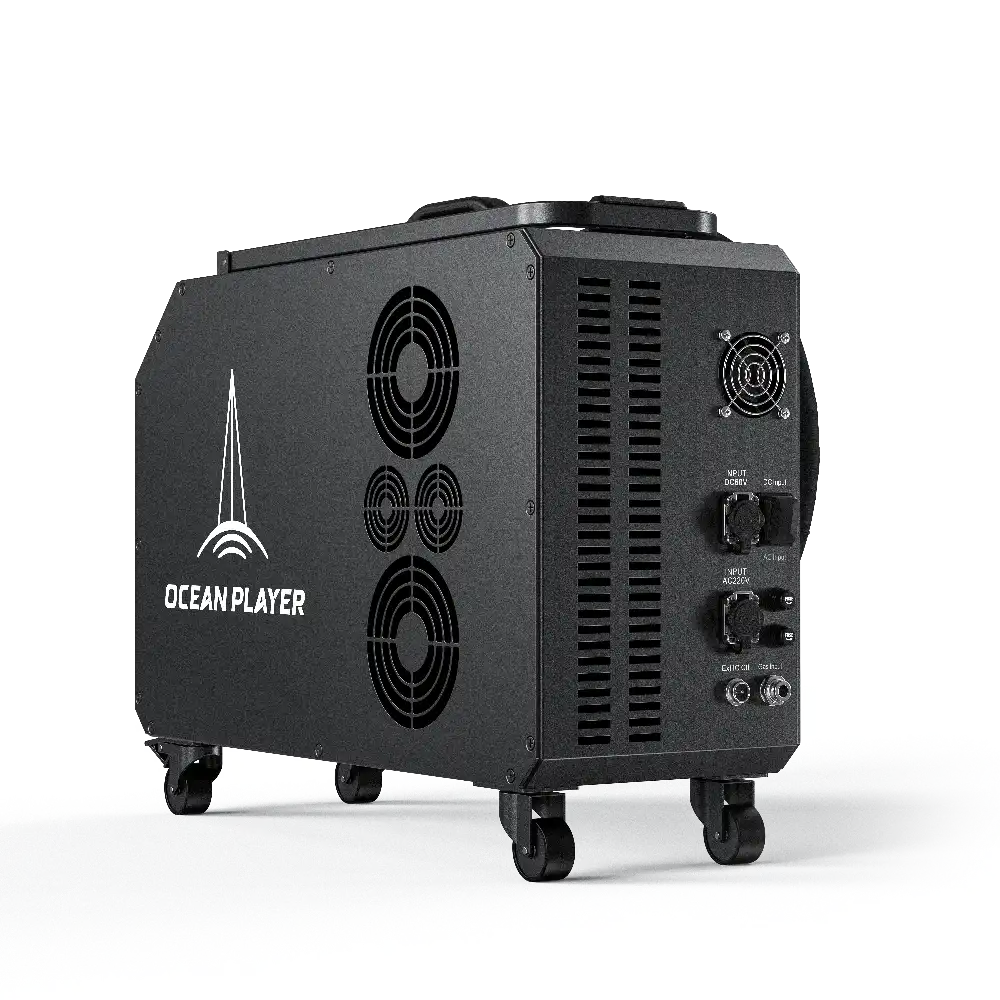
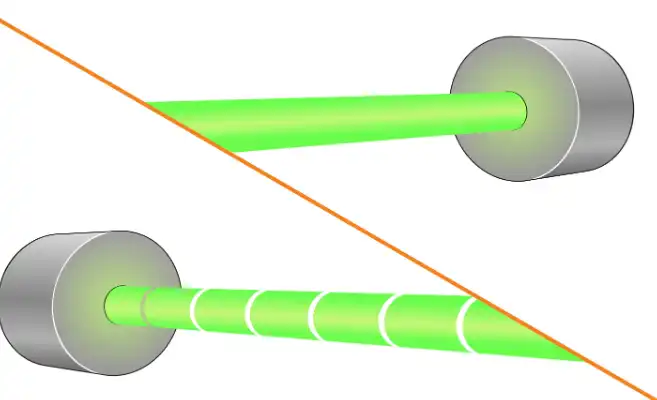
When deciding between a pulse laser vs. continuous wave (CW) laser for rust removal, a pulse laser often provides better results. Pulse laser vs. continuous wave (CW) laser technology shows that pulse lasers offer high precision and generate less heat, which helps protect the material being cleaned. In contrast, pulse laser vs. continuous wave (CW) laser comparisons reveal that CW lasers can clean larger areas more quickly, but they tend to produce more heat and may risk damaging the surface. Ultimately, the choice between pulse laser vs. continuous wave (CW) laser depends on your specific project needs, as both types have their advantages.
| Laser Type | Precision | Risk of Thermal Damage | Efficiency for Large-Scale Tasks |
|---|---|---|---|
| Pulse laser vs. continuous wave (CW) laser: Pulse Laser | High | Low | Moderate |
| Pulse laser vs. continuous wave (CW) laser: CW Laser | Moderate | High | High |
Key Takeaways
- Pick a pulse laser for careful rust removal on fragile surfaces. It keeps heat low and gives you more control.
- Use a continuous wave (CW) laser for big rust removal jobs. It works fast but can make too much heat. This heat might hurt sensitive materials.
- Think about the material before you pick a laser. Pulse lasers are best for thin or soft metals. CW lasers work well on thick and strong materials.
- Look at your project size and how much money you have. CW lasers cost less for big jobs. Pulse lasers are better for small, detailed work.
- Safety is very important when using laser cleaning machines. Wear safety gear and make sure the air is clean. This helps you stay safe from harm.
Laser Cleaning Mechanisms
Pulse Laser Cleaning Machine: How It Works
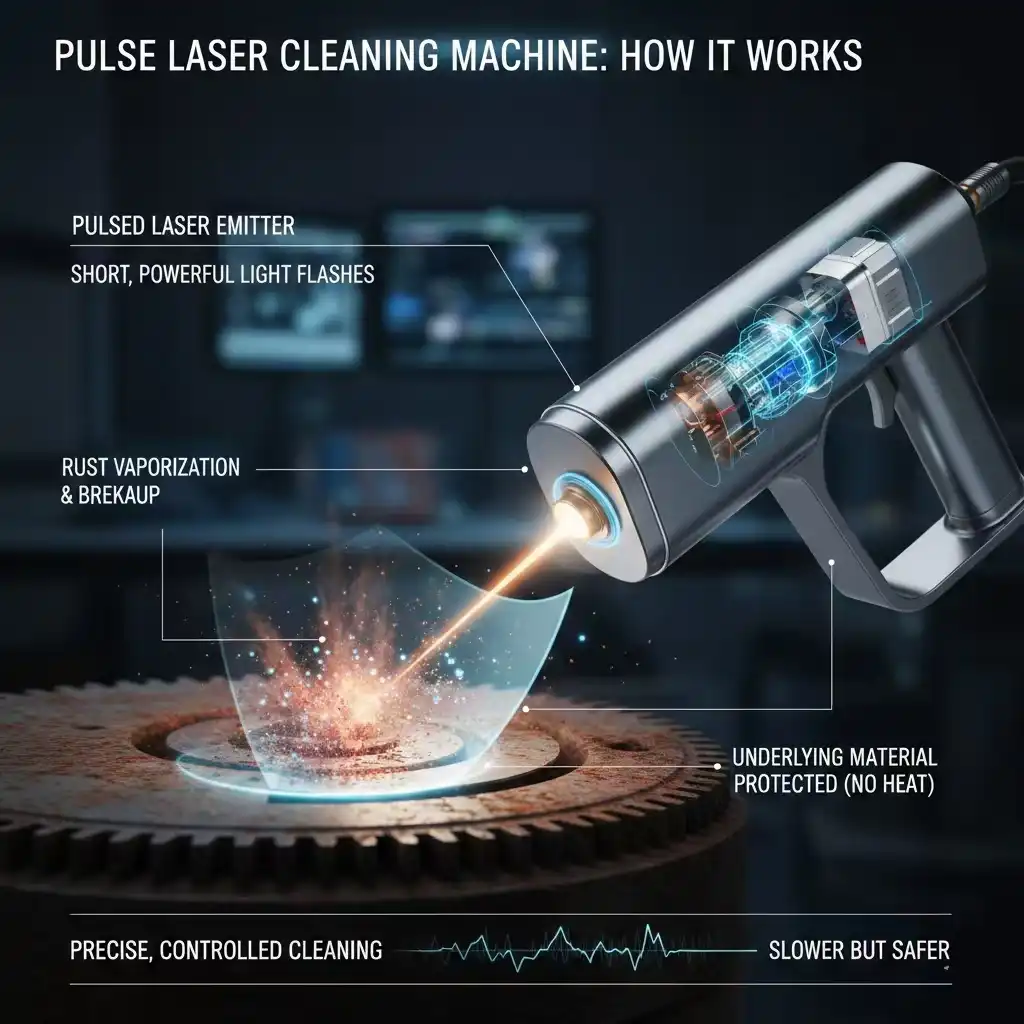
A pulse laser cleaning machine uses short, strong flashes of light. These flashes hit the rust and make it break up or turn into vapor. This way, you can control the cleaning very well. The metal under the rust does not get hot. Pulse laser cleaning works best for surfaces that are delicate or need careful work. The pulse laser only removes the rust, so the rest of the material stays safe.
- Pulsed lasers send out energy in quick flashes.
- These flashes take off rust without making much heat.
- You can use this for thin or fragile materials.
- Pulse laser cleaning is slower but gives better control.
Pulse laser cleaning is a smart choice if you want to keep the surface safe while getting rid of thick or tough rust. You can count on this laser cleaning technology when you need to be exact.
Continuous Wave (CW) Laser: Operation Explained
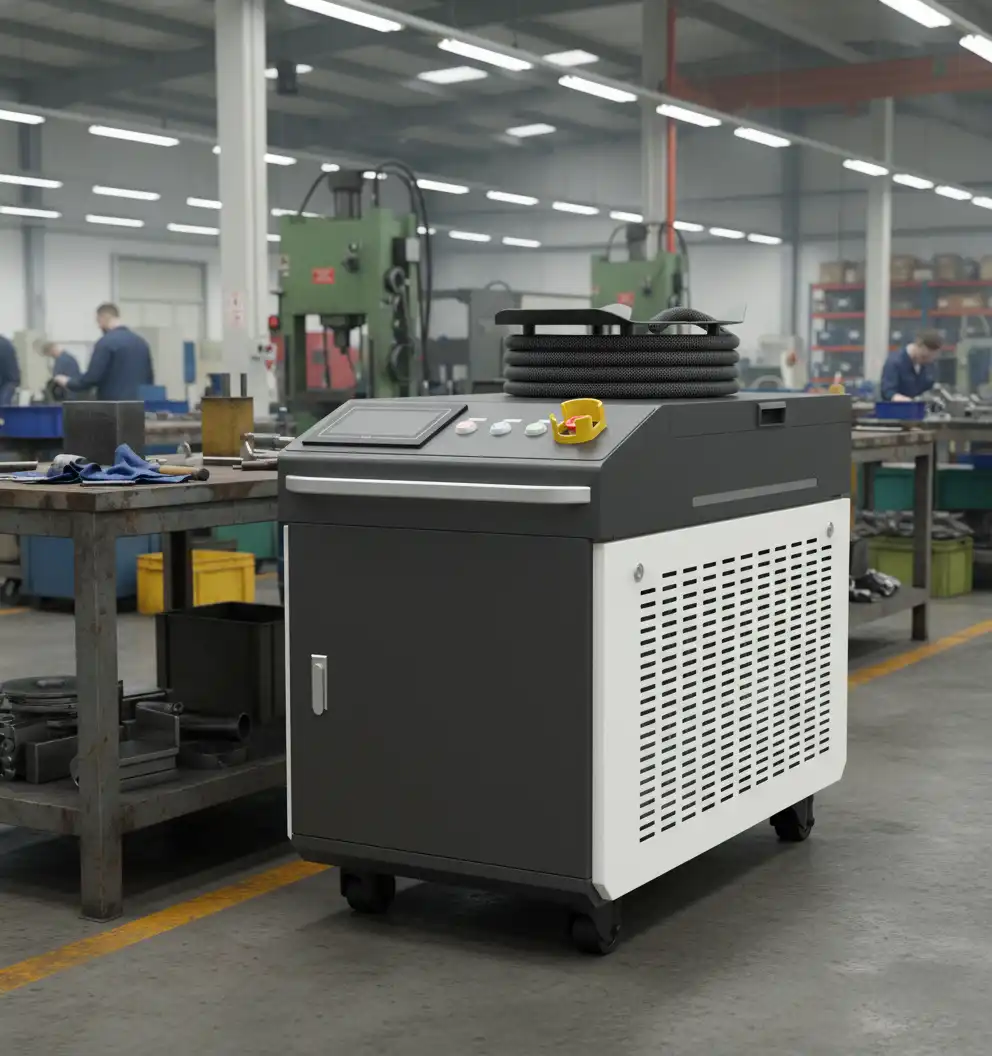
A cw laser cleaning machine works in another way. It sends out a steady, nonstop beam of light. This beam melts or boils the rust, so you can wipe it away. CW laser cleaning machines work quickly and clean big areas. You might pick a cw laser cleaning machine for large jobs or when you need to remove thick rust fast.
- CW lasers give a steady stream of energy.
- This way works best for cleaning big surfaces.
- The heat from the beam can hurt the material.
- CW laser cleaning machines are not as exact as pulsed lasers.
You should know that a continuous wave laser can make the part very hot. This can bend or harm thin or soft materials. CW laser cleaning machines work best for tough jobs where speed is more important than detail.
Tip: Use pulse laser cleaning for careful work and soft materials. Pick a cw laser cleaning machine for quick, big cleaning jobs.
| Feature | Pulse Laser Cleaner | Continuous Wave (CW) Laser Cleaner |
|---|---|---|
| Cleaning Method | Uses flashes of energy to turn rust into vapor. | Sends a steady beam that melts or boils rust. |
| Heat on Part | Very little heat, so sensitive parts stay safe. | Lots of heat, which can bend or harm parts. |
| Precision | Very exact, good for careful cleaning. | Less exact, good for cleaning lots at once. |
| Speed | Slower, best for small or tricky jobs. | Faster, made for big areas. |
Laser cleaning technology lets you pick from different tools for many cleaning jobs. Pulse laser cleaning and cw laser cleaning machines both have good uses. You can choose the best one for your job.
Pulse Laser vs. Continuous Wave (CW) Laser: Rust Removal Comparison
Effectiveness and Speed
You might wonder which laser is best for rust removal. The answer depends on what you need. Pulse laser vs. continuous wave (cw) laser technology works in different ways. If you want to clean a big area fast, use a continuous wave laser. It gives a steady beam that heats rust over 2000 °C. This high heat helps take off thick rust quickly. You can see the differences in the table below:
Authoritative context: Removing oxides by laser ablation requires temperatures near vaporization; iron’s boiling point is documented at 2,862 °C in the NIST Chemistry WebBook – Iron data, so ablation plumes and surface flashes can exceed 2000 °C under sufficient fluence. In cleaning practice, pulsed solid‑state systems are favored for high peak power with lower heat input to the substrate, as outlined on TRUMPF’s laser cleaning application page (2019–2025). Mechanistically, material removal occurs by rapid heating and phase change, consistent with Coherent’s definition of laser ablation (2022).
Scope note: Actual temperature and efficiency depend on power density (fluence), spot size, scanning speed, material/oxide composition, and surface condition; parameter tuning is essential for safe, efficient rust removal.
| Laser Type | Speed of Rust Removal | Characteristics |
|---|---|---|
| Continuous Wave | High | Generates high temperatures (>2000 °C) for ablating thick rust layers, forming a dense oxide layer. |
| Pulsed Laser | Limited | Effective for thin rust layers with minimal heat effects, but less efficient for thick rust removal. |
A pulse laser works in another way. It sends short bursts of energy. This method is slower but gives you more control. You can use a pulse laser for thin rust or when you do not want the metal to get hot. Pulse laser vs. continuous wave (cw) laser comparisons show pulsed lasers work better with tough residues like oxide layers. Continuous lasers are good for light things like paint, grease, or dust.
| Laser Type | Advantages | Applications |
|---|---|---|
| Continuous Laser | Cost-effective, suitable for large areas, compensates efficiency gaps with high power. | Removing light contaminants like paint, grease, and dust. |
| Pulsed Laser | More efficient under equivalent power, better control over heat input. | Tackling tougher residues like oxide layers and coatings. |
If you want speed, pick a continuous wave laser. If you want control and good results for hard jobs, pick a pulse laser.
Representative pilot (internal example): A36 steel plate, rust 0.5–2.0 mm, target cleanliness Sa2.5 (visual + profilometry). Pulse test: 100 ns pulse width, 20 kHz rep rate, ~1 mJ/pulse (≈0.8 J/cm² fluence), 0.5 mm spot, 200 mm/s scan — 3 passes removed ≈95% of rust; surface ΔT <15°C; no distortion. CW test: 1.5 kW average power, 2 mm spot, 500 mm/s scan — 1 pass removed ≈90%; surface ΔT ≈+100–130°C with slight edge warping on 1.5 mm sections. Conclusion: Pulse gave finer control and lower thermal risk; CW gave higher single-pass throughput but greater HAZ—pilot validation required for final selection. (Representative pilot; not a published study.)
Substrate Safety and Damage Risk
You should think about keeping the material safe. Pulse laser vs. continuous wave (cw) laser cleaning affects the base material in different ways. A continuous wave laser gets very hot. This heat can bend or damage thin or soft materials. You might see marks or changes after cleaning.
A pulse laser gives better control over heat. It sends energy in short bursts, so the metal does not get too hot. This makes pulse laser cleaning safer for thin or delicate materials. You can use a pulse laser for careful cleaning when you need to protect the surface.
Note: If you work with sensitive parts, a pulse laser helps you avoid damage. For thick, strong materials, a continuous wave laser may be safe and faster.
Precision and Surface Quality
You want the rust gone and the surface to look smooth. Pulse laser vs. continuous wave (cw) laser cleaning gives different results. Pulse lasers are made for careful cleaning. They work well on small spots and let you control how much you clean. You can use a pulse laser to clean just the rust and leave the rest alone.
- Pulse laser cleaning machines are made for high surface quality and careful cleaning.
- They work best for small areas and focus on accuracy.
- These machines lower heat damage, which helps with precision.
- Pulsed lasers let you control how deep you clean.
- You can use them for selective cleaning, removing only what you want.
- Pulsed lasers use short, strong bursts, making them better for delicate materials.
Continuous wave lasers do not give as much control. They work best for thick rust but may not leave a smooth finish. The steady energy can make the surface too hot and hurt the quality.
| Laser Type | Characteristics | Surface Quality Impact |
|---|---|---|
| CW Lasers | Provide constant energy, risk of substrate overheating. | Less common in cleaning due to potential damage to surface quality. |
| Pulsed Lasers | Dominant in cleaning applications, can use nanosecond, picosecond, or femtosecond pulses. | Minimize heat effects, suitable for delicate surfaces, better control over surface roughness and cleanliness. |
If you want a clean, smooth surface, pulse laser cleaning is the best choice. You get better results for delicate jobs and careful cleaning. Pulse laser vs. continuous wave (cw) laser technology lets you pick what works best for your project.
Laser Cleaning Machines: Application Scenarios
Delicate vs. Heavy-Duty Rust Removal
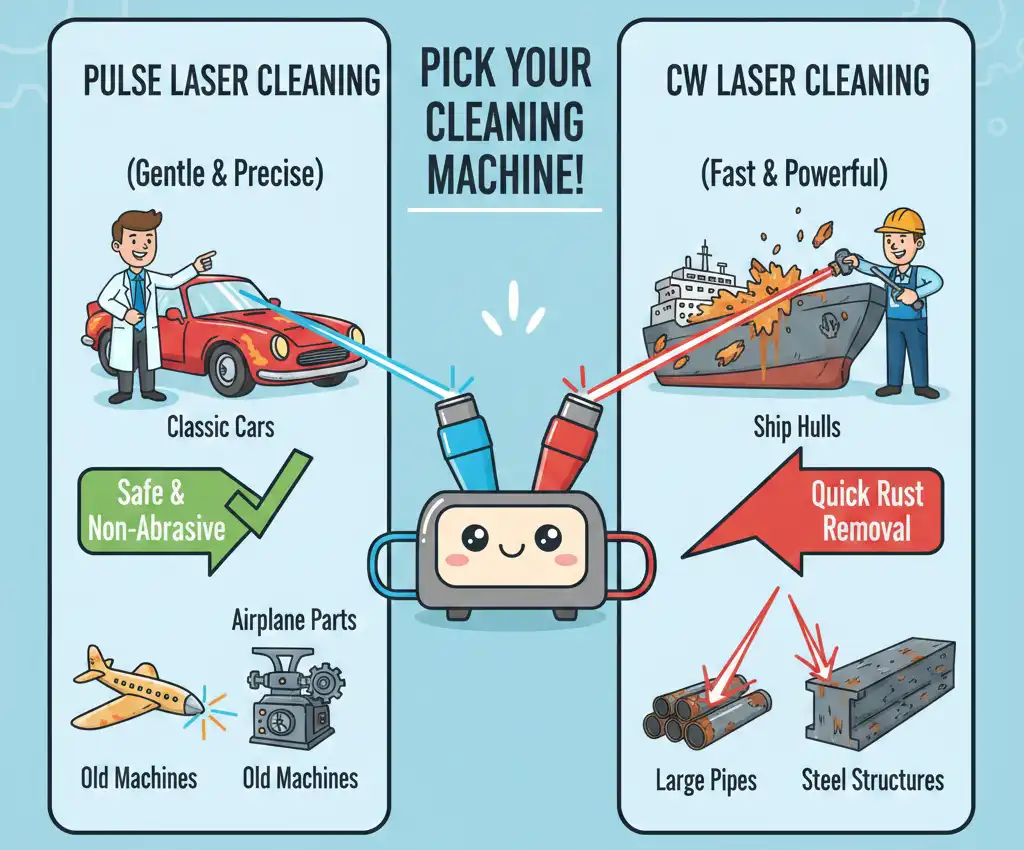
You need to pick the right laser cleaning machines for your job. If you have delicate parts, pulse laser cleaning is a good choice. It lets you remove rust without hurting the surface. You can use it on classic cars, airplane parts, or old machines. Many places use pulse laser cleaning because it is safe. It also saves time and hard work compared to older ways.
- People fix old machines with laser cleaning machines for gentle rust removal.
- Car shops use pulse laser cleaning to restore classic cars.
- Airplane workers use this technology to protect aircraft parts.
If you need to clean big, rusty things, you want a fast machine. CW laser cleaning machines use a strong, steady beam. They can clean ship hulls, pipes, or large steel pieces. These machines make the surface look even and do tough jobs well.
CW laser cleaning machines work best for big, industrial cleaning jobs. They take off thick rust quickly and help you work faster.
Material Type and Thickness
You should think about the material before picking a laser cleaning machine. Thin or soft metals need gentle cleaning. Pulse laser cleaning works well for aluminum and delicate parts. It is also good when you need to be very exact. Thick steel or big metal pieces need more power. CW laser cleaning machines are better for these jobs.
| Material Type | Laser Type |
|---|---|
| Thin, soft, or delicate materials | Pulsed Laser |
| Thick, strong, or large metal | Continuous Laser |
| Light rust, oil, coatings | Pulsed Laser |
| Heavy rust, paint, or scale | Continuous Laser |
| High precision requirements | Pulsed Laser |
| High efficiency and productivity | Continuous Laser |
If you need to take off paint or rust from aluminum, use pulse laser cleaning. For steel, CW laser cleaning machines give you the strength you need.
Project Scale and Budget
You should match your laser cleaning machines to your project size and money. For small jobs or careful work, pulse laser cleaning machines are accurate. They cost less for small cleaning jobs. For big projects, CW laser cleaning machines save time. They clean large areas quickly and help you finish on time.
- CW laser cleaning machines are great for big, industrial rust removal.
- Pulse laser cleaning machines are good for small shops or fixing old things.
Tip: Use pulse laser cleaning for small, careful jobs. Pick CW laser cleaning machines for big, fast cleaning work.
Safety and Environmental Impact
Operator Safety
When you use laser cleaning for rust, safety is very important. Both pulse laser and CW laser machines can be risky if you do not follow rules. You must wear special safety gear every time you use a laser cleaning machine. This means you need laser safety goggles, gloves, and sometimes a mask to keep fumes out of your lungs.
- Wear laser safety goggles to keep your eyes safe.
- Put on gloves so your hands do not get hurt by heat or flying bits.
- Use a mask or respirator if you think there will be fumes.
You should get your work area ready before you start. Make sure the room has good air flow. Take away anything that could catch fire. Mark the work zone so only trained people can go in. When you use laser cleaning, always follow the machine’s directions. Stay the right distance from the surface and check the machine’s temperature often.
Safety Tip: Always do safety checks before you start laser cleaning. This helps keep you and others safe.
Operator Safety — ANSI Z136 / OSHA checklist
- Verify laser class labeling and NHZ signage at beam entry/exit points.
- Ensure fully interlocked enclosures and fail-safe access controls before operation.
- Use ANSI‑specified eye protection (correct wavelength range and optical density) and appropriate skin protection.
- Install and interlock local exhaust ventilation (HEPA + molecular filtration as needed); interlock fan failure to beam disable.
- Maintain documented training, LSO oversight, SOPs, and lockout/tagout procedures. Please follow the equipment manual and applicable local regulations.
Environmental Considerations
Laser cleaning is good for the environment in many ways. You do not need strong chemicals or sandblasting stuff. This means you make less waste and do not cause bad runoff. Both pulse laser and CW laser cleaning help the air because they make less dust and do not use toxic cleaners. You help keep the air clean and lower pollution when you pick laser cleaning instead of old ways.
Old cleaning ways can make up to 40% of dangerous waste in factories. Laser cleaning does not have this problem. You also do not make fine dust that can hurt your health. Laser cleaning machines control dust and help you follow air quality rules.
Here is a quick look at how laser cleaning helps the environment:
| Environmental Benefit | Description |
|---|---|
| Eco-friendliness | Laser cleaning does not need toxic abrasives, so it is cleaner than old ways. |
| Reduction of chemical runoff | Laser cleaning does not make harmful chemical waste. |
| Compliance with environmental policies | Laser cleaning helps you follow rules and avoid getting fined. |
Laser cleaning is a smart way to take off coatings and dirt while keeping people and the planet safe.
Cost and Efficiency
Equipment and Operating Costs
You want to know how much you will spend on laser cleaning machines. The price can change based on the type you choose. CW lasers usually cost less. You can find a CW laser starting at about $4,500. These machines work well for large-area cleaning and heavy rust. If you need a pulsed laser, you will pay more. Pulsed lasers start at around $6,500. They cost more because they use advanced technology for precise cleaning.
- CW lasers are more affordable for most jobs.
- Pulsed lasers cost more but give you better control for delicate surfaces.
- CW lasers help you finish big cleaning tasks quickly.
- Pulsed lasers are best for careful cleaning where you do not want to damage the material.
CW lasers also save you money when you need to clean large areas fast. Pulsed lasers are a better choice if you need to protect sensitive parts, even though they cost more.
Maintenance and Longevity
You should think about how long your machine will last and how much it will cost to keep it running. Both types of lasers need regular care to work well. You must clean the lens and check the cooling system often. CW lasers have fewer parts that wear out, so they can last longer with less maintenance. You will spend less time fixing them.
Pulsed lasers have more complex parts. They may need more care and cost more to repair. If you use your machine for small, careful cleaning jobs, a pulsed laser can last a long time. If you use a CW laser for big projects, you get good value because it works fast and does not break down often.
| Laser Type | Starting Price | Best Use Case | Maintenance Needs |
|---|---|---|---|
| CW Laser | ~$4,500 | Large, fast cleaning jobs | Lower, less frequent |
| Pulsed Laser | ~$6,500 | Delicate, precise cleaning | Higher, more frequent |
Prices vary by configuration (power, pulse/CW type, brand) and region. As of 2026-02 (region: U.S.), entry listings show handheld CW cleaners starting from $5,200 per STYLECNC’s 2026 handheld CW pricing overview and pulsed units around $6,500 for a 100W backpack model per STYLECNC’s 2025 100W pulsed backpack price.
Tip: Choose a CW laser if you want lower costs and easy care for big cleaning jobs. Pick a pulsed laser if you need careful cleaning and do not mind paying more for precision.
Advantages and Disadvantages
Pulse Laser Pros and Cons
Pulse lasers let you control how you clean rust. You can use them on delicate parts without making too much heat. They help keep the surface smooth and safe. Pulse lasers are good for small, detailed jobs.
Pros:
- Very precise for careful cleaning
- Not likely to hurt thin or soft materials
- Makes surfaces smooth and nice
- Good for taking off rust in certain spots
Cons:
- Costs more at first than other choices
- Cleans slower, especially with thick coatings
- Needs a skilled person to set it up right
Tip: If you want to keep valuable or delicate things safe, use a pulse laser. You might spend more time and money, but you get better results for sensitive work.
CW Laser Pros and Cons
CW lasers are best for cleaning big, rusty things fast. You can use them for tough jobs like ship hulls or big steel parts. These lasers give strong and steady cleaning. You do not have to stop often, so you finish big jobs quickly.
Pros:
- Cleans large areas very fast
- Made for tough, heavy-duty rust removal
- Gives a steady and strong laser beam
- Works well for big metal pieces that can handle heat
Cons:
- Makes a lot of heat, which can bend or damage metal if you stay in one spot
- You must keep moving the laser to stop damage
- Not as exact as pulse lasers, so not good for delicate surfaces
Note: CW lasers help you finish big jobs faster. Always move the laser so you do not overheat the metal.
If you want to be very exact, pick a pulse laser for rust removal. It is good for delicate surfaces that need protection. CW lasers are better for big jobs that need to be done fast. Think about these things before you choose:
- Pick a laser that fits your material and project size.
- Look at your budget. Pulsed lasers cost more but give better control.
- Follow safety rules. Both lasers can be risky.
- Pulsed lasers help you be accurate. CW lasers work faster.
Choosing the right laser helps you clean safely and quickly every time.
FAQ
What is the main difference between a pulse laser and a CW laser for rust removal?
You get short bursts of energy with a pulse laser. You get a steady, nonstop beam with a CW laser. Pulse lasers give you more control. CW lasers clean faster but can heat the surface more.
Can you use a pulse laser on all types of metal?
You can use a pulse laser on most metals. It works best on thin, soft, or delicate materials. You should check your metal type before starting to avoid damage.
Is laser cleaning safe for the environment?
Laser cleaning does not use chemicals or sand. You make less waste and avoid toxic runoff. You help protect the environment when you choose laser cleaning.
How do you choose between a pulse laser and a CW laser?
Think about your project. If you need speed for large areas, pick a CW laser. If you want precision and safety for delicate parts, choose a pulse laser.
Do you need special training to use a laser cleaning machine?
Yes, you need training. You must learn how to use the machine safely. You also need to wear safety gear and follow all safety rules.