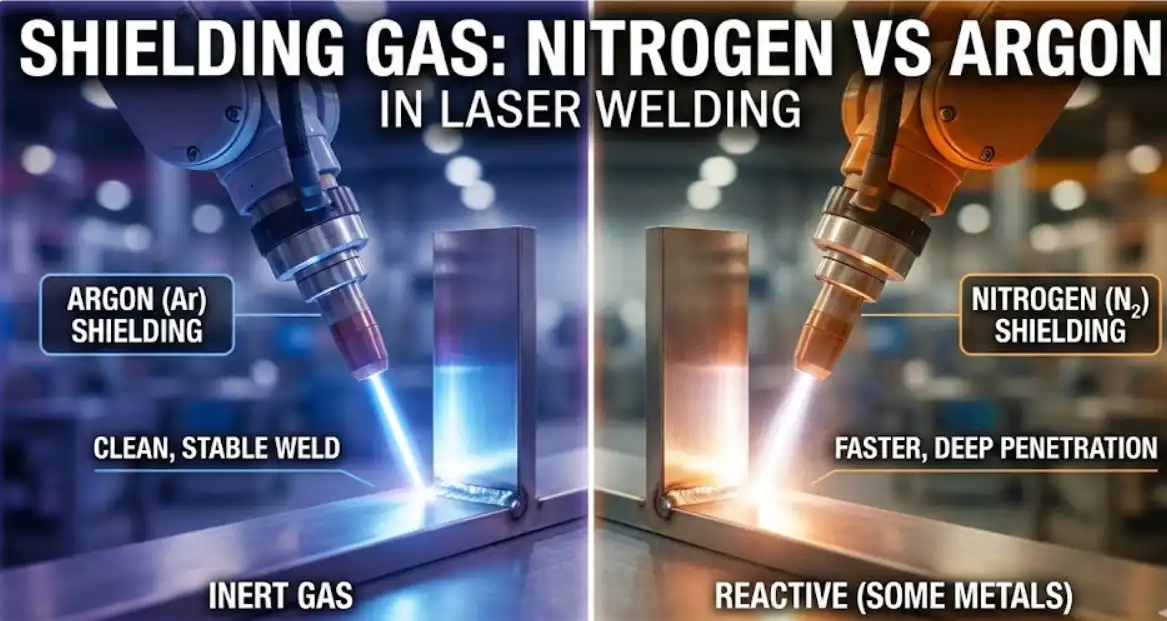
You might ask which shielding gas is best for laser welding. The answer depends on your material, the weld quality you want, and your budget. Picking the right shielding gas changes how energy goes into the weld. It also keeps the melted pool steady and stops bad chemical reactions. Studies show that the right gas and flow rate can make welds harder and lower mistakes. Always think about what you need for welding before you choose.
Key Takeaways
- Pick argon if you want a shiny, clean weld. Argon works with most metals and stops oxidation.
- Use nitrogen on stainless steel to stop rust. Nitrogen can make welds stronger but might make some metals break easier.
- Always pick the right shielding gas for your metal. This helps you get strong, clean welds and fewer errors.
- Think about price and how easy it is to get the gas. Nitrogen costs less, so it is good for saving money.
- Check and take care of your gas supply system. This keeps out dirt and gives you the best welds.
Which Shielding Gas Is Best?
Quick Comparison
You want to know which shielding gas works best for laser welding. Both nitrogen and argon have strengths and weaknesses. You can see the main differences in the table below:
| Feature | Nitrogen (N₂) | Argon (Ar) |
|---|---|---|
| Reactivity | Moderate | Very low |
| Cost | Lower | Low to moderate |
| Weld Appearance | Smooth, may darken stainless | Bright, clean finish |
| Corrosion Resistance | Can improve with some metals | Neutral, does not add protection |
| Plasma Control | Good | Less effective |
| Availability | Widely available | Very widely available |
Nitrogen and argon both prevent oxidation and help control spatter. You will find that nitrogen can boost corrosion resistance in some metals, like stainless steel. Argon gives you a bright, clean weld and is easy to use for many jobs. The mechanical properties of welds made with either gas are usually close to the base metal. This means you do not lose strength or hardness when you pick one over the other.
Tip: If you want a simple choice for most metals, argon is a safe bet. If you weld stainless steel and want better corrosion resistance, try nitrogen.
Key Factors for Selection
You need to think about several things before you pick a shielding gas for laser welding. Here are the main points to consider:
- Purpose of Shielding Gas: You use shielding gas to stop oxidation, control spatter, and keep the weld pool stable. This helps you get a strong, clean weld.
- Metal Type Compatibility: Always check if the gas matches your metal. Argon and nitrogen work well with carbon steel, stainless steel, and aluminum. Some metals need special gases.
- Weld Quality: Both gases can give you good welds. Nitrogen can make the weld seam more resistant to rust, especially in stainless steel. Argon gives you a smooth, shiny finish.
- Welding Penetration and Speed: Helium is best for deep, fast welding, but argon and nitrogen are good for most jobs. Nitrogen helps control plasma, which can make the process smoother.
- Cost vs. Performance: Nitrogen costs less than argon. If you need to save money and still get good results, nitrogen is a good choice. For critical jobs, you might want to pay more for argon.
- Application Techniques: The way you blow the gas and set the angle can change your results. Practice and adjust your setup for the best outcome.
You should always balance cost, weld quality, and metal type when you choose a shielding gas. If you use the wrong gas or flow rate, you might see more oxidation, poor welds, or even wasted materials. Take time to match the gas to your project for the best results.
Shielding Gas Role in Laser Welding
Protection and Arc Stability
You must keep air away from the weld pool during laser welding. Shielding gas forms a shield that blocks oxygen and nitrogen from touching the hot metal. This keeps the weld strong and clean. Using the right gas and nozzle shape helps stop oxidation, especially with titanium alloys. The speed of the gas and how high the nozzle sits are important too. If you set these well, you lower the chance of oxidation in hot spots.
- Shielding gas stops oxidation in titanium alloys during laser welding.
- The nozzle shape and gas speed help the gas protect better.
- Good gas control means less oxidation in hot welding areas.
Arc stability is also very important. You want the arc to stay steady for a smooth weld. The kind and mix of shielding gas change how the arc acts. For example, adding helium to argon makes the arc more focused and steady. Too much helium can make the arc lose shape or even stop. The best mix keeps the arc steady and helps you make a better weld.
| Shielding Gas Composition | Arc Characteristics | Impact on Stability |
|---|---|---|
| 75% Argon, 25% Helium | Steady start, arc gets a bit thinner | Arc stays steady |
| 50% Helium | Focused arc, longer shape | Arc gets steadier |
| 75% Helium | Arc loses shape, stays in melted metal | Arc might stop |
Impact on Weld Quality
You want your welds to look nice and last a long time. Shielding gas helps you do this. It keeps air away from the weld pool, so there is no oxidation. This makes the weld cleaner and stronger. You also get less spatter, so you do not have to clean as much. The right gas lets you make deeper welds and smoother seams.
- Shielding gas stops oxidation, so welds look good and stay strong.
- It cuts down on spatter, so welds look better.
- You get deeper welds and smoother seams.
- Welds have fewer holes, so they last longer.
- The gas helps the laser work better by lowering plasma problems.
Shielding gas also helps shape the weld. It spreads the melted metal so the seam is even. Picking the right gas makes welding easier and gives you better results.
Nitrogen vs. Argon: Properties and Effects
Reactivity and Stability
It is important to know how nitrogen and argon act in laser welding. These gases have different properties that change your welds.
- Nitrogen has medium ionization energy. It can react with metals like aluminum and carbon steel. This reaction makes nitrides. Nitrides can make the weld break easier and not bend well. Nitrogen is often used for stainless steel. It can make the weld stronger.
- Argon has low ionization energy. It does not react with metals. Argon is very stable. It is heavier than air. This helps keep the weld pool safe from air and keeps the weld clean.
Argon gives a clean and steady welding area. You get fewer mistakes in your welds. Nitrogen also works as a shielding gas. It stops oxidation and keeps the weld pool steady. This helps you make careful welds. Nitrogen can also help stop rust and lower tiny holes, especially with stainless steel.
Weld Appearance and Finish
How your weld looks is important. You want a weld that is smooth and shiny. The shielding gas you pick changes the look of your weld.
| Property | Argon | Nitrogen |
|---|---|---|
| Weld Aesthetics | Bright, clean, white | Possible discoloration |
| Potential Issues | None significant | Brittleness, porosity, poor color |
Argon makes welds look bright and clean. It keeps the metal from changing color and stops dirt from getting in. Your welds look nice and smooth. Nitrogen can make the weld change color and get brittle in some metals. You might see a darker color or rougher weld if you use nitrogen with aluminum or carbon steel.
Tip: If you want a weld that looks nice and shiny, argon is a good pick for most metals.
Porosity and Corrosion Resistance
Porosity means small holes in your weld. You do not want porosity because it makes the weld weak. Corrosion resistance helps your weld last longer, even in tough places.
| Atmosphere Pressure (MPa) | Porosity (%) | Nitrogen Content in Weld Metal (%) | Solidification Mode | Corrosion Resistance Improvement (%) |
|---|---|---|---|---|
| 0.1 | 4.75 (N₂) / 3.84 (Ar) | – | – | – |
| >0.4 | <0.29 | – | – | – |
| ≥0.7 | – | 0.54 | A mode | 42.03 |
Argon helps you get welds with fewer holes. Nitrogen can lower holes if you use the right pressure. When you weld stainless steel, nitrogen can help stop rust by more than 40%. This makes your welds stronger and helps them last longer in hard places. You need to control the pressure and how much nitrogen you use to get the best welds.
Risk of Brittleness
You want your welds to be strong and not break easily. Brittleness makes welds crack or snap. Nitrogen can react with metals like aluminum and carbon steel. This makes nitrides. Nitrides make the weld more brittle and less tough. You should not use nitrogen for these metals if you want strong welds.
Argon does not react with metals. You get steady and tough welds. Argon is a good pick if you worry about brittle welds. You can use argon for many metals without trouble.
Note: Always pick the right shielding gas for your metal. This helps you stop brittle welds and get the best results.
Metal Compatibility
Stainless Steel
Stainless steel is used in many industries. You can use both nitrogen and argon for welding it. Each gas gives different results. Nitrogen works best with austenitic stainless steels. It helps keep the austenitic phase stable. It also makes the weld resist pitting and crevice corrosion. This is important for jobs in places like the ocean or food factories.
| Shielding Gas | Compatible Metals |
|---|---|
| Argon | Aluminum, Stainless Steel, Titanium |
| Nitrogen | Austenitic Stainless Steels |
Nitrogen can make welds stronger. But sometimes it makes them less tough. Argon gives steady protection. It works for most stainless steel types. You get a clean weld with fewer issues.
| Gas Type | Ionisation Energy | Effects on Weld Quality | Suitability |
|---|---|---|---|
| Nitrogen | Moderate | Makes welds stronger but can lower toughness | Good for stainless steel, be careful with sensitive metals |
| Argon | Low | Gives steady protection, saves money | Good for many metals, used for most jobs |
Tip: Use nitrogen if you want more corrosion resistance in austenitic stainless steel. Pick argon for most stainless steel jobs and a shiny weld.
Mild Steel
Mild steel is common in building and making things. Argon works well for welding it. But you get the best welds with an argon-CO₂ blend. This mix gives a steady arc and deep welds. You also get less spatter.
| Metal | Shielding | Advantages |
|---|---|---|
| Steel | Argon-CO₂ blend (75% Ar, 25% CO₂) | Steady arc, deep welds, and less spatter. |
Nitrogen is not good for mild steel. It can react with the metal and make welds brittle. Use argon or an argon blend for strong, clean welds.
Aluminum and Other Metals
You must be careful when welding aluminum and other non-ferrous metals. Argon is the best choice for these metals. It makes a shield that keeps the molten pool safe from air. This stops oxidation and keeps the weld clean.
Nitrogen costs less. But it can react with aluminum and other metals. This can cause problems or make the weld weak. Always use argon for aluminum and most non-ferrous metals. This gives you the best welds and stops contamination.
Note: For aluminum and titanium, argon gives the safest and cleanest welds. Do not use nitrogen to avoid problems.
Cost and Availability
Price Comparison
You need to think about the cost of shielding gases before you start a welding project. Nitrogen and argon have different prices. Nitrogen usually costs less than argon. You can see the average prices in the table below:
| Gas Type | Average Price (yuan per bottle) |
|---|---|
| Nitrogen | 50 |
| Argon | 80 – 100 |
A single cylinder of either gas can last about 8 to 10 hours of welding. If you weld often, your monthly gas costs can range from $500 to $2,000. Over a year, you might spend between $6,000 and $24,000 on shielding gases. Nitrogen helps you save money, especially if you have a large project or need to weld many parts. Argon costs more, but it gives you a cleaner weld and works well with many metals.
Tip: If you want to balance cost and weld quality, use nitrogen for less critical jobs and argon for projects that need a perfect finish.
Supply Considerations
You should also check if you can get the gas you need in your area. Argon is easy to find in most places. Many suppliers keep argon in stock because it is popular for welding. Argon is more cost-effective than helium, so many industries choose it to lower production costs. Its stable arc and easy control make it a favorite for laser welding.
Nitrogen is also widely available. Most gas suppliers offer both nitrogen and argon. You will not face many supply problems with either gas. If you work in a remote area, always ask your supplier about delivery times and stock levels.
- Argon and nitrogen are both easy to find in most regions.
- Argon’s popularity means you can get it quickly and in large amounts.
- Nitrogen is a good choice if you want to save money and still get reliable results.
When you pick a shielding gas, think about both the price and how easy it is to get. This helps you plan your welding jobs and avoid delays.
Choosing the Right Shielding Gas
Material and Application
You need to start by looking at the metal you want to weld. Each metal reacts differently to gases. Follow these steps to pick the best shielding gas for your job:
- Identify the Material: Check if you are welding stainless steel, aluminum, or copper.
- Select the Appropriate Gas: Use argon for metals that oxidize easily. Choose nitrogen for mild steel if you want to save money. Pick helium for copper or when you need deep welds.
- Assess Gas Purity: Make sure your gas is very pure (at least 99.99%) to avoid problems in the weld.
- Avoid Prohibited Gases: Do not use mixed gases, carbon dioxide, or oxygen. These can cause oxidation and holes in your weld.
Tip: Always match your shielding gas to the metal and the job you want to do.
Desired Weld Properties
Think about what you want from your weld. Helium helps you get deeper welds and a smaller heat zone. Argon gives you a wider heat zone, which is good for steady welding. If you want to weld fast or work with thick metal, helium can help you finish quicker. Argon works well for jobs where you need a smooth finish and easy control.
Budget Considerations
You should balance cost with the quality you need. Look at this table to compare your options:
| Gas Type | Cost-Effectiveness | Impact on Weld Quality | Best Use Case |
|---|---|---|---|
| Argon | Moderate | Excellent stability | Clean finishes, no chemical reactions |
| Nitrogen | Low | Can improve welds | Stainless steel, as an alloying agent |
| Helium | High | Deep penetration | High-performance applications |
| Mixtures | Variable | Balanced performance | Specific alloys for optimized profiles |
If you have a tight budget, nitrogen is a good choice for simple jobs. Argon costs more but gives you better welds. Helium is expensive and best for special tasks.
Common Mistakes
Many people make mistakes when choosing a shielding gas. You can avoid problems by watching out for these:
- Picking the wrong gas for your metal can make your weld weak or messy.
- Not checking gas flow rates can cause turbulence, which leads to discoloration and holes.
- Forgetting to test and clean your gas supply system can let dirt in and ruin your weld.
Note: Always check your setup and match your gas to your metal and project needs.
Real-World Applications
Industrial Use Cases for Nitrogen
Factories and workshops use nitrogen a lot. Nitrogen works well with stainless steel and carbon steel. You can use nitrogen for TIG, MIG, MAG, and laser welding. Nitrogen stops oxidation on the weld seam. It keeps the melted pool steady and stops tiny holes. Nitrogen helps the weld bead look better by cutting down on discoloration. Nitrogen also costs less than argon or helium.
- Nitrogen keeps welds strong and clean.
- You can use nitrogen for big jobs when you need to save money.
- Nitrogen helps keep the right heat during welding.
- You get even laser beams and fewer bad spots.
- Many industries use nitrogen for food machines, chemical tanks, and pipes.
Tip: If you want to save money and still get good welds, use nitrogen for stainless steel work.
Industrial Use Cases for Argon
Argon is used in many jobs. You pick argon when you want a shiny, clean weld. Argon works best for aluminum, titanium, and most metals that do not have iron. Argon is used in aerospace, car making, and electronics. Argon gives a steady arc and a smooth finish. You can weld thin sheets and small parts with argon.
| Industry | Common Argon Applications | Benefits |
|---|---|---|
| Aerospace | Aircraft frames, engine parts | Clean, strong welds |
| Automotive | Body panels, exhaust systems | Smooth seams, low spatter |
| Electronics | Circuit boards, connectors | Precise, bright welds |
| Manufacturing | Machinery, tools | Versatile, easy to use |
You get fewer mistakes in your welds with argon. Argon helps stop dirt and keeps the weld pool safe. You use argon for jobs that need to look good and be strong.
Note: Pick argon when you want the best look and strong welds for important parts.
You see clear differences between nitrogen and argon as shielding gas in laser welding. Nitrogen boosts corrosion resistance and mechanical strength, while argon gives you a cleaner weld and works with more metals.
- Nitrogen works best for stainless steel and lowers corrosion rates.
- Argon is safer for most metals and gives a bright finish.
- Always check your material, weld quality needs, and budget.
- Pick the gas that matches your metal and project.
- Ask experts or suppliers for advice on complex jobs.
- Use pure gas and the right flow rate for best results.
FAQ
Can you mix nitrogen and argon for laser welding?
You can mix nitrogen and argon for some welding jobs. This mix can balance cost and weld quality. Always check if your metal works well with both gases before you try a mix.
Does shielding gas affect weld strength?
Yes, shielding gas affects weld strength. Argon gives you stable, strong welds. Nitrogen can make stainless steel welds stronger but may cause brittleness in other metals. Always match the gas to your metal.
Why does my weld look discolored when using nitrogen?
Nitrogen can react with some metals and cause discoloration. You may see a darker or duller weld, especially on stainless steel or aluminum. Argon usually gives you a brighter, cleaner finish.
Is argon safer to use than nitrogen?
Both gases are safe if you use them correctly. Argon is inert and does not react with metals. Nitrogen can react with some metals. Always use proper ventilation and follow safety rules.
Why can laser welding achieve seamless welding?
Why is handheld laser welding machine so popular?
How to train laser welding workers effectively
What You Should Know About Laser Welding Cold Welding Technology