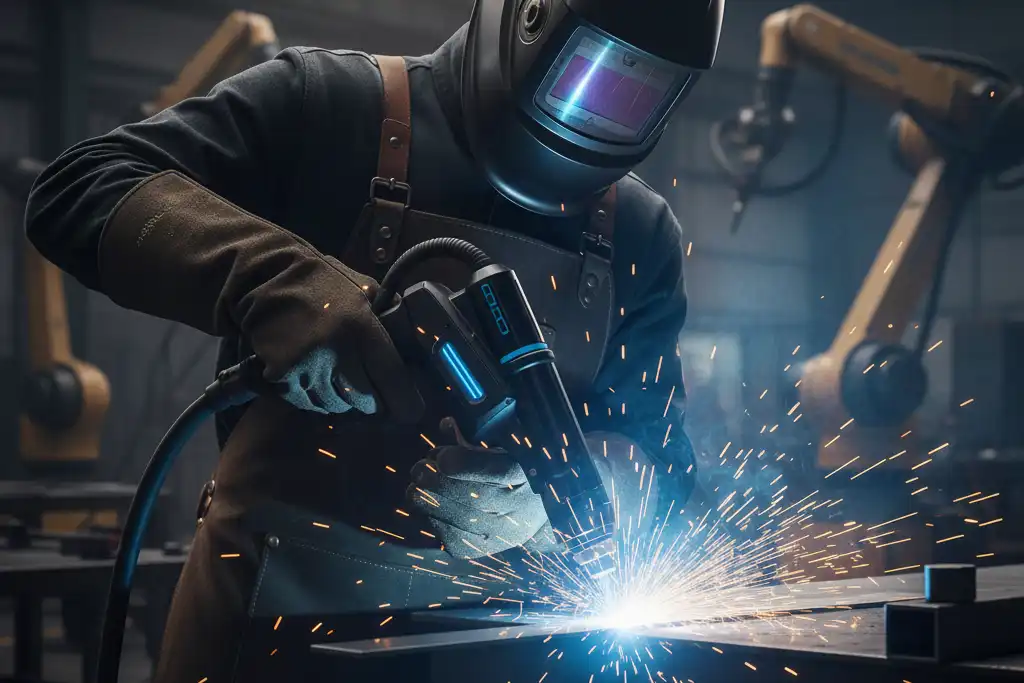
Laser welding of thin plates uses a focused laser beam. It joins thin metal sheets with high accuracy. This process helps you because it is very precise. It can reach up to 0.01 mm precision. It causes little heat distortion. It also makes production much faster. It can be up to ten times faster than old welding methods. More people are using this technology now. The table below shows how the market is growing:
| Year | Market Size (USD) | CAGR (%) |
|---|---|---|
| 2023 | 1,054.79 million | N/A |
| 2033 | 2,882.48 million | 9.85 |
Burn-through is still the biggest problem. You need to control the process well. This helps stop holes or defects in the weld.
Key Takeaways
- Laser welding of thin plates is very precise. It can be accurate up to 0.01 mm. This makes the welds cleaner and stronger.
- This process is much faster than old welding ways. It helps people work quicker and saves money on labor.
- You must control the heat to stop burn-through. Change the laser power and speed to keep the material safe.
- Clean and line up the materials before welding. This helps lower mistakes and makes the weld better.
- Use real-time monitoring tools to spot problems early. This helps make sure the welds are always good and steady.
Laser Welding of Thin Plates
Process Overview
Laser welding of thin plates uses a focused laser beam to join thin metal sheets. You start by cleaning the metal surface to remove any dirt or oxides. Next, you make sure the plates fit together well. You select the right laser settings for the material. The weld head design helps control heat flow. You use an inert gas, like argon, to protect the weld from oxidation. Then, you aim the laser at the joint and begin welding. You control the time and power to melt the metal just enough for a strong bond. After welding, you let the area cool slowly to avoid cracks.
Here is a simple step-by-step process:
- Clean and align the materials.
- Set the laser parameters.
- Use gas shielding.
- Focus the laser on the weld area.
- Start welding and control the heat.
- Let the weld cool.
Key Advantages
Laser welding of thin plates gives you many benefits:
- You get high precision, which means neat and accurate welds.
- The process is fast, so you can finish more work in less time.
- Minimal heat input keeps the rest of the metal safe from damage.
- Automation makes the process repeatable and reduces mistakes.
Tip: Automation helps you get the same quality every time, even if you are not an expert welder.
You also save money in the long run because you need less rework and labor.
Common Materials and Applications
You can use laser welding of thin plates on many metals. The most common ones are stainless steel, aluminum, and copper. The table below shows typical thickness ranges:
| Material | Thickness Range |
|---|---|
| Stainless Steel | 0.5 mm – 5 mm |
| Aluminum | 0.5 mm – 4 mm |
You will find laser welding of thin plates in car manufacturing, electronics, and making battery parts. It is also used for joining thin-walled assemblies where you need strong but light parts.
Challenges in Thin Plate Welding
Burn-Through Causes
Burn-through happens often when you weld thin plates. You face this problem because thin metals heat up quickly and cannot handle too much energy. The main causes include using too much amperage, moving the weld head too slowly, and not cleaning the base metal. If you grind away too much material or use the wrong welding process, you increase the risk. Poor joint fit-up also leads to gaps that need more filler, which adds heat and makes burn-through more likely. The table below shows common causes and explanations:
| Cause | Explanation |
|---|---|
| Too High an Amperage | Excess heat input melts through the plate. |
| Too Slow a Travel Speed | More heat builds up, burning through the metal. |
| Not Cleaning Your Base Metal | Oxide layers melt before the metal, causing burn-through. |
| Improper Joint Fit Up | Gaps require more filler and heat, increasing burn risk. |
| Grinding Too Much Base Metal | Less material means easier burn-through. |
| Poor Weaving Technique | Heat concentrates in one spot, melting the plate. |
| Wrong Welding Process | Using the wrong method for thin plates causes too much heat input. |
Heat Conduction and Melting Depth
Thin plates conduct heat very fast. You must watch the melting depth closely. If the laser power is too high, you get excessive melting and spatter. This weakens the weld and causes burn-through. If the melting depth is too shallow, the joint becomes weak. Laser welding of thin plates works best when you control the heat input. In conduction mode, the laser melts only the surface, which suits thin metals. Keyhole mode gives deeper penetration but needs careful control. If you do not manage the heat, you see problems like unstable melt pools, large heat-affected zones, porosity, and spatter.
Note: Laser welding can give you weld strength up to 95% of the parent metal, while TIG welding reaches only 82%. You need to balance melting depth for strong and safe welds.
Open Gap Issues
Open gaps between plates create more challenges. If you do not clamp the workpiece well, gaps can change during welding. This leads to misalignment and thermal collapse. You see defects like lack of fusion and burn-through. The geometry and assembly of the plates affect heat flow and fusion. Excessive gaps make it hard to get a strong weld. You need proper clamping and fixtures to keep gaps small and steady. If you use low heat, you may not get full fusion. High heat causes molten metal to fall through, making burn-through worse. Quality control becomes harder when gaps are not managed.
- Common issues you may face:
- Burn-through or warping from too much heat
- Distortion from uneven heat
- Weak welds from lack of fusion
- Visible spatter or uneven welds
- Extra finishing needed after welding
Preventing Burn-Through
Laser Parameter Adjustment
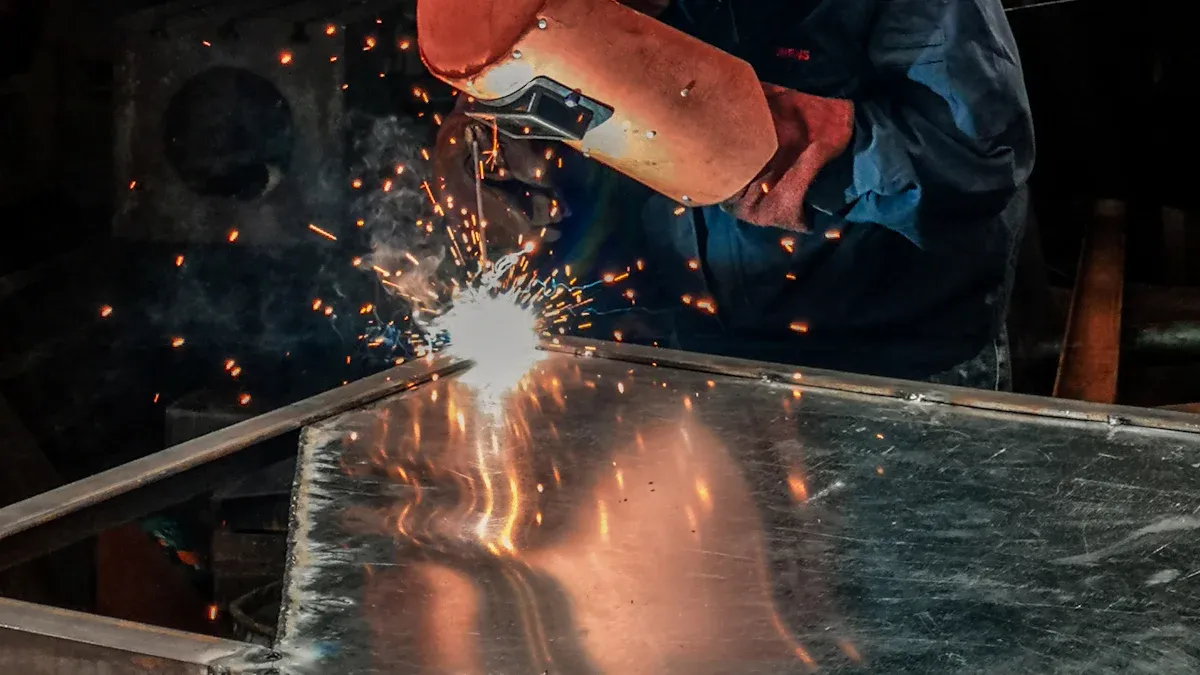
You can prevent burn-through by adjusting the laser parameters. Each setting plays a key role in how much heat the metal receives. If you use too much power, thin plates will melt too quickly. If you move too slowly, the heat will build up and cause holes. Here are the main adjustments you should make:
- Laser Power: Use lower power settings for thin plates. This helps you avoid melting through the material. Always match the power to the type and thickness of the metal.
- Welding Speed: Increase your welding speed when working with thin plates. Faster movement means less heat stays in one spot, which keeps the metal from burning through.
- Focus Position: Set the laser focus at or just above the surface for surface welds. For deeper welds, you can focus slightly below the surface. Proper focus gives you better control over the energy and helps you avoid defects.
Tip: Always test your settings on scrap material before starting the real weld. This helps you find the best combination for your project.
Welding Techniques for Thin Plates
Special welding techniques help you manage heat and prevent burn-through. You should choose the right method based on your material and project needs. The table below shows some common techniques and how they work:
| Technique | Description |
|---|---|
| Pulsed Laser Welding | Uses short bursts of energy for precise control and less heat input. |
| Heat Input Control | Adjusts the amount of heat to avoid melting too much of the thin material. |
| Travel Speed Adjustment | Changes how fast you move the laser to spread heat evenly. |
You can also use tack welds to hold plates in place and stringer beads to spread heat along the joint. Adjusting amperage and choosing the right electrode help you control how deep the weld goes. These steps lower the risk of thermal overload and keep your welds strong.
Heat Input Control
Managing heat input is one of the most important steps in laser welding of thin plates. If you use too much heat, you will see more pores and wider welds, but you may also cause burn-through. If you use too little heat, you might get weak joints or lack of fusion. You can control heat input in several ways:
- Use backside cooling to keep the metal from overheating and warping.
- Try preheating or post-weld heat treatment to manage how the metal heats and cools.
- Optimize your laser settings to reduce distortion and improve weld quality.
This study found that controlling distortion during laser welding helps you get better results, especially when joining thin sheets to thicker parts.
Mechanical tests show that the best weld strength happens at a certain heat input. For example, a heat input of 347 J/mm gives you the highest tensile strength. If you go above or below this value, the weld may not be as strong.
Best Practices
You can achieve high-quality welds by following some simple best practices. These steps help you avoid common problems and keep your work safe:
- Cleanliness: Always clean your workpiece before welding. Dirt and oil can cause defects.
- Fixation: Secure the plates so they do not move during welding.
- Power Settings: Adjust the power for each material and thickness.
- Frequency and Pulse Width: Fine-tune these for better control.
- Gun Position and Angle: Hold the welding gun at the correct angle to avoid damage.
- Uniform Speed: Move at a steady speed for even welds.
- Start and Finish: Begin and end the weld just outside the seam to avoid weak spots.
You should also use real-time monitoring tools. These tools can check the weld as you work and alert you to problems like burn-through or lack of fusion. High-speed cameras, acoustic sensors, and computer vision systems help you spot defects early. Some systems even use artificial intelligence to watch for issues like spatter or undercut.
Note: Always follow safety rules when welding. Wear protective clothing and eyewear, keep your area clean, and never touch the workpiece right after welding. Make sure you know how to use your equipment and keep a fire extinguisher nearby.
Laser welding of thin plates is cleaner than other methods like TIG welding. It produces less waste and fewer fumes, which is better for the environment. You still need to follow safety and environmental rules to keep your workspace safe.
By adjusting your laser settings, choosing the right techniques, and following best practices, you can prevent burn-through and create strong, reliable welds every time.
You should know about laser welding of thin plates. This process is used in many industries. The table below explains why it is important and what problems you might have:
| Key Takeaways | Description |
|---|---|
| Importance of Laser Welding | It helps you work fast and accurately in electronics, cars, and medical devices. |
| Advantages | You can make things lighter, better, and cheaper. |
| Challenges | You need to control heat to make strong welds and stop burn-through. |
To stop burn-through, you must watch the heat closely. You can use fiber lasers and try keyhole welding. Keep learning new ways and follow good steps to get the best welds.
FAQ
What is burn-through in laser welding?
Burn-through happens when the laser melts all the way through the thin plate. You see holes or gaps in the weld. This weakens the joint and can ruin your project.
What materials work best for laser welding thin plates?
You get the best results with stainless steel, aluminum, and copper. These metals handle the laser well and give you strong, clean welds.
What steps help you prevent burn-through?
You should lower the laser power, increase welding speed, and keep the plates clean. Use proper clamping and test your settings first. These steps help you avoid holes and defects.
What tools can help you monitor weld quality?
You can use high-speed cameras, acoustic sensors, or computer vision systems. These tools watch the weld in real time and alert you to problems like burn-through.
What are the main benefits of laser welding thin plates?
You get fast, precise welds with little heat distortion. The process works well for automation. You save time and money while making strong, neat joints.
Which welding process has the smallest heat affected zone?
What is the heat affected zone in laser welding
What you should know about CNC machine tools and laser cutting