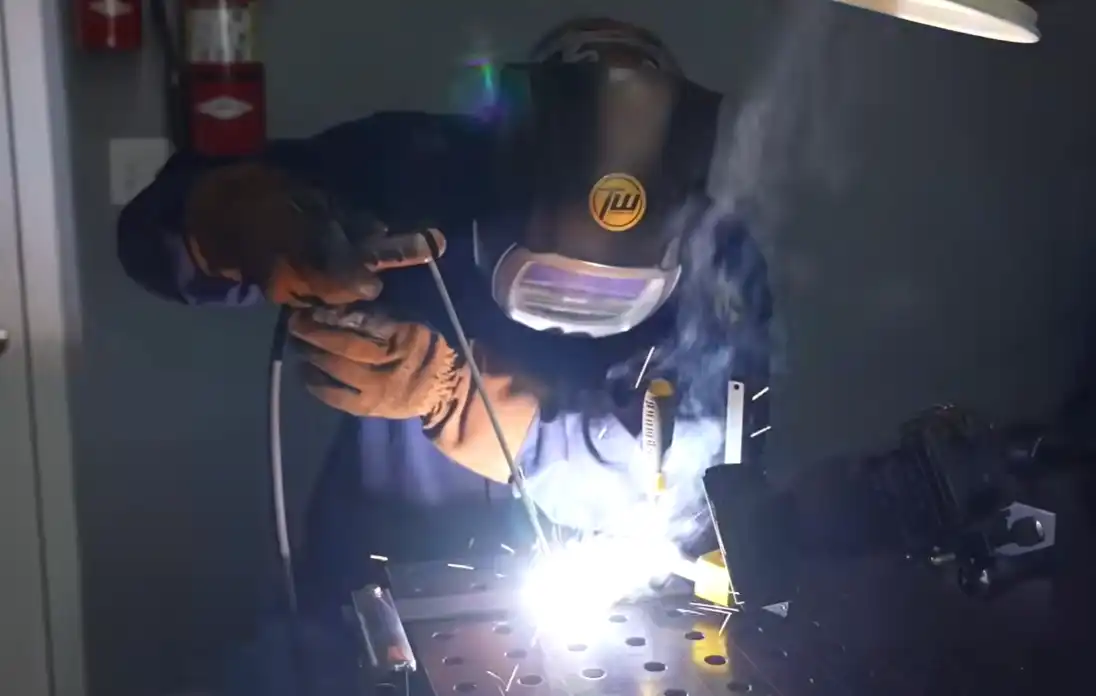
TIG welding is recognized as a secure welding method, making it one of the safest ways to weld. When you use this secure welding method, you have a reduced chance of breathing in fumes, getting burned, or experiencing electric shock. Choosing the right welding process is essential for maintaining safety at work or at home.
When you examine injury statistics, the results are promising:
Evidence Type Description Injury Reduction Utilizing machines for welding significantly lowers the risk of burns, eye injuries, and respiratory issues. Cost Benefits Enhanced safety translates to lower costs and increased productivity.
You will also observe the following benefits:
Improved safety and fewer reworks—thanks to better process control and fewer interruptions—typically help boost overall efficiency in quality-sensitive work without implying a specific percentage.
Key Takeaways
- TIG welding often yields better process control and steadier heat input, which typically improves efficiency and reduces mistakes, leading to fewer reworks without asserting specific numeric gains.
Welding Methods Safety
TIG Welding Advantages
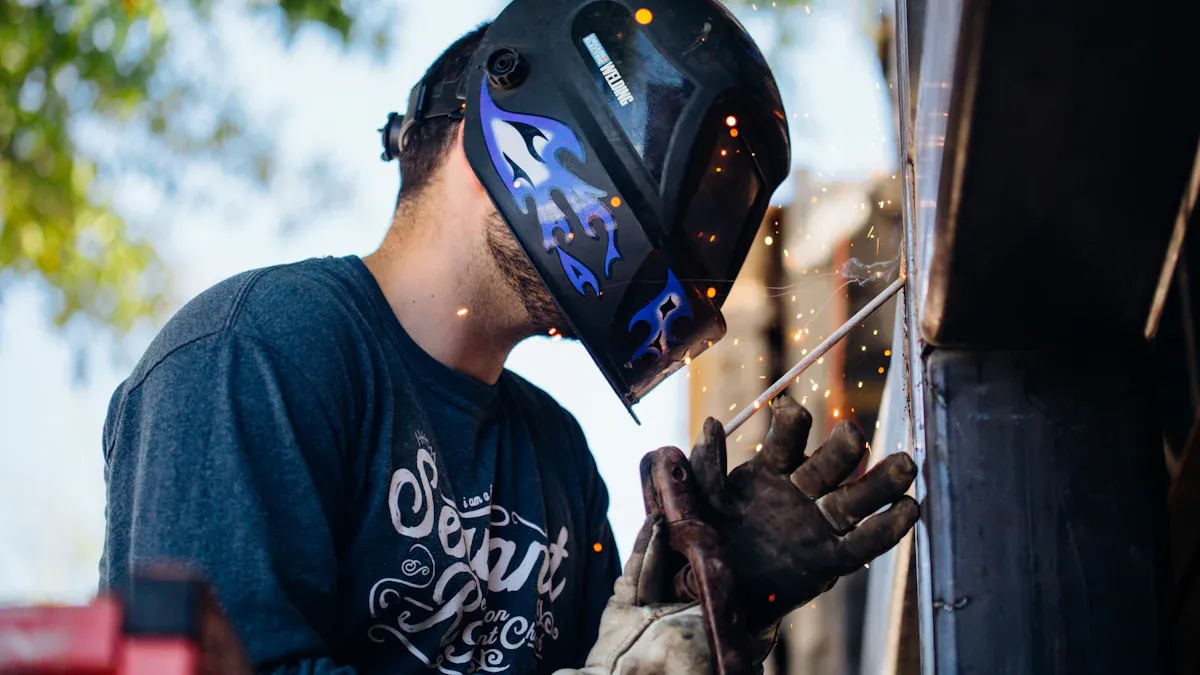
When you think about welding safety, TIG welding is a safe choice. TIG welding makes less fumes and toxic gas than other ways. This keeps your workspace safer and helps you breathe better.
| Evidence Type | Findings |
|---|---|
| Ozone Concentration | TIG welding makes much less ozone than other welding types. |
| Agglomerate Emission Rate | TIG welding gives off fewer agglomerates than other welding processes. |
| Particle Size | TIG welding fume particles are very small, which can affect health in different ways. |
You are also less likely to get burned or shocked with TIG welding. TIG welding uses a tungsten electrode that does not melt. This lets you control the arc and heat better. Good control helps you stay away from hot metal and live wires. TIG welding is safe because you can make strong welds with less chance of getting hurt.
But you still need to be careful. TIG welding can give off UV light that hurts your eyes and skin. Some metals and shield gases can make toxic fumes if you do not have good airflow.
- UV light from the arc can hurt your eyes and skin.
- Fumes from melted metals can be bad for your health.
- Electric shocks can happen if tools are unsafe or things are wet.
- Shield gases can push out oxygen and make it hard to breathe.
MIG and Stick Welding Risks
MIG and Stick welding are used a lot, but they are more risky. MIG welding uses a wire that melts, which makes more fumes and toxic gas. Stick welding, also called SMAW, has even more accidents.
MIG (GMAW) uses a continuously fed wire and shielding gas and is generally cleaner and faster; it needs good ventilation and safe gas‑cylinder handling because shielding gases can displace oxygen. Stick (SMAW) uses flux‑coated electrodes, produces more slag and visible fumes, and often increases burn and cleanup risks. Both share hazards (fumes, UV, shock); follow controls like ventilation, respirators, PPE, and training (see OSHA welding hazards guidance).
You can get burned or shocked more easily with these ways. More fumes mean you need better airflow and more safety gear. These risks make MIG and Stick welding less safe than TIG welding.
FCAW and Laser Safety
FCAW and Laser welding have their own safety problems. FCAW makes a lot of fumes because it puts down metal fast. This means you breathe in more bad stuff.
There’s no single “total weld‑fume” PEL; exposure is controlled by limits for specific metals and compounds. For example, OSHA’s hexavalent chromium standard (29 CFR 1910.1026) sets a PEL of 5 µg/m³ (8‑hour TWA) for Cr(VI), NIOSH recommends a 1 mg/m³ (10‑hr TWA) REL for manganese, and ACGIH lists a 0.02 mg/m³ (8‑hr TWA, respirable) TLV for certain nickel species—assess exposure by substance, particle fraction, and applicable standard (OSHA/NIOSH/ACGIH).
Laser welding makes less fumes, but you still need to watch out for eye injuries and burns from the bright light and heat. Studies show welders, especially those who use stainless steel, can get lung diseases and asthma from welding.
| Study Type | Findings |
|---|---|
| Cohort Study | Welders, especially those using stainless steel, have a higher risk of lung cancer. |
| Case-Control Study | Stainless steel welders have a higher risk of lung cancer, and the risk goes up with more exposure. |
| Occupational Asthma Study | Welders made up 9% of reported asthma cases, and 3% of 194 apprentice welders got asthma in one study. |
- Breathing welding fumes is linked to lung diseases like lung cancer and asthma.
- Breathing lots of welding fumes for a long time raises your asthma risk, even if you do not smoke.
Why TIG Welding Stands Out
In typical open, well‑ventilated shop conditions with moderate currents and appropriate PPE, TIG welding often carries lower fume, spatter, and fire risk than other arc processes. This advantage is conditional — for example, confined or poorly ventilated spaces, high‑amp stainless work (chromium/NOx concerns), or inadequate LEV and training can negate the benefit; always perform job‑specific exposure and ventilation checks.
Why TIG is the Most Secure Welding Method
Fume and Gas Reduction
You want clean air when you weld. TIG welding is a safe way because it makes very little fume and gas. This happens for a few reasons.
- TIG welding uses an electrode that does not melt. This means it does not make extra fumes.
- The process uses less heat. Less heat makes less fume.
- You can pick materials that make less fume. This helps lower gas even more.
The table below shows how TIG welding is different from other ways:
| Welding Process | Fume Generation Rate | Gas Emissions |
|---|---|---|
| TIG (GTAW) | Very Low | Ozone, Nitric Oxide, Nitrogen Dioxide |
| MIG (GMAW) | Moderate | Ozone, Nitric Oxide, Nitrogen Dioxide |
| Stick (SMAW) | High | Cr(VI), Ozone, Nitric Oxide, Nitrogen Dioxide |
| FCAW | Highest | Minimal Ozone, Nitric Oxide, Nitrogen Dioxide |
You can see TIG welding makes the least fumes. This keeps you safer and healthier.
Lower Burn and Shock Risk
You do not want burns or shocks when you weld. TIG welding helps keep you safe. You get more control over the heat and the arc. You can keep your hands away from hot metal and wires. This lowers your chance of getting hurt.
TIG welding uses a torch with a tungsten electrode that does not melt. You do not need to touch the electrode to the metal. This keeps you safe. You use a pedal or finger switch to change the heat. You can stop the arc fast if you need to. These things make TIG welding a safe choice for people who care about safety.
Tip: Always wear gloves and a helmet. Even with TIG welding, you need to protect your eyes and skin from UV light and hot metal.
Weld Quality and Control
You want strong welds that look good and do not break. TIG welding gives you the most control. You can change the heat and how much filler metal you use. You can make neat welds on thin or thick pieces.
Here is what makes TIG welding special:
- You control the heat. This stops damage from too much heat.
- You keep the arc steady. This helps you put the weld in the right spot.
- You add filler metal slowly. This makes the weld smooth and strong.
Good welds mean fewer problems later. The table below shows why good welds matter:
| Aspect | Importance |
|---|---|
| Quality & Consistency | Makes sure you get good results by following the right steps for each job. |
| Code Compliance | Shows that the weld meets rules and laws for some jobs. |
| Welder Qualification | Proves welders know how to do the job right every time. |
| Cost & Safety | Fewer mistakes mean stronger work and less fixing later. |
You can check welds with special tests. X-rays can find hidden problems. Sound waves can find defects too. These tests show TIG welds are strong and safe.
When you pick TIG welding, you choose a safe way that protects you and gives great results.
Essential Welding Safety Tips
Personal Protective Equipment
You need the right personal protective equipment (PPE) to stay safe. The most important things are:
- Welding helmets keep your eyes safe from bad light. New helmets also help protect you from heat and electricity.
- Gloves for TIG welding are thin and bendy. You can move your hands easily and still keep your skin safe from burns.
- Flame-resistant cotton jackets protect you from sparks and heat. TIG welding does not make much spatter, so these jackets are good.
Replace the temperature table with the following paragraph:
“Do not rely on unverified °C thresholds when choosing PPE. Use material‑purpose descriptions instead: leather (durable outer shell for sparks and molten metal), aramid/FR fabrics (lightweight flame resistance for jackets and liners), fiberglass/insulating layers (added heat barrier where contact risk exists), and cotton FR (breathable base layers). Select specific products after a job‑hazard assessment and by consulting applicable standards (e.g., ANSI/AWS Z49.1, ISO 11611, ANSI/ISEA 105) and the manufacturer’s technical datasheet—this avoids incorrect protection choices based on unsupported temperature numbers.”
Wearing the right PPE stops burns, cuts, and eye injuries.
Ventilation and Workspace
A safe workspace keeps you healthy. You should use machines to move fumes away. Put the exhaust close to where you work to catch fumes fast. Always send the dirty air outside, far from places where air comes in. Make sure new air is clean and safe to breathe. Never use oxygen to clean or move air.
Keep your workspace clear of things that can burn. Take away anything that could catch fire before you start. Know where the fire alarms and fire extinguishers are.
Equipment Handling
Be careful with your welding equipment. Keep gas cylinders standing up and tie them so they do not fall. Work on a surface that does not burn. Keep a fire extinguisher close by. Always wear your PPE, like your helmet and gloves. Make sure you have good airflow and use fume systems if you need them.
Follow these steps to use equipment safely:
- Always wear eye protection.
- Check your ground wire before you start.
- Never hold two bare wires at the same time.
Training and Supervision
Good training teaches you about risks and how to stay safe. Training helps you see dangers, follow rules, and use PPE the right way. You also learn what to do if there is an emergency.
| Training Objective | Description |
|---|---|
| Enhanced Hazard Recognition | Learn to spot dangers like electric shock, fire, and bad fumes. |
| Stronger Regulatory Compliance | Learn and follow safety rules. |
| Proper Use of PPE and Fire Equipment | Practice using safety gear and tools. |
| Strengthened Emergency Response | Know what to do if something bad happens. |
Certified workers help keep you safe. They make sure everyone follows the rules and watches for risks all the time.
When performed on thin sections under good general ventilation or with local exhaust, at moderate current and with proper PPE and LEV, TIG (GTAW) typically yields lower fume volumes than consumable-arc methods; however, stainless‑steel, high‑amp, or confined‑space work can still generate hazardous metal aerosols—prioritize enhanced ventilation and air monitoring in those cases.
Selection recommendation: Use TIG + LEV/monitoring for precision or thin parts; for high-throughput, robust applications evaluate GMAW/FCAW with engineered LEV and a validated exposure-monitoring plan.
- Always wear PPE like helmets, gloves, and long sleeves.
- Make sure your workspace has good airflow to clear fumes.
- Look over your tools before you start working.
- Keep learning about new safety rules.
Going to training and safety classes helps you stay safe and avoid getting hurt at work.
Sources and scope
This guide draws on occupational and cancer‑hazard authorities to ground recommendations: U.S. workplace rules and ventilation guidance from OSHA (29 CFR 1910/1926), exposure guidance from NIOSH and ACGIH, industry practice from American Welding Society guidance, international standards bodies (ISO), and hazard classifications by IARC (Group 1: welding fumes).
Scope and disclaimer: limits and PEL/TLV values are jurisdictional and task‑specific; this article offers general, conservative guidance (ventilation, PPE, and 1 m/30 min screening) and does not replace on‑site industrial hygiene assessment or regulatory compliance testing.
Authoritative references (select, directly relevant):
- ANSI/AWS Z49.1 (Safety in Welding, Cutting, and Allied Processes) — practical controls for ventilation, fire prevention and radiation (see AWS downloadable guidance, 2012/2021). ANSI/AWS Z49.1 guidance (AWS)
- IARC Monographs — Welding fumes (Group 1), carcinogenic classification and evaluation (IARC Monographs listing). IARC Monographs (WHO)
- Riccelli MG et al., 2020, “Welding Fumes, a Risk Factor for Lung Diseases,” review (mechanisms, toxicology). PMC 2020 review
- Wong J.Y.Y. et al., 2017, epidemiology of lung cancer in welders (cohort/case evidence). PMC 2017 study
- Li G. et al., 2022, systematic review on welding‑related respiratory risk (Frontiers in Public Health, 2022). Frontiers 2022 review
- NIOSH welding research and exposure measurements hub — practical measurement reports for particulate and gas (ozone) studies and methods. NIOSH welding research
These citations support the article’s exposure, health-risk, and ventilation claims; quote specific study DOIs/sections when reporting numeric values in the body and retain the “validate on-site” caveat.
FAQ
What is the main reason TIG welding is safer than other methods?
You make fewer fumes with TIG welding. You also control the heat better. This means you lower your risk of burns and breathing problems.
What personal protective equipment do you need for TIG welding?
You need a welding helmet, gloves, and a flame-resistant jacket. These items protect your eyes, hands, and skin from heat and light.
What should you do if you breathe in welding fumes?
Move to fresh air right away. Tell your supervisor. If you feel dizzy or sick, get medical help.
What makes a workspace safe for welding?
A safe workspace has good airflow, clear exits, and no flammable items nearby. You should always keep fire extinguishers close.