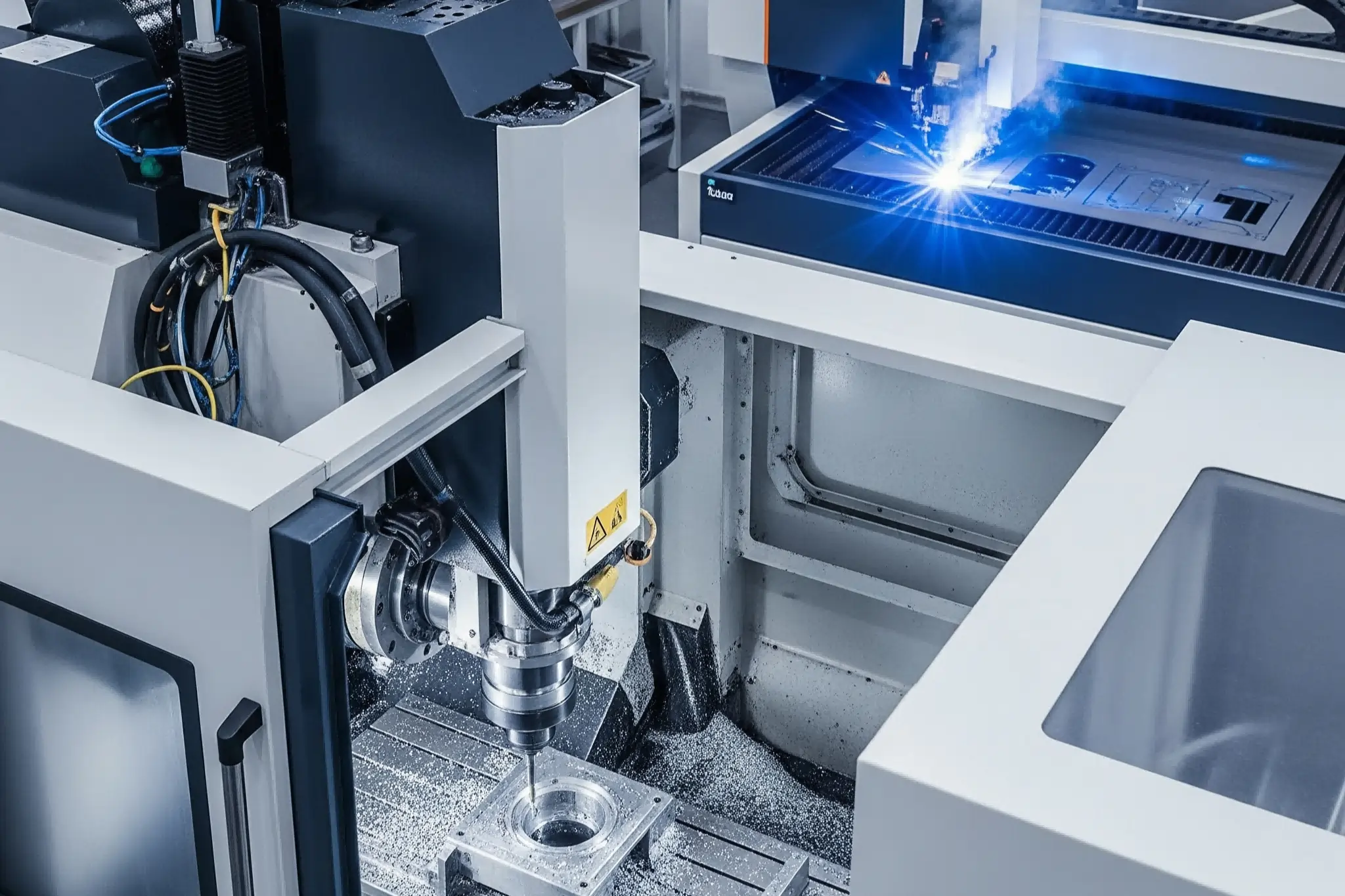
You see CNC machine tools and laser cutting in many factories. These tools help you work faster and more accurately. The table below shows how some countries use these tools a lot. Germany and the United States use them in more than 65% of factories.
| Country | CNC Machine Adoption Rate |
|---|---|
| Japan | 55% |
| India | 20% growth (2019-2023) |
| Germany | Over 70% |
| South Korea | Exceeding 60% |
| United States | Over 65% |
You get less waste when you use these tools. You can pick better materials. You also work more efficiently with these advanced tools.
Key Takeaways
- CNC machines and laser cutters help make things faster and more exact. They are very important in many jobs.
- CNC machines are great for making hard 3D shapes. Laser cutters work best for flat designs and fast work.
- You should pick the right tool for your material. CNC is good for thick stuff. Laser cutting works well for thin stuff.
- CNC and laser cutting cost different amounts. Think about the price to buy, use, and fix them before you choose.
- Always look at what your project needs. Think about how exact you need to be, how many things you need to make, and how much money you have. This helps you pick the best way to cut.
CNC Machine Tools Overview
What Are CNC Machines
CNC machines use computers to move tools by themselves. There are different kinds for different jobs. Some examples are:
- CNC milling machines
- CNC lathes
- CNC routers and engravers
- CNC grinders
- CNC plasma cutters
You might see brands like Yamazaki Mazak, DMG MORI, Trumpf, MAG, Haas, Hardinge, AMADA, Okuma, and Makino. These brands are trusted and use new technology.
How CNC Machines Work
CNC machines follow computer instructions to do their work. You make a digital design first. The machine uses this design to move its tools very carefully. It makes a plan, tests it, and then changes it into G-code. G-code is a language the machine understands. This lets you make hard shapes and do the same job many times with few mistakes.
CNC Applications
Many industries use CNC machine tools and laser cutting. In aerospace, they make parts like manifolds and landing gear. Medical companies use them for implants and tools. Car, electronics, energy, and food companies also use CNC machines for special parts.
CNC Benefits
CNC machines are very accurate and fast. You get the same results every time, even for thousands of parts. These machines can work all day and night. This means you can make things faster. They help save materials and money on workers. You can also make shapes that are hard to do by hand.
CNC Limitations
CNC machines do not work well with very hard materials. Hard things like steel can wear out the tools and make them less accurate. Thick or breakable materials need special care. Some materials make dangerous dust or fumes when cut. If the machine is not set up right, or the material is uneven, the product may not be good.
Tip: Always check what kind of material and how thick it is before you pick a CNC machine.
| CNC Machine Category | Cost |
|---|---|
| Entry level desktop CNC routers | $150-$500 |
| Hobby level CNC router | $1,000-$3,000 |
| Hobby level CO2 laser | $1,000-$3,000 |
| Hobby/Small Business plasma table | $1,000-$5,000 |
| Professional CNC Machine | $50,000-$100,000 |
| Entry-Level 3-axis Mill | $50,000-$100,000 |
| Industrial HD plasma tables | $40,000-$120,000 |
| Industrial Fiber Laser | $100,000 – over $500,000 |
| Production 3-axis CNC Milling Machines | $100,000-$500,000 |
| Production 5-axis CNC Milling Machines | Over $500,000 |
CNC machine tools and laser cutting have many price options. Cheaper machines are good for hobbies. Big factories need to spend more money on their machines.
Laser Cutting Basics
What Is Laser Cutting
Laser cutting uses a strong light beam to cut things. It can make shapes and designs that are very exact. You can use it for easy or hard projects. Laser cutting is important in CNC machine tools and laser cutting technology.
How Laser Cutting Works
A computer controls the laser cutter. The machine points a bright light at the material. The laser gets hot and melts, burns, or turns the material into gas. The machine moves in a set path to make the shape you want. Some machines use gases like nitrogen or argon. These gases help keep the edges smooth and clean.
- The laser can cut metal, wood, glass, and plastic.
- The lens makes the beam very sharp for fine cuts.
- Some ways, like fusion cutting, use gas to blow away melted parts for a cleaner edge.
Laser Cutting Applications
Laser cutting is used in many jobs. It helps make car parts, electronics, signs, jewelry, and medical tools. People also use it for art, models, and custom gifts. You can cut thin or thick materials, depending on the machine.
Laser Cutting Benefits
Laser cutting is very exact and makes smooth edges. You can make small details and tight fits. The process is fast and saves material. You can cut many shapes and sizes with one machine. Laser cutting works on many kinds of materials.
| Benefit | Description |
|---|---|
| Unmatched Precision | You get very exact cuts, even for hard shapes. |
| Reduction in Errors and Material Waste | The machine uses software to plan cuts and save material. |
| Speed and Efficiency in Production | Strong lasers cut fast and keep things moving. |
| Versatility for Unique Geometric Shapes | You can make many shapes and designs. |
| Adaptability Across Materials and Industries | The machine works with metals, plastics, wood, and more. |
Laser Cutting Limitations
Laser cutting does not work with every material. Some plastics, like PVC and ABS, make dangerous fumes. Shiny metals, like copper and brass, are hard to cut. Flammable things and oily woods are not safe for laser cutting. High-end machines can cost a lot of money.
| Type | Description | Key Features |
|---|---|---|
| CNC CO2 Laser Cutter | Uses carbon dioxide gas. | Good for metals up to 10 mm thick and fine details. |
| CNC Fiber Laser Cutter | Uses fiber-optic cables and diodes. | Fast, energy-saving, best for metals, not as good for non-metals. |
| CNC Crystal Laser Cutter | Uses special crystals like Nd:YAG. | Cuts thick metals, works with many materials. |
| Compatible Materials | Limitations |
|---|---|
| Organic materials | N/A |
| Glass | N/A |
| Man-made boards | N/A |
| Metals | N/A |
| ABS | Challenges |
| Epoxy | Challenges |
| PVC | Hazards (makes toxic fumes) |
Tip: Always check the material before you use laser cutting. Some things are not safe or can hurt the machine.
| Type of Laser Cutter | Price Range |
|---|---|
| Fiber Laser Cutting Machine | $14,000 – $1,000,000 |
| CO2 Laser Cutters | $2,600 – $20,000 |
| Mixed Hybrid Laser Cutting | $6,800 – $32,500 |
| Entry-Level Laser Cutter Kits | $2,600 – $5,600 |
| Budget-Friendly Home Systems | $3,000 – $10,800 |
| Industrial Laser Sheet Cutters | Starts at $6,800 |
| Professional Laser Tube Cutter | At least $50,000 |
| All-in-One Laser Cutters | $42,500 – $116,000 |
| Automatic 5 Axis Laser Robots | $49,000 – $83,500 |
CNC Machine Tools and Laser Cutting Compared
Precision and Speed
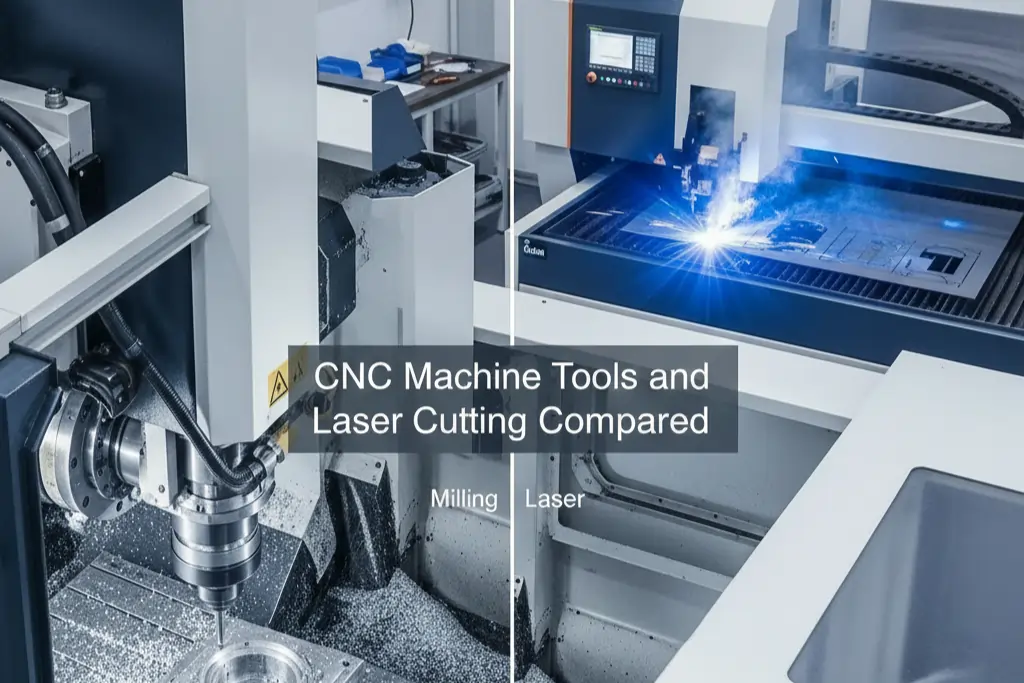
CNC machine tools and laser cutting are different in how they work. CNC machines can make 3D shapes with high accuracy. Laser cutters are better for flat, detailed patterns. Laser cutters waste less material. They also move faster, especially with thin things. This makes laser cutters good for making many parts quickly. CNC machines can also be fast, but their speed depends on how their parts move.
- CNC machines are great for 3D shapes and close fits.
- Laser cutters are best for quick, detailed flat cuts.
- Laser cutters save time with thin materials.
You can see how close the cuts are and how smooth the surfaces look in this table:
| Process | Tolerances (inches) | Surface Finish (microinches) | Notes |
|---|---|---|---|
| CNC Machining | ±0.001 to ±0.0005 | 32–250 | Good for very close fits and hard 3D shapes. |
| Laser Machining | ±0.001 (thin) to ±0.004 (thick) | 125–250 | Smooth edges on thin things; heat can change thick parts. |
Tip: If you want cuts with less stress and tight fits, try pulsed laser cutting and water-cooled laser heads. These help control heat and keep cuts neat.
Material Compatibility
It is important to know which materials work best for each method. CNC machining is good for thick things and hard shapes. Laser cutting works well for thin things and fine details.
- CNC machining is best for thick metals and plastics.
- Laser cutting is best for thin metals and plastics with small details.
| Cutting Method | Best Suited Materials | Notes |
|---|---|---|
| CNC Machining | Metals, Plastics | Uses cutting bits to shape things. |
| Laser Cutting | Thin Metals, Plastics | Uses a laser beam for exact cuts. |
- CNC machining shapes materials with metal bits.
- Laser cutting takes away less material and is good for careful jobs.
Note: Always check what the material is before you pick a cutting method. Some plastics and metals are not safe or need special care.
Cost Factors
Many things change the cost of CNC machine tools and laser cutting. You pay for the machine, tools, and software. You also pay workers, buy materials, and store finished parts. How well the machine works changes the cost for each part. Different materials need different power and speed, which changes the price. Hard designs take more time and cost more. Skilled workers can help save money by using the best settings.
| Cost Factor | Description |
|---|---|
| Type of Laser Source | Different lasers cost more or less based on what they cut. |
| Cutting Speed | Faster machines cost more because they use better technology. |
| Automation Features | Automation costs more but helps you make more parts. |
| Brand Reputation | Famous brands cost more for better quality and help. |
| Support and Training | Training and help cost more at first but make work better. |
| Machine Efficiency | Good machines cost less to run over time. |
| Material Type | Some materials need more power and speed, so they cost more. |
| Design Complexity | Hard designs take longer and cost more. |
| Operator Skills | Skilled workers save money; untrained workers can cost more. |
| Maintenance Needs | Machines need care; too much care costs more. |
| Cooling Systems | Good cooling systems help save money. |
| Environmental Control | Good controls help machines work better and change costs. |
You also need to think about care and power costs:
| Machine Type | Maintenance Costs | Energy Costs |
|---|---|---|
| CNC Router | Costs more to run because of tool wear and care. Yearly care might cost about $5,000. | Uses less power than laser cutters. |
| Laser Cutter | Costs more at first and to run, mostly from power and lens changes. Yearly costs could be $8,000. | Uses more power, so it costs more to run. |
- Using less power changes the cost for each part.
- Picking the right material changes how much power and gas you need.
- Skilled workers and regular care help you avoid extra costs.
Use Cases
CNC machine tools and laser cutting are used in many jobs. Each one is good for different things.
| Industry | Use Case |
|---|---|
| Electronics | Making products |
| Automotive | Making car parts |
| Aerospace | Making airplane parts |
| Medical | Making tools and implants |
| Architecture | Making building parts |
| Art | Making art and signs |
| Agriculture | Making farm equipment parts |
| Contract Manufacturing | Making parts for other companies |
| Military | Making parts for military machines |
| Construction | Making steel parts for buildings |
You use CNC machine tools for thick parts and hard shapes. You use laser cutting for thin things and detailed designs. People pick between these two based on how exact they need to be, what material they use, how hard the design is, and how many parts they need.
| Factor | CNC Machining | Laser Cutting |
|---|---|---|
| Precision | Good for hard shapes | Very exact, best for detailed designs |
| Material Type | Works with thick materials | Best for thin materials |
| Design Complexity | Makes hard 3D shapes | Best for detailed flat designs |
| Production Quantity | Good for making many parts | Good for smaller batches |
Tip: Pick CNC machine tools or laser cutting based on your project. Think about the material, the shape, and how many parts you need.
Choosing Between CNC and Laser Cutting
Project Needs
Think about what your project needs first. Some projects need tiny, detailed shapes. Others need strong parts with special shapes. Here are some things to think about:
- Laser cutting is best for small, detailed designs. CNC milling is better for hard 3D shapes.
- Laser cutting is fast on thin materials. CNC milling is good for making lots of parts.
- Laser cutting works with many materials, but not all metals. CNC milling works with more types of materials.
- Both ways can cost a lot to buy and use.
Material and Thickness
The kind of material and how thick it is are important. Laser cutting gives smooth edges and is very exact, especially for thin things. Use laser cutting for thin metals and plastics if you want smooth cuts. CNC cutting is better for thick or hard things, like hardwood or composites. If you need to cut big, thick parts, CNC is the best choice.
Budget Considerations
Think about how much money you can spend before you pick. The table below shows some cost differences:
| Cost Factor | CNC Machines | Laser Cutting Machines |
|---|---|---|
| Initial Investment | Several thousand to tens of thousands | Entry-level is cheaper, industrial is more expensive |
| Operating Costs | Regular upkeep and calibration | Costs for lenses and gases |
| Long-term Maintenance | Needs regular maintenance for precision | Fewer moving parts, but still needs servicing |
Finish and Tolerance
Look at the finish and how close the cuts need to be. Laser cutting gives smooth edges and tight fits, about ±0.10mm. This is good for most jobs. CNC routing is better for thick things or if you want a very smooth surface. Laser cutting can heat up the edge and change it, but this is not a big problem for simple shapes.
Production Volume
How many parts you need changes your choice. Laser cutting can make lots of parts fast and for less money per part. CNC machines are better for small batches or special shapes. For example, laser cutting can make 200 parts in one hour for less money per part. CNC makes about 50 parts in one hour.
Tip: Pick the way that fits your project, material, money, finish, and how many parts you need. CNC machine tools and laser cutting are both good for different jobs.
You can spot big differences between CNC machine tools and laser cutting. The table below shows what each one is good at:
| Feature | CNC Machine Tools | CNC Laser Cutting |
|---|---|---|
| Versatility | Works with many materials | Cuts fast and very exact |
| Material Waste | Makes more waste | Makes up to 20% less waste |
| Design Complexity | Good for simple shapes | Good for fancy designs |
| Production Speed | Not as fast | Works much faster |
Think about your project, the materials, and your money. Laser cutting is great for quick and detailed work. CNC machines are better for thick or 3D parts. Always plan for what you need now and what you might want later.
FAQ
What materials can you cut with CNC machines and laser cutters?
You can cut metal, plastic, wood, and glass. CNC machines work with thick and hard things. Laser cutters work with thin metal, plastic, and organic stuff. Always make sure your material is safe for the machine.
What safety steps should you follow when using these machines?
Wear safety glasses and gloves. Keep your workspace clean. Check the machine before you start. Never leave the machine running by itself. Use good ventilation for laser cutting to avoid bad fumes.
What is the difference between CNC milling and laser cutting?
CNC milling uses spinning tools to shape things. Laser cutting uses a strong light beam to cut or engrave. CNC milling is best for 3D shapes and thick parts. Laser cutting is faster for thin, flat designs.
What maintenance do these machines need?
Clean the machine after you use it. Check and change parts that are worn out. Lubricate moving parts often. For laser cutters, clean the lens and check cooling systems. Regular care helps your machine last longer.
What software do you need for CNC and laser cutting?
You need design software like CAD to make your project. The machine uses CAM software to follow your design. Some machines have their own software. Always read the manual for software tips.
Laser welder buying guide how much will you pay
6 Downsides of Laser Welding for Manufacturers