
You will see that laser cleaning technology works better for many jobs. New improvements make it faster, more accurate, and safer. It also costs less and is better for the environment. Think about these main things when you pick a cleaning method:
| Aspect | Traditional Methods | Laser Cleaning |
|---|---|---|
| Equipment Costs | $25,000–$500,000 | $35,000–$500,000 |
| Labor and Safety Costs | Many workers, some dangers | One worker, safer |
| Maintenance and Downtime | Needs fixing often | Needs little fixing |
| Operating Costs | Uses chemicals often | Uses electricity |
| Eco-Friendly Compliance | Makes dangerous waste | No chemical left behind |
Laser cleaning technology gives you good control and gentle cleaning. It also makes very little waste. Pick the method that fits your project best to get good results.
Key Takeaways
- Laser cleaning technology works faster and is more exact than traditional polishing. It is good for jobs that need careful work or have many details.
- This technology is safer because only one person needs to use it. It does not use dangerous chemicals, so there are fewer risks at work.
- Laser cleaning makes very little waste. This helps keep the environment safe and lowers the cost to throw things away.
- Traditional polishing can be used on many kinds of materials. It works well, but it can make more waste and might hurt soft surfaces.
- Always try your cleaning method on a small spot first. This helps you avoid damage and get the best results.
- Think about saving money over time with laser cleaning technology. It costs less for supplies and workers in the long run.
- Pick your cleaning method by looking at the type of material. Laser cleaning is best for metals. Traditional polishing works better for plastics and ceramics.
- Safety is very important. Always follow safety rules and wear safety gear when you use any cleaning method.
Effectiveness
Cleaning Results
Surface Quality
You want the surface to look smooth and feel even. Laser cleaning technology makes surfaces look better than traditional polishing. It gives less roughness and more shine. The process does not scratch or wear down the material. Look at the table below to see the differences:
| Method | Surface Cleanliness | Surface Roughness | Finish Quality |
|---|---|---|---|
| Laser Cleaning | Better | Reduced | Superior |
| Traditional Polishing | Moderate | Higher | Standard |
Laser cleaning technology leaves fewer marks on surfaces. It also makes surfaces look more even. Traditional polishing can make surfaces rougher and sometimes leaves scratches.
Contaminant Removal
You need to get rid of dirt, rust, paint, or oil. Laser cleaning technology works well for metals. It removes rust, paint, and oxides without hurting the base material. Traditional polishing can clean surfaces too, but it may wear down the material or change its shape. Laser cleaning technology gives you more control, especially for tough dirt.
Precision
Micron-Level Control
Sometimes you need to clean parts with tiny details. Laser cleaning technology is very precise. You can use the laser to clean at the micron level. This means you can remove small bits of dirt without touching the rest of the surface. You do not risk hurting the material. Traditional polishing does not give this much control. It can scratch or change the shape of delicate parts.
- Laser cleaning technology, especially pulse laser cleaning, gives much higher precision than traditional polishing when working with tiny tolerances.
- The laser’s controlled energy keeps the material safe, which is important for high-precision jobs.
- Traditional polishing may not be as precise and can damage the material.
Complex Shapes
Some parts have curves, corners, or tiny holes. Laser cleaning technology works well on these shapes. It does not make chips or dust like grinding or sandblasting. You get the same results every time. Laser cleaning technology works for small, detailed parts and complex shapes. Traditional polishing takes more time and effort. It may not reach every spot, especially on 3D printed parts or detailed surfaces.
- Laser polishing does not make chips or extra waste, unlike sandblasting or grinding.
- It gives steady and repeatable results, so it is reliable for finishing surfaces.
- Laser polishing works well for finishing small, detailed parts with complex shapes.
- Traditional polishing needs more work and may not reach all areas of tricky shapes.
- Mechanical polishing is not always good for lots of complex 3D printed parts.
Limitations
Material Suitability
You need to pick the right method for your material. Laser cleaning technology works best for metals. It removes rust and paint without hurting the surface. For plastics and composites, results can be mixed. The laser might melt or damage these materials. Glass and ceramics do not work well with laser cleaning technology. Traditional polishing works better for these surfaces. See the table below for differences:
| Substrate Type | Laser Cleaning Effectiveness | Traditional Polishing Limitations |
|---|---|---|
| Metals | Highly effective for rust, paint, and oxides removal | Can cause surface wear and dimensional changes |
| Plastics | Mixed results; risk of melting | Generally safe but less precise |
| Composites | Challenges due to thermal properties | Effective but may require careful handling |
| Glass | Limited effectiveness | Traditional methods preferred |
| Ceramics | Not suitable for laser cleaning | Traditional methods preferred |
Laser cleaning is mostly used for metal surfaces like carbon steel, stainless steel, and aluminum alloys. It removes oil, coatings, and oxides without hurting the metal. Traditional polishing may not be as exact or safe for these jobs.
Depth Control
You want to control how deep you clean. Laser cleaning technology lets you change the depth by adjusting the laser settings. You can remove just the top layer or go deeper if needed. This helps you protect the material. Traditional polishing does not let you control the depth as well. You might remove too much material or damage the surface.
Tip: Always test your cleaning method on a small area first. This helps you avoid mistakes and keeps your material safe.
Laser cleaning technology has some limits. The equipment costs more and uses more power. You must use it in a safe place with good airflow. It does not work well on soft, fragile, or shiny surfaces. Traditional polishing is easier for some materials, but it can make more waste and wear down the surface.
Laser Cleaning Technology: Advantages
Non-Abrasive Cleaning
No Substrate Damage
You want to clean things without hurting them. Laser cleaning technology uses light, not touch. This way, it does not scratch or wear out the material. You can clean glass or metal parts and keep their shape. Scientists found that changing laser settings can make surfaces better. The heat from the laser can even make the surface stronger. You do not have the problems that come with rough tools.
- Laser cleaning technology does not touch the surface, so you do not get tiny scratches.
- You can take off rust, paint, or dirt and keep small details safe.
- The process works well for molds and parts with fancy designs.
Gentle on Surfaces
You need a soft cleaning method for fragile things. Laser cleaning technology lets you control how strong the cleaning is. You can set the laser to take off only what you want. The process does not use strong chemicals or rough pads. You keep the surface safe and looking new.
Tip: Use laser cleaning technology for items with fine patterns or soft finishes. You will keep the surface smooth and undamaged.
Speed and Reliability
Fast Process
You save time when you use laser cleaning technology. The laser works fast and does not need extra steps. You do not have to wait for chemicals or for things to dry. The process takes off dirt and coatings in seconds. You finish jobs quickly and move to the next one.
No Drying Time
You do not have to wait for things to dry after cleaning. Laser cleaning technology uses light, not liquids. You can touch parts right away. This makes your work go faster and helps you finish on time.
| Metric Type | Laser Cleaning Technology | Traditional Polishing Methods |
|---|---|---|
| Time Efficiency | Reduced average cleaning time | Longer cleaning times |
| Cost Reduction | No need for consumables, lower costs | Ongoing costs for abrasives/chemicals |
| Quality/Performance | Reliable, less secondary damage | Possible equipment damage |
| Environmental Impact | Minimal waste, no hazardous materials | More waste, chemical use |
Eco-Friendly
No Chemicals or Water
You help the earth when you use laser cleaning technology. The process does not need chemicals or water. You do not use toxic liquids or make bad fumes. Studies show you can save up to 80% on cleaning costs because you do not buy chemicals or pay to get rid of waste. You keep your workspace safer and cleaner.
Minimal Waste
You make very little waste with laser cleaning technology. The laser turns dirt and coatings into tiny bits. You can filter these bits and throw away less stuff. You do not make piles of sand or buckets of dirty water. You spend less on waste and help nature.
- Laser cleaning technology makes less waste than old methods.
- You do not get toxic liquid waste or leftover rough materials.
- You turn dirt into vapor, so cleanup is easier.
Note: Picking laser cleaning technology means you help the planet and save money.
Traditional Polishing: Pros and Cons
Proven Effectiveness
Versatile Applications
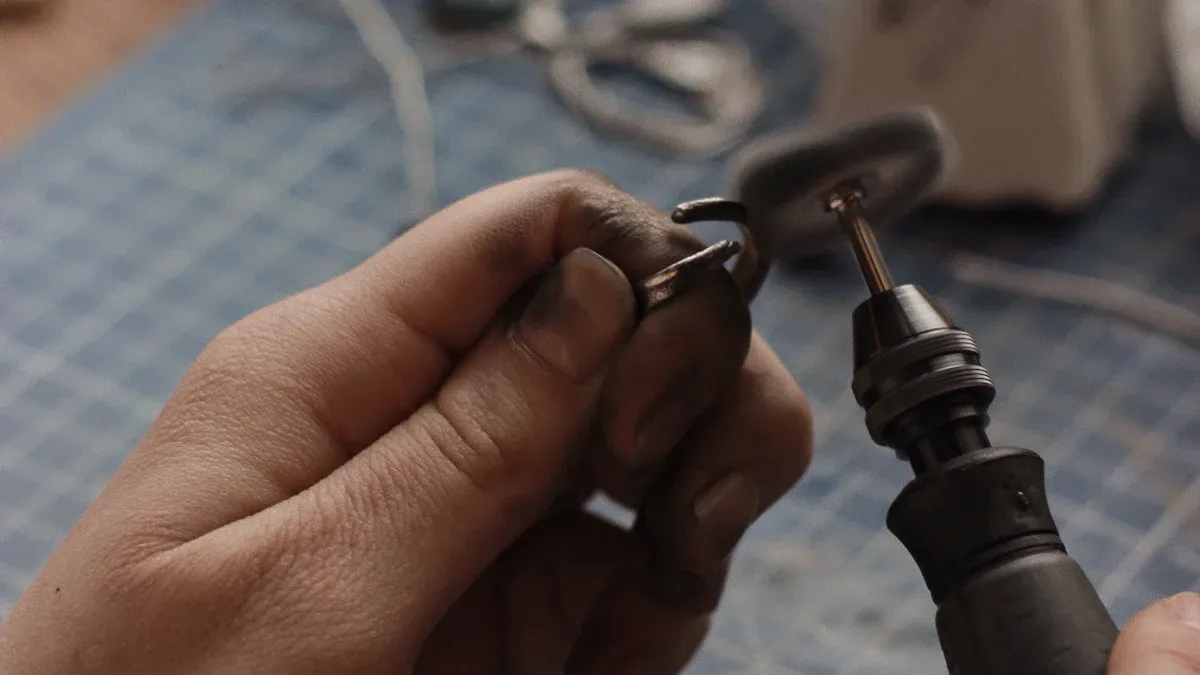
Traditional polishing works on many types of materials. You can use it on metals, plastics, ceramics, and dental items. People use this method in factories, shops, and dental offices. It helps polish car parts, jewelry, and teeth. Many businesses trust this method because it gives good results.
Tip: Traditional polishing is a good choice if you need to polish many different things.
Strong Cleaning Power
Traditional polishing can remove stains and scratches. It makes surfaces smooth and shiny. Studies show that using three steps with diamond paste makes dental materials very smooth. This method gives strong cleaning if you follow the right steps.
| Study Title | Key Findings | Conclusion |
|---|---|---|
| Polishing systems for modern aesthetic dental materials: a narrative review | Three-step polishing with diamond paste makes surfaces as smooth as glazed ones. | Using the right system works well for polishing dental materials. Following the steps is important for best results. |
| The Effect of Various Polishing Systems on the Surface Roughness of Two Resin Composites—An In Vitro Study | Sof-Lex and Super Snap systems made the smoothest surfaces, with Ra values under 0.2 µm, which helps stop bacteria from sticking. | Different systems give different results; Super Snap worked best in this study. |
You can see that polishing works well when you use the right tools and steps. You get smooth surfaces and help stop bacteria from sticking to dental materials.
Drawbacks
Abrasive Impact
Traditional polishing uses rough materials. These can scratch or wear down surfaces. If you polish too much, you might change the shape of your item. You could lose small details or hurt soft materials. This risk is higher if you do not use the right way.
Waste Generation
Traditional polishing makes waste. You use pads, pastes, and sometimes chemicals. These leave dust, dirty water, and used pads. You have to clean up and throw away this waste. This takes more time and costs more money.
| Drawback | Impact on Operational Efficiency | Impact on Product Quality |
|---|---|---|
| High operational costs | Makes production cost more | Lowers how much money you make |
| Inefficiencies in production speed | Slows down how fast you work | Makes products take longer to finish |
| Inconsistencies in product quality | More products get rejected | More surface problems |
You can see that waste and rough polishing can slow you down. You might spend more money and time. You may also see more problems in your finished products.
Chemical Use
Safety Concerns
You often use chemicals with traditional polishing. Some chemicals are strong and can be dangerous. You need to wear gloves and masks. Chemicals can bother your skin or eyes. You must follow safety rules to stay safe.
Note: Always read the labels and wear safety gear when using polishing chemicals.
Environmental Issues
Chemicals and waste from polishing can hurt the environment. You need to throw them away the right way. If you do not, you could pollute water or soil. Many places have rules about throwing away chemicals. You must follow these rules to avoid trouble and help nature.
Traditional polishing works well for many jobs. But you need to think about the risks and costs. If you want strong cleaning and flexibility, this method is helpful. If you want less waste and safer work, you may want to try other ways.
Safety
Safety is very important when picking a cleaning method. Both laser cleaning technology and traditional polishing have risks. You should know what dangers there are and how to stay safe at work.
Operator Risks
Physical Hazards
Laser cleaning technology uses strong beams of light. If you look at the laser or see a reflection, it can hurt your eyes or skin. Eye burns can happen fast. Skin burns can happen if you touch the beam. You need to wear special goggles and protective clothes.
Traditional polishing has other dangers. Sharp tools can cut or scrape you. Machines can pinch your fingers or hands. Pieces can fly and hit your skin or eyes. You must pay attention and use guards on machines.
| Safety Risks | Laser Cleaning Technology | Traditional Polishing Methods |
|---|---|---|
| Laser Radiation Hazards | Yes | No |
| Exposure to Fumes and Particulates | Yes | Yes |
| Electrical and Fire Hazards | Yes | Yes |
| Mechanical and Ergonomic Dangers | Yes | Yes |
| Psychological Stress | Yes | Yes |
| Hazardous Waste | No | Yes |
| Injury Risks | Lower | Higher |
Laser cleaning is safer because it does not touch the surface. Traditional polishing is riskier because of moving parts and sharp tools.
Chemical Exposure
Laser cleaning does not use chemicals. You do not have to worry about toxic fumes or skin burns. There are no spills to clean up. Traditional polishing uses strong pastes and solvents. These can bother your skin, eyes, and lungs. Breathing dust or fumes can make you sick over time.
Tip: Always wear gloves and masks when working with chemicals or dust.
Workplace Safety
Noise and Vibration
Traditional polishing machines are loud and shake a lot. Loud noise can hurt your hearing. Strong shaking can hurt your hands and arms. Laser cleaning systems are quieter and do not shake as much. You work in a calmer space.
Airborne Particles
Traditional polishing makes dust and flying bits. Dust can get in your lungs and make it hard to breathe. Laser cleaning makes less dust, but you still need good airflow. Some materials can make fumes when hit by the laser.
- Laser cleaning lowers the chance of breathing in bad dust.
- You do not need harsh chemicals, so the air is safer.
- Always use good ventilation to clear away fumes and dust.
Compliance
Regulations
You must follow safety rules for both methods. Laser cleaning needs special work areas and warning signs. You need laser safety training and protective gear. Some rules say you must use fume filters and control the light in the room.
| Compliance Aspect | Description |
|---|---|
| Fume Filtration | Special filters may be needed to follow the rules. |
| Energy Consumption | Lasers use a lot of electricity, which costs more. |
| Workplace Safety Compliance | You must follow laser safety standards. |
Industry Standards
You need to meet safety standards and keep good records. If you do not follow the rules, you could get fined or have to stop work. Keeping records shows you follow all the rules.
| Compliance Aspect | Consequences of Non-Compliance |
|---|---|
| Safety Regulations | Not following rules can mean fines or stopping work. |
| Documentation | Records are needed to show you follow the rules. |
Note: Following safety rules keeps you, your team, and your business safe.
Environmental Impact
Waste Management
Hazardous Byproducts
You want your workspace to stay clean and safe. Laser cleaning technology helps with this. It does not use dangerous chemicals. You do not have to worry about toxic waste. The laser turns dirt and rust into vapor. You do not get piles of trash or harmful liquids. Traditional polishing uses chemicals and water. These can make dangerous waste. You must be careful when you throw them away.
- Laser cleaning technology does not make extra waste.
- You do not deal with toxic chemicals or harmful leftovers.
- Traditional polishing can leave dirty water and chemical trash.
Disposal Needs
You save time and money by avoiding waste problems. Laser cleaning technology catches dirt well. You do not need special ways to throw things away. You do not pay for chemical cleanup or water treatment. Traditional polishing needs you to collect pads, dirty water, and chemical trash. This takes more work and costs more money.
| Method | Hazardous Waste | Disposal Steps | Cost Impact |
|---|---|---|---|
| Laser cleaning technology | Minimal | Simple filtration | Lower |
| Traditional polishing | High | Complex disposal | Higher |
Tip: Pick cleaning methods that make less dangerous waste. This helps the planet and saves you money.
Energy Use
Equipment Efficiency
You want machines that use less power. Laser cleaning technology uses smart systems. These work fast and break down less. You spend less on fixing and waiting. Traditional polishing machines run longer and use more energy. They break more often and slow you down.
- Laser cleaning technology saves energy.
- You finish jobs faster and spend less money.
- Traditional polishing uses more electricity and needs more repairs.
Sustainability
You help the earth when you use green methods. Laser cleaning technology does not use chemicals or water. You make less pollution and waste. Companies that use laser cleaning technology see better results and less waiting. You also use less energy, which is good for nature.
- Laser cleaning technology does not use chemicals.
- You lower pollution and extra waste.
- You save water and help the environment.
Eco-Friendly Practices
Water and Chemical Reduction
You help a lot by using less water and fewer chemicals. Laser cleaning technology does not need water. You do not make dirty water or chemical spills. Traditional polishing uses lots of water and strong chemicals. These can hurt rivers and soil if not handled right.
- Laser cleaning technology does not use water.
- You stop dirty water from spreading.
- You keep your workspace cleaner and safer.
Long-Term Effects
You help the future by picking green cleaning. Laser cleaning technology makes very little waste. You do not add bad stuff to nature. Over time, you save money and protect the earth. Traditional polishing can pollute for years if waste is not handled right.
Note: Choosing green cleaning helps you save money and keeps the earth safe for a long time.
Cost
When you look at laser cleaning technology and traditional polishing, cost is important. You should think about how much you pay at first, what you spend later, and what you get back over time.
Initial Investment
Equipment Costs
Laser cleaning machines cost more to buy than polishing tools. The price changes based on the type and features you pick.
- Pulse laser cleaning machines: $6,000 to $33,000
- CW laser cleaning machines: $3,000 to $7,500
Traditional polishing tools usually cost less to buy. But laser cleaning technology can save you money later. It lowers daily costs and helps you work faster.
Setup Expenses
You might need to spend more to set up both methods. Laser cleaning technology may need special power, safety gear, and training. Traditional polishing setups are easier but still need tables, fans, and places for chemicals and pads. These setup costs can get big, so plan your money well.
Operating Costs
Maintenance
Laser cleaning machines do not need much fixing. They have fewer moving parts. You do not need to buy pads or chemicals. This saves you time and money. Traditional polishing tools break faster and need new parts often.
Labor
Laser cleaning technology lets one person do the job fast. The process can be automatic, so you pay less for workers. Traditional polishing takes longer and needs more people. More manual work means more mistakes and injuries, which can cost you more.
Long-Term Value
ROI
You want your money to come back to you. Many U.S. companies see laser cleaning technology pay for itself in 12 to 24 months. This is because you save on supplies, workers, and waste. In car and plane factories, you can work up to 30% faster. Factory bosses see less waiting and longer machine life, which saves even more.
| Industry | Average Payback Period | Key Cost Savings Areas | Productivity Improvement |
|---|---|---|---|
| Automotive | 12-18 Months | Consumables, Waste Disposal, Labor | 20-30% |
| Aerospace | 18-24 Months | Rework Reduction, Labor, Specialized Cleaning | 15-25% |
| Medical Device Manufacturing | 12-24 Months | Cleaning Validation, Consumables, Rework | 25-40% |
| Mold Cleaning | 6-12 Months | Downtime Reduction, Labor, Cleaning Efficiency | 30-50% |
Savings Over Time
Laser cleaning technology helps you save money every year. You do not need to buy chemicals or pads. The machines last longer because they do not rub and wear out. You also do not pay for waste cleanup. Laser cleaning technology uses less energy and keeps your space cleaner. These savings add up and help your business grow.
| Cost Factors | Laser Cleaning | Traditional Methods |
|---|---|---|
| Consumables | No consumables needed | High cost of chemicals and solvents |
| Equipment Lifespan | Non-abrasive; preserves equipment | Risk of corrosion or chemical damage |
| Labor Costs | Automated and reduces labor time | High due to manual processes |
| Downtime | Minimal; in-place cleaning possible | Significant due to rinsing and drying |
| Waste Disposal Costs | No waste; no disposal needed | Costly hazardous waste management |
| Energy Consumption | Energy-efficient systems | High energy for heating chemicals |
Tip: If you want to spend less over time and work better, laser cleaning technology is a good pick. The money you save each year can pay for your machine and help your business stay strong.
Applications and Versatility
Material Range
Metals and Plastics
You can use laser cleaning technology and traditional polishing on many things. Laser cleaning works best on metals. It removes rust, oxides, and old coatings from car parts. You can also use it to restore metal artifacts. For plastics, laser cleaning can take off glue, paint, or ink. If you use the right settings, it will not melt the plastic. Traditional polishing works on metals and plastics too. But it can scratch or wear down soft materials.
Here is a table that shows what you can clean with laser technology:
| Material Type | Applications |
|---|---|
| Metals | Rust and oxide removal, coating removal, cleaning automotive parts, restoration of artifacts |
| Plastics | Cleaning coatings, adhesives, surface preparation, mold cleaning, removal of paint or ink |
| Glass | Cleaning optical lenses, architectural glass, restoration of stained glass, maintenance of solar panels |
| Wood | Restoration of artifacts, paint removal, mold removal, maintenance of wooden structures |
| Stone and Concrete | Restoration of monuments, graffiti removal, cleaning architectural surfaces, maintenance of walkways |
| Ceramic and Porcelain | Cleaning tiles, restoration of artworks, removal of production residues, cleaning machine components |
Tip: Always test a small spot first, especially on plastics or delicate things.
Sensitive Surfaces
Laser cleaning gives you more control on sensitive surfaces. You can clean glass, ceramics, or old artwork with less risk. Traditional polishing might scratch or dull these surfaces. Laser settings let you change the power so you do not hurt fine details.
Industry Use
Aerospace
Laser cleaning technology is used in the aerospace industry. Workers use it to clean molds and get surfaces ready for bonding. It also helps prepare parts for welding. The process takes off dirt and coatings but does not change the part’s shape. This helps keep planes safe and strong.
Electronics
Electronics makers use laser cleaning to remove tiny dirt or old coatings from circuit boards. You can clean small, detailed spots without touching or hurting them. Traditional polishing cannot reach these small spaces and might cause scratches.
Here is a table that shows where laser cleaning is used:
| Industry | Primary Use Cases |
|---|---|
| Automotive | Mold cleaning, oil and grease removal, adhesive bonding preparation, industrial equipment cleaning |
| Aerospace | Mold cleaning, adhesive bonding preparation, welding and brazing surface preparation |
| Medical | Industrial equipment cleaning, sensitive device maintenance |
| Industrial Manufacturing | Mold cleaning, oil and grease removal, equipment cleaning, surface preparation for welding |
| Cultural Heritage | Restoration and preservation of artifacts, monuments, and statues |
Project Adaptability
Scalability
Laser cleaning technology works for small and big projects. You can use a low-power system for tiny parts. You can use a high-power system for thick rust. This means you can clean one tool or a whole line of machines. Traditional polishing often needs more people and time for large jobs.
Customization
You can change laser cleaning systems to fit your needs. You can adjust the power, the type of laser, and how the beam is delivered. Some systems let you change fiber length, optics, and fume extraction. This helps you clean different shapes and sizes. You can also set up the system for special jobs, like restoring old statues or cleaning molds in factories.
- Laser systems can be changed for project size and cleaning needs.
- You can make them safer, faster, or better for different materials.
Note: Laser cleaning technology is flexible. You can handle many types of projects and materials with just one system.
Choosing the Right Method
Decision Matrix
Key Criteria
You want to choose the best cleaning method for your job. You should look at some important things before you decide. These things help you compare laser cleaning technology and traditional polishing.
| Criteria | Laser Cleaning Technology | Traditional Polishing |
|---|---|---|
| Precision | High, targets only contaminants | Moderate, may affect base |
| Speed | Fast, often automated | Slower, manual steps |
| Safety | Safer, no chemicals | Risks from chemicals and tools |
| Environmental Impact | Chemical-free, less waste | Chemical use, more waste |
| Cost Efficiency | Saves money over time | Higher ongoing costs |
| Material Suitability | Best for metals, some plastics | Works on many materials |
| Scalability | Easy to automate and scale | Labor-intensive for large jobs |
Tip: Use this table to see which method matches your project.
Example Cases
You can see how these things matter in real jobs. Here are some examples:
- Automotive Factory: You need to clean molds fast and safely. Laser cleaning technology is best. It saves time and money.
- Restoring Old Statues: You want to keep small details safe. Laser cleaning technology gives control and does not harm the surface.
- Dental Lab: You polish many kinds of materials. Traditional polishing works well because it is flexible.
- Electronics Workshop: You clean tiny parts. Laser cleaning technology gives you accuracy and keeps parts safe.
Note: The type of project and material help you pick the right method.
Evaluation Steps
Project Needs
Start by thinking about what your project needs. Ask yourself these questions:
- What material do you need to clean?
- How big is the area you must clean?
- Do you need very careful cleaning?
- Is speed important for your work?
- Do you want to skip using chemicals?
Write your answers down. This helps you see which method fits your needs.
Expert Advice
You can talk to experts if you are not sure. They know how to test cleaning methods and set up machines. Experts help you avoid mistakes and pick the right settings. You can ask for a sample cleaning or a demo. This lets you see real results before you choose.
Tip: Always test a small spot first. Experts can help you set the right settings and keep your material safe.
Mistakes to Avoid
Safety Oversights
You must be safe when you clean. Some people forget safety gear or rules. This can cause injuries or damage. You should:
- Wear goggles and gloves for laser cleaning technology.
- Use masks and guards for traditional polishing.
- Keep your workspace clean and have good airflow.
Alert: Never skip safety steps. Protect your eyes, skin, and lungs every time.
Material Errors
You can make mistakes if you do not match the method to the material. Here are some common mistakes and how to avoid them:
- Over-processing: Too much energy can hurt your item. Test settings on samples and use tools to watch the process.
- Shadowing and Redeposition: Some spots stay dirty or get new dirt. Change how you place your item and use special gases.
- Inconsistent Results Across Lots: Results can change from batch to batch. Use the same recipes and automate your process.
- Ignoring Optics Health: Dirty optics make cleaning weaker. Clean your equipment often.
- One-size-fits-all Recipes: Using the same settings for every job can cause problems. Change your process for each job.
Common Mistakes When Choosing a Cleaning Method:
- Picking a method without testing on your material.
- Forgetting to check safety rules.
- Using too much energy or pressure.
- Not cleaning or taking care of your equipment.
- Using the same settings for every job.
Tip: Avoid these mistakes by testing, following safety steps, and changing your process for each project.
You can make a smart choice by using a decision table, checking your project needs, and asking experts. Stay safe and match your method to your material. This helps you get the best results every time.
You see that laser cleaning technology works best for metal surfaces and jobs that need speed, safety, and less waste. Traditional polishing helps when you need to clean many types of materials. Always check your project needs before you choose. Think about safety, cost, and the impact on the environment. If you have a complex job, ask an expert for advice.
Tip: Test both methods on a small area first to find the best fit for your project.
FAQ
What is laser cleaning technology?
Laser cleaning technology uses strong light to clean surfaces. It removes rust, paint, or dirt. You can clean metals and some plastics. The laser does not touch or harm the material.
Is laser cleaning technology safe for all materials?
You can use laser cleaning technology on metals and some plastics. It does not work well on glass or ceramics. Always test a small spot first so you do not damage anything.
How fast can you clean with laser cleaning technology?
Laser cleaning technology works much faster than polishing. You finish cleaning jobs quickly. You do not need to wait for things to dry or do extra steps.
Do you need special training to use laser cleaning technology?
You should learn how to use laser cleaning technology before starting. You must know safety rules and how to set up the machine. Training helps you stay safe and avoid mistakes.
Does laser cleaning technology create waste?
Laser cleaning technology makes very little waste. Dirt turns into vapor or dust. You do not need to deal with chemicals or dirty water.
Can you use laser cleaning technology for large projects?
Laser cleaning technology works for big and small jobs. You can clean one part or many parts in a factory. The system can change to fit your needs.
Is laser cleaning technology expensive?
Laser cleaning technology costs more at first. You save money later because you do not buy chemicals or pads. You also spend less on workers and waste cleanup.
How does laser cleaning technology help the environment?
Laser cleaning technology helps the earth. You do not use chemicals or water. You make less waste and less pollution.
See also
The advantages of laser rust removal technology in ship maintenance
The advantages of laser cleaning in the automotive industry
What Factors Affect the Lifespan of Fiber Laser Cleaning Machines