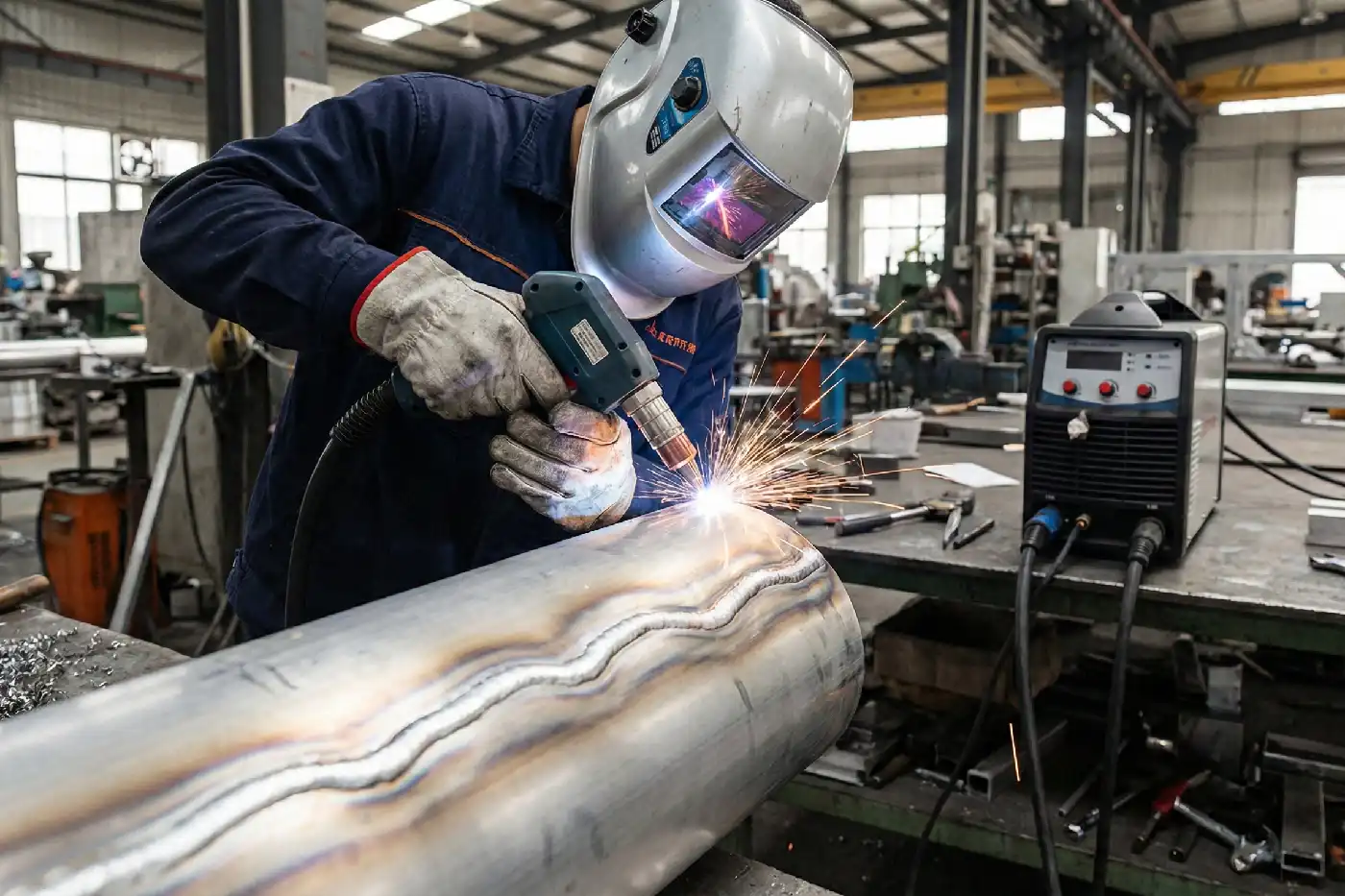
You might think aluminum welding is difficult. This is because aluminum acts differently than steel or other metals. Many businesses use aluminum for cars, planes, buildings, and energy systems.
- The welding industry helps make cars, airplanes, buildings, and energy tools.
- Aluminum is important for new uses and helps the planet.
- The U.S. aluminum industry is a big part of making things.
If you understand why aluminum welding is difficult, you can address the problems and achieve better results when working with aluminum.
Key Takeaways
- Aluminum welding is hard because it moves heat fast. This means you must control heat carefully or the weld can be weak or break. Aluminum melts at a low temperature, so it can melt very fast. You need to watch the temperature all the time when welding. Aluminum gets a tough layer from oxidation. This layer must be taken off before welding. If not, the weld can have holes and be weak. Laser welding lets you control heat very well. This makes fewer mistakes and stronger welds than old ways. Laser welding also helps people work faster and cleaner. It is used in many jobs like making cars and airplanes.
Why Is Aluminum Welding Difficult
High Thermal Conductivity
Welding aluminum is hard because it moves heat fast. It spreads heat much quicker than steel or other metals. This makes it tough for both new and skilled welders. The heat you use does not stay in one place. It moves away from the weld area quickly. This makes it hard to keep the weld hot enough. Aluminum has a thermal conductivity of 235 W/m·K. Carbon steel only has 45 W/m·K. Stainless steel is even lower at 15 W/m·K.
| Metal Type | Thermal Conductivity (W/m·K) |
|---|---|
| Aluminum | 235 |
| Carbon Steel | 45 |
| Stainless Steel | 15 |
| Tool Steel | 24 |
| High-Speed Steel | 25 |
| Ferritic Stainless Steel | 25 |
| Duplex Stainless Steel | 30 |
Tip: You must watch the heat closely. Too much heat can bend or crack the weld. Not enough heat can make the weld weak.
- Because aluminum moves heat fast:
- You need to control heat very well.
- Too much heat can bend or crack the weld.
- Not enough heat can make the weld weak.
Low Melting Point
Aluminum melts at a lower temperature than steel. This makes welding aluminum tricky. The metal can melt very fast. Aluminum melts at about 660°C. Carbon steel melts at around 1425–1540°C. Stainless steel melts at 1400–1450°C.
| Property | Aluminum | Carbon Steel | Stainless Steel |
|---|---|---|---|
| Melting point | ~660°C | ~1425–1540°C | ~1400–1450°C |
- Aluminum melts at about 1200°F. This low melting point means:
- The melted metal can move around too much.
- You might burn through the metal if you use too much heat.
- The oxide layer on aluminum needs more heat to break, which can melt the metal below if you are not careful.
You have to watch the temperature all the time. The high thermal conductivity makes this even harder because heat spreads so fast.
Oxidation and Porosity
Aluminum gets a strong oxide layer on top. This layer melts at a much higher temperature than the metal under it. You must remove this oxide before welding. If you do not, the weld will not be good. Oxidation makes welding aluminum hard because it can trap gas and cause porosity.
- Porosity in aluminum welds can happen because:
- Bad shielding gas lets air get into the weld.
- The metal is dirty with oil, grease, or water.
- Nozzles that are blocked or too small stop gas from flowing.
Porosity makes the weld weak and can cause it to break. You must keep the metal clean and use the right shielding gas to stop these problems.
Deep Penetration Challenges
Getting deep penetration is another reason aluminum welding is hard. The heat moves away from the weld area fast. This makes it hard to melt enough metal for a strong weld. You have to control the heat to stop bending and cracking.
- Problems with deep penetration:
- You must control heat to stop cracks.
- You need to remove the oxide layer for a good weld.
- Not enough penetration often happens at the start.
- The weld may not join well at the edges.
- Using the wrong settings or filler can cause trouble.
- Cleaning the metal is important because oxides need more heat to melt.
If you do not get enough penetration, the weld can break later. This is why many people think welding aluminum is hard, especially in factories.
Note: You can make better welds by cleaning the metal, using the right filler, and changing your welding settings for aluminum.
Traditional Welding Limitations
Inconsistent Heat Control
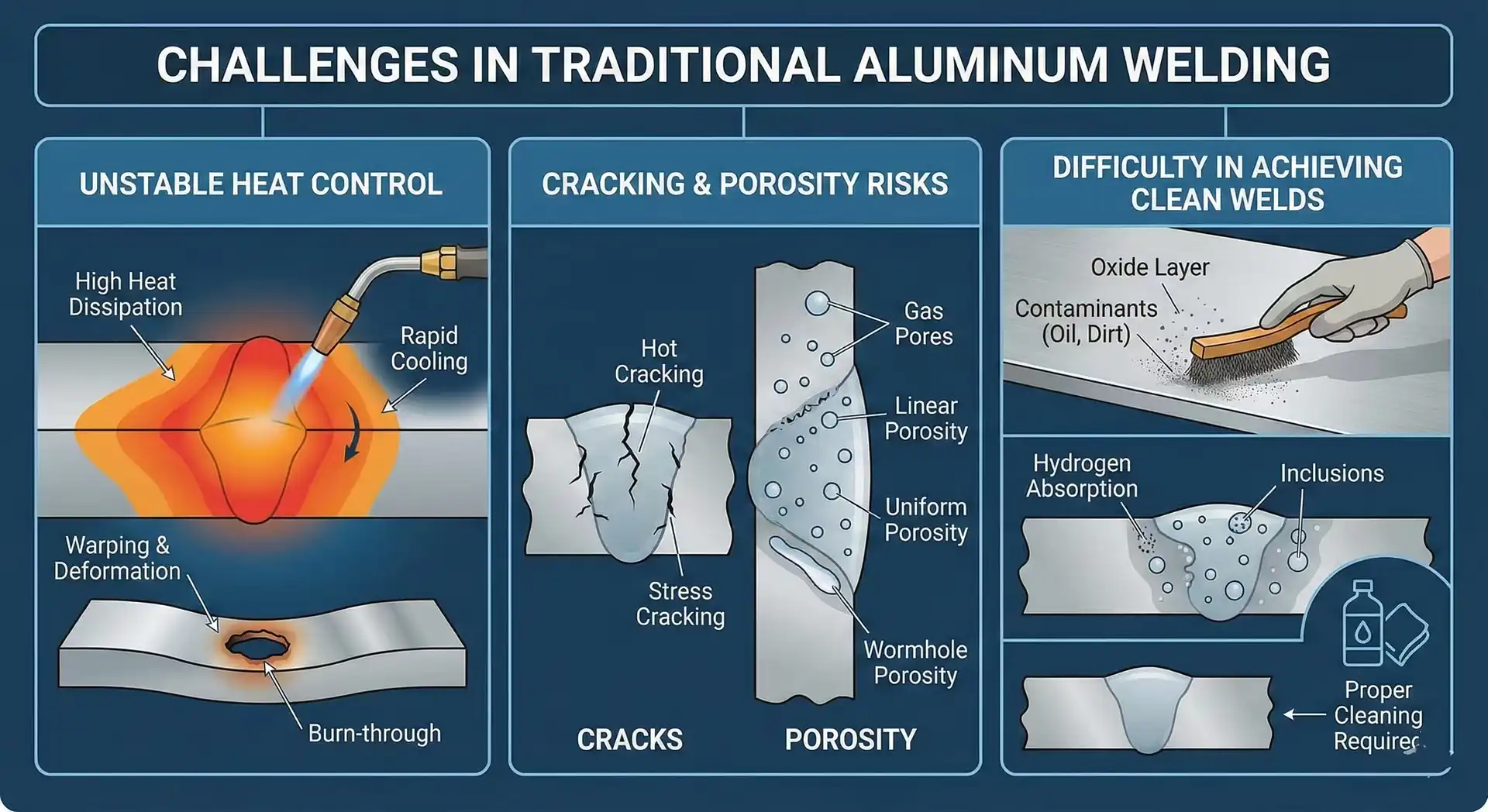
When you weld aluminum with old methods, you face many problems. One big problem is heat control. Aluminum moves heat away from the weld very fast. This makes it hard to keep the right temperature. If you do not control the heat, you can burn holes in the metal or make it bend. The oxide layer on aluminum melts at a higher temperature than the metal. You have to break this layer to weld well, but you might melt the metal under it.
You need to watch the heat all the time. If you do not, the weld can be weak or the part can get damaged.
Here are some reasons why heat control is hard with aluminum:
- The oxide layer melts at a higher temperature than aluminum.
- Aluminum spreads heat fast because of high thermal conductivity.
- Bad heat control can make the metal bend or burn.
- The area near the weld can get too hot and weak.
Cracking and Porosity Risks
Old welding ways can make cracks and holes in aluminum welds. These problems make welding aluminum hard for many people. Cracks can happen from stress or when the filler metal does not harden well. Porosity is when gas gets stuck in the weld.
| Type of Cracking | Description |
|---|---|
| Hot Cracking | Happens a lot in aluminum welds, caused by how the filler metal hardens. |
| Stress Cracking | Happens less, caused by leftover stress in the weld. |
| Type of Porosity | Description |
|---|---|
| Scattered Porosity | Small holes in random spots, often from dirt. |
| Linear Porosity | Holes in a line, caused by the same problem happening again and again. |
| Uniform Porosity | Holes spread out evenly, caused by gas flow problems. |
| Wormhole Porosity | Long holes like tunnels, which make the weld weak. |
| Crater Porosity | Holes at the end of a weld, which can cause stress. |
Cracks and porosity can make the weld weak and unsafe. You need to keep the metal clean and use the right way to stop these problems.
Clean Weld Difficulty
It is hard to get a clean weld with aluminum. You must take off the oxide layer before you start. Molten aluminum can soak up hydrogen, which makes holes in the weld. Dirt, oil, and other things can also cause problems. If the metal is thick in some spots and thin in others, the weld may not be strong. Too much heat can cause hot cracking, and aluminum’s high thermal conductivity makes deep welds hard.
Here are some things that make clean welds hard:
- Oxidation makes a tough layer on the metal.
- Molten aluminum takes in hydrogen, which makes holes.
- Oil, dirt, and trash make the weld weak.
- Different thicknesses make strong welds harder.
- Hot cracking happens when the weld cools too fast.
- High thermal conductivity makes deep welds tough.
You need to clean the metal well and control the process to get a strong, clean weld.
Laser Welding Solutions for Aluminum
Precise Heat Input
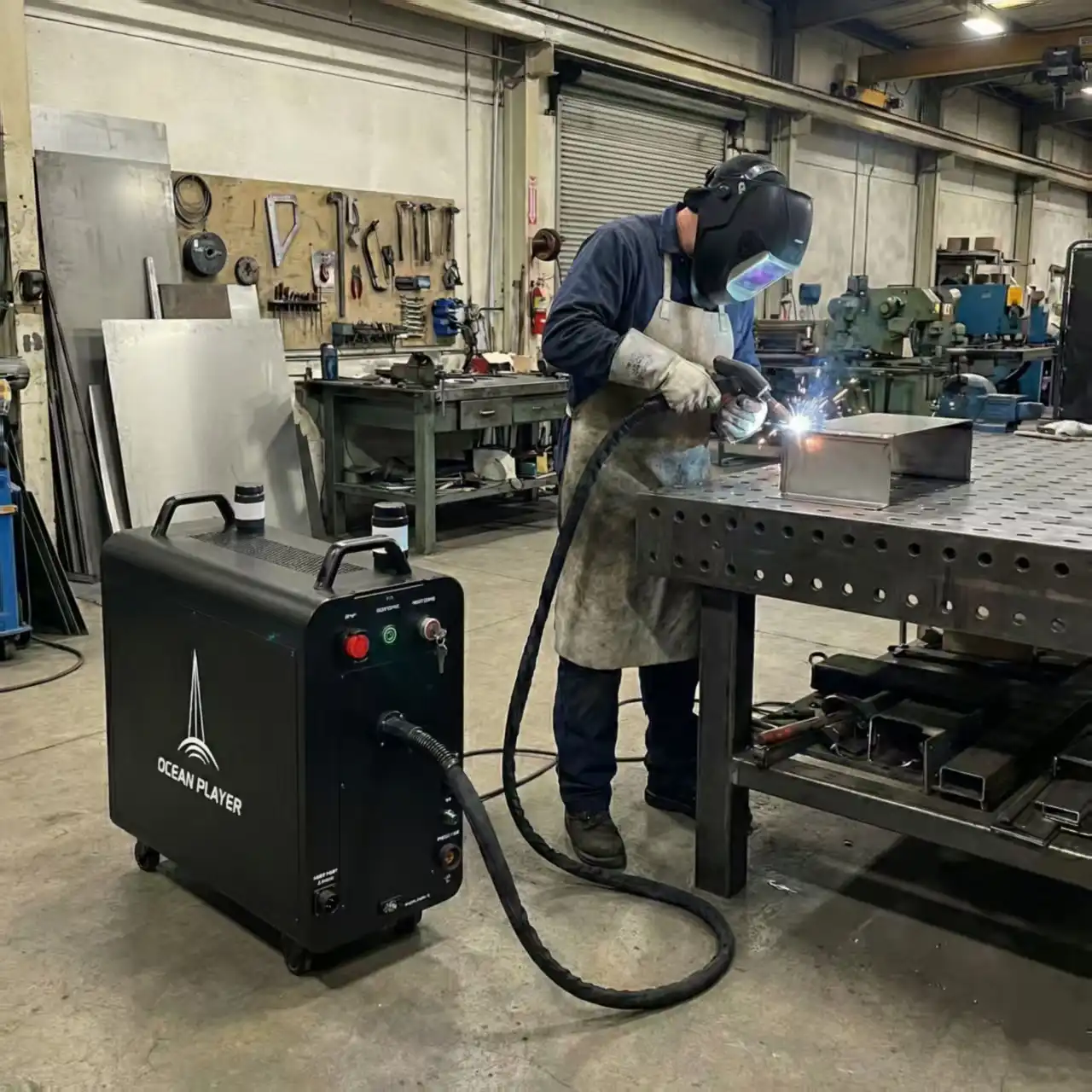
Laser welding gives you exact control over heat. The laser beam focuses energy into a small spot. This lets you melt and join aluminum quickly and accurately. You do not waste heat on areas you do not want to change. The result is a smaller heat-affected zone than with older welding methods. You see less bending and fewer problems with the metal.
- Laser welding uses a concentrated beam for efficient heating.
- You get rapid melting and strong fusion at the joint.
- The heat stays where you need it, so the rest of the metal keeps its strength.
When you use laser welding, you lower the total heat input. This means less damage and less distortion. You can make better welds, even on thin or tricky parts.
Minimized Heat Affected Zone
A big problem with aluminum welding is the heat-affected zone (HAZ). If you use too much heat, the metal near the weld can get soft or weak. Laser welding keeps the HAZ small. This helps the welded part stay strong and last longer.
- The HAZ can lose strength if it gets too hot.
- Changes in the HAZ can make the weld break or wear out faster.
- Laser welding lets you control the HAZ, so you keep the metal’s good properties.
You need to keep the HAZ small, especially in cars and airplanes. These parts must be strong and safe. Laser welding helps you meet these tough rules.
Deep Penetration Capability
Laser welding can reach deep into the metal. You can make strong welds, even on thick aluminum. This is hard to do with old welding methods. The laser beam goes deep without spreading heat everywhere.
| Welding Method | Penetration Depths (mm) |
|---|---|
| Laser Welding | 1.0 mm (stable), 2.0 mm (deep) |
| MIG Welding | 1 mm to 13 mm (varies) |
| TIG Welding | Not specified |
You can use laser welding for many jobs. Car makers use it for body panels and frames. Airplane builders use it for wings and fuselages. You get strong, deep welds that last.
Reduced Defects
Laser welding helps you avoid many common problems. You see fewer cracks and less porosity. The welds come out cleaner and stronger. In fact, the defect rate for laser welding is much lower than for TIG welding. Laser welding has a defect rate of only 0.8%, while TIG welding has a rate of 5.7%.
- Laser welding cuts down on porosity and cracking.
- You avoid keyhole collapse and other tricky defects.
- The welds look better and last longer.
| Benefit | Description |
|---|---|
| Precise Heat Input | You control heat, so the HAZ stays small. |
| Narrow Weld Bead | You get a deep, narrow weld that is very strong. |
| Minimal Distortion | The metal keeps its shape and strength. |
| Fast Welding Speeds | You finish jobs quickly, even on thin parts. |
| Deep Penetration | You make strong welds in thick aluminum. |
| Real-time Adjustments | You can change settings as you weld for the best results. |
Laser welding makes aluminum welding less difficult. You get fewer defects, stronger welds, and better results for your projects.
You see laser welding in many industries. Car factories use it for fast, clean welds. Aerospace companies use it for safe, strong joints. Even electronics makers use laser welding for tiny, precise parts. When you need quality and speed, laser welding is the answer.
Benefits and Applications
Automotive and Aerospace Uses
Laser-welded aluminum is used in many cars and planes. Car makers use laser welding for body panels and exhausts. They also use it for battery packs in electric cars. Aerospace companies use laser welding for turbine blades and engine parts. They also use it for strong parts that must handle heat. Laser welding helps meet tough safety rules. It makes parts that last a long time, even in hard conditions.
| Industry | Application Description | Benefits |
|---|---|---|
| Automotive | Welding car body parts, exhaust systems, battery packs for electric vehicles | Faster production, less waste, stronger joints, better safety and efficiency |
| Aerospace | Turbine blades, engine parts, structural elements | High strength, heat resistance, clean and durable joints, safety under extreme conditions |
Laser welding gives clean and strong joints. These joints meet strict standards in cars and planes.
Improved Productivity
Laser welding helps you work faster. You can weld much quicker than with old ways. Laser welding can go over 200 inches each minute. MIG and TIG welding only reach 20 to 50 inches per minute. This means you finish more jobs in less time. When you weld thin metal, laser welding is up to 10 times faster. You save time and do more work in your shop or factory.
| Welding Method | Speed (inches per minute) | Productivity Impact |
|---|---|---|
| Laser Welding | >200 | High |
| MIG Welding | 20-50 | Moderate |
| TIG Welding | 20-50 | Low |
- Laser welding helps you:
- Finish projects fast
- Cut down on production time
- Do more jobs with fewer delays
Enhanced Weld Quality
Laser welding makes better welds. It gives you high accuracy and less heat damage. Welds look smooth and clean, so you do not need extra work. You see fewer holes or cracks in the welds. Laser welding lets you change power and speed. This helps control how wide and deep the weld is. You can weld both thin and thick pieces with strong results.
| Feature | MIG/TIG Welding | Laser Welding Aluminum |
|---|---|---|
| Speed | Slow to moderate | Very fast |
| Precision | Limited | Extremely high |
| Heat Distortion | High | Minimal |
| Porosity Issues | Common | Significantly reduced |
| Automation | Less adaptable | Highly compatible |
| Weld Appearance | Needs finishing | Smooth and clean |
- Weld quality includes:
- Weld width
- Weld depth
- Weld area
- Weld porosity
Laser welding makes these things better by letting you change power and speed. You get strong and reliable welds that meet high standards.
Laser welding helps make aluminum welding less hard. It lets you control heat very well. You get fewer problems and stronger welds. People use laser welding for cars and planes. Many other industries use it too. This way, you finish jobs faster and get better results.
If you want your aluminum welds to look better, try laser welding. You will get cleaner welds and stronger pieces.
FAQ
What makes aluminum welding more difficult than steel welding?
Aluminum moves heat fast and melts at a lower temperature. You need to watch the heat closely. Steel does not move heat as quickly. Aluminum welding can cause more cracks and holes.
How does laser welding help you avoid defects in aluminum welds?
Laser welding lets you control heat very well. You see fewer cracks and fewer holes.
Laser welding gives you cleaner welds and stronger joints.
Can you use laser welding for thick aluminum parts?
Yes, laser welding works for thick aluminum. The laser beam goes deep into the metal.
| Welding Method | Maximum Penetration (mm) |
|---|---|
| Laser Welding | Up to 2 mm (single pass) |
What industries use laser welding for aluminum?
Laser welding is used in car factories, airplane makers, and electronics.
- Automotive
- Aerospace
- Electronics
Do you need to clean aluminum before laser welding?
Yes, you need to clean aluminum before laser welding. Dirt and oil can cause problems.
Clean metal helps you make strong and safe welds.
Three in one laser machine really worth your money
How Does Laser Wire Feeding Technology Improve Welding Precision
What is Wobble Laser Welding? Solving Fit-up Gaps
Wire Feeding vs No Wire Feeding Laser Welding: Which Is Better?