You know the feeling—you’re ready to weld, but the welding wire jams right in the nozzle. That moment can really test your patience. Good news: you can fix this without stress. You don’t need to be a pro to get things moving again. Safety comes first, so grab your gear and take a deep breath. Let’s get your welder back on track.
Key Takeaways
- Always stay safe. Turn off and unplug your welder before you fix anything. Wear gloves and safety glasses to protect yourself from getting hurt.
- Look at the welding wire for bends, rust, or dirt before you try to fix it. Change out any wire that is damaged. This helps the wire move smoothly and stops jams from happening again.
- Clean the nozzle often and look for spatter that builds up. Use the right tools to clean so the welding wire can move through easily.
- Change the spool tension and wire speed by following your welder’s manual. The right settings stop the wire from bunching up and help it work well.
- Take care of parts like the contact tip and liner often. Put in new parts if they are worn out. This keeps your welder working well and lowers the chance of jams.
Safety Check
Before you do anything else, you need to make sure you stay safe. Working with welding equipment can be risky if you skip the basics. Let’s walk through the first steps together.
Power Off Equipment
You should always turn off your welder before you try to fix a jam. Unplug the machine from the wall. This step keeps you safe from electric shock. Even if you think the machine is off, unplug it. Sometimes, machines can hold a charge. You don’t want any surprises.
Here’s a quick look at what safety standards say about shutting down your welder:
| Safety Protocols for Welding Equipment Maintenance |
|---|
| Disconnect the power source before performing maintenance or adjustments. |
| Disconnect switches should be used with all power sources so that they can be disconnected from the main lines for maintenance. |
| All checking should be done with the machine off or unplugged. |
| It shall be determined that proper switching equipment for shutting down the machine is provided. |
| Power it down: Turn off the power source when it’s not in use, and unplug the machine so there is no voltage on the plug. |
Tip: Always double-check that your welder is unplugged before you touch any part of it. This habit can save you from accidents.
Wear Protective Gear
You need to protect yourself from burns and sparks. Put on your welding gloves and safety glasses before you start. Gloves keep your hands safe from hot metal and sharp edges. Safety glasses protect your eyes from flying bits of welding wire or debris.
- Wear gloves that fit well and cover your wrists.
- Use safety glasses with side shields for extra protection.
- If you have a welding jacket, wear it to cover your arms.
You might feel like you can skip the gear for a quick fix, but don’t take chances. Even a small spark can cause a big injury.
Remember: Safety gear is your best friend in the workshop. It lets you focus on the job without worrying about getting hurt.
Now that you’re safe, you’re ready to tackle the stuck welding wire.
Find the Cause
Before you start pulling or cleaning, you need to figure out why your welding wire got stuck. If you know the cause, you can fix it faster and prevent it from happening again.
Inspect Welding Wire
Start by looking closely at the welding wire. Is it bent, rusty, or dirty? Sometimes, wire jams happen because the wire is old or has picked up moisture from the air. Humidity can cause oxidation, which leads to rust and weak spots. Rusty wire doesn’t feed smoothly and can clog the nozzle. Dust and dirt also block the wire path and make jams more likely.
Moisture can even get inside flux-cored wire. When that happens, hydrogen forms during welding and can mess up the weld’s strength. Rust from moisture can block the feeder and gun, making it tough for the wire to move.
Here are some things to check:
- Look for bends or kinks in the wire.
- Check for rust or discoloration.
- Feel for rough spots or dirt.
If you spot any of these problems, replace the wire before you continue.
Check for Spatter
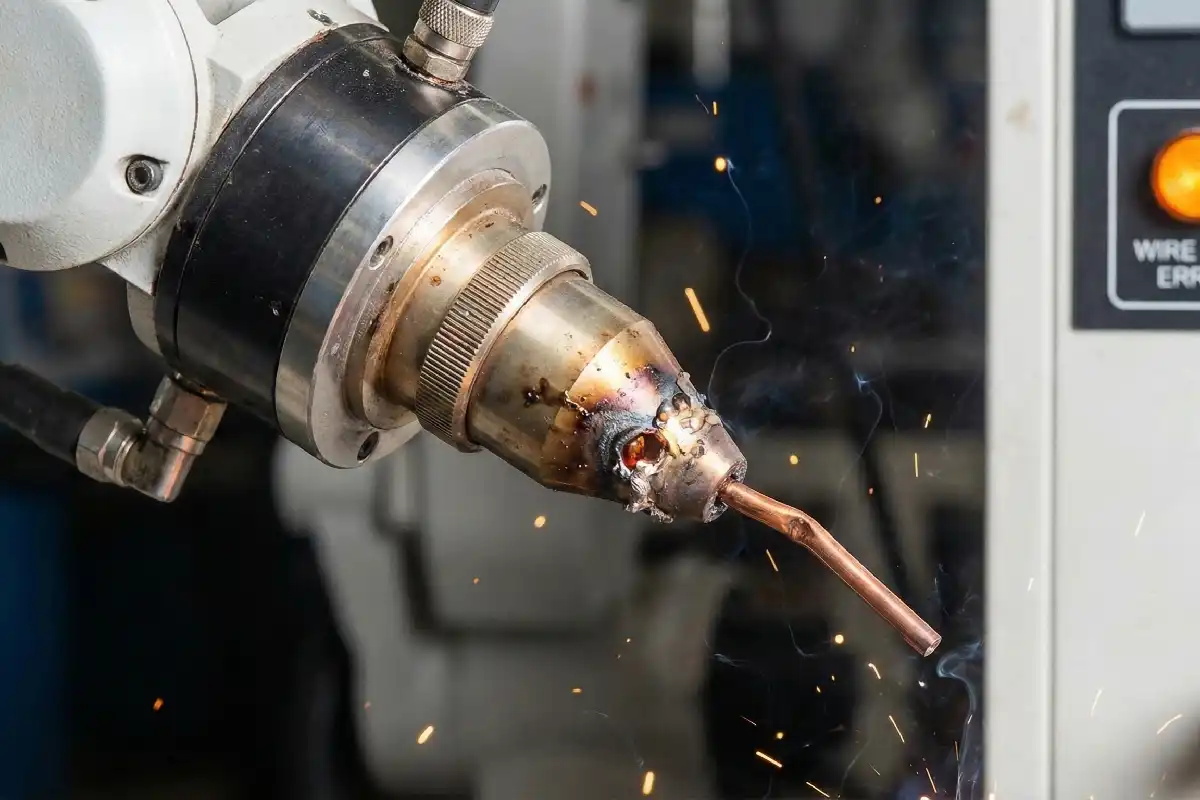
Spatter is another big reason for wire jams. When you weld, tiny bits of metal can fly off and stick to the nozzle or contact tip. Over time, this spatter builds up and blocks the wire’s path. If the contact tip wears out, it can’t guide the wire smoothly, which leads to more jams.
Here’s how spatter and wear can cause trouble:
- A worn contact tip loses its grip on the wire.
- Spatter piles up and blocks the nozzle.
- High heat and friction wear down the tip, making jams more likely.
Let’s look at some common mistakes that lead to jams:
| Mistake Description | Impact |
|---|---|
| Using the wrong type of drive roll or improper drive roll tension | Causes erratic or poor wire feeding |
| Cutting the welding liner the wrong length | Leads to poor wire feeding and erratic arc |
| Overheating of MIG gun consumables | Results in increased vibration and burnback issues |
If you find spatter or a worn tip, clean or replace these parts before you try to weld again.
Remove Welding Wire
Getting the welding wire out of a stuck nozzle can feel tricky, but you can do it step by step. You just need to stay calm and use the right tools. Let’s break it down so you know exactly what to do.
Take Off Shield
First, you need to remove the shield from the welding gun. The shield is the part that covers the nozzle and keeps sparks from flying everywhere. Hold the gun steady and twist the shield gently. If it feels stuck, don’t force it. Try wiggling it back and forth until it loosens. Once the shield comes off, set it aside in a safe spot. You want to keep it clean so you can put it back on later.
Tip: If the shield is covered in spatter, wipe it with a dry cloth before you continue. This helps you see what you’re working with.
Unscrew Contact Tip
Now, look for the contact tip inside the nozzle. The contact tip guides the welding wire and helps make a good connection. Use your fingers or a small wrench to unscrew the tip. Turn it slowly so you don’t strip the threads. If the tip feels tight, try using pliers, but be gentle. You don’t want to damage the gun.
Once you remove the contact tip, you’ll see the wire jam more clearly. Sometimes, the wire gets bent or stuck right at the tip. You can pull it out with pliers or snap it off if it’s broken. If you have trouble, check out some tools that make this job easier:
| Tool Name | Description |
|---|---|
| Torch Wizard™ Nozzle Cleaning Stations | Designed to remove spatter build-up in gas nozzles, enhancing productivity and quality in MIG welding. |
| Universal Fit Reamer Blades | Made from durable alloy tool steel, these blades efficiently remove spatter and are adaptable to various reaming stations. |
These tools help you clean out the nozzle without scratching or breaking anything. You want to keep your equipment in good shape so you can weld smoothly next time.
Remember: Take your time and check each part as you go. If you rush, you might miss something or damage the gun.
Now you’re ready to clear out the jam and get back to welding.
Clear the Jam
Snap Off Wire
You’ve got the shield and contact tip off. Now, you can see the jammed welding wire. Sometimes, the wire bends or breaks right at the nozzle. If you spot a piece sticking out, try snapping it off with your fingers. Hold the gun steady and grip the wire close to the nozzle. Give it a quick, firm twist. The wire should break cleanly. If it feels stuck, don’t force it too hard. You don’t want to damage the gun or hurt your hand.
Tip: If the wire won’t snap off easily, check for any melted spots. Melted wire can fuse to the nozzle. In that case, you’ll need a tool to help.
Here’s a quick checklist for snapping off wire:
- Make sure your gloves are on.
- Hold the gun steady.
- Grip the wire close to the nozzle.
- Twist and snap with a firm motion.
If the wire breaks off cleanly, you’re halfway done. If not, move on to the next step.
Use Pliers
Sometimes, the welding wire gets stuck deep inside the nozzle. You’ll need pliers to pull it out. Needle-nose pliers work best because they fit into tight spaces. Open the pliers and grab the end of the wire. Pull gently but firmly. If the wire doesn’t budge, wiggle it back and forth. This motion helps loosen any melted or jammed spots.
Never yank the wire too hard. You could damage the liner or the gun.
Here’s a simple table to help you pick the right pliers:
| Pliers Type | Best Use |
|---|---|
| Needle-nose pliers | Grabbing thin wire ends |
| Slip-joint pliers | Pulling thicker wire |
| Locking pliers | Holding wire steady |
Once you get the wire out, check the nozzle for leftover bits. Remove any small pieces with your pliers. Now, your gun is ready for cleaning.
Clean Nozzle
Keeping your nozzle clean makes welding smoother and helps prevent wire jams. If you let debris build up, you might notice your welding wire getting stuck more often. You can avoid this problem with a few simple steps.
Remove Debris
Start by making sure your welder is off and cool. You don’t want to touch a hot nozzle. Put on your gloves and safety glasses before you begin. Look at the nozzle and wipe away any visible dirt or spatter using a lint-free cloth. This first step gets rid of the loose stuff and lets you see what’s left inside.
Here’s a quick checklist to help you remove debris safely:
- Power down your welder and let it cool.
- Put on protective gloves and safety glasses.
- Wipe away surface residue with a lint-free cloth.
- Check for any leftover bits of spatter or dust.
Tip: Cleaning your nozzle several times a day keeps your welding wire feeding smoothly and helps you avoid jams.
Use Cleaning Tools
Sometimes, you’ll find stubborn debris that won’t come off with just a cloth. Grab a soft brass brush or a special nozzle cleaning tool. Gently scrape the inside of the nozzle. Don’t use anything too hard, or you might scratch the metal. If you see a lot of buildup, try using a cleaning solvent approved for welding equipment. Spray a little on the brush and scrub the nozzle.
Compressed air works great for blowing out dust and tiny bits. Hold the nozzle away from your face and give it a quick blast. After cleaning, inspect the nozzle for cracks or thinning metal. If you spot damage, replace the nozzle before you weld again.
Here’s a table showing some handy cleaning tools:
| Tool | Use |
|---|---|
| Brass brush | Scrapes off spatter gently |
| Cleaning solvent | Loosens tough residue |
| Compressed air | Blows out dust and debris |
Once you finish, put the nozzle back on and run a short test weld. You’ll notice the wire feeds better and your welds look cleaner.
Replace Consumables
You’ve cleaned the nozzle and removed the jam, but your job isn’t done yet. If you want smooth welding, you need to check the parts that wear out most often. These parts are called consumables. They include the contact tip and the liner inside your welding gun. When these get old or damaged, they can cause your welding wire to stick or jam.
Check Contact Tip
Take a close look at the contact tip. This small part guides the welding wire and helps create a steady arc. If you see any residue, burn marks, or rough edges, it’s time to swap it out. A worn contact tip can make the wire feed unevenly. You might notice the wire sputtering or stopping during a weld. That’s a sign the tip isn’t working right.
Here’s a quick checklist to help you spot trouble:
- Look for burn marks or melted spots.
- Check for rough edges or grooves.
- Wipe away any residue and see if it comes back quickly.
Tip: Replace the contact tip regularly, even if it looks okay. Fresh tips help your welding wire move smoothly and keep your welds clean.
Inspect Liner
The liner runs inside your welding gun and guides the wire from the spool to the nozzle. If the liner gets twisted, kinked, or blocked, your wire can’t move freely. You might see the wire bunch up or get stuck before it reaches the nozzle. That’s a sure sign the liner needs attention.
Here’s what you should look for:
- Kinks or twists in the liner.
- Dirt, dust, or metal shavings inside.
- Obstructions that block the wire path.
If you spot any of these problems, replace the liner right away. A clean, straight liner helps your welding wire feed without jams and keeps your welding gun working like new.
| Consumable Part | What to Check For | When to Replace |
|---|---|---|
| Contact Tip | Residue, wear, roughness | When wire jams or sputters |
| Liner | Kinks, twists, obstructions | When wire bunches or sticks |
Keeping your consumables fresh saves you time and frustration. You’ll spend less time fixing jams and more time making strong welds.
Prevent Future Jams
You’ve fixed the jam, but you want to keep your welder running smoothly. Let’s talk about how you can stop welding wire from getting stuck in the nozzle again. A few smart adjustments and regular checks make a big difference.
Adjust Spool Tension
If your spool tension is too tight, the wire can bunch up or get stuck. Too loose, and the wire slips or feeds unevenly. You want to find that sweet spot. Here’s what happens when you set the tension just right:
- You avoid wire bunching, which often happens when the top roller squeezes too hard.
- The drive roll motor lasts longer because it doesn’t have to work against too much pressure.
- The wire feeds smoothly, so you spend less time fixing jams.
Check your welder’s manual for the best tension settings. Make small adjustments and test the feed until it feels steady.
Set Proper Wire Speed
Wire speed matters more than you might think. If you set it too fast, you risk burn-through. Too slow, and you get burnback or jams. Here’s a tip that works for most welders:
Set the burnback control to the middle range—around 5 on a scale of 1 to 10. This keeps the wire from sticking out too far when you stop welding and helps prevent jams.
- Setting burnback to 5 helps keep the wire at the right length.
- Adjusting wire feed speed controls how deep your weld goes and how smooth the arc feels.
Test your settings on scrap metal before you start a big project. You’ll see fewer problems and get better welds.
Regular Maintenance and Wire Choice
You can avoid most jams with simple routines and the right wire for your job. Here’s a table to help you remember what to check:
| Maintenance Routine | Description |
|---|---|
| Proper Tension Settings | Set tension by the manual for smooth feeding. |
| Scheduled Liner Maintenance and Replacement | Clean and replace the liner often to cut down on friction and jams. |
| Maintain Straight Gun Cable Routing | Keep the cable straight to help the wire move easily. |
| Proper Wire Storage and Handling | Store wire in a dry, clean spot and handle gently to avoid kinks. |
Pick the right wire for your project. If you use aluminum wire, try a Teflon liner and U-groove drive rolls. For indoor jobs, solid MIG wire works well. If you’re welding outside or on rusty metal, flux-cored wire is a good choice.
Daily checks help you spot trouble early. Look at your cables, connections, and nozzle before you start. Clean the wire feed system and nozzle every day. Once a week, do a deeper inspection and clean all parts.
You’ll spend less time fixing jams and more time welding.
Welding Wire Troubleshooting
Persistent Issues
Sometimes, you do everything right, but the welding wire still jams. This can feel annoying, but you can solve it by checking a few more things. Here’s a simple list to help you find the problem:
- Check Drive Roll: Look at the drive rolls. If they look worn out, replace them. Make sure the tension is just right. If you can stop the wire by pinching it, try turning up the tension a little.
- Align Wire Path: Make sure the wire moves in a straight line from the reel to the drive rolls. If you see any bends or blocks, fix them so the wire can move smoothly.
- Adjust Brake Tension: The brake on the wire reel should not be too loose. If it is, the reel can spin too much and the wire can tangle.
You might also notice that some brands of welding wire jam more than others. Softer wire can bend and get stuck more easily. If you keep having trouble, try a different brand and see if that helps.
Other things can cause jams, too:
- Worn contact tips can make the wire feed unevenly.
- If your welding gun cable is too long or twisted, the wire can get stuck.
Tip: Keep your cables straight and check your contact tip often. Small changes can make a big difference.
When to Get Help
You can fix most jams yourself, but sometimes you need extra help. If you keep having the same problem after trying all the steps, it might be time to call a professional. Here are some signs you should ask for help:
- The wire jams every time you weld, even after changing parts.
- You see sparks or smoke coming from the gun handle.
- The welder makes strange noises or shuts off by itself.
A welding technician can check for hidden problems inside the machine. They have special tools and know how to fix things safely. Don’t wait too long if you feel stuck. Getting help early can save you time and money.
Remember: Asking for help is smart, not a sign of weakness. You want your welder to work well and keep you safe.
You can fix welding wire that is stuck if you follow easy steps and stay safe. Doing regular checks and using the right settings helps stop most jams. Here’s how some maintenance jobs help:
| Maintenance Task | Impact on Wire Jams |
|---|---|
| Inspect and Clean Feed Path | Gets rid of things that block the wire. |
| Check Wire Spool Condition | Stops jams from a spool that binds or wobbles. |
| Ensure Proper Alignment of Components | Makes sure parts line up and don’t rub too much. |
If you keep doing these things, you get more than just fewer jams:
| Benefit Type | Description |
|---|---|
| Enhanced Safety | Makes burns, shocks, and fumes less likely. |
| Increased Efficiency | Helps your welder work better and last longer. |
| Cost Efficiency | Saves money because you won’t need big repairs. |
| Regulation Compliance | Helps you follow rules and keeps your warranty. |
Stay safe, take care of your tools, and enjoy welding with no problems! 🚀
FAQ
Why does my welding wire keep getting stuck?
You might have dirty wire, worn parts, or wrong tension settings. Check your wire for rust or bends. Clean your nozzle often. Adjust spool tension and wire speed. Fresh consumables help a lot.
Can I use regular pliers to remove stuck wire?
Yes, you can use regular pliers. Needle-nose pliers work best for grabbing thin wire. Always wear gloves to protect your hands. Pull gently so you don’t damage the gun.
How often should I clean my welding nozzle?
Clean your nozzle after every welding session. If you weld a lot, wipe it several times a day. Regular cleaning stops spatter from building up and keeps your wire feeding smoothly.
What type of wire is best for beginners?
Solid MIG wire works well for most indoor jobs. It feeds smoothly and makes clean welds. If you work outside or on rusty metal, try flux-cored wire. Always match the wire to your project.
Do I need to replace the liner often?
You should check the liner every month. If you see kinks, dirt, or blockages, replace it right away. A clean liner helps your wire move easily and stops jams.
What Happens When You Get a Laser QBH Alarm
How to Diagnose Button Response Issues in Laser Welding Machines
The light emission characteristics of laser welding machines