You should consider laser welders as a strategic investment, but assess cost and payback on a site‑by‑site basis rather than by blanket claims. Market estimates for laser welding in the mid‑2020s generally cluster in the low‑single‑digit billions (USD), with reported mid‑2020s estimates often in the $2–3 billion range depending on scope and methodology (see Fortune Business Insights market overview). Evidence and industry case summaries typically show that payback periods vary widely by application; a commonly reported typical payback range is 18–24 months, driven by labor, scrap reduction, and throughput gains, while some high‑volume or narrowly optimized installations report substantially faster returns in vendor case studies (see industry ROI examples such as the cobot.systems laser‑welding ROI case). In short: laser welding can deliver strong ROI, but the exact payback depends on machine class, part mix, utilization, and local labor/electricity costs; we quantify these drivers in the TCO model below.
Key Takeaways
- Laser welders help you get your money back fast, usually in six months.
- They lower the cost of workers and help make more products.
- New technology makes laser welders work better and more accurately.
- More people are buying laser welders, especially in Asia-Pacific.
- You need to keep laser welders in good shape and train people to use them well.
Investment Value in 2026
Laser Welder ROI
Methods & assumptions
All figures use USD as the default currency (adjust locally for EUR). Power classes: <1 kW (low), 1–5 kW (mid), >5 kW (high). Modeling scenarios: single-, two- and three-shift operation with OEE 70–90%. Energy: $0.10–$0.18/kWh; laser system draw parameterized at 1.5–6 kW including cooling and extraction. Labor benchmark: $28–45/hr (loaded). Consumables & maintenance: 10–20% of CapEx annually. Depreciation: straight-line 7 years. ROI metric: Payback = CapEx / Annual net savings; run sensitivity on labor, electricity, utilization/OEE, power draw and media/disposal costs.
You might wonder if a laser welder is a good buy. In 2026, many businesses see great results. Car and electronics companies use them the most. These companies need fast and exact welds. Factories in Asia-Pacific are growing fast and want better tools. Fiber laser welding is known for being fast and making money. If you work in these areas, you can get good returns.
Brand names are important too. Famous brands cost more, but they last longer. They also give better help and support. These machines do not break as much. You spend less time fixing them and more time working. Many companies save money because they do not have to repair as often.
If you make a lot of products, you can get your money back in one to three years. This is because you save on labor, work faster, and use fewer supplies. Even though laser welders cost more at first, you save money later. Some companies even make a profit in the first year. You make more products and fix fewer mistakes.
Tip: For the best return, pick trusted brands and use them where speed and accuracy matter.
Laser Welder Cost Analysis
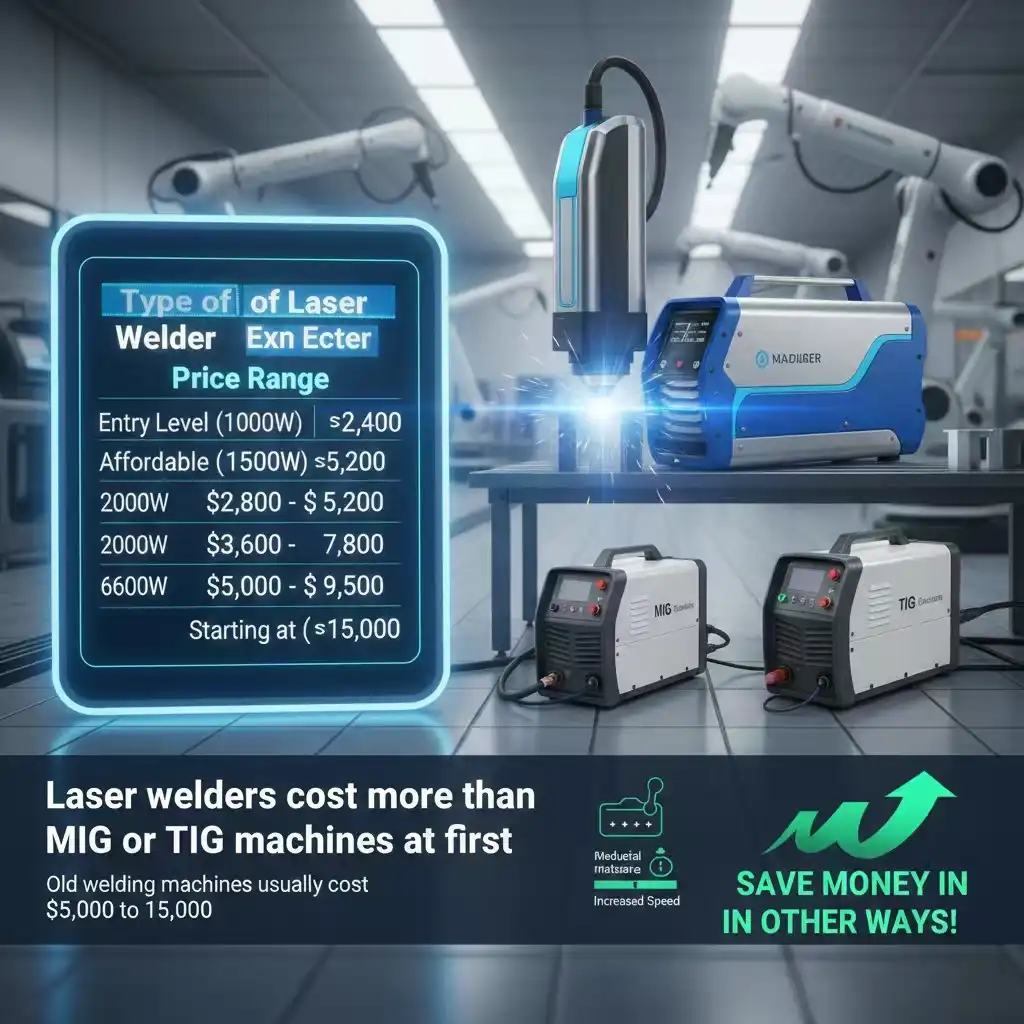
You may worry about the laser welder cost compared to old welding. The price for a new laser welder in 2026 depends on what you need. Here is a simple chart with prices:
| Type of Laser Welder | Price Range |
|---|---|
| Entry Level (1000W) | ~$2,400 |
| Affordable (1500W) | $2,800 – $5,200 |
| 2000W | $3,600 – $7,800 |
| 3000W | $5,000 – $9,500 |
| 6000W | Starting at ~$15,000 |
Laser welders cost more than MIG or TIG machines at first. Old welding machines usually cost $5,000 to $15,000. But you should think about more than just the price. Laser welders help you save money in other ways.
| Category | Laser Welding Machine | Traditional MIG/TIG Systems |
|---|---|---|
| Initial Investment | $100,000 | $5,000 – $15,000 |
| Payback Period | 1-3 years | N/A |
| Labor Cost Savings | Significant | Higher |
| Cycle Time | Faster | Slower |
| Consumable Usage | Minimal | Higher |
Laser welders use fewer supplies and need less fixing. You spend less on filler and gas. You do not need to fix them as much. Repairs do not happen often. Laser welders are more exact, so you waste less material. You do not have to redo work as much.
| Cost/Benefit Category | 2x Manual TIG Stations | 1x Automated Laser Welding Machine |
|---|---|---|
| Initial Investment | -$20,000 | -$200,000 |
| Annual Labor Cost | -$100,000 | -$60,000 |
| Annual Consumables | -$8,000 | -$2,000 |
| Post-Processing Labor | -$25,000 | -$3,000 |
| Increased Throughput Value | Base | +$300,000 |
Even with a higher laser welder cost, you save money each year. You spend less on workers and supplies. You also make more products faster. Over time, these savings are bigger than the extra money you pay at first.
Here is a quick list of the main money benefits:
| Financial Benefit | Description |
|---|---|
| Reduced Material Waste | Laser welding is exact, so you make fewer mistakes and save money. |
| Increased Production Efficiency | You make more in less time, so you pay less for labor and get more done. |
When you add everything up, owning a laser welder costs less than you think. You work faster, make better products, and pay less over time. The laser welder cost is worth it because you earn more and grow your business.
Technology Advancements
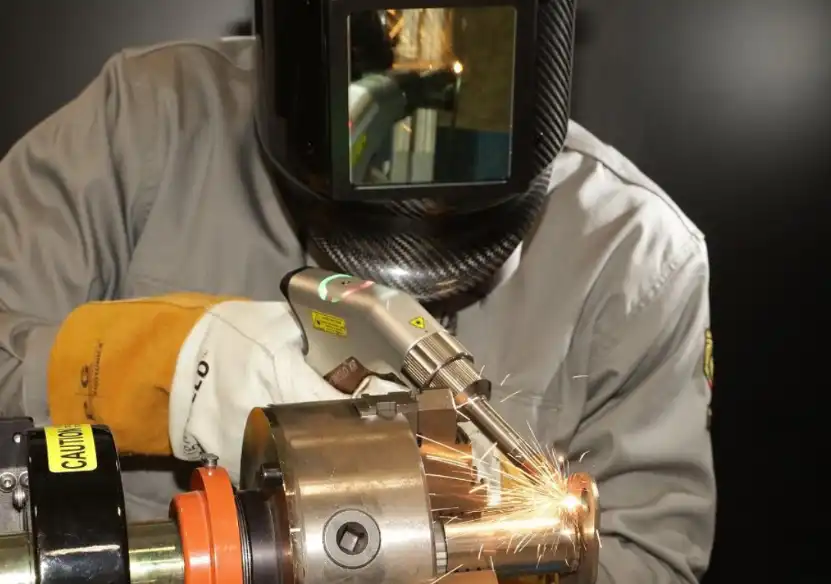
Innovations in Laser Welding
Between 2023 and 2026, laser welding gets many new features. These changes make your work easier and more exact. Here are some of the biggest improvements:
- Automation and AI now help with welding. Machines can change their own settings. This means you get better welds with less work.
- AI helps you be more exact and flexible. It uses smart tools to find the best way to weld each part.
- The market for semiconductor lasers grows by 6.6% every year. This means you get stronger and more reliable machines.
- Laser welders now cost less money. Small and medium businesses can buy them. Today, 60% of these businesses use automatic welding.
You also get new things like fiber laser sources, adaptive optics, and real-time analytics. These features give you more control and help you find problems early.
| Breakthroughs | Impact on Laser Welding Technology |
|---|---|
| Fiber Laser Sources | Improved beam quality and power scalability |
| Adaptive Optics | Enhanced precision and control |
| Integrated Automation | Increased throughput and reduced cycle times |
| Robotics | Greater flexibility and process control |
| Real-time Analytics | Better defect detection and weld consistency |
| Digital Twins | Improved simulation and monitoring capabilities |
Productivity and Quality Impact
With these new machines, you can weld faster and better. Automation helps you make up to 30% more products. Laser welding is up to 10 times faster than old ways. This speed lets you finish more jobs quickly.
Robots with AI can change welding settings right away. This means you make fewer mistakes and waste less material—up to 25% less. Real-time checks help you spot errors before they cause problems.
“Laser welding has helped us finish jobs faster and make perfect products on many materials.”
You also see better quality in your finished work. Laser welders join metals very exactly. This is important for things like batteries and electronics. Automatic checks now look at your work, so you miss fewer mistakes.
| Aspect | Benefit |
|---|---|
| Precision | Precise joining for high-reliability products |
| Defect Control | Automated systems catch more errors than manual checks |
| Speed | Faster production and shorter lead times |
You get more control, better quality, and faster results with new laser welders. These changes help your business stay ahead in a fast-changing world.
Market Trends and Demand
Industry Adoption
Laser welders are used in many industries now. Car and airplane companies use them the most. They need parts that are strong and light. These companies must follow tough safety and quality rules. Laser welders help them do this. Electronics and medical device makers also use laser welders. They need very exact work, so laser welding is a good choice.
Asia-Pacific is a leader in using laser welders. Factories there make cars, electronics, and other things. Automation is a big reason why they use these machines. About 30% of factories in rich countries use laser welders to work better. Electric car makers use laser welders for lighter cars and to meet green rules. In North America, 60% of medical devices that need to be very exact use laser welding.
Note: Industry 4.0 tools like IoT and AI help you watch and control welding as it happens. This makes your work faster and more trustworthy.
- Car and airplane companies need laser welders.
- Electronics and medical fields want exact work.
- Asia-Pacific uses laser welders more because factories are growing.
- Automation and smart tools make laser welding more common.
Market Growth Outlook
Data sources & scope
Market figures cited above come from different report scopes and currencies: ResearchInChina (2021) reports China laser‑processing equipment (incl. welding) using RMB 2019 base; Intel Market Research (2025) provides a global CO2/metal‑laser subsegment in USD (2024 base); smaller press/PR forecasts (e.g., OpenPR, 2026) summarize varied vendor projections. Differences stem from scope (China vs. global), product definition (laser welding only vs. all laser processing vs. total welding equipment) and currency/base‑year conversions—check each report’s table/footnote for exact definitions.
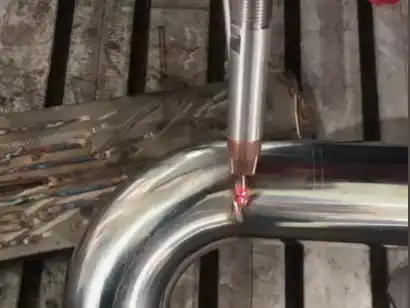
The market for laser welding machines is getting bigger. It may reach $1.47 billion in 2026, up from $1.41 billion in 2025. The market grows about 4.2% each year. Handheld fiber laser welders are also getting more popular. By 2033, this group could reach almost $2 billion, with steady growth.
Many things are making the market grow. More companies want to make things very exactly. Automation helps save money and finish jobs faster. New laser systems cost less and can do more. Tough safety and quality rules mean companies need better welding. The market could grow by 8–10% each year for five years as technology gets better and more companies use laser welders.
| Market Drivers | Description |
|---|---|
| High-precision manufacturing | Car, airplane, and electronics companies need fast, good work. |
| Automation and Industry 4.0 | Companies use machines to save money and work better. |
| Technological advancements | Laser systems are cheaper and can do more jobs. |
| Quality and safety standards | Hard rules mean companies need better welding. |
| Market growth prediction | The market may grow 8–10% each year for five years. |
You pay less as more companies make laser welders, especially in Asia. Tariffs and supply chain changes can change prices, but companies find new ways to get what they need. Laser welders are easier to buy, so you can keep up in a fast-changing world.
Practical Considerations
Maintenance and Training Costs
You must plan for regular maintenance when you get a laser welder. Maintenance helps your machine work well and stops big repair bills. Here is a table that shows usual costs:
| Maintenance Type | Cost Range | Frequency |
|---|---|---|
| Scheduled Maintenance | $500 to $1,500 per session | 2–4 sessions annually |
| Unscheduled Repairs | $2,000 to $10,000 per incident | As needed |
| Annual Average Costs | $2,500 to $6,000 | Annual total |
Training is important for your team. You want everyone to use the machine safely and get good results. Most companies give training programs. These programs show your staff how to use the machine and learn about different materials. Basic welding skills and hands-on practice are important. Well-trained workers help you avoid mistakes and save money over time.
- Training helps your team use the machine right.
- Refresher classes keep skills sharp.
- Operators should tell you about problems fast.
Tip: Good training and regular maintenance protect your machine and help keep costs low.
Risks and Drawbacks
Laser welders have some risks and problems you should know. The starting price is high. Laser welders cost more than old machines because they use new technology and need special setup. You also need to keep up with calibration and cleaning to keep quality high.
Some risks are:
- Bad beam quality can make weak welds.
- You must control heat to stop cracks or warping.
- Safety is very important. Laser beams can hurt skin or eyes. Always wear safety gear and shields.
- Shiny materials can cause uneven welding.
- Parts that are not lined up or wrong settings can cause mistakes.
Laser welders need steady power and good cooling. The workshop should be clean and safe. Workers must follow all safety rules and know how each setting changes the weld. If training is not enough, mistakes can happen.
Note: Laser welders meet tough safety rules like CE, FDA, and ISO. These rules help keep your team and business safe.
When you think about these things, you can make a smart choice and get the most from your investment.
Case Studies
Business Success Stories
Parameter checklist for each case study (provide auditable evidence): company or anonymized ID / location / date; equipment model & optical power (kW); material & thickness; welding parameters (power %, speed, spot/beam geometry); shifts, OEE and cycle time (arc‑on vs takt); throughput (parts/hr), yield (% pass) and rework rate; destructive/NDT results (tensile, macro/micrograph) with report links; energy (kWh) and maintenance costs; and a payback spreadsheet or input table. Mark each item with a verifiable source.
You can see real results when you look at how other businesses use laser welders. Many companies have improved their profits and work quality by switching to this technology.
- QTR Industries added laser welding cobots to their factory. You can learn from their example. They improved efficiency and made better products. They also used fewer workers for the same jobs. This helped them save money and become stronger in the market.
- AutoTech Innovations saw a big change after they started using laser welders. Their assembly line worked 35% faster. You can imagine how much more you could make with that kind of boost.
- A small job shop in Phoenix bought a 1.5 kW laser welder for $2,500. They increased their net profit by $140 each day. They paid off their machine in only 18 days. You can see how fast you might get your money back with the right setup.
Many small and medium-sized businesses now choose handheld laser welding systems. You can move these machines easily and use them for many jobs. You do not need a big investment to start. These systems give you high-precision welds right where you need them. You save money on shipping and cut down on waiting time.
- You get a lower starting cost compared to old welding machines.
- You can do more types of work because the machines are flexible.
- You spend less on repairs because portable units need less maintenance.
- You get your investment back faster because you work quicker and make fewer mistakes.
| Company/Type | Key Benefit | Result |
|---|---|---|
| QTR Industries | Labor optimization | Lower costs, better quality |
| AutoTech Innovations | Faster assembly line | 35% efficiency increase |
| Phoenix Job Shop | Low-cost investment, quick payback | $140/day profit, 18-day ROI |
| SMEs | Portable, precise, flexible | Lower costs, faster ROI |
You can see that laser welders help both big companies and small shops. You get better products, save money, and grow your business faster.
You have good reasons to buy laser welders in 2026. The U.S. market is growing fast because new technology helps people work better. Many businesses like cars, planes, electronics, and medical devices use laser welders for better results. Skilled workers and smart machines help you do well. You can save money, make better products, and finish jobs faster. If you want your business to grow, pick laser welders and teach your team how to use them.
- Market grows fast with new technology
- Big need in important industries
- Skilled workers help you succeed
FAQ
What materials can you weld with a laser welder?
You can weld many metals like steel, aluminum, copper, and titanium. Laser welders work well on thin and thick pieces. You get strong, clean welds on most metals used in cars, electronics, and medical devices.
Is a laser welder safe for your team to use?
Laser welders are safe if you follow safety rules. You must use protective eyewear and shields. Training helps your team avoid accidents. Most machines have built-in safety features.
How long does it take to learn laser welding?
Most operators learn basic laser welding in a few days. You can master advanced settings in a few weeks with practice. Many companies offer training programs to help you get started quickly.
Can you use a laser welder for small jobs or repairs?
- Yes, you can use handheld laser welders for small jobs.
- These machines work well for repairs and custom parts.
- You save time and get precise results, even on detailed work.