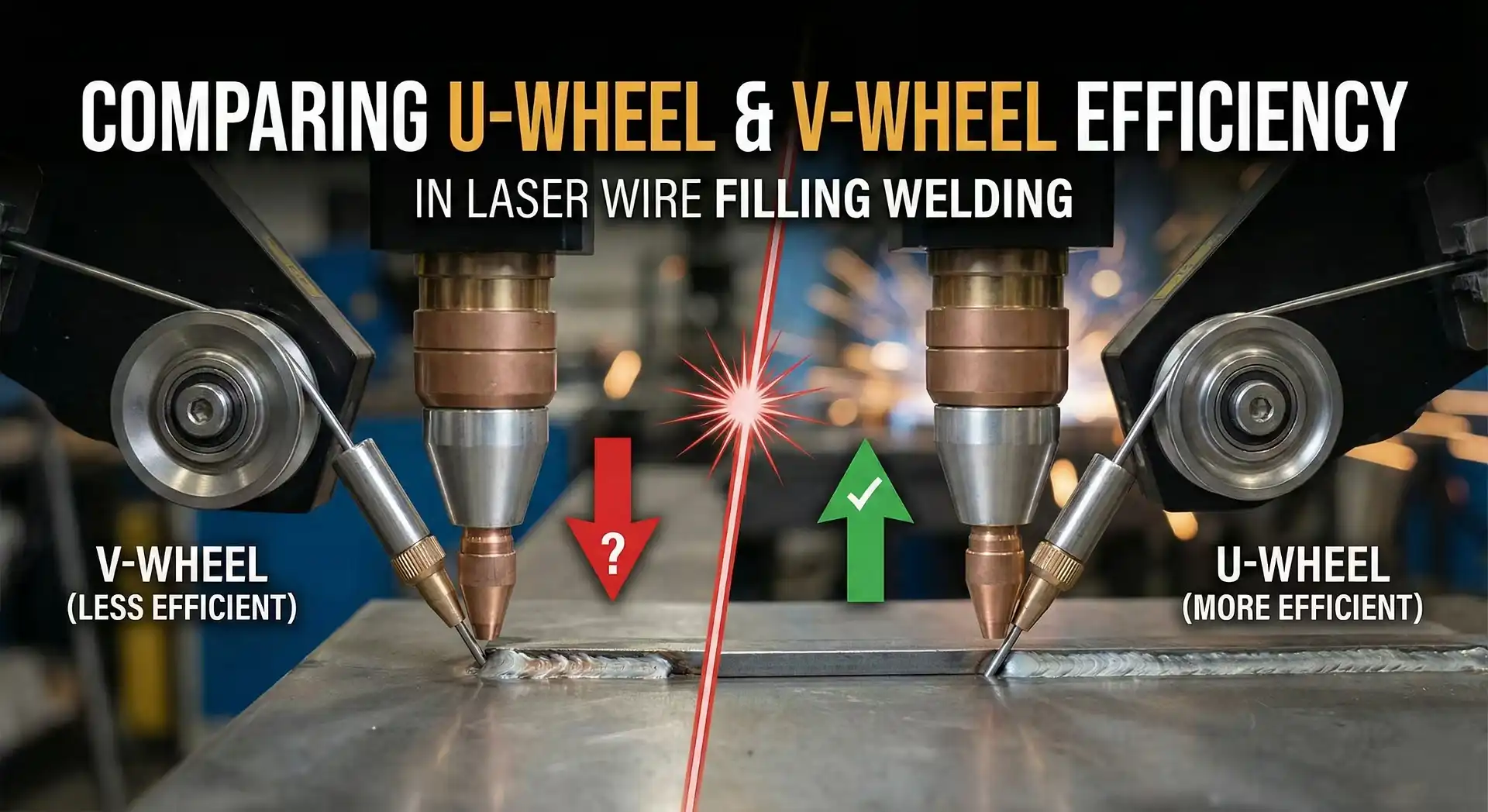
You will notice that U-wheel vs V-wheel efficiency depends on the wire material you choose. U-wheels give you smooth feeding with soft wires like aluminum. V-wheels work best with hard wires such as steel. Wire deformation, grip, and tension control all play a role in the results. You should always match the wheel type to your wire for the best welding performance.
Key Takeaways
- U-wheels work best with soft wires like aluminum. They help the wire move smoothly. They also lower the chance of wire damage.
- V-wheels are better for hard wires like steel. They hold the wire tightly and give more control. This helps make welding more exact.
- You should always use the right wheel for your wire. This stops feeding issues and helps make strong welds.
- Check your wheels often and keep them clean. This helps them work well and last longer.
- Think about how much each wheel costs and how often you need new ones before you choose.
U-wheel vs V-wheel: Efficiency Comparison
U-wheel Performance
When you use a U-wheel in laser wire filling welding, you get smooth and gentle feeding, especially with soft wires like aluminum. The U-shaped groove supports the wire from all sides. This design reduces the risk of flattening or damaging the wire. You will notice less slippage because the wheel grips the wire evenly. U-wheels help you keep the wire round, which is important for a steady weld. You can rely on U-wheels for soft wires because they do not require much tension to move the wire forward. This means you get fewer feeding problems and more consistent welds.
V-wheel Performance
V-wheels work best when you use hard wires, such as steel or stainless steel. The V-shaped groove holds the wire tightly at two points. This grip gives you better control over stiffer wires that need more force to feed. You will see that V-wheels prevent the wire from twisting or wandering during welding. The strong grip also helps you keep the wire straight, which is important for precise welds. Here is a table that shows which wires fit best with V-wheels and where you might use them:
| Type of Wire | Description | Applications |
|---|---|---|
| Mild Steel Filler Wire | Used for welding low-carbon steel, produces clean, smooth welds with good strength. | Automotive manufacturing, general fabrication, sheet metal welding. |
| Stainless Steel Filler Wire | Contains nickel and chromium for excellent corrosion resistance, ideal for strong, durable welds. | Chemical tanks, food-grade equipment, structural projects. |
You can see that V-wheels handle tough jobs in many industries. They give you the grip and control you need for hard wires.
Key Metrics: Speed, Consistency, Feed Quality
When you compare U-wheel vs V-wheel, you should look at three main things: speed, consistency, and feed quality.
- Speed: U-wheels let you feed soft wires quickly because they do not crush or deform the wire. V-wheels keep up with hard wires, even at higher speeds, because they grip tightly and prevent slipping.
- Consistency: U-wheels give you steady feeding with soft wires. You get fewer stops and starts. V-wheels keep hard wires moving in a straight line, so your welds stay even.
- Feed Quality: U-wheels protect the shape of soft wires. You get smooth, round wires at the weld point. V-wheels keep hard wires from twisting or bending, so you get clean, accurate welds.
Tip: Always match your wheel type to your wire. This choice helps you avoid feeding problems and keeps your welds strong.
When you look at U-wheel vs V-wheel, you see that each has a clear advantage with certain wires. U-wheels shine with soft wires, while V-wheels excel with hard wires. You can boost your welding efficiency by picking the right wheel for your job.
Application Suitability
U-wheel Best Uses
You will find that U-wheels work best when you use soft wires. Aluminum wire is a common choice for these wheels. The U-shaped groove supports the wire from all sides. This design helps you avoid wire flattening or damage. You can use U-wheels for welding tasks that need gentle handling of the wire. Pipe welding is a great example. In pipe welding, you often use soft wires to create smooth, even welds. U-wheels help you keep the wire round and steady as it feeds into the weld pool. You also get fewer feeding problems because the wheel does not need much tension. This makes U-wheels a good choice for jobs where you want to protect the wire shape and get a clean weld.
Best tasks for U-wheels:
- Pipe welding with aluminum or other soft wires
- Sheet metal welding where wire shape matters
- Applications that need smooth, consistent feeding
Note: U-wheels help you avoid wire jams and feeding errors when you work with soft materials.
V-wheel Best Uses
V-wheels give you the best results when you use hard wires. Steel and stainless steel wires fit well in the V-shaped groove. The wheel grips the wire tightly at two points. This grip helps you feed stiff wires with more control. You can use V-wheels for welding tasks that need strong, straight wire feeding. Angle iron track welding is a good example. In this job, you need the wire to stay straight and not twist. V-wheels keep the wire in place, even when you use high tension. You will see fewer feeding issues with hard wires when you use V-wheels.
Best tasks for V-wheels:
- Welding with steel or stainless steel wires
- Angle iron track welding
- Jobs that need high tension and strong wire grip
Tip: Always check your wire type before you choose between U-wheel vs V-wheel. The right match gives you better welds and fewer problems.
Practical Considerations
Maintenance & Durability
You need to think about how much care each wheel type needs. U-wheels often last longer when you use them with soft wires. The U-shaped groove does not wear down quickly because soft wires do not cause much friction. You can clean U-wheels easily. Most users say you only need to check for dirt or small bits of wire. V-wheels work well with hard wires, but they may wear out faster. Hard wires can scratch or dent the V-groove. You should inspect V-wheels often for signs of wear. If you see deep grooves or sharp edges, you need to replace the wheel. Regular cleaning helps both wheel types last longer.
Cost & Availability
You will find that both U-wheels and V-wheels are easy to buy. Most welding supply stores carry both types. U-wheels sometimes cost a bit more because they use more material in the groove. V-wheels usually cost less, but you may need to replace them more often if you use hard wires every day. Here is a quick table to help you compare:
| Wheel Type | Average Cost | Replacement Frequency | Availability |
|---|---|---|---|
| U-wheel | Medium-High | Low | Widely available |
| V-wheel | Low-Medium | Medium-High | Widely available |
Tip: Check your wire type and how often you weld before you choose which wheel to buy.
User Feedback
Many welders share their experiences with both wheel types. Most users like U-wheels for soft wires. They say U-wheels give smooth feeding and fewer jams. Welders who use hard wires prefer V-wheels. They report better grip and less wire twisting. Some users mention that V-wheels need more frequent checks for wear. You should listen to feedback from other welders. Their advice can help you pick the right wheel for your job.
You can boost your welding results by matching the wheel to your wire. U-wheel vs V-wheel efficiency depends on your material and job. U-wheels work best for soft wires like aluminum. V-wheels suit solid, hard wires such as steel. For easy selection, follow these tips:
- Choose U-groove wheels for soft wires to keep the wire round and smooth.
- Pick V-groove wheels for solid wires to get steady feeding without too much pressure.
Always check your wire and welding needs before you decide.
FAQ
What happens if you use the wrong wheel type for your wire?
You may see wire jams, poor feeding, or damaged wires. Your welds can look uneven. Always match the wheel to your wire for the best results.
Can you use one wheel type for all wires?
You should not use one wheel for every wire. U-wheels work best with soft wires. V-wheels fit hard wires. Using the right wheel helps you avoid problems.
How often should you check your wheels for wear?
Check your wheels before each welding job. Look for grooves, dirt, or sharp edges. Clean or replace the wheel if you see damage.
Do U-wheels or V-wheels cost more?
U-wheels usually cost a bit more than V-wheels. You may replace V-wheels more often if you use hard wires every day.
Why does wire shape matter in welding?
Wire shape affects how the wire feeds and melts. A round wire gives you a steady weld. Damaged or flat wires can cause weak welds.
Passive vs Auto-darkening welding helmet: Is it worth it?
Selection guide for 6010 and 6011 welding rods
Top Portable Laser Welding Machines for Stainless Steel and Their Prices