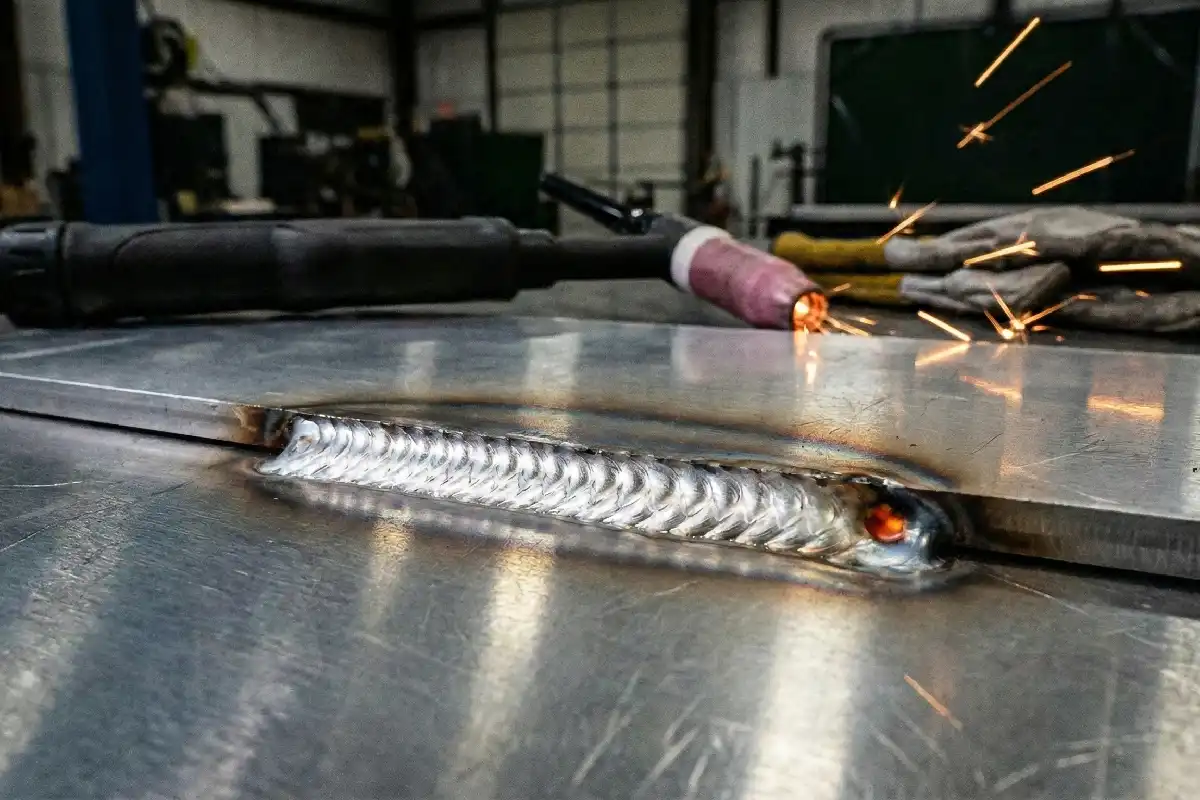
You can get quick and neat results with a fiber laser welding machine for 2mm aluminum. Handheld fiber laser welders let you control the process well. You can make strong and exact welds. This method is more accurate than other welding ways. It is also faster and makes deeper welds.
| Advantage | Fiber Laser Welding | Other Welding Methods |
|---|---|---|
| Precision | High | Moderate to Low |
| Welding Speed | Fast | Slower |
| Fusion Zone Width | Narrow | Wider |
| Penetration Depth | Deep | Shallow |
| Automation Capability | High | Low to Moderate |
| Quality Control | Enhanced | Variable |
You spend less money because fiber laser welding uses fewer supplies than older methods. You also get cleaner and stronger welds. The seams are almost invisible.
Key Takeaways
- Fiber laser welding machines work fast and are very accurate. You can weld 2mm aluminum much quicker than old ways. It is 3 to 10 times faster.
- The welds are strong and look clean. There is little bending because the heat zone is small. Less heat goes into the metal.
- You must get the aluminum ready before welding. Clean it well and set the laser right. This helps stop problems like holes and makes good welds.
- Picking a machine means you need to think about power. You should also look at cooling and special features. These help with different welding jobs.
- Take care of your machine often. Test it on scrap pieces. This keeps it working well and makes better welds.
How fiber laser welding machine works
Welding process overview

You can weld 2mm aluminum with a fiber laser welding machine by following a clear set of steps. Each step helps you get a strong and clean weld. Here is how the process works:
- Pre-treatment: Clean the aluminum sheet. Cut and shape it so the surface is smooth and the size is correct.
- Fixture: Place the aluminum sheet in a special fixture. Use a positioning system to line up the sheets with the laser beam. Make sure the gap between the sheets is just right.
- Welding: Turn on the laser source and protective gas. Set the laser power, welding speed, and focal position. Start the welding process and watch for a steady weld.
- Post-treatment: Turn off the laser and gas. Check the weld for strength and quality. If needed, grind, clean, or paint the weld area.
Tip: Careful cleaning and alignment before welding help you avoid defects and get a smooth finish.
Precision and control
You get high precision and control when you use a fiber laser welding machine for 2mm aluminum. The technology gives you several advantages over older welding methods. The table below shows how you benefit:
| Feature | Description |
|---|---|
| Faster welding speed | You can weld 2-10 times faster than with traditional methods. This saves time on big jobs. |
| Higher welding precision | The laser beam is very fine. You get a smaller heat-affected zone and better accuracy. |
| Better welding quality | You see smooth seams without defects. You do not need extra polishing or grinding. |
| Easy weld weave patterns | You can program the laser to move in complex patterns for special welds. |
You control the laser settings to match your project needs. You can adjust the speed, power, and pattern for each weld. This flexibility helps you get the best results every time.
Benefits of fiber laser welding machine

Speed and efficiency
You can finish welding jobs much faster with a fiber laser welding machine. This tool works at a higher travel speed than MIG welding, especially on thin sheets like 2mm aluminum. You save time because the laser moves quickly and does not need many stops. The process also uses less heat, which means you do not have to wait for the metal to cool down as much.
- You can weld 2mm aluminum at speeds that are 3 to 10 times faster than TIG welding.
- The machine works well in automated production lines, making it perfect for factories.
- The compact design lets you mount the laser on CNC machines, which boosts your productivity.
Note: Faster welding means you can finish more projects in less time and reduce your labor costs.
Weld strength and quality
You get strong and clean welds with a fiber laser welding machine. The laser creates a narrow and deep fusion zone, which makes the weld stronger than many other methods. You do not see much spatter or smoke, so the weld area stays clean. The seams look smooth and often do not need extra grinding or polishing.
- The laser can weld as close as 0.05mm to sensitive parts without causing damage.
- You can join thin aluminum sheets without burning through or warping the edges.
- The small heat-affected zone keeps the metal’s strength and shape.
Here is a table that shows how laser welding compares to other methods:
| Welding Method | Precision (mm) | Heat-Affected Zone | Speed |
|---|---|---|---|
| Laser Welding | 0.05 | Small | Higher |
| Conventional Methods | >0.05 | Larger | Slower |
Minimal distortion
You can keep your aluminum parts flat and straight when you use a fiber laser welding machine. The laser puts in less heat than MIG or TIG welding. This means the metal does not warp or twist as much. You can control the power settings to match the thickness of the aluminum. You can also move the laser steadily to spread the heat evenly.
- Lower heat input reduces the risk of warping.
- You can use clamps or backing bars to hold the metal in place during welding.
- The laser’s precise control helps you avoid overheating and keeps the weld area small.
Tip: Always adjust the laser power and speed to fit the thickness of your aluminum. This helps you get the best results with minimal distortion.
You can trust a fiber laser welding machine to give you fast, strong, and clean welds on 2mm aluminum. This makes it a smart choice for both small shops and large factories.
Challenges and solutions for 2mm aluminum
Porosity and reflectivity
Welding 2mm aluminum can be tricky. You might see problems like porosity and reflectivity. Porosity happens when gas gets stuck in melted metal. This makes the weld weaker and easier to rust. Aluminum reflects laser light a lot. This can make welding hard and unstable.
| Factor | Effect on Weld Quality |
|---|---|
| Reflectivity | Aluminum reflects light, so laser welding is harder to keep steady. |
| Porosity | More porosity means weaker welds and less strength. |
You might notice pores, cracks, or dark welds. The surface can look rough too. These problems come from trapped gas, quick heating and cooling, or not enough laser power.
Tip: Clean the aluminum well before you start welding. You can use sandpaper, chemicals, or plating. This helps remove dirt and lowers porosity.
Heat management
It is important to control heat when welding 2mm aluminum. Too much heat can bend or crack the metal. Too little heat makes weak welds. You can use different ways to manage heat:
- Spotwise Strategy: Keep the laser in one spot for a short time.
- Single Linear Path: Move the laser in a straight line. This heats fast but can bend the metal.
- Multipath Strategy: Move the laser in many paths. This spreads heat more evenly.
Pick the way that fits your project and the aluminum thickness.
Practical solutions
You can fix most welding problems by doing a few things:
- Change the laser power to spread heat evenly.
- Weld faster on thin plates. This stops gas from making pores.
- Clean the weld area to get rid of dirt and oil.
- Use pure helium gas to cover the weld. This lowers porosity and makes welds stronger.
- Watch how much shielding gas you use. This helps stop oxidation.
| Solution | Description |
|---|---|
| Use high-purity helium | Pure helium gas helps make welds with fewer pores. |
You can get better welds by cleaning the surface and controlling the process. This helps you avoid problems and get strong, clean welds.
Choosing a fiber laser welding machine
Key features to consider
When you pick a fiber laser welding machine for 2mm aluminum, you should look at some important things. These features help the machine work well and make it easier for you to use. Here are the main things to check:
- Power Output: You need enough power for 2mm aluminum. Machines with 1kW to 1.5kW are best for this job.
- High-Frequency Modulation: This stops the laser from bouncing off the aluminum and hurting the machine’s optics.
- Pulse Frequency: You can change the pulse settings for different jobs and materials.
- Spot Size Range: A smaller spot size helps you make more exact welds.
- Cooling System Requirements: Good cooling keeps the machine from getting too hot during long jobs.
- Weld Quality: Make sure the machine can make strong and clean welds.
- Certifications & Compliance: Check that the machine is safe and meets industry rules.
- Training and Technical Support: You should be able to get training and help if you need it.
Tip: High beam quality is very important for thin aluminum. It helps the laser focus better. This gives you stronger and cleaner welds, even if there is an oxide layer.
You can use this table to match the right power to your aluminum thickness:
| Aluminum Thickness | Recommended Power Output |
|---|---|
| 1-2mm | 1kW to 1.5kW |
| 3-5mm | 2kW |
| Up to 6mm | 3kW |
You also need to think about taking care of your machine. Keeping it clean and in good shape helps it last longer and work better. Here are some steps you should follow:
- Change the lens protector often to keep the optics clear.
- Change the focus lens in a clean place.
- Check and clean the laser and gas tubes.
- Keep the nozzles clean and replace them if needed.
- Check the water level and quality in the cooler.
- Wipe the laser gun after each use.
- Look at the lens protector for marks or dirt.
Note: Always check for software updates and train your team often. This helps your machine run well and stay safe.
Cost and value
The price of a fiber laser welding machine can be very different. Some basic handheld models cost a few thousand dollars. Fancy machines with more features can cost over $1,000,000. The price depends on the power, features, and brand.
- The first cost may seem high, but you save money later. You finish jobs faster, use fewer supplies, and spend less on repairs.
- Laser welding machines cost more than MIG welders at first. But you spend less on fixing and materials over time.
- You get more value from machines with extra features, like cutting and cleaning. For example, the XLaserlab X1 Pro can weld, cut, and clean. It works with many materials, including 2mm aluminum. It has both continuous and pulse welding modes. This is good if you want one machine for many jobs.
Here is a table to help you compare two popular choices:
| Feature | X1 Pro | X1 |
|---|---|---|
| Functionality | Multifunctional (welding, cutting, cleaning) | Precision welding of thin materials |
| Material Compatibility | Various materials including 2mm aluminum | Optimized for thin stainless steel |
| Welding Mode | Continuous and pulse dual-mode | Pulse welding only |
| Ease of Use | More versatile but complex | Beginner-friendly |
| Additional Features | External wire feeder, precision cutting, cleaning | Focused on high-speed welding of thin materials |
Tip: Think about what you need now and later. A multifunctional machine may cost more, but it can save you money if you want to do many types of work.
When you look at all these things, you can pick the best fiber laser welding machine for your needs. You get strong welds, save time, and make your shop work better.
Welding parameters and tips
Recommended settings
You need to set the right parameters to get strong and clean welds on 2mm aluminum. Aluminum reflects most laser energy, so you must use high intensity and precise energy control. Start by choosing a fiber laser with a wavelength between 1070 and 1080 nm. This range helps the laser energy couple well with aluminum.
Set the laser power between 1kW and 1.5kW for 2mm sheets. Higher power helps you overcome aluminum’s fast heat loss. Adjust the welding speed by testing on scrap pieces. If you move the laser too fast, you spread the heat and get shallow welds. If you go too slow, you risk overheating and making the weld too wide. Try to find a balance that gives you good penetration without burning the metal.
The focus position matters, too. For thin aluminum, use a slight positive defocus. This means you focus the laser just above the surface. You get a stable weld pool and avoid burning through the sheet.
| Parameter | Recommended Value |
|---|---|
| Laser Power | 1kW – 1.5kW |
| Wavelength | 1070 – 1080 nm |
| Welding Speed | Test and adjust |
| Focus Position | Slight positive defocus |
Tip: Always test your settings on scrap aluminum before starting your main project.
Preparation and technique
You can improve your weld quality by following a few key steps before and during welding:
- Clean the aluminum surface to remove oxides, oils, and dirt.
- Check the joint fit-up. Make sure the edges line up tightly with no gaps.
- Monitor your laser settings as you weld. Watch for changes in the weld pool.
- Keep your wire feeder and machine parts in good shape with regular maintenance.
To avoid common mistakes:
- Adjust laser power and speed to prevent air holes and weak welds.
- Control the cooling rate to stop hot cracking.
- Use enough shielding gas, like argon or an argon-helium mix, to keep the weld clean.
- Make sure you and your team know how to use the machine safely and correctly.
Note: Good preparation and careful technique help you avoid blackening, cracks, and other defects. You get stronger, cleaner welds every time.
You can make fast and neat welds on 2mm aluminum with a fiber laser welding machine. The table below lists the main good points and problems you might face:
| Benefits | Challenges |
|---|---|
| Speed | Porosity |
| Precision | Deformation |
| Reduced Heat Input | Reflectivity |
| Clean Results | N/A |
To get the best welds, pay attention to these things: how thick the material is, how well the pieces fit together, and how clean the surface is.
If you want more information, look for guides about fiber laser cutting machines. These machines also work well on thin aluminum and help with reflection problems.
FAQ
Can you weld painted or dirty aluminum with a fiber laser welding machine?
You should always clean aluminum before welding. Dirt, paint, or oil can cause weak welds and porosity. Use a wire brush or chemical cleaner to prepare the surface.
What shielding gas works best for 2mm aluminum laser welding?
You get the best results with pure argon or a mix of argon and helium. These gases protect the weld from oxidation and help reduce porosity.
How do you avoid warping when welding thin aluminum?
You can lower the laser power and increase travel speed. Use clamps to hold the metal flat. Spread heat evenly to keep the part from bending.
Is a fiber laser welding machine safe to use?
You must wear safety glasses and gloves. Keep the work area clear. Follow the machine’s safety instructions. Fiber lasers have built-in safety features to protect you.
How to Solve Undercut Defects in Laser Welding
What Weld Bead Colors Reveal About Your Welds
Air-Cooled vs Water-Cooled Handheld Laser Welders: Ultimate Guide