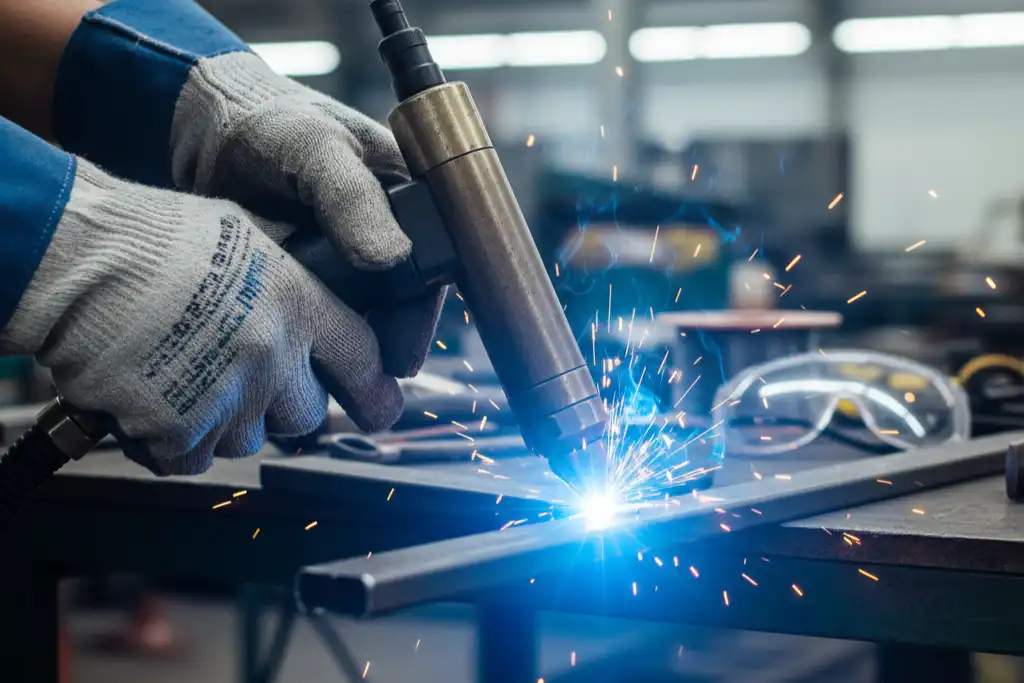
You can enhance laser welding strength by following some main steps:
- Pick materials that fit together well
- Clean surfaces to get rid of dirt or oil
- Change laser power, speed, and spot size for your job
- Use treatments after welding to make it last longer
Strong laser welds hold a lot of weight and do not break easily. They help keep parts safe in cars, planes, and medical tools. Use these steps to achieve good and safe results while maximizing laser welding strength.
Key Takeaways
- Pick materials that work well together for welding. This helps make strong bonds and stops weak spots from forming.
- Clean the surfaces very well before welding. Dirt and oil can make the weld weak and cause problems.
- Set the laser power and speed with care. More power lets the laser go deeper. Speed changes the shape of the weld.
- Try post-weld treatments like artificial aging. These steps make the weld stronger and help it last longer.
- Take care of your equipment often. Good care stops problems and keeps welds strong every time.
Why Laser Welding Strength Matters
Product Performance
You want your products to last and work safely. Laser welding strength plays a big role in how well your parts perform. Strong welds help your products resist stress, fatigue, and corrosion. This means your parts can handle heavy loads and tough conditions. You see this in industries like aerospace and medical devices, where safety and reliability matter most.
Laser welding uses focused heat. This process keeps internal stress low and helps the weld stay strong. The narrow and deep welds you get from laser welding add to the overall strength. When you use the right welding methods, you improve hardness and tensile strength. These qualities make your products more durable over time.
Modern designs often need precise welds. Laser welding gives you the accuracy needed for complex shapes and tight spaces. If you work with cars or planes, you know that weld strength affects how well joints hold up. Hybrid weld-bonding and friction-stir-spot-welding can reduce stress at overlap edges. This leads to better product performance and fewer failures.
Tip: Always check your welds with tests like tensile shear tests. These tests show how much load your welds can handle before breaking.
Common Weakness Issues
Weak welds can cause big problems. You might see defects that lower the strength of your products. Here are some common issues you should watch for:
| Defect Type | Description |
|---|---|
| Porosity | Gas bubbles form in the weld, making it weaker and less able to hold weight. |
| Cracks | Cracks can appear during or after welding, often from stress or hydrogen. |
| Weak Fusion | The weld metal does not bond well to the base, leading to low strength. |
| Incomplete Penetration | The weld does not fill the joint fully, which weakens the connection. |
| Spatter | Small metal droplets can affect the look and may need extra cleaning. |
If you ignore these problems, your products may fail early. Weak fusion and incomplete penetration often mean your welds cannot handle much load. Porosity and cracks can lead to breaks under stress. You need to spot these issues early and fix them to keep your products strong and reliable.
Key Factors Affecting Laser Welding Strength
Material Fit and Compatibility
You should pick materials that go well together for strong laser welding. Some metals, like low-carbon steel, stainless steel, and aluminum alloys, join easily and make strong welds. When welding different metals, you can use special wires or powders to help them stick. For example, copper-based welding wire helps when joining steel and aluminum. It stops weak spots and helps the weld last longer.
- Materials that match well make better welds and structure.
- Alloying wire or powder helps mixed-metal welds stick better.
- Copper-based wire in steel-aluminum welds helps them last longer.
You also need to make sure the parts fit together well. Keep the gap between parts very small. Less than 0.1mm is best for most jobs. If the gap is too big, the weld may not hold and could break. Always check the fit before you start welding. For outside corners, overlap fit-up helps if things do not line up.
Surface Preparation
Clean parts are important for strong welds. Dirt, oil, and rust can make the weld weak and cause problems. You should:
- Use lint-free wipes and acetone or alcohol to clean off oils.
- Take off oxides with stainless brushes or pickling paste.
- Wipe away films and glue to stop leftover stuff.
- Smooth edges and use good tools for tight fits.
- Make sure parts are dry to keep hydrogen out of the weld.
These steps help the laser work better and stop problems like bubbles or cracks.
Workpiece Alignment
Good alignment keeps your welds strong and even. If parts move, you can get weak spots or uneven welds. Use strong tools to hold everything still. Try to keep the gap between parts small, about 10% to 20% of the thinner part’s thickness. Always check the setup before you start welding.
| Issue | Effect on Tensile Strength |
|---|---|
| Insufficient penetration | Smaller weld and weaker joint |
| Gaps | Weaker joint from heat changes |
| Seam irregularities | Uneven weld and lower strength |
Tip: Good alignment and fit help you avoid weak welds and make laser welding stronger.
Process Optimization for Stronger Welds
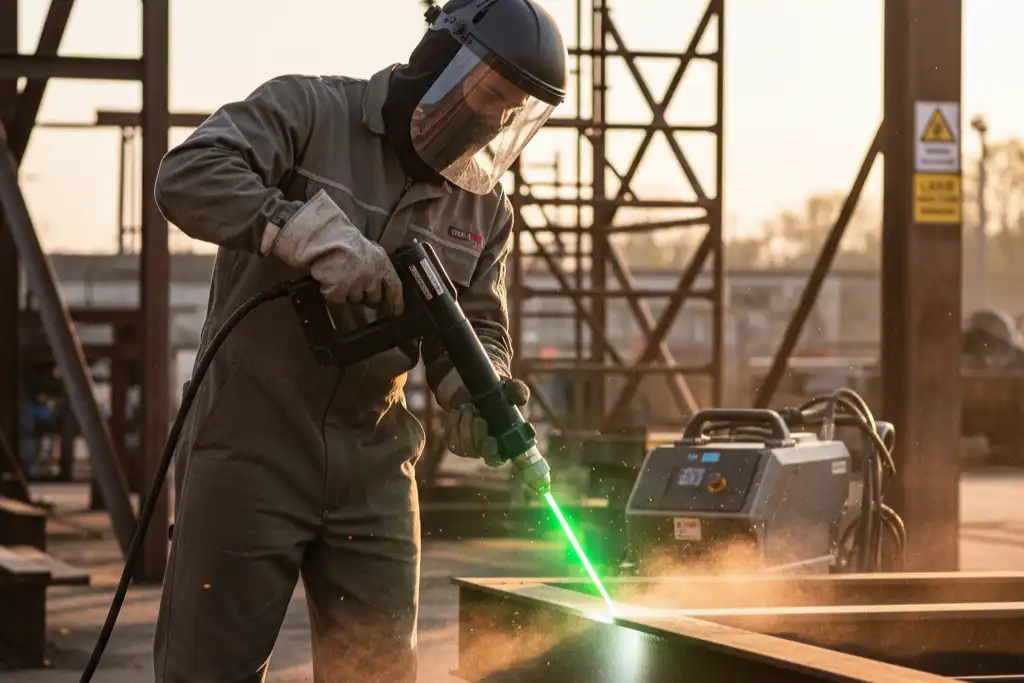
You can boost laser welding strength by fine-tuning your process settings. Each parameter affects how strong and reliable your welds turn out. Follow these steps to get the best results.
Laser Power and Speed
Start by setting the right laser power and travel speed. These two factors control how deep the weld goes and how strong it becomes.
- Use higher laser power to get deeper weld penetration. This helps your weld hold more weight and last longer.
- Adjust travel speed to control the shape of the weld bead. Slower speeds let the laser stay longer on the metal, which improves fusion and weld quality.
- Avoid using too much power. Excessive power can make the grains in the metal too large, which lowers strength and hardness.
- Try power modulation. Changing the power during welding can keep the weld stable and reduce spatter.
| Parameter | Effect on Weld Penetration and Strength |
|---|---|
| Laser Power | Higher power leads to deeper penetration and influences mechanical properties. |
| Travel Speed | Controls weld bead geometry and affects root formation through heat input. |
| Excessive Power | Can cause grain coarsening, reducing strength and hardness. |
Tip: For aluminum alloys, you need to find the right balance. Too much power can overheat the metal, while too little power can cause weak welds. Adjust speed so you do not get cracks or over-melting.
- High-power lasers focus energy on a small spot, making deep and strong welds.
- The way the laser beam interacts with the metal decides how deep the weld goes.
- Slower speeds give the weld more time to form, which improves quality.
Spot Size and Pulse Width
The size of the laser spot and the length of each pulse also affect your welds.
- Use a smaller spot size to change the grain structure in the weld. This can make the weld stronger, especially in metals like stainless steel.
- A spot size of 50 to 100 micrometers can lead to better microstructure and higher strength.
- Adjust the pulse width to control how much heat goes into the weld. Shorter pulses can reduce heat damage and keep the weld area small.
Note: Changing the spot size and pulse width lets you fine-tune the weld for different materials and thicknesses.
Filler Materials
Sometimes, you need to use filler materials to join different metals or fill gaps. The right filler can make your welds much stronger.
- Choose high entropy alloys (HEAs) as fillers when welding dissimilar metals. These special alloys improve the bond and make the weld more reliable.
- HEAs work well for joining metals like CoCrFeMnNi with stainless steel. They help the weld resist breaking and improve its structure.
- Always match the filler to the metals you are joining for the best results.
Tip: Using the right filler material helps you avoid weak spots and boosts laser welding strength, especially in mixed-metal joints.
Shielding Gas Use
Shielding gas protects your weld from air and keeps it strong. The type of gas you use can change the weld’s strength and quality.
| Shielding Gas | Effects on Weld Strength | Additional Benefits |
|---|---|---|
| Nitrogen | Improves strength, corrosion resistance, and fracture toughness | Narrower heat-affected zone, better weld quality |
| Argon | Commonly used but may have limitations in penetration and cooling rates | N/A |
- Use nitrogen gas if you want higher weld strength and better resistance to corrosion. Nitrogen also makes the weld tougher and gives you a cleaner, smaller heat-affected zone.
- Argon is common, but it may not give you the same strength or cooling benefits as nitrogen.
Tip: Try different shielding gases on test pieces to see which one gives you the best results for your material.
By adjusting these process settings, you can maximize laser welding strength and create welds that last longer and perform better.
Best Practices to Maximize Laser Welding Strength
Post-Weld Treatments
You can make welds stronger by using post-weld treatments. These methods change the metal inside and help it handle stress better. Artificial aging and solution treatment with aging help welds last longer. Post weld heat treatment also makes welds stronger and more flexible. The table below shows how each method helps your welds:
| Treatment Method | Effect on Tensile Strength | Effect on Fatigue Life | Additional Notes |
|---|---|---|---|
| Artificial Aging (AA) | Big increase | Makes fatigue life much longer | Makes welds harder and lowers dislocation density |
| Solution Treatment + Aging (STA) | Medium increase | Helps fatigue life, but not as much as AA | More β-AlFeSi precipitates, less second phase strengthening effect |
| Post Weld Heat Treatment (PWHT) | 428 MPa | — | Done by quenching and artificial aging, improves phase composition and microstructure |
Tip: Pick artificial aging if you want the most strength and longest fatigue life.
Equipment Maintenance
You must keep your equipment working well for strong welds. If your machine has problems, you can get weak welds or defects. Watch for these common problems:
- Not enough penetration
- Spatter on the weld
- Uneven weld bead
- Dirty surfaces
- Shielding gas issues
- Wrong settings
- Operator mistakes
Check your laser system before every job. Clean the lenses and nozzles. Make sure the shielding gas flows right. Change your settings for each material. Regular care helps you avoid mistakes and keeps welds strong.
Operator Training
You can get better results by learning the right skills. Training programs like ‘Introduction to Laser Welding‘ teach you how to set up and use the machine. You learn welding theory and practice real techniques. This training helps you work faster and make better welds.
Check your progress by measuring:
- Weld time for each piece
- Total hours worked
- Time spent cleaning or grinding after welding
- Weld quality and how often you redo work
- How much consumable you use
Ask welders for feedback and look at your numbers. Training helps you find problems early and fix them. You gain skill and confidence, which leads to stronger laser welds.
You can make laser welding stronger by doing some main things. Clean the surfaces before you start. Pick materials that work well together. Set the laser to the right settings. After welding, use treatments to help the weld last longer. Take care of your equipment so it works well. Keep making your process better by using these ideas:
| Strategy | Description |
|---|---|
| Process Parameter Optimization | Change laser power and other settings to get better welds. |
| Joint Preparation | Line up and get materials ready to stop problems. |
| Real-time Monitoring | Watch the welding as it happens and fix things fast. |
| Continuous Improvement Culture | Ask for feedback and make upgrades often. |
Help your team do better with these tips:
| Strategy | Description |
|---|---|
| Select an equipment champion | Pick someone to lead and help train the team. |
| Address common resistances | Show why laser welding is safe and helpful. |
| Launch a pilot program | Try a small project first to show it works. |
Always test your welds and try to get better. Strong welds make your products last longer. Start now to make your laser welding safer and stronger.
FAQ
What materials work best for strong laser welds?
You get the best results with stainless steel, low-carbon steel, and aluminum alloys. These metals melt evenly and bond well. If you join different metals, use a matching filler wire for extra strength.
How do you clean surfaces before laser welding?
Wipe surfaces with lint-free cloths and acetone. Remove rust with a stainless brush. Dry the parts fully. Clean surfaces help you avoid weak welds and defects.
Why does laser power matter for weld strength?
Laser power controls how deep the weld goes. High power gives you deeper, stronger welds. Too much power can damage the metal. Test settings on scrap pieces first.
What post-weld treatments make welds stronger?
You can use artificial aging or heat treatment. These methods change the metal inside the weld. You get higher strength and longer life for your welded parts.
How do you avoid common weld defects?
Tip:
Keep parts clean and aligned. Set the right laser power and speed. Use the correct shielding gas. Check your welds often to catch problems early.
Plastic and metal welding made simple for everyone
10 Common Laser Welding Machine Faults and How to Fix Them