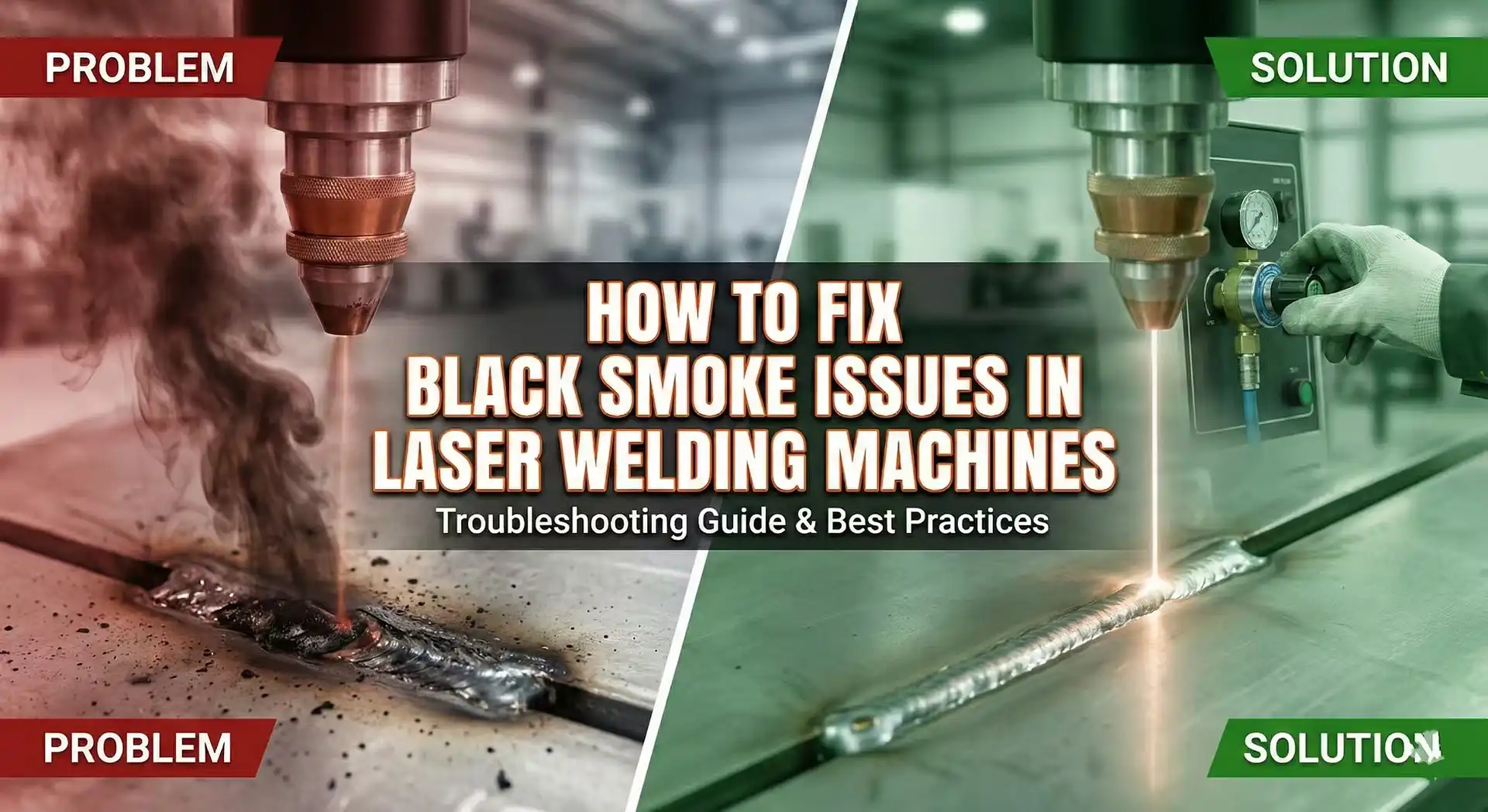
If you notice that your laser welding machine emits black smoke, it’s crucial to act quickly. Immediately stop the machine and check for any safety issues in your workspace. The presence of black smoke can occur due to dirty surfaces, damaged lenses, or incorrect welding settings. Additionally, poor airflow or the type of material you are using can contribute to this issue. The table below outlines common reasons why a laser welding machine emits black smoke. Begin addressing the problem step by step to ensure your safety and the proper functioning of your machine.
| Cause of Black Smoke | Explanation |
|---|---|
| Materials Used | Different welding materials produce varying amounts of black smoke. |
| Surface Conditions | Oil or oxide layers on the workpiece can lead to increased black smoke. |
| Welding Wire | Standard welding wires may not perform as well; smokeless welding wires are preferable. |
| Welding Techniques | The speed and power settings during welding can affect the amount of black smoke produced. |
| Lens Damage | A damaged lens can result in more black smoke during the welding process. |
Key Takeaways
- If you see black smoke, stop the machine right away. Unplug it to stay safe. Check for fire or electrical dangers.
- Clean your workpiece before you start welding. Take off dirt, oil, and oxide layers. This helps make less smoke and gives better welds.
- Change your welding settings with care. The right power, speed, and gas flow can make much less black smoke.
- Use good fume extraction systems. Clean air keeps you healthy and helps the welding work.
- Do maintenance often. Clean your machine and check its parts a lot. This stops black smoke problems.
Why Laser Welding Machine Emits Black Smoke

Material Contamination and Surface Films
A laser welding machine can make black smoke if the workpiece is dirty. Oil, grease, or oxide layers on the metal can cause this. When the laser gets hot, these things burn or turn into vapor. This makes more smoke. Thin metal can make tiny particles when welded. If the surface is not clean, more of these particles form. Always clean your materials before you start welding. This helps lower smoke and makes the weld better.
Incorrect Welding Settings
Wrong settings can make a laser welding machine give off black smoke. If the wire feed speed is too fast or too slow, you might see more smoke. If the voltage is not set right, the arc can get shaky. This also makes more smoke. You should check the shielding gas flow. If it is too low, air and dirt can get in. Dirty metal and wrong polarity can also make more smoke and spatter. Make sure to set your machine right for each job.
Poor Ventilation and Fume Extraction
If your workspace does not have good airflow, welding fumes can build up. This can hurt the weld and the machine. More black smoke can happen if fumes and dust are not removed well during welding.
You should use fume extraction systems and keep the area aired out. This helps get rid of smoke and keeps the air safe.
Material Properties Affecting Smoke
Some material properties can make more black smoke when welding. These include how well the metal moves heat, how many tiny holes it has, and how much heat it soaks up. Using more power and having dirty metal can also make more smoke. If heat moves fast, the metal cools quickly. If there are many holes, the metal melts unevenly and makes more vapor. This causes more black smoke.
When picking materials, think about their properties. Some metals, like stainless steel, make more smoke. Always check for dirt and set your machine for the metal you use.
Immediate Actions to Take
Stop Operation and Ensure Safety
If you see black smoke, stop the machine fast. Hit the emergency stop button if your machine has one. Unplug the power to keep everyone safe. Tell people nearby about the problem. Acting quickly keeps you and others safe. Smoke means something is burning or too hot. Wait for the machine to cool before you touch it.
Tip: Always wear safety glasses and gloves when you weld. These keep you safe from sparks and smoke.
Inspect for Fire or Electrical Risks
After you stop the machine, check for fire or electric problems. Look for flames, hot spots, or wires that melted. Smell for burning in the air. If you see sparks or broken cables, stay away. Use a fire extinguisher for small fires. Call for help if the fire gets bigger or you feel unsafe. Make sure the air system works. Bad airflow can trap smoke inside.
- Look for:
- Burn marks on the metal
- Melted wire covers
- Strange sounds from the machine
Record the Incident for Troubleshooting
Keep notes to help fix things later. Write down what happened and when it started. Say what you saw. Take pictures of the weld and the area near the machine. Write down the settings you used. This helps you or a repair person find the problem faster.
Here is a simple table to help you write things down:
| Issue | Solution |
|---|---|
| The weld seam is black | 1) Make sure the protective gas is on; nitrogen gas should be used. |
| 2) Point the protective gas against the way the work piece moves. |
If your laser welding machine makes black smoke, use this table. Check your protective gas and how it flows. Good notes make fixing problems easier and help stop them next time.
Troubleshooting Black Smoke Issues
Clean Workpiece and Remove Surface Films
You should always start by cleaning your workpiece. Dirt, oil, and oxide layers on metal surfaces can cause a laser welding machine emits black smoke. Cleaning helps you get a better weld and less smoke. Follow these steps to clean your workpiece:
- Open windows and doors to let fresh air in.
- Put on rubber gloves and safety goggles.
- Mix one part Lestoil with four parts warm water.
- Test your cleaning mix on a small area first.
- Wipe the workpiece from top to bottom with a damp cloth or sponge.
- Scrub gently if you see stubborn soot or dirt.
- Rinse with clean water and dry the surface.
- Repeat if you still see any residue.
Tip: Always check for oil films or oxide layers before you start welding. Clean surfaces help you avoid black smoke and improve weld quality.
Adjust Laser Power, Speed, and Interval
You can control how much smoke your welding makes by changing the laser power, speed, and interval. If you use too much power, the laser burns more material and makes more smoke. If you move the laser faster, you get less charring and less smoke. Try these adjustments:
- Lower the laser power if you see too much smoke.
- Increase the welding speed to reduce charring.
- Adjust the interval or oscillation size to limit heat input.
A laser welding machine emits black smoke more often when you use high power and slow speed. You should find the right balance for your material and job.
Optimize Air Pressure for Aluminum Welding
When you weld aluminum, air pressure matters a lot. Too little pressure can let smoke build up. Too much pressure can blow away shielding gas. You need to set the air pressure just right. This helps you get a clean weld and less smoke. Always check your machine’s manual for the best air pressure settings for aluminum.
Improve Shielding Gas Flow and Direction
Shielding gas protects your weld from air and dirt. If the gas flow is too low or goes the wrong way, you get more smoke. You should:
- Increase the flow of nitrogen or other shielding gas.
- Point the gas nozzle in the opposite direction of the laser movement.
- Make sure the gas covers the weld area well.
Researchers found that when the gas flows against the laser’s path, it removes black smoke better. You should also check the nozzle stand-off distance. A good setup helps you keep the weld clean.
Use Fume Extraction Near Weld Area
Fume extraction systems pull smoke away from your work area. You have many options:
- Ambient systems clean the air in large rooms but do not catch smoke at the source.
- Extraction hoods work well for robots but need you to move the hood.
- Portable fume extractors can sit close to your weld and catch smoke right away.
- Fume arms are easy to move and can go right where you need them.
- PAPR systems protect you in small spaces but can feel heavy.
- Downdraft tables pull smoke down but use a lot of air and power.
Extraction at the source works best. Place the extractor close to the weld. This keeps the air clean and protects your health.
Move Laser Faster Over Metal
Moving the laser faster helps you make less smoke. When you weld slowly, the laser burns more material and makes more black smoke. Try to keep a steady, quick pace. This works well for both aluminum and fiber laser welding. You get a cleaner weld and a safer workspace.
Note: If you still see black smoke after trying these steps, check your welding wire and make sure you use the right type for your job.
By following these troubleshooting steps, you can fix most problems when your laser welding machine emits black smoke. Clean surfaces, good settings, and proper ventilation make a big difference.
Preventing Black Smoke in Laser Welding
Regular Maintenance and Cleaning
You can stop black smoke by keeping your machine clean. Check and clean important parts often. Clean mirrors and lenses every two weeks. Wipe guide rails and remove burned stuff from the table. Change the water in the chiller once a month. Use pure gases and look for leaks in gas lines every week. Take away dust from the laser system every day. Make sure the laser gun has no leftover dirt.
| Frequency | Maintenance Tasks |
|---|---|
| Every two weeks | Clean optics, wipe guide rails, remove residues, check chiller |
| Once a month | Change chiller water, clean electronics with compressed air |
Tip: Clean mirrors and lenses every week. This keeps them safe from dirt and helps you weld without smoke.
Upgrade Ventilation and Fume Extraction
Good airflow keeps the air clean and safe. Get a better fume extractor to catch smoke right away. Use arms and big filters for lots of smoke. Pick systems with sensors and cleaning that works by itself. These things help you follow safety rules and lower smoke in the air by up to 95%. You can get portable or fixed systems for your needs.
| Feature | Description |
|---|---|
| Filtration Efficiency | Catches almost all welding fumes and smoke |
| Extraction Method | Takes smoke away with an arm |
| Filter Size | Big filter for lots of smoke |
| Cleaning System | Cleans filter by itself |
| Compliance | Follows OSHA and W3 rules |
Train Operators on Best Practices
Teach everyone how to use the machine the right way. Show them how to check gas pressure and make sure it is pure. Teach them to look for leaks in gas lines. Remind them to clean metal before welding. Show them the best torch angle and how far to hold it. Training helps people stay safe and stops black smoke.
- Check gas pressure and purity
- Look for leaks in gas lines
- Clean metal before welding
- Use the right torch angle and distance
Use High-Quality Materials
Pick good materials for welding. Clean metal makes less smoke. Do not use dirty or rusty pieces. Use wires that make less smoke if you can. Pure gases help you get better welds.
Maintain Proper Welding Parameters
Set your machine with the right power, speed, and gas flow. Change settings for each job and metal. Check everything before you start. Good settings help you stop black smoke and make strong welds.
Note: Checking your machine and having good habits keeps it working well. It also keeps your workspace clean.
When to Seek Professional Help
Persistent Black Smoke After Troubleshooting
Sometimes, black smoke does not stop even after you try to fix it. You might clean the machine, change settings, and make the air better, but smoke still comes out. This means you should get help from a professional. Here are some signs you need an expert:
- You smell burning or see smoke after cleaning and changing wires.
- Oil films or oxide layers stay on the workpiece after cleaning.
- You use the right wire, but black smoke keeps coming.
- The power is high and air pressure is low, but smoke does not stop.
- The laser focus is not right, and you cannot fix it.
If you see these problems, stop using the machine. A technician can find bigger problems that you cannot fix by yourself.
Signs of Major Equipment Failure
Big problems with the machine can make black smoke and hurt your machine. Watch for these warning signs:
- You hear weird sounds from inside the machine.
- The machine gets very hot when you use it.
- Welds look weak or burnt, and the quality drops.
- You smell burnt plastic or ozone in the air.
- Smoke comes out from the machine’s case.
If you smell ozone or burnt plastic, turn off the machine right away. These smells can mean there are electrical problems, like wires melting or boards shorting out.
- A burning smell means parts might be too hot or shorting out.
- If the case feels hot, the cooling system might be broken.
Call a professional if you see any of these signs. Acting fast can stop bigger problems.
Safety Concerns Beyond Basic Repairs
Some safety problems need a professional to fix. You should not try to fix these by yourself. Look at the table below for common safety problems and what to do:
| Safety Concern | Management Strategy |
|---|---|
| Exposure to hazardous airborne contaminants | Use local exhaust ventilation and check air quality to meet OSHA rules. |
| Fire hazards | Use fire barriers, keep the area clean, and teach fire safety. |
| Need for comprehensive safety programs | Do hazard checks for your system and train people on laser safety. |
You might feel your throat or nose hurt, smell chemicals, or worry about your health. If you feel unsafe or unsure, call a professional. They can help you make your workspace safer and healthier.
You can stop black smoke in your laser welding machine by doing a few easy things. Start by cleaning the workpiece and checking the machine’s settings. Then, make sure the air moves well and use the right materials. Taking care of your machine often helps it work better.
- Act quickly if you notice black smoke.
- Have a checklist ready to help you fix problems.
Remember: Checking your machine often and having good habits can stop bigger problems and keep your workspace safe.
FAQ
What causes black smoke during laser welding?
Black smoke often comes from dirty metal, wrong machine settings, or poor airflow. You might also see more smoke if you use the wrong type of welding wire or if the shielding gas does not flow well.
How can you reduce black smoke when welding aluminum?
You should clean the aluminum before welding. Set the right air pressure and use pure shielding gas. Move the laser faster over the metal. These steps help you get less smoke and a cleaner weld.
Is black smoke dangerous to breathe?
Yes, breathing black smoke can harm your lungs. Always use a fume extractor and wear a mask. Good ventilation keeps you safe from harmful fumes.
Can changing welding speed help with black smoke?
Yes, moving the laser faster can lower the amount of black smoke. Fast movement means less burning and fewer fumes. Try different speeds to see what works best for your job.
Step-by-Step Guide to Figuring Out Laser Machine Hourly Costs
Formula for calculating the cost of laser welding processing