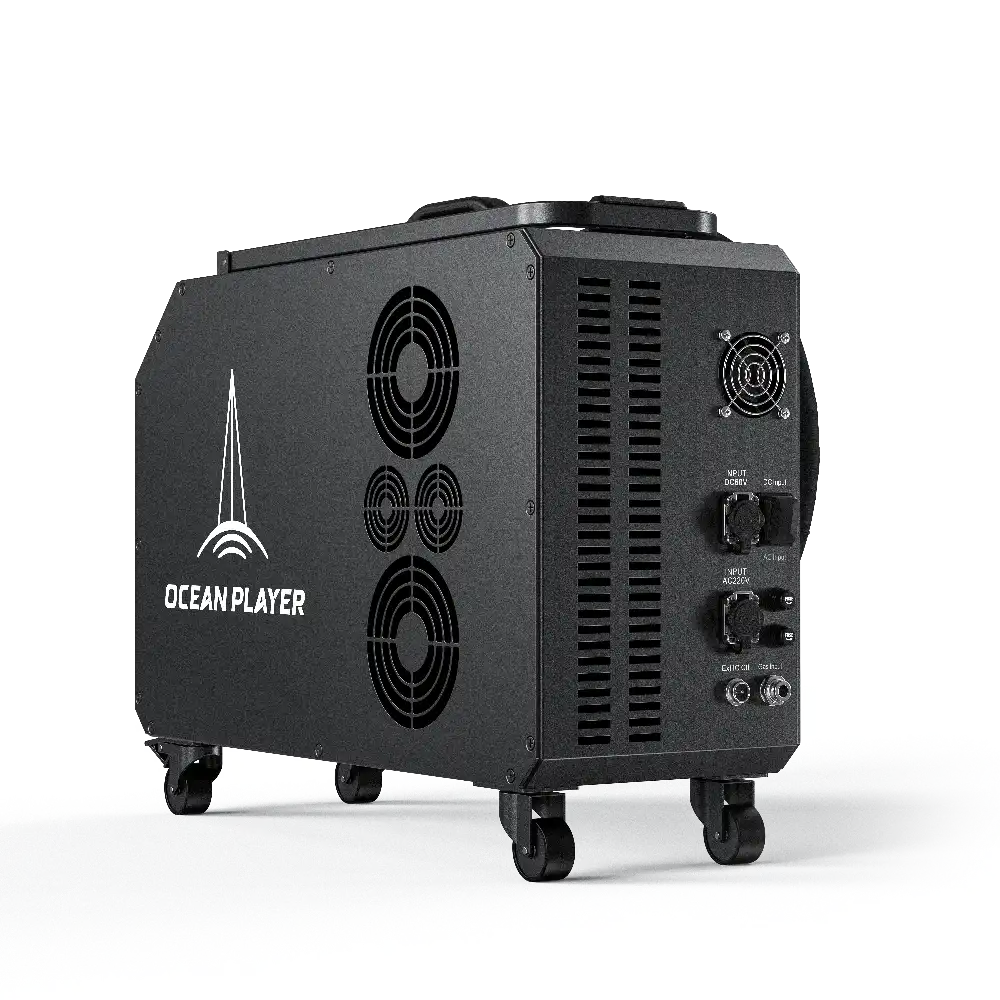
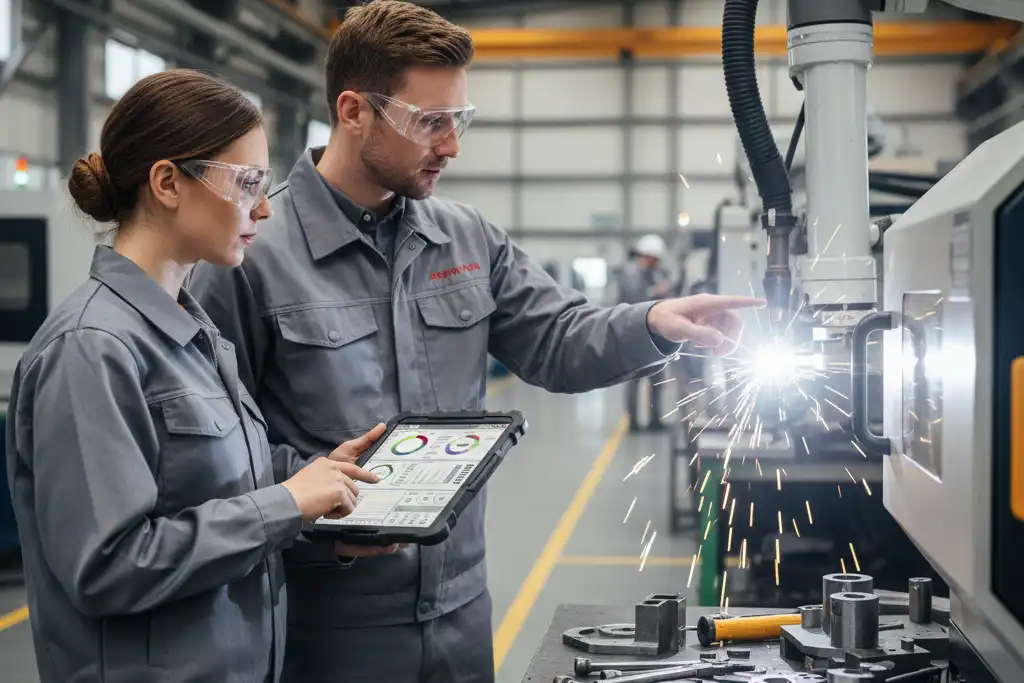
You need to make sure your Laser Welding Machine fits your production needs. Picking the right machine can change your results a lot. Many companies say they work faster—up to 30% more—after using this technology.
- Faster work and better accuracy are usual good points.
- Less heat often means the material does not bend as much.
Production managers check some important things before they decide:
| Factor | Description |
|---|---|
| Brand Reputation | Famous brands usually give better quality and last longer, but they may cost more. |
| Training and Support | Training and help from experts are important for easy use. |
| After-sales Service | Fast help and long warranties keep things running well for a long time. |
| On-site Evaluations | Testing the machine at your place shows if it is easy to use. |
| Sample Testing | Trying real welding shows if the machine works for your job. |
Taking careful steps helps you pick the best machine for your needs.
Key Takeaways
- Think about what your factory needs before picking a laser welding machine. Look at what materials you use, how thick they are, what kind of joints you need, how fast you want to work, and how much you want to automate.
- Check if the brand is trusted and gives good help after you buy. Famous brands usually have better machines and service. This can help you save money over time.
- Look at what the machine can do, like its welding modes and power. Pick pulsed modes for careful jobs. Use continuous modes for faster work.
- Make sure your team learns how to use the machine safely. Good training helps stop mistakes and makes work better.
- Try the machine with your own materials before you buy it. Testing helps you see if the machine fits your needs.
Define Your Production Needs
Before picking a laser welding machine, know what you need. This helps you avoid mistakes and makes sure the machine fits your work. Focus on four things: material compatibility, thickness and joint types, output and speed, and automation level.
Material Compatibility
First, write down the materials you want to weld. Different materials need different laser welding machines. Metals like stainless steel, aluminum, and titanium are used a lot. Non-metallic materials, like glass or porcelain, need special lasers.
| Material Type | Examples | Impact on Machine Selection |
|---|---|---|
| Metals | Stainless steel, aluminum, titanium | Power needs change; shiny metals need more power. |
| Non-metallic | Porcelain, glass | Other lasers work better for these materials. |
- Stainless steel and carbon steel usually need 1000W to 1500W.
- Aluminum needs more power, often above 1500W.
- Fiber lasers are best for metals like stainless steel, aluminum, and titanium.
- CO2 lasers work better for non-metallic materials like plastics and ceramics.
Laser welding is very precise. This matters in car and airplane factories. You can join different materials fast and neatly. The welds are smooth, with no rough edges. You save time and spend less on repairs.
Thickness and Joint Types
Check how thick your materials are and what joints you need. Laser welding machines work with different thicknesses and joints.
| Joint Type | Maximum Thickness (3kW Laser) | Notes |
|---|---|---|
| Butt Joints | Up to 6 mm (steel), 4 mm (aluminum) | Deep welds, used in many jobs. |
| Lap Joints | 3-4 mm | Needs more power, about 30-40% less than butt joints. |
| Edge Joints | Thinner materials | Easier to weld, good for thin sheets. |
| Fillet Joints | Varies | Harder to weld all the way through, used in strong welds. |
- Butt joints are strong and need careful work.
- Lap joints are fast for thin plates, but you must watch for stress.
- T-joints are strong for structures, but need deep welds to avoid problems.
Think about your product design. If you use thick or tricky joints, you may need a stronger laser welding machine.
Output and Speed
Figure out how many parts you must weld each day. If you need a lot, pick a fast machine that can work long hours. Laser welding joins many parts quickly. This is good for making lots of products.
- Laser welding is good for making many items.
- You get faster results than with old welding.
- The process is clean, so you spend less time cleaning up.
If your factory runs all day, get a machine that can keep up.
Automation Level
Decide how much automation you want. Some machines are handheld. Others use robots or computers.
Automated laser welding is faster than doing it by hand. Old machines need people to watch them all the time and work slower. New machines use computers and cameras to control everything. This gives you the same, high-quality welds every time and needs less work from people.
More automation costs more money. Handheld machines are cheaper, but robots and CNC machines are more exact and faster.
Automation saves money on workers and makes more products. One person can watch many machines, each making thousands of welds in one shift.
Automation also makes welds better. Real-time checks give instant feedback. Robots make sure every weld is the same, so there are fewer mistakes.
- Automated machines find bad welds right away.
- You get better accuracy and faster work.
- Hard welding jobs become easier and more dependable.
Think about what you will need later. If you want to grow, buying automation now can save money and time in the future.
By knowing your production needs, you can pick the right laser welding machine. This helps you get the best results for your business.
Laser Welding Machine Specifications

When you pick a laser welding machine, look at its features. These features help you know if the machine fits your needs. Let’s talk about the most important ones.
Welding Modes and Pulse Control
You can pick pulsed or continuous welding modes. Each mode is good for different jobs. The right mode helps you get strong and clean welds.
| Feature | Pulsed Laser Welding | Continuous Laser Welding |
|---|---|---|
| Output Time | Pulsed output is good for careful work | Constant output gives steady welding |
| Peak Power | Very high peak power, great for fine jobs | Lower peak power, used for many jobs |
| Scope of Application | Best for spot welding and tiny parts | Good for seam welding and long jobs |
| Welding Characteristics | Small hot spot, less heat spread, high quality | Works fast, adapts well, runs without stopping |
- Pulsed laser welding makes a small hot spot. This keeps heat from spreading too much. It gives great welds, especially on thin parts.
- Continuous laser welding is good for fast jobs. You can change the speed and get deep, steady welds.
Tip: Use pulsed mode for delicate parts. For long seams or thick pieces, use continuous mode.
Switching between these modes lets you do many jobs. Pulsed lasers are best for careful, small welds. Continuous lasers are good for big, strong welds. For example, pulsed lasers work well for medical tools. Continuous lasers are great for car panels.
Power and Precision
The power of your laser welding machine matters a lot. More power lets you weld thick parts and work faster. Less power is better for thin or gentle parts.
- To weld 3mm steel at 2 meters per minute, you need about 3kW.
- A simple rule: 1kW can weld 1mm steel at 2 meters per minute.
- Thicker parts or faster work need more power.
| Industry | Typical Power Range (kW) | Application Description |
|---|---|---|
| Automotive | 2-3 | Welding thin to medium parts like car panels |
| Aerospace | 1.5-2.5 | Welding thin parts and important pieces |
| Electronics Manufacturing | 1-1.5 | Tiny welds on small parts |
| Medical Device Manufacturing | 1.5-2.5 | Welding safe, clean parts for medical use |
High laser power melts thick parts well. Power density means how much power hits a small spot. This helps you get deep, strong welds. A focused beam makes your welds more exact.
Heat-Affected Zone (HAZ)
The heat-affected zone, or HAZ, is the area around the weld that gets hot. A smaller HAZ means less harm to your parts.
Laser welding machines make a much smaller HAZ than old welding ways. The laser’s strong energy and fast speed keep heat in one spot. This is good if you want to stop bending or changing the metal.
- A small HAZ keeps your parts strong.
- You avoid cracks and bending.
- The metal stays strong and keeps its shape.
Note: In aerospace and car making, a small HAZ is very important. It keeps your products safe and strong.
You can control the HAZ by changing the laser’s power and speed. Heating and cooling also help keep the HAZ small.
User Interface and Controls
A good user interface makes the machine easy to use. You want controls that are simple and quick to learn.
| Feature | Description |
|---|---|
| Ease of Access | Quick access to settings without hard menus |
| Intuitive Design | Simple layout for easy use |
| Real-Time Adjustments | Change settings while welding for better control |
| Mode Selection | Switch between welding, cutting, and cleaning easily |
| Parameter Adjustments | Change power, frequency, and width quickly |
| Built-in Presets | Use saved settings for different materials to save time |
| Analog vs. Digital | Analog gives focus, digital gives more choices |
- Look for a machine with real-time adjustments. This lets you fix problems right away.
- Built-in presets help you set up faster. Pick the material, and the machine sets the best options.
- A clear display and simple buttons help you make fewer mistakes.
Training is important. If the controls are too hard, new workers make more mistakes. Good training and easy controls help you get better welds and fewer problems.
When you pick a laser welding machine, check the controls. Make sure your team can learn it fast and use it every day.
If you know these features, you can pick a laser welding machine that fits your needs. You get better welds, faster work, and fewer problems in your factory.
Operational Fit and Safety
Ease of Use and Training
Your team must use the Laser Welding Machine safely. Training is needed because these machines are harder to learn than old welding tools. Workers should know about laser classes and how to spot dangers. They must learn to use safety gear like glasses and special clothes. Real practice, such as emergency stops, helps workers get ready for surprises.
| Training Requirement | Description |
|---|---|
| Role-specific training | Learn about the laser class and how it works in your area. |
| Foundational instruction | Study laser types, dangers, and where the beam goes. |
| PPE education | Know how to pick and wear safety glasses and clothes. |
| Hands-on exercises | Practice lining up parts and stopping the machine fast. |
| Core Topics | Learn laser basics, how materials react, and what to do in emergencies. |
Tip: Training often helps your team stay sharp and make fewer mistakes.
Integration with Workflow
You must fit the Laser Welding Machine into your work line. First, look at your steps to find slow spots and places to add robots. Pick robots that reach far enough and work with your parts. Make holders that keep pieces steady for good welding. Set up programs when the line is off to save time.
- Check your work steps for places to add robots.
- Pick robots that can handle your parts well.
- Use holders to keep pieces in place.
- Program machines when not working to save time.
- Teach both workers and fixers how to use the machine.
Safety Features
Safety is important in every factory. Rules say you need covers to block laser beams and signs for danger spots. Covers protect workers from harm. Emergency stop buttons and alarms help keep people safe. Workers must wear safety glasses and clothes that do not burn.
- Class 1 lasers are safe for normal jobs. Class 4 lasers need locked rooms and strict rules.
- ANSI and OSHA rules tell you how to use lasers safely and what gear to wear.
Shields and safety locks help stop accidents. Checking safety parts often keeps them working right.
Flexibility for Future Needs
Your work needs may change later. New machines have parts you can swap, better beam shapes, and smart controls. These things let you change settings for new jobs or materials.
| Feature | Benefit |
|---|---|
| Modularity | Add new parts easily as tech gets better. |
| Advanced Beam Shaping | Change settings for different materials and thicknesses. |
| AI-driven Optimization | Watch and change settings for the best welds. |
| Multiple Laser Tech | Use new laser types for new jobs. |
Testing with small projects shows if machines can handle new needs.
Cost, Support, and Reliability
When picking a laser welding machine, you need to think about price, brand, and support. These things help you avoid trouble and get good value for your company.
Price and Brand Reputation
Laser welding machines can cost a lot or a little. Most cost between $21,000 and $75,000. If you want robots or special features, the price can be over $150,000. Famous brands cost more, sometimes 10% to 25% extra. This extra money often means the machine is more reliable and service is better.
- Paying more can mean better help and longer use.
- Well-known brands fix machines faster and have more spare parts.
- Cheaper brands might save you money now but cost more later.
Warranty and Technical Support
Always check the warranty and support before buying. Warranties are different for each brand. Some give one year, others give two years or more. Support hours and hidden costs are important too.
| Manufacturer | Warranty Coverage | Technical Support | Exclusions |
|---|---|---|---|
| Manufacturer A | 1 year | 24/7 support | Diagnostic charges apply |
| Manufacturer B | 2 years | Business hours only | OEM parts required |
| Manufacturer C | 1.5 years | 24/7 support | Hidden fees for parts replacement |
- Read all the details. Some warranties make you use their parts or keep records.
- Look out for hidden costs that can make things expensive.
Sample Testing and Validation
Ask for sample testing before you buy. This helps you know if the machine works for you.
- Check if the machine is clean and has guides.
- Look at the warranty, including repair shipping.
- Ask for sample welds on your real parts.
- Do tests to check weld quality and if it is always the same.
- Make sure you get all safety and rule papers.
Tip: Sample testing helps you find problems early and makes sure the machine fits your work.
Long-Term Reliability
You want a machine that lasts many years. Some machines lose power or weld badly after a while. You might see more breaks or weak welds. Bad beam focus or broken cables can cause problems.
- Check and clean your machine often to keep it working.
- Change old parts fast to stop bigger problems.
- Watch for bent or weak welds in your products.
A reliable laser welding machine saves money and keeps your factory strong.
You can choose the right laser welding machine by following a clear process:
- List your production needs.
- Check machine features and safety.
- Compare costs and support.
Always match the machine to your work. Ask suppliers for demos or sample tests. Test the machine with your own parts. This helps you see real results. Focus on long-term value and strong support for your business. 🛠️
FAQ
What materials can you weld with a laser welding machine?
You can weld metals like stainless steel, aluminum, and titanium. Some machines also work with plastics or ceramics. Always check the machine’s specs to match your material.
How do you know what power level you need?
Check the thickness of your material. Thicker parts need more power. For example, 1kW can weld 1mm steel at 2 meters per minute. Ask your supplier for advice.
Is laser welding safe for your team?
Laser welding is safe if you follow safety rules. Use protective glasses and shields. Train your team on emergency stops and laser safety basics.
Can you upgrade your machine later?
Many machines let you add new parts or software. Ask the supplier about upgrades. This helps your machine stay useful as your needs change.
Comparison of Laser Welding, Spot Welding, and TIG Welding Technologies
What Metals Can Be Welded Using Laser Welding?
Laser Welding or Traditional Welding Which Is Better for Your Project
Fiber Laser Welding Versus CO2 Laser Welding—A Detailed Comparison